


The best place to store saffron is a cool, dry, dark cupboard in a tightly closed container. That simple answer covers most homes: storing saffron well means keeping the threads away from steam, sunlight, cooking heat and repeated contact with air. These are the saffron storage methods that matter.
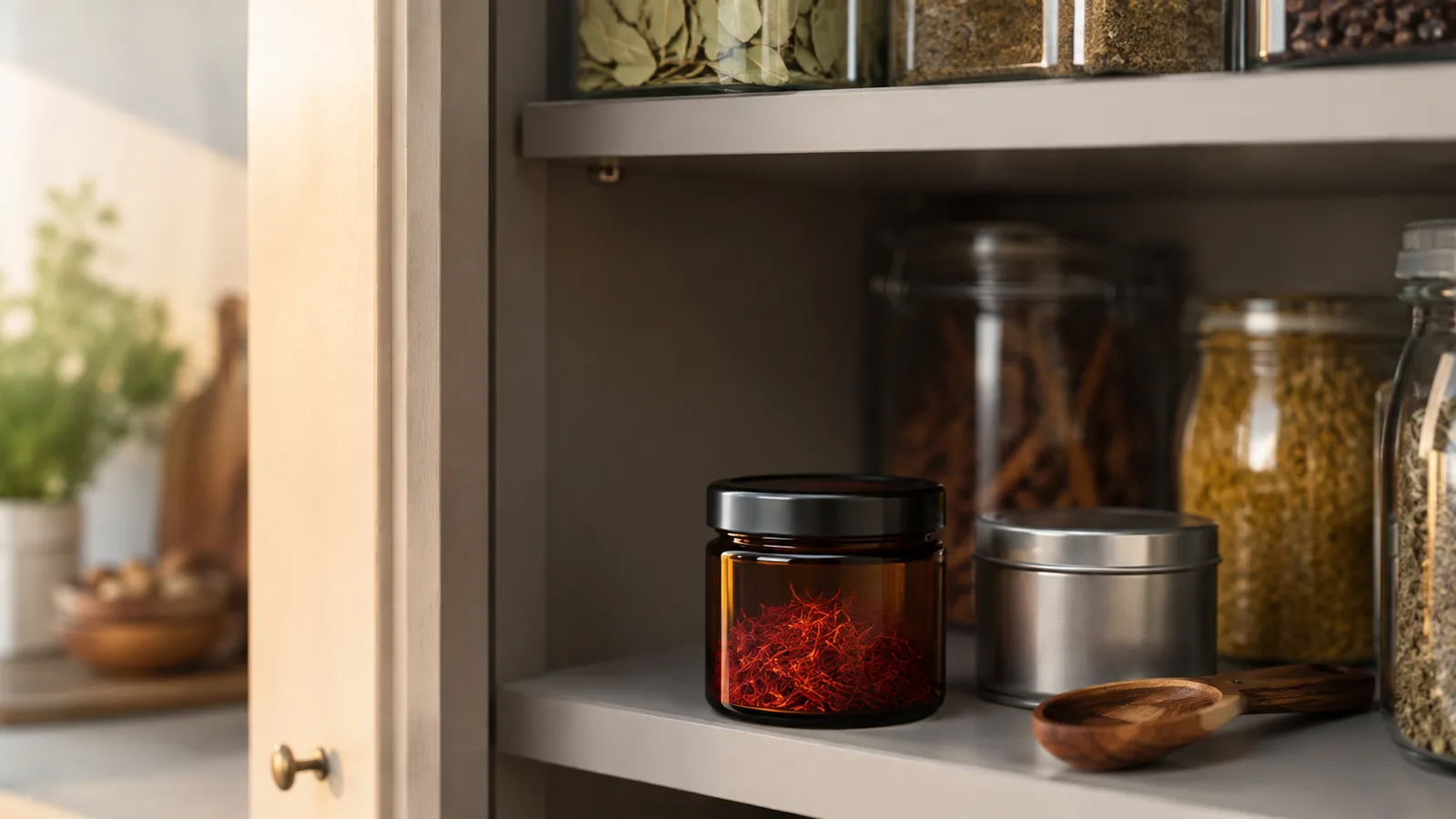
Where should saffron be stored at home?
If you are wondering where to store saffron at home, choose an interior cupboard that stays fairly steady in temperature. A spice cabinet away from the oven, hob, kettle and dishwasher is usually suitable. A shelf beside a sunny window is not. Neither is the warm cupboard above a cooker, however convenient it may seem.
The container matters as much as the location. Use a small jar or tin with a lid that closes firmly. Amber glass and opaque metal block light; clear glass works too when it remains inside a dark cabinet. A decorative jar with a loose cork is less useful than a plain container with a dependable seal.
This advice applies to saffron threads and to kesar sold under that name. If you are deciding where to store kesar, treat it as the same dried spice: sealed, dry, dark and away from heat.
The four saffron storage conditions that keep it fresh
Light, heat, moisture and oxygen are the main storage concerns. Research on saffron chemistry shows that time changes its colouring, taste and aroma compounds, while the rate of deterioration depends on conditions including temperature, humidity and light. A review of saffron drying and storage research recommends tightly closed containers protected from light after drying.
- Keep it dark. Put the container behind a cupboard door rather than displaying it on an open shelf.
- Keep it dry. Measure saffron with a dry spoon or clean, dry fingers, and never hold an open jar over a steaming pan.
- Keep it reasonably cool. Stable room conditions are better than repeated warming and cooling beside kitchen appliances.
- Limit air exchange. Open the jar only long enough to take what you need, then close it promptly.
The best way to store saffron is to manage all four conditions together. This is about preserving quality, not turning a home cupboard into a laboratory. You do not need to chase one supposedly perfect saffron storage temperature. At home, a stable cool place with a good seal is more useful than a thermometer reading that ignores sunlight, steam or condensation.
Should saffron be refrigerated?
Dry saffron does not normally need refrigeration. In a temperate home, an airtight container in a dark cupboard is the easier choice and avoids the condensation that can form when a cold jar is opened in warm, humid air.
Can saffron be stored in the refrigerator? Yes, when the container and handling routine keep moisture out. Does saffron need to be refrigerated in an ordinary kitchen? Usually not.
If your home remains very hot or humid and there is no reliably cool cupboard, saffron can be stored in the refrigerator, but only with careful moisture control. Place the threads in a genuinely airtight food-safe container. Take the closed container out of the fridge and let it reach room temperature before opening it. This keeps humid room air from condensing on cold saffron.
Do not move an unsealed jar in and out of cold storage, and do not assume the refrigerator protects a weak seal. This is the key saffron cold-storage precaution: refrigeration is a response to difficult room conditions, not an automatic upgrade for every jar.
How to store saffron in a humid climate
Humidity changes the practical decision. Start with the smallest airtight container that comfortably holds the saffron. Keep it away from the sink and steam, close it immediately after use, and avoid transferring the threads with damp utensils.
A food-safe moisture-control sachet supplied for spice packaging may help in a larger commercial pack, but do not improvise by placing loose rice or unlabelled drying material among the threads. For a small household quantity, a sound seal and careful handling are usually the more important steps.
If refrigerated storage is necessary, divide a large supply into small sealed portions. The main jar then stays closed while the everyday portion is used. Fewer temperature changes mean fewer chances for condensation.
How to store saffron in a dry climate
A dry room reduces one risk but does not remove the others. Saffron still needs protection from direct light, warm air and repeated opening. Keep it in a closed cupboard rather than an open bowl, paper envelope or thin bag.
Very dry threads can be fragile, so avoid crushing the whole supply every time you measure it. Store saffron threads intact and grind only the portion required for a dish. That also exposes less surface area to air before use.
Can you freeze saffron?
Dry saffron can be frozen, but it is rarely necessary for the small amount kept in a home kitchen. Freezing cannot restore old saffron, and a poorly sealed frozen pack can collect moisture when it is opened.
If freezing is genuinely useful for a large supply, divide it into recipe-sized airtight portions first. Let one portion warm completely while it remains sealed, then open it. Do not repeatedly thaw and refreeze the same jar.
How long can saffron be stored?
How long can you store saffron? There is no single shelf-life promise that applies to every harvest, package and kitchen. Well-dried threads in a sound container commonly remain useful for around two years, but that is a quality rule of thumb rather than a universal safety deadline. Follow the producer’s best-before information and consider when the pack was opened.
An experimental comparison of fresh and two-year-stored saffron found measurable changes in key compounds, including reduced colouring compounds in stored samples. That is why a jar can remain dry and apparently sound yet give a weaker result in cooking.
Whole threads usually hold their character better than powder because less surface area is exposed. If you buy powdered saffron, keep the pack small, close it quickly and use it sooner. Do not combine a new purchase with an older jar; separate dates make changes in aroma and colour easier to notice.
Does saffron expire or go bad?
Saffron often fades gradually rather than failing on one exact day. A weaker aroma or paler colour release can simply mean it has aged. Damp clumps, visible mould, insects, a musty odour or known contact with water are different: discard the affected product rather than tasting it to decide.
Colour alone cannot prove freshness or authenticity. Added dyes can create a strong colour, while genuine older threads may release colour more slowly. Check the package, aroma, thread condition and storage history together.
What about freshly harvested or brewed saffron?
Freshly separated stigmas are not ready for normal cupboard storage. Drying saffron is a controlled post-harvest step that affects aroma, colour and safety; a purchased pack that seems damp should be returned or assessed rather than dried casually at home. Research shows that drying temperature and airflow can change the spice’s important compounds, so one improvised method cannot be recommended for every batch.
Brewed saffron is also a different product because water has been added. Cool it promptly in a clean covered container and refrigerate it. As a conservative food-safety rule, the USDA guidance for prepared leftovers uses three to four refrigerated days; freeze covered portions if they will not be used in that period. Our long-term saffron storage guide explains the separate routine for brewed saffron and larger stocks.
How to store saffron threads: a practical routine
- Leave dry saffron as whole threads until a recipe needs it ground.
- Put it in a small airtight jar or opaque tin.
- Write the purchase or opening date on the container.
- Keep it in a dark cupboard away from sunlight, steam and cooking heat.
- Use only dry utensils and close the lid straight away.
- Refrigerate dry saffron only when hot or humid room conditions make cupboard storage unsuitable, and let the sealed container warm before opening.
For most kitchens, the answer to “where should saffron be stored?” is pleasantly ordinary: in a well-sealed container in the right cupboard. If you want to know how to keep saffron fresh or how to preserve saffron for a long time, consistent protection from moisture, light, heat and unnecessary air will do more than repeatedly moving it between storage places.

![Exporting Saffron to Turkey + Price Guide [Complete 0 to 100]](https://img.rowhanisaffron.com/20260827003933/saffron-export-turkey-quality-inspection.webp)



