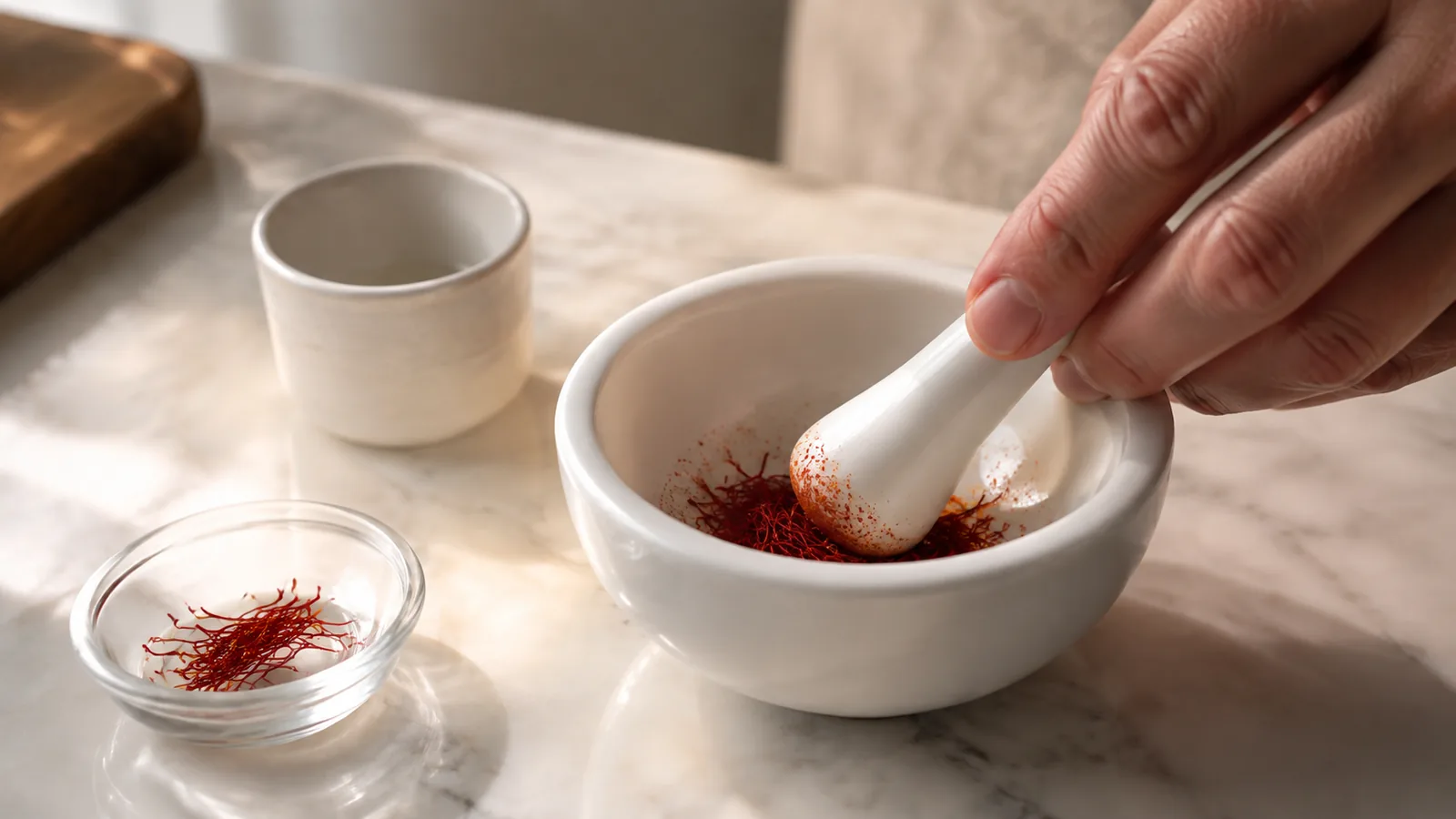
Saffron powder benefits a cook mainly through speed and even distribution. It is simply dried saffron stigma ground into fine particles, so it releases colour and flavour more quickly than whole threads and disperses easily through rice, sauces, drinks and desserts. The trade-off is that powder is harder to inspect for authenticity and loses aroma faster after grinding.
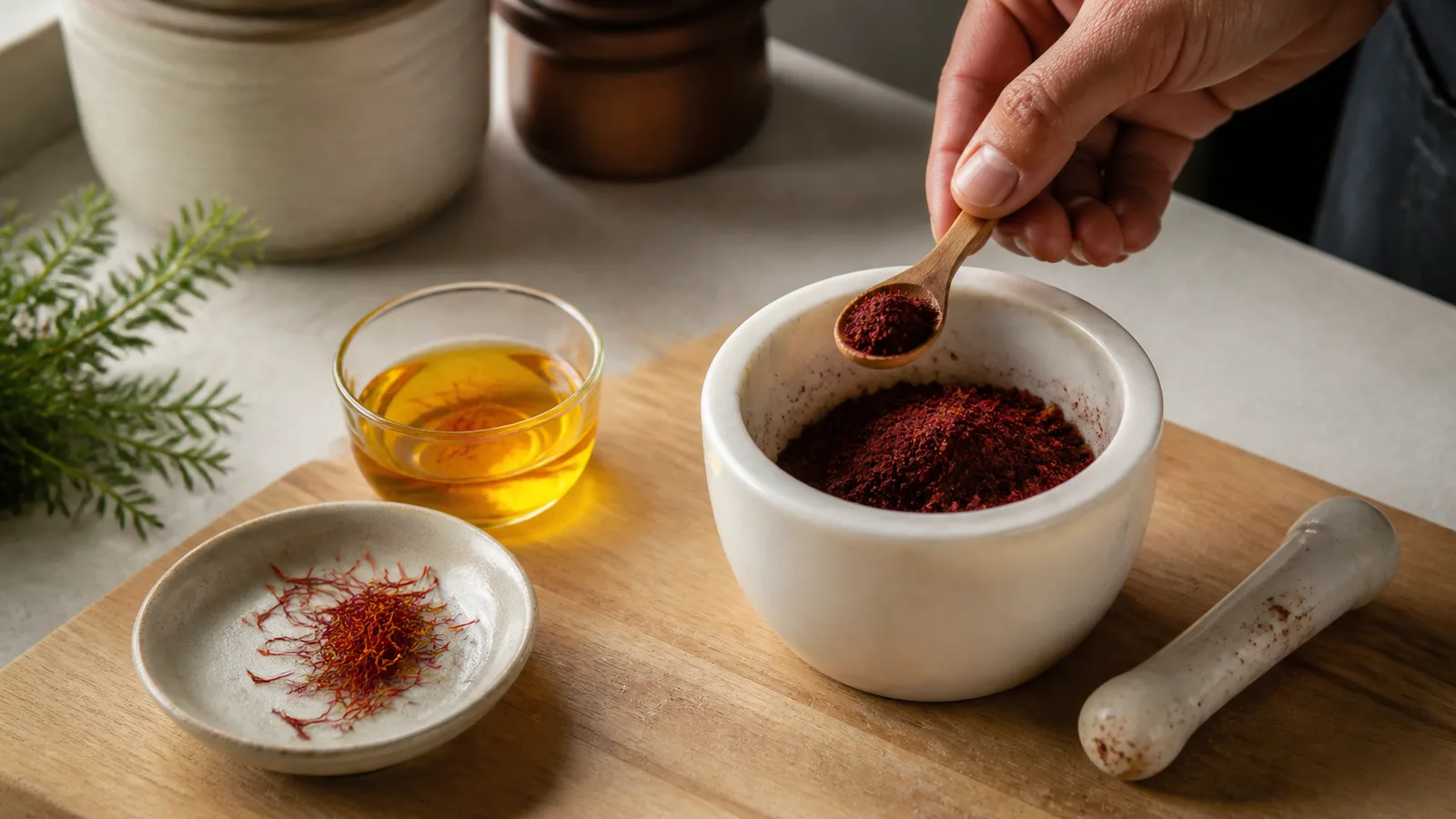
Pure powder should contain one ingredient: saffron, listed botanically as Crocus sativus. It is not the same as a “saffron seasoning,” drink mix or supplement that may contain sugar, fillers, other spices or a standardized extract. Read the label before assuming two red powders are equivalent.
What is saffron powder made from?
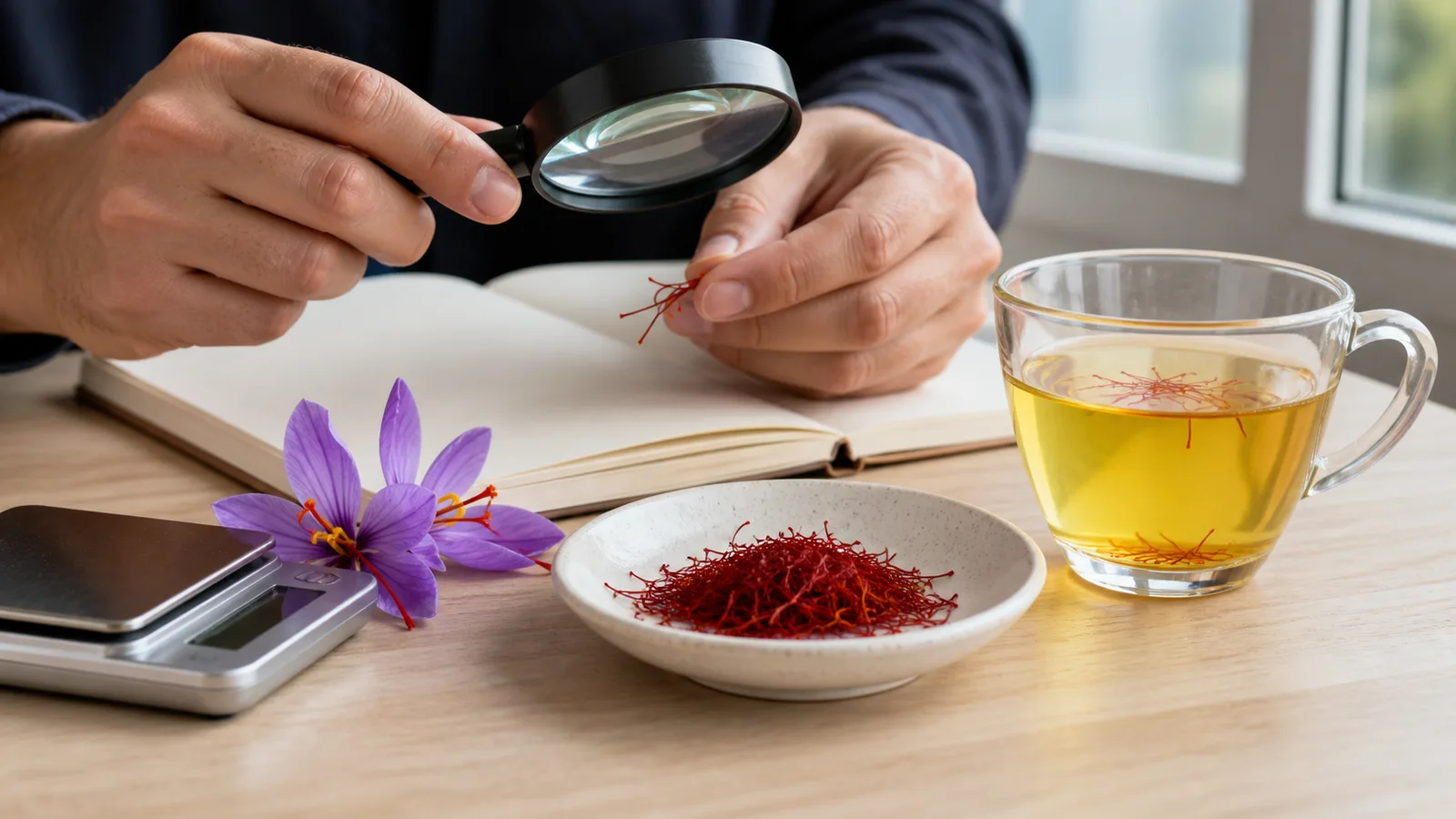
Saffron comes from the three red stigmas inside each Crocus sativus flower. Once separated and dried, those stigmas are sold whole or ground. Good powder carries the same key sensory compounds as the threads: crocins contribute the golden colour, picrocrocin is associated with bitterness, and volatile compounds including safranal help create the aroma.
Grinding increases surface area. That is why colour develops quickly and why a small amount can spread evenly through a dish. It also exposes more of the spice to air, light and moisture. If you use saffron only occasionally, whole threads kept intact until needed will usually hold their character longer.
Saffron powder benefits in the kitchen
- Fast blooming: fine particles release colour promptly in warm water or milk.
- Even mixing: powder is useful when every spoonful of rice, batter, custard or sauce should have a similar colour and aroma.
- Easy portioning: a consistently ground batch is simple to divide among several dishes, provided it is measured with care.
- No visible threads: this suits smooth drinks, ice cream, cream sauces and fine-textured desserts where strands would be distracting.
Powder is not automatically stronger or better than threads. If both begin with the same saffron and the same quantity is used, the main difference is how quickly and evenly the spice is released. Whole threads are attractive as a garnish and easier to examine before purchase; powder is convenient once authenticity is already established.
Other saffron powder uses appear on cosmetic and supplement labels. Manufacturers may formulate with saffron powder or an extract, but that does not make kitchen powder a tested skin or hair treatment. Mixing it into homemade cosmetics can stain skin or fabric and may irritate a sensitive user. Likewise, a medicinal or pharmaceutical product should identify its measured preparation rather than rely on the word “saffron” alone.
How to use saffron powder
Start with a small culinary pinch. Saffron should add a clear aroma and a warm golden tone, not make a dish aggressively bitter. Because fine powder is easy to over-measure, add less than you think you need and give it time to disperse before adding more.
Bloom it in warm water
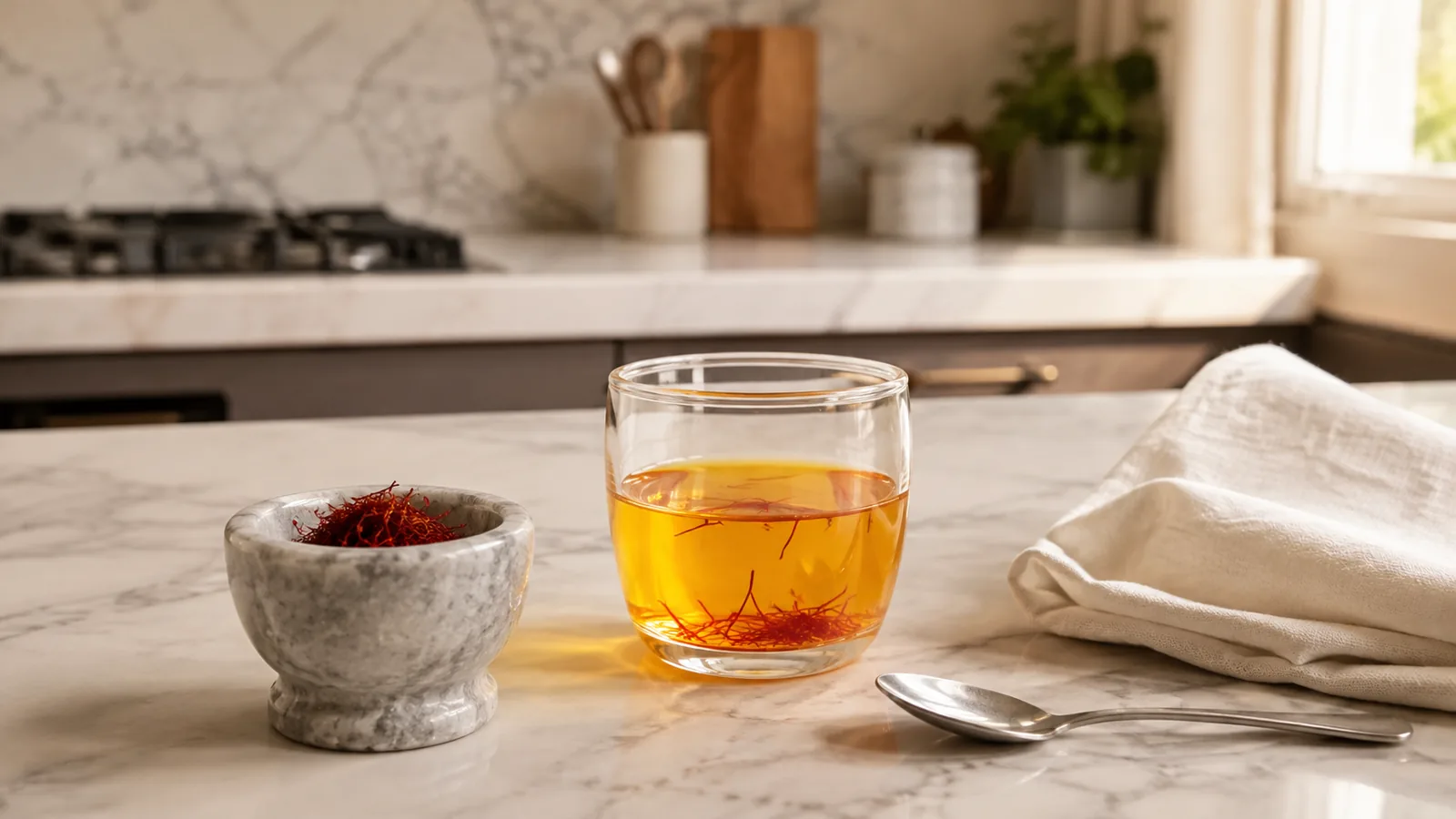
Put the powder in a small cup, add a few spoonfuls of warm water, cover and leave it for about 10 to 15 minutes. Stir the golden infusion into rice near the end of cooking, or add it to soup, a sauce or bread dough. The powder may suspend through the liquid rather than disappearing like sugar; that is normal.
Use warm milk for dairy dishes
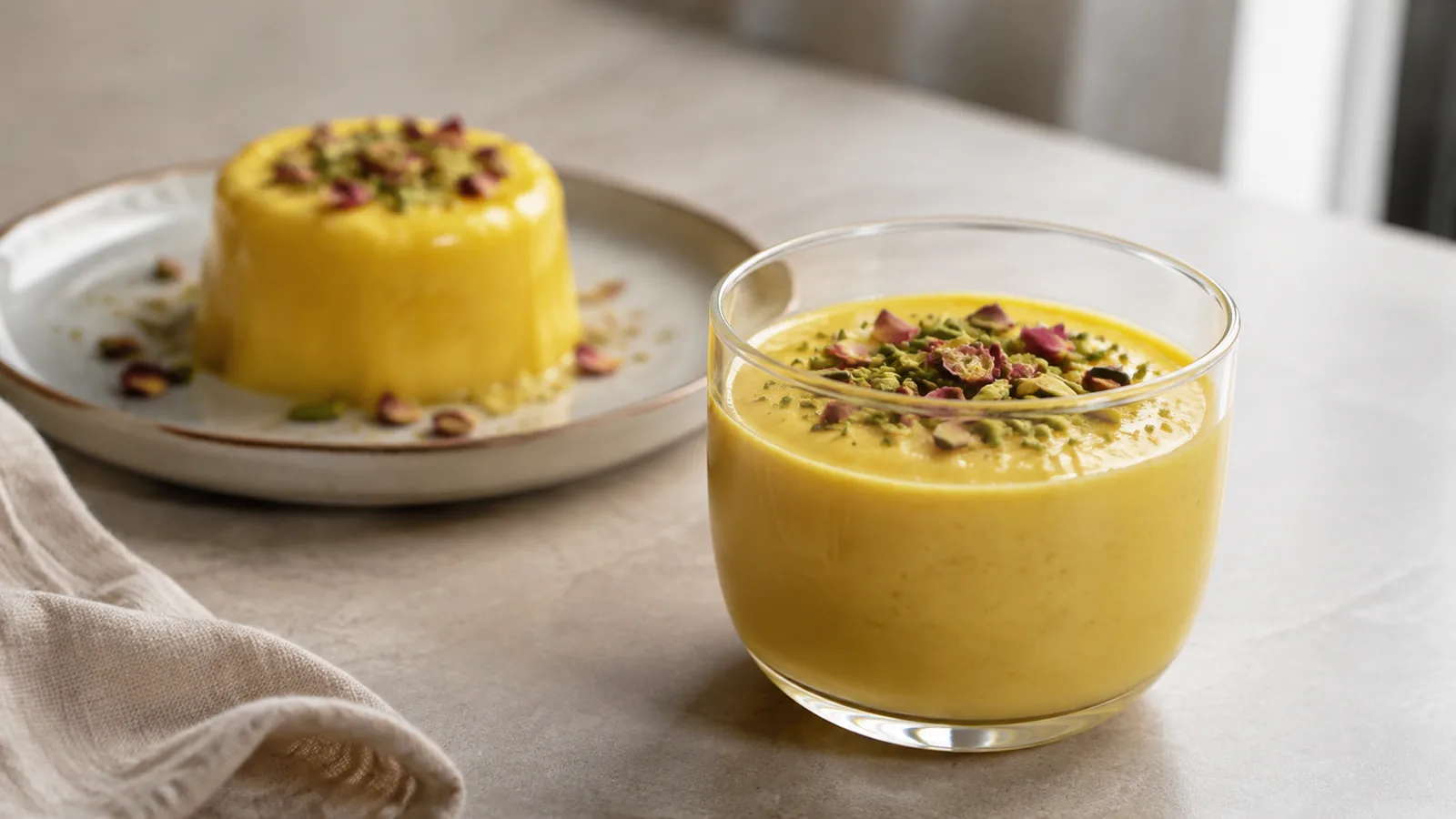
For custard, rice pudding, ice cream or a milk drink, whisk the powder into a small amount of warm milk first. This prevents a concentrated spot of saffron in the finished dish. Avoid prolonged hard boiling if the aroma matters, since heat and an uncovered pan encourage volatile notes to escape.
What about the ice method?
Some Persian cooks place ground saffron over ice and let the cubes melt gradually. It produces a usable infusion, but it is not necessary for authentic flavour and has not been shown to make saffron healthier. Warm-water blooming is faster. Our practical guide to grinding and preparing saffron with hot water or ice compares both methods step by step.
Ground saffron, powder blends and grade labels
Names such as “premium powder,” “basic powder” or “mixed powder” are not a dependable universal grading system. A reputable seller should say whether the powder was made from red stigmas alone, whether yellow style material is present, and whether anything else has been added. The current ISO 3632-1 saffron specification applies to filaments, cut filaments and powder, but a standard claim is meaningful only when it is backed by appropriate testing and traceability.
A blend can still be useful if it is honestly labelled—for example, a sweetened mix intended for a latte—but its quantity cannot be compared directly with pure ground saffron. “Saffron flavour,” “saffron colour” and “contains saffron” do not necessarily mean the jar is 100% powdered stigma.
Can you identify genuine saffron powder at home?
No single home test can prove that a powder is authentic. Colour, smell and taste can reveal an obvious problem, but they cannot show the botanical source or measure hidden fillers. Powder removes the thread shape that normally gives a buyer useful visual clues. The US Food and Drug Administration specifically gives saffron bulked with lower-value plant material as an example of economically motivated food adulteration.
Laboratory methods go much further than a water test or paper test. A published target-screening study of saffron powder, for example, used chemical markers to detect several botanical adulterants at low concentrations. That is why an instant colour release or a non-oily mark on paper should be treated as a clue, not a certificate.
- Choose a seller that identifies the producer or origin and provides a batch or lot reference.
- Look for a one-ingredient label when you want pure powder.
- Avoid a powder that smells musty, strongly synthetic or almost odourless.
- Be cautious when the price is far below that of credible whole saffron; grinding does not remove the cost of harvesting the stigmas.
- If certainty matters, buy whole threads and grind a small amount yourself. See our guide to recognizing counterfeit saffron and the limits of home tests.
Health benefits of saffron powder: an important distinction
Saffron has been studied for mood and several other health outcomes, but “powder” is not a single clinical intervention. Trials may use whole-stigma powder at a measured daily amount, or an extract standardized to particular compounds. A kitchen pinch from an untested jar cannot be assumed to deliver the same preparation or dose.
A current GRADE-assessed review of 34 randomized trials found moderate-certainty evidence that saffron supplementation may reduce some self-reported depression and anxiety scores, while other clinical scales did not show a significant effect and results varied substantially. This does not establish culinary saffron powder as a treatment. Claims that it “boosts the immune system” or protects the heart are also too broad without a specific outcome, preparation and study population.
Using pure saffron powder in food is different from taking it medicinally. Do not copy a trial dose into a recipe or replace prescribed care with a spice. Pregnant or breastfeeding people, anyone using regular medicine, and people considering concentrated or prolonged use should ask a clinician first. Stop if it causes an allergic reaction or persistent digestive symptoms.
Storage and a practical buying choice
Keep saffron powder in a small airtight container, away from steam, sunlight and heat. Use a dry spoon and close the jar promptly. Buying a modest quantity protects aroma better than keeping a large open package for years.
Choose powder when convenience and smooth distribution matter. Choose threads when you want to inspect the saffron, preserve aroma for longer or display the strands in a finished dish. For many home kitchens, the best compromise is simple: buy traceable whole threads and grind only what the next recipe needs.