How to prepare saffron for cooking: the short method
To prepare saffron for cooking, gently crush the threads, bloom them in a few spoonfuls of warm-to-hot water for 15 to 20 minutes, then add the whole infusion to your recipe. This simple method distributes the spice more evenly than scattering dry threads into a large pot.
Ice can also be used for a slower infusion, but it is not automatically better. The most important parts of saffron preparation are genuine threads, gentle grinding, a small amount of liquid, enough time, and sensible heat.
What is saffron used for in cooking?
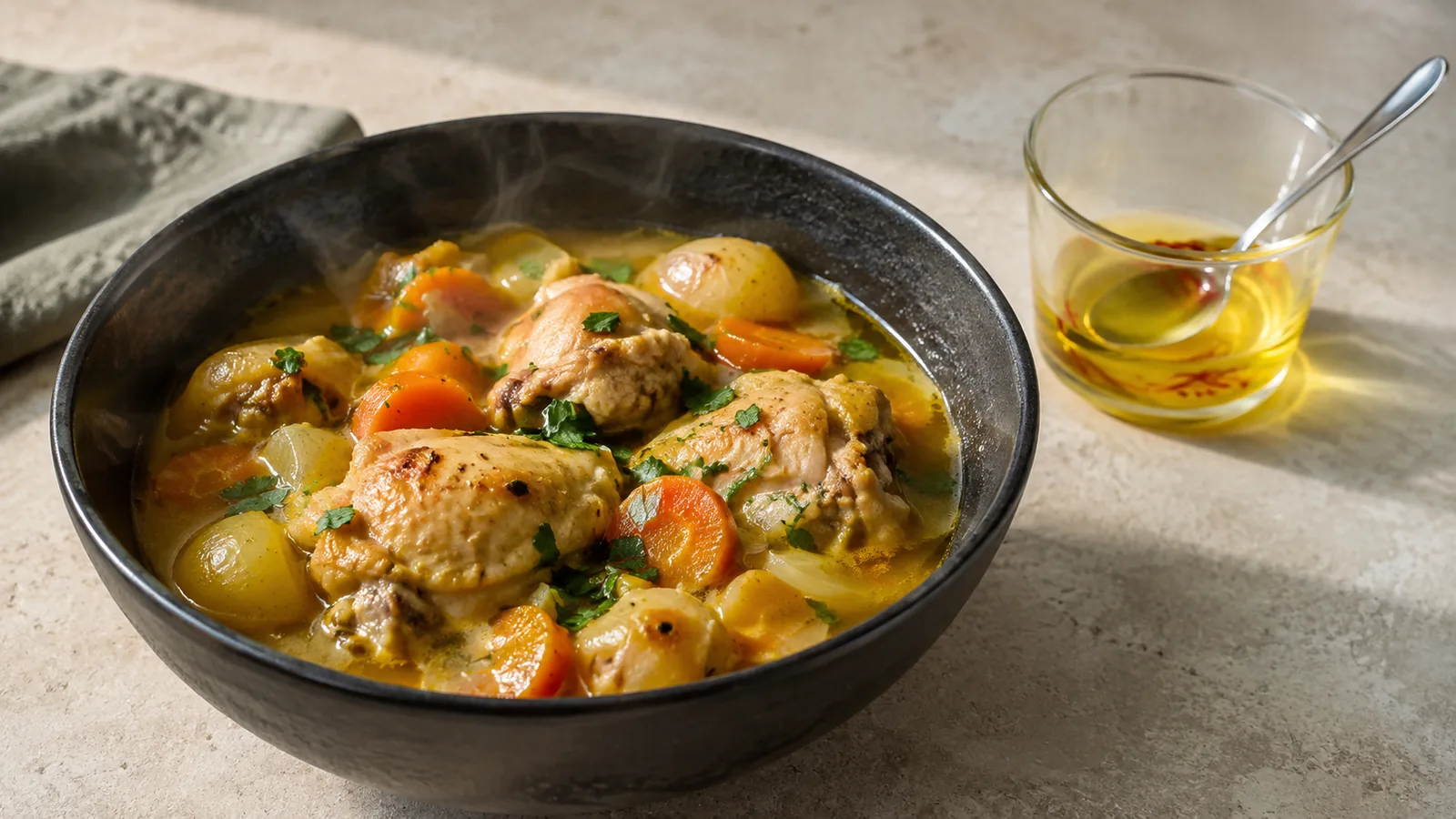
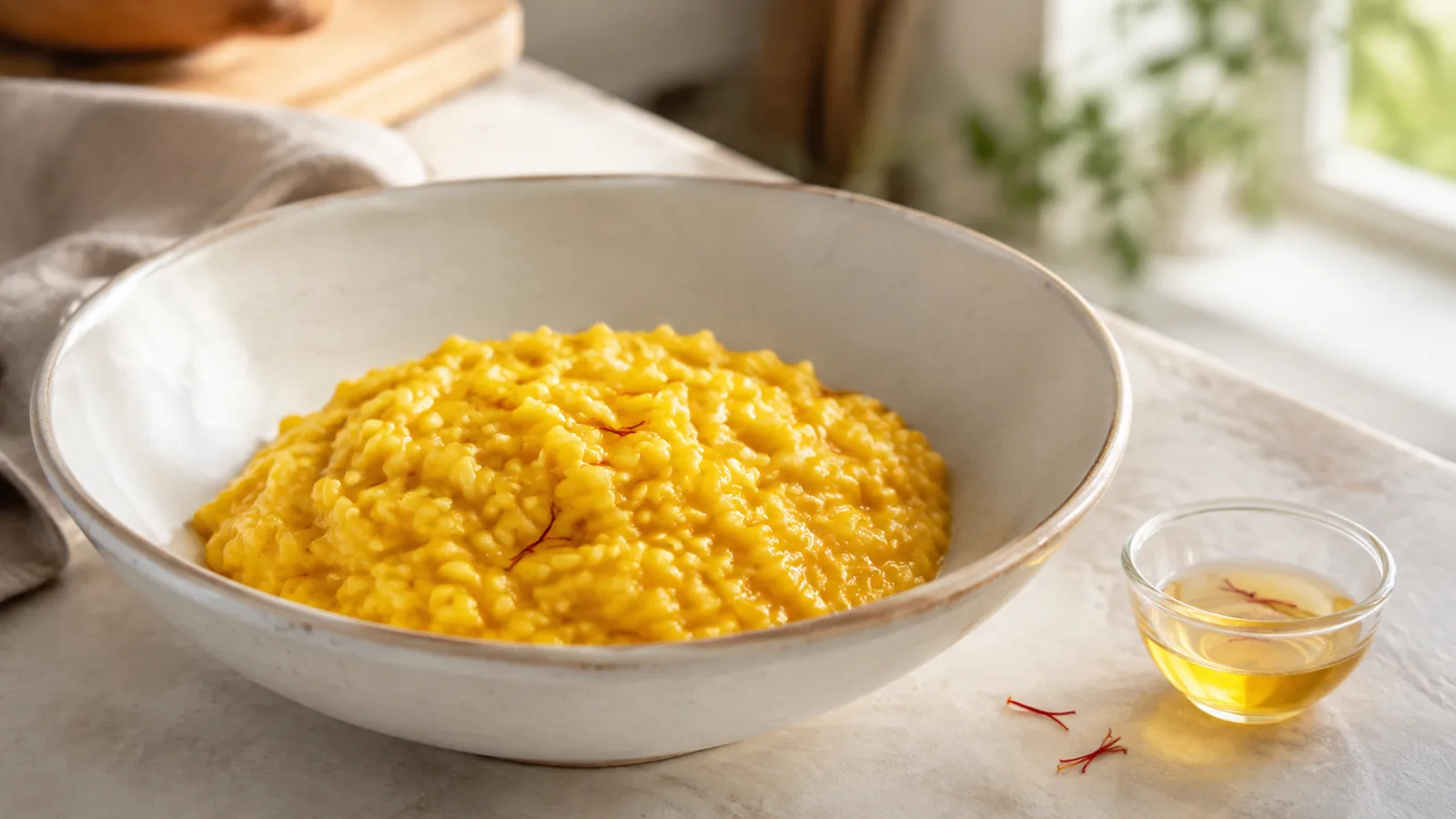
Saffron brings three things to food: a golden color, a floral hay-like aroma, and a delicate flavor with a mild bitter edge. It is used in rice, stews, soups, sauces, seafood, breads, custards, ice cream, and drinks. Because the flavor is distinctive, it usually works best as a clear accent rather than one spice among many powerful seasonings.
Cooking with saffron does not require specialist equipment. A small mortar and pestle, a heat-safe cup, and a spoon are enough.
Kesar is another name for saffron. If you are learning how to use kesar in food, use the same crushing, blooming, and timing methods described here.
How to grind saffron
- Measure only what the recipe needs.
- Place the dry threads in a small mortar.
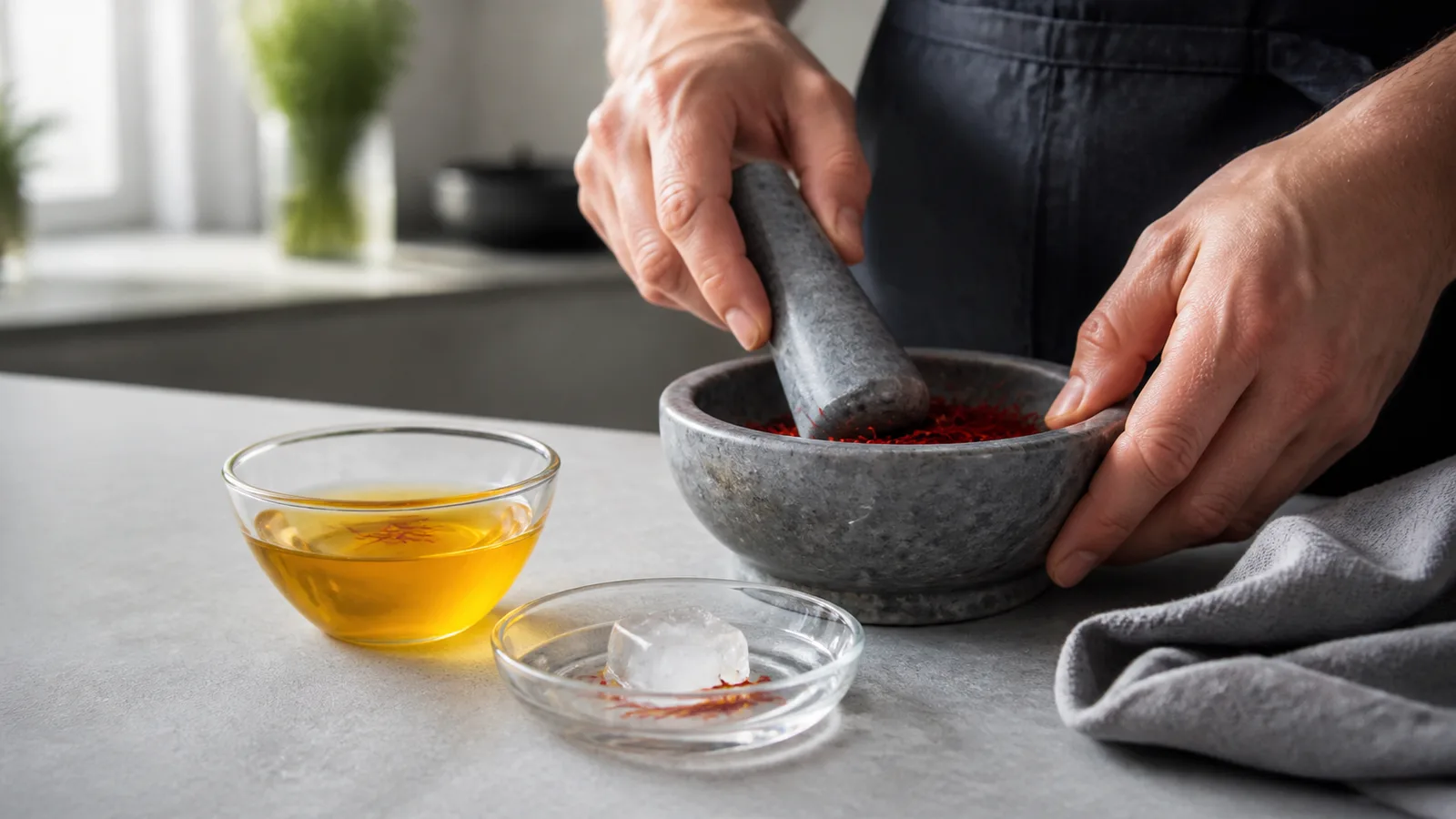
- Press and turn the pestle gently until the threads become a coarse powder.
- Stop if the mortar becomes warm; excessive friction can dull the aroma.
A pinch of coarse sugar or salt can give the pestle more grip, but choose one that belongs in the recipe. Sugar suits desserts and drinks; salt may suit a savory dish. Neither is necessary.
How to grind saffron without a mortar and pestle
Put the threads on a clean saucer and press them with the back of a metal spoon. You can also fold them inside baking paper and roll over them with a jar. Avoid an electric spice grinder for a tiny portion: much of the saffron can remain inside the machine, and prolonged grinding creates heat.
How to brew saffron and how to steep saffron threads
- Put the crushed saffron in a small heat-safe cup.
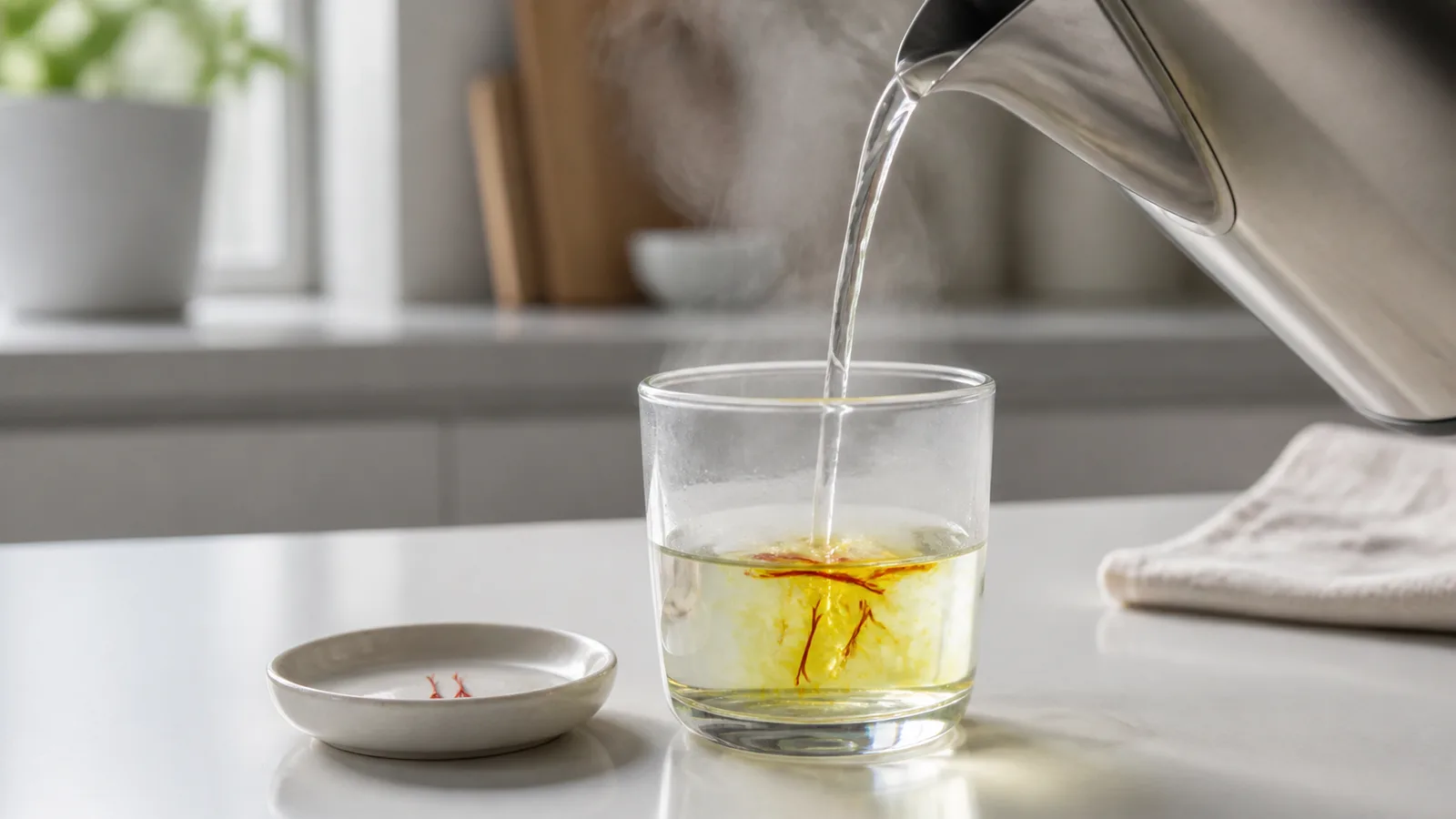
- Add 2 to 4 tablespoons of water at roughly 60–80°C (140–176°F). The water should be hot but not at a rolling boil.
- Cover the cup and leave it for 15 to 20 minutes.
- Stir, then add both the liquid and softened spice to the dish.
This is brewed saffron, sometimes called saffron in water, steeping saffron, or a saffron infusion. A 2024 laboratory study found that water temperature and infusion time changed the extraction of saffron’s color and aroma compounds; under its test conditions, 60°C for 20 minutes retained the highest measured crocin content. Kitchen recipes vary, but the result supports moderate heat rather than prolonged boiling.
How long to soak saffron
Fifteen to 20 minutes is a useful target for ground threads in warm water. If the threads remain mostly whole, allow longer. Covering the cup helps keep the aroma in the infusion.
How to prepare saffron with ice
Place the crushed threads in a small cup, add one or two ice cubes, cover, and let them melt at room temperature. This traditional method takes longer than warm water. Some cooks like its clear color, but evidence does not establish that ice always produces a stronger or better infusion.
Do not combine a simmering infusion with ice in the hope of forcing out more color. The rapid temperature change adds complexity without a proven culinary advantage.
How much saffron to use in cooking
For a family-size dish, start with about 12 to 20 threads and adjust the next time you cook it. Strength and thread size vary, so no single count fits every saffron or recipe. A full 1 gram is usually far more than one ordinary dish needs and can overwhelm it with bitterness.
When learning how to use saffron, start modestly. You can add a little more infusion near the end, but you cannot easily remove an excessive amount.
When to use saffron in a recipe
Timing depends on the dish:
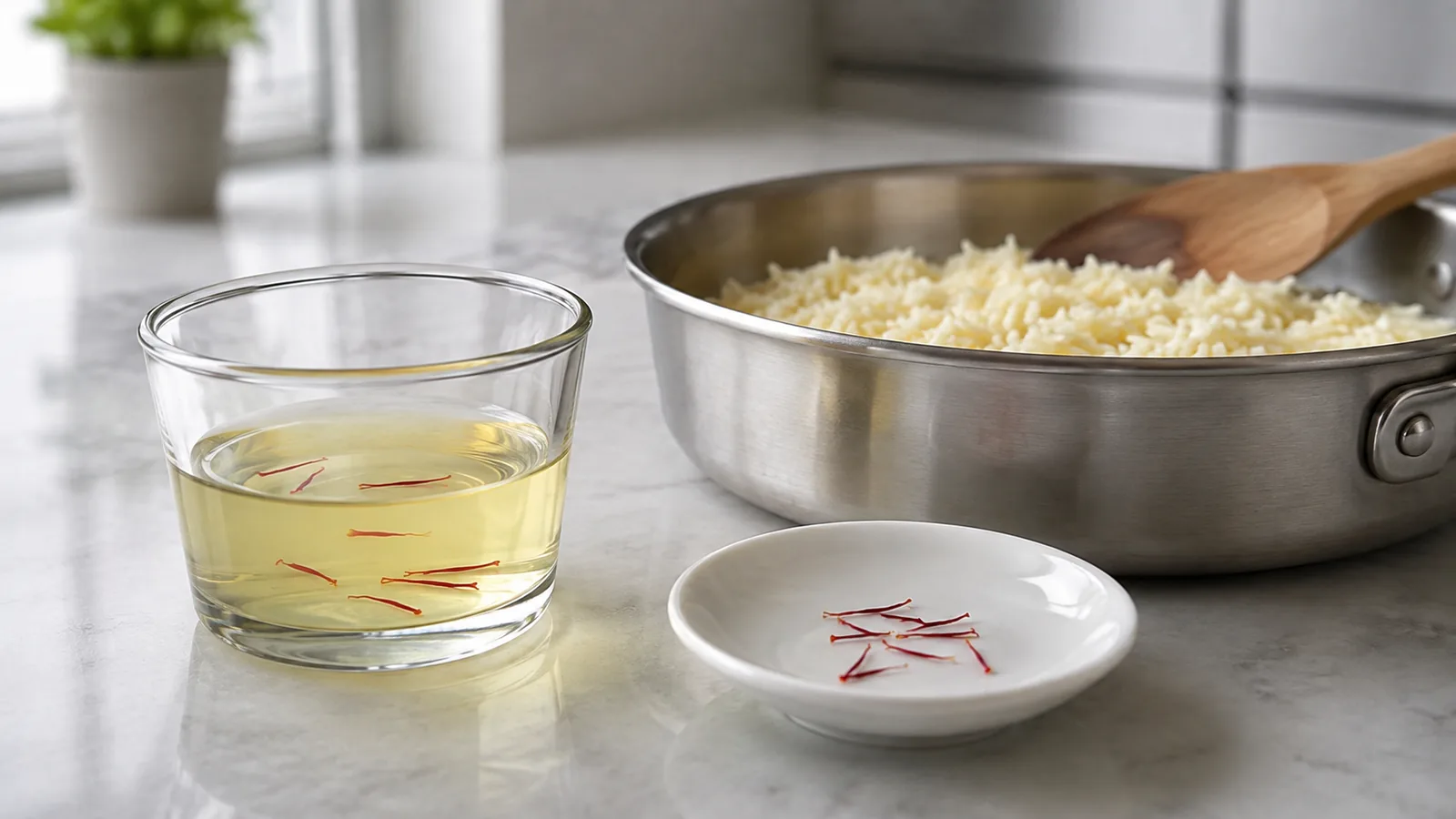
- Rice: mix some infusion into a small portion of cooked rice for a golden garnish, or drizzle it through the pot near the end.
- Stews and soups: add the infusion during the final 10 to 20 minutes so it disperses without being boiled for hours.
- Sauces: add it once the main liquid is hot, then keep the heat gentle.
- Baking: include the measured infusion with the recipe’s liquids and account for its water.
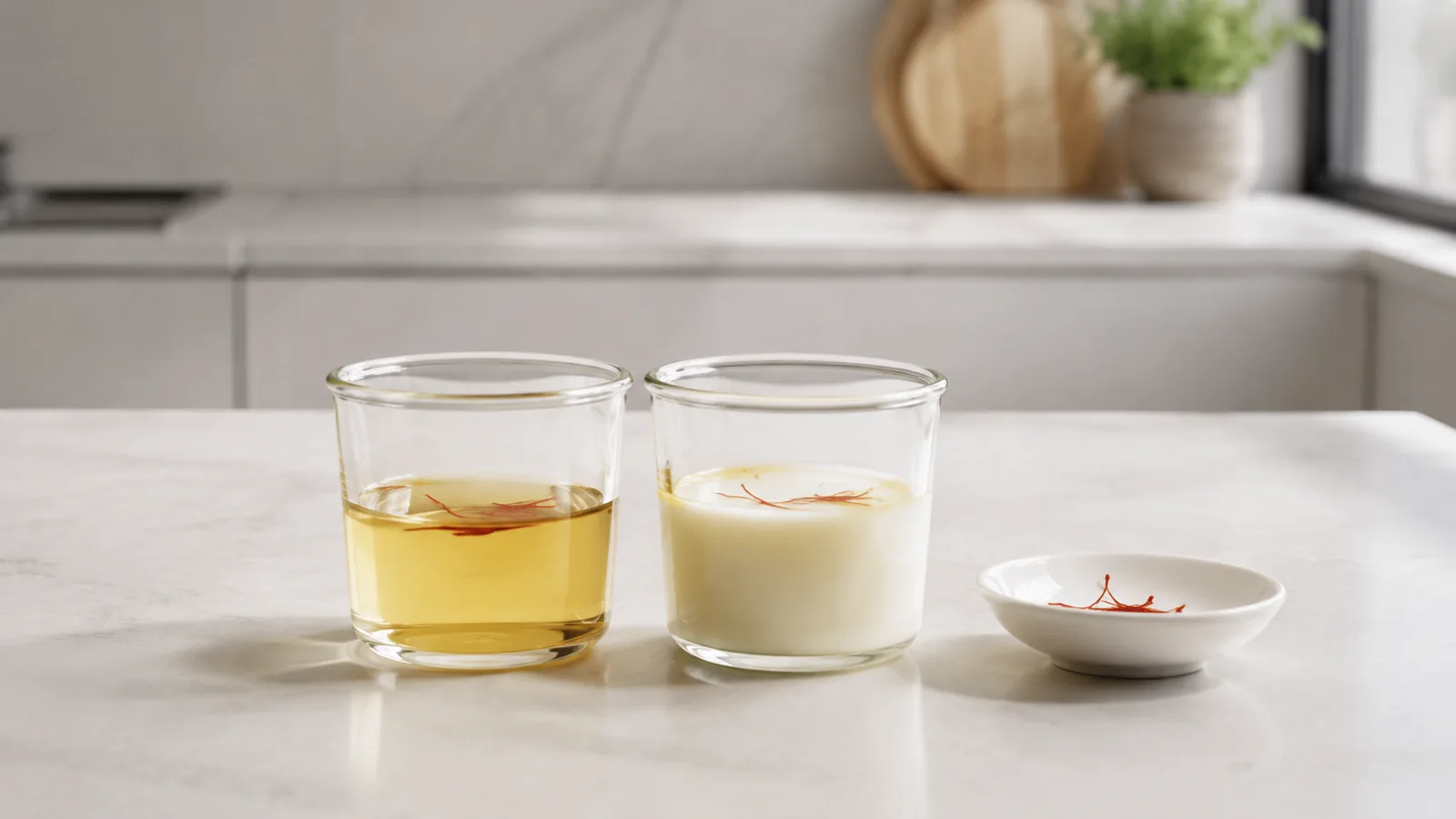
- Custards and ice cream: infuse the saffron in warm milk or part of the dairy base, then continue with the recipe.
- Tea and other drinks: steep it directly or add a prepared infusion to taste.
For dishes with a long cooking time, reserve a little brewed saffron for the finish. That final addition restores some of the aroma lost during heating.
How to cook saffron without wasting it
- Do not fry dry threads. Direct high heat can scorch them quickly.
- Do not use a large volume of blooming water. A concentrated infusion is easier to fit into a recipe.
- Do not judge quality by instant red color. Genuine saffron releases color gradually; an immediate harsh red stain can be suspicious.
- Do not bury the aroma. Very strong chilies, smoke, or an abundance of competing spices can make expensive saffron hard to notice.
- Do not discard the softened threads. Add them with the liquid unless a very smooth texture is essential.
Choosing saffron for cooking
Look for dry red threads with a clean floral, hay-like scent and little yellow plant material. Whole threads are easier to inspect than pre-ground saffron and tend to retain aroma longer. Powder is not always poor quality, but it is harder for a buyer to assess and easier to adulterate.
Store saffron airtight, away from light, heat, moisture, and strong odors. Grind only the amount you are about to use. For more detail on thread types, see our guide to saffron varieties.
Real saffron versus saffron essence for cooking
A bottled saffron essence or flavoring is not necessarily the same as an infusion made from threads. Check the ingredient list for artificial flavor, color, sugar, alcohol, or another carrier. If a recipe specifies real saffron, replacing it with essence can change both flavor and liquid balance.
If a recipe asks how to make saffron, it usually means how to make an infusion from the harvested threads. The spice itself cannot be made by mixing other powders or flavorings; it comes from the dried stigmas of Crocus sativus.
Does cooking saffron add health benefits?
Saffron contains studied compounds, but an ordinary culinary amount should be valued mainly for flavor, aroma, and color. Claims that saffron in a meal improves mood, digestion, brain function, or the immune system are much stronger than the evidence for that serving. Cooking with saffron can make nourishing food enjoyable; it should not turn a recipe into a treatment claim.
The practical formula is easy to remember: crush, bloom, cover, and add with care. Once those habits become routine, saffron cooking is less about luxury and more about getting a small amount of spice to work well.
Source
Molecules (2024): effects of infusion conditions on saffron compounds and antioxidant activity