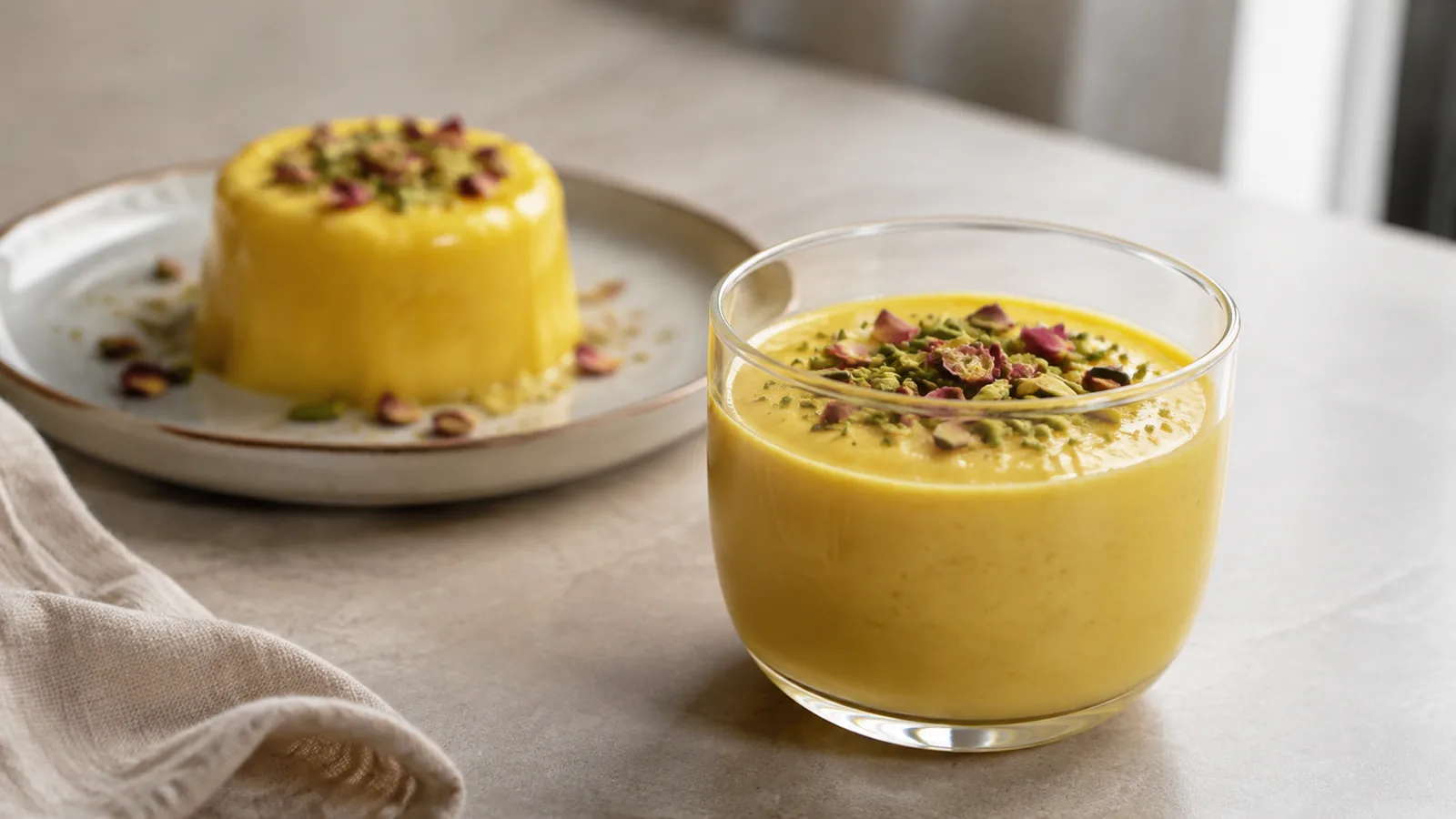
Homemade Saffron Ice Cream is easiest to control when you make a cooked custard base, chill it thoroughly, then churn it. This version uses three egg yolks for a smooth, scoopable texture and enough saffron to stay noticeable beside the milk and cream.
What style of saffron ice cream is this?
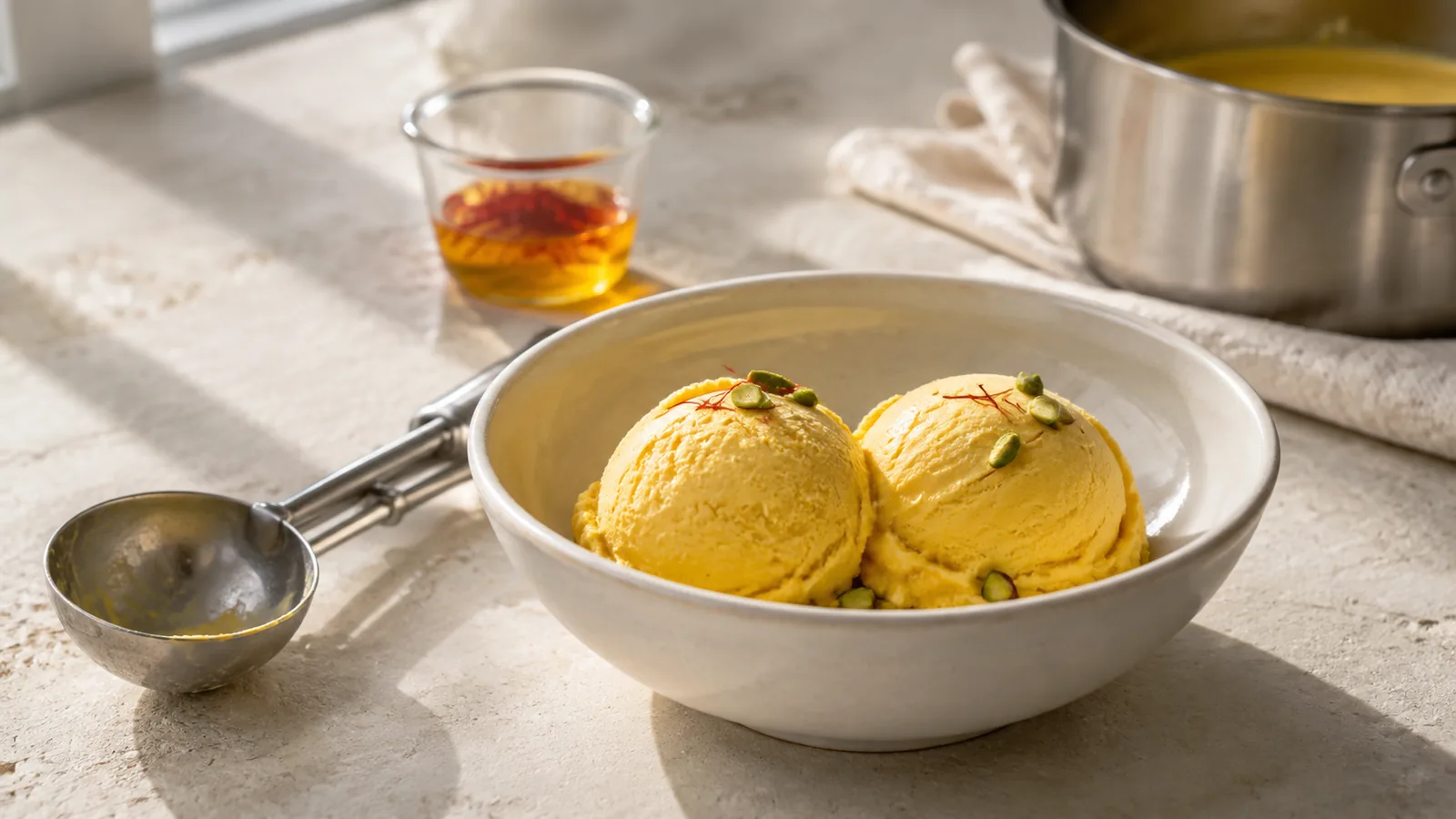
This is a custard-style saffron ice cream rather than traditional Persian bastani. It is creamy and softly set, with a restrained touch of rosewater and optional pistachios. It does not use salep, so it will not have bastani’s elastic texture or frozen cream flakes.
If that chewy Iranian style is what you want, use our separate traditional salep-based saffron ice cream recipe. Keeping the two methods separate avoids a common recipe problem: listing eggs and salep, then never explaining how either one should be cooked.
Homemade saffron ice cream ingredients
This recipe makes about one litre, enough for six modest servings.
- 500 ml whole milk, about 2 cups
- 250 ml heavy cream, about 1 cup
- 150 g granulated sugar, divided
- 3 large egg yolks
- 0.15 g saffron threads, about a loosely filled 1/2 teaspoon
- 2 tablespoons hot water
- 1 teaspoon food-grade rosewater, optional
- 1/4 teaspoon vanilla extract
- A small pinch of salt
- 40 g unsalted pistachios, roughly chopped, optional
Use pasteurised milk and cream. Rosewater varies considerably in strength, so start with one teaspoon; the flavour should sit behind the saffron rather than perfume the whole bowl. The earlier one-cup quantity would overwhelm this size of batch.
Bloom the saffron
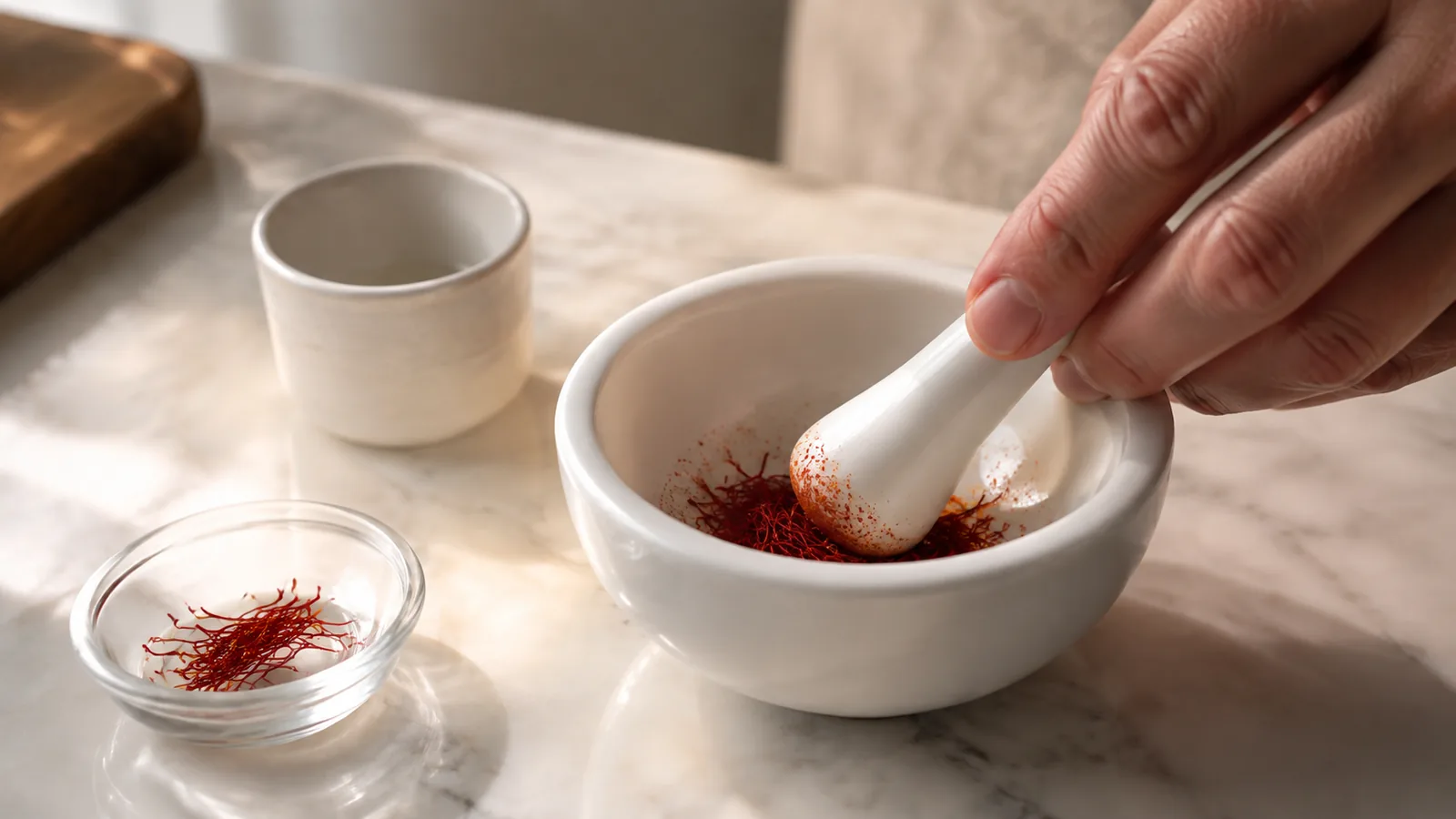
Crush the saffron threads with a clean, dry mortar and pestle. Stir them into two tablespoons of hot water, cover and leave for 10 minutes. The small volume creates a concentrated infusion without adding enough water to make the ice cream icy.
Do not judge the infusion only by how dark it looks. Genuine saffron brings aroma, a warm golden colour and a slight bitterness as well as pigment. Our guide to brewing saffron with hot water explains the preparation in more detail.
Cook the custard base safely
- Pour the milk and cream into a heavy saucepan. Add half of the sugar and the pinch of salt.
- Warm over medium-low heat, stirring occasionally, until the dairy is steaming and the sugar has dissolved. Do not let it boil over.
- In a heatproof bowl, whisk the three egg yolks with the remaining sugar until the mixture looks smooth and slightly lighter.
- While whisking constantly, pour about a quarter of the hot dairy into the yolks in a thin stream. Add another quarter, whisk again, then return the tempered mixture to the saucepan.
- Cook over low heat, stirring continuously with a flexible spatula and scraping the bottom and corners. Heat the mixture to at least 71°C (160°F), checking with a food thermometer. It should lightly coat the spatula but must not simmer.
- Remove the pan from the heat. Strain the custard into a clean bowl, then stir in the saffron infusion, vanilla and rosewater.
Tempering brings the yolks up to temperature gradually, which reduces the chance of scrambled pieces. If the base starts steaming heavily or forming small curds, take it off the heat at once and strain it. Do not rely on colour or thickness alone to decide whether an egg mixture is safely cooked.
The FDA’s guidance for homemade ice cream recommends a cooked egg base or pasteurised egg products and identifies 160°F as the target for a cooked egg mixture. This recipe follows the cooked-base method rather than freezing raw eggs.
Chill before churning
Set the bowl of custard over a larger bowl of ice water and stir until it is no longer warm. Keep the water below the rim so none splashes into the base. Cover the custard and refrigerate it for at least four hours, or overnight.
This cold rest is not idle time. A properly chilled base freezes faster in the machine, which generally produces smaller ice crystals and a smoother texture. It also gives the saffron time to spread evenly through the dairy.
Churn and freeze
Pour the cold base into your ice-cream machine, staying below its maximum-fill line. Churn according to the manufacturer’s instructions; many domestic machines take 20–25 minutes. Add the chopped pistachios during the final two minutes so they remain evenly distributed.
At this point the ice cream will resemble soft serve. Transfer it to a shallow freezer-safe container, press a piece of reusable freezer cover or baking paper against the surface, add the lid and freeze for two to four hours before scooping.
How to make it without an ice-cream machine
Pour the chilled custard into a shallow metal container and freeze it for 45 minutes. When the edges begin to set, scrape them into the softer centre and whisk the mixture vigorously. Return it to the freezer and repeat every 30–45 minutes for four or five rounds.
Fold in pistachios during the final round, then cover and freeze until firm. Hand mixing cannot incorporate air quite as evenly as a machine, but frequent stirring is far more effective than simply freezing the liquid for six hours and hoping it stays creamy.
How to balance the saffron, rosewater and vanilla
Saffron is the leading flavour here. Rosewater and vanilla should round it out, not compete with it. Taste a cold spoonful of the cooked base before churning. Cold food tastes less aromatic than warm food, so the saffron should be clear, but the mixture should not be bitter.
If the saffron seems weak, improve the infusion next time rather than adding a large amount of dry powder to the cold base. If rosewater dominates, dilute the custard with a little more plain dairy before churning. A garnish of pistachios adds texture without making the base sweeter.
Troubleshooting homemade saffron ice cream
The custard curdled
The heat was probably too high or the yolks warmed too quickly. Strain the base immediately; a brief pass with an immersion blender may smooth minor curdling. Next time, use lower heat and add the first hot dairy to the yolks more slowly.
The ice cream is icy
The base may have been warm when it entered the machine, or it may have frozen too slowly. Chill it fully, pre-freeze the machine bowl for the time its manufacturer specifies, and use a shallow container for the final firming stage.
It freezes rock hard
Homemade ice cream has fewer texture stabilisers than many shop-bought versions. Let the closed container stand at room temperature for 5–10 minutes before scooping. Large reductions in sugar also make the finished ice cream harder.
The flavour is too floral
Rosewater is the usual cause. Leave it out or reduce it to a few drops in the next batch. Extra saffron will add bitterness rather than cancel an excessive floral note.
Storage and serving
Keep the saffron ice cream tightly covered in the coldest part of the freezer so it does not absorb food odours or develop a dry surface. It is at its best while the texture and saffron aroma are still fresh, commonly within about two weeks. That is a quality guide, not permission to refreeze ice cream that has melted and remained warm.
Serve it in chilled bowls with a small scatter of pistachios. The result is recognisably saffron ice cream, but distinct from salep-thickened bastani: a smooth golden custard with a clean saffron finish and just enough rosewater to recall the Iranian flavour pairing.