Learning How to Brew Saffron is mostly a matter of using enough threads, a modest amount of water and a little time. Hot water is the dependable everyday method; ice also works, but it extracts more slowly and does not need to be combined with heat as a supposed “thermal shock.”
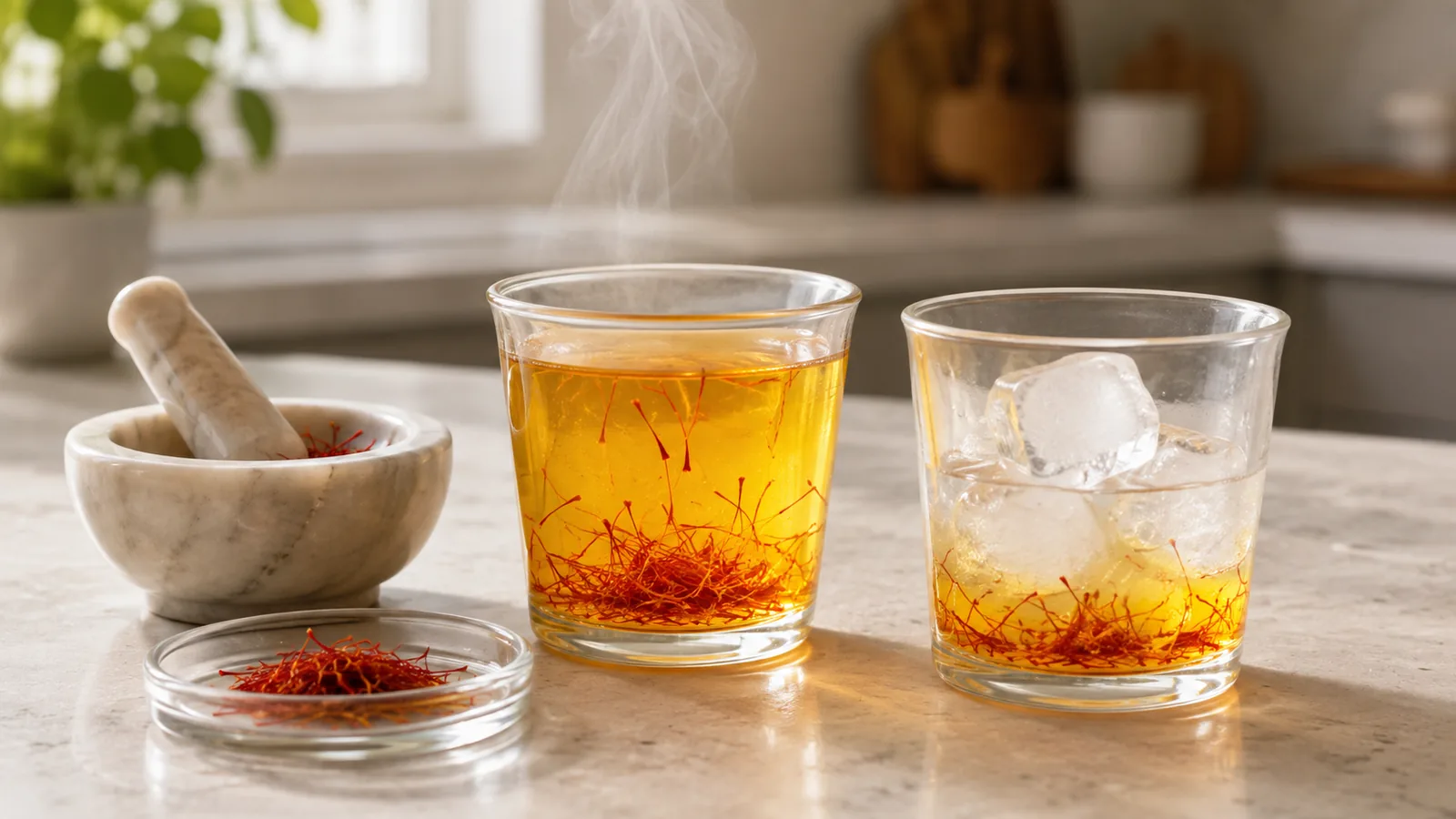
What does “brewing” saffron mean?
In Persian cooking, brewing saffron usually means making a concentrated water infusion before adding the spice to rice, stews, drinks or desserts. Water spreads the colour and flavour more evenly than dropping dry threads into a large pot. It also lets you judge the saffron’s strength before it disappears among other ingredients.
This is an infusion, not a long boil. Saffron does not need a samovar or constant heat. A cup, a lid and hot water are enough for most kitchens.
How much saffron and water should you use?
For a small batch, start with 20 to 30 threads and 3 tablespoons (45 ml) water. That makes a useful concentrate for about four servings of rice or a medium pot of food. Thread size and strength vary, so treat the count as a starting point rather than a universal dose.
If a recipe gives saffron by weight, follow that amount and add only enough water to cover it well. Using a full mug of water for a pinch of threads creates a weak saffron brew and may add more liquid than the dish can take.
Should saffron be ground first?
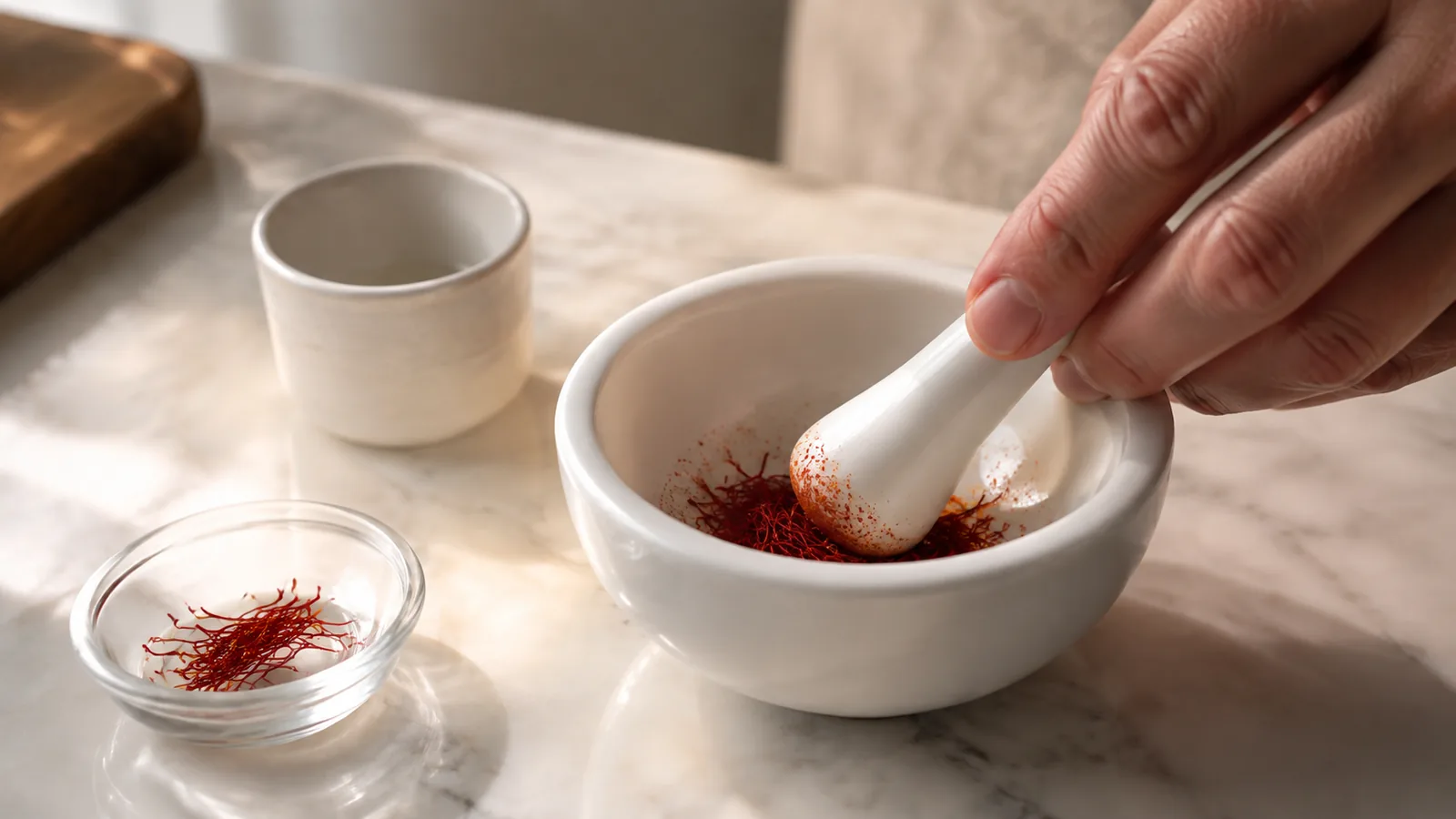
Lightly crushing saffron exposes more surface area and helps a short infusion work evenly. Put the dry threads in a small clean mortar and press them into coarse flecks or a fine powder. Do not pound so aggressively that the spice scatters out of the bowl.
A tiny pinch of sugar can be used as an abrasive when the mortar is smooth. It helps the pestle catch the threads; it does not “prevent saffron from burning,” and it is unnecessary in a savoury dish if you do not want added sugar. Grind only what you plan to use, because whole threads retain their aroma better during storage.
Method 1: how to brew saffron in hot water
- Lightly crush 20 to 30 saffron threads.
- Put them in a small heat-safe cup or bowl.
- Add 3 tablespoons water at roughly 80–90°C (175–195°F). It should be very hot but does not need to be rolling at a boil.
- Cover the cup and steep the saffron for 10 to 15 minutes.
- Stir once, then use both the golden liquid and the softened threads.
This method is quick, repeatable and easy to fit into cooking. A controlled study of saffron infusion found that hot water at 90°C recovered close to 80% of the measured crocetin sugar esters after five minutes and reached complete recovery in that test after ten minutes; cold water was much slower over the same short period. The experiment does not dictate one perfect home recipe, but it supports giving saffron in hot water enough warmth and time. See the published infusion study for the method and measurements.
Do you need to keep the cup over heat?
No. Covering the cup reduces heat loss and keeps the aroma in the infusion. Direct heat under a small vessel adds a risk of boiling it dry, while a samovar may hold the extract hot for much longer than needed. If the cup is not heat-safe, use a suitable bowl rather than trying to warm it over a burner.
Method 2: how to steep saffron with ice
- Place the crushed saffron in a small bowl.
- Add two or three ordinary ice cubes made from clean drinking water.
- Cover the bowl and let the ice melt in the refrigerator.
- Stir after melting and allow another 15 minutes if the colour is still developing.
- Use the liquid and threads together.
The ice method is convenient when you can prepare the infusion early. It is not the fastest way to extract saffron: cold water releases colour more slowly than hot water, so patience matters. Cube size also changes the water-to-saffron ratio. If three large cubes leave a pale, diluted infusion, the issue may be excess water rather than poor saffron.
A saffron ice cube can mean two different things. In this method, plain ice melts over dry saffron. For make-ahead cooking, you can instead freeze a finished, measured infusion in an ice tray. Label the tray so the cubes are not mistaken for plain ice, and protect them from freezer odours.
Should you combine hot water and ice?
You can, but there is rarely a practical reason to add ice to a hot infusion and then place the mixture back over heat. The ice immediately lowers the temperature and adds more water; reheating simply reverses that change. Claims that this “thermal shock” is automatically the best way to extract colour or aroma are not established by the kitchen evidence cited here.
Research does show that extraction depends on time, temperature and the cooking medium. A 2024 study measured saffron compounds at 60°C, 80°C and 100°C over periods from 10 to 30 minutes, with water and water-oil mixtures producing different results. That is a more useful lesson than a single magic temperature: match the infusion to the food and avoid prolonged, uncontrolled heating. The study abstract is available through PubMed.
How to tell when brewed saffron is ready
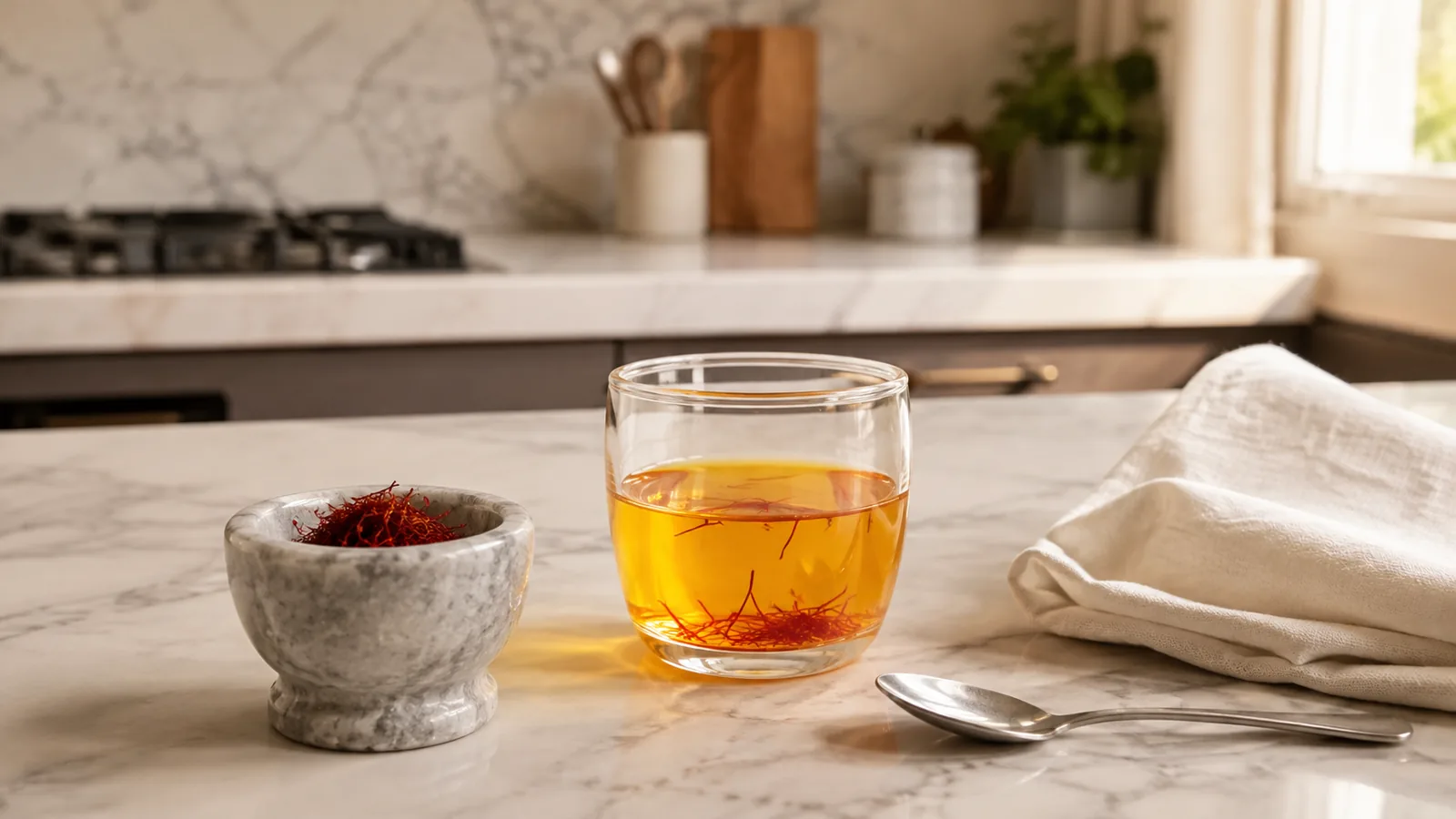
The liquid should be a clear golden yellow to orange, and its aroma should be easy to notice when you lift the cover. Dark red water is not the goal. Natural saffron releases colour progressively; the final shade depends on thread strength, quantity, water volume and steeping time.
Taste a drop. A concentrated infusion can be gently bitter and floral, but it should not taste burnt. If the aroma is weak, steep it longer before adding more threads. If the liquid is pale because too much water was used, adding the entire diluted batch may upset the texture of rice or a sauce.
When to add the infusion to food
For rice, use part of the brewed saffron to colour a small portion of cooked rice, then fold or arrange it over the white grains. The method in our simple saffron rice recipe shows where the infusion fits.
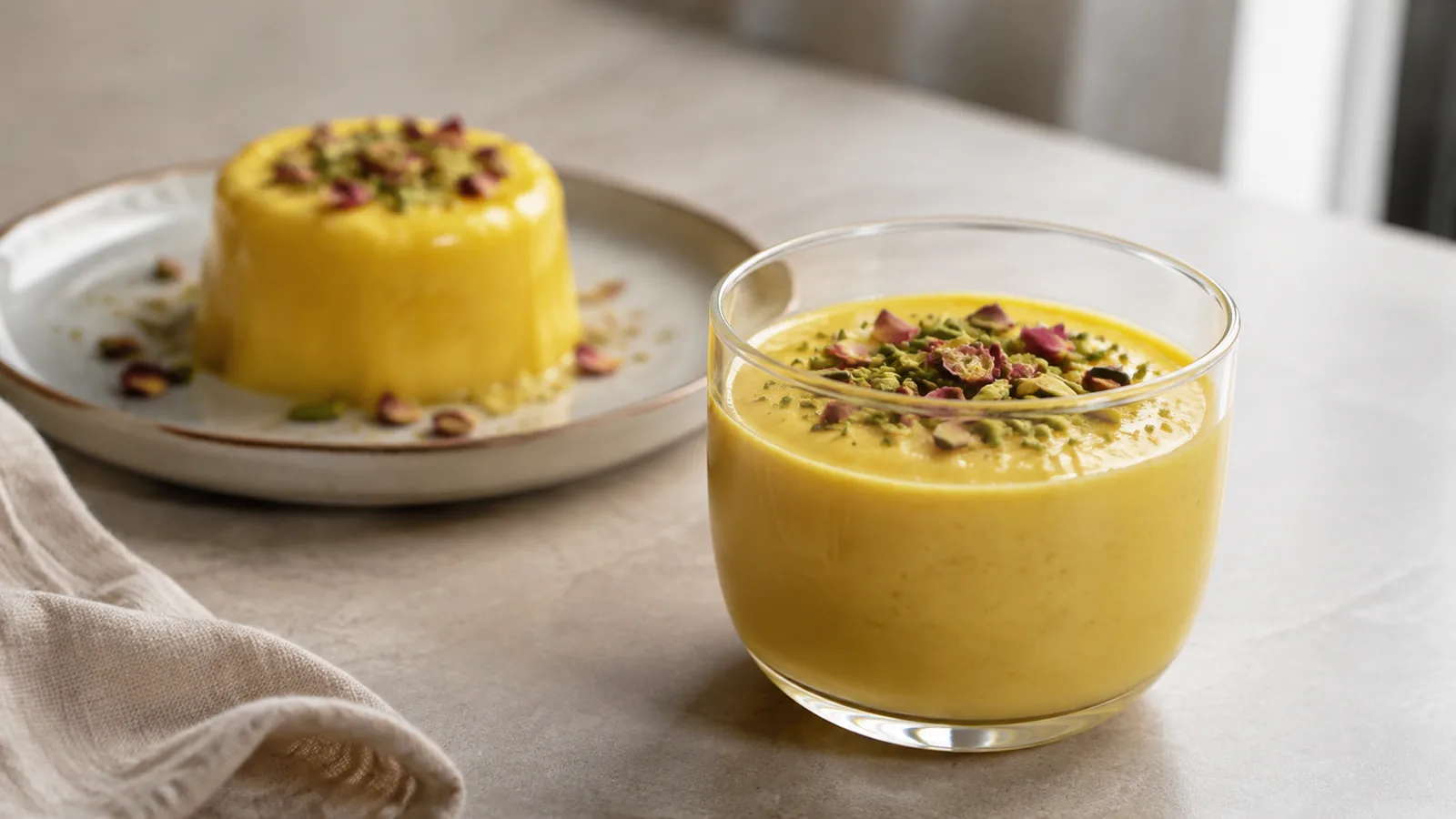
In a stew or sauce, add the infusion late enough that its aroma is not cooked away for hours, but early enough to spread through the dish. In milk, syrup or tea, account for the water already in the infusion so the final drink does not become thin.
Common brewing mistakes
Using too much water
Saffron is expensive, but making the infusion extremely dilute does not stretch its flavour. Use a small measured volume, then dilute the finished dish if needed.
Boiling the infusion for a long time
More heat is not always more extraction. Once the water has taken on colour and aroma, prolonged boiling offers little kitchen advantage and makes the result harder to control.
Judging only by colour
Colour is one part of saffron quality. Aroma and taste matter too. Turmeric or artificial colouring can make liquid yellow without producing a genuine saffron infusion.
Leaving the cup uncovered
A cover keeps dust out, slows cooling and holds aromatic vapour near the liquid. A saucer is sufficient; special brewing equipment is optional.
Using and storing the finished infusion
Freshly brewed saffron is at its most useful when it goes straight into the recipe. If you prepare it ahead, cool it, cover it and refrigerate it promptly. Make only the amount you need for the next day rather than keeping a jar for weeks.
For longer storage, freeze measured portions and thaw only what the dish requires. Keep dry saffron threads in an airtight container away from light, heat and moisture, and crush them just before the next infusion.