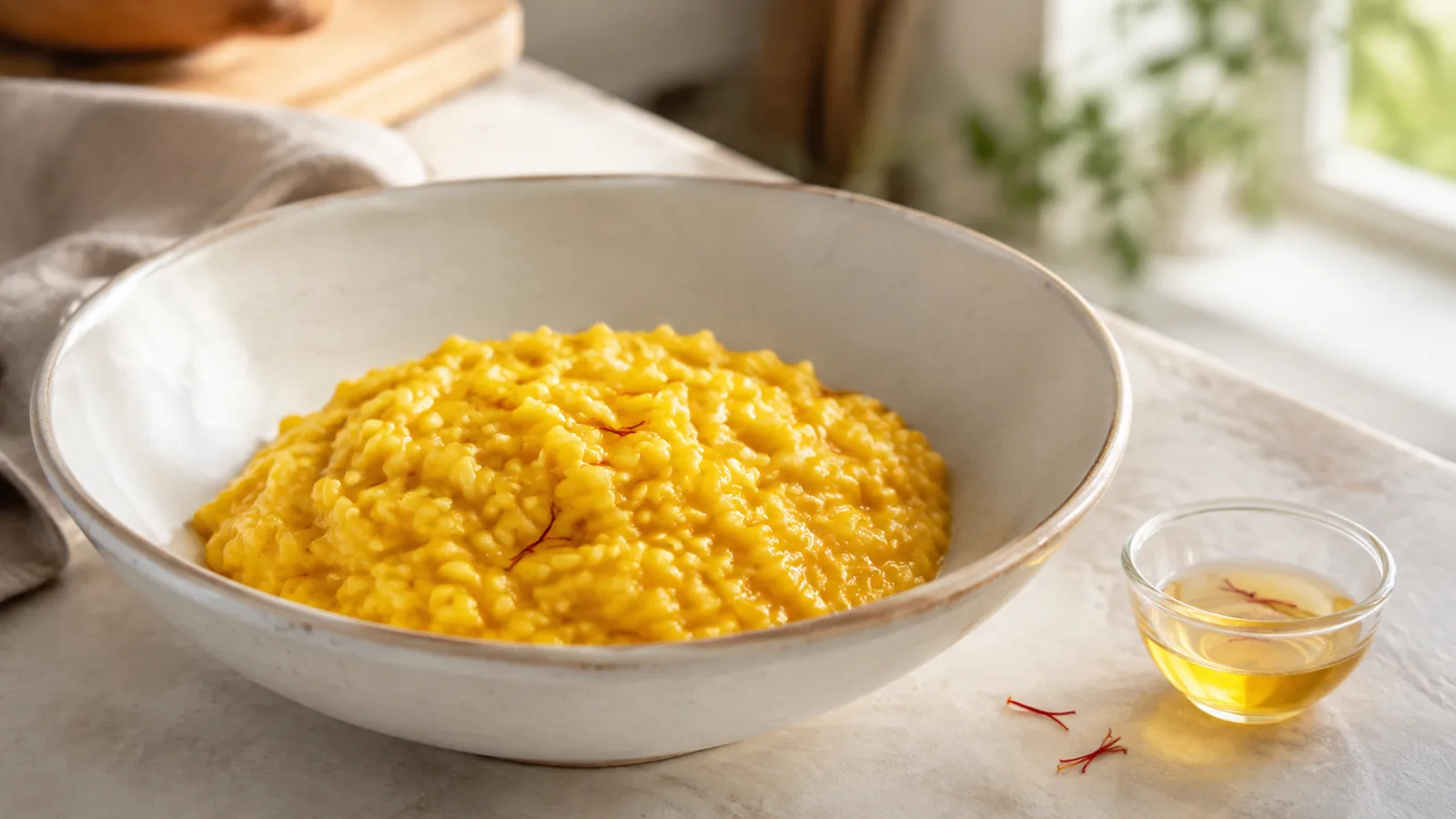
This simple Saffron Chicken Recipe is a one-pot braise built around deeply softened onions, garlic and a measured saffron infusion. It has no tomato or heavy spice blend, so the chicken stays savoury while the saffron remains easy to smell and taste.
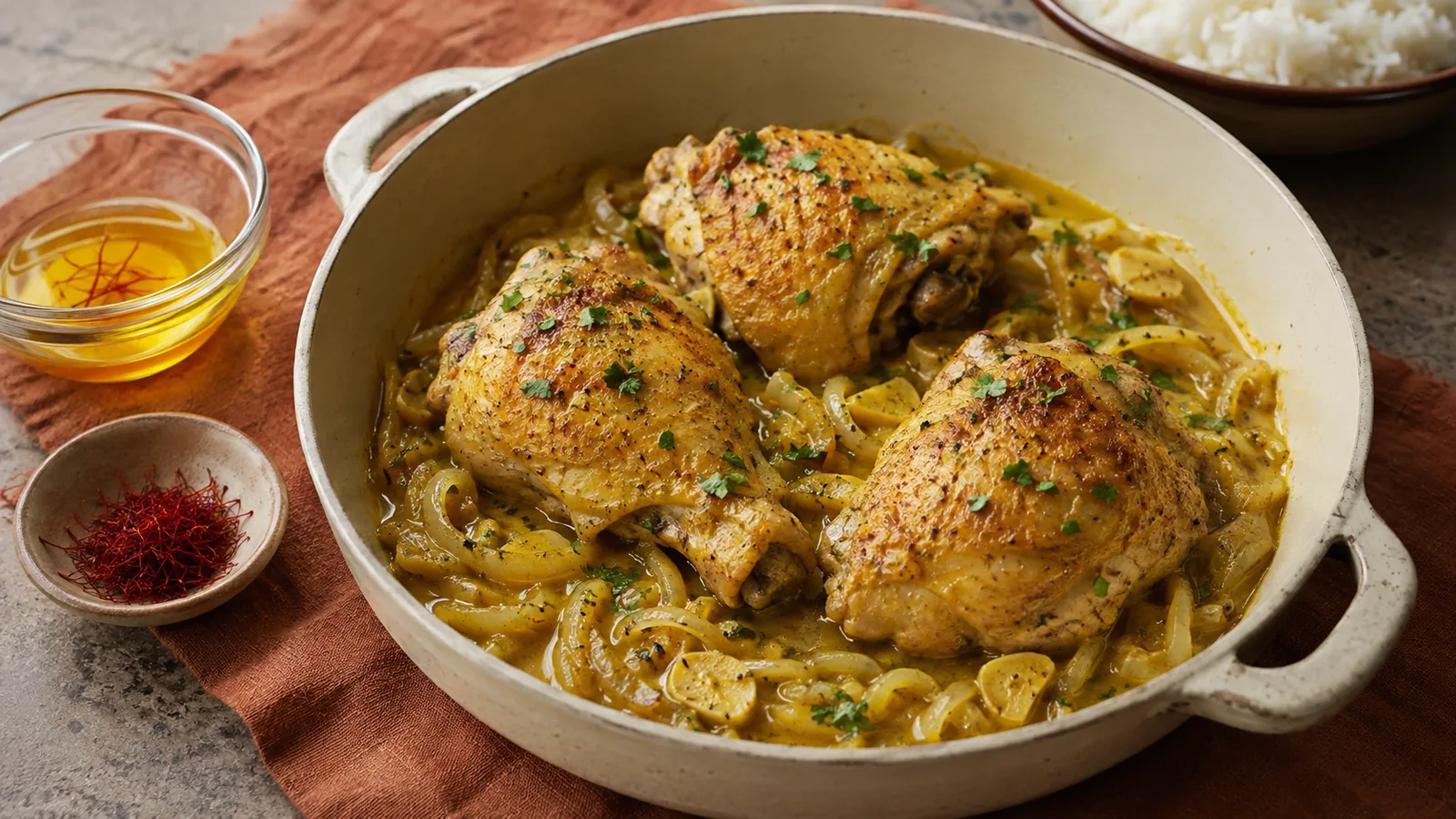
What is saffron chicken?
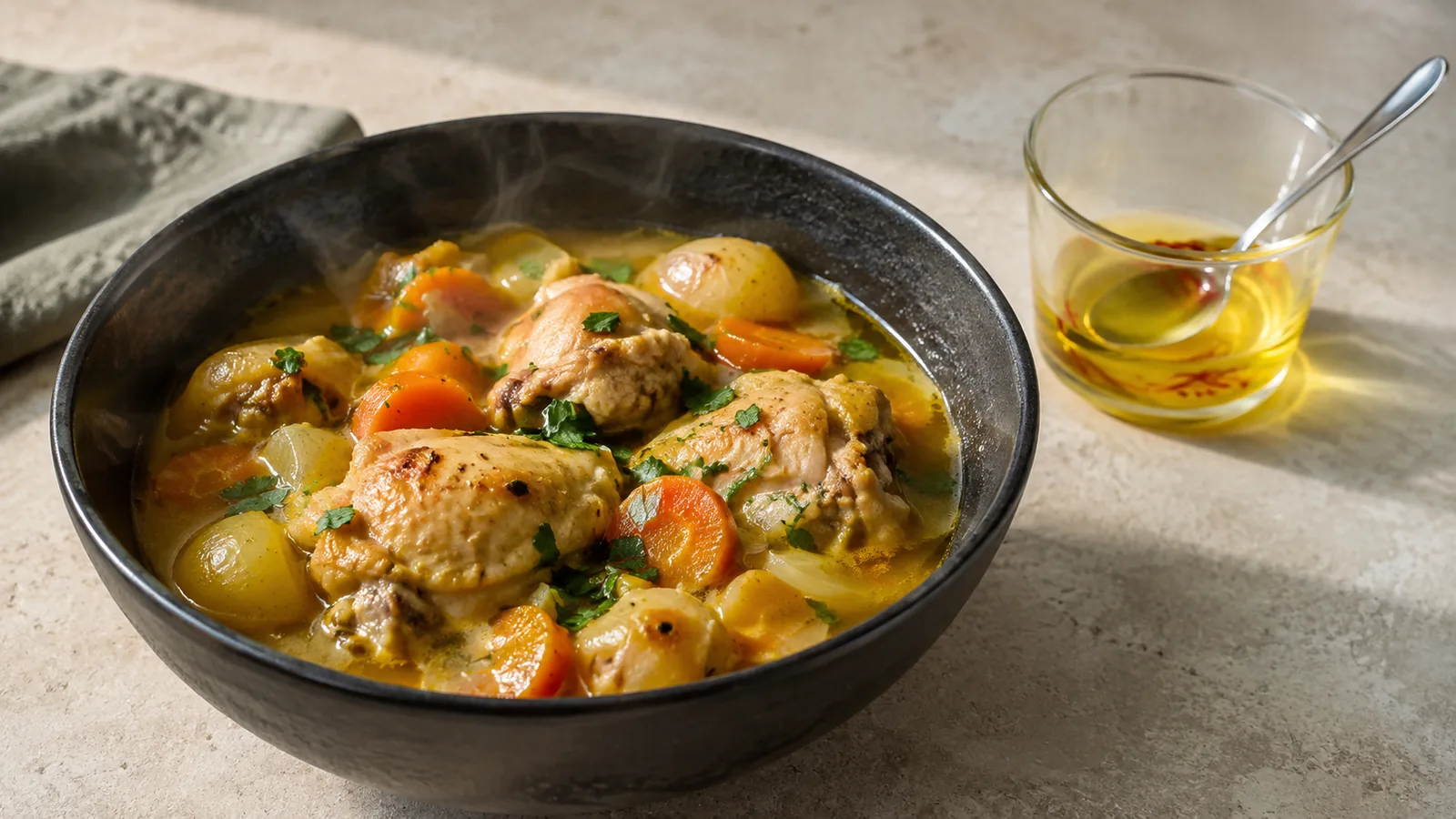
Saffron chicken is not one fixed recipe. The name can describe grilled pieces, oven-baked chicken or a saucy braise. This version cooks bone-in pieces slowly over onions until tender, then reduces the cooking juices into a light golden sauce. It is a practical Persian saffron chicken recipe for serving with rice, not a claim that every household makes the dish the same way.
Ingredients
This quantity serves three to four people.
- 3 bone-in chicken pieces, about 900 g (2 lb) in total
- 2 large onions, thinly sliced
- 5 garlic cloves, thinly sliced
- 2 tablespoons neutral vegetable oil
- 25–30 saffron threads
- ¼ cup (60 ml) hot water for the saffron
- ½ cup (120 ml) hot water or unsalted chicken stock, plus more if needed
- 1 teaspoon fine salt, divided
- ½ teaspoon black pepper
- Optional: ¼ teaspoon ground turmeric for a warmer savoury base
- Chopped parsley or coriander leaves for serving
Choose the chicken pieces
Bone-in thighs and drumsticks remain moist during a gentle braise and finish at roughly similar times. A split breast can be used, but check it earlier because its shape and lower fat content make it easier to overcook. If mixing cuts, remove each piece as it reaches a safe internal temperature.
Bloom the saffron
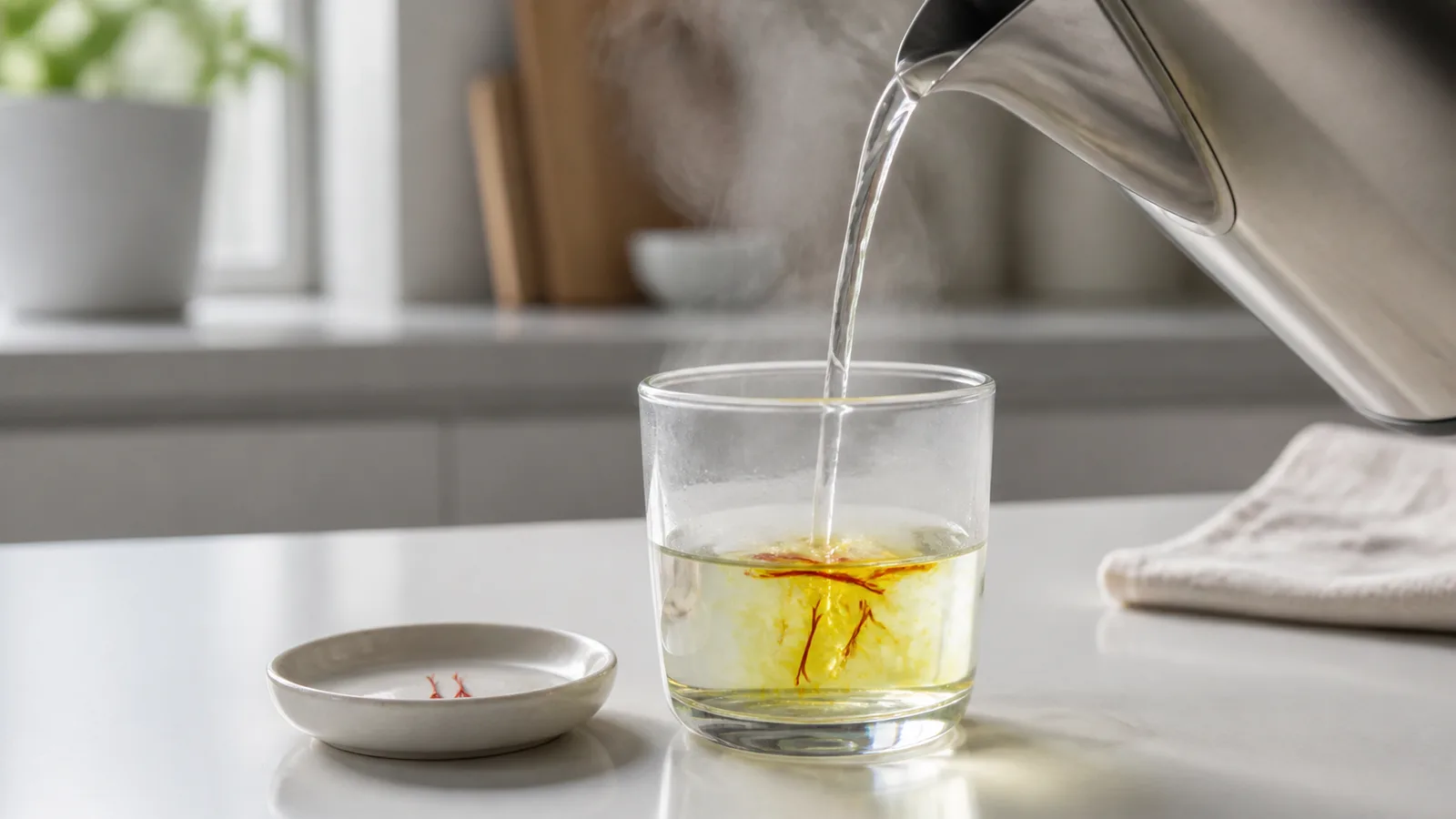
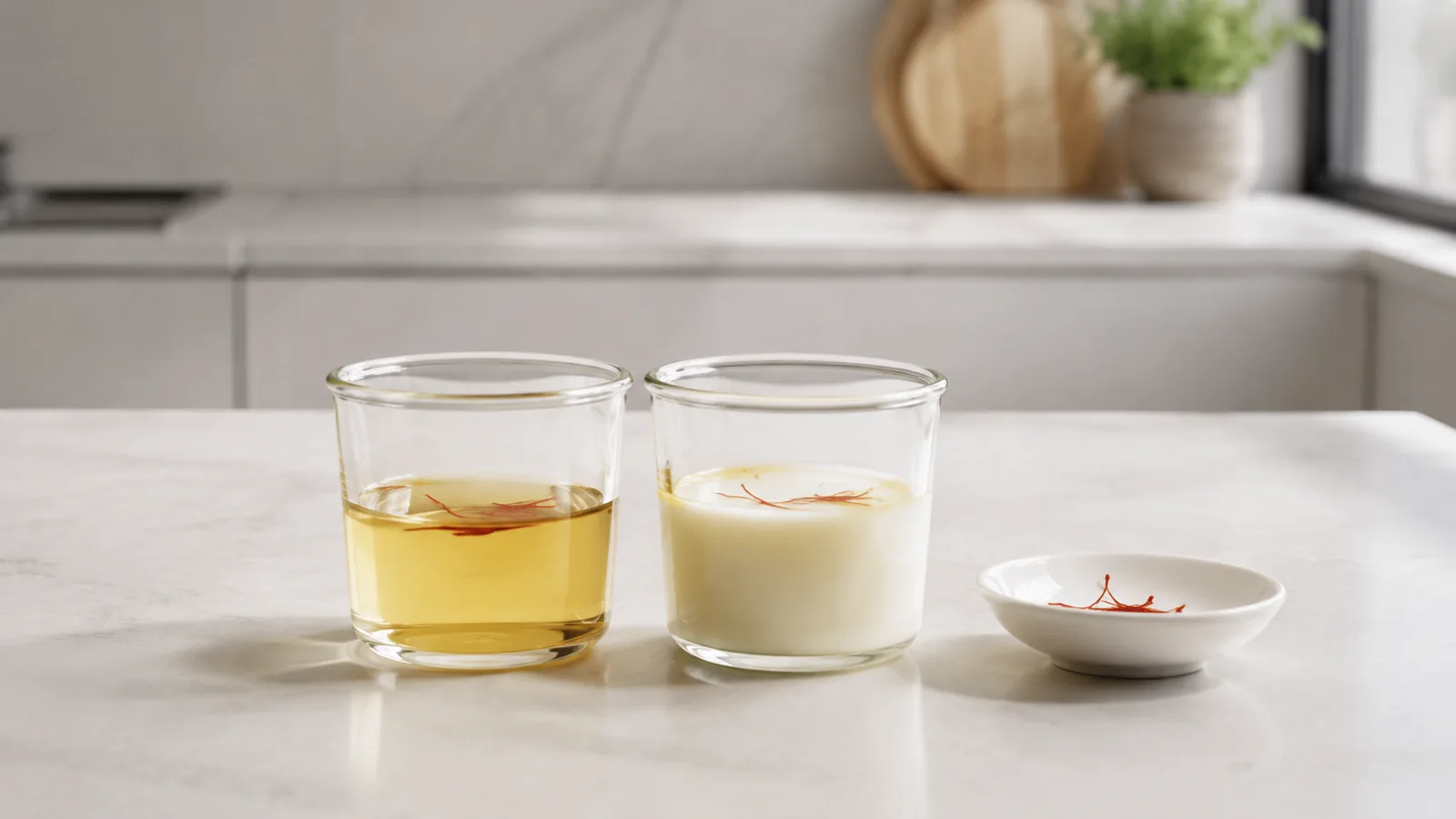
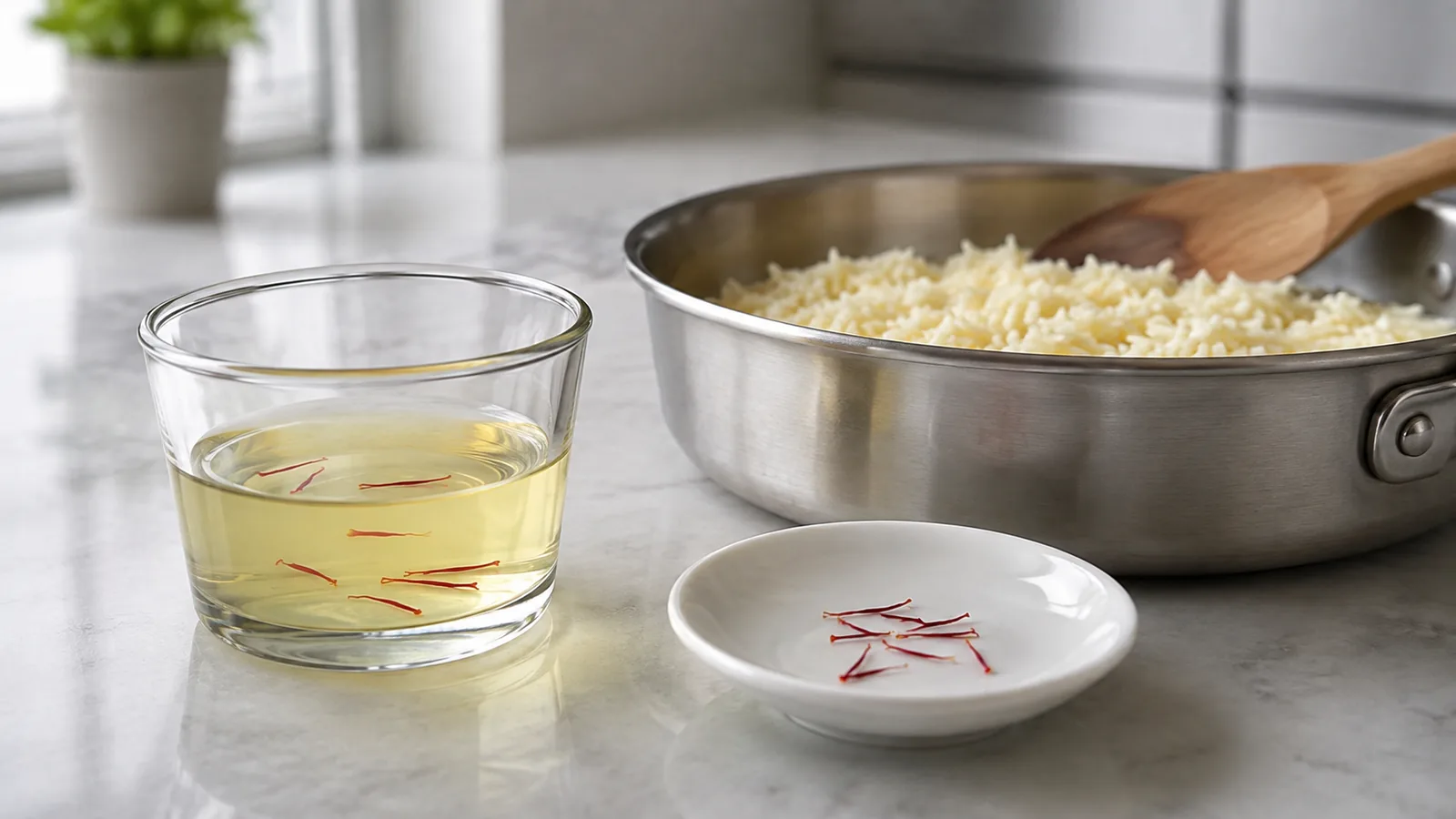
Lightly crush the saffron threads, cover them with the ¼ cup hot water and leave them for 10 to 15 minutes. Use both the liquid and threads. Do not scatter dry saffron on chicken before cooking; an infusion distributes the colour and aroma more evenly.
How to make saffron chicken
Step 1: Brown the chicken
Pat the chicken dry and season it with half the salt, the pepper and optional turmeric. Heat 1 tablespoon oil in a wide, heavy lidded pan over medium-high heat. Brown the pieces for 3 to 4 minutes on each side, then move them to a clean plate. They will not be cooked through yet.
Browning adds savoury depth that a covered pot cannot create. Leave space between the pieces; if the pan is small, work in batches rather than steaming crowded chicken.
Step 2: Cook the onions and garlic
Lower the heat to medium and add the remaining tablespoon oil. Add the onions with a small pinch of the remaining salt. Cook for 12 to 15 minutes, stirring often, until soft and golden at the edges.
Add the sliced garlic and cook for 1 minute. Garlic becomes bitter when deeply browned, so it goes in after the onions rather than at the beginning. Scrape up the browned chicken residue with a spoonful of the hot water or stock.
Step 3: Braise with saffron
Return the chicken and any collected juices to the pan, placing the pieces over the onions. Pour in the saffron infusion and the ½ cup hot water or stock. Bring the liquid to a gentle simmer, cover and lower the heat.
Cook for 30 minutes, then turn the pieces once. Cover again and continue for 10 to 20 minutes, checking the liquid occasionally; most pieces will need about 45 minutes of braising in total. Add a small splash of hot water if the onions begin to catch before the chicken is ready.
Step 4: Check, reduce and serve
Measure the thickest part of each piece without touching bone. The U.S. government’s safe minimum temperature chart lists poultry at 165°F (74°C). Do not rely on saffron colour or clear-looking juices as a substitute for a thermometer.
Move cooked pieces to a clean warm platter. Simmer the onion sauce uncovered for 3 to 6 minutes if it is watery, then taste and add the remaining salt only as needed. Spoon the sauce over the chicken, add chopped herbs and serve hot.
How much saffron should go on chicken?
For about 900 g chicken, 25 to 30 good threads make a sensible starting point. Thread size, freshness and strength vary, so “saffron to taste” is not a reproducible instruction. Record how much you use and adjust the next batch rather than repeatedly adding dry threads to a finished sauce.
A stronger yellow colour does not necessarily mean a better dish. Onion, oil and the optional turmeric also influence colour. Judge the saffron by its clean floral-earthy aroma and how it sits beside the savoury chicken.
Can I make saffron baked chicken?
Yes. Brown the chicken and prepare the onions as written in an oven-safe pan. Add the saffron infusion and stock, cover, and bake at 180°C (350°F) until the thickest piece reaches 74°C (165°F). Uncover for the final minutes only if the sauce needs reduction.
Oven timing depends heavily on the cut and starting temperature, so use the thermometer rather than treating one minute count as universal. A shallow uncovered tray will also lose more liquid than this covered braise.
What to serve with saffron chicken
Steamed basmati rice is the natural partner because it catches the onion sauce. For a complete side, use our simple saffron rice recipe, but keep the rice infusion modest so the same spice does not become tiring across the plate.
A cucumber-and-herb salad, plain yoghurt or simply cooked green beans adds freshness. For a dinner party, keep the chicken covered over the lowest possible heat only briefly; an extra hour of simmering will dry the meat and flatten the saffron aroma.
Common problems
The sauce is pale or weak
Check the saffron’s aroma and infusion time before adding more. Old or poorly stored threads may release colour without much fragrance. Reduce a watery sauce first; concentration can make the existing seasoning clearer.
The onions are catching
The pan may be too hot or too wide for the amount of liquid. Lower the heat and add hot water one tablespoon at a time. A hard boil is unnecessary and can tighten the meat.
The chicken is cooked but the sauce is thin
Remove the chicken and reduce the liquid uncovered. This protects the meat while water evaporates. Return the pieces for one minute after the sauce reaches the consistency you want.
The garlic tastes bitter
Garlic probably browned too far before the liquid was added. Cook it briefly after the onions next time. Saffron cannot mask burnt garlic, and adding extra spice only makes the final balance harsher.
Storage and reheating
Cool leftovers promptly and refrigerate them in a covered shallow container. Use within 3 to 4 days. Reheat chicken with its onion sauce until it reaches 74°C (165°F), adding a spoonful of water if the sauce has tightened in the refrigerator.
If you prefer a tomato-based sauce with carrots and pepper, compare this onion-garlic method with our other saffron and chicken recipe. Both are chicken recipes with saffron, but their different sauces give a cook a genuine choice.