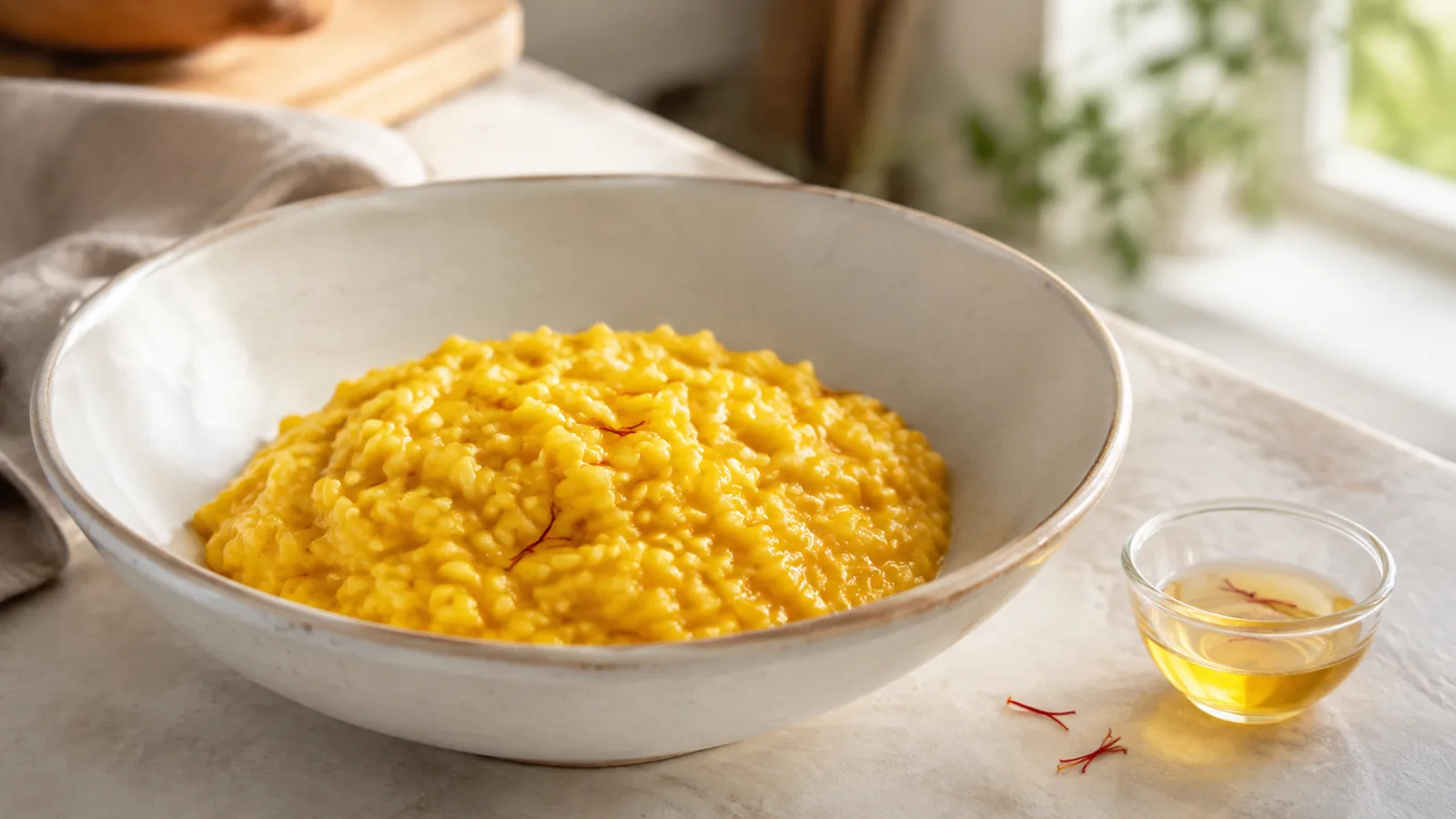
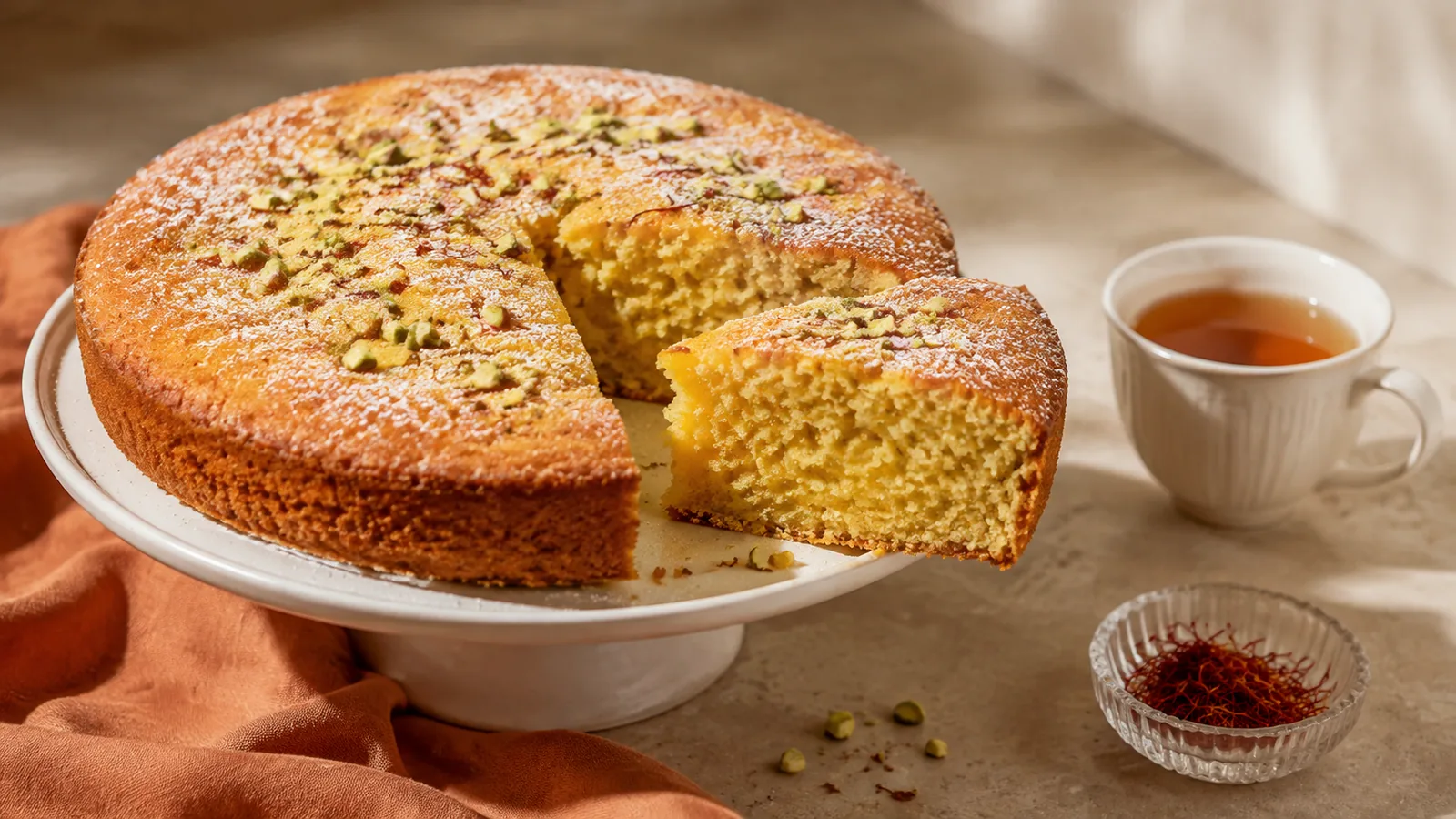
This saffron sponge cake has a light, springy crumb and a clear saffron-cardamom aroma. Separating the eggs gives it the lift of a classic sponge, while a modest amount of milk and oil keeps an afternoon slice tender enough to serve without icing.
Saffron sponge cake at a glance
- Makes: one 20 cm (8-inch) round cake, about 10 slices
- Preparation: 25 minutes
- Baking: 35 to 42 minutes
- Oven: 170°C / 340°F conventional, or 160°C / 320°F fan
- Pan: deep 20 cm round pan with a removable base, or a similar uncoated chiffon pan
The method is closer to a small saffron chiffon cake than to a butter cake: whipped egg whites supply much of the rise. Baking powder provides support, but it cannot replace a stable meringue or careful folding.
Ingredients
- 5 large eggs, at room temperature, separated
- 150 g (¾ cup) caster or superfine sugar, divided
- 150 g (1¼ cups) cake flour
- 1½ teaspoons baking powder
- ¼ teaspoon fine salt
- 80 ml (⅓ cup) whole milk, at room temperature
- 60 ml (¼ cup) neutral vegetable oil
- 25–30 saffron threads
- 2 tablespoons hot water
- ½ teaspoon ground cardamom
- 1 teaspoon vanilla extract
- ¼ teaspoon cream of tartar or ½ teaspoon lemon juice, optional
- Optional for serving: icing sugar, pistachios or fresh berries
Why these proportions work
Five eggs provide enough foam for this 20 cm cake. Keeping the flour and sugar close to the weight of the eggs gives that foam support without burying it in dry ingredients; the measured milk and oil then make the crumb tender without turning the batter loose.
Cake flour makes folding easier because it has less protein than many plain flours, but it is not the only route to a good cake. If you cannot buy it, measure 125 g plain flour and 25 g cornstarch, whisk thoroughly, then sift. Accurate weighing matters more than the label on the bag.
How to make saffron sponge cake
Step 1: Prepare the saffron, pan and oven
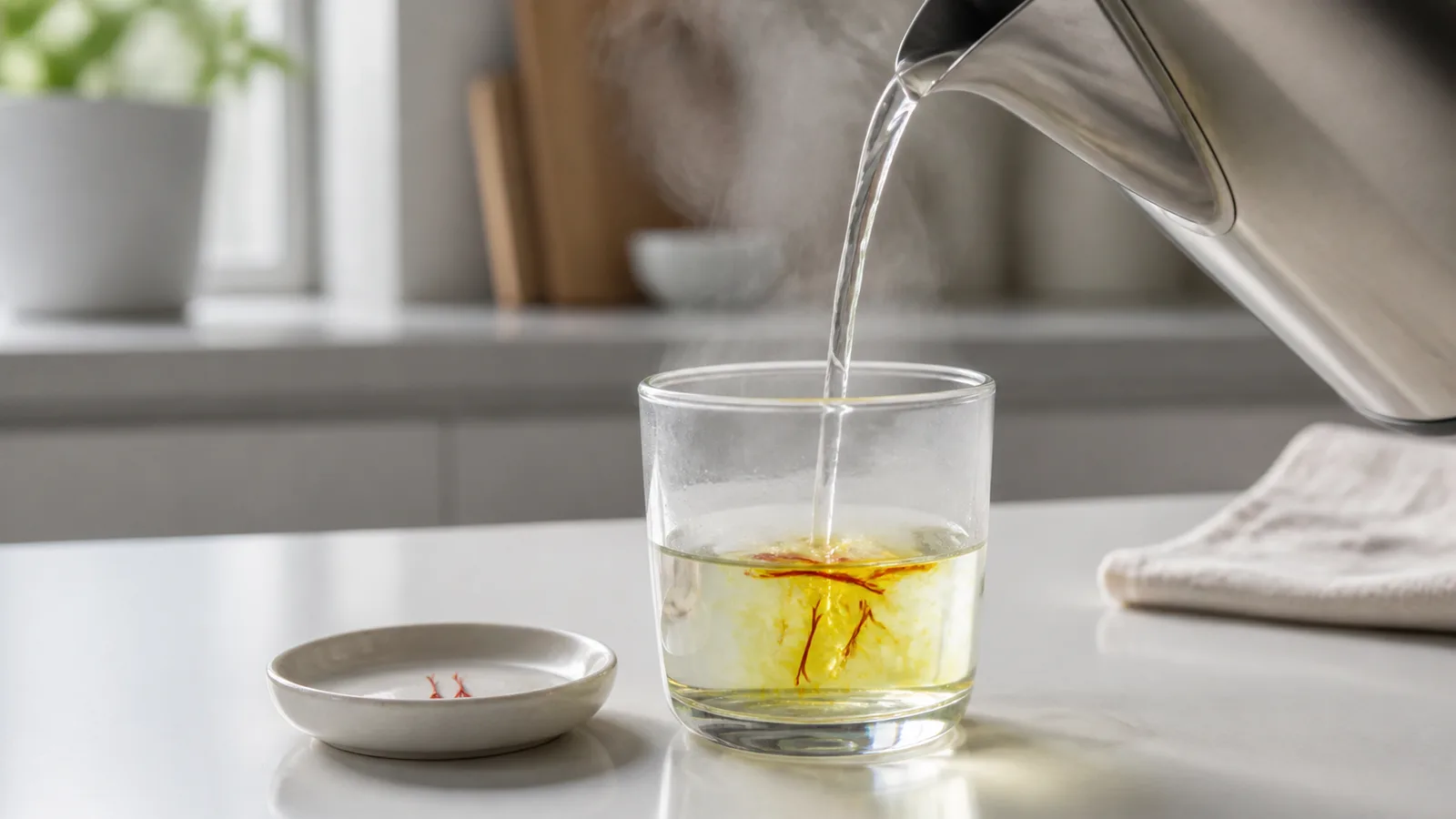
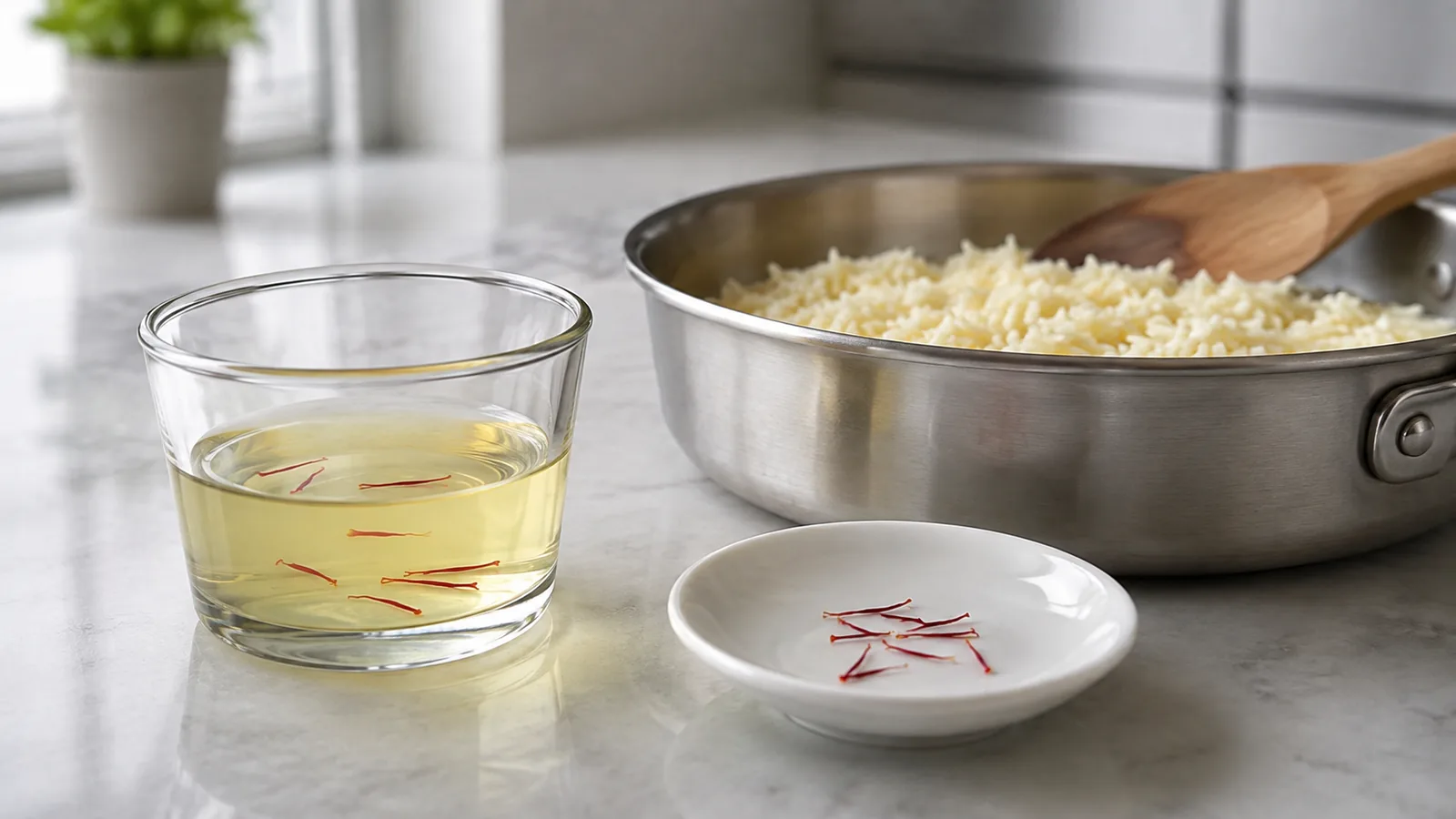
Lightly crush the saffron and cover it with the hot water. Leave it for 10 to 15 minutes. Heat the oven to the temperature above and place a rack in the lower-middle position.
Line only the base of the pan with baking paper. Leave the sides clean and ungreased so the batter can climb them. If your pan is prone to leaking, wrap its exterior base with foil; do not put foil inside the batter.
Step 2: Sift the dry ingredients
Sift the cake flour, baking powder, salt and cardamom together twice. Sifting removes compacted pockets and distributes the small amount of baking powder evenly. Set the bowl close to your mixing area so the meringue does not wait.
Step 3: Mix the yolk batter
Whisk the five egg yolks with 50 g (¼ cup) of the sugar until slightly paler. Add the milk, vegetable oil, vanilla and the entire saffron infusion. Whisk until smooth.
Add the sifted dry ingredients and whisk gently only until no dry flour remains. The batter should fall from the whisk in a thick ribbon. Overmixing here develops gluten and works against the light texture.
Step 4: Whip the egg whites
Use a completely clean, dry bowl and beaters. Whip the whites on medium speed until foamy, then add the optional cream of tartar or lemon juice. Add the remaining 100 g (½ cup) sugar gradually while beating.
Stop at glossy medium-stiff peaks: the tip should stand with a slight bend. Dry, clumpy whites are harder to fold and leave uneven pockets in the finished sponge. There is no need to refrigerate a finished meringue; fold it into the batter promptly.
Step 5: Fold without losing the air
Stir one quarter of the meringue into the yolk batter to lighten it. Add half of the remaining whites and fold with a broad spatula, cutting through the centre, sweeping around the base and turning the batter over. Repeat with the final whites.
Rotate the bowl as you work and stop when no large white streaks remain. Do not use the electric mixer for this stage. A few tiny streaks are less damaging than repeated stirring that collapses the foam.
Step 6: Fill the pan
Pour the batter into the prepared pan from a low height and level the surface gently. Run a thin skewer through the batter once in a slow spiral to break only very large air pockets. Do not strike the pan repeatedly against the counter; the air you whipped into the whites is the cake’s main structure.
Step 7: Bake and cool
Bake for 35 to 42 minutes without opening the door during the first 30 minutes. The top should spring back under a light fingertip, and a skewer inserted near the centre should emerge clean or with a few dry crumbs.
Cool the cake in its pan for 10 minutes, then run a thin knife around the edge and release it onto a rack. Remove the base paper and let it cool completely before slicing. Cutting while hot compresses the crumb and makes a well-baked centre appear wet.
How to tell when the sponge is ready
Time is a guide because metal colour, pan depth and oven calibration differ. Use three signals together:
- The cake has risen evenly and begun to pull very slightly from the pan.
- The centre springs back instead of retaining a fingertip dent.
- A skewer has no liquid batter attached.
If the top colours too quickly after it has set, lay a loose sheet of foil over it for the remaining minutes. Do not cover it early, when opening the door can collapse the still-fluid centre.
Common sponge-cake problems
The cake rose and then sank
The centre may have been underbaked, the whites may have been whipped dry, or too much air was lost during folding. Check oven temperature with a separate thermometer if the problem repeats.
The crumb is dense at the bottom
Liquid can settle when the yolk batter is too thin, folding is incomplete or the filled pan waits before baking. Measure accurately, scrape from the base during each fold and put the cake in the hot oven promptly.
The saffron flavour is weak
Use fresh, aromatic threads and give them the full infusion time. Do not simply keep adding more ground spice for colour. Old saffron may look red but release little aroma, while too much can make the cake bitter.
The cake tastes strongly of baking powder
Use level measuring spoons and the stated 1½ teaspoons. The meringue, not a large chemical-leavener dose, should create the sponge structure.
Serving and storing saffron sponge cake
Serve the cake plain with tea, or dust it lightly with icing sugar once cool. Pistachios suit the saffron and cardamom, but press them onto a thin glaze or a spoonful of softly whipped cream rather than scattering them where they fall off each slice.
Keep the unfilled cake covered at cool room temperature for a day, or refrigerate it when the room is warm. Bring chilled slices back toward room temperature before serving. For longer storage, wrap individual slices well and freeze them, then thaw while still covered.
If you would like to compare this separated-egg method with other batters, see our guide to Persian saffron cakes and desserts. For the infusion itself, follow the best way to brew saffron and keep the added liquid within the recipe’s measurement.