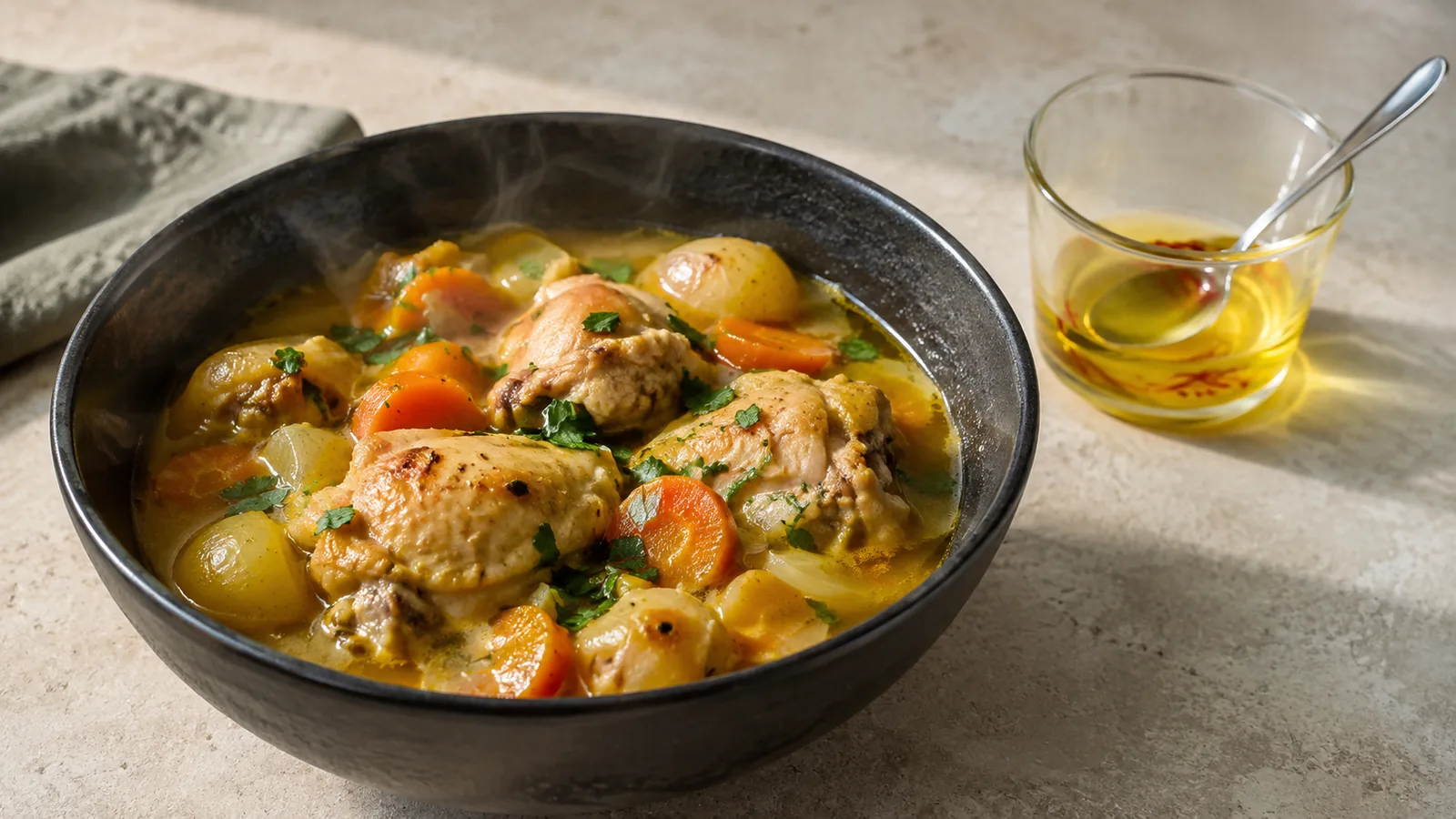
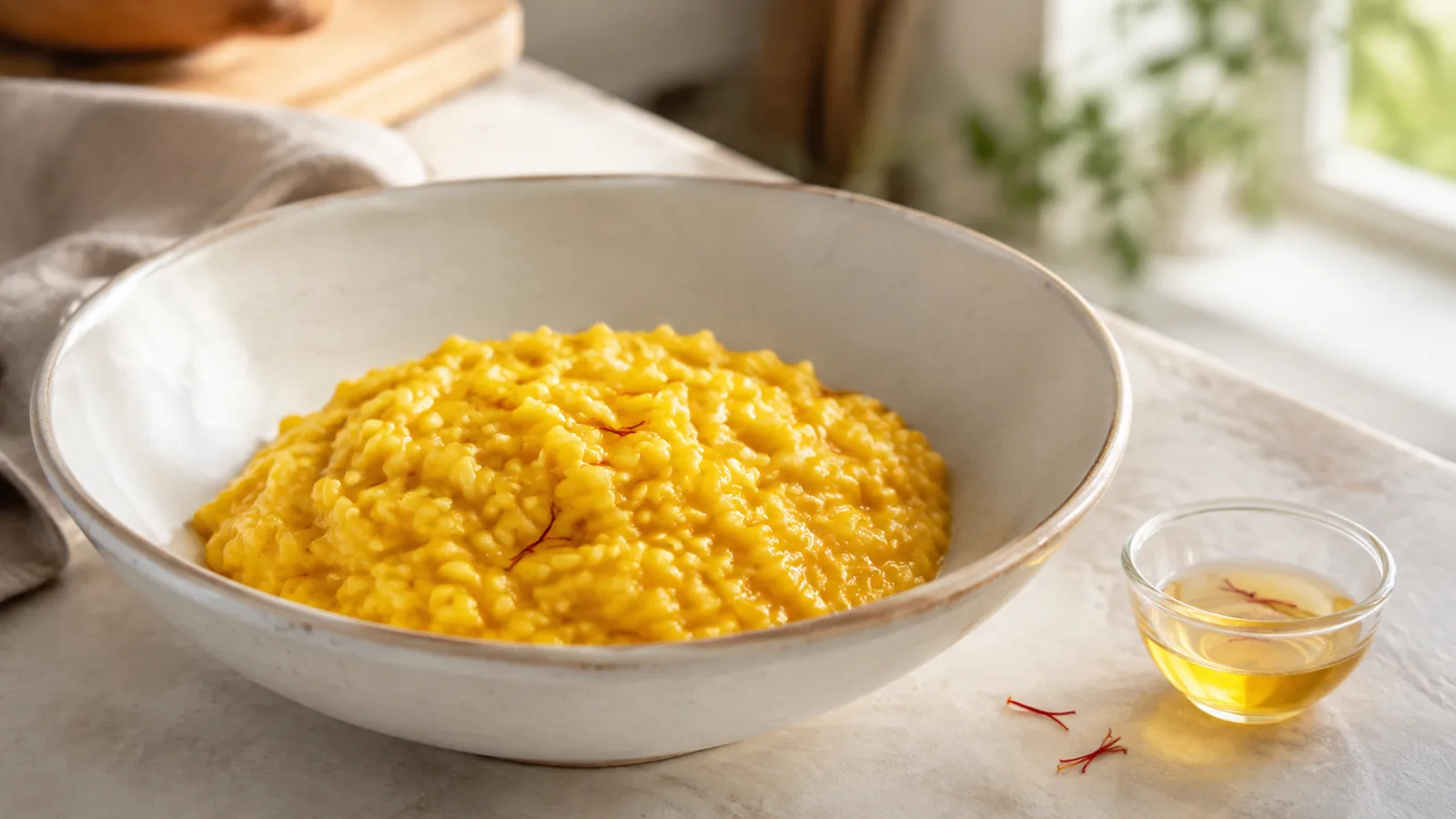
Saffron sweets can be soft, crystalline or frozen, and each texture asks for a different kind of patience. This guide shows how to make three distinct treats—Persian Muscati, saffron Nabat and saffron ice cream—without hiding the important temperatures, timings or setting stages.
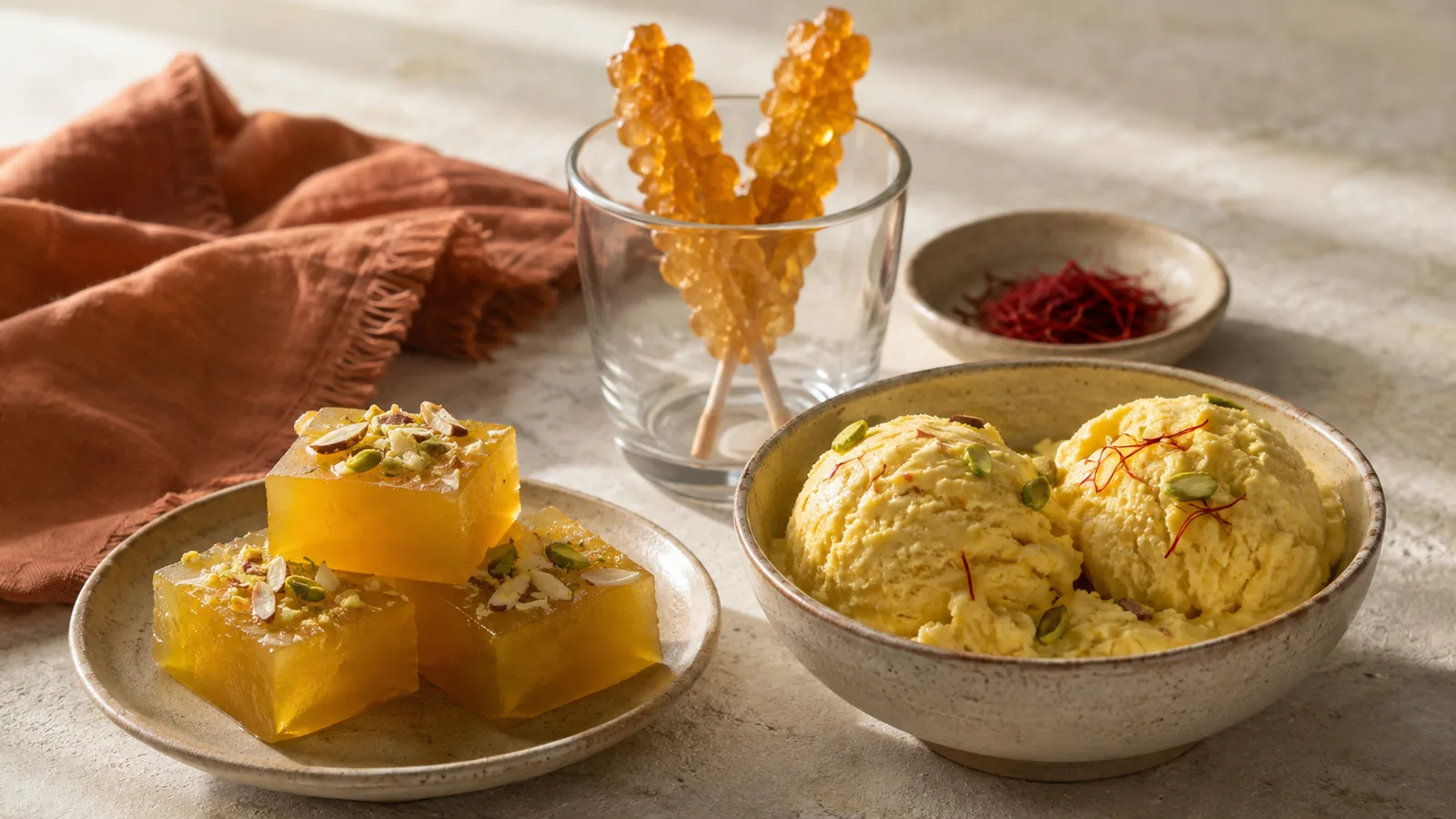
Three saffron dessert recipes, three techniques
A dessert with saffron is easiest to balance when the spice has a clear role. In these desserts with saffron, Muscati thickens slowly on the stove, Nabat grows as concentrated syrup rests undisturbed, and ice cream depends on rapid chilling and small ice crystals. Read the whole method for the sweet you choose before heating anything; both hot sugar and thick starch mixtures need your full attention.
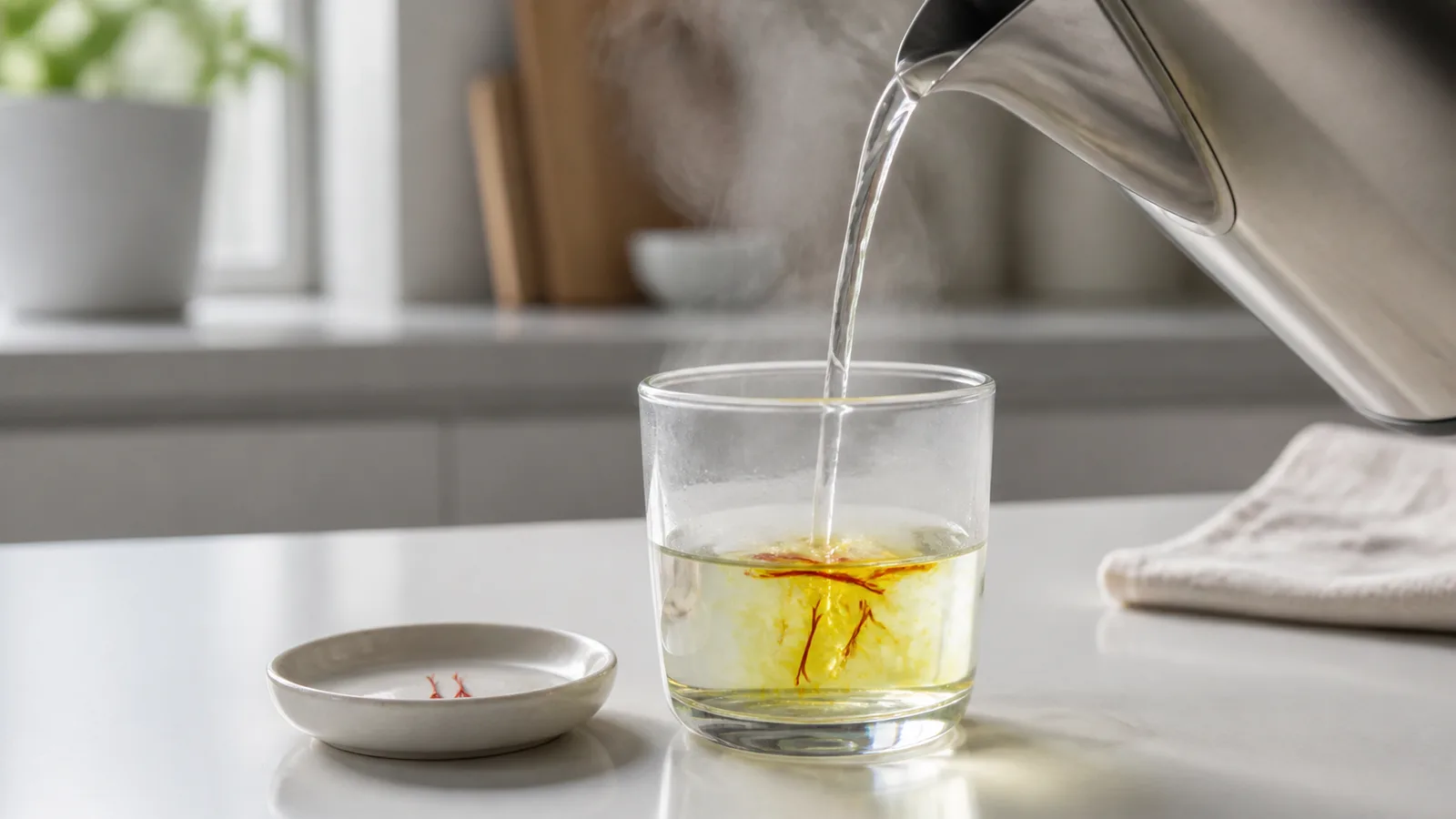
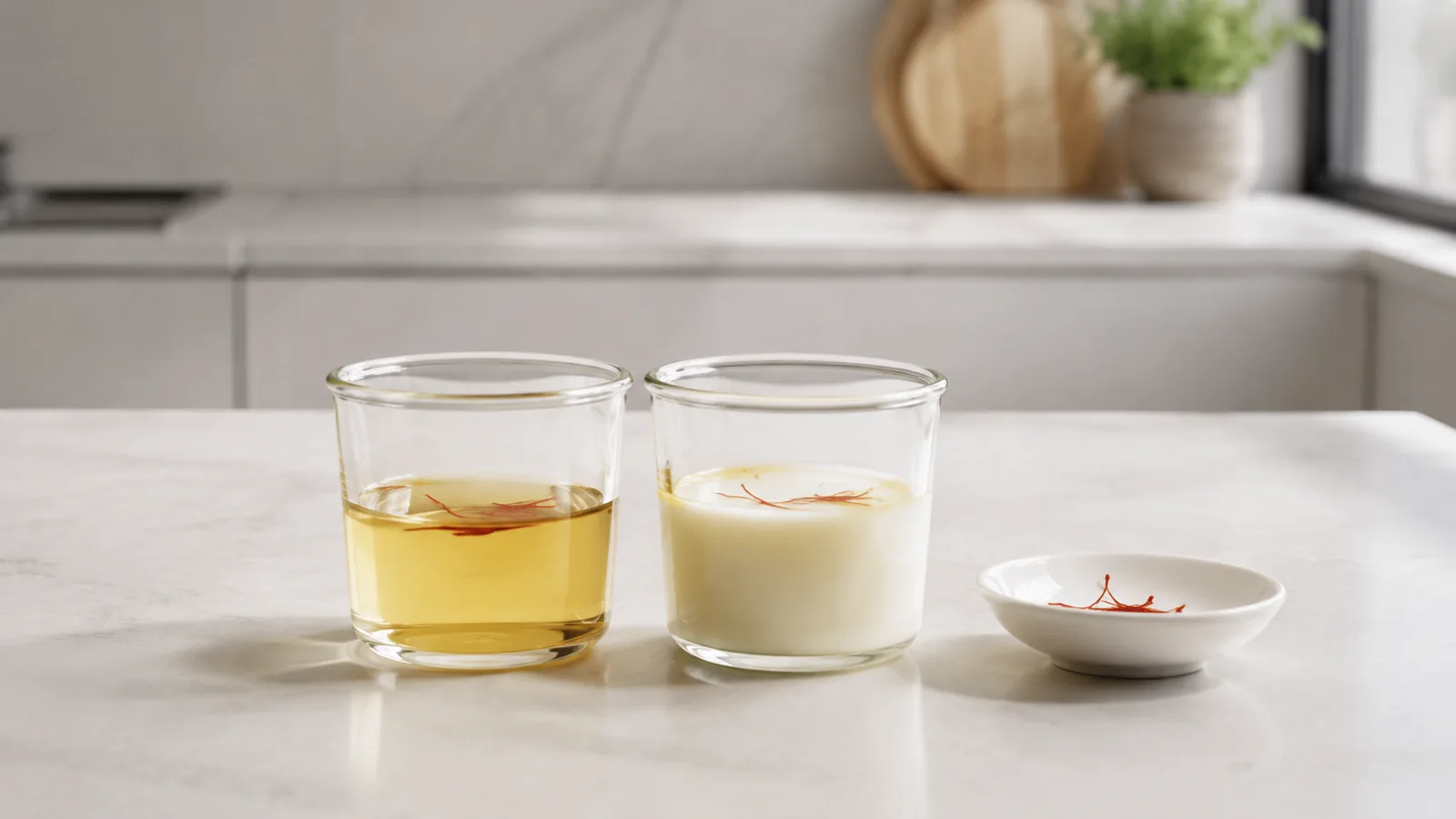
Lightly crush saffron threads before infusing them in a small amount of hot water. Use the infusion and the threads together. The goal is a clear floral aroma and a warm gold colour, not the darkest yellow you can force into the recipe.
Saffron Muscati (Masghati)
Muscati, also transliterated as Masghati, is a Persian starch sweet with a glossy, softly chewy set. It is sometimes described as a type of halva, but its texture is quite different from toasted-flour halva. The starch needs time to cook fully; it does not need the four hours suggested by the old draft.
Ingredients
- 1 cup (120 g) cornstarch
- 3 cups (720 ml) cool water, divided
- 1½ cups (300 g) sugar
- 4 tablespoons (56 g) unsalted butter or ¼ cup neutral vegetable oil
- 30 saffron threads
- 2 tablespoons hot water for the saffron
- ⅓ cup (80 ml) rosewater
- ½ teaspoon ground cardamom, optional
- ⅓ cup chopped pistachios or almonds, plus more for the top
How to make saffron Muscati
- Prepare the pan and saffron. Lightly oil a 20 cm (8-inch) square dish or line it with baking paper. Infuse the crushed saffron in the 2 tablespoons hot water for 10 to 15 minutes.
- Make a smooth starch slurry. Whisk the cornstarch with 1 cup of the cool water. Leave it for 10 minutes, whisk again, then pass it through a fine sieve into a heavy saucepan.
- Dissolve the sugar. Add the remaining 2 cups water and the sugar. Cook over medium-low heat, stirring continuously, until the mixture changes from cloudy to translucent and begins to thicken.
- Cook out the starch. Lower the heat. Stir for 25 to 35 minutes, scraping the base and corners. It should become glossy and thick enough that the spoon leaves a path for a second or two.
- Add the flavourings. Work in the butter or oil a little at a time. Add the saffron infusion, rosewater, cardamom and nuts. Continue stirring for 8 to 12 minutes, until the mixture gathers softly around the spoon and no oily layer remains.
- Set and cut. Spread it in the prepared dish, smooth the top and add a light nut garnish. Cool to room temperature, cover and refrigerate for at least 3 hours. Cut with a lightly oiled knife.
If the sweet will not hold a cut after chilling, it was probably taken off the heat too early or measured with too much water. Serve a soft batch in small bowls rather than trying to correct it with dry starch after cooking.
Saffron rock candy (Nabat)
Nabat is crystallised sugar, often served on a stick with tea. This Nabat recipe is a small science project rather than a quick boiled sweet: the syrup must become highly concentrated, the stick needs seed crystals, and the jar must remain still for several days.
Ingredients and equipment
- 1 cup (240 ml) water
- 3 cups (600 g) white granulated sugar, plus 1 tablespoon for coating the sticks
- 10–15 saffron threads
- 2 or 3 wooden skewers or plain wooden candy sticks
- 2 or 3 clean, heat-safe glass jars
- Clips or pegs to suspend the sticks
How to make Nabat
- Seed the sticks. Wet the lower half of each stick, roll it in sugar and leave it to dry completely. These dry grains give the first crystals somewhere to form.
- Concentrate the syrup. Heat the water in a saucepan. Add the sugar a little at a time, stirring until each addition dissolves. Bring the clear syrup to a brief boil, then remove it from the heat. Keep children and loose sleeves away: concentrated sugar causes serious burns.
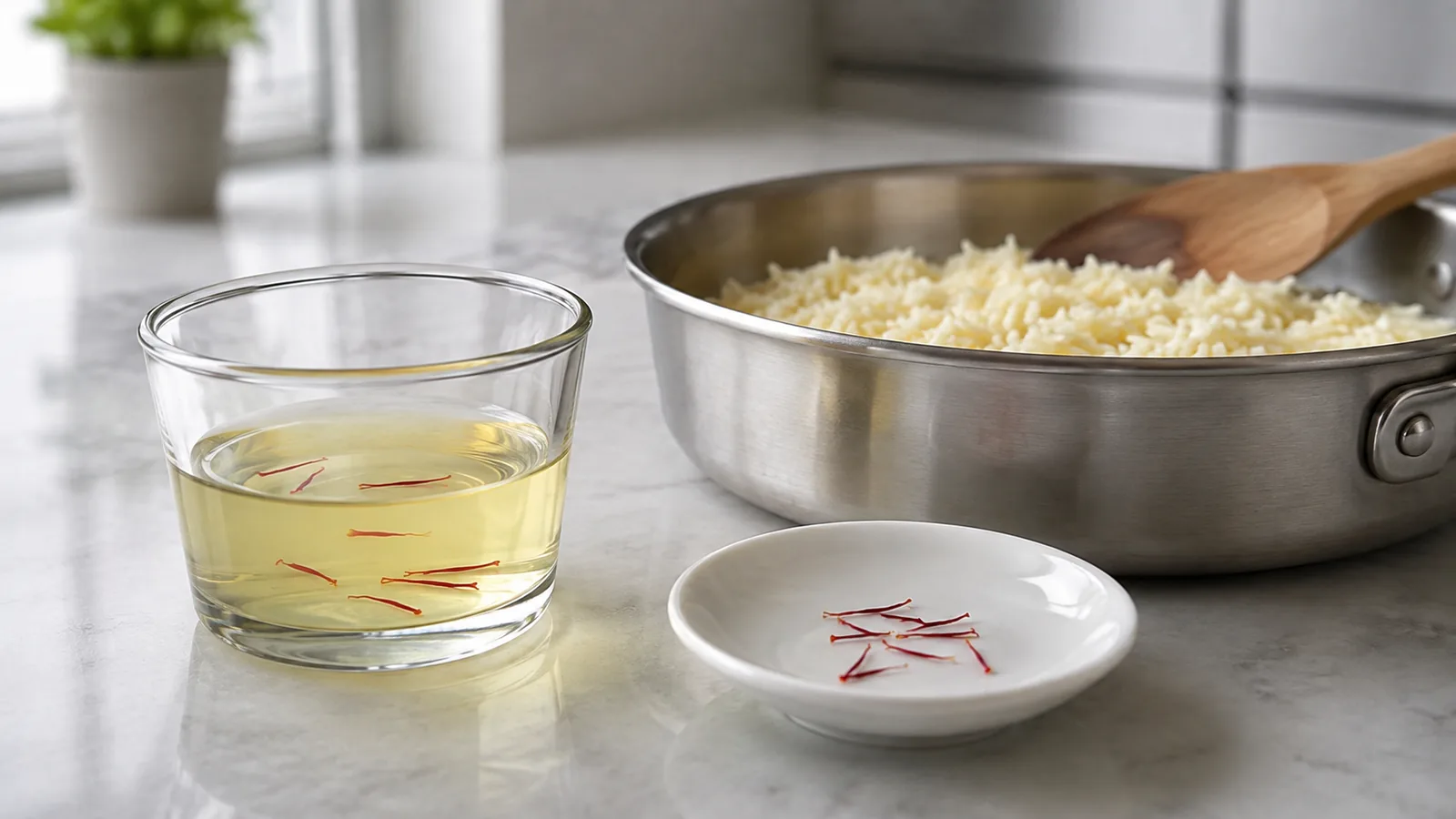
- Add saffron and cool briefly. Stir in the lightly crushed saffron. Let the syrup stand for about 10 minutes so it is still hot and fluid but no longer bubbling violently.
- Fill the jars. Pour carefully into the heat-safe jars. Suspend one seeded stick in each, keeping it away from the bottom and sides. Cover the opening loosely with clean paper or a coffee filter.
- Let the crystals grow. Put the jars somewhere stable and leave them undisturbed for 5 to 7 days. Crystal growth varies with room conditions; moving the jar or stirring the syrup disrupts it.
- Dry the Nabat. Lift out the sticks when the crystals are large enough, rest them over an empty glass to drip, then let them dry on baking paper.
Cloudy crystals or a solid mass across the jar can occur when stray sugar remains on the glass, the syrup cools too quickly or the jar is disturbed. Homemade Nabat may not have the uniform shape of commercial rock candy, but it should be dry, hard and securely attached to the stick before storage.
Persian-style saffron ice cream
This egg-free recipe uses milk, cream and a small amount of cornstarch for body. Cornstarch is named explicitly because “one teaspoon of thickener” does not tell a cook what to buy or how it behaves. The result is creamy and fragrant rather than stretchy like salep-based ice cream.
Ingredients
- 3 cups (720 ml) whole milk, divided
- ¾ cup (150 g) sugar
- 2 teaspoons cornstarch
- 1 cup (240 ml) heavy cream, cold
- 30 saffron threads
- 2 tablespoons hot water for the saffron
- 2 tablespoons rosewater
- ¼ teaspoon ground cardamom, optional
- ⅓ cup chopped pistachios, optional
How to make saffron ice cream
- Infuse the saffron. Lightly crush the threads, cover with the hot water and leave for 10 to 15 minutes.
- Make the milk base. Whisk the cornstarch with ¼ cup of the cold milk until smooth. Heat the remaining milk and sugar in a saucepan until steaming. Whisk in the slurry and simmer gently for 2 minutes, stirring constantly.
- Add saffron and cool. Remove the pan from the heat. Stir in the saffron infusion, rosewater and optional cardamom. Pour into a clean bowl, cool briefly, cover and refrigerate until thoroughly cold.
- Add cream and churn. Whisk the cold cream into the base. Churn in an ice-cream maker according to its instructions, adding pistachios in the final minutes.
- Firm the ice cream. Transfer to a shallow covered container and freeze for 3 to 4 hours. Let it stand at room temperature for 5 to 10 minutes before scooping.
Without an ice-cream maker
Pour the cold mixture into a shallow metal pan and freeze for 30 to 40 minutes. Whisk vigorously, reaching the frozen edges, then return it to the freezer. Repeat three or four times at 30-minute intervals before leaving it to firm. This interrupts large ice crystals; stirring only once an hour for three hours is usually not enough for a smooth texture.
For a fuller traditional-style variation, including optional frozen cream pieces, see our Iranian saffron ice cream recipe.
What about Baslogh, saffron jam and saffron cream?
They are worthwhile saffron treats, but they are not interchangeable with these recipes. Baslogh is another starch-based confection, usually shaped around nuts or coated in coconut. Saffron jam needs a specific fruit, sugar and acidity formula. “Saffron cream” may mean pastry cream, whipped cream or frozen cream, each with a different method.
Rather than offer one vague line for each, this page keeps three recipes complete. If you want rice-based sweets or flour halva, continue with our guide to Sholeh Zard, saffron rice pudding and Persian halva.
Useful tips for better saffron sweets
- Weigh starch and sugar when possible; cup packing changes texture.
- Use a heavy pan and lower the heat if the base catches before it thickens.
- Add rosewater late and measure it. Its strength varies widely.
- Do not use turmeric to force a brighter colour; it changes the flavour.
- Keep nuts fresh and add garnishes with restraint.
- Label and date chilled or frozen batches rather than relying on memory.
For cooks learning to use saffron in sweets, observation matters more than bravado. Watch how the starch clears, leave the Nabat jar alone and chill the ice-cream base completely. These saffron desserts recipes use texture to tell you when each sweet is ready; saffron then has room to supply the aroma that brought you to the recipe.