How to make saffron desserts depends on the texture you want: spoonable Sholeh Zard, creamy milk rice pudding or sliceable Persian halva. These three recipes use saffron differently, but each keeps its aroma clear by measuring the infusion and adding rosewater with restraint.
Before you begin: make one saffron infusion
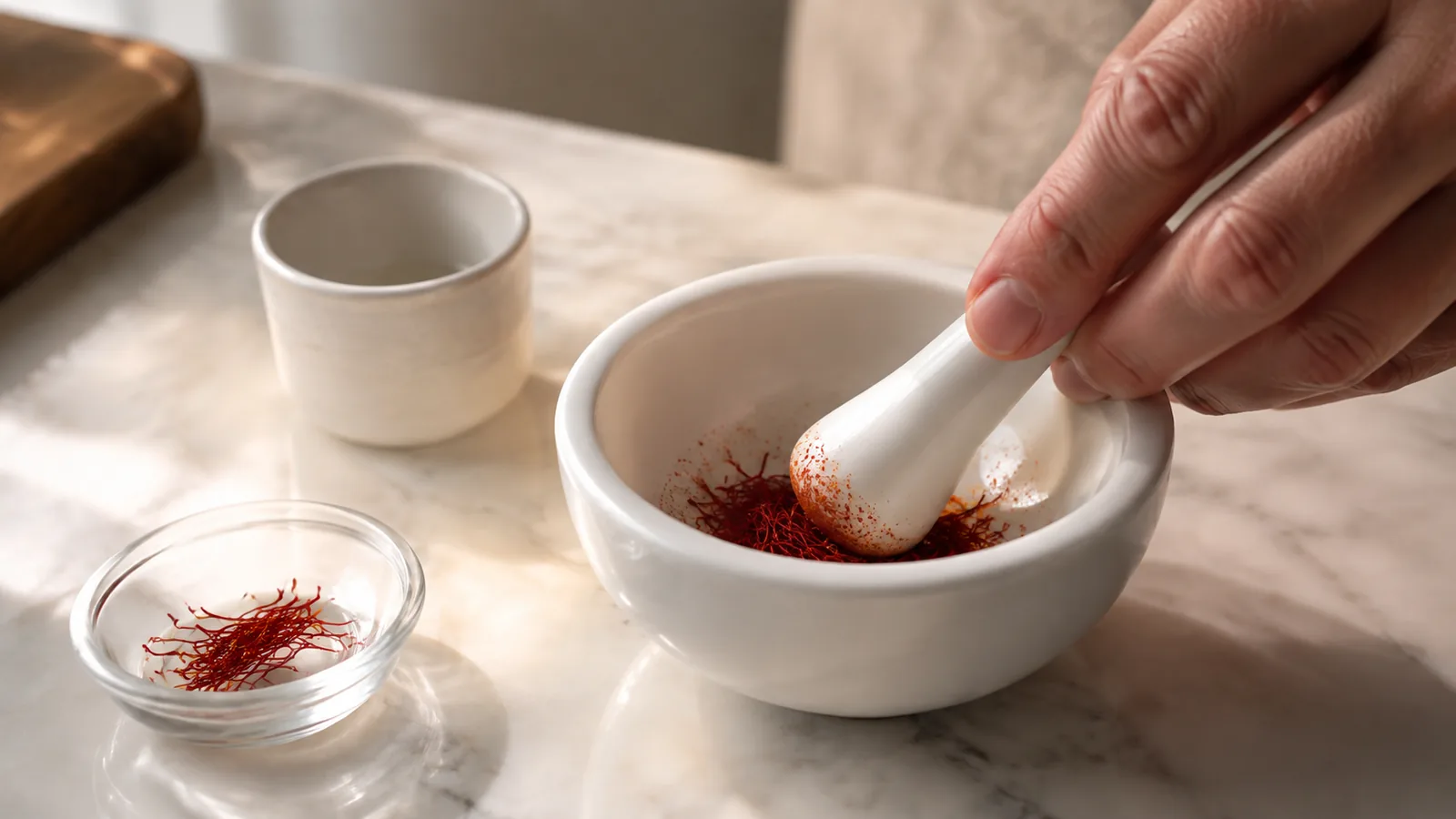
For any of the recipes below, lightly crush the listed saffron threads and cover them with 2 tablespoons of hot, not furiously boiling, water. Leave the infusion for 10 to 15 minutes. Add both the golden liquid and the threads when the recipe directs.
Measure saffron and rosewater separately. More colour does not always mean better flavour, and too much rosewater can cover the spice you meant to showcase. Taste the mixture before adding an optional extra spoonful.
Saffron porridge: Sholeh Zard
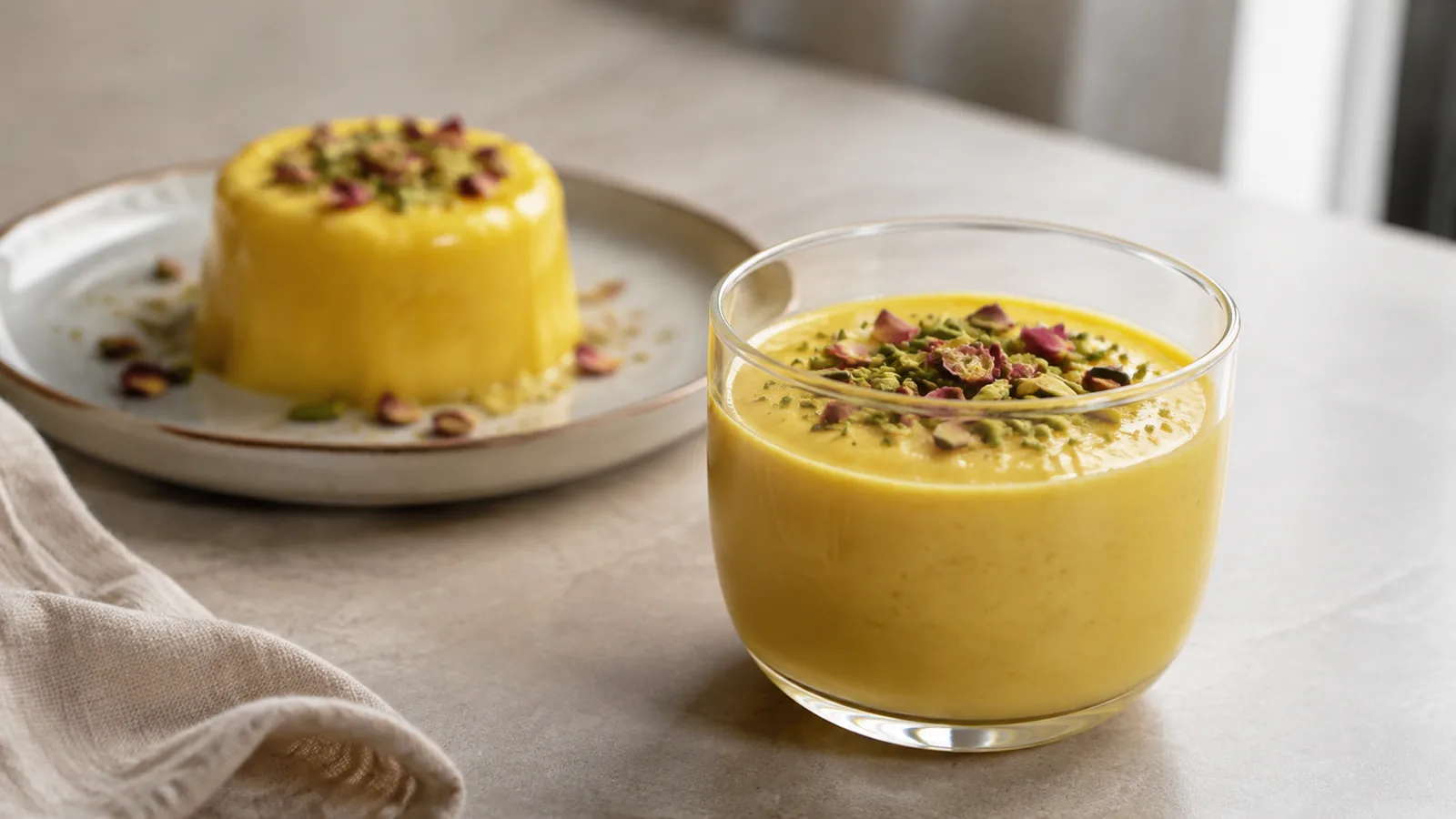
Sholeh Zard is a dairy-free Persian saffron rice porridge. Long cooking breaks the rice down into a soft, glossy base; sugar, saffron and rosewater are added only after the grains have opened. It can be served warm, although it is often chilled and decorated with cinnamon and nuts.
Ingredients for Sholeh Zard
- 1 cup (200 g) broken or short-grain white rice
- 7 cups (1.65 litres) water, plus a little more if needed
- 1½ cups (300 g) sugar
- 30–35 saffron threads, infused as described above
- ¼ cup (60 ml) rosewater
- 2 tablespoons (28 g) butter or neutral oil
- ¼ cup (30 g) almond slivers
- Optional: 3 lightly crushed green cardamom pods in a small spice bag
- Ground cinnamon and pistachio slivers for garnish
How to make saffron porridge
- Rinse and soak the rice. Rinse until the water is mostly clear, then soak in cool water for 2 hours. Drain.
- Cook until the grains open. Put the rice and 7 cups water in a heavy pot. Bring to a boil, skim any foam, then simmer partly covered for 60 to 75 minutes. Stir more often as it thickens. Add hot water a little at a time if the rice catches before it becomes very soft.
- Add the sugar. Stir in the sugar only after the rice has broken down. The mixture will loosen at first. Simmer gently for 15 minutes, stirring across the bottom.
- Add saffron and almonds. Stir in the saffron infusion, butter or oil, almond slivers and the optional cardamom bag. Cook for 10 minutes.
- Finish with rosewater. Remove the cardamom, add the rosewater and cook for 3 to 5 minutes. The porridge should fall slowly from the spoon; it will thicken further as it cools.
- Set and decorate. Spoon into shallow bowls. Cool briefly, then garnish with cinnamon, pistachios and a few almond slivers. Refrigerate once it is no longer steaming.
Fixing the consistency
If the Sholeh Zard is too thick while still hot, stir in a small amount of boiling water. If it is thin, keep it at a gentle simmer and stir until the spoon leaves a brief path. Do not judge it by its chilled texture while it is still in the pot.
Saffron rice pudding with milk
This pudding is creamier and less sweet than Sholeh Zard. Milk needs gentler heat and more attention, so use a heavy saucepan and scrape the base regularly. It makes four to six small servings.
Ingredients for saffron rice pudding
- 1 cup (200 g) short- or medium-grain white rice
- 1 cup (240 ml) water
- 4 cups (960 ml) whole milk, warmed
- 6 tablespoons (75 g) sugar
- 15–20 saffron threads, infused in 2 tablespoons hot water
- 2 tablespoons rosewater
- ¼ teaspoon ground cardamom, optional
- Small pinch of salt
- Pistachios or almonds for serving
Method
- Rinse the rice, then put it in a heavy saucepan with the water and salt. Simmer until most of the water has been absorbed.
- Add the warm milk one cup at a time. Keep the heat low and stir frequently, especially around the edge and base of the pan.
- After 25 to 35 minutes, when the grains are tender and the milk looks creamy, stir in the sugar, saffron infusion and optional cardamom.
- Cook for another 8 to 10 minutes. Add the rosewater during the final 2 minutes, then remove the pan from the heat.
- Serve warm or divide among bowls and chill. Add nuts just before serving so they retain their texture.
The pudding should look slightly looser than you want when it leaves the stove. Rice continues to absorb milk as it rests. If a chilled portion becomes too firm, loosen it with a spoonful of cold milk rather than reheating the whole batch repeatedly.
Persian saffron halva
Persian flour halva is made by patiently toasting flour, then working in an aromatic syrup. The colour should come from both the toasted flour and saffron, not from burning the roux. Have the warm syrup ready before the flour reaches its final shade.
Ingredients for saffron halva
- 2 cups (250 g) plain white flour
- 100 g (7 tablespoons) unsalted butter
- ½ cup (120 ml) neutral oil
- 1 cup (200 g) sugar
- 1 cup (240 ml) water
- 30 saffron threads, infused in 2 tablespoons hot water
- ¼ cup (60 ml) rosewater
- ½ teaspoon ground cardamom, optional
- Pistachio or almond slivers for garnish
How to make saffron halva
- Make the syrup. Warm the sugar and water in a small saucepan, stirring just until the sugar dissolves. Do not reduce it into a thick candy syrup. Add the saffron infusion, rosewater and optional cardamom; keep it warm.
- Toast the flour. Sift the flour into a wide heavy pan. Stir over medium-low heat for 20 to 30 minutes, until it smells nutty and turns light beige. Adjust the heat rather than rushing this stage.
- Add the fat. Add the butter and oil carefully. Stir until the mixture is smooth, then continue cooking until it reaches a warm caramel colour. If it smells scorched, start again; syrup cannot repair burnt flour.
- Work in the syrup. Lower the heat. Add the warm syrup in several portions, standing back because the mixture may steam and spit. Stir firmly after each addition until smooth.
- Shape the halva. Continue folding until the mixture pulls away from the pan and holds a soft mound. Transfer it to a platter, shape it while warm and garnish with nuts.
The halva firms as it cools. If it is oily and loose, continue folding over low heat for a minute or two. If it is dry and crumbly, work in a spoonful of warm water or syrup before shaping. For a more detailed look at flour colour and syrup control, see our guide to Persian saffron halva.
Choosing between the three desserts
- Choose Sholeh Zard for a dairy-free, make-ahead dessert with a soft set and decorative surface.
- Choose milk rice pudding when you want a creamy, gently sweet bowl served warm or chilled.
- Choose halva for a richer flour-based sweet that can be shaped and shared in small portions.
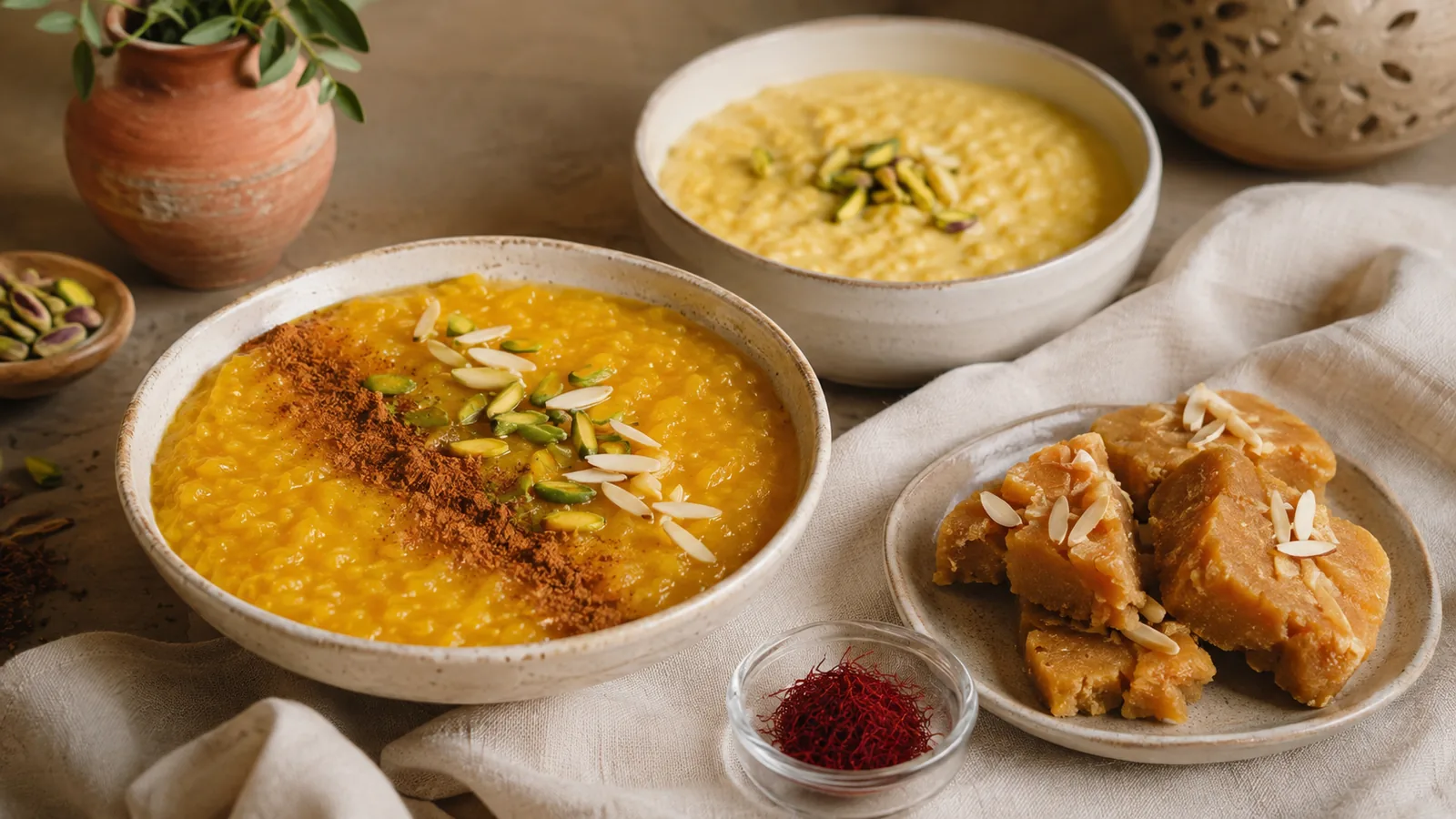
All three are saffron-based treats, but they should not taste identical. Sholeh Zard lets rice and saffron lead; the pudding is softened by milk; halva brings the deeper flavour of toasted flour and butter.
Storage and serving
Cover and refrigerate Sholeh Zard or milk rice pudding after cooling, and use clean spoons for serving. Halva can be covered once cool and kept away from heat and direct light; refrigerate it when the room is warm or when you intend to hold it longer.
Bring chilled desserts out shortly before serving so their aroma is not muted by refrigerator-cold temperatures. Add cinnamon and nuts at the end. If you would rather bake, our Persian saffron cakes and desserts offer three oven-based alternatives.