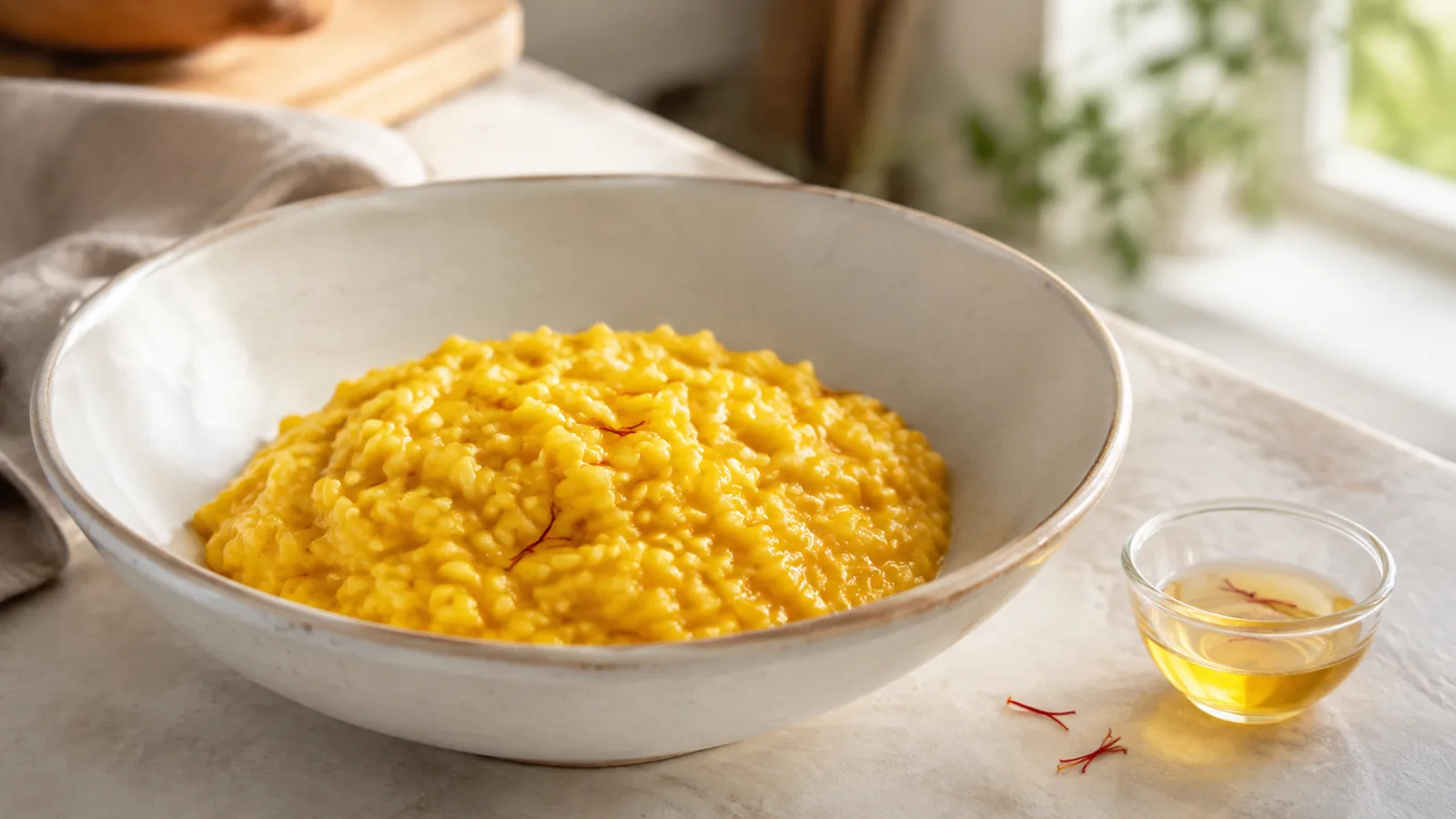
Saffron dishes work best when the spice has a clear job: perfume the rice, deepen a sauce or give a dessert its warm golden character. You do not need a large amount. Careful steeping, restrained seasoning and the right companions matter more than adding extra threads.
How to cook with saffron
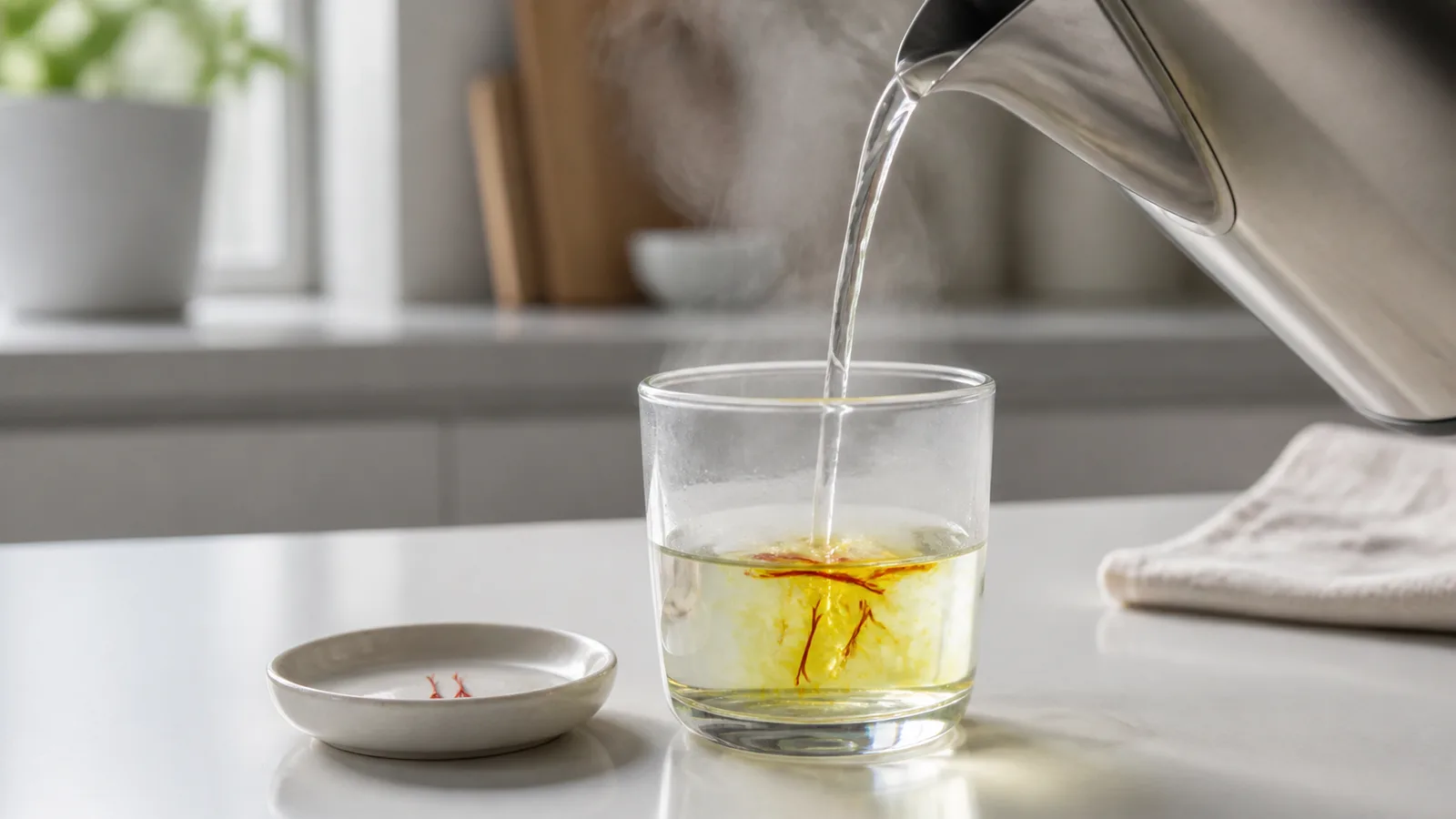
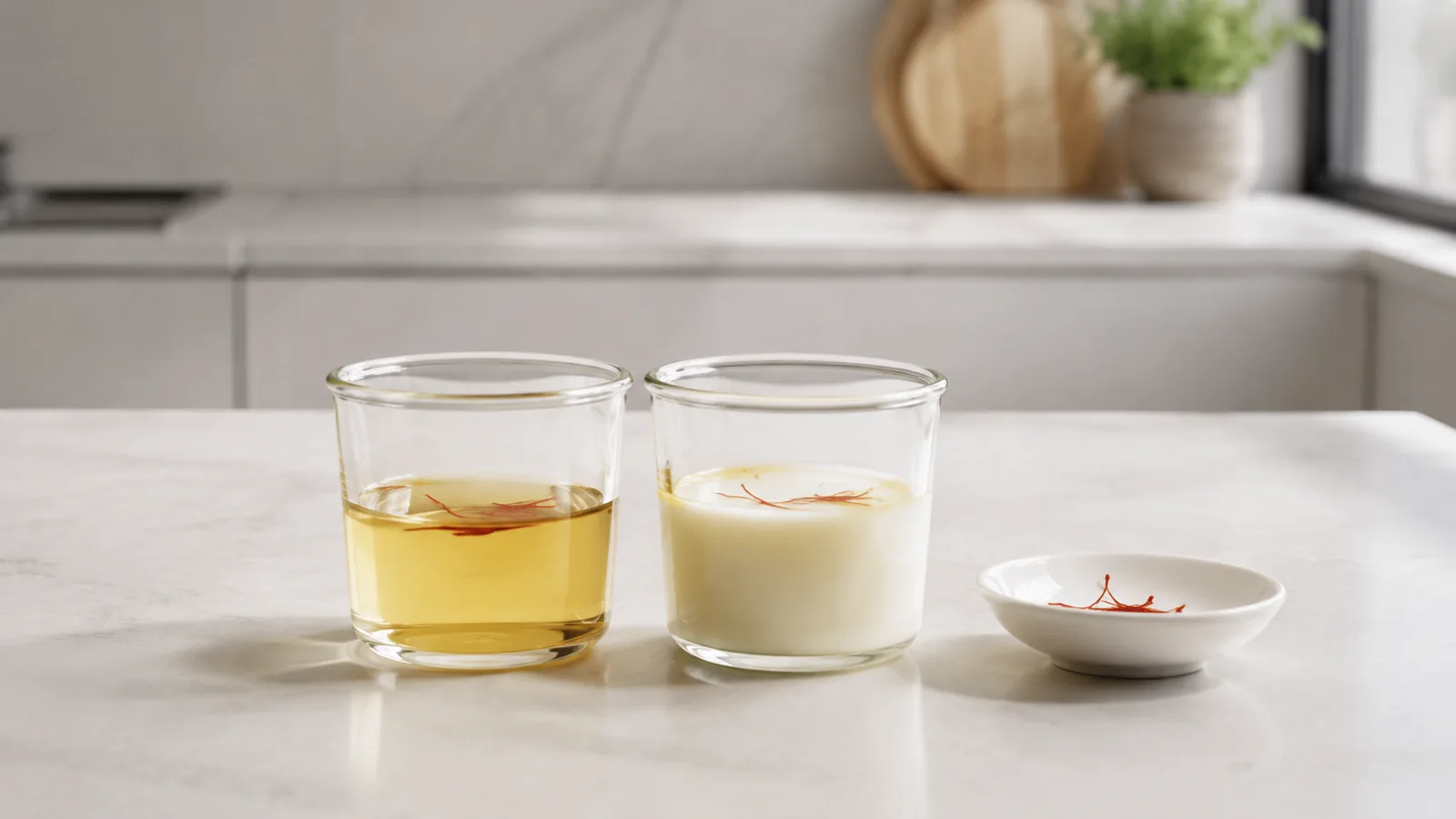
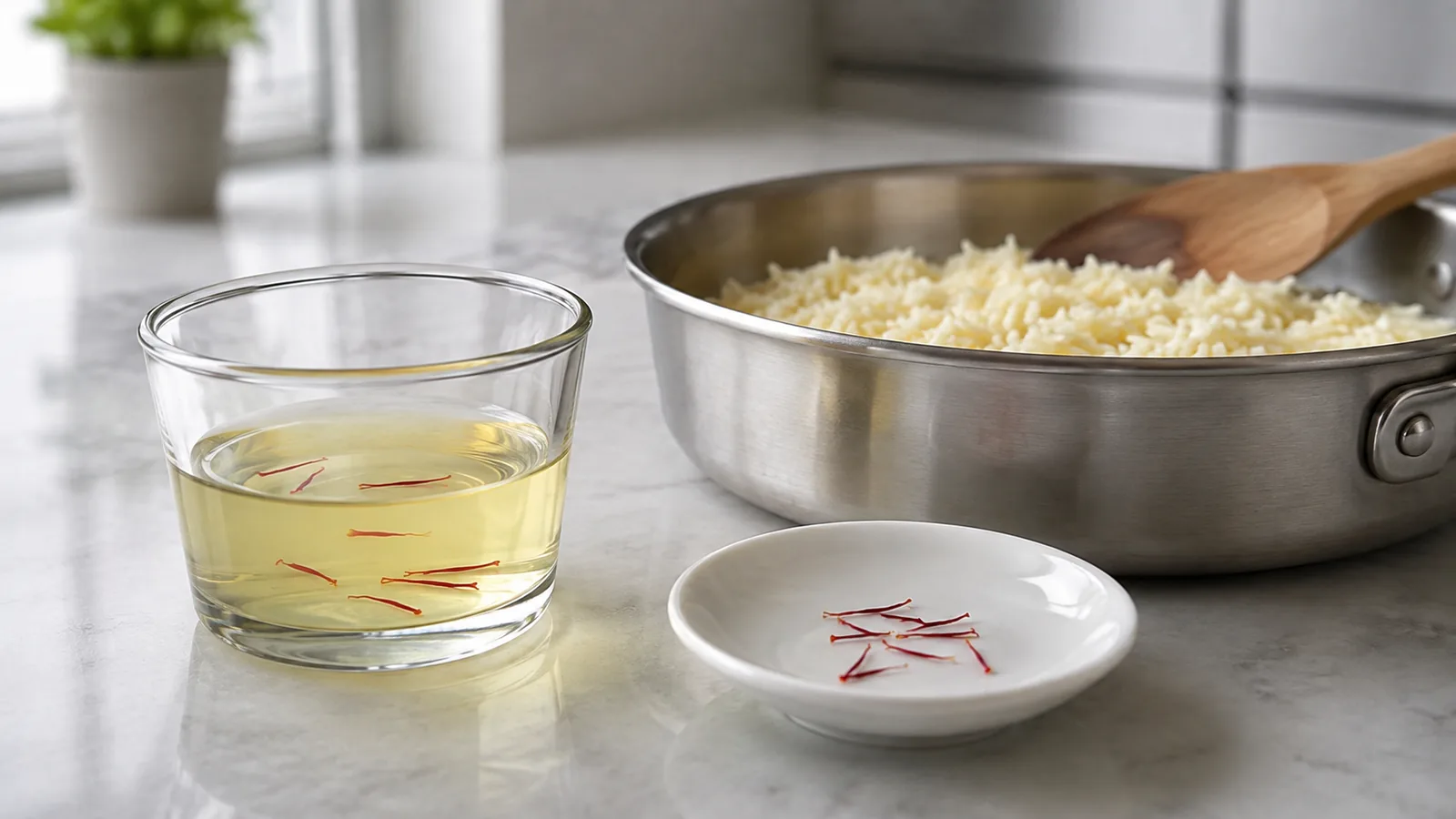
Saffron threads release their colour and aroma more evenly after a short infusion. Put the threads in a small bowl, crush them lightly between clean fingers or with a mortar, and cover them with a few tablespoons of warm water, milk or unsalted stock. Leave the bowl for 10 to 20 minutes, then add both the liquid and the threads to the dish.
The liquid should be warm rather than furiously boiling. Saffron can certainly cook in a hot dish, but a long, aggressive boil sends much of its delicate aroma into the air. For rice, stews and sauces, add most of the infusion during cooking and reserve a spoonful for the final minutes if you want a fresher fragrance.
Measure cautiously. Thread size and strength vary, so a fixed teaspoon is less dependable than it sounds. For a four-person savoury dish, begin with a small pinch—roughly 15 to 25 good threads—and taste the finished base before deciding whether the next batch needs more. Too much saffron can turn pleasantly earthy notes bitter or medicinal.
Seven saffron dishes worth cooking
1. Persian saffron rice
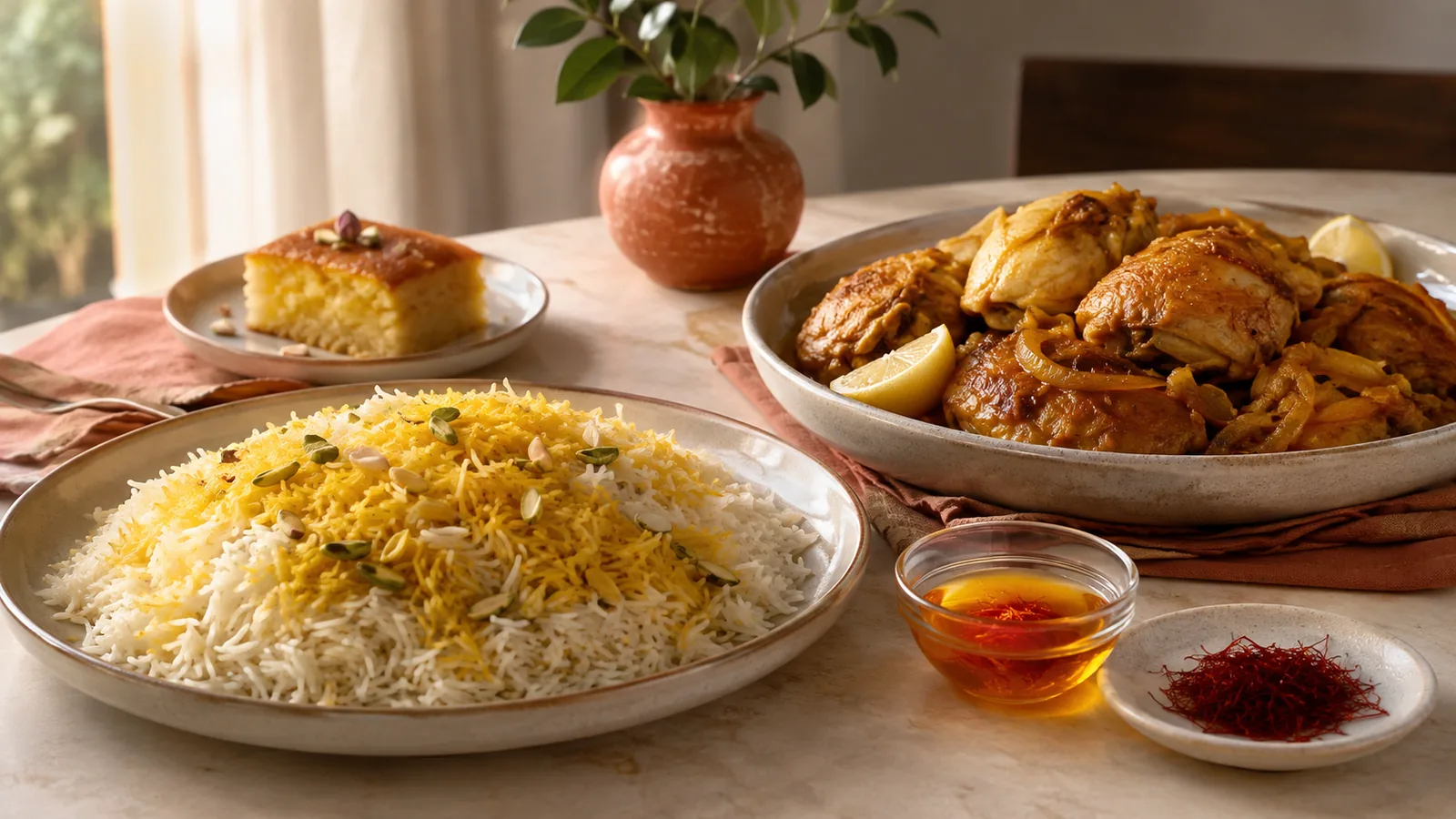
Steamed basmati rice is one of the clearest ways to appreciate saffron. Cook the rice until the grains are tender and separate, then mix a small portion with the saffron infusion. Spoon that golden rice over the white rice instead of colouring the entire pot. The contrast looks deliberate, and each forkful carries a different balance of aroma and sweetness.
For a richer version, combine the infusion with a little melted butter before folding it into the rice. Barberries, pistachios or almonds can be added when they suit the meal, but none is required. Properly cooked rice and clean saffron are enough.
2. Tahdig, the crisp saffron crust
The “saffron crust” in the original article is better known as tahdig: the crisp layer formed at the bottom of a Persian rice pot. Stir bloomed saffron into yoghurt, egg yolk or simply oil and a portion of parboiled rice, depending on the style you are making. Spread it evenly in the oiled pot, add the remaining rice and cook over controlled low heat until the base is deeply golden.
Tahdig should release as one crisp sheet or in sturdy pieces. If the heat is too high, the base burns before the rice above it steams; if it is too low, the crust stays pale and soft. A heavy pot and a few minutes of patience after removing it from the heat make release easier.
3. Saffron chicken
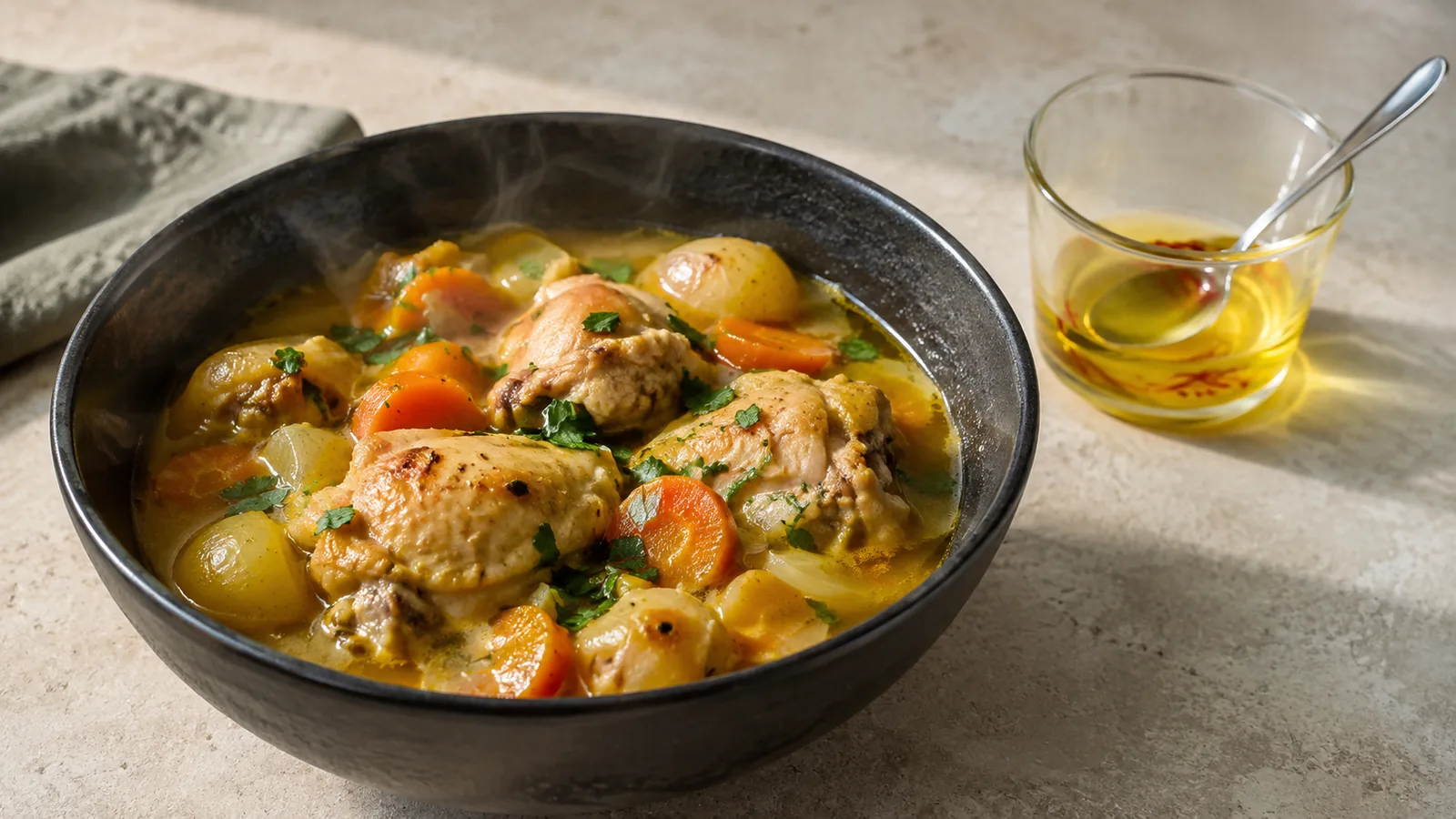
Chicken gives saffron enough richness to bloom without covering it. Season the meat with salt and pepper, brown it lightly, then finish it with onion, a modest amount of stock and the saffron infusion. Lemon can brighten the sauce, but add it carefully: strong acidity can dominate the spice.
For exact quantities and food-safe timing, use our complete saffron chicken recipe. It explains when to add the infusion and how to check that the thickest part of the chicken has reached a safe temperature.
4. Biryani with saffron
In biryani, saffron is one part of a larger aromatic structure. Infuse it in warm milk or water and drizzle it over the upper rice layers before the final covered steam. This creates pockets of colour and aroma rather than a uniformly yellow pot.
Cardamom, cinnamon, clove, fried onion and meat or vegetables all compete for attention, so resist increasing every spice at once. Let saffron provide the high floral note while toasted spices supply warmth. A small amount used in the final layering often registers more clearly than a larger amount stirred into the cooking liquid at the beginning.
5. Risotto and saffron pasta
Saffron belongs naturally in creamy, starch-thickened sauces. For risotto, stir the infusion in after the rice has begun absorbing stock, then finish with butter and a restrained amount of cheese. For pasta, add it to a sauce based on butter, cream, seafood stock or gently cooked onion.
Avoid boiling dry pasta in saffron water merely to colour it; most of the expensive infusion will be poured away. Put the spice in the sauce, where its flavour remains on the plate. Mild shellfish, peas, fennel and lemon zest pair well, while a very hot chilli sauce can make the saffron hard to notice.
6. Fish, shellfish and light stews
White fish, mussels and prawns suit saffron because they cook quickly and do not need heavy seasoning. Add the infusion to a tomato-light fish stew, a clear broth or a cream sauce shortly before the seafood is ready. Keep the heat gentle so the fish stays moist.
Saffron also works in chicken, lamb and vegetable stews. Build the savoury base first, then judge whether tomato, dried lime or strong spice is already providing enough intensity. If it is, use saffron as a finishing aroma rather than expecting it to overpower the pot.
7. Cakes, puddings and chilled desserts
Milk, cream, vanilla, cardamom, rosewater, pistachio and citrus all give saffron room to show. Infuse the threads in the recipe’s warm milk or cream, let the liquid cool if the batter requires it, and count that liquid as part of the measured recipe. Adding an unmeasured cup of “saffron water” can upset a cake or custard.
Good recipes with saffron include rice pudding, panna cotta, ice cream, shortbread and lightly spiced cakes. Our guide to Persian saffron cakes and desserts gives three complete cakes rather than loose flavour suggestions.
What does saffron pair well with?
Saffron has a floral, honeyed aroma with earthy and faintly bitter edges. Pair it with ingredients that frame those qualities instead of burying them:
- Starches: basmati rice, risotto rice, couscous, potatoes, bread and pasta.
- Proteins: chicken, lamb, mild white fish, prawns, mussels and eggs.
- Dairy: butter, yoghurt, milk and cream.
- Aromatics: onion, garlic in moderation, cardamom, cinnamon, fennel and vanilla.
- Bright accents: lemon zest, orange, barberries and a measured amount of rosewater.
- Nuts: pistachios, almonds and cashews.
These are starting points, not a rule that every saffron meal needs several additions. Choose two or three supporting flavours and leave space for the spice itself.
Common mistakes when using saffron in food
Adding dry threads unevenly
A few dry threads dropped into a large pot create isolated strong bites and leave the rest of the food under-seasoned. Blooming distributes both colour and aroma. If you want visible threads as a garnish, keep a few whole and use the rest in the infusion.
Using turmeric as “extra saffron”
Turmeric brings an assertive earthy flavour and a much stronger yellow colour. It can be appropriate in biryani or a stew, but it does not extend saffron invisibly. Use it because the recipe calls for turmeric, not to disguise a weak infusion.
Covering the spice with too many flavours
Smoke, heavy chilli, large quantities of garlic or an intensely reduced tomato sauce can overwhelm saffron. That does not make the combination forbidden; it means the cook should decide which flavour is leading the dish. When saffron is meant to lead, keep the supporting seasonings quieter.
Judging only by colour
A vivid yellow dish is not proof that it contains more or better saffron. Colour develops before the full aroma does, and other ingredients can change the shade. Smell the infusion, taste the base and pay attention to balance rather than chasing the brightest possible plate.
A simple plan for cooking with saffron
- Choose a dish with a mild enough base for saffron to be noticed.
- Bloom a small pinch in warm recipe liquid for 10 to 20 minutes.
- Add the infusion where its liquid belongs in the recipe.
- Keep a little for the end when a fresher aroma would help.
- Taste the finished dish and record the amount for next time.
If you are new to the spice, start with rice, chicken or a milk-based dessert. These saffron uses in cooking are forgiving, easy to compare from one attempt to the next and broad enough to answer the practical question “what dishes use saffron?” Once you recognise the aroma, it becomes much easier to build your own saffron recipes without wasting the threads.
For a closer explanation of crushing, steeping temperature and storage, read the best way to brew saffron. Make the infusion while the rest of the ingredients are being prepared, then use it as a seasoning—not simply as yellow colouring.