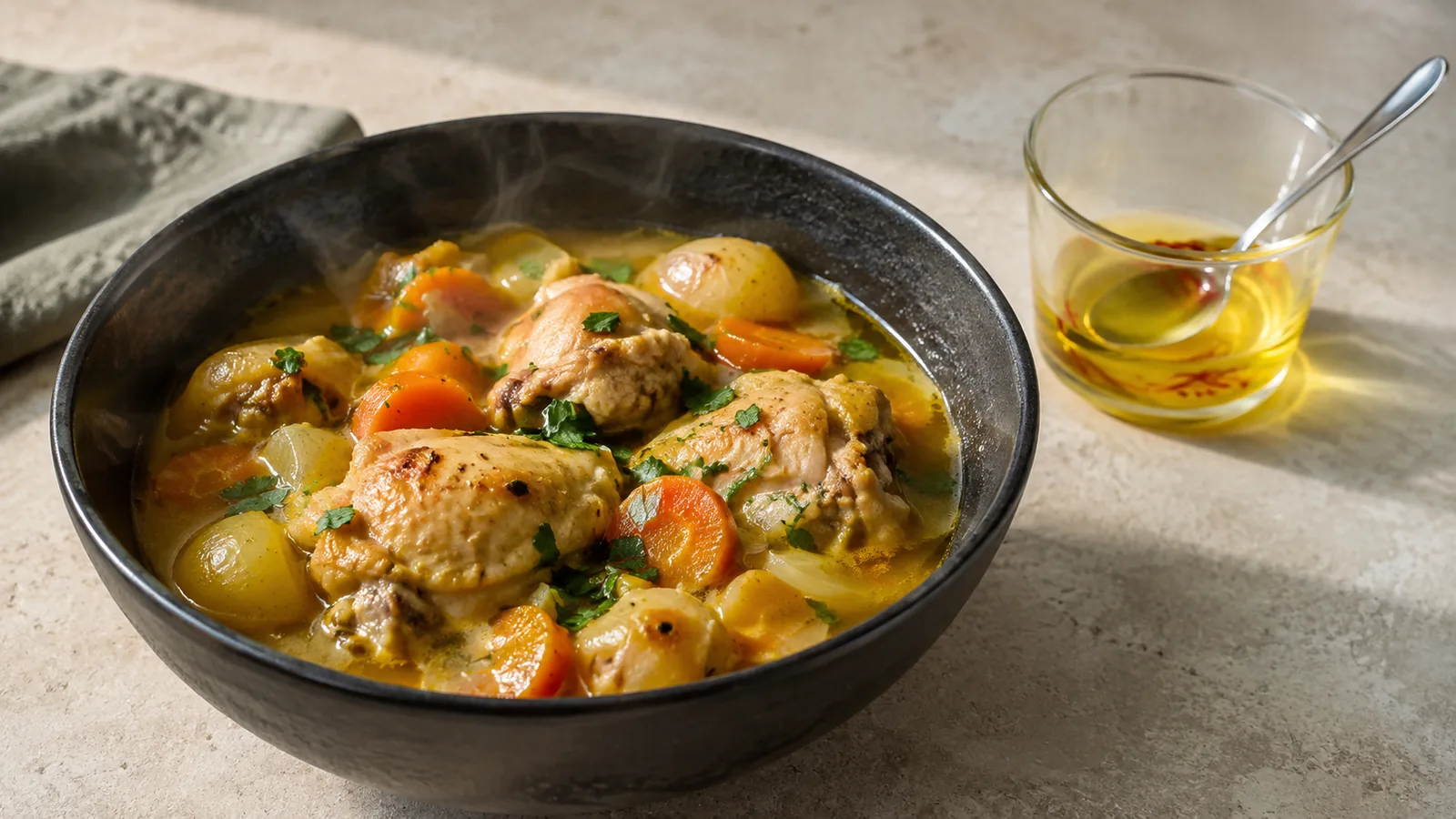
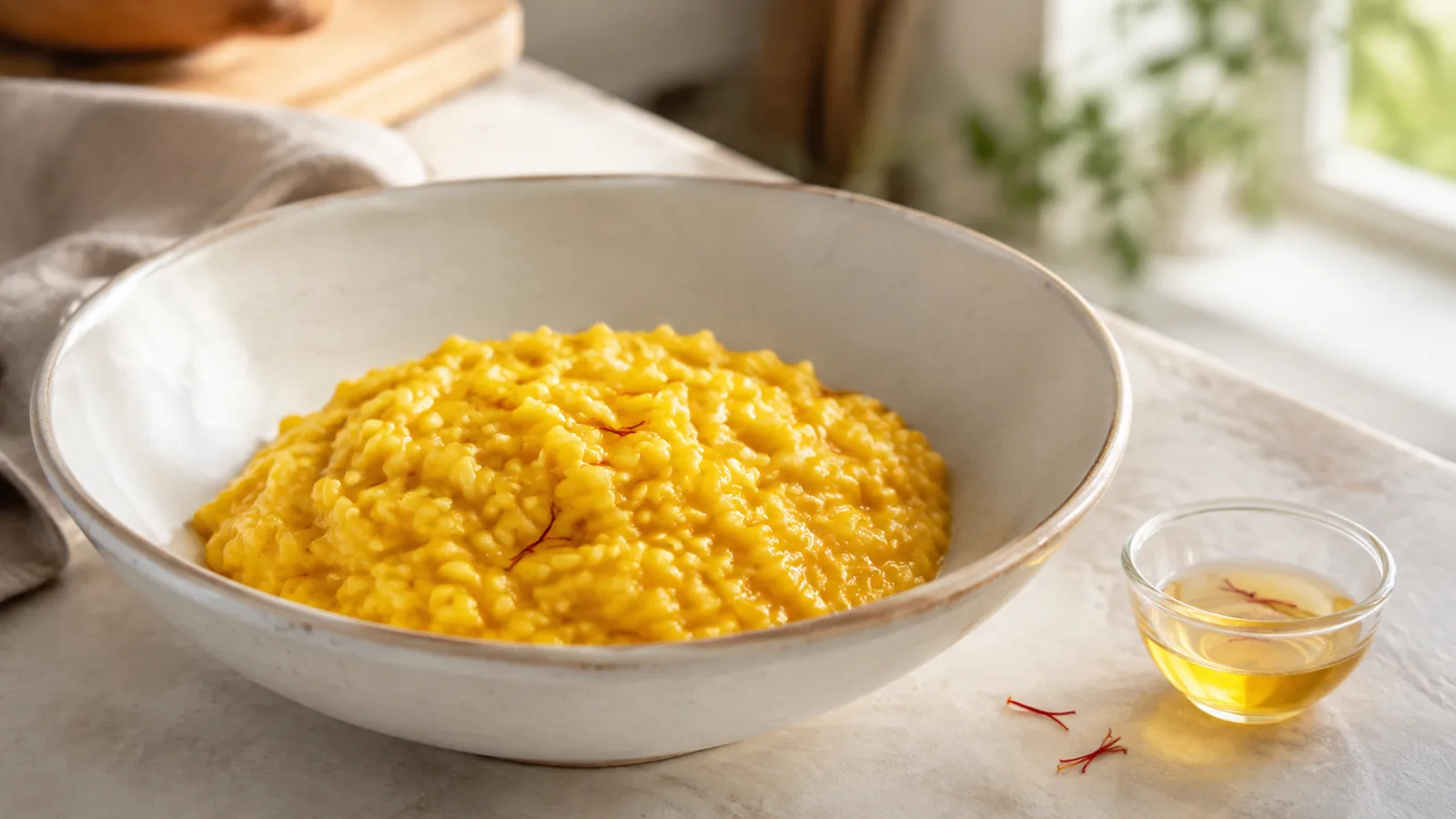
This Saffron Chicken Recipe braises browned chicken with onion, tomato paste, carrots and bell pepper, then adds brewed saffron near the end so its aroma stays clear. The result is tender chicken in a glossy, savoury sauce made for spooning over rice.
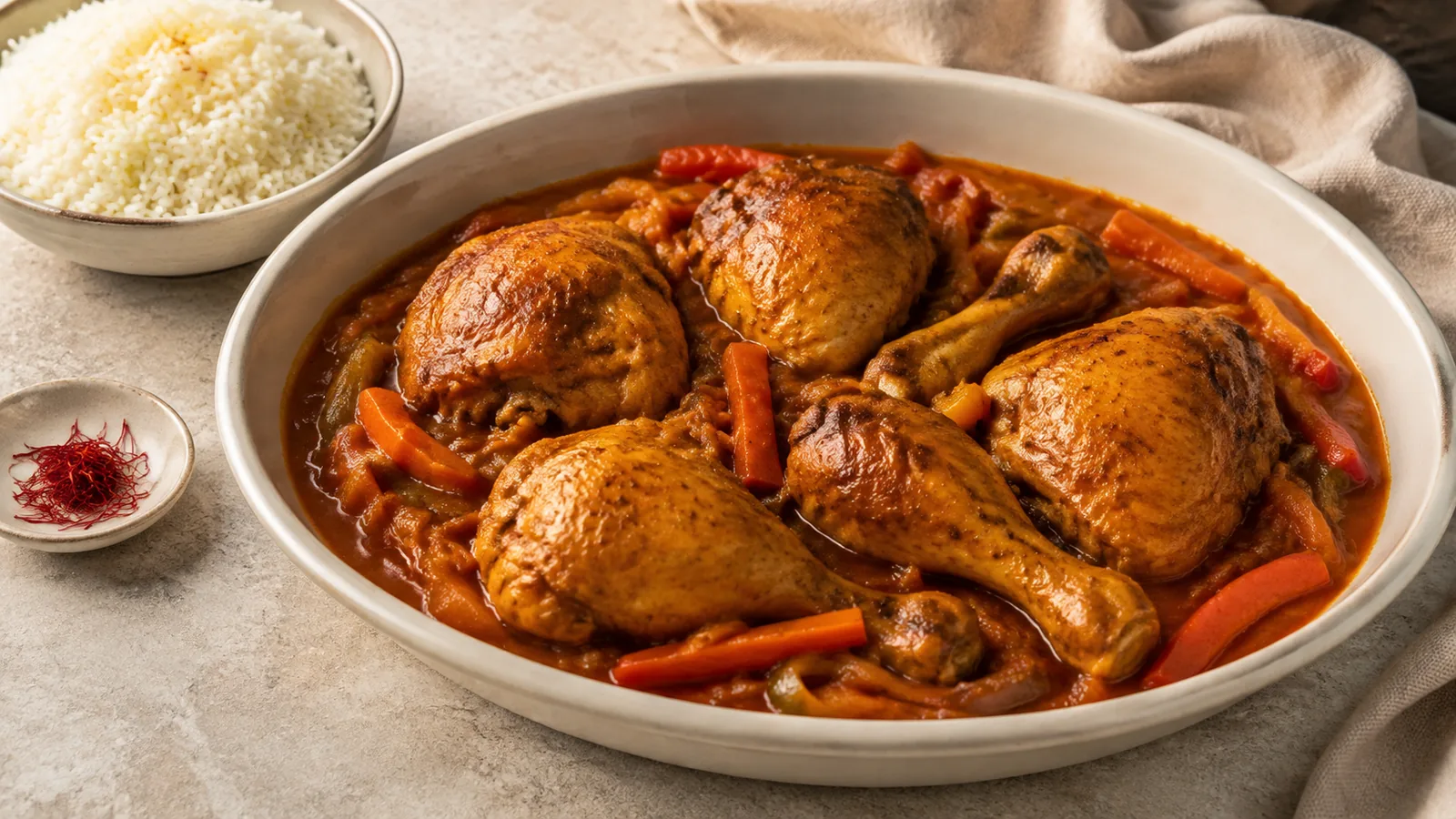
Saffron chicken ingredients
This quantity serves about 6 people, depending on the size of the chicken pieces and what you serve alongside them.
- 10 bone-in chicken pieces, preferably a mixture of thighs and drumsticks (about 1.6–1.8 kg / 3 1/2–4 lb)
- 2 tablespoons neutral cooking oil, plus a little more if needed
- 2 large onions, thinly sliced
- 2 carrots, cut into thick rounds or batons
- 1 bell pepper, sliced
- 2–3 tablespoons tomato paste
- 1 teaspoon ground turmeric
- 1/2 teaspoon freshly ground black pepper
- Salt to taste
- 1/2 teaspoon saffron threads
- 1/4 cup hot water for brewing the saffron; use at least 2 tablespoons of the finished infusion
- 1 1/2–2 cups hot water or unsalted chicken stock, as needed
- 1 tablespoon cornstarch mixed with 1 tablespoon cold water, optional
Bone-in pieces remain succulent during a gentle braise and give the sauce body. Boneless thighs also work, but they cook faster. Chicken breast can be used if you monitor it closely and remove it as soon as it reaches a safe temperature.
Before you begin
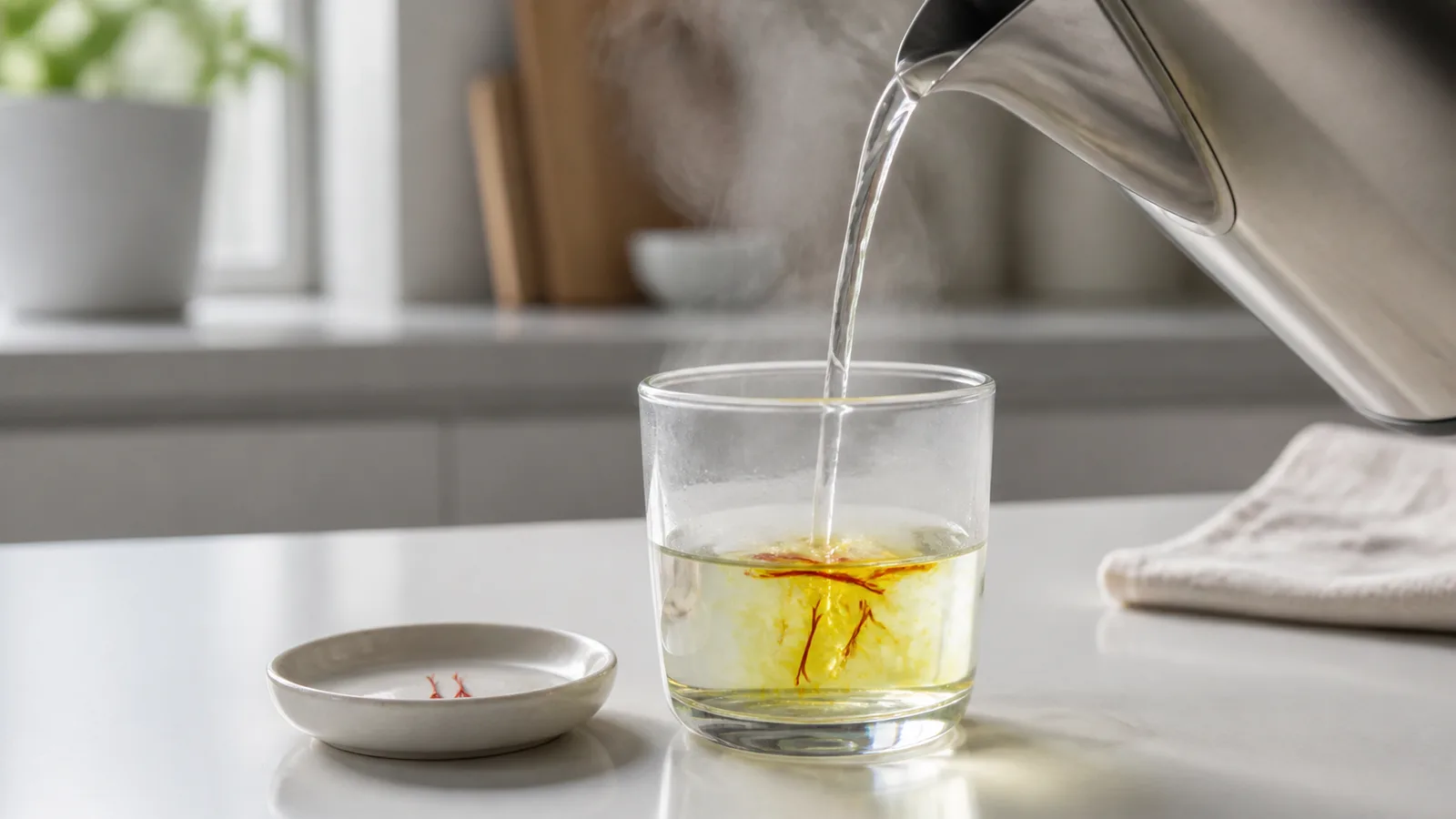
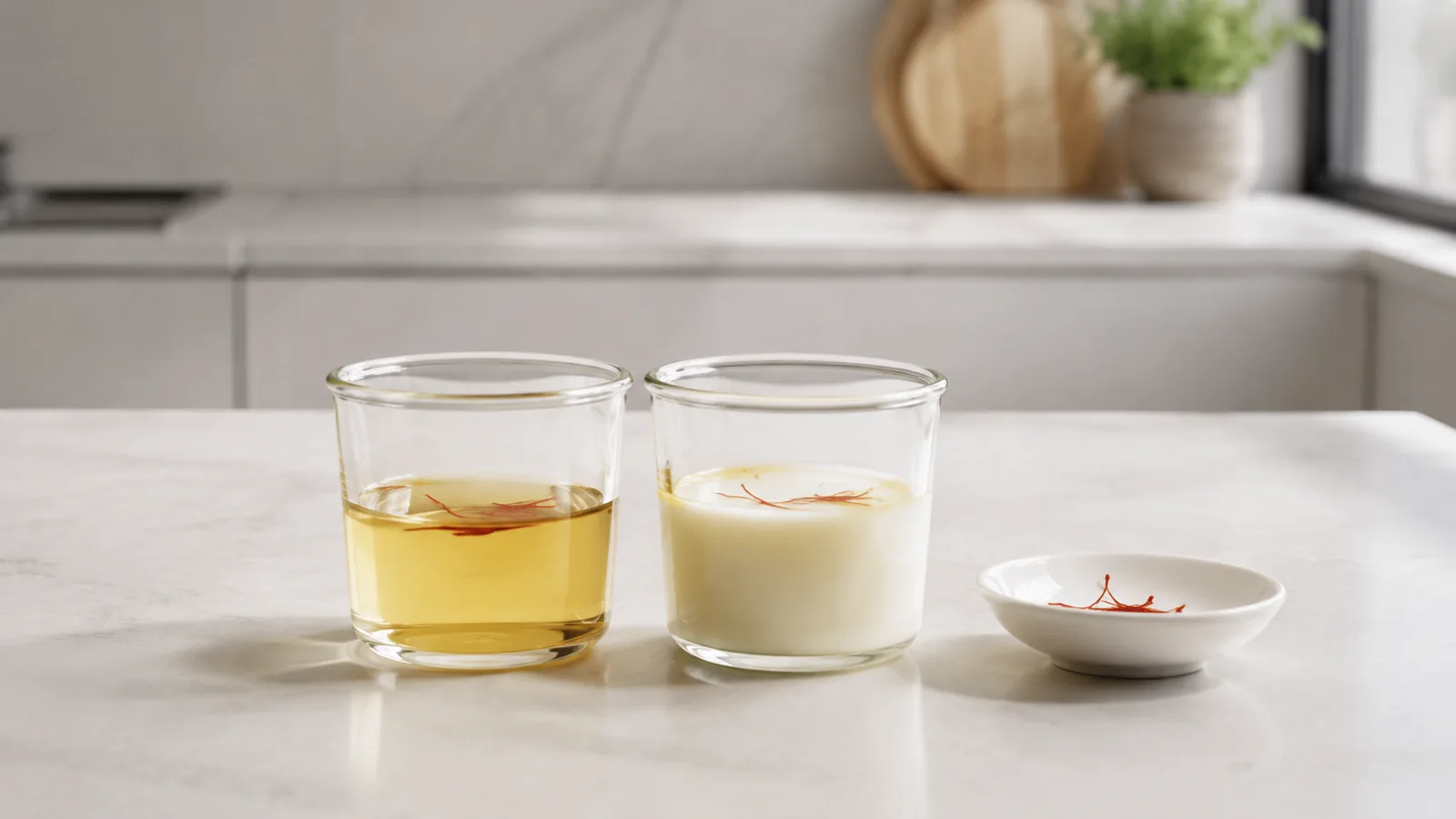
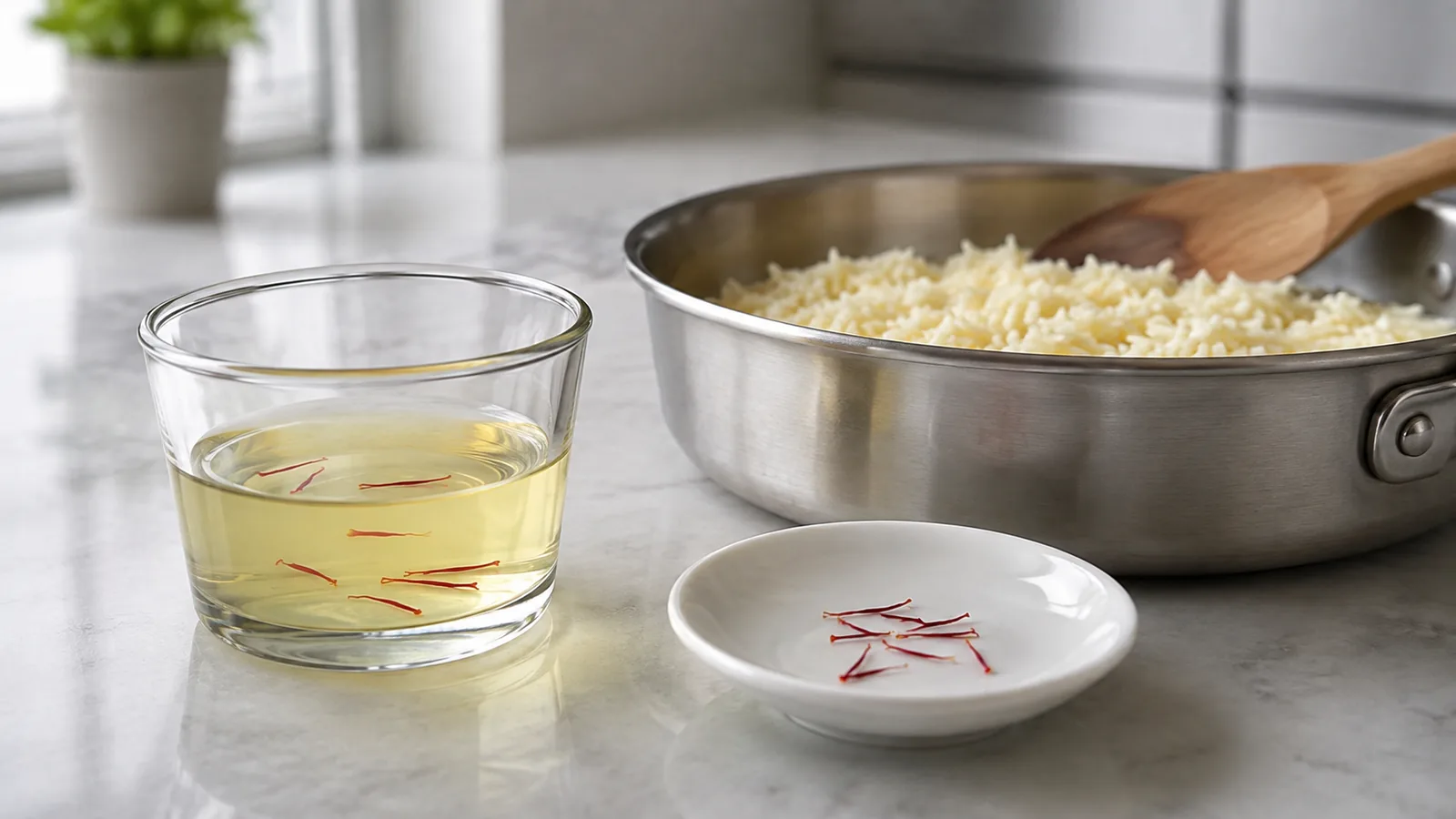
Lightly crush the saffron threads and cover them with the hot water for 10 to 15 minutes. A concentrated infusion spreads the colour evenly and lets you add the spice late in cooking. If you want to compare hot-water and ice methods, see our guide to brewing saffron for cooking.
Pat the chicken dry with paper towel and season it with salt, pepper and half the turmeric. Do not rinse or soak raw chicken in water and vinegar to remove its smell. Soaking does not make poultry safer and can spread raw juices around the sink and work surface. Fresh chicken should have a mild smell; if it has a persistent unpleasant odour, do not try to hide it with pepper or saffron.
How to make saffron chicken
1. Brown the chicken in batches
Heat a wide, heavy pot over medium-high heat and add the oil. Place the chicken in one layer, leaving room between the pieces. Brown it for 3 to 4 minutes on each side, working in batches if necessary. The goal is a golden surface, not cooking the meat through. Transfer the browned pieces to a clean plate.
Do not crowd the pot. When too many cold pieces go in at once, their moisture steams the surface and prevents the colour that gives the finished sauce depth.
2. Build the onion and tomato base
Lower the heat to medium. Add the onions with a small pinch of salt and cook for 8 to 10 minutes, stirring often, until soft and lightly golden. Add the carrots and bell pepper and cook for another 4 minutes.
Stir in the remaining turmeric and the tomato paste. Cook the paste for 2 to 3 minutes, moving it across the base of the pot, until its colour deepens and it no longer smells raw. If it begins to catch, add a spoonful of water rather than more oil.
3. Braise the chicken gently
Return the chicken and any collected juices to the pot. Add enough hot water or stock to come roughly halfway up the pieces; they do not need to be submerged. Bring the liquid just to a simmer, then lower the heat and cover the pot.
Cook gently for 30 minutes, turning the pieces once. Check the sauce occasionally and add a small amount of hot water if the pot is becoming dry. A hard boil can toughen the outside of the chicken before the centre is ready.
4. Add the brewed saffron
Pour in the brewed saffron, beginning with 2 tablespoons and adding more for a stronger aroma and colour. Stir it into the sauce without scraping or breaking the chicken pieces. Leave the lid slightly open and simmer for another 10 to 15 minutes.
Adding the infusion near the end gives chicken and saffron time to come together without cooking away all the spice’s fragrance. If you used ice to bloom the threads, melt that infusion separately and account for its liquid rather than dropping ice cubes directly into the braise.
5. Check doneness, seasoning and sauce
Insert a food thermometer into the thickest part of a piece without touching bone. Chicken is safe when it reaches at least 74°C (165°F), according to the USDA chicken safety guidance. Colour and tenderness are useful cooking clues, but neither replaces the thermometer.
Move the cooked chicken to a clean serving dish while you finish the sauce. Taste and adjust the salt and pepper. If the sauce is thin, simmer it uncovered for a few minutes. Reduction gives a cleaner flavour than adding starch immediately.
For a sauce that still needs more body, stir the cornstarch slurry again, pour it into the simmering liquid and cook for 1 to 2 minutes. Do not add dry cornstarch directly to the pot; it will form lumps.
How long does saffron chicken take?
Allow about 20 minutes for preparation and 50 to 60 minutes for cooking. Chicken size, cut, starting temperature and the shape of the pot all change the timing, so treat the thermometer reading as the finish line.
Boneless thighs may be ready sooner than bone-in pieces. Breasts also vary widely in thickness. If cooking a mixture, check each type and remove pieces as they reach 74°C (165°F), then return them briefly when the sauce is ready.
Why tomato paste works with saffron chicken
Tomato paste contributes savoury depth, colour and body. Cooking it in the onion mixture before adding water softens its raw acidity and lets it take on a rounded flavour. Two tablespoons produce a lighter saffron-forward sauce; three make the tomato more noticeable.
More paste is not always better. Too much can dominate the saffron and turn the dish into a general tomato braise. The finished sauce should taste of chicken, caramelised onion and tomato first, with saffron’s warm aroma clearly present rather than buried.
How to keep the chicken tender and juicy
- Choose similar-sized pieces: they are more likely to finish together.
- Brown, then braise: browning develops flavour; moist low heat cooks the centre gently.
- Keep the simmer calm: rapid boiling can tighten the meat and break the vegetables.
- Measure the temperature: guessing from colour can lead to undercooking or needless extra time.
- Reduce the sauce separately: once the chicken is safe, take it out while excess liquid evaporates.
Bell pepper can complement the sauce, but it does not remove an unsafe smell from chicken. The same is true of vinegar, turmeric and saffron. Begin with properly refrigerated poultry and keep raw utensils separate from the clean plate used for cooked pieces.
Can I make saffron chicken without tomato paste?
Yes. Leave out the tomato paste and increase the onions to three large onions. Cook them slowly until deeply golden, then braise the chicken with hot water or light unsalted stock. This version is paler and puts more attention on the saffron.
Because tomato paste normally helps thicken the sauce, allow a little more uncovered reduction at the end. The optional cornstarch slurry is still available, but use it only after the flavour and amount of liquid are right.
What to serve with saffron chicken
Steamed basmati rice is the natural partner because it absorbs the sauce without competing with the spice. A crisp cucumber and herb salad, plain yoghurt or simply cooked green vegetables keep the plate balanced. Spoon the sauce over the chicken at the last moment and serve extra sauce beside the rice.
For a dinner party, the dish can rest over very low heat for a short period once every piece is cooked, but do not leave it simmering for an hour. That extra time dulls the saffron and dries the meat.
Storage and reheating
Cool leftovers promptly and refrigerate them in shallow covered containers within two hours. Use them within 3 to 4 days. Reheat the chicken and sauce together until the centre reaches 74°C (165°F), adding a spoonful of water if the sauce has thickened in the refrigerator.
The dish can also be frozen in meal-sized containers. Thaw it safely in the refrigerator and reheat it thoroughly. The peppers will become softer after freezing, but the braised chicken and tomato-onion sauce hold up well.
Common saffron chicken problems
The saffron flavour is faint
Use a concentrated infusion, add it near the end and make sure an excessive amount of tomato paste or stock is not masking it. Old saffron may release colour while giving little aroma. Adding more weak spice is less effective than beginning with a small amount of well-stored saffron.
The sauce is watery
Remove the cooked chicken and reduce the liquid uncovered before reaching for cornstarch. A wide pot speeds evaporation. If using the slurry, add it only to simmering sauce and give it a full minute to thicken.
The chicken browned outside but stayed raw inside
Browning is only the first stage. Return the pieces to the sauce, cover and continue the gentle braise until the thickest part reaches the safe internal temperature. Do not judge doneness from the colour of the skin.
People compare many chicken recipes with saffron, but the dependable sequence stays simple. This recipe for saffron chicken is forgiving once the stages stay separate: brown for flavour, braise for tenderness, add the saffron late, and finish the sauce after the meat is safely cooked. That rhythm produces a far better result than putting every ingredient into the pot at once.