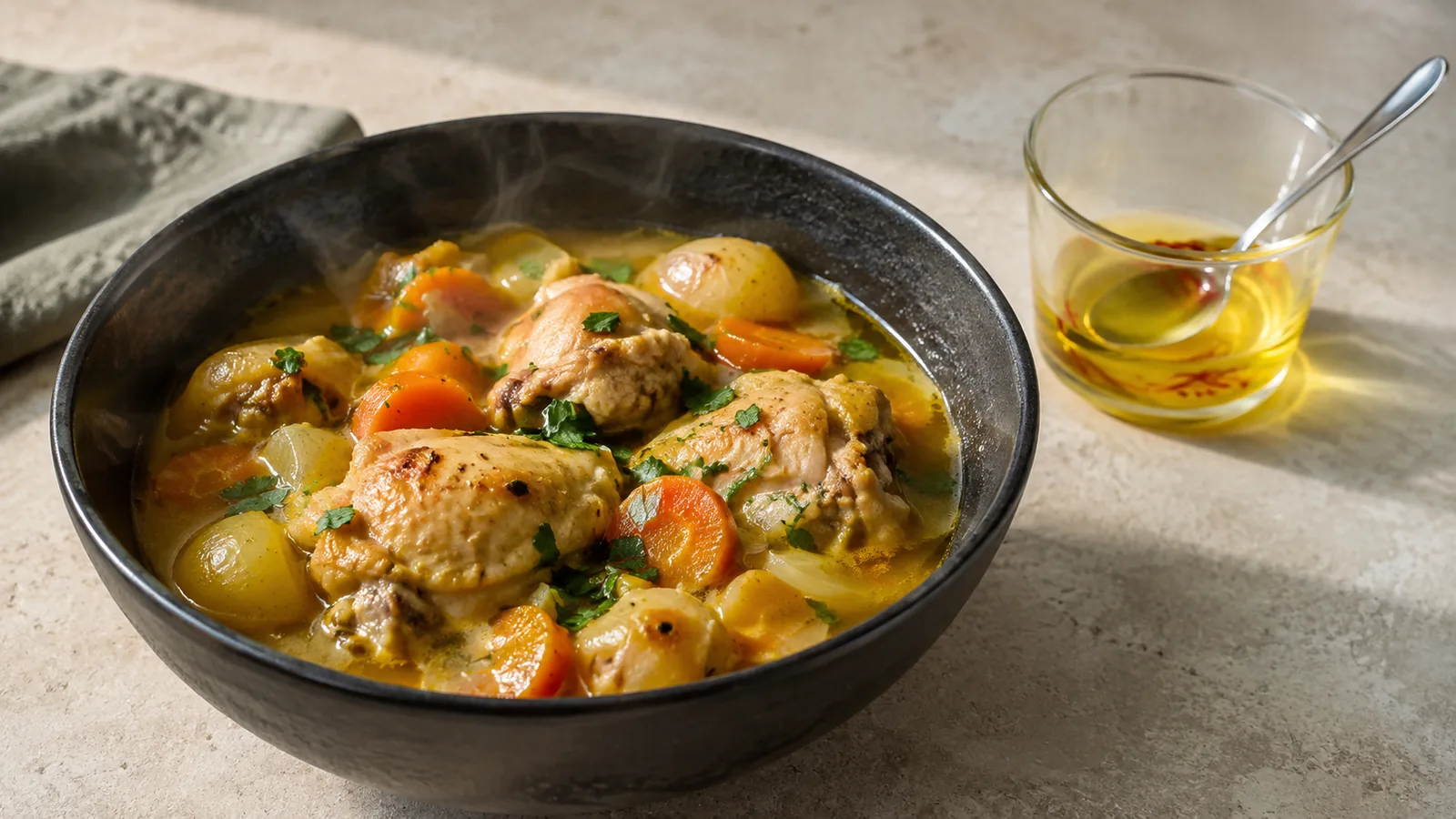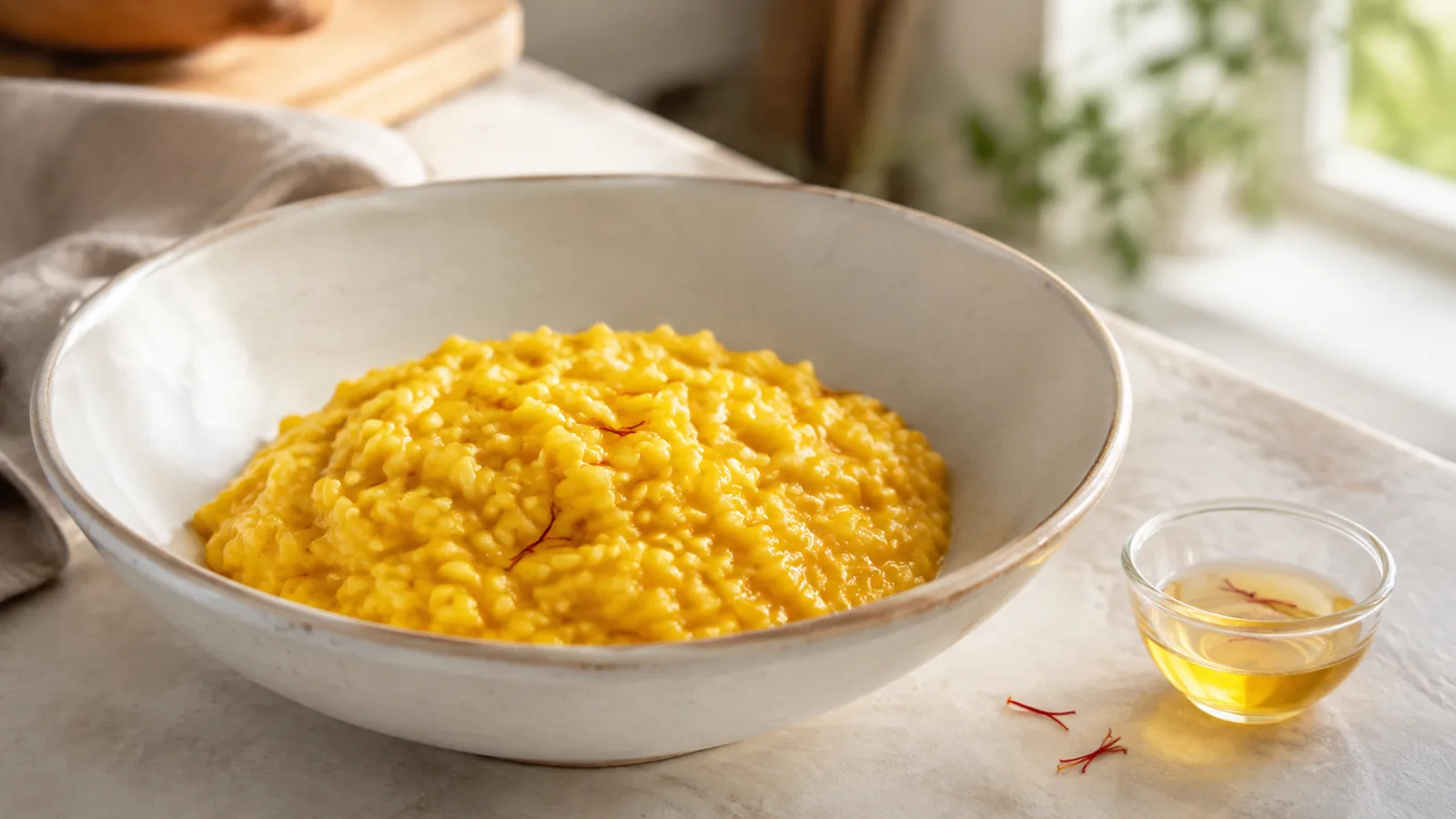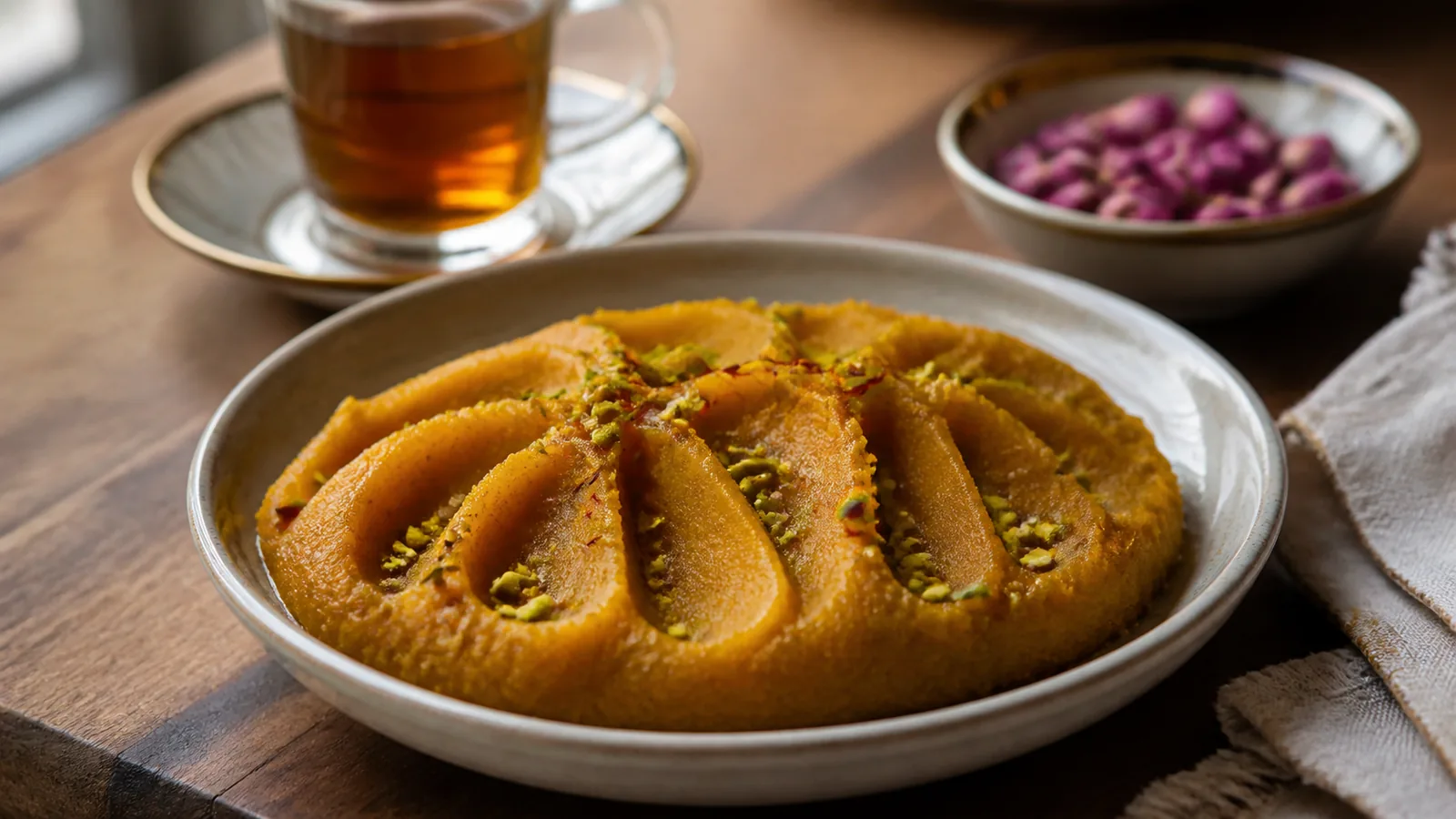
Persian saffron halva is a soft, spoonable sweet made by patiently toasting flour in oil, then working in a saffron-and-rose-water syrup. It should hold a smooth shape without leaking oil, with a warm toasted aroma and a clear golden-brown colour.
This small-batch recipe for Persian halva preserves the original one-cup proportions and takes about an hour. Have the syrup ready before the flour reaches its final colour, because the mixture comes together quickly.
Ingredients
- 125g plain flour (1 cup)
- 120ml neutral oil (1/2 cup)
- 150g sugar (3/4 cup)
- 1/4 teaspoon saffron threads, finely ground
- 60ml rose water (1/4 cup)
- enough water to bring the combined saffron infusion, rose water and water to 240ml (1 cup)
- ground pistachios, almonds or cinnamon, optional for decoration
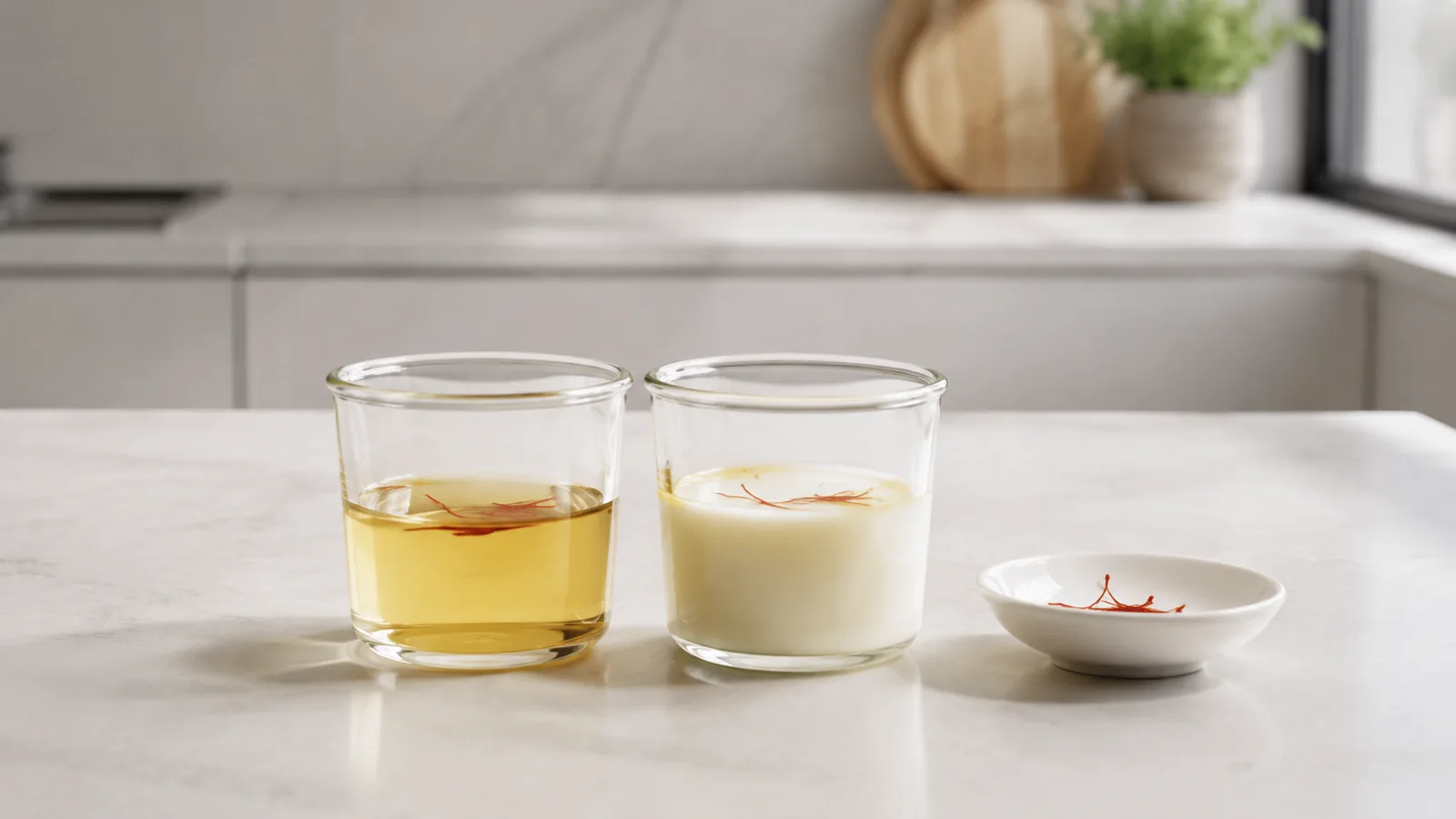
You can change the balance of rose water and plain water, but keep their total—together with the saffron infusion—at one cup. Strong rose water may need less than the quantity above.
Prepare the saffron syrup
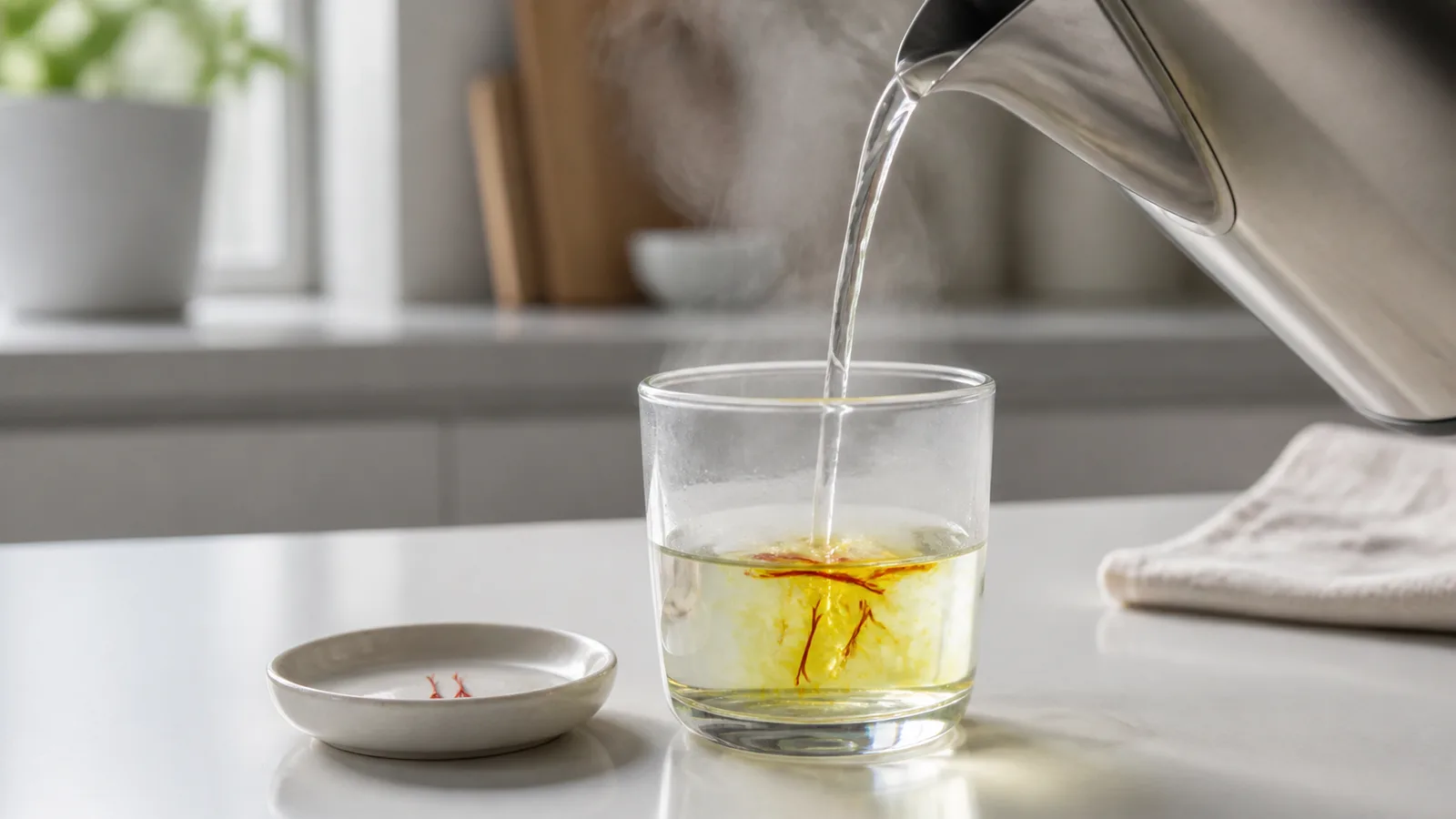
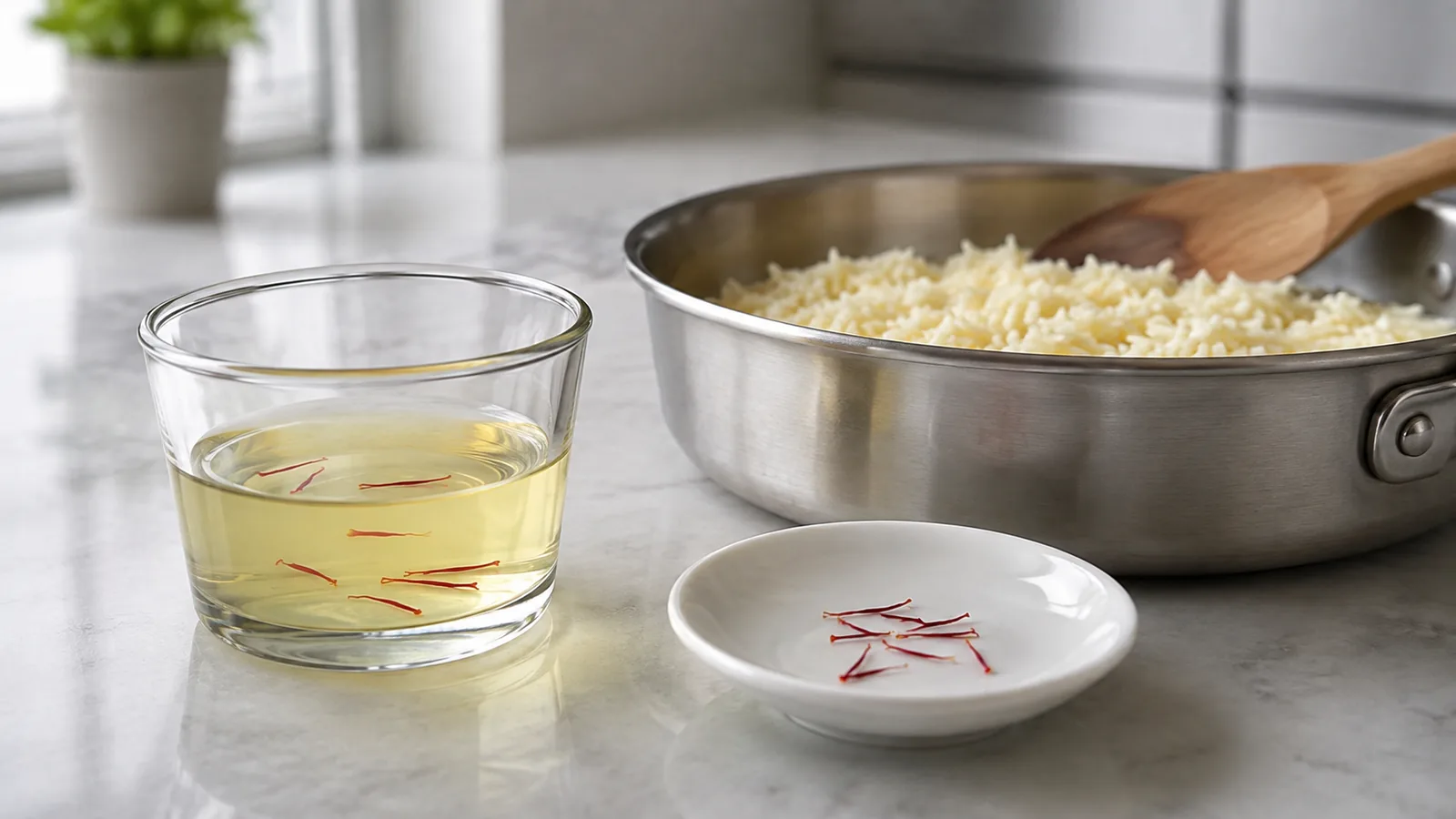
Place the ground saffron in a cup with two small ice cubes and let them melt, or cover it with 60ml hot water for 15 minutes. Add the rose water and enough plain water to make one cup in total.
Stir in the sugar until mostly dissolved. Warm the syrup gently if crystals remain, then take it off the heat. It should be warm rather than refrigerator-cold when it meets the flour mixture. See how to brew saffron for a fuller explanation of both extraction methods.
How to cook Persian saffron halva
- Sift the flour into a wide, heavy saucepan with high sides.
- Add the oil and stir over low heat until no dry pockets remain.
- Cook slowly for 35 to 45 minutes, stirring and scraping the base continuously. The flour should smell nutty and become an even golden brown.
- Remove the pan from the heat. Add the warm saffron syrup gradually in four or five additions, standing back from the steam and stirring well after each one.
- Return the pan to low heat and continue stirring until the halva gathers into one smooth mass and pulls cleanly from the sides.
- Spoon it onto a plate while warm, shape it with the back of an oiled spoon and decorate if desired.
Use a pan about twice the apparent volume of the finished halva. Adding liquid to hot flour and oil produces strong steam and bubbling; the extra room makes the step safer and easier.
How to judge the flour colour
Low heat is what gives Irani halva its even toasted taste. A high flame can darken the base before the rest of the flour is cooked. Watch the aroma as well as the colour: the raw-flour smell should disappear, but the mixture should never smell burnt.
A pale toast makes a more golden saffron halva; a longer toast gives a deeper brown result. Saffron cannot brighten flour that has been scorched, so stop before the mixture turns very dark.
Troubleshooting
- Oil pools on the plate: keep stirring over low heat until the mixture emulsifies and pulls together.
- Halva is dry or crumbly: work in one tablespoon of warm water at a time.
- Halva is loose: cook gently for a few more minutes; it also firms slightly as it cools.
- Lumps appear: add the syrup in smaller portions and stir each addition smooth.
- It tastes raw: the flour needed longer toasting before the syrup was added.
Serving and storage
Across halva in Iran, recipes and occasions vary. This flour-based version is often shaped on a platter or served in small portions, sometimes with tea. It is rich, so a little goes a long way.
Cover leftovers and refrigerate for up to four days. Let the halva lose its refrigerator chill before serving so the aroma and soft texture return. Do not leave it at room temperature for extended periods.