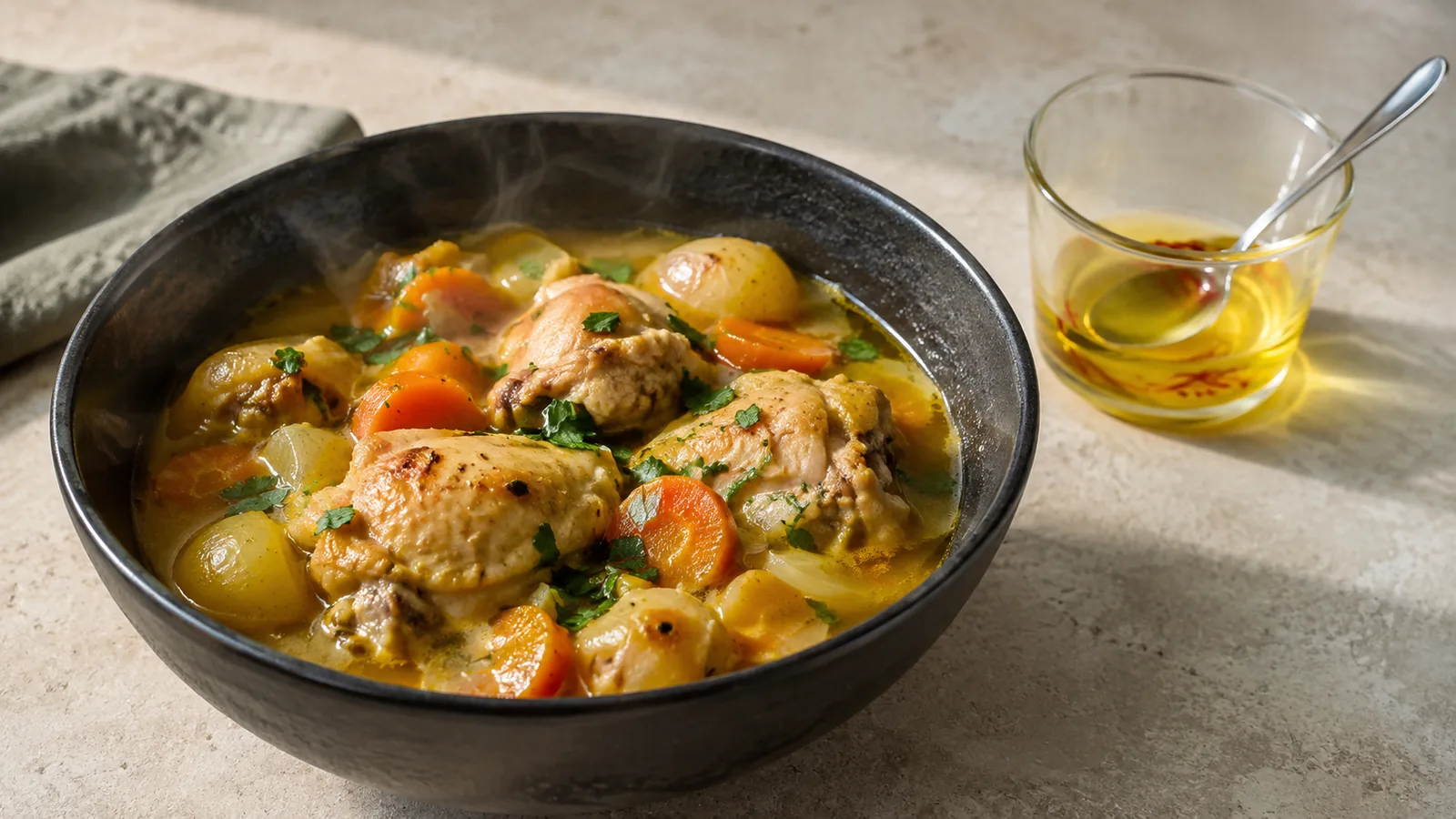
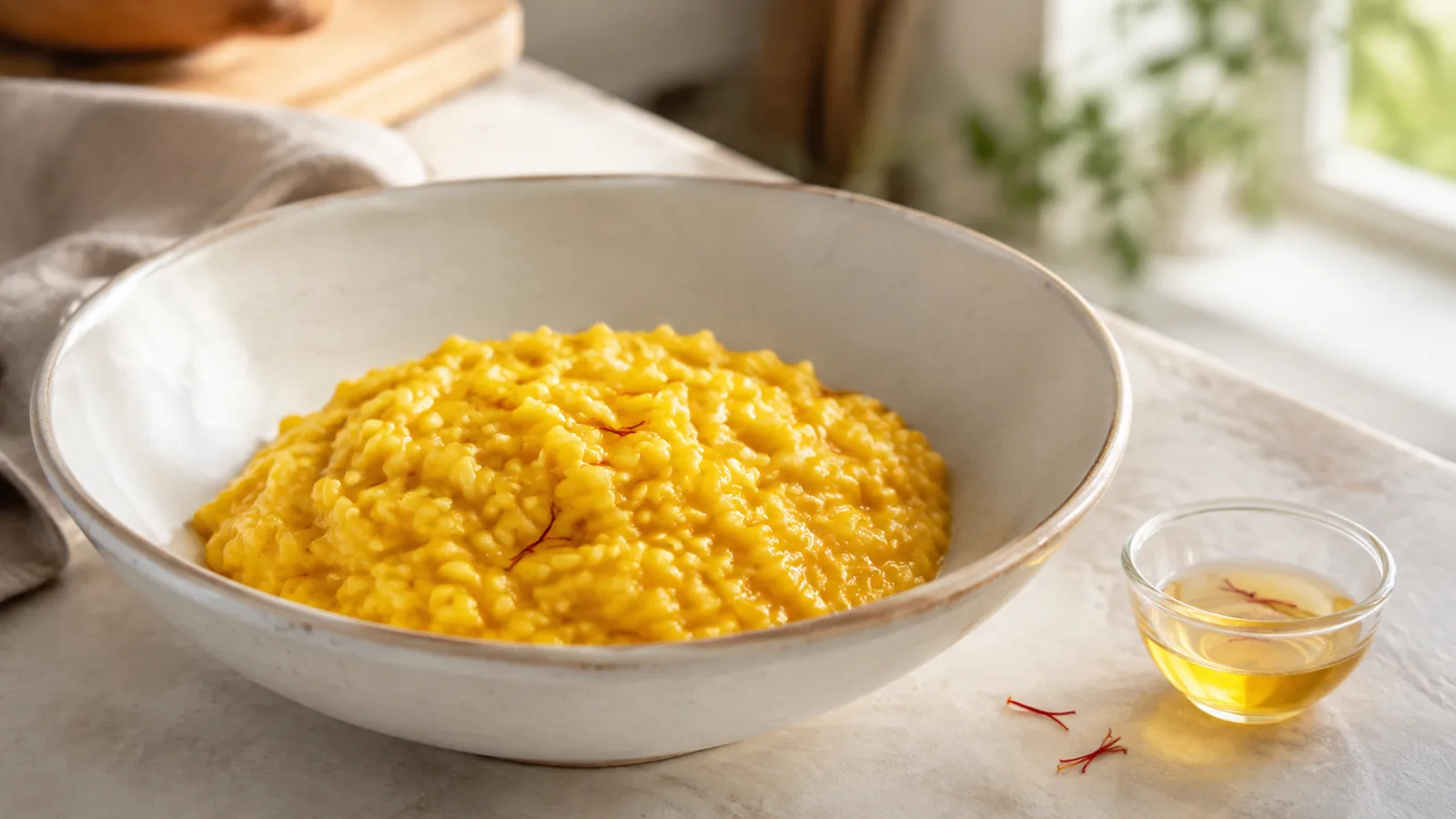
This Saffron Chicken with Carrot Recipe makes a glossy, gently spiced braise with tender chicken and carrots that hold their shape. Saffron goes in twice: once to season the sauce and once near the end, where its aroma stays clear.
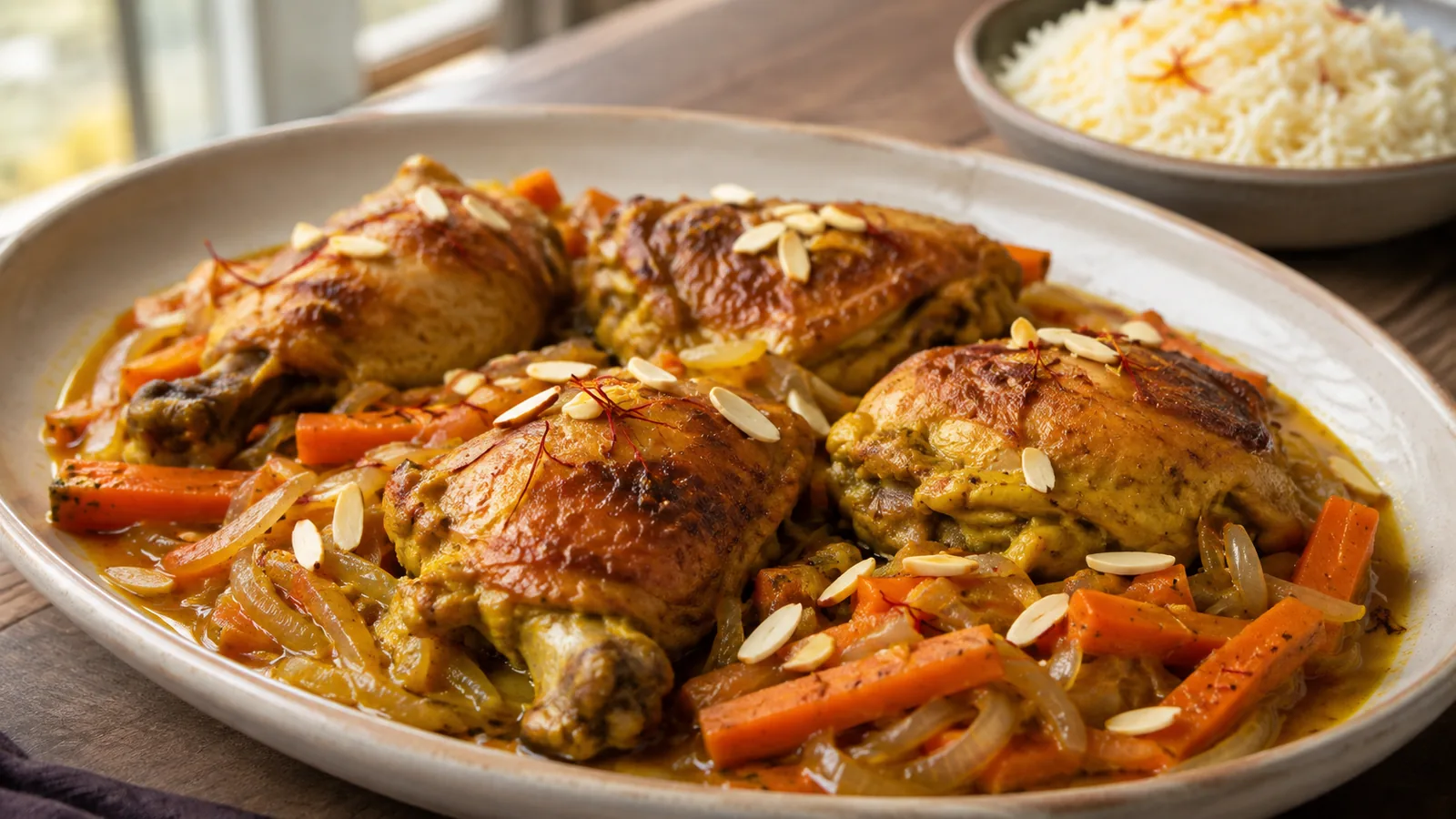
What is restaurant-style saffron chicken?
Saffron chicken can be grilled, roasted or simmered. This version is a Persian-inspired stovetop braise built around browned chicken, softened onion, carrot batons, a small cinnamon stick and concentrated saffron infusion. The finished sauce is savoury with a mild natural sweetness from the carrots, not sugary.
“Restaurant-style” describes the careful browning, tidy carrot pieces and reduced sauce. It is not a claim that every Iranian restaurant uses one formula. Some cooks add tomato paste for a deeper orange sauce; others leave it out so the saffron remains the leading flavour. Both options are included below.
Ingredients for saffron chicken with carrots
This quantity serves four people.
- 4 bone-in chicken thighs, or 4–5 mixed thigh and drumstick pieces, about 1 kg total
- 1 medium onion, finely sliced
- 3 medium carrots, cut into thick diagonal pieces or batons
- 0.15 g saffron threads, about a loosely filled 1/2 teaspoon
- 3 tablespoons hot water for the saffron
- 1 tablespoon neutral oil
- 20 g butter, about 1 1/2 tablespoons
- 1/2 teaspoon ground turmeric
- 1/2 teaspoon black pepper
- 1 teaspoon fine salt, divided, plus more if needed
- 1 small cinnamon stick
- 1 tablespoon tomato paste, optional
- 240 ml hot water or unsalted chicken stock, about 1 cup
- 1 tablespoon fresh lemon juice, optional
- Slivered almonds for serving, optional
Bone-in thighs stay juicy through a gentle braise and finish at roughly the same time. If you use breast pieces as well, check each one separately and remove it as soon as it is safely cooked; breast meat can dry out while larger thighs are still becoming tender.
Prepare the saffron and carrots
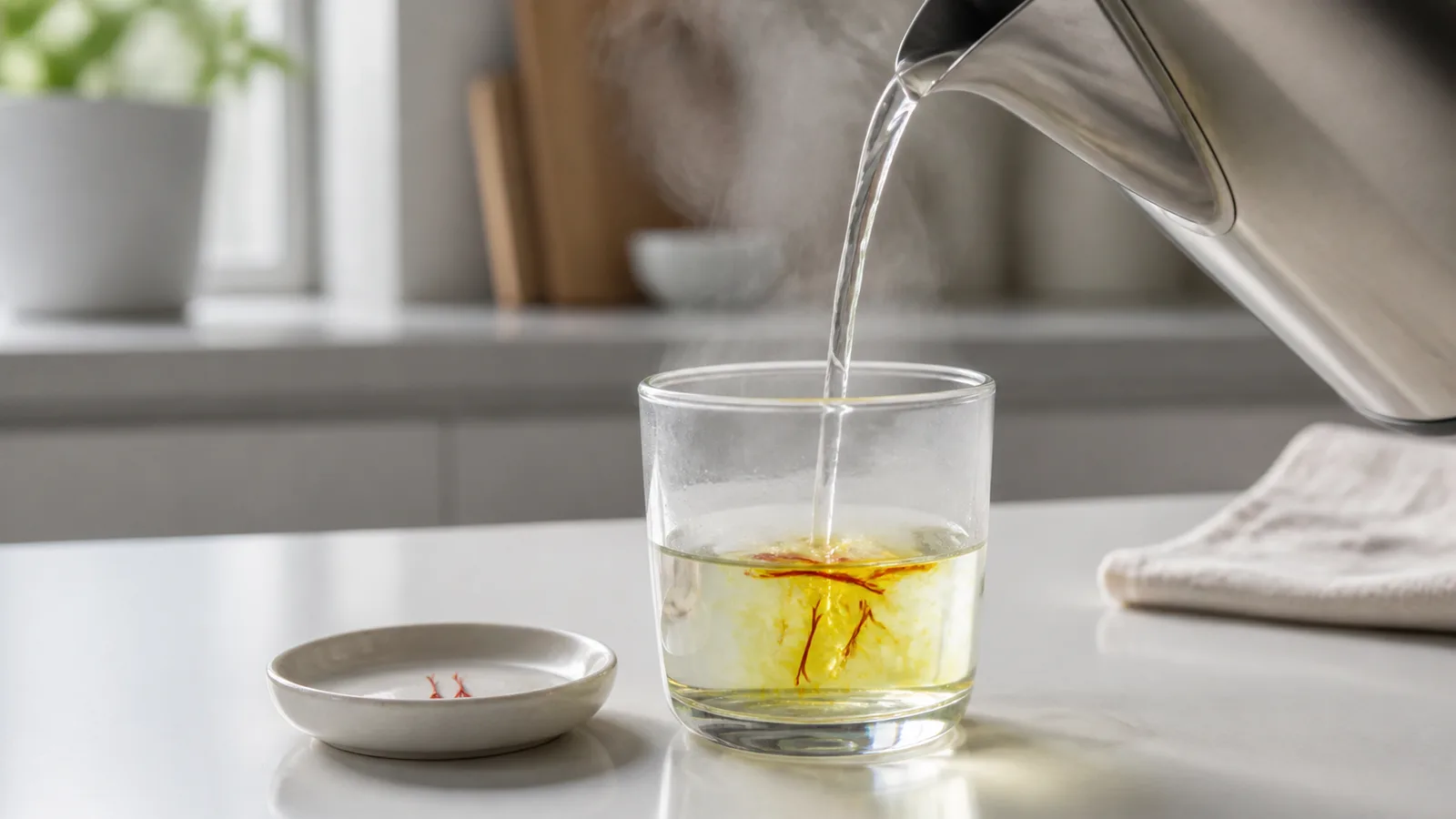
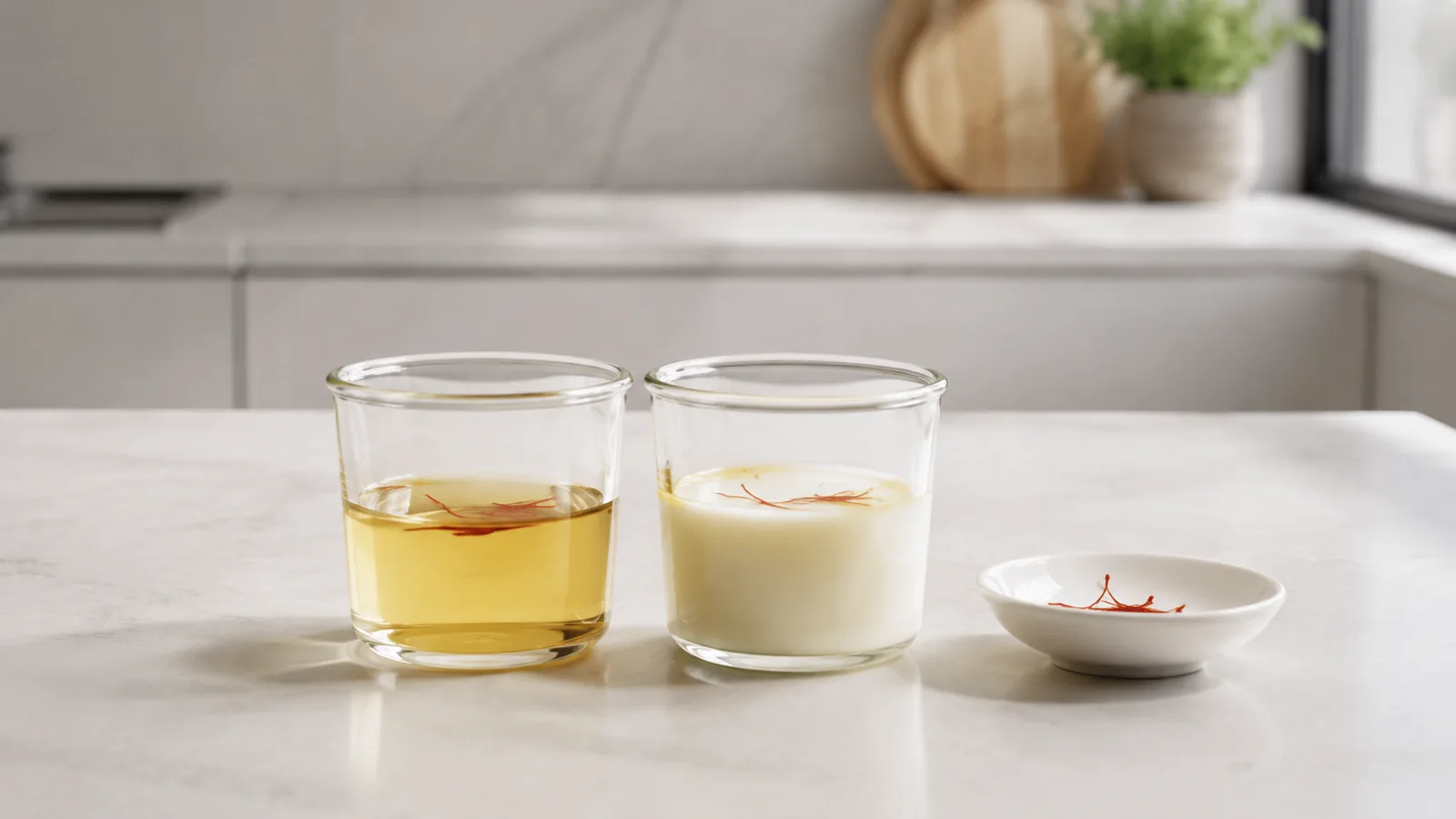
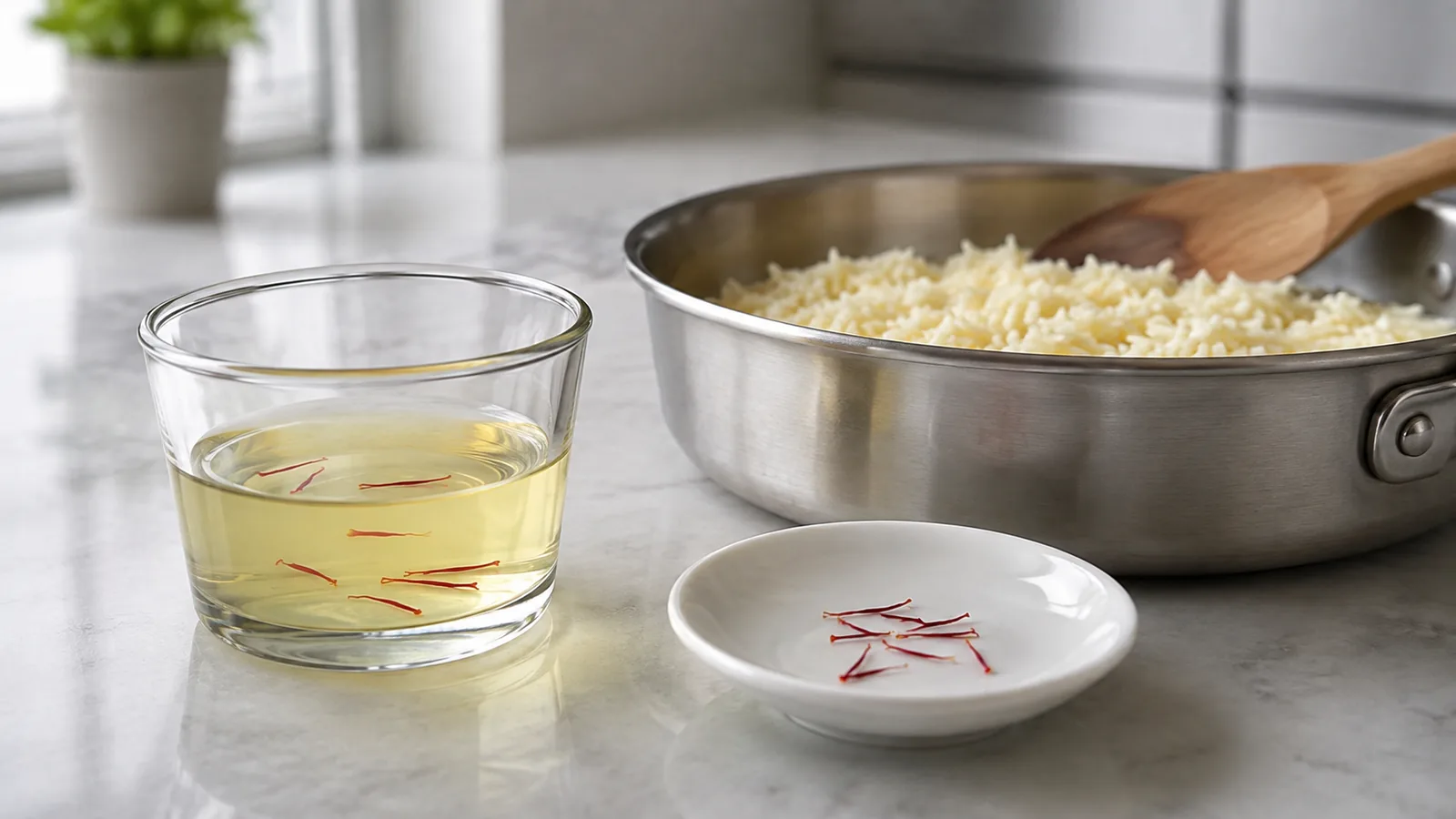
Lightly crush the saffron threads and cover them with three tablespoons of hot water. Cover the cup and leave it for 10 minutes. A small, concentrated infusion distributes the colour and flavour more evenly than scattering dry saffron into the pan.
Peel the carrots if their skins are tough, then cut them into pieces of similar thickness. Thin grated carrot disappears into the sauce; sturdy diagonal pieces give the finished dish a cleaner shape and a better contrast with the chicken.
How to make saffron chicken with carrots
1. Brown the chicken
Do not wash raw chicken. Pat the pieces dry with disposable kitchen paper, then season them with half the salt, the pepper and turmeric. Heat the oil and half of the butter in a wide, heavy lidded pan over medium-high heat.
Place the chicken skin-side down, leaving space between the pieces. Brown for 4–5 minutes, turn and cook the second side for 3 minutes. Move the chicken to a clean plate. It is only browned at this stage and is not ready to eat.
2. Build the carrot and onion base
Lower the heat to medium and add the remaining butter. Cook the onion for 7–9 minutes, stirring often, until soft and lightly golden. Add the carrots and cook for 3 minutes so their edges begin to take on the buttery onion flavour.
If using tomato paste, clear a small space in the pan and cook the paste there for about 1 minute before mixing it through the vegetables. This removes its raw taste. For a golden saffron-forward sauce, simply leave the paste out.
3. Braise gently
Return the chicken and any collected juices to the pan. Add the cinnamon stick, hot water or stock and two-thirds of the saffron infusion. The liquid should reach partway up the chicken rather than cover it completely.
Bring the sauce to a gentle simmer, cover and lower the heat. Cook for 25 minutes, then turn the pieces and check the carrots. Continue cooking for 10–20 minutes, depending on the size and cut of the chicken. Add a splash of hot water if the pan becomes dry before the meat is ready.
4. Add the final saffron and lemon
When the thickest part of each chicken piece reaches 74°C (165°F), stir the remaining saffron infusion into the sauce. Simmer uncovered for 3–5 minutes, just long enough to reduce a watery sauce and bring back the fresh saffron aroma.
Remove the cinnamon stick. Taste first, then add the remaining salt and optional lemon juice a little at a time. Lemon should brighten the sauce, not make it sour. Arrange the chicken and carrots on a warm platter, spoon over the sauce and finish with slivered almonds if you like.
Why saffron is added in two stages
The first addition seasons the braising liquid and reaches the chicken and carrots as they cook. The smaller final addition is exposed to less heat, so its aroma is easier to notice at the table. This is more controlled than using an undefined amount of “brewed saffron as needed.”
If your infusion is unfamiliar, taste a drop before it goes into the pot. Very concentrated saffron can become bitter, while a weak infusion may add colour without enough aroma. Our guide to brewing saffron with hot water explains how to make a measured concentrate.
Food-safety points that matter
Washing raw chicken can splash bacteria onto the sink, taps and nearby food; cooking is what makes the meat safer. Keep the raw-chicken plate and utensils away from the cooked dish, wash your hands after handling it, and use a clean thermometer.
The U.S. government’s safe minimum temperature chart lists all poultry at 165°F (74°C). Measure the thickest part without touching bone. Saffron colour, clear-looking juices and a one-hour timer are not dependable substitutes, especially when pieces differ in size.
How the sauce should look
The finished sauce should coat a spoon lightly but still move around the chicken. If it is thin once the meat is cooked, lift the chicken and carrots onto a clean warm plate and simmer the liquid uncovered. Return everything to the pan only for the final minute.
If the sauce becomes oily, the heat may have been too high or the chicken skin released more fat than expected. Spoon off the excess rather than trying to hide it with flour. A glossy sauce needs enough reduction, not a heavy thickener.
Carrot texture and flavour adjustments
Carrots should be tender enough for a fork but not collapsing into the sauce. If they are ready before the chicken, remove them and return them during the final saffron step. If they remain hard, cut them slightly smaller next time rather than extending the chicken’s cooking time.
Cinnamon, turmeric and tomato paste can all overwhelm saffron when used heavily. Keep the cinnamon stick small and remove it before serving. Do not add ginger or chilli only to cover a supposed “chicken odour”; fresh chicken, good browning and controlled cooking produce a cleaner result.
What to serve with saffron chicken
Plain basmati rice lets the carrot sauce stand out. A lightly seasoned saffron rice also works, though it is sensible to use less saffron in the rice when the chicken sauce is already aromatic.
For contrast, add a cucumber-and-herb salad, plain yoghurt or simply dressed greens. Bread is useful for the sauce, but keep the rest of the plate uncomplicated; this dish gets its character from the balance of savoury chicken, sweet carrots and saffron.
Storage and reheating
Cool leftovers promptly and refrigerate them in a covered shallow container. The USDA leftovers guidance uses a refrigerated limit of 3–4 days. Reheat the chicken with its sauce until the meat again reaches 74°C (165°F), adding a spoonful of water if the sauce has tightened in the refrigerator.
The restaurant-style finish comes from attention to a few ordinary details: evenly cut carrots, properly browned chicken, a quiet simmer and saffron added with restraint. None is difficult, but together they make the plate look deliberate and keep every flavour recognisable.