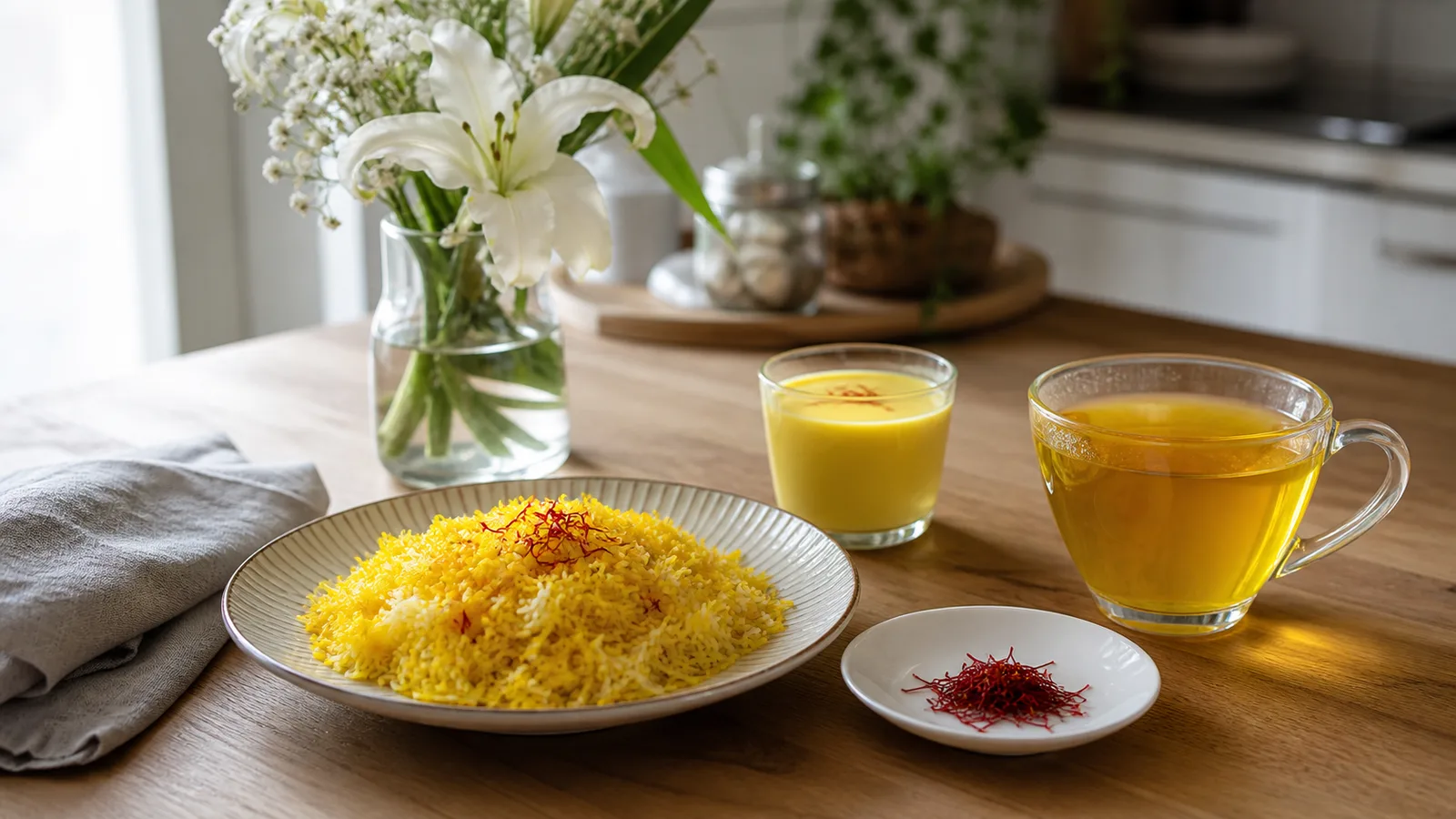
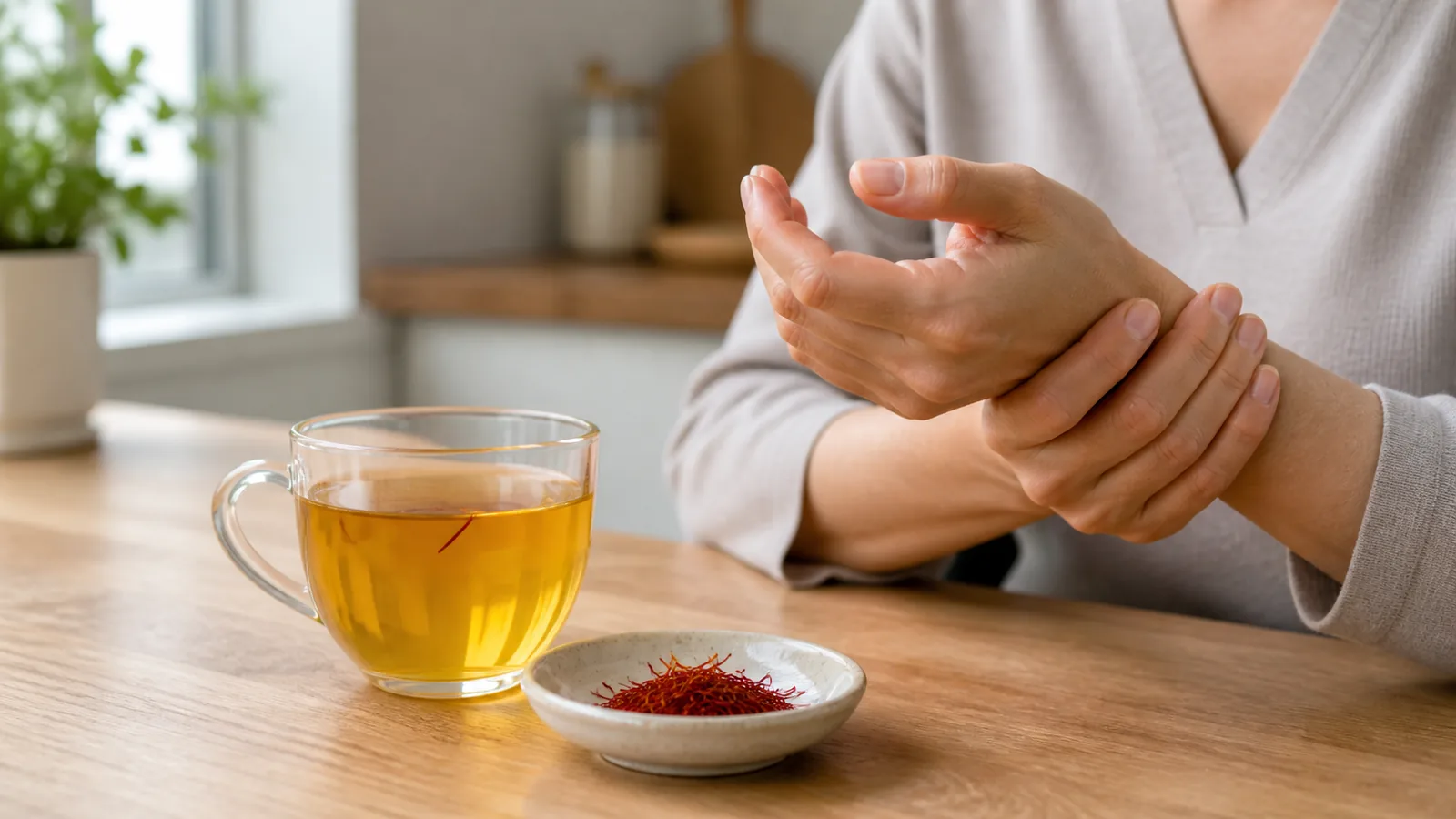
A saffron infusion is made by steeping a small culinary pinch of saffron threads in hot water. Add chamomile, cinnamon, cardamom or lemon verbena and the cup takes on a different aroma without needing caffeine. These blends can be pleasant and soothing as drinks, but their medical effects should not be inferred from the flavour—or from research on concentrated supplements.
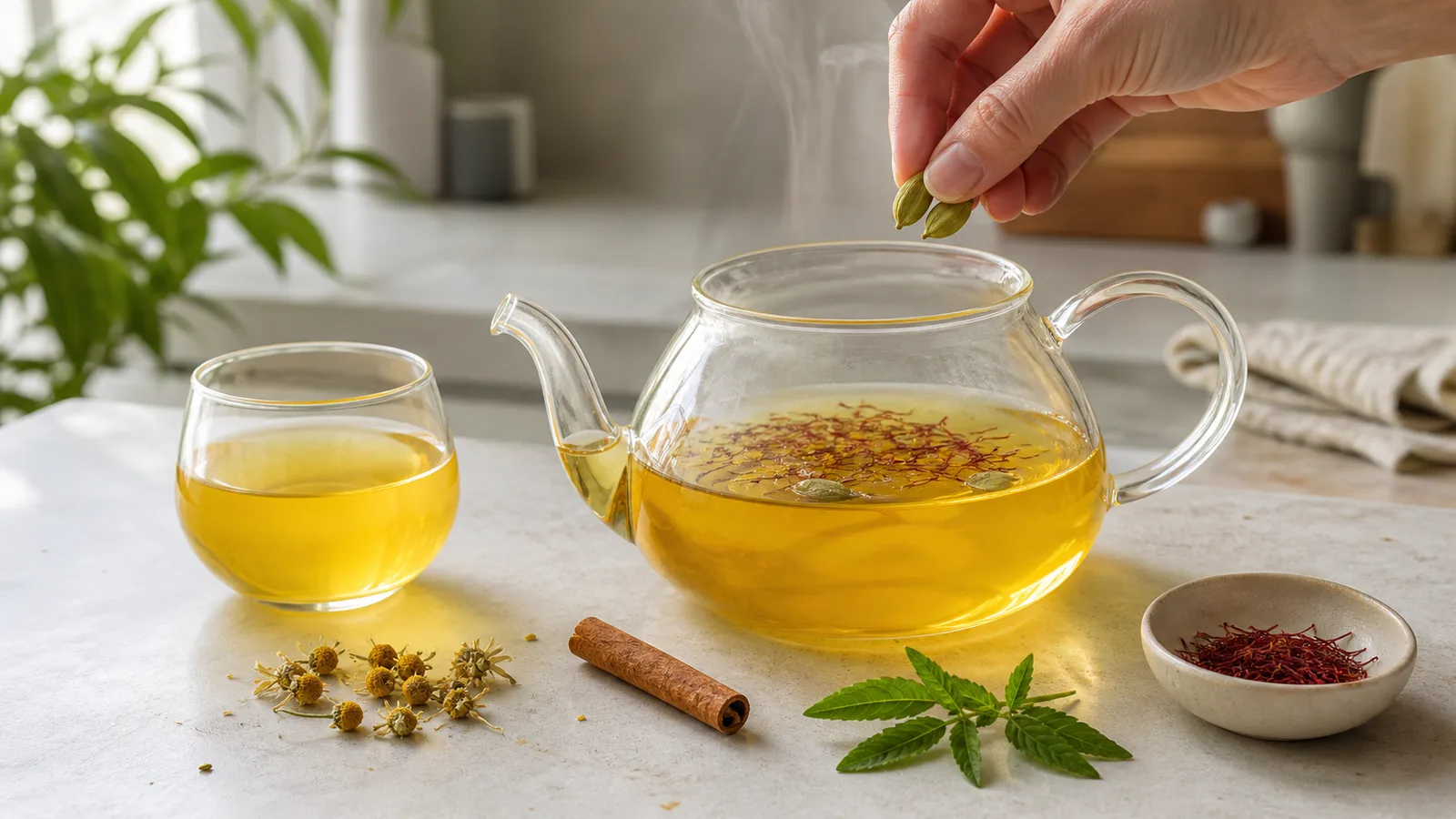
The best combination depends on the moment. Chamomile is soft and floral, cinnamon is warm and woody, cardamom is bright and aromatic, and lemon verbena brings a clean citrus note. Each recipe below keeps the saffron noticeable instead of burying it beneath a large quantity of another herb.
How to make a balanced saffron infusion
For one cup, lightly crush a small pinch of saffron threads and place it in a teapot or heatproof glass. Add about 250 ml of hot water, cover, and steep for 10 to 15 minutes. Covering the vessel helps keep the aroma in the cup. The liquid should become clear gold, not opaque red.
Add the companion herb at the start of steeping unless its instructions say otherwise. Taste before sweetening. Honey or sugar can soften bitterness, but neither is required, and honey must never be given to a child under one year because of the risk of infant botulism. If you use ordinary black or green tea as the base, the drink is no longer caffeine-free.
Can I mix saffron with chamomile tea?
Yes. Saffron and chamomile make a gentle floral blend. Use a small pinch of crushed saffron with one teaspoon of dried chamomile flowers, add hot water and steep under a lid for 8 to 10 minutes. Strain before drinking. A 15-minute steep gives a stronger cup, but more time can also draw out extra bitterness from the herbs.
Chamomile is often described as calming, though evidence for many advertised uses remains limited. It should not be used as a home treatment for teething pain, and there is no good evidence that combining it with saffron strengthens hair follicles or treats dandruff. The US National Center for Complementary and Integrative Health also notes that chamomile may cause allergic reactions, especially in people sensitive to ragweed, chrysanthemums, marigolds or daisies, and may interact with medicines including warfarin and sedatives.
Saffron and cinnamon tea benefits—and limits
This pairing offers a warming aroma and needs little or no sweetener. Use one small cinnamon stick rather than a spoonful of ground cinnamon; the stick is easier to remove and leaves a clearer drink. Steep it with a small pinch of saffron for about 10 minutes.
Cinnamon and saffron have each been studied separately for metabolic outcomes, but a homemade cup containing both has not been shown to control blood sugar, treat diabetes or prevent Alzheimer’s disease. NCCIH’s diabetes guidance says herbal supplements have not been proven to control diabetes or its complications. It also notes that cassia cinnamon contains varying amounts of coumarin, which can be a concern for people with liver disease, and that concentrated cinnamon can interact with diabetes medicine. A culinary stick in an occasional cup is different from high-dose daily supplementation.
Lemon verbena and saffron infusion
Lemon verbena gives saffron a fresh citrus aroma without adding lemon juice. Combine a small pinch of saffron with about one teaspoon of dried lemon verbena leaf, add hot water, cover and steep for 7 to 10 minutes. Strain it before serving; steeping too long can make the leaf taste sharp.
The European Medicines Agency recognizes traditional use of lemon verbena leaf for temporary sleep difficulty, mild mental stress and mild gastrointestinal complaints. “Traditional use” is not the same as proof from strong clinical trials. Claims that this blend suppresses appetite, clears skin blemishes or produces weight loss go beyond the evidence and should not guide treatment.
Cardamom and saffron infusion
Lightly crack two green cardamom pods so the water can reach the seeds, then steep them with a small pinch of saffron for 10 minutes. Whole pods give a cleaner cup than ground cardamom. The result is fragrant and works particularly well after a meal, but enjoying the flavour is a more defensible reason to drink it than promising digestive or mood treatment.
Clinical studies of cardamom generally use measured daily supplementation, not two pods in a mixed tea. A systematic review of eight small trials found small changes in some inflammatory markers and blood-pressure measures while warning that the limited evidence requires cautious interpretation. Those results do not turn cardamom-saffron tea into blood-pressure medicine.
What saffron infusion benefits are supported?
The dependable benefits of a saffron infusion are straightforward: it is a fragrant drink, it can be made without caffeine or added sugar, and the preparation itself can create a quiet pause. Saffron contains compounds such as crocin and safranal, and human research has examined standardized saffron preparations for mood, PMS and other outcomes. The crucial detail is that a variable home infusion is not the same intervention used in most trials.
Mood and stressful days
A current GRADE-assessed meta-analysis of saffron trials found moderate-certainty evidence for improvement in some self-reported depression and anxiety scores, while several clinician-rated scales did not show a significant effect and results varied substantially. These studies do not prove that tea relieves anxiety or depression. Persistent low mood, anxiety or major changes in sleep deserve professional care.
Menstrual discomfort and PMS
Saffron research has also examined premenstrual syndrome and menstrual pain. A 2026 systematic review reported favourable pooled results, but the included interventions were measured saffron preparations—not ordinary mixed herbal tea. It is reasonable to enjoy a warm cup for comfort; it is not reasonable to promise that it will control cramps. Severe pain, fainting, very heavy bleeding or a major change in a cycle should be assessed by a clinician.
Digestion, cholesterol and blood pressure
Warm fluid may feel comfortable after a meal, but claims that a saffron infusion cures bloating or “detoxes” digestion are not established. Research on saffron supplements has found small or inconsistent changes in some cardiovascular measures. Tea must not replace prescribed medicine or monitoring for high cholesterol, high blood pressure or a heart condition. For a closer look at the distinction, read our evidence-based guide to saffron tea benefits.
Who should be careful with herbal blends?
A mixed infusion has more than one ingredient, so it also has more than one set of possible sensitivities and interactions. Keep the amount culinary and avoid trying to recreate supplement doses in a teapot.
- Ask a clinician before frequent medicinal use during pregnancy or breastfeeding.
- Check each herb if you take blood thinners, sedatives, diabetes or blood-pressure medicine, or if surgery is approaching.
- Avoid an ingredient that has previously caused an allergy. Stop if a blend causes swelling, breathing difficulty, rash or persistent digestive symptoms.
- Choose food-grade herbs from an identifiable supplier, and do not use an ornamental or unidentified plant as tea.
The simplest way to find a favourite is to start with saffron alone, then try one companion herb at a time. You will taste the difference more clearly, and if a blend does not agree with you, the cause is easier to identify.