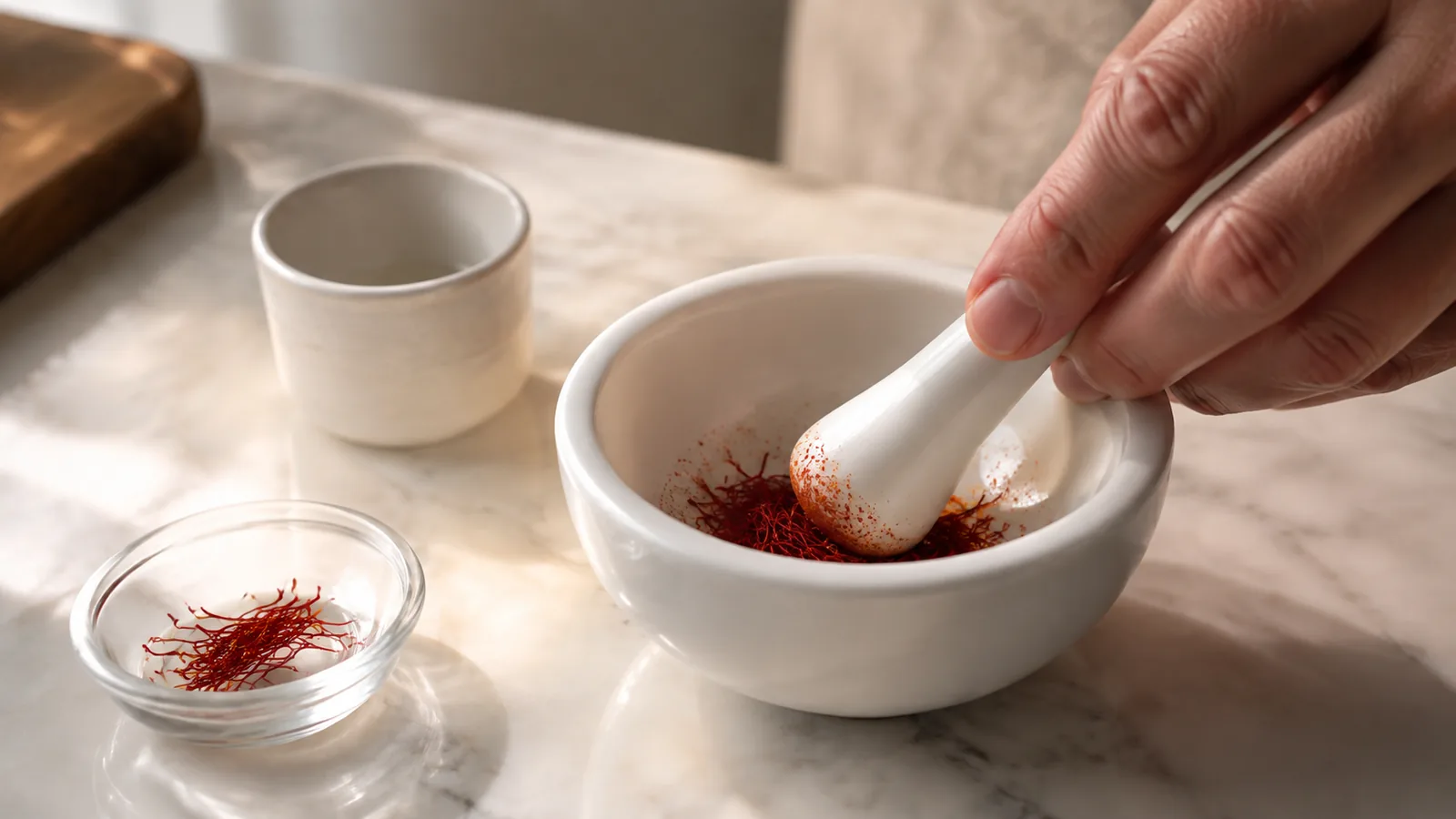
Good saffron syrup recipes balance three things: the spice’s aroma, enough acidity to keep the drink lively, and restrained sweetness. Start with a real saffron infusion, then turn it into a classic sharbat or add basil seeds, orange blossom water, lemon, food-grade mallow, musk-willow distillate or honey. The same base can also be scaled for a gathering of 100 people.
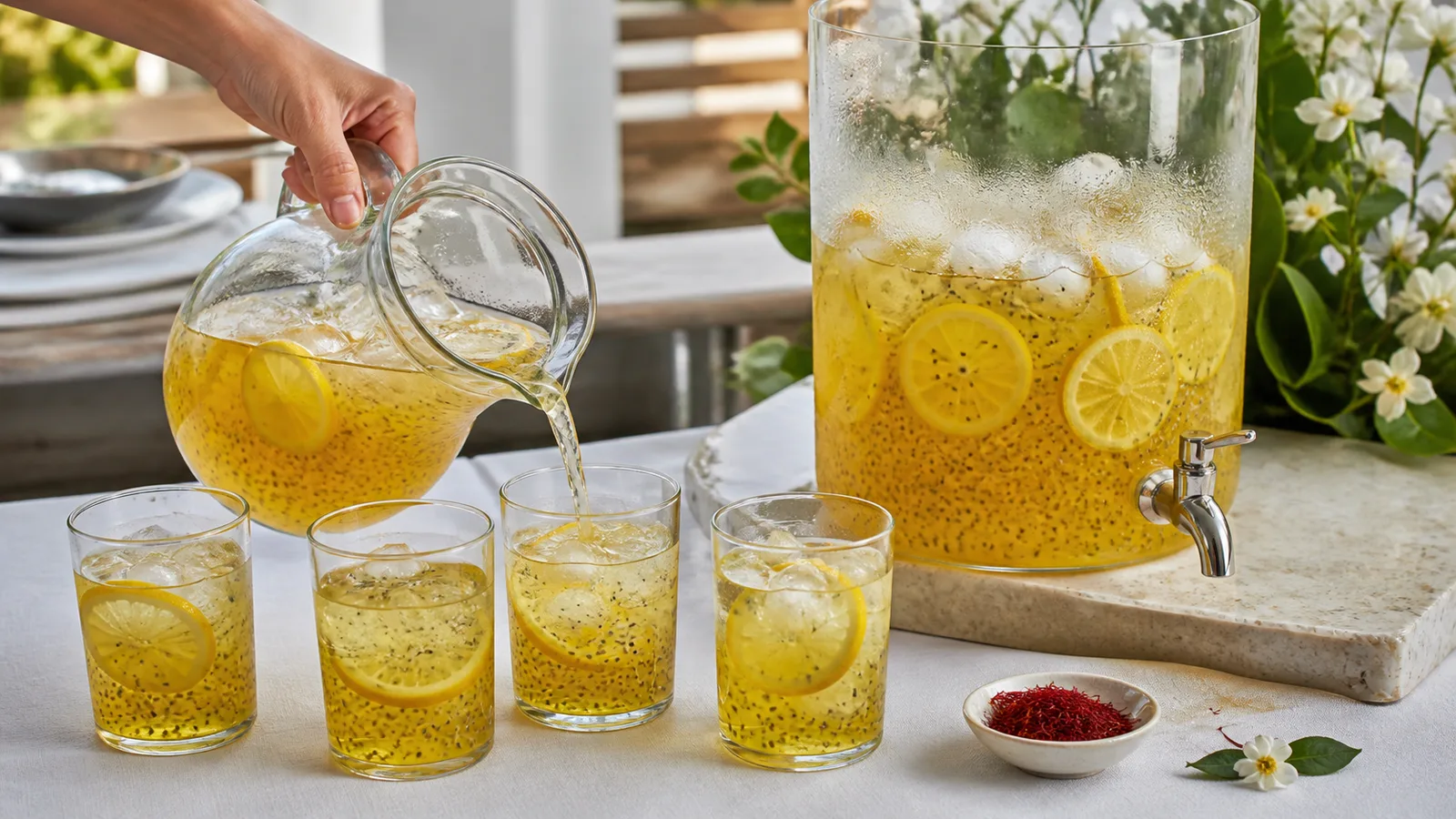
This guide gives seven variations and a practical large-batch method. It also separates homemade saffron syrup from iron supplements, tonics and concentrated extracts. Those products may share a search name, but they are not interchangeable.
A reliable saffron syrup base for four
This base makes four glasses of roughly 225 to 250 ml. Adjust the final water and sweetness to the way the drink will be served; plenty of ice will dilute it further.
- 3 cups (720 ml) water, divided
- 1/3 to 1/2 cup (65 to 100 g) sugar
- A small culinary pinch of saffron threads, lightly ground
- 2 to 4 tablespoons fresh lemon juice, to taste
- Ice and additional cold water for serving
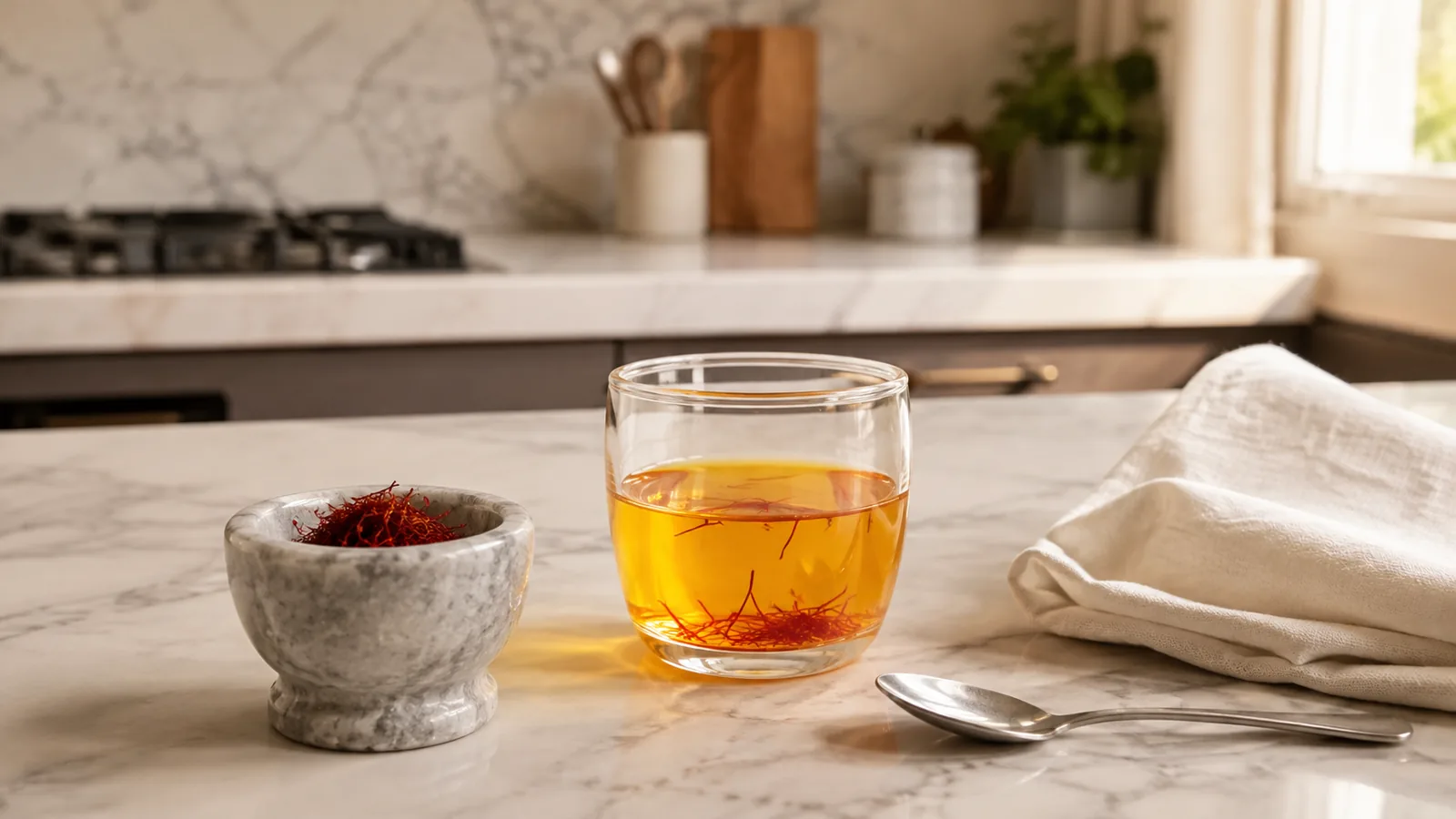
- Bloom the ground saffron in 1/4 cup of hot water, covered, for 10 to 15 minutes. The infusion should turn clear gold and smell distinctly floral.
- Warm 1 cup of the remaining water with the sugar just until the crystals dissolve. There is no need to boil it for a long time.
- Remove from the heat and stir in the saffron infusion. Cool, then add the rest of the water and enough lemon juice to brighten the flavour.
- Chill thoroughly. Taste over ice and dilute if it is too sweet or concentrated.
Some cooks bloom ground saffron over a melting ice cube. That method works, but hot-water blooming is faster and does not make the drink medically stronger. The quality and quantity of the saffron matter more than turning one preparation custom into a rule.
Seven saffron syrup recipes
1. Classic saffron simple syrup
Use the base exactly as written. For a concentrate rather than a ready-to-drink sharbat, omit the final cold water and refrigerate the cooled syrup in a clean covered container. Add a spoonful at a time to sparkling water, iced tea or lemonade. This is the most flexible saffron simple syrup because it has no second floral flavour competing with the spice.
2. Saffron syrup with basil seeds
Soak 1 tablespoon of food-grade basil seeds in 1/2 cup of cool water for about 15 minutes, until each seed develops a translucent coating. Stir them into the cold base just before serving. They add texture, so offer a spoon or wide straw and stir the jug between pours. Basil seeds are not chia seeds, even though they look similar after soaking.
3. Saffron syrup with mallow flowers
Steep 1 to 2 tablespoons of dried, food-grade mallow flowers in 1/2 cup of cool water according to the supplier’s directions, then strain. Add the coloured liquid gradually to the cold saffron base. Common names such as marshmallow flower, mallow and hollyhock are used inconsistently, so do not brew an ornamental or unidentified flower. The colour may shift when lemon is added; that is chemistry, not a sign that the saffron has changed.
4. Saffron syrup with orange blossom water
Add 2 tablespoons of food-grade orange blossom water to the cooled base, taste, then add more only if needed. Brands vary greatly in strength, and too much can make the drink taste perfumed. Keep the lemon modest so both floral aromas remain clear.
5. Lemon saffron syrup
Increase the fresh lemon juice to about 1/4 cup and serve with thin lemon wheels. For a sharper lemonade-style drink, reduce the sugar before increasing the lemon; adding more of both can hide the saffron and turn a refreshing drink into a very sweet one.
6. Saffron syrup with musk-willow water
For the Iranian drink made with bidmeshk, use a commercially prepared, food-grade musk-willow blossom distillate and follow its label. Start with 1 to 2 tablespoons in the four-serving base. This is not the same as steeping willow bark at home, and it should not be promoted as a pain medicine. If the bottle does not clearly identify the ingredient and food use, leave it out.
7. Saffron syrup with honey
Replace the sugar with 1/3 cup of honey, dissolving it in warm rather than vigorously boiling water. Honey changes the flavour and is still an added sugar; it does not make the drink a treatment. Never serve honey in any food or drink to a baby younger than 12 months because of the risk of infant botulism, as the US Centers for Disease Control and Prevention explains.
How to make saffron syrup for 100 people
For a large gathering, work by final volume rather than multiplying a small recipe blindly. The quantities below make about 20 litres, enough for 100 servings of 200 ml. If your cups are 250 ml, make 25 litres or plan for fewer servings.
- 20 litres of potable water in total, including the brewing water
- 2 to 2.5 kg sugar, depending on the sweetness wanted
- 2 to 2.5 g genuine saffron threads, ground shortly before brewing
- 750 ml to 1 litre fresh lemon juice, added gradually to taste
- Plenty of clean ice, kept separate from the measured water unless its melt is included in the final volume
- Bloom the ground saffron in about 1 litre of hot water, covered, for 15 minutes.
- Dissolve the sugar in 4 litres of hot water in a food-safe vessel. Do not add all the sugar at once if the crowd prefers a lighter drink.
- Combine the syrup and saffron infusion, then add cold water toward a final volume of 20 litres.
- Add 750 ml lemon juice, mix thoroughly and taste a chilled sample. Adjust acidity, sweetness and final volume before adding ice.
- Divide among clean covered dispensers and keep chilled until service. Stir before and during serving so the batch remains even.
Make a small test batch with the same saffron, sugar and lemon a day before the event. This catches an unusually strong orange blossom water, a weak batch of saffron or a lemon that is sharper than expected. For service, use clean utensils and potable water and ice. The FDA Food Code is the US model for retail food-safety practice; local event and food-service rules still apply.
Saffron syrup uses
Saffron syrup uses go beyond a glass of sharbat. A restrained concentrate can sweeten sparkling water, flavour lemonade, moisten a cake layer, finish a fruit salad, tint a yogurt drink or add a floral note to a non-alcoholic cocktail. Add it gradually: the sugar, not just the saffron, changes the recipe.
“Liquid saffron” usually means a brewed saffron concentrate without much sugar. It is useful for rice, stews and batters where sweet syrup would be wrong. A commercial saffron tonic may be a supplement, and a saffron iron syrup is an iron-containing product with its own label and dose. Neither should be used as a cocktail syrup or treated as equivalent to homemade sharbat.
Saffron syrup benefits without the exaggeration
The reliable benefits are culinary: aroma, colour, refreshment and an easy base for serving saffron consistently to a group. Sugar supplies carbohydrate energy, but describing a sweet drink as an energy or strength treatment is misleading. Saffron does not provide meaningful potassium, calcium or iron in the tiny culinary quantity used here, and the FDA’s added-sugars guidance notes that sugar-sweetened drinks are a major source of added sugar.
Saffron contains compounds with antioxidant activity, and researchers have studied measured saffron preparations for mood, cognition and some metabolic outcomes. An evidence map of saffron meta-analyses found promising signals alongside heterogeneous results and differences in review quality. It does not show that syrup prevents heart disease, reduces joint inflammation, cures bloating, gas or indigestion, improves memory, or relieves stress or anxiety. A sweet culinary drink is not a substitute for care.
Saffron syrup for babies, pregnancy and regular medicines
Saffron syrup for babies is not a suitable home remedy. Infants do not need added-sugar drinks, honey is unsafe before 12 months, and a baby with feeding, digestive or health concerns needs advice from a paediatric professional. Do not confuse a commercially prescribed infant product with homemade syrup.
During pregnancy, culinary saffron in food is different from frequent or concentrated use intended to produce an effect. A recent review of saffron and pregnancy found that safety evidence remains limited and inconclusive, with concerns increasing at higher exposure. Ask the maternity-care clinician before making saffron syrup a regular health practice; it will not affect a baby’s complexion.
Anyone using medicines for blood sugar, blood pressure, mood or bleeding—or preparing for surgery—should check before frequent medicinal use of saffron or other herbs added to the drink. Stop if an ingredient causes an allergic reaction or persistent digestive symptoms. For ordinary hospitality, keep the saffron culinary, the syrup properly chilled and the claims modest.