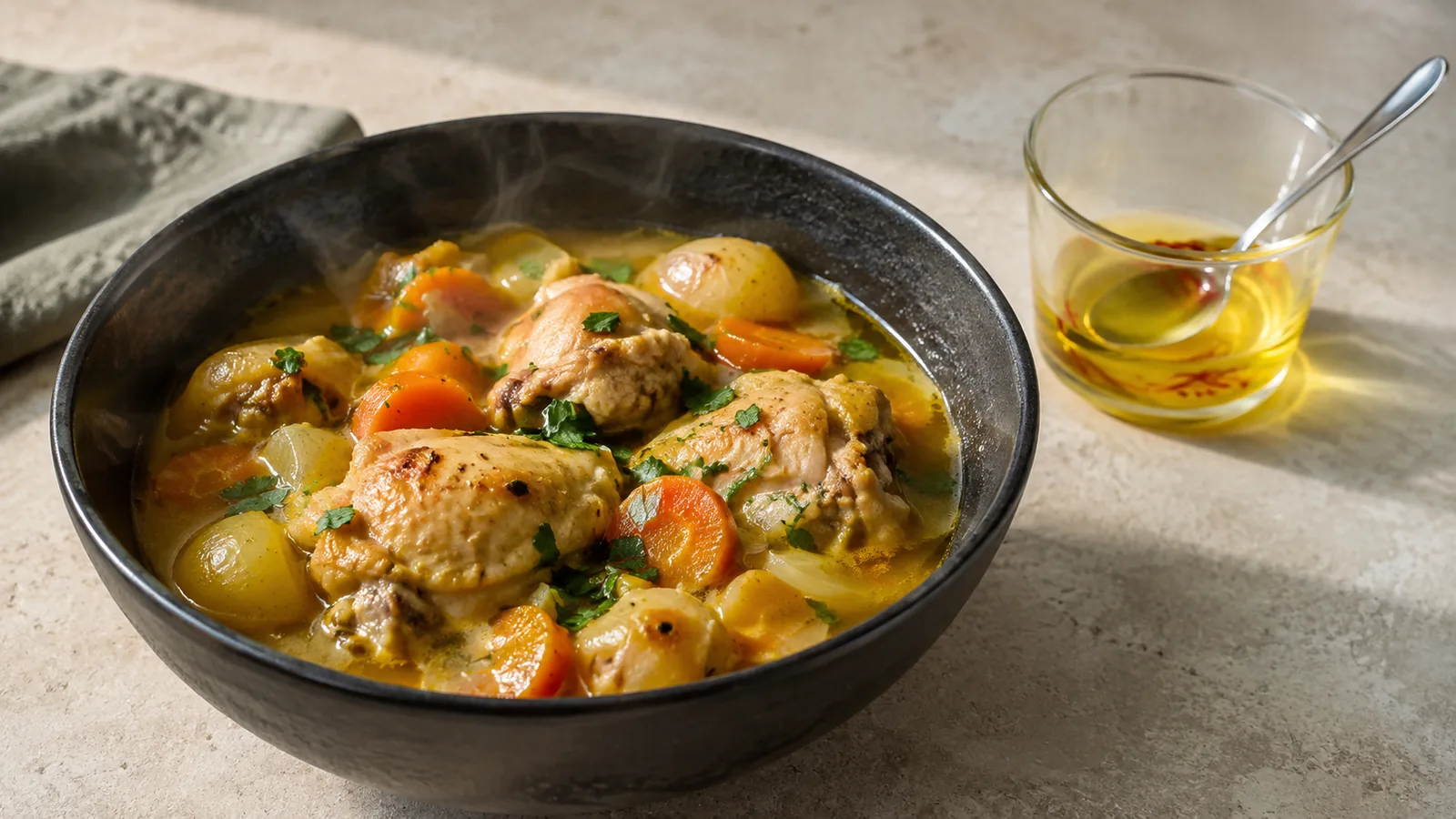
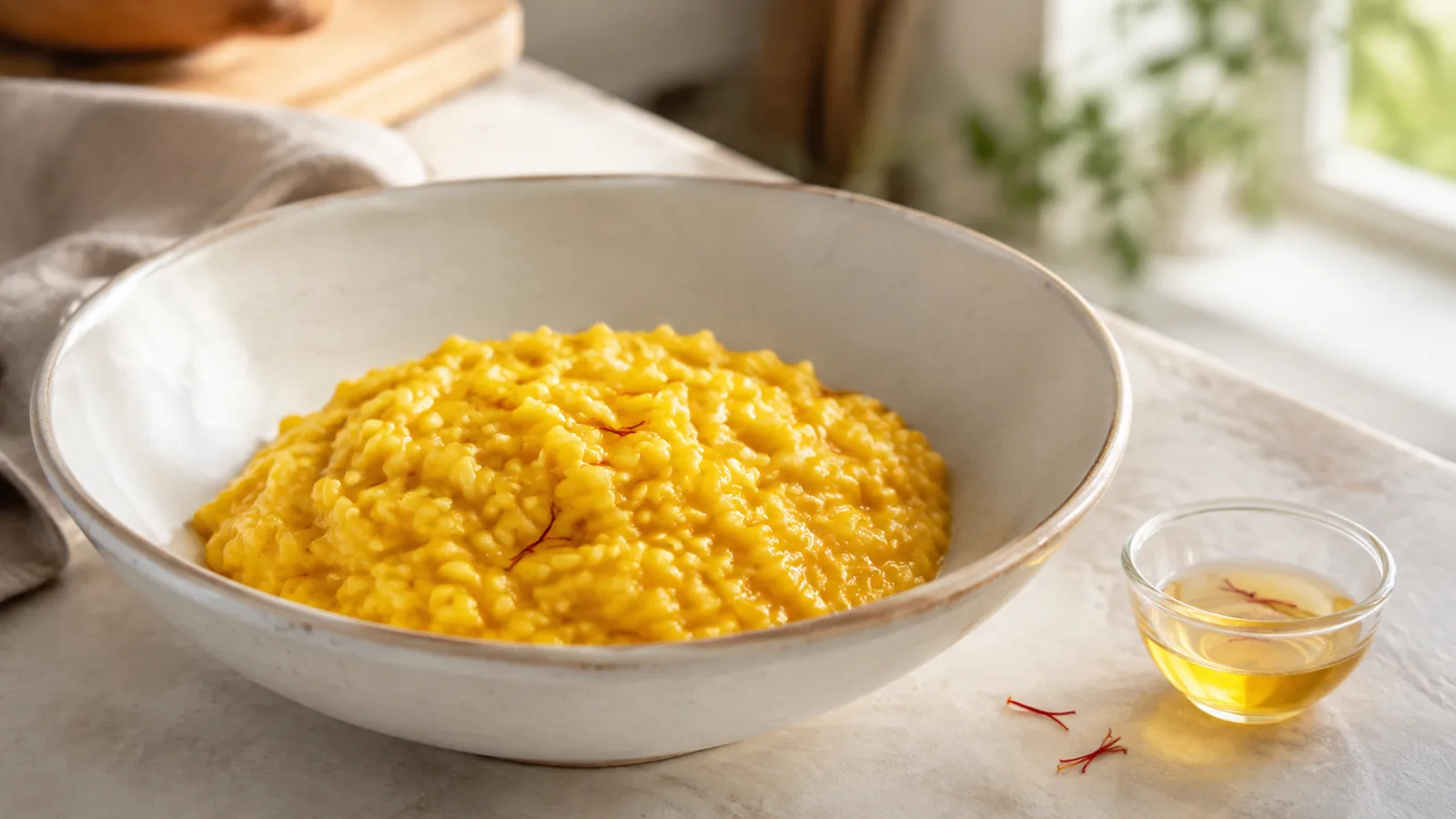
This Saffron Bread Recipe makes a soft, lightly sweet yeast loaf with a golden crumb and a clear saffron aroma. The same dough can be baked as a round loaf, braid or small rolls, with a walnut variation and a practical stovetop option.
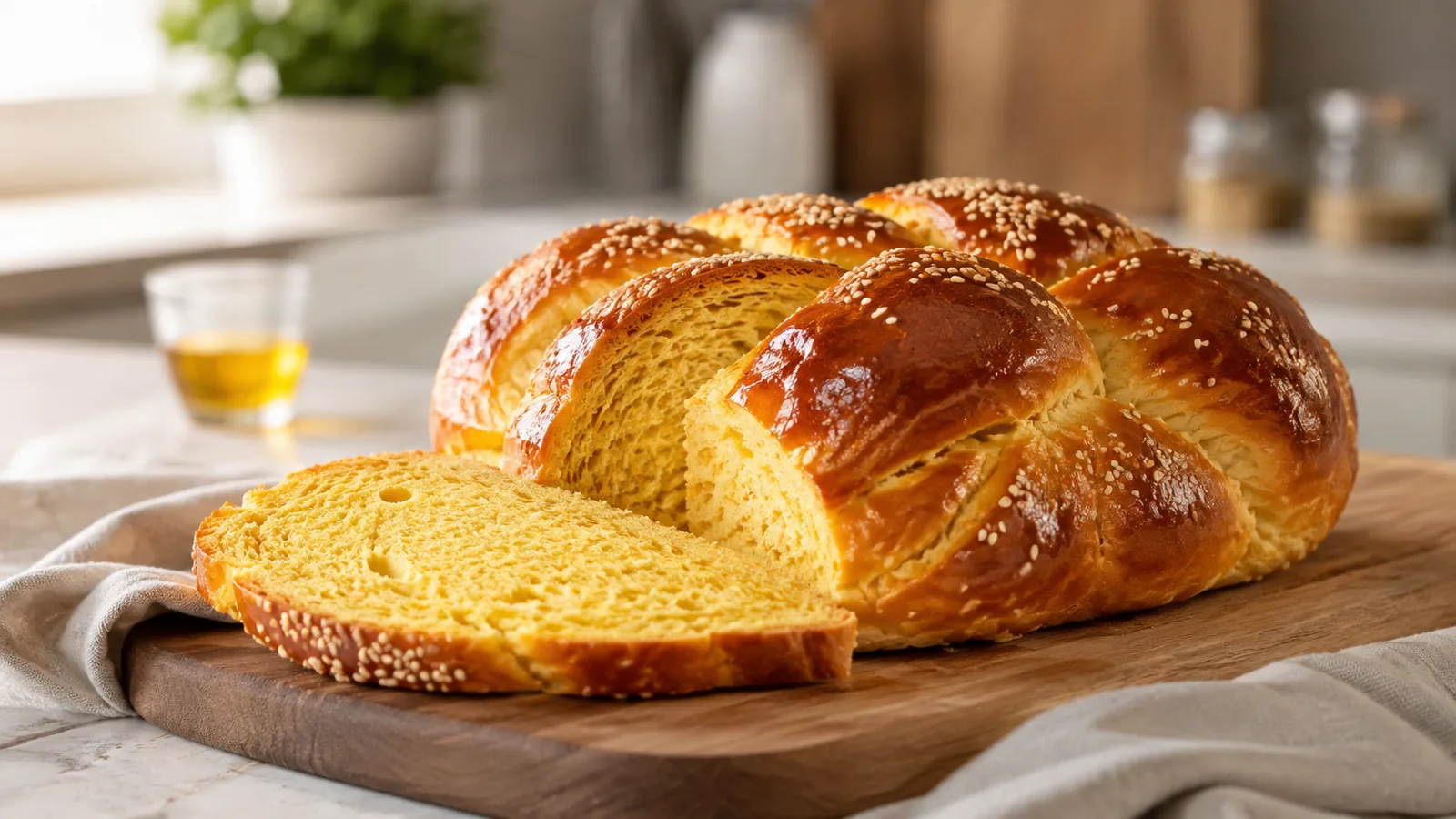
What kind of saffron bread is this?
Saffron bread can mean very different things. Swedish lussekatter are shaped festive buns, while several Iranian “bread” recipes are closer to tea biscuits or short pastries. This page is for a true risen loaf: yeast provides the lift, oil keeps the crumb tender, and two egg yolks are divided between the dough and its glaze.
The flavour is gently sweet rather than cake-like. Serve it with tea, plain yoghurt or a little cream cheese. If you add walnuts, it becomes richer but should still slice like bread.
Saffron bread ingredients
This quantity makes one medium loaf or eight small rolls.
- 390 g plain or bread flour, about 3 cups, plus a little only if needed
- 7 g instant yeast, about 2 1/4 teaspoons
- 40 g sugar, about 3 tablespoons
- 1 teaspoon fine salt
- 220 ml warm water, just under 1 cup
- 0.15 g saffron threads, about a loosely filled 1/2 teaspoon
- 2 tablespoons hot water for the saffron
- 60 ml neutral oil, about 1/4 cup
- 2 egg yolks, divided
- 1 tablespoon milk or water for the glaze
- 1 tablespoon sesame seeds, optional
Use flour by weight if possible. Cup measurements vary, and adding extra flour until every trace of tackiness disappears is the quickest route to a dry loaf.
Prepare the saffron and yeast
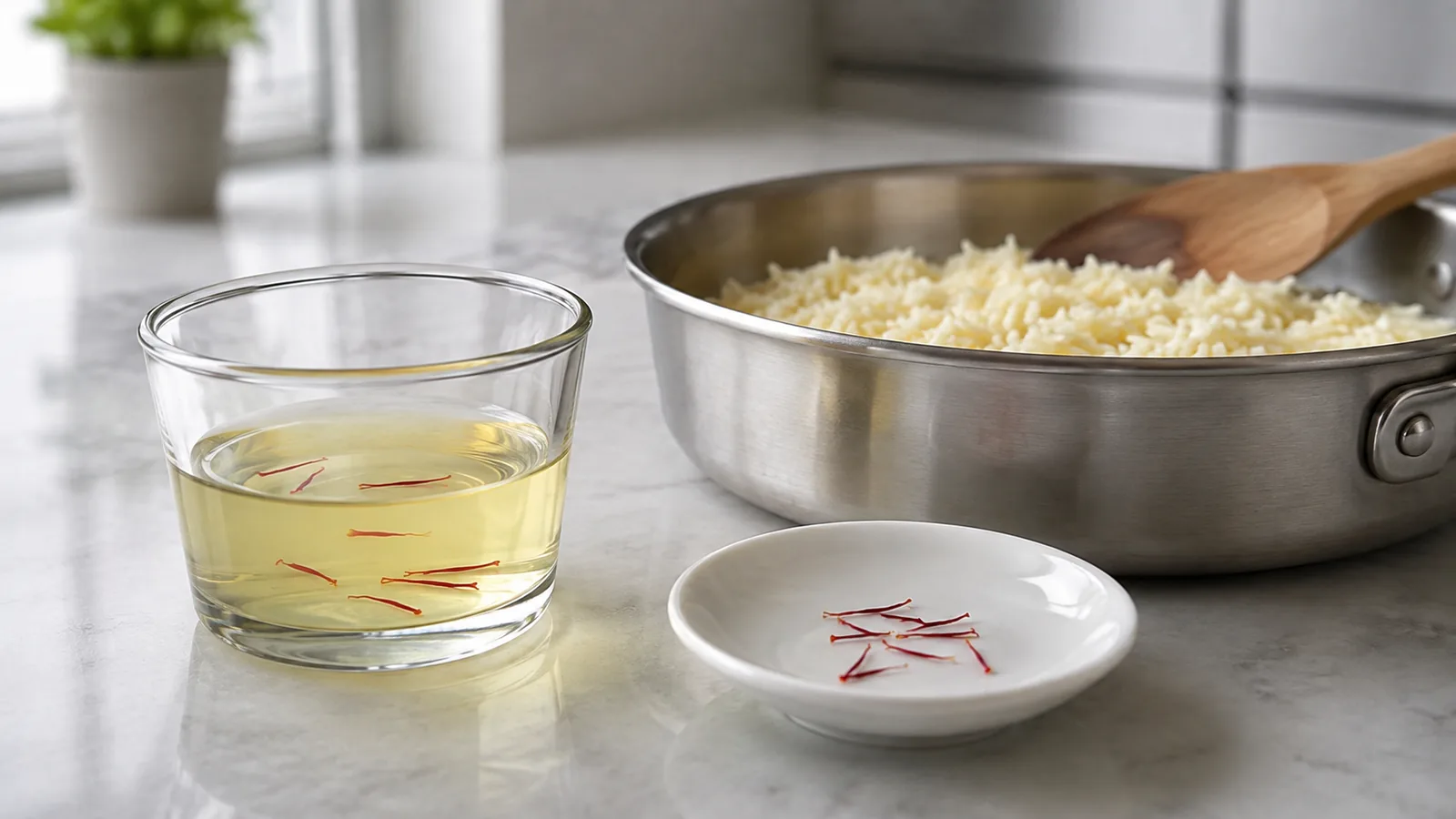
Lightly crush the saffron threads. Cover them with two tablespoons of hot water and leave for 10 minutes, then let the infusion cool until warm. The small amount keeps the colour concentrated without loosening the dough too far.
If you need more detail, see our method for brewing saffron with hot water. Use both the liquid and threads.
Instant yeast can be mixed directly with flour. If your packet is labelled active dry yeast, follow its instructions; many brands ask you to stir it into the warm water with a pinch of the measured sugar for 5–10 minutes. The water should feel comfortably warm, not hot enough to sting a finger.
How to make saffron bread
1. Mix the dough
Whisk the flour, yeast, sugar and salt in a large bowl. In a second bowl, combine the warm water, oil, one egg yolk and cooled saffron infusion.
Pour the liquids into the flour and stir until no dry patches remain. The dough should look rough and feel slightly tacky. Cover the bowl and leave it for 10 minutes; this short rest gives the flour time to absorb the water before you decide whether it needs an adjustment.
2. Knead until elastic
Knead on a lightly floured surface for 8–10 minutes, or use a mixer with a dough hook for 6–8 minutes on low speed. The dough is ready when it feels smooth, stretches without tearing immediately and springs back slowly after a fingertip press.
If it sticks heavily after several minutes, add flour one tablespoon at a time. If it feels stiff and cracks at the edges, knead in warm water one teaspoon at a time. Do not treat three cups as permission to add unlimited extra flour.
3. Let the dough rise
Place the dough in a lightly oiled bowl, turn it once and cover. Leave it in a comfortably warm, draught-free place until roughly doubled, usually 60–90 minutes. Room temperature and yeast activity matter more than a rigid timer.
A heavy blanket is unnecessary and can make the dough too warm. Look at its volume: a properly risen dough should hold a fingertip indentation briefly rather than springing back at once.
4. Shape the loaf
Press out the largest gas bubbles without aggressively kneading the dough again. Shape it into a round loaf, place it in a greased 20 cm pan, or divide it into three ropes and make a loose braid. For rolls, divide it into eight equal pieces and shape each into a smooth ball.
Cover and leave for a second rise of 25–40 minutes, until the dough looks puffy. Whisk the remaining egg yolk with one tablespoon milk or water, brush a thin layer over the surface and add sesame seeds.
5. Bake
Heat the oven to 170°C (340°F) before the second rise ends. Bake a medium loaf for 25–30 minutes or small rolls for 16–20 minutes. The surface should be evenly golden and the underside should sound hollow when tapped.
If the glaze colours too quickly, cover the loaf loosely with foil for the final minutes. Move it to a rack and wait at least 30 minutes before slicing; steam still settling inside a hot loaf can make the crumb gummy.
How to make saffron bread without an oven
A tall loaf does not cook predictably in a dry pot, especially after preheating the pot on high heat. For a safer and more even stovetop version, divide the risen dough into eight pieces and flatten each into a disc about 1 cm thick. Cover and rest for 20 minutes.
Heat a heavy lidded skillet over low heat and brush it very lightly with oil. Cook two or three breads at a time for 4–6 minutes on the first side, keeping the lid on, then turn and cook for another 3–5 minutes. Adjust the heat so the centre cooks before the surface scorches.
The stovetop breads will be flatter and less evenly browned than the oven loaf, but they should still be soft. Do not place a loose metal dish inside a very hot empty pot; cookware manufacturers differ, and an improvised spacer can damage a pan or create unstable handling.
Walnut saffron bread variation
For saffron walnut bread, knead 100–120 g chopped toasted walnuts into the dough after it becomes smooth. The earlier 150 g quantity also works, but it produces a dense, nut-heavy loaf; use it only if that is the texture you want.
Pat the walnuts dry if they were rinsed, and let toasted nuts cool before adding them. Scatter them across the flattened dough, fold it in thirds, then knead gently until they are distributed. Sharp pieces can tear the surface, so avoid adding all of them in one pile.
What is Khorasani saffron bread?
Khorasani saffron breads and tea pastries are a separate family rather than one universal recipe. The former formula on this page used yoghurt, solid fat, sugar syrup, rosewater, baking powder, eggs and 500 g flour. That is a chemically leavened sweet dough, not a variation of the yeast loaf above.
To keep that style recognisable, cream 100 g softened butter or solid baking fat with 125 g sugar, then beat in 80 g egg, 165 g yoghurt, 30 g rosewater, 60 g cooled sugar syrup, 0.15 g brewed saffron and 1 teaspoon vanilla. Fold in 500 g flour sifted with 16 g baking powder. Add cardamom to taste rather than using an unmeasurable number of “essence drops.”
Rest the soft dough for 20 minutes, roll it about 8–10 mm thick, cut small rectangles and bake at 180°C (355°F) until the bases and edges are lightly golden, usually 12–16 minutes depending on size. The old instruction to shape pieces 5 cm thick and bake them for only five minutes could leave the centres raw.
Where saffron rice bread fits
Saffron rice bread is also not the risen loaf on this page. It is a delicate rice-flour pastry associated with Kermanshah and needs different fat, sugar and resting proportions. Use a dedicated saffron rice bread recipe rather than replacing wheat flour with rice flour in this yeast dough.
This distinction matters for texture and allergens. The main loaf contains wheat and egg; the Khorasani-style variation also contains dairy, and the walnut version contains tree nuts.
Common saffron bread problems
The bread is dense
The yeast may have been old, the liquid too hot, or the dough too dry. Check the packet date and judge the dough before adding more flour. Give each rise enough time to increase in volume rather than moving on only because the timer rang.
The saffron flavour is weak
Use a covered, concentrated infusion and add it after it cools. Old or poorly stored saffron may colour the dough without giving much aroma. Adding a large spoonful of dry powder can make the loaf bitter and disturb hydration.
The crust browned before the centre baked
The oven may run hot or the egg glaze may be too thick. Check the temperature with an oven thermometer if possible, brush on only a thin glaze and cover the top loosely once it reaches the colour you want.
The crumb is dry
Too much flour and overbaking are the usual causes. The dough should remain slightly tacky before its first rise. Start checking at the early end of the baking range, especially if you shaped small rolls.
Storage and serving
Cool the bread completely before sealing it. Keep it in an airtight container at room temperature for up to two days, or freeze individual slices once cool. Reheat briefly at low temperature so the crumb softens without drying.
The main loaf is good plain, but a small amount of butter, mild cheese or cream turns it into a simple snack. Its success comes from the bread fundamentals—hydration, kneading, two patient rises and controlled baking—while saffron supplies the colour and aroma that make the loaf distinctive.