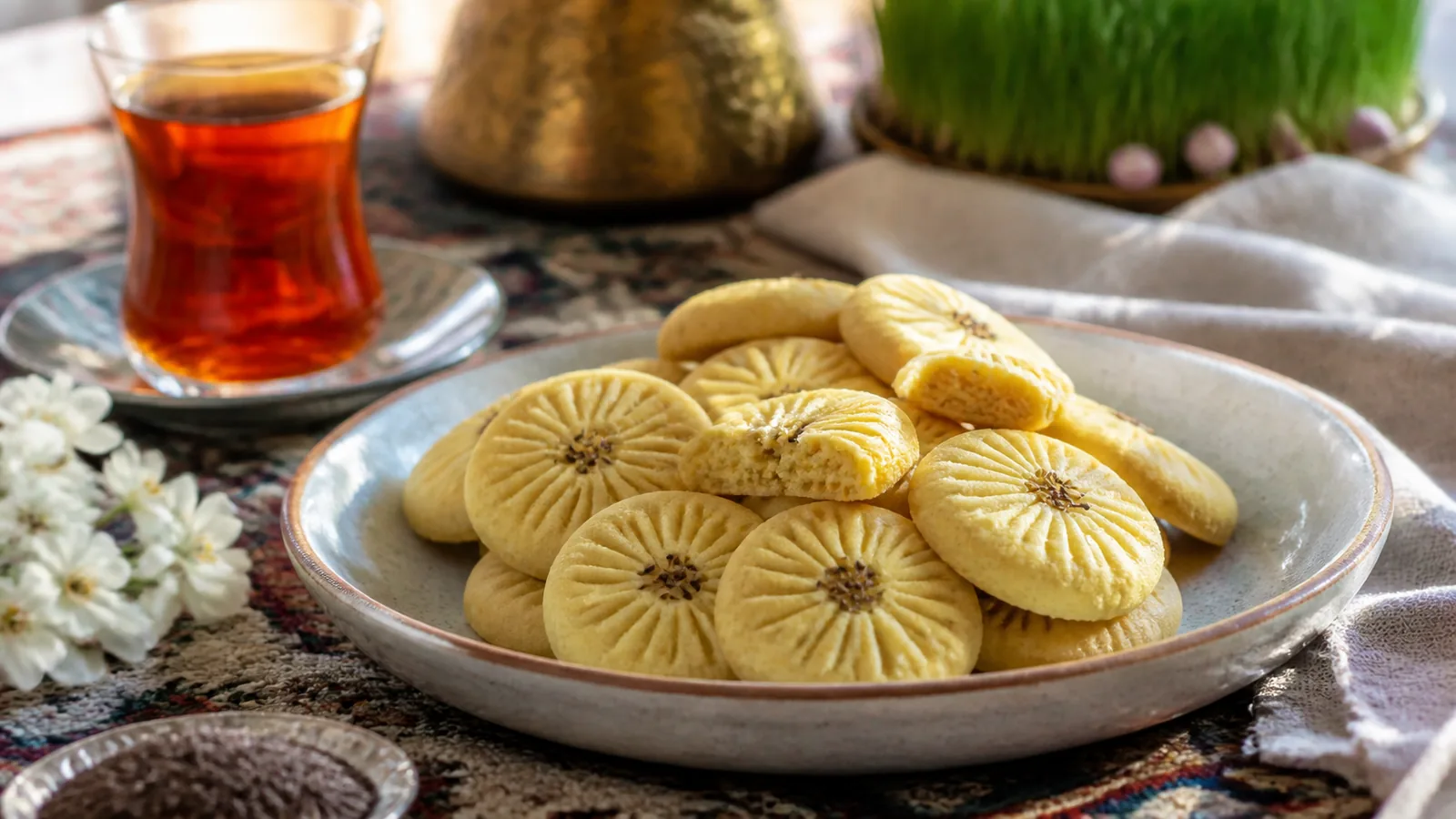
Rice bread in this recipe means nan-e berenji, the delicate rice-flour cookie associated with Kermanshah. These small Iranian sweets are scented with rosewater, cardamom and saffron, then marked with a traditional pattern and scattered with purslane seeds before baking.
For this batch, use exactly 58 g powdered sugar. That modest amount keeps the cookie gently sweet and lets the rice flour and aromatics remain clear. The dough also needs a long rest, so begin the day before you plan to bake.
Rice bread ingredients for eight servings
- 160 g solid cooking fat or clarified Kermanshahi oil, at room temperature
- 58 g powdered sugar, sifted
- 2 egg yolks, at room temperature
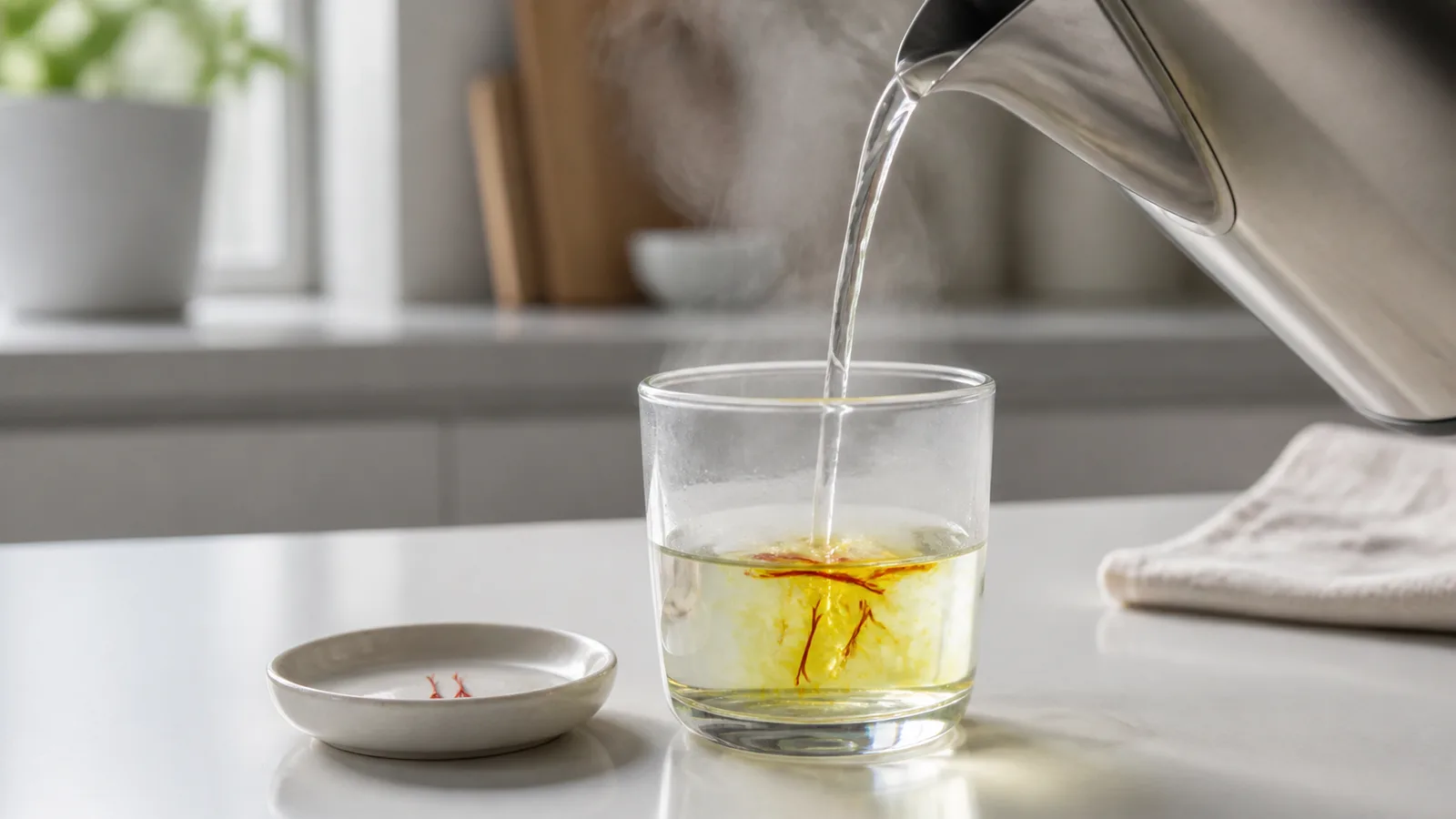
- 1 tablespoon concentrated brewed saffron
- 260 g fine rice flour
- 1/2 teaspoon ground cardamom
- 1/8 teaspoon fine salt
- 1/4 cup rosewater
- Whole purslane seeds, for decorating
The older translation calls the topping “Portulaca oleracea powder.” Traditional nan-e berenji is decorated with the plant’s tiny whole seeds, not a dusting of leaf powder. Poppy seeds may look similar but are a different ingredient.
Choosing the fat and rice flour
Kermanshahi oil gives the most characteristic aroma, but a good clarified butter or bakery-style solid fat also works. It should be soft enough to beat, not melted. Melted fat can make the cookies spread and feel greasy.
Use finely milled rice flour intended for pastry. Coarse flour produces a sandy cookie and can prevent the dough from holding an imprint. Sift it with the cardamom and salt at least twice.
How to make saffron rice bread
1. Beat the fat and powdered sugar
Put the room-temperature fat and 58 g powdered sugar in a mixing bowl. Beat for 4–5 minutes, scraping the bowl and beater several times, until pale, smooth and slightly aerated.
The old instruction about removing material “attached to the blade” means to scrape down the beater. The quantities are small, so leaving mixture on the tool can noticeably change the dough.
2. Add the yolks
Add the egg yolks one at a time, beating well after each. Scrape the bowl again. The mixture should look creamy and even, with no streaks of yolk.
3. Add the rice flour
Add the sifted rice-flour mixture in three portions. Mix on low speed or with a spatula until the dough looks crumbly but evenly moistened.
Combine the rosewater and brewed saffron, then add them gradually. Use your fingertips to bring the dough together. Do not knead aggressively: rice flour has no gluten to develop, and excessive handling simply warms the fat.
The dough should hold when pressed without feeling wet. Rice flours absorb differently, so hold back the final tablespoon of liquid until you see the texture. If it stays powdery, add the remainder one teaspoon at a time.
4. Rest the dough for 24 hours
Cover the bowl tightly and refrigerate the dough for 24 hours. This gives the flour time to hydrate and allows the rosewater and cardamom to settle into the fat.
Take it out about one hour before shaping. It should be pliable but still cool. If the kitchen is warm and the dough becomes oily, return it to the refrigerator for 10 minutes.
5. Shape and decorate
Line a baking tray with parchment; there is no need to grease it. Pinch off walnut-size portions, press each one firmly to remove cracks and roll it into a smooth ball.
Flatten lightly, then use a nan-e berenji stamp or the edge of a teaspoon to mark a simple pattern. Sprinkle a few whole purslane seeds in the centre and press them very gently so they stay in place.
6. Bake gently
Preheat the oven fully to 150°C/300°F for at least 15 minutes. Bake on the middle rack for about 15 minutes.
Rice cookies should remain pale on top. Look for a dry surface and only the faintest colour underneath. They are fragile when hot, so leave them on the tray for 10 minutes before moving them to a rack.
Why did the rice cookies crack or spread?
Fine hairline cracks are normal, but a cookie that falls apart may need another teaspoon of rosewater or a longer rest. Large cracks can also come from dough that was too cold to shape.
Spreading usually means the fat was melted or the tray was warm. Chill the shaped cookies for 10 minutes before baking the next batch and make sure the oven is at the correct temperature.
Saffron, plain and cocoa variations
For a plain white batch, leave out the saffron and replace its liquid volume with rosewater. For a brown variation, remove one tablespoon of rice flour and add one tablespoon of unsweetened cocoa powder.
Divide the base dough before adding the final flavouring if you want several colours from one batch. Keep each piece covered so its surface does not dry.
Serving and storage
Nan-e berenji is served as a small sweet with tea and is especially popular at Nowruz and as a Kermanshah souvenir. The stored recipe describes eight servings; the exact cookie count depends on how large you shape them.
Allow a full day for the dough rest, about 30 minutes of hands-on work and 15–20 minutes per tray. Once completely cool, keep the cookies in an airtight container with parchment between layers. Their fragile, short texture is the point: a tender bite, a quiet sweetness and a clean finish of saffron, rosewater and cardamom.