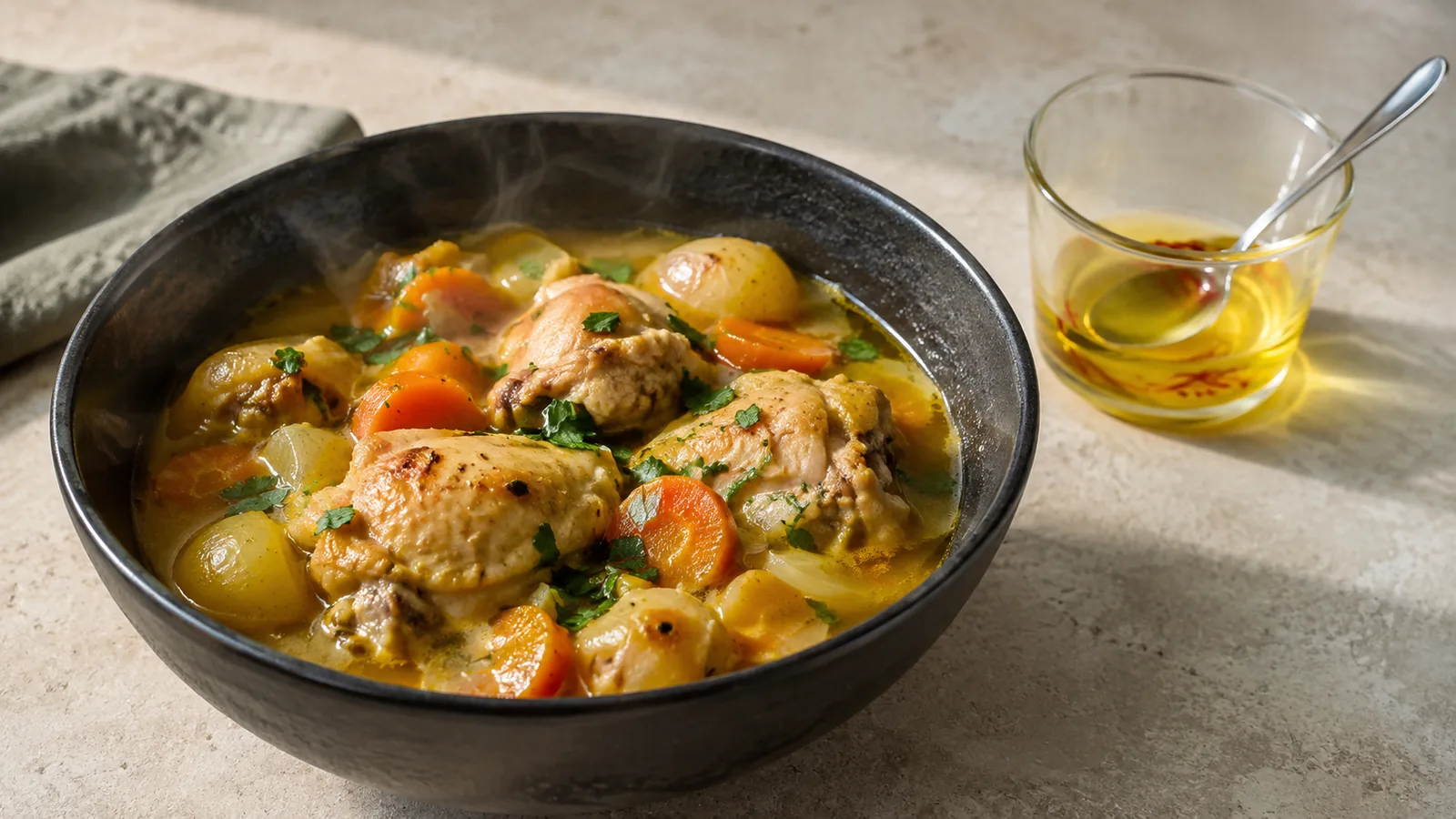
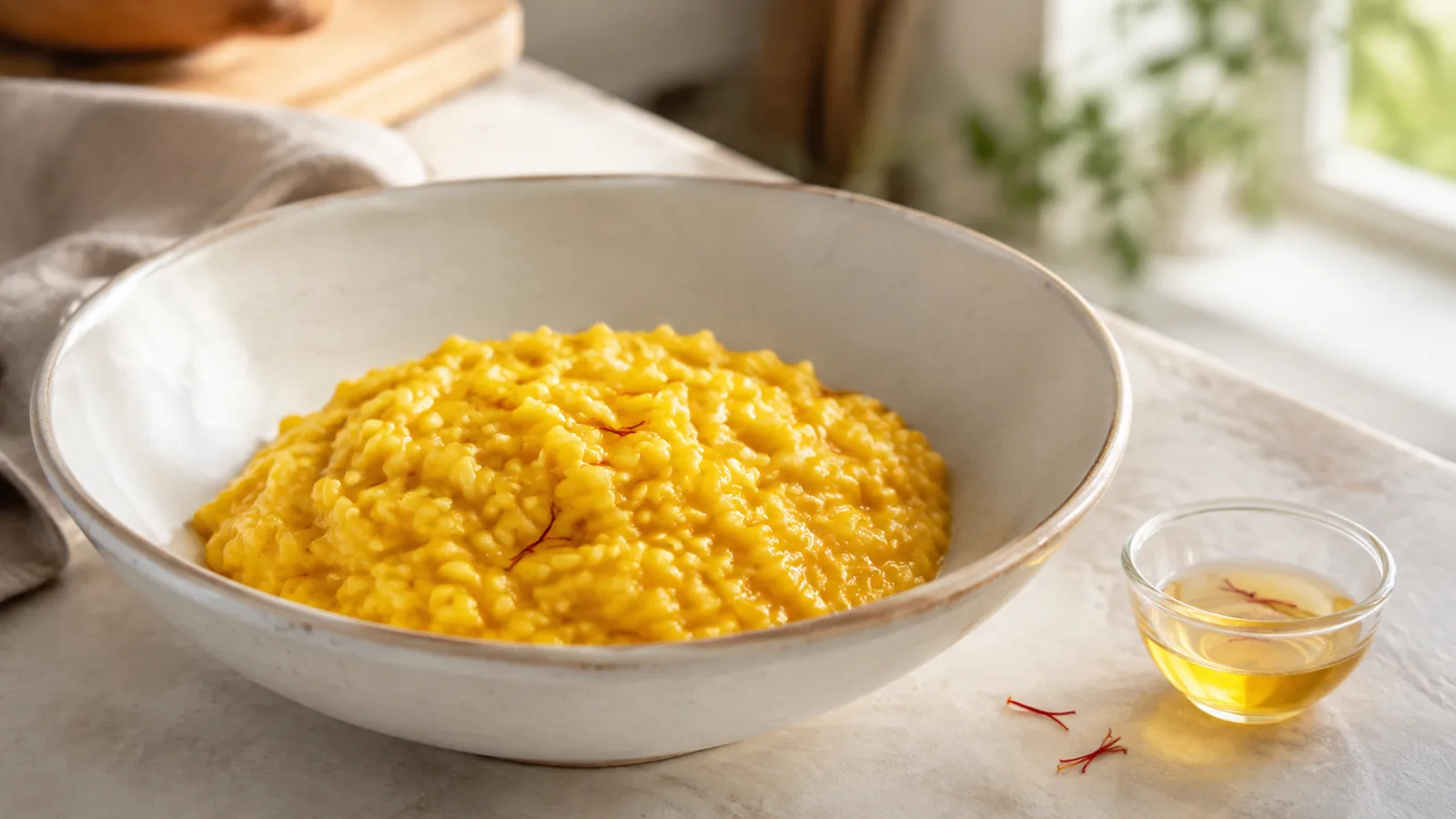
Using saffron for Persian dishes is especially visible in communal cooking: a measured infusion can colour rice, perfume a stew or turn a large pot of sholeh zard gold. For Muharram nazri, the scale is larger, but the same rule applies—saffron works best when the recipe, equipment and serving plan are decided before it reaches the pot.
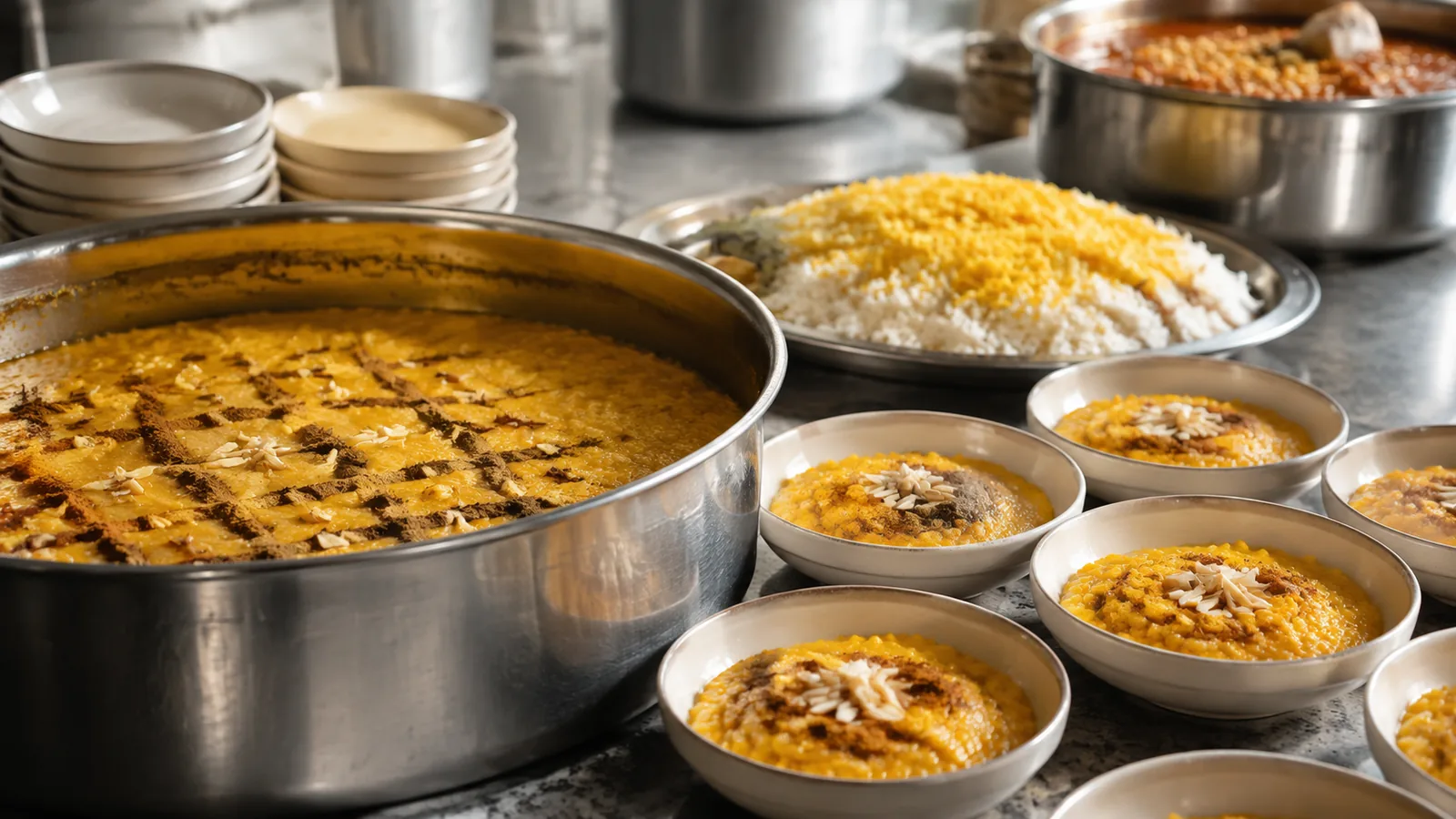
What is nazri food?
Nazri is food prepared and shared in connection with a vow, remembrance or religious occasion. During Muharram, families, neighbourhood groups and charitable kitchens may cook large quantities for distribution. The menu is not fixed: gheimeh stew and sholeh zard are familiar choices, but local practice and the people cooking matter.
Encyclopaedia Iranica’s account of Qajar cuisine records sholeh zard and halva among important nazri foods associated with mourning months, alongside lentil rice and ash reshteh in votive settings. That history helps explain why saffron appears in both savoury and sweet communal dishes without implying that every dish must contain it.
The Muharram dates move through the solar calendar each year because the observance follows the Islamic lunar calendar. A date published for 2025 should not be reused as though it were permanent.
Persian dishes commonly prepared for Muharram
Menus may include gheimeh or qeema khoresh, zereshk polo, lentil polo, sholeh zard, kebab, shorba, ash reshteh, ash mash, fesenjan or halim. Saffron is central to some versions and optional in others. It should support the identity of the dish rather than being added to every nazri pot as a generic sign of quality.
This guide concentrates on two large-batch preparations that use saffron clearly: gheimeh nazri with rice and sholeh zard. It also points to a dedicated zereshk polo method rather than reducing a third full recipe to a few vague lines.
Before cooking for 50 people
“For 50” is a planning estimate, not a guaranteed yield. Portion size, the number of side dishes, meat cut, rice variety and evaporation all change the result. Test a five-person batch before an important event, multiply by ten, then allow a modest reserve rather than doubling ingredients at the last moment.
- Confirm how many portions are adults’ meals and how many are smaller servings.
- Check that the pots can be stirred safely without filling them to the rim.
- Use scales for rice, peas, sugar and saffron; tablespoons are too variable at this size.
- Assign separate clean utensils for raw meat, cooked food and portioning.
- Plan how hot food will stay hot during packing and distribution.
- Write down the final salt, water and cooking times so the next batch improves.
Two manageable pots are often safer and easier to season than one vessel that cannot be stirred from the bottom. Scale by weight, but do not assume cooking time also multiplies by ten.
Gheimeh Nazri for 50 people
Gheimeh—also written qeema in English—is a tomato-based split-pea stew usually served with rice and fried potato. Lamb or beef is the conventional meat in this version; the former 1.5 kg chicken listing did not match the method’s instruction to brown “the meat” and would have been too little for 50 main-meal portions.
Ingredients for the stew and rice
- 4–5 kg boneless lamb or beef, trimmed and cut into 2–3 cm pieces
- 2 kg yellow split peas, rinsed and checked for stones
- 3 kg onions, finely chopped
- 1.25–1.5 kg tomato paste
- 100 g dried limes, pierced and soaked, usually 20–25 small limes
- 4–5 g saffron threads
- 500 ml hot water for the saffron infusion
- 750 ml neutral oil for the stew, plus a separately measured amount for potatoes
- 25 g ground turmeric
- 10 g ground cinnamon or two small cinnamon sticks
- 10 g ground cardamom, optional
- Black pepper and salt, added gradually to taste
- 5 kg potatoes for the fried topping
- 8–10 kg dry rice, depending on portion size and side dishes
- Hot water as needed for the stew and rice
The former five-kilogram oil figure is not a useful stew measurement. Oil needed for frying potatoes depends on the fryer or pan and should be tracked separately; it should not all be poured into the khoresh. Salt also depends on stock, reduction and portion size, so three tablespoons is a starting reference at best, not a final command.
Prepare the saffron, peas and dried limes
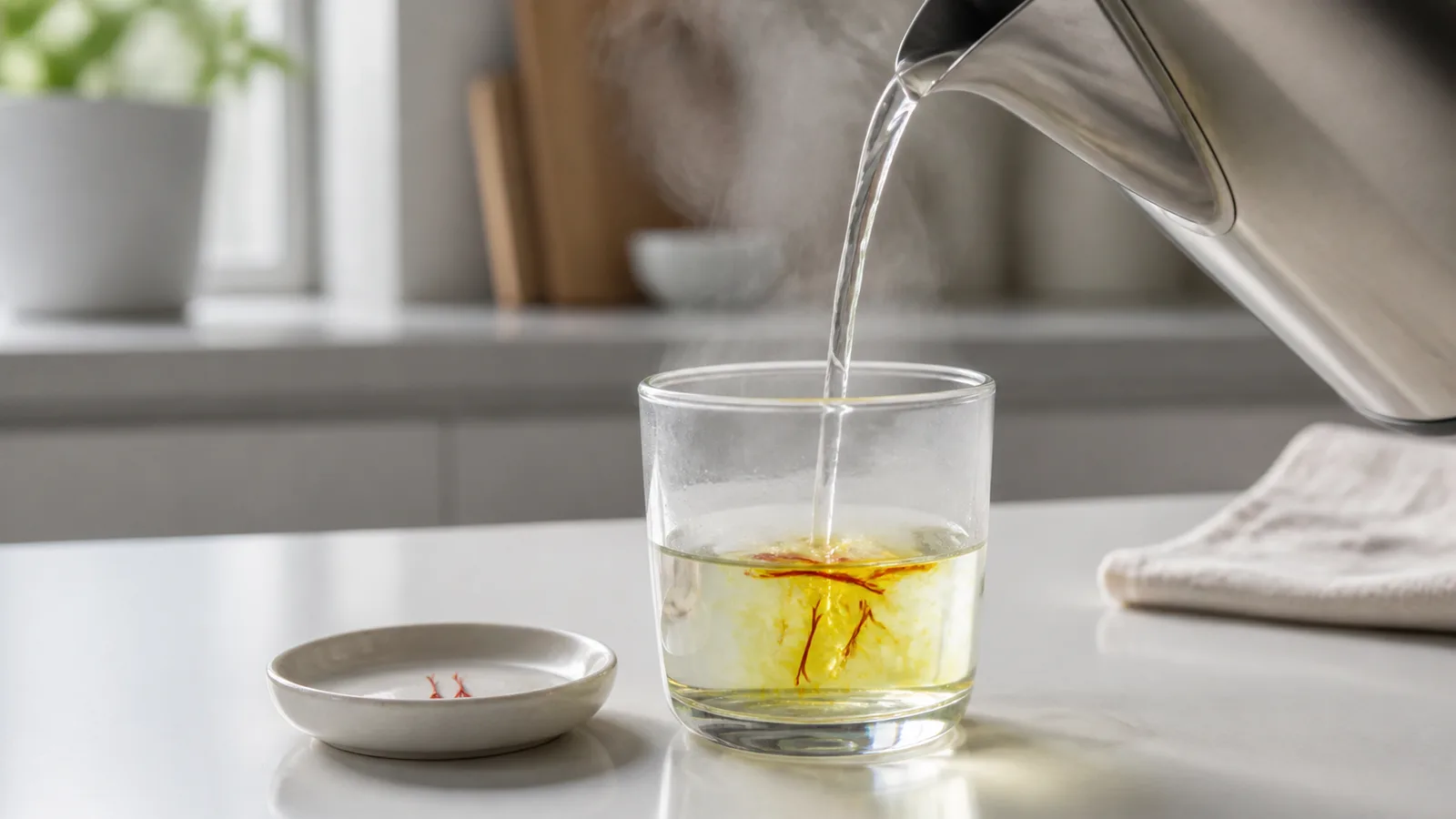
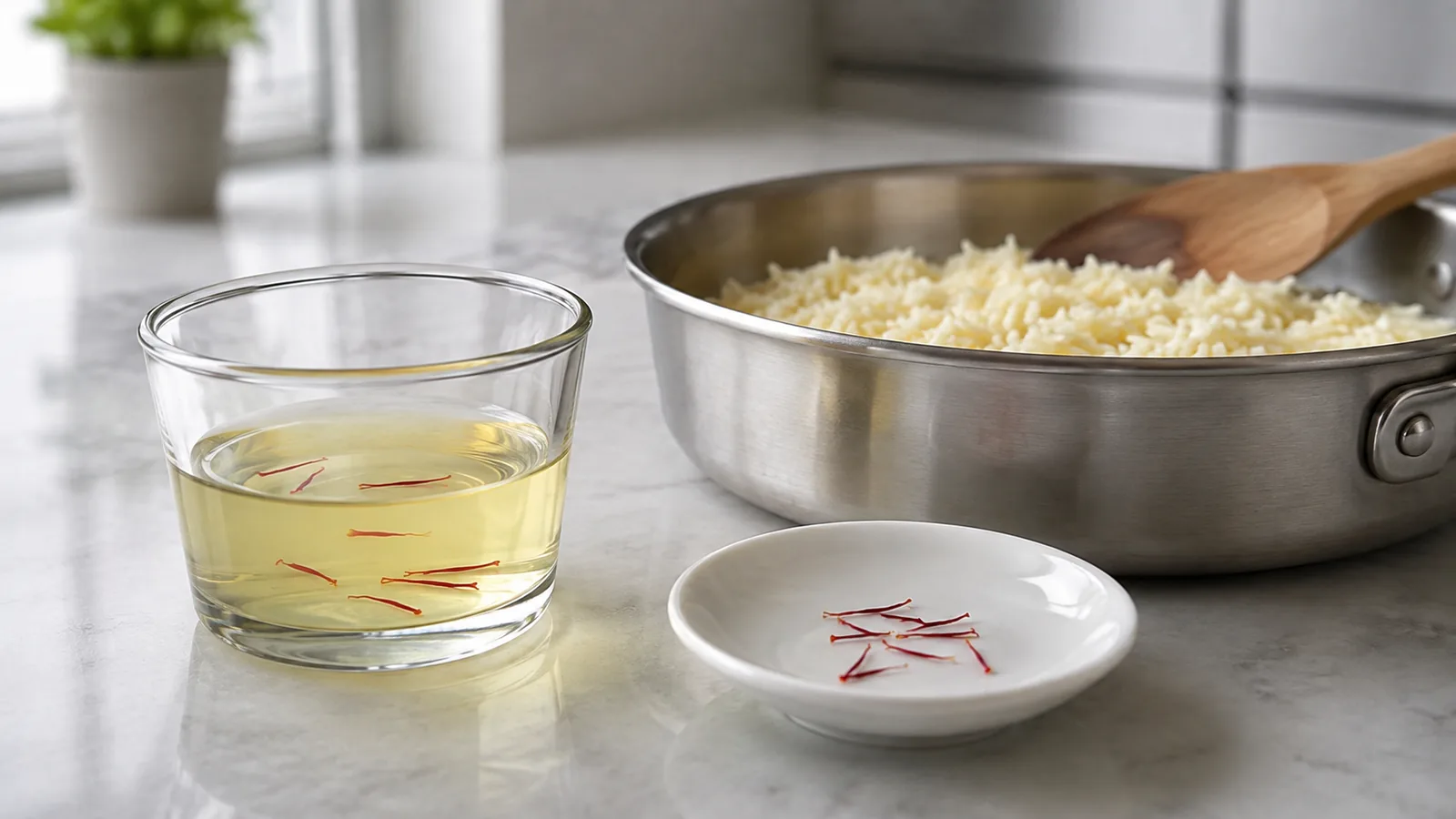
Lightly grind the saffron, cover it with 500 ml hot water and leave it covered for 15 minutes. Keep it aside. Soak the dried limes in warm water for 30 minutes, then pierce them carefully so they flavour the stew without floating intact.
Par-cook the split peas in a separate pot until they are beginning to soften but still hold their shape. Drain. This gives the cook more control in a large batch and reduces the chance that the meat becomes tender while the peas remain hard.
Cook the gheimeh
- Heat the measured stew oil in a large heavy pot, or divide it between two pots. Cook the onions in batches until deeply softened and golden.
- Add the meat and brown it rather than crowding the pot until it steams. Stir in turmeric, pepper and optional cardamom.
- Clear a space on the bottom, add the tomato paste and cook it for several minutes until its raw smell fades. Mix it through the meat and onions.
- Add enough hot water to cover the meat by a few centimetres. Bring to a controlled simmer, cover partially and cook until the meat is approaching tenderness.
- Add the par-cooked split peas, dried limes and about two-thirds of the saffron infusion. Simmer gently until the meat and peas are tender, stirring from the bottom so the thickening stew does not catch.
- Add the remaining saffron near the end. Taste several spoonfuls from different parts of the pot before adjusting salt, cinnamon or lime.
Do not rely on the old fixed sequence of one to one-and-a-half hours plus two more hours. A large pot’s timing changes with meat cut, burner strength, starting temperature and vessel depth. Use tenderness and the consistency of the peas as the decision points.
Finish the potatoes and rice
Cut the potatoes into even matchsticks, rinse away surface starch, dry them thoroughly and fry in manageable batches. Keep the topping separate until portions are packed so it stays crisp. Hot oil and wet potatoes are a dangerous combination; drying is not optional.
Cook the rice by the method your team has already tested at scale. Ten kilograms is a generous allowance for 50 people, while eight kilograms may be enough when several sides are served. Record actual cooked yield instead of assuming every event needs the same amount.
Sholeh Zard for 50 people
Sholeh zard is a saffron rice pudding made with water rather than dairy. Long cooking breaks down the rice, sugar provides the characteristic sweetness, and rosewater and saffron go in after the grains are fully soft.
Ingredients
- 2 kg short-grain rice
- 14 litres water to begin, plus extra hot water if needed
- 4 kg sugar
- 4.5–5 g saffron threads
- 500 ml hot water for the saffron infusion
- 1.25–1.5 litres food-grade rosewater, adjusted for strength
- 700 g slivered almonds
- 2 tablespoons ground cardamom, optional
- Ground cinnamon and extra almonds for decoration
This keeps the original 2 kg rice, 4 kg sugar, 14 litres water, 700 g almonds and roughly 4.6 g saffron proportions. Rosewater varies, so hold back part of the 1.5 litres and add it after tasting rather than assuming every bottle has the same strength.
Cook the rice until it breaks down
Rinse the rice until the water is much clearer, then soak it for 12–24 hours if the schedule permits. Drain, combine with 14 litres fresh water and bring to a boil in a pot with generous headroom. Lower the heat and cook, stirring regularly, until the grains are very soft and beginning to lose their shape.
Add hot water as needed; cold water can interrupt the simmer. Scrape the bottom and corners with a long heatproof paddle. A large pot can look loose on top while thick rice sticks underneath.
Add sugar, saffron and almonds
Add the sugar only after the rice is fully soft. Stir until dissolved, then add the almonds and about three-quarters of the saffron infusion. Continue cooking gently until the pudding is thick but still flows from the ladle.
Stir in the remaining saffron, most of the rosewater and optional cardamom near the end. Taste a cooled spoonful before adding the reserved rosewater; hot steam can make its aroma seem weaker than it will be in a cooled bowl.
Portion and decorate
Ladle the pudding into clean serving bowls while it is still fluid. It thickens as it cools. Once the surface begins to set, decorate with cinnamon and slivered almonds. Decoration can be simple; it should not delay safe portioning or distribution.
Where zereshk polo fits
Zereshk polo brings saffron into steamed rice and pairs it with tart barberries. It needs its own rice-rinsing, parboiling and barberry-handling steps, none of which appeared in the old page despite promising the dish. Use the complete saffron rice with barberries recipe, then scale it only after a smaller test batch.
For a large menu, avoid making every component equally sweet or strongly saffron-coloured. A measured golden rice garnish can be more effective than colouring an entire pot, especially when saffron is already prominent in dessert.
Safe handling for a large nazri pot
Large-batch cooking creates risks that do not appear in a four-person recipe. Raw meat needs separate boards and utensils. Cooked food should not be returned to a raw-meat tray. A deep pot also cools slowly, so leftovers must be divided into shallow containers rather than left on the counter or placed hot in one enormous container.
The U.S. government’s four food-safety steps cover cleaning, separating, cooking and chilling. For an event, local food-service rules and the instructions of the organisers take priority; this recipe is not a substitute for a trained kitchen lead or jurisdiction-specific requirements.
Using saffron well in Persian communal dishes
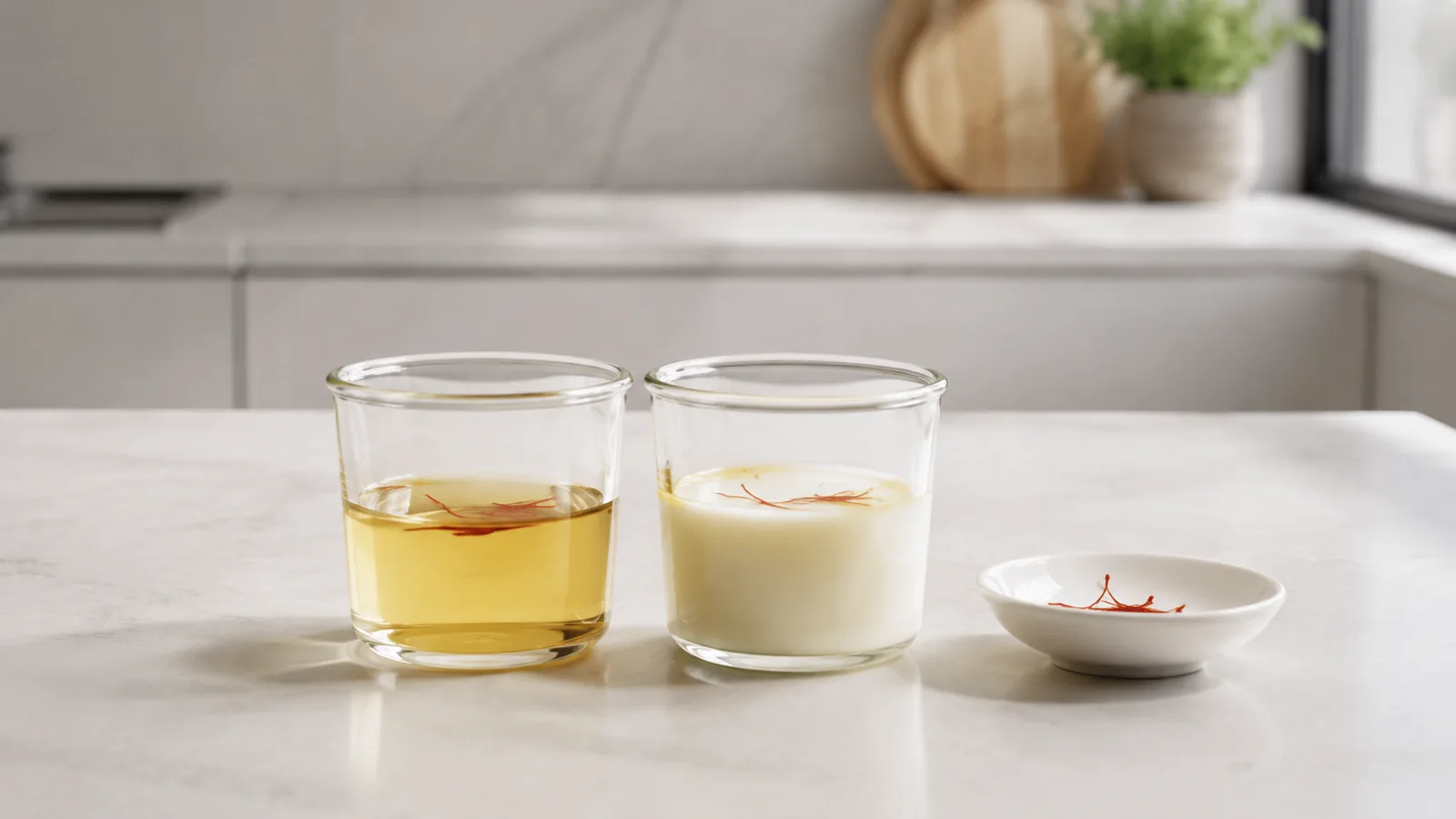
Grind saffron in measured batches, make a covered infusion and reserve a portion for the end of cooking. Do not pour dry saffron into a large pot and expect it to distribute evenly. Label each infusion cup so it is not mistaken for tea or discarded during a busy service.
Good nazri cooking is as much about coordination as ingredients. Accurate weights, manageable pots, a tasting sequence and a safe distribution plan protect the dish—and the people waiting for it—better than an extravagant but uncontrolled amount of Persian saffron. Harvests vary, so weigh the Iranian saffron that actually goes into the pot and record the result.