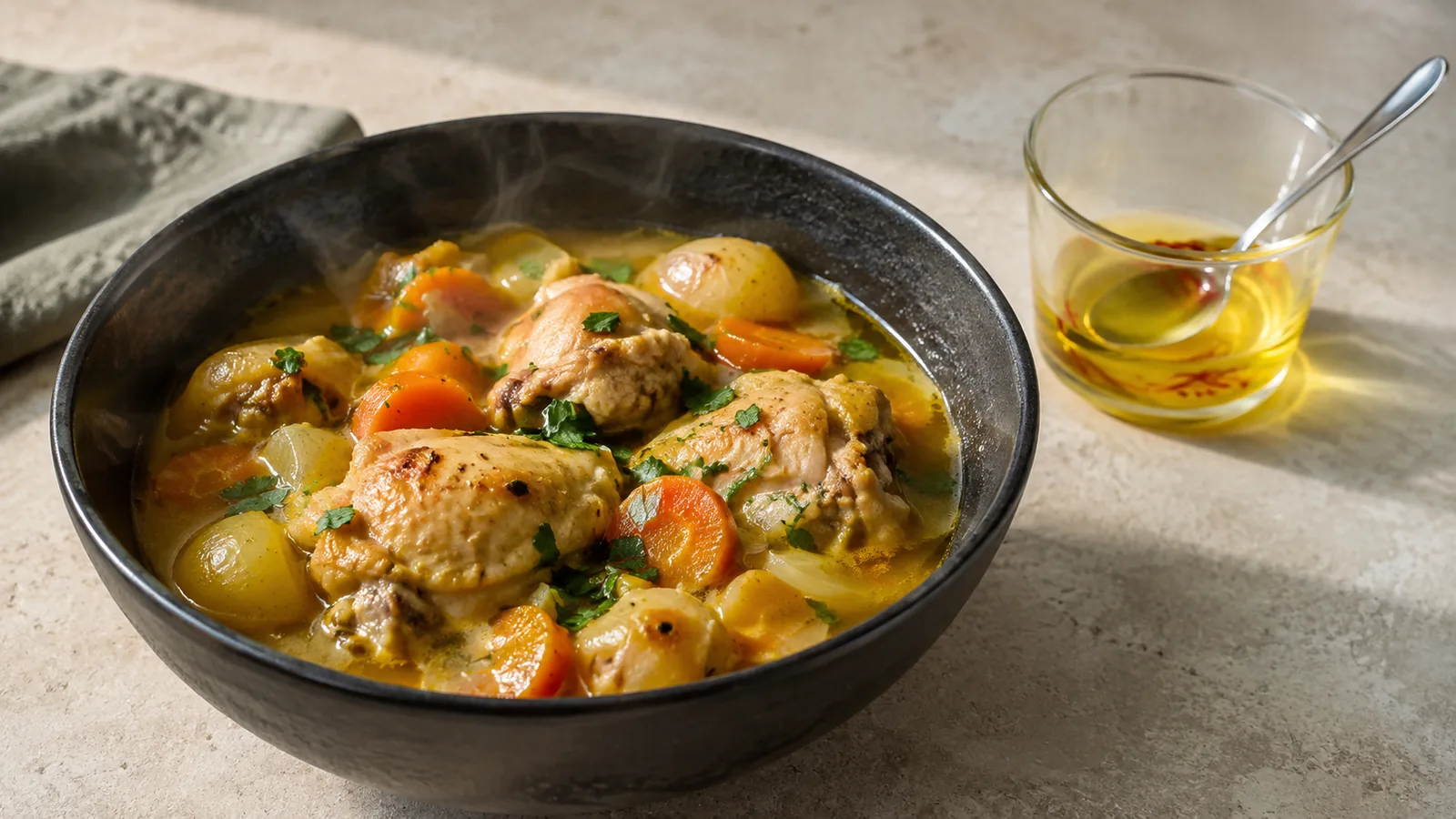
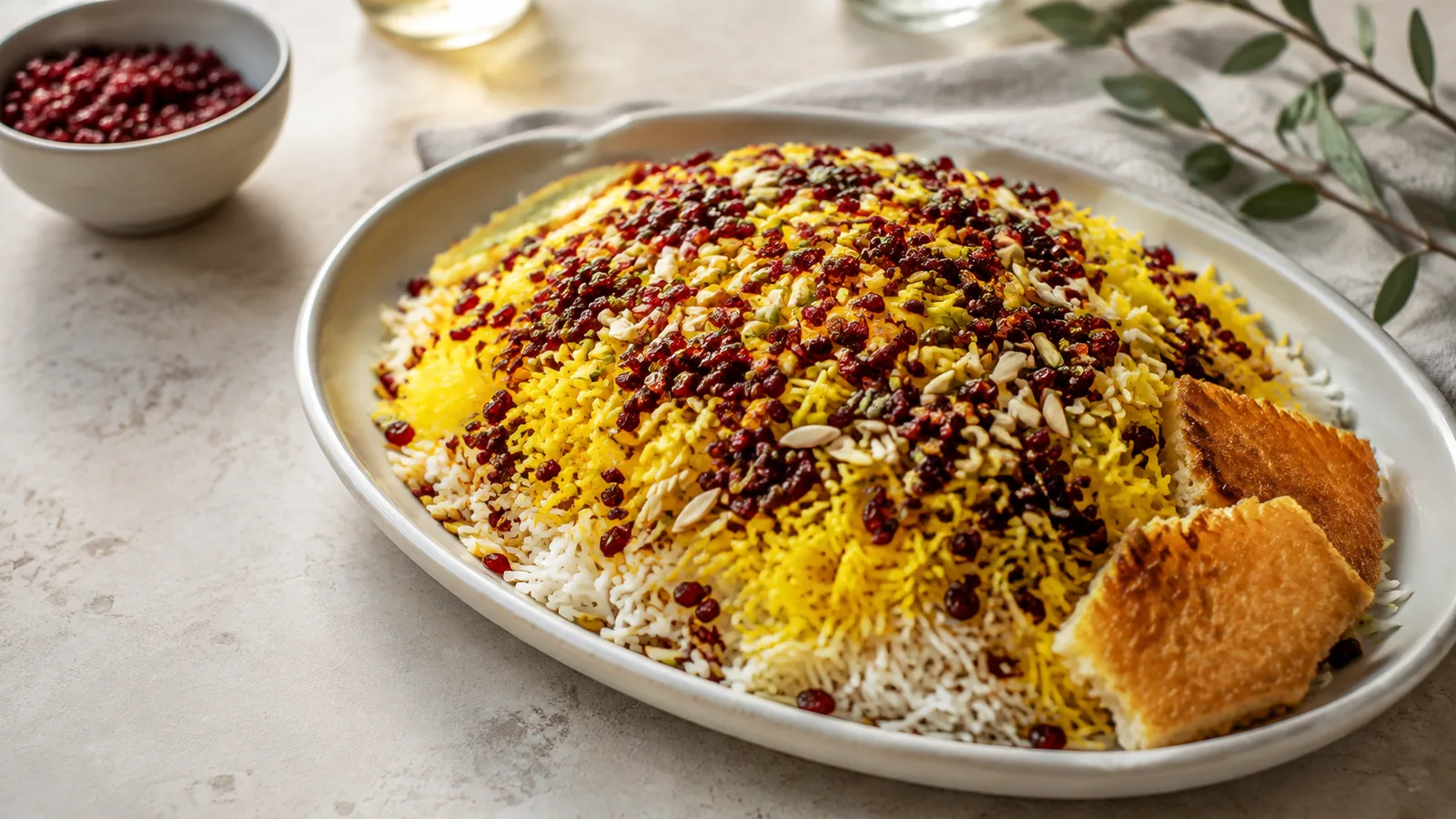
Saffron rice with barberries brings together fluffy Persian rice, tart red berries and a fragrant saffron topping. The contrast looks elaborate on the table, but each part is manageable: parboil and steam the rice, prepare the barberries briefly, then combine them only when you are ready to serve.
What is Persian saffron rice with barberries?
Often known as zereshk polo, this is Persian rice with barberries scattered across the top rather than stirred through the whole pot. Keeping the topping separate protects the berries from the long steaming time and lets the saffron rice remain bright and distinct.
Barberries are naturally sharp. A small amount of sugar rounds the edges without turning the dish into sweet rice. The finished balance should still be tart, with the saffron’s aroma and the rice’s savoury character clearly present.
Ingredients for saffron barberry rice
This quantity serves about 8–10 people. For a smaller table, halve everything and use a narrower pot.
For the rice
- 5 cups basmati rice
- 2 teaspoons saffron threads, finely ground
- 6 tablespoons hot water for brewing the saffron
- Salt for soaking and parboiling
- 3 tablespoons neutral oil, plus more if needed for the pot
- 1/3 cup water for the final steam
- Thin potato slices or one flatbread for an optional tahdig crust
For the barberry topping
- 1 1/2 cups dried barberries
- 2 tablespoons butter or neutral oil
- 1–3 tablespoons sugar, according to taste
- 2 tablespoons of the brewed saffron
- 1/3 cup slivered pistachios or almonds, optional
Prepare the rice and saffron
Rinse the rice in several changes of cool water, moving it gently with your fingers, until the water is much less cloudy. Cover with fresh water, add a generous spoonful of salt and soak for at least one hour. A two- or three-hour soak is also fine when you are planning ahead.
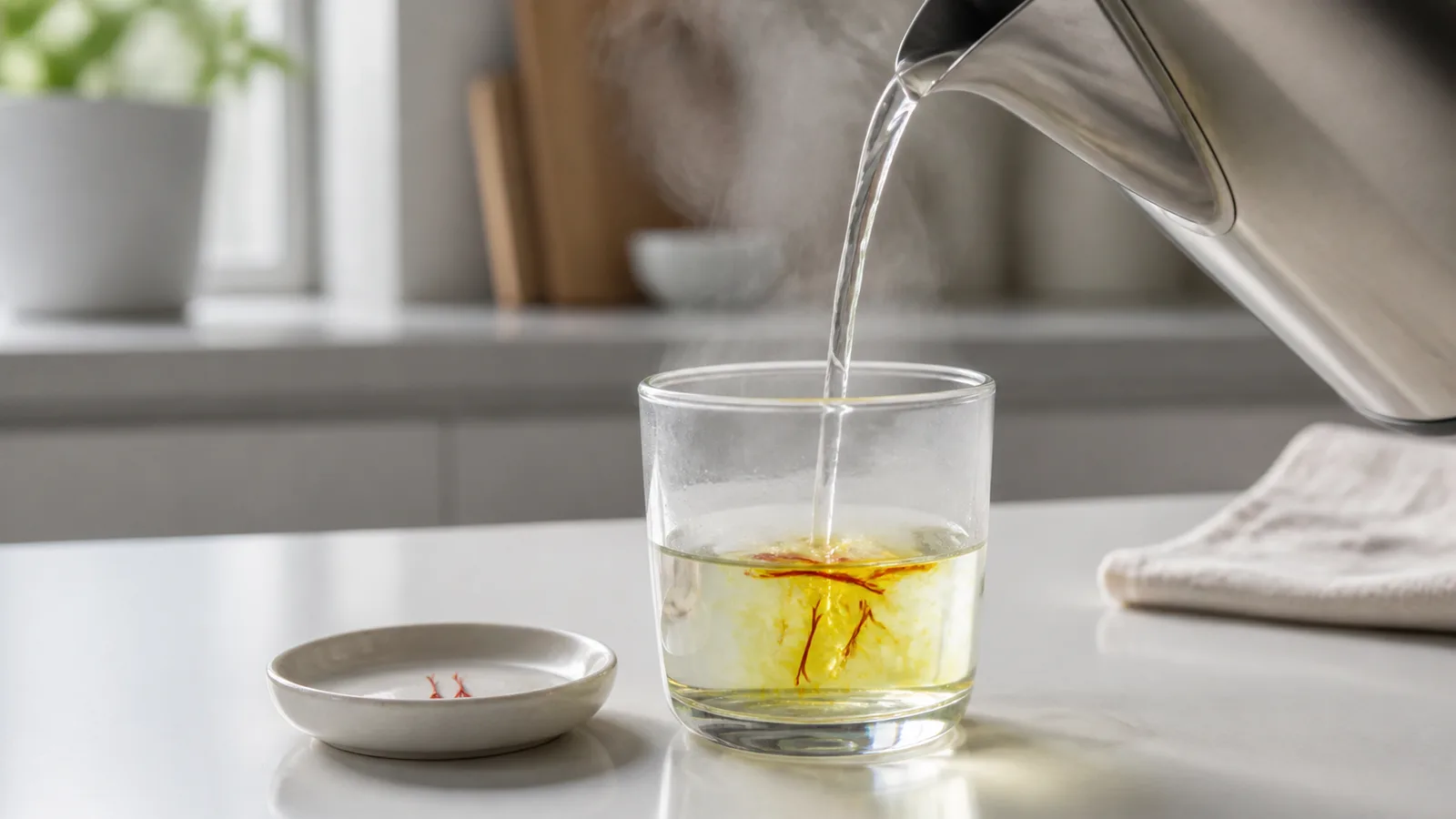
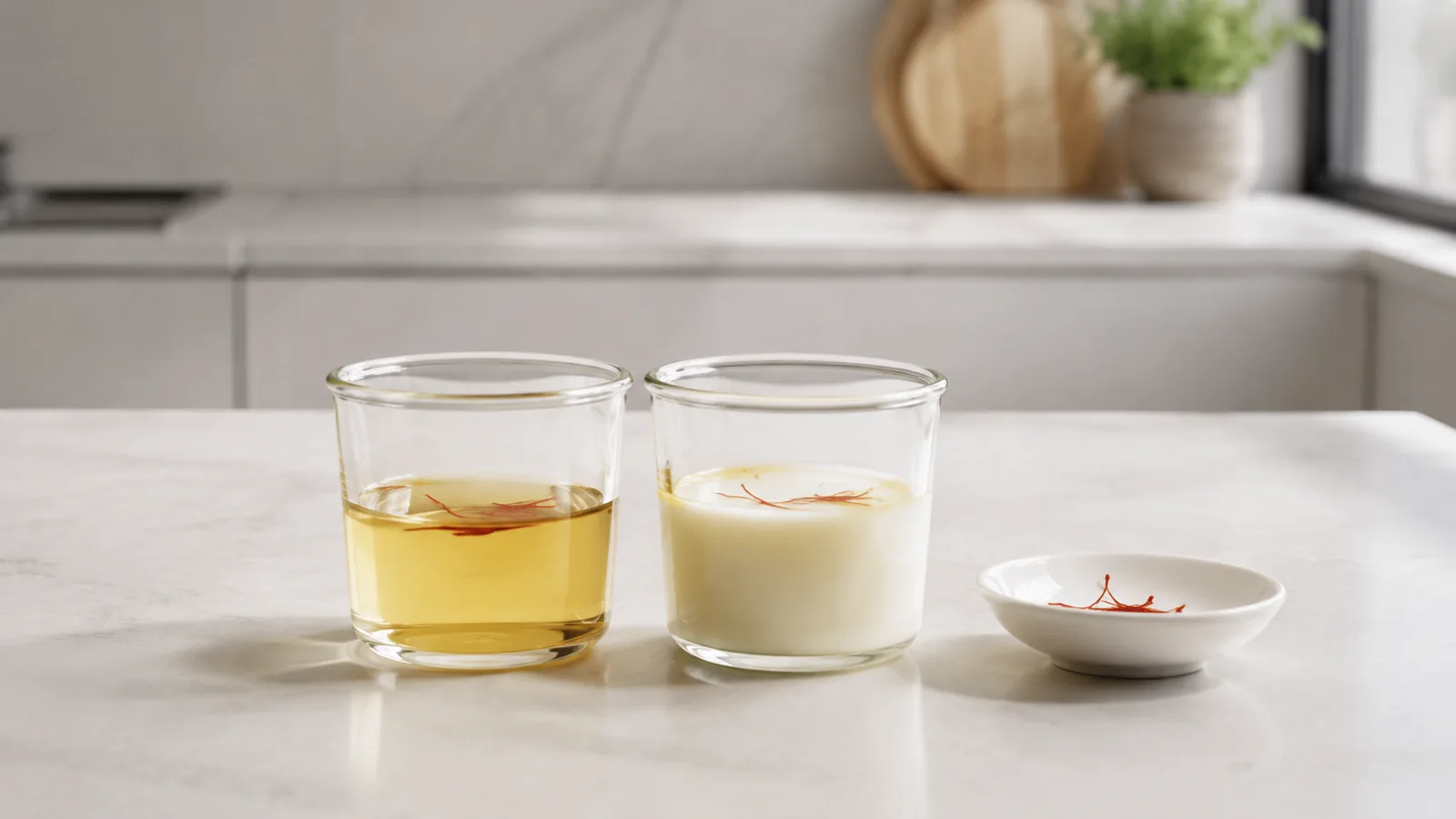
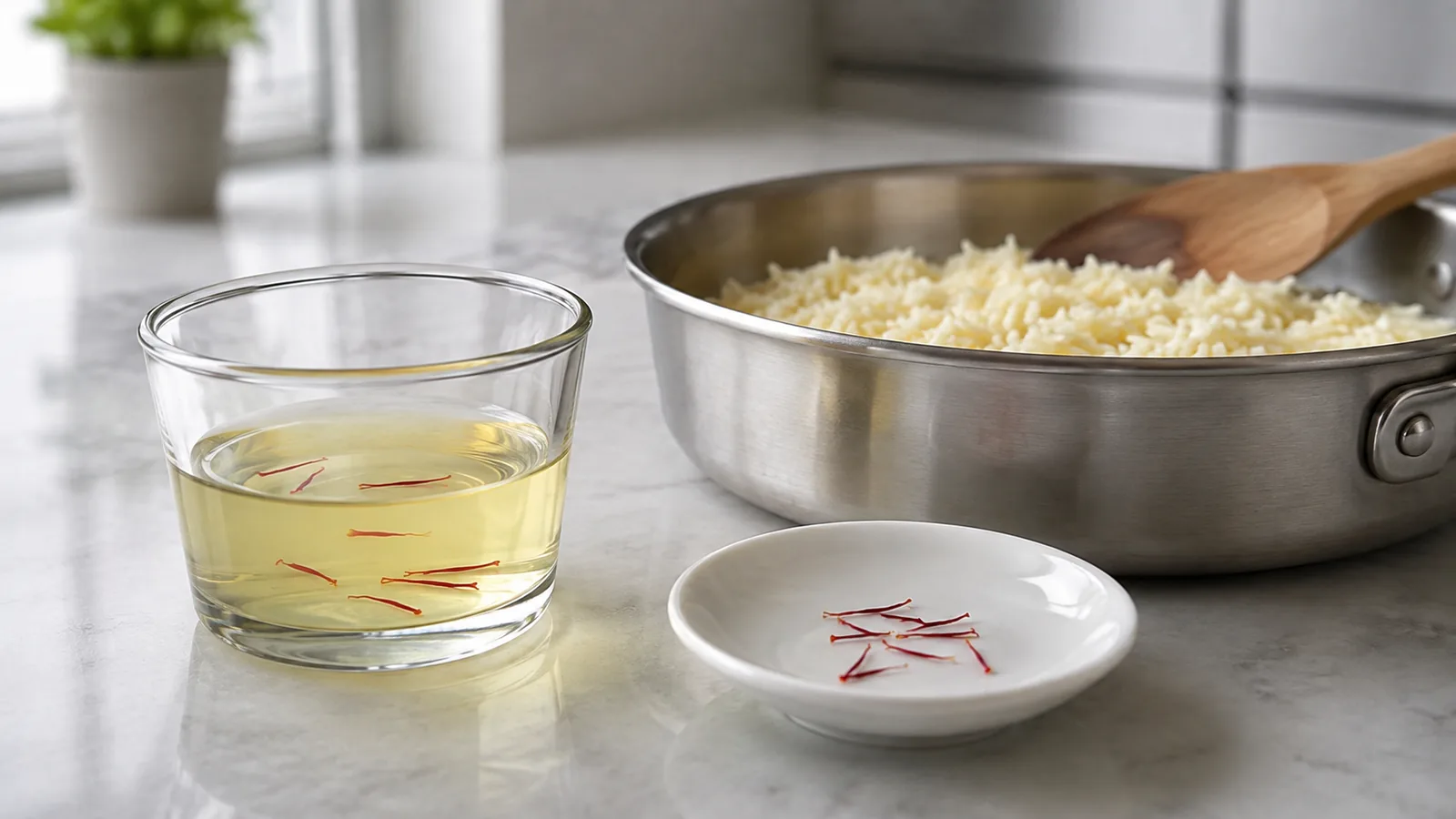
Meanwhile, cover the ground saffron with 6 tablespoons of hot water and leave it covered for 10–15 minutes. The water should be hot enough to draw out the colour and aroma but does not need to boil over the saffron. See the full guide to brewing saffron for cooking if you are working with whole threads for the first time.
How to cook Persian rice by the steaming method
- Boil plenty of water. Fill a large pot with water and bring it to a rolling boil. Drain the soaked rice, add it to the pot and stir once gently so the grains do not settle together.
- Parboil the grains. Cook for roughly 5–8 minutes. Begin testing early: the outside of a grain should feel soft, while the centre retains a small firm core. It should bend without becoming fully tender.
- Drain and rinse. Tip the rice into a large colander and rinse briefly with lukewarm water. Taste a grain; if it is distinctly salty, rinse once more.
- Build the pot. Add oil and 1/3 cup water to the clean pot. If you want tahdig, arrange potato slices or flatbread over the base. Mound the rice loosely on top rather than pressing it flat.
- Make steam channels. Use the handle of a wooden spoon to make several holes through the rice, stopping before the crust layer. Cover the lid with a clean kitchen towel and fit it tightly, keeping every part of the towel safely away from the flame.
- Steam gently. Use medium heat for about 5 minutes to build steam, then lower the heat and cook for 35–45 minutes. The rice is ready when the grains are tender and separate and a clear column of steam has developed under the lid.
How to use barberries without burning them
Pick through the dried berries and remove any stems or grit. Put them in a bowl of cold water, swish gently and lift them into a fine sieve; grit falls to the bottom while the berries float. Repeat with fresh water if necessary, then drain thoroughly. Do not leave them soaking for a long time, as they lose flavour and can become waterlogged.
Melt the butter in a wide frying pan over low heat. Add the drained barberries and sugar and stir for only 30–60 seconds, just until the berries look glossy and begin to plump. Take the pan off the heat, then stir in 2 tablespoons of brewed saffron. Barberries scorch and turn bitter quickly, so this is a brief warming step, not a long sauté.
Taste one berry once it is cool enough. Add a little more sugar only if the tartness feels too aggressive for your meal. This is the key to using barberries well: preserve their bright acidity rather than masking it.
Combine the saffron rice and barberries
When the rice is ready, transfer about 2 cups of the white rice to a bowl. Fold in the remaining brewed saffron until the grains are evenly golden. Fluff the rest of the pot with a wide spoon and mound it on a serving platter.
Layer the golden saffron rice across the top, followed by the warm barberries. Add slivered pistachios or almonds if using them. Keep the motions light so the long grains do not break and the red berries remain visible. Serve the tahdig on the side or arrange large pieces around the rice.
Can you make rice with barberries in a rice cooker?
Yes, although the exact water level and crust setting depend on the machine. Rinse and soak the rice as above, then use the cooker manufacturer’s basmati-rice ratio rather than transferring the stovetop quantity blindly. Brew the saffron and prepare the barberries separately.
When the cooker switches to its final steaming stage, you can colour a small portion of nearly cooked rice with saffron and return it to the top. For the cleanest presentation, wait until serving to add the saffron portion and barberry mixture. Never add the berries at the beginning of a full cycle; prolonged heat dulls their colour and can make them bitter.
Common problems and practical fixes
The rice is soft or clumped
It was probably parboiled too long or stirred too vigorously. Drain while the centre is still firm, use a roomy pot and handle the grains gently. A short soak does not compensate for overcooking in boiling water.
The rice is hard after steaming
The grains may have been drained too early or the pot may not have produced enough steam. Sprinkle two tablespoons of hot water around the mound, replace the covered lid and continue on low heat for another 10 minutes.
The barberries taste bitter
High heat and long frying are the usual causes. Warm a fresh batch briefly over low heat. Sugar can soften natural tartness, but it cannot repair scorched berries.
The saffron is uneven
Do not pour the infusion randomly over the entire pot. Mix it with a measured portion of cooked rice in a separate bowl, then use that rice as the golden top layer.
Serving ideas and make-ahead timing
Barberry saffron rice is commonly served beside chicken, lamb or a vegetable main dish. Its tart topping works best when the accompanying sauce is savoury rather than very sweet. If the rest of the meal is richly spiced, keep the rice itself simple.
You can wash the barberries and brew the saffron several hours ahead, keeping both covered in the refrigerator. Rewarm the berries very gently just before serving. The rice is best steamed close to mealtime, but it can rest off the heat with the lid on for 10–15 minutes while you arrange the platter.
The dish is also described in English as barberry saffron rice or saffron barberry rice. Both names refer here to the same serving method: steam the basmati rice until separate, treat the berries gently and reserve the saffron mixture for the top.