This Swedish saffron bread recipe makes soft, buttery buns with a warm golden crumb and the distinctive curled shape associated with Christmas in Sweden. They are called lussekatter or lussebullar, and the dough is gently sweet rather than cake-like.

What is Swedish saffron bread?
In Sweden, saffron buns are closely tied to Advent and Saint Lucia Day on 13 December. The familiar version is rolled into an S, with a raisin pressed into each curl. Sweden’s official tourism site describes lussekatter as a seasonal Lucia and Christmas bake; families and bakeries also make wreaths, plaits and other shapes from similar enriched dough.
The name lussekatt is often translated as “Lucia cat.” Whatever shape you choose, the defining qualities are saffron’s colour and aroma, a light bread texture and a tender crumb enriched with milk, butter and egg.
Ingredients for 12 saffron buns
- 3 cups (375 g) all-purpose flour, plus a little more only if needed
- 2 teaspoons active dry yeast
- 1/4 cup (50 g) sugar
- 1/2 teaspoon fine salt
- 0.5 g saffron threads, finely ground (about 1/4 teaspoon)
- 1/2 cup (120 ml) whole milk
- 1/4 cup (60 ml) warm water
- 1 large egg, at room temperature
- 1/4 cup (57 g) unsalted butter, softened
- 24 raisins, optional but traditional for the curls
- 1 tablespoon milk for brushing
Use butter or neutral vegetable oil for the main fat, not both in full amounts. If you need a dairy-free version, replace the butter with 3 tablespoons of neutral oil and use an unsweetened plant drink that behaves well in baking.
Prepare the saffron and yeast
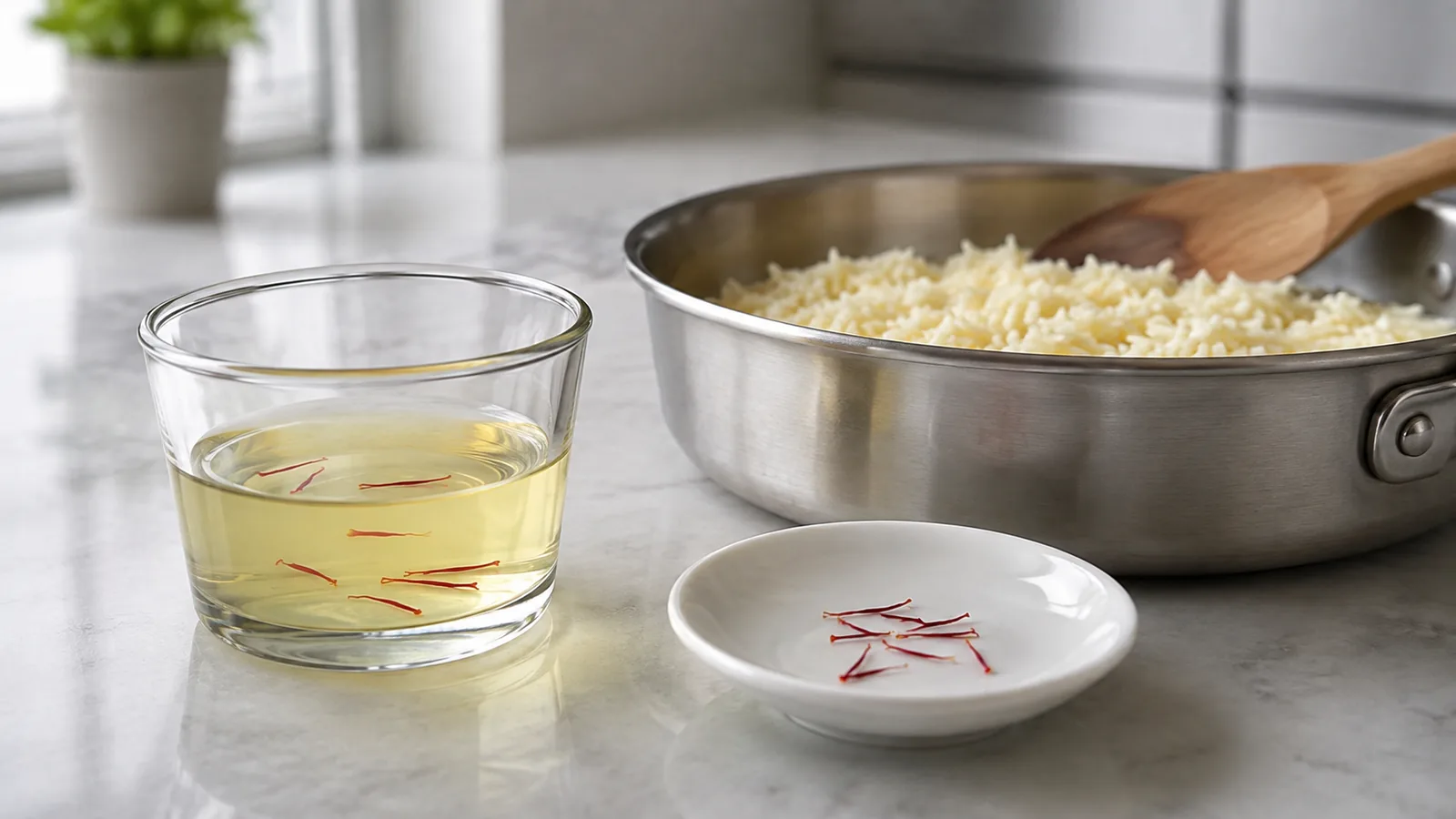
Warm the milk until it feels comfortably warm, not hot. Stir the ground saffron into the milk and leave it covered for 10 minutes. This brief infusion distributes both the colour and the aroma more evenly than adding dry threads directly to the flour.
Combine the warm water, yeast and a pinch of the measured sugar in a large bowl. Leave it for 5–10 minutes. Active dry yeast should form a creamy or lightly foamy surface. If nothing happens and you know the water was not too hot, the yeast may be inactive and should be replaced before you commit the rest of the ingredients.
How to make Swedish saffron bread
- Start the dough. Add the saffron milk, remaining sugar, egg and salt to the yeast mixture. Stir until the egg is fully broken up.
- Add the flour. Mix in 2 1/2 cups of the flour. Add the rest a little at a time until you have a soft dough that pulls away from the bowl but still feels slightly tacky. Flour absorbs liquid differently, so do not force in the final spoonful if the dough is already manageable.
- Knead in the butter. Work the softened butter into the dough in several small additions. Knead for 8–10 minutes by hand, or 6–8 minutes with a dough hook on low to medium-low speed, until the dough is smooth and elastic.
- Let it rise. Put the dough in a lightly greased bowl, cover it and leave it in a comfortably warm place until roughly doubled. This usually takes 60–90 minutes; a cool room can bring the total closer to two hours.
- Divide evenly. Turn the dough onto an unfloured or very lightly floured surface and divide it into 12 pieces. A scale gives the most even buns, but careful visual portions work too.
- Shape the curls. Roll each piece into a rope about 30 cm (12 inches) long. Curl one end inward from the left and the other from the right to form an S. Press one raisin into the centre of each spiral.
- Proof again. Arrange the buns on two baking-paper-lined trays with room between them. Cover loosely and leave for 30–45 minutes, until visibly puffy. They do not need to double completely.
- Bake. Heat the oven to 190°C (375°F). Brush the tops lightly with milk and bake one tray at a time on the centre rack for 12–15 minutes, until the edges are golden and the bases are lightly browned.
- Cool. Transfer the buns to a wire rack. Cover them with a clean towel as they cool if you prefer a softer crust.
How to shape a saffron wreath instead
For one large holiday loaf, divide the risen dough into two equal pieces and roll each into a long rope. Twist the ropes together, join the ends to make a circle and pinch the seam firmly underneath. Set the wreath on a lined tray and let it rise until puffy.
Brush with milk, sprinkle with a little pearl sugar or coarse sugar if you like, and bake at 180°C (350°F) for about 25–30 minutes. The centre of a larger loaf takes longer than separate buns, so look for an evenly browned base and a loaf that sounds lightly hollow when tapped. If the top colours early, cover it loosely with foil for the final minutes.
Why saffron-bread dough can feel sticky
Egg, butter and sugar make this dough softer than an everyday sandwich loaf. It becomes much easier to handle after kneading, once the gluten has developed and the butter is fully incorporated. Adding a large handful of flour at the first sticky moment produces dry buns.
Use a dough scraper and lightly greased hands before reaching for extra flour. If the dough still spreads like a thick batter after several minutes of kneading, add flour one tablespoon at a time. The finished dough should be supple enough to roll into ropes without sticking heavily to the surface.
Tips for soft, fragrant lussekatter
- Watch the liquid temperature. Very hot milk or water can damage yeast; cool liquid merely slows the rise.
- Grind the saffron just before using it. A short covered infusion helps it disperse without adding excess water.
- Use the dough, not the clock, as your guide. Rising time changes with room temperature and yeast activity.
- Keep the buns the same size. Even pieces finish together, which prevents the smaller ones from drying out.
- Do not overbake. Lussekatter are small and can move from golden to dry within a few minutes.
Variations that still suit the dough
Raisins are the classic decoration, but they can be omitted. Chopped dates make a pleasant filling when used sparingly: flatten each portion, add a small amount, seal it and shape it into a round bun rather than an S. Cardamom is also at home in Scandinavian baking, although keeping it subtle allows saffron to remain the main aroma.
If you would rather make a floral-shaped loaf with a different flavour balance, try the site’s rose bread with Iranian saffron. It is a separate presentation, not the traditional Lucia shape described here.
Serving and keeping Swedish saffron bread fresh
Serve the buns slightly warm or at room temperature with coffee, tea or Swedish glögg. Their restrained sweetness also works at breakfast. A fresh bun needs no icing; butter is optional.
Cool the buns fully, then keep them airtight at room temperature and eat within two days. Refrigeration makes enriched bread firm and stale-tasting, so freezing is a better choice for the rest. Wrap the buns well, freeze for up to two months and thaw at room temperature. A few minutes in a low oven restores the soft crumb and saffron aroma.