This recipe for baking rose bread with Iranian saffron turns a soft, lightly sweet milk dough into individual flower-shaped rolls with warm saffron color and a tender crumb.
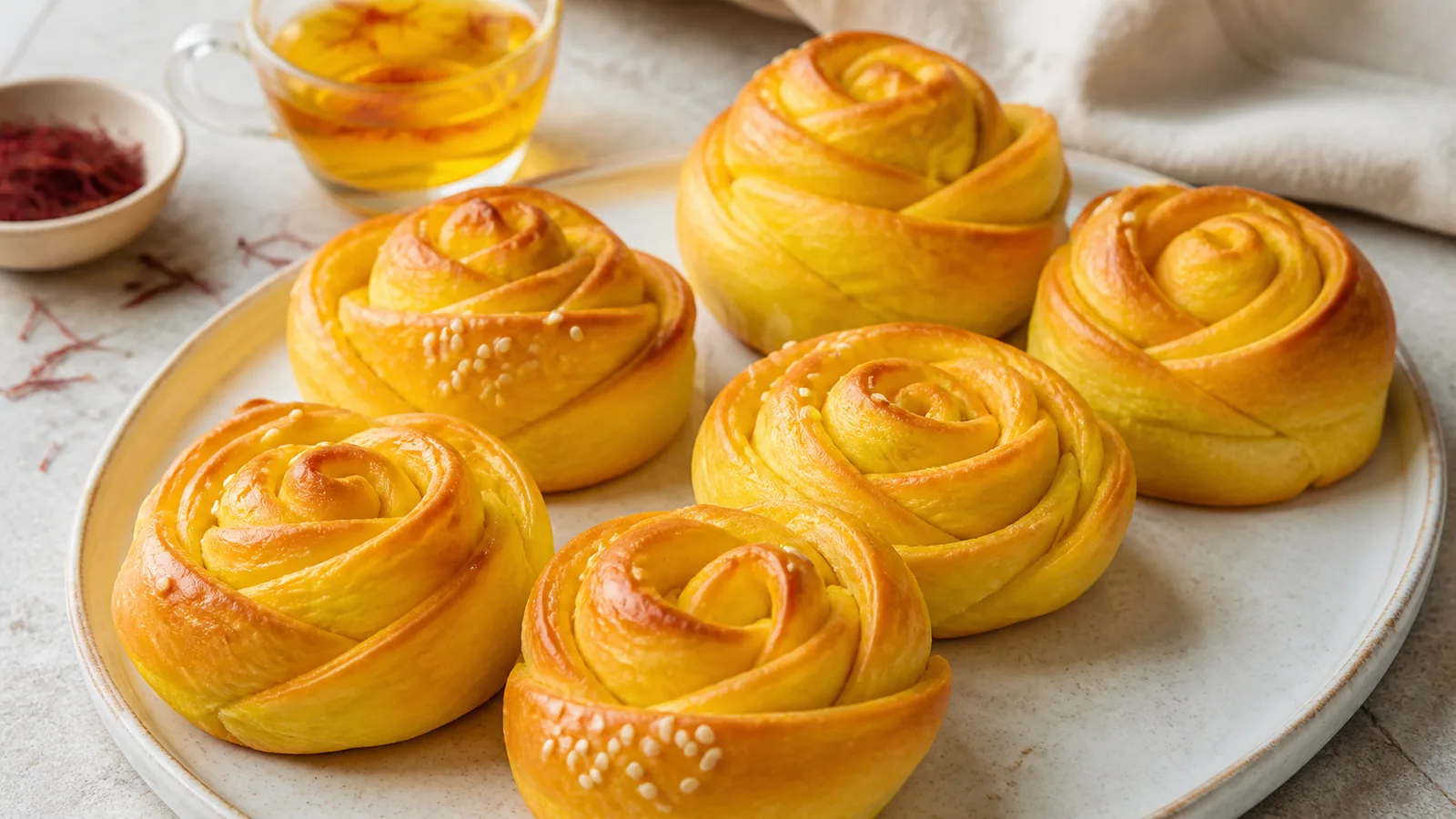
The rose shape comes from overlapping small dough circles, rolling them together and cutting the roll in half. The cut edge becomes the base, while the curved edges open into petals as the bread proofs and bakes.
Ingredients for Iranian saffron rose bread
- 1 tablespoon active dry yeast
- 1 tablespoon sugar for activating the yeast
- 1/4 cup lukewarm water
- 1 cup milk
- 1 cup sugar for the dough
- 1 tablespoon concentrated bloomed saffron
- 1 large egg
- 1/3 cup neutral cooking oil
- 1 teaspoon salt
- Wheat flour, as needed, about 4 to 5 cups
- Sesame seeds or decorative sugar sprinkles, optional
The original rose bread recipe leaves the flour quantity open because flour absorbs liquid differently. Begin at the lower end and add more only until the dough is soft, smooth and manageable.
Activate the yeast for 10 minutes
Combine the active dry yeast, one tablespoon sugar and the 1/4 cup lukewarm water in a small bowl. Stir, cover and leave it for 10 minutes. The surface should become creamy or lightly foamy.
Use water that feels comfortably warm rather than hot. If there is no sign of activity after 10 minutes, begin again with fresh yeast before using the remaining ingredients.
Prepare the saffron milk
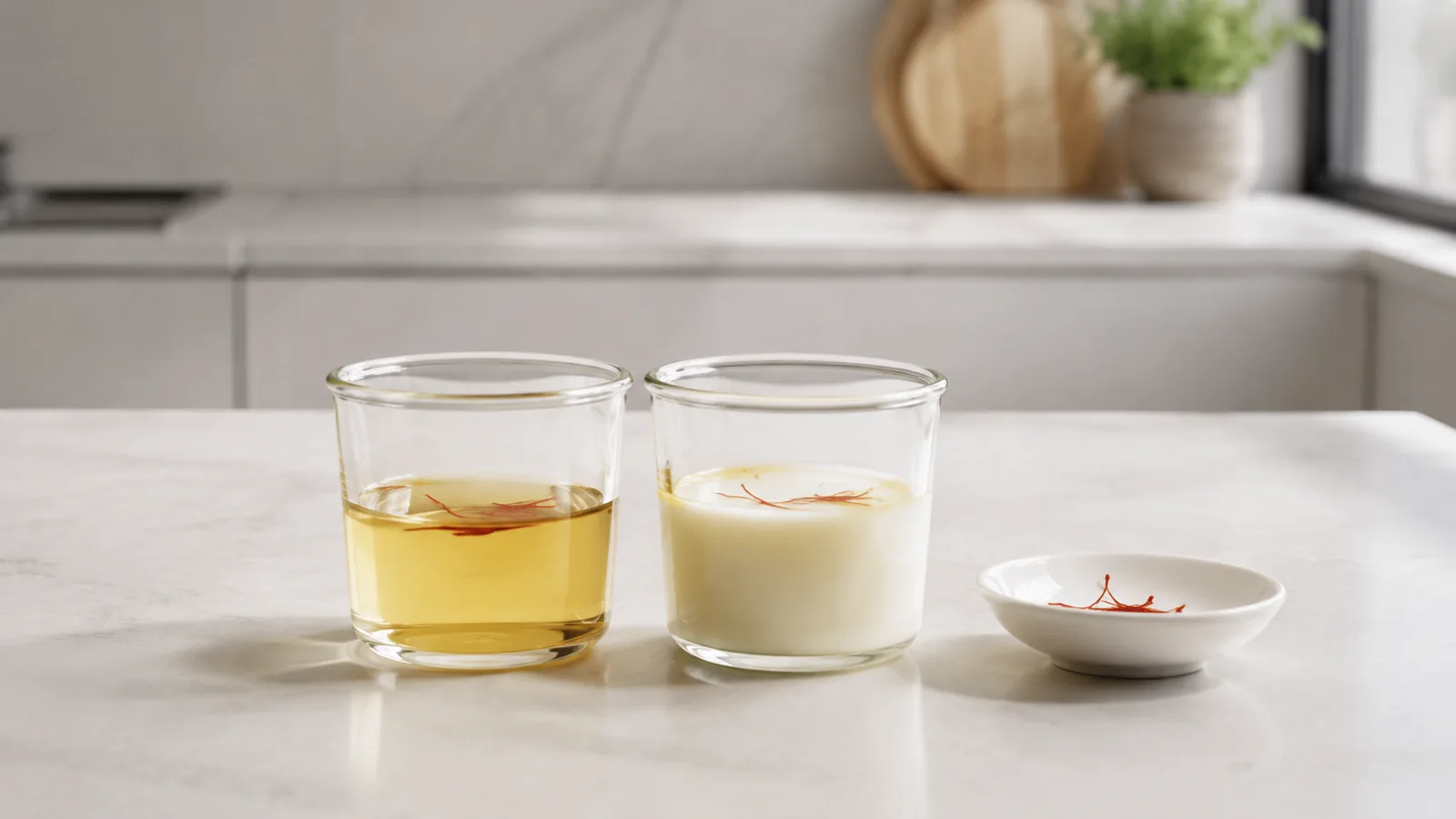
Warm the milk with the one cup sugar, stirring until the sugar dissolves. Remove it from the heat and stir in the tablespoon of bloomed saffron. Do not add the yeast or egg while the milk is hot.
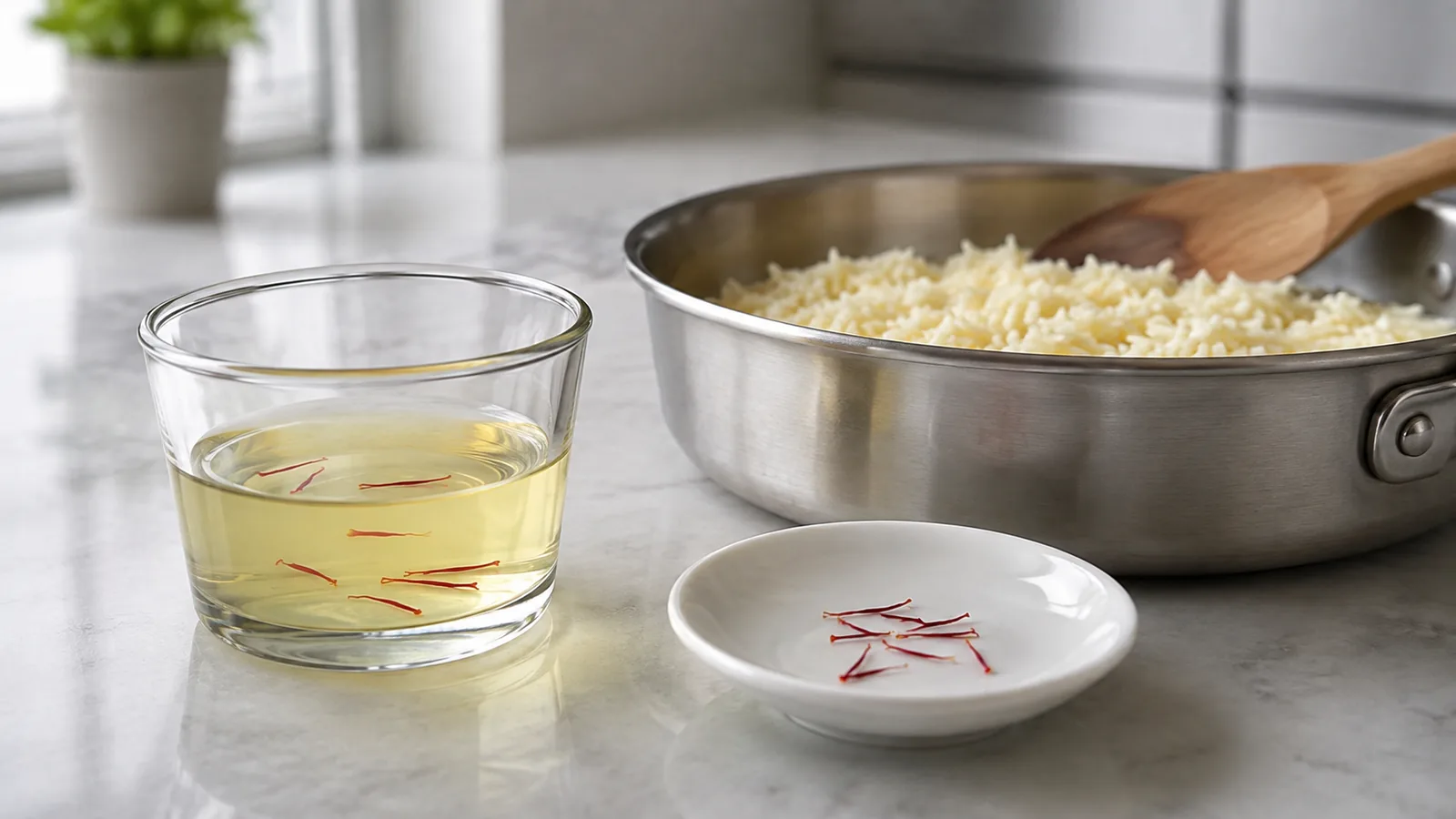
Let the saffron milk cool to lukewarm. If you are working from dry threads, prepare a strong infusion first with this guide to brewing Iranian saffron.
The mixture should be golden and aromatic, with no dry saffron clumps. A concentrated infusion colors the dough without adding enough water to upset its texture.
Mix and knead the rose bread dough
Beat the egg with the salt and neutral oil in a large bowl. Add the cooled saffron milk and activated yeast, then mix until even.
Add the flour gradually, about one cup at a time. When the dough becomes too firm for a spoon, turn it onto a lightly floured surface and knead until smooth and elastic. It should feel soft and slightly tacky, but it should not leave wet dough on your fingers.
Avoid adding flour simply to make the dough completely dry. Too much flour is the most common reason a shaped sweet bread becomes dense instead of opening gently in the oven.
Let the dough rise for one hour
Place the dough in a lightly oiled bowl and turn it once so the surface has a thin coat of oil. Cover the bowl and leave it in a comfortably warm, draft-free place for about one hour.
The dough should look noticeably larger and feel airy. Room temperature and yeast activity matter more than the clock, so give it a little longer if it has not expanded well after an hour.
Roll the dough to half a centimeter
Line a baking tray with baking paper. Gently press the risen dough to release large air pockets, then divide it into manageable pieces.
Roll one piece to a thickness of about 5 mm, or half a centimeter. Cut equal rounds with a small circular cutter. Keep the unused dough covered while you shape the first roses so its surface does not dry out.
Shape each rose
Arrange four dough circles in a short row, overlapping each one by about half. Starting at one end, roll the row into a loose cylinder. Cut the cylinder across the middle to make two roses.
Stand each half on its freshly cut side and gently open the outer edges to suggest petals. Place the roses on the lined tray with space between them. Use light pressure; tightly packed layers cannot expand, while a very loose roll may open flat.
Gather the scraps once, let them relax for five minutes, then roll and cut them again. Repeated rerolling can make the last roses tougher than the first.
Proof the shaped bread for 20 minutes
Cover the tray loosely and leave the shaped roses for 20 minutes. They should become slightly fuller but do not need to double.
Near the end of this rest, heat the oven to 180°C (350°F). Brush the tops very lightly with milk or water, then add sesame seeds or decorative sugar sprinkles if using them. Keep the topping restrained so the petal shape remains visible.
Bake the rose bread for 30 minutes
Set the tray on the middle rack and bake for about 30 minutes, until the roses are risen, golden at the edges and cooked through the center. Turn the tray once if the oven browns one side more quickly.
Check a roll near the center of the tray. Its base should be dry and lightly colored, and the layers should pull apart without a line of raw dough. If the tops brown early, cover them loosely with foil for the remaining time.
Move the baked rose bread to a rack and let it cool for at least 15 minutes. The crumb finishes setting during this rest, while the curved saffron petals stay soft.
How to keep the rose shape clear
- Cut circles to the same size so the petals rise evenly.
- Keep the dough close to 5 mm thick; heavy circles make a bulky center.
- Roll the overlapping circles gently rather than compressing them.
- Stand each half on the cut face so the sealed base supports the petals.
- Leave room between roses for the 20-minute proof and oven rise.
Rose bread with Iranian saffron is at its best when freshly baked, but cooled rolls can be kept airtight for a day. Warm them briefly in a low oven before serving to soften the crumb without drying the petal edges.