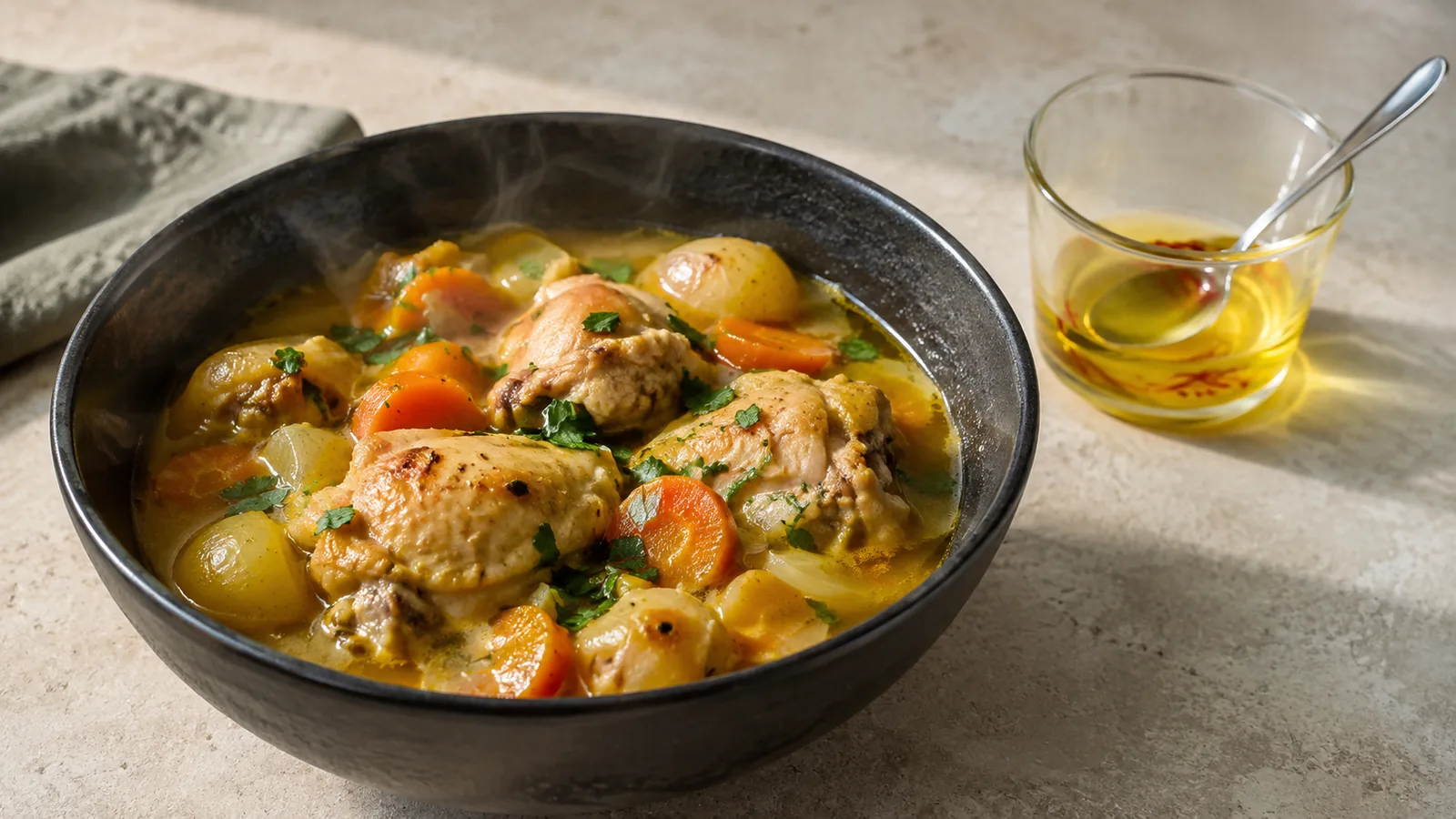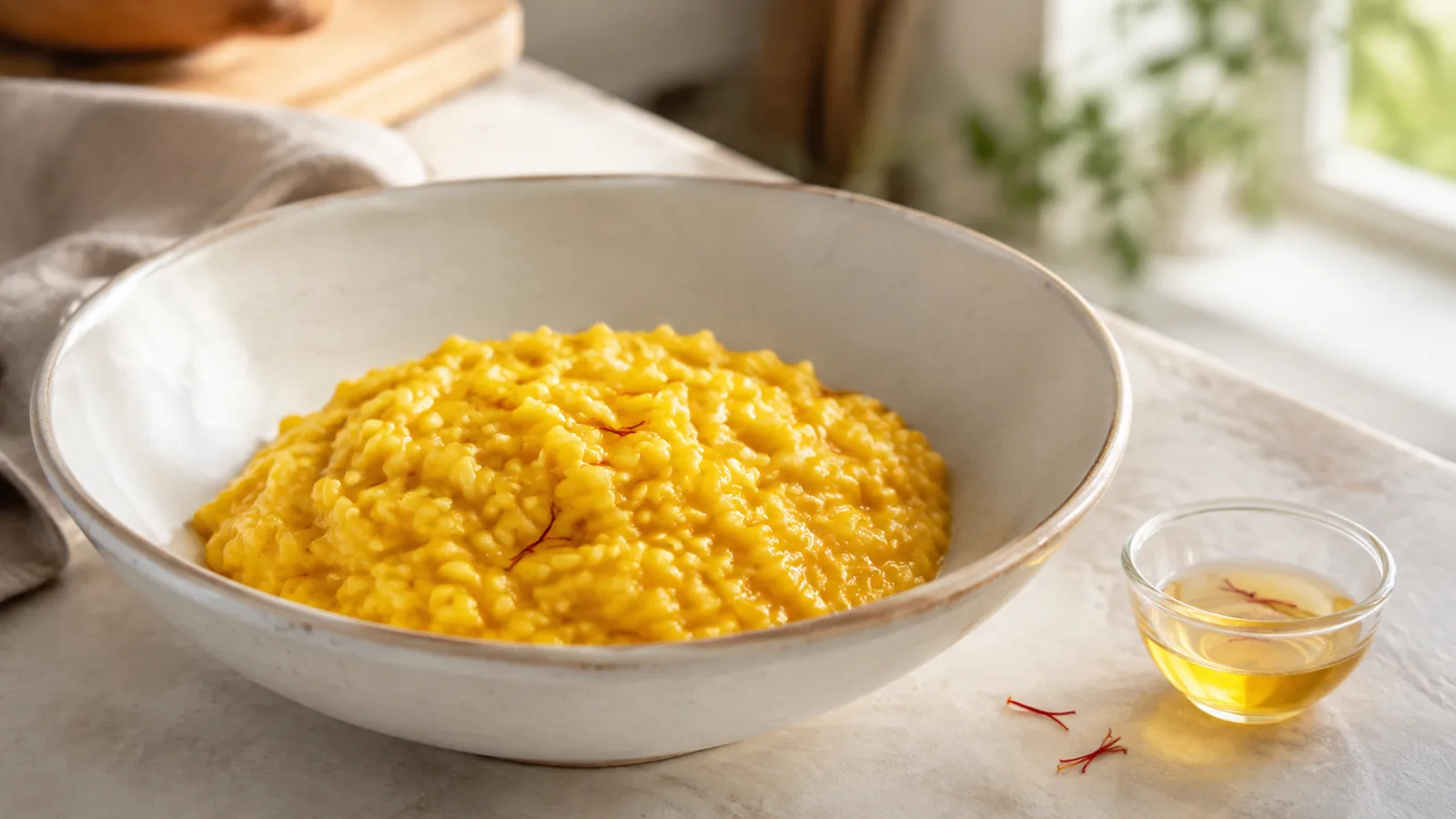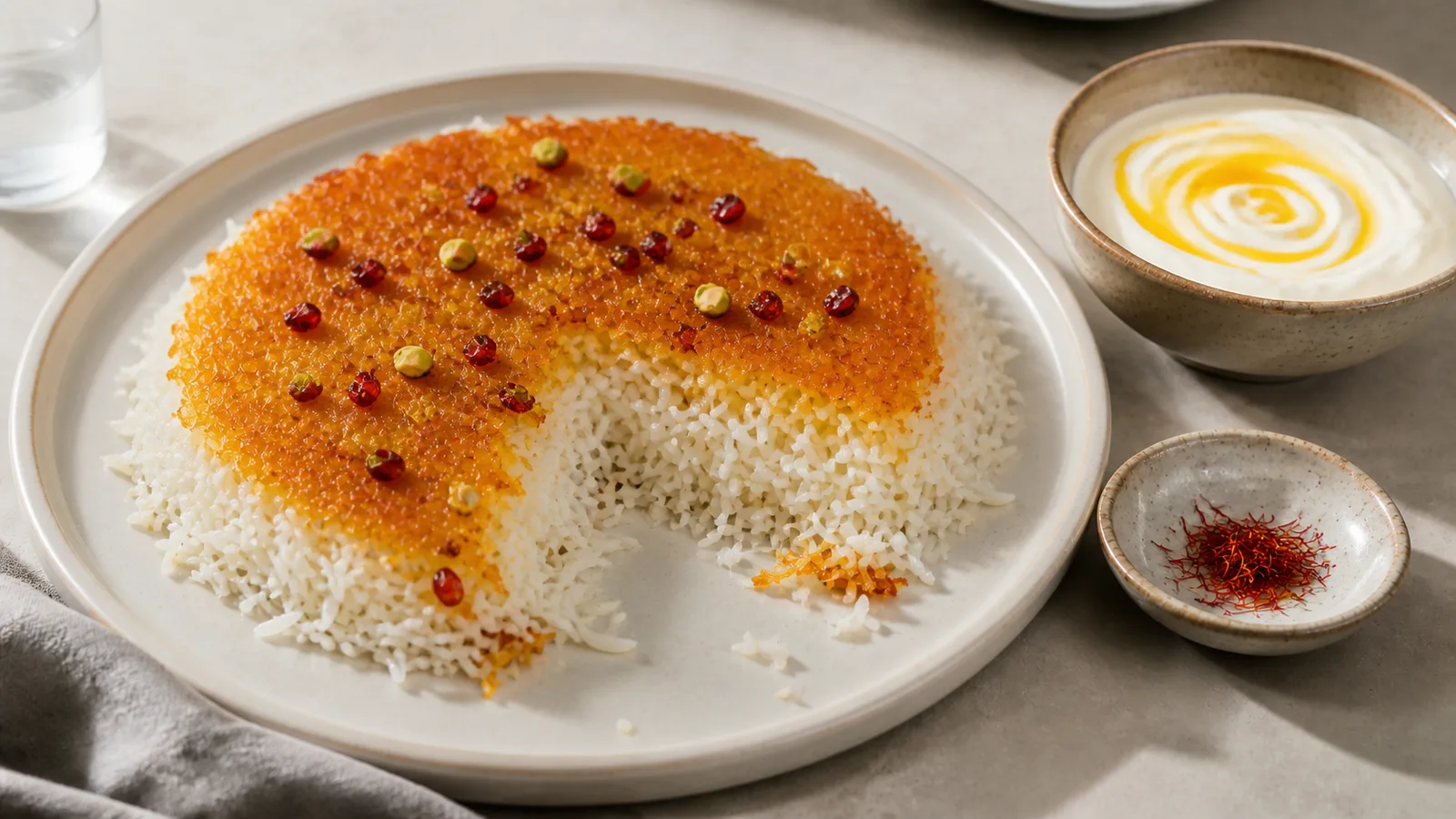
Saffron rice crust with yogurt is a practical way to make an evenly golden, fragrant tahdig. Part of the parboiled basmati rice is mixed with yogurt, egg yolk, bloomed saffron, and oil, pressed into the bottom of the pot, then cooked slowly beneath the remaining rice.
The result should release as one crisp layer: deep gold on the outside, tender where it meets the rice, and aromatic without tasting bitter. This recipe gives exact amounts and the visual cues that matter more than a rigid clock.
Is this tahdig or tahchin?
Tahdig means “bottom of the pot” and refers to the crisp layer formed beneath Persian rice. A yogurt-and-egg tahdig uses a relatively thin enriched layer under plain rice. Tahchin is a thicker, cake-like baked or steamed rice dish in which much more of the rice is mixed with yogurt, egg, and saffron, often with chicken or another filling.
This recipe is tahdig. Its method borrows the binding power of yogurt and egg without turning the whole pot into a rice cake.
Ingredients for saffron rice crust with yogurt
Serves 6 as a side dish.
- 2 cups (about 380 g) white basmati rice
- 2 tablespoons salt for the boiling water, most of which is drained away
- 1/4 teaspoon saffron threads
- 2 tablespoons hot water
- 1/2 cup (120 g) full-fat plain yogurt
- 1 large egg yolk
- 4 tablespoons neutral oil or melted ghee, divided
- 1/2 teaspoon fine salt for the yogurt mixture
- optional: a pinch of garlic powder or onion powder
- optional garnish: barberries and chopped pistachios
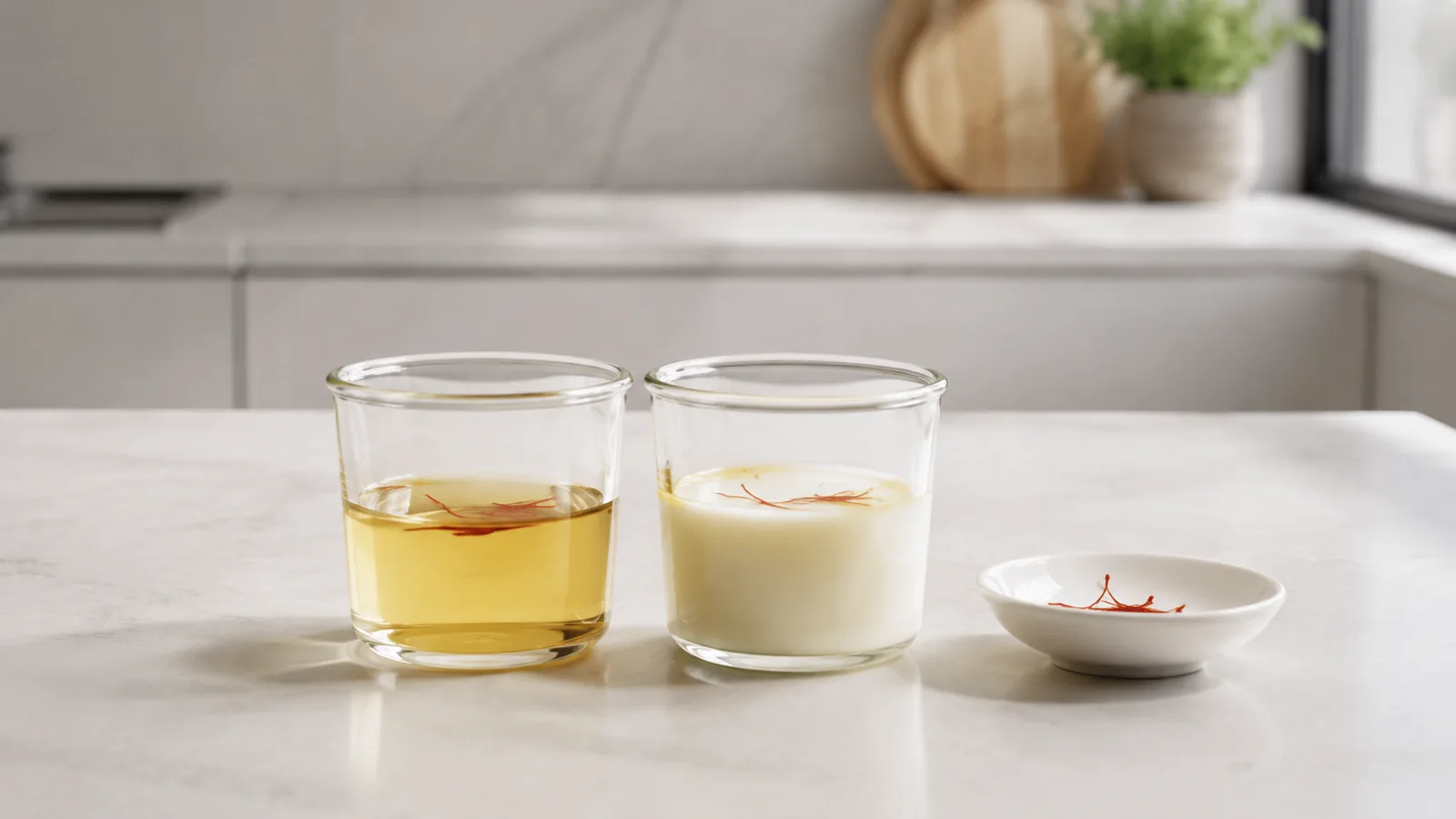
Use plain, unsweetened yogurt. Greek yogurt is workable but may need a teaspoon or two of water so the mixture coats the rice rather than clumping. In some recipe searches, yogurt is called curd; “saffron curd” here means a saffron-yogurt mixture, not a dessert curd.
Some recipes use whole eggs, but one egg yolk gives this thin crust enough binding and color without making it taste like an omelet. That proportion is one reason this remains tahdig rather than a thick tahchin.
How to make saffron rice crust with yogurt
1. Bloom the saffron
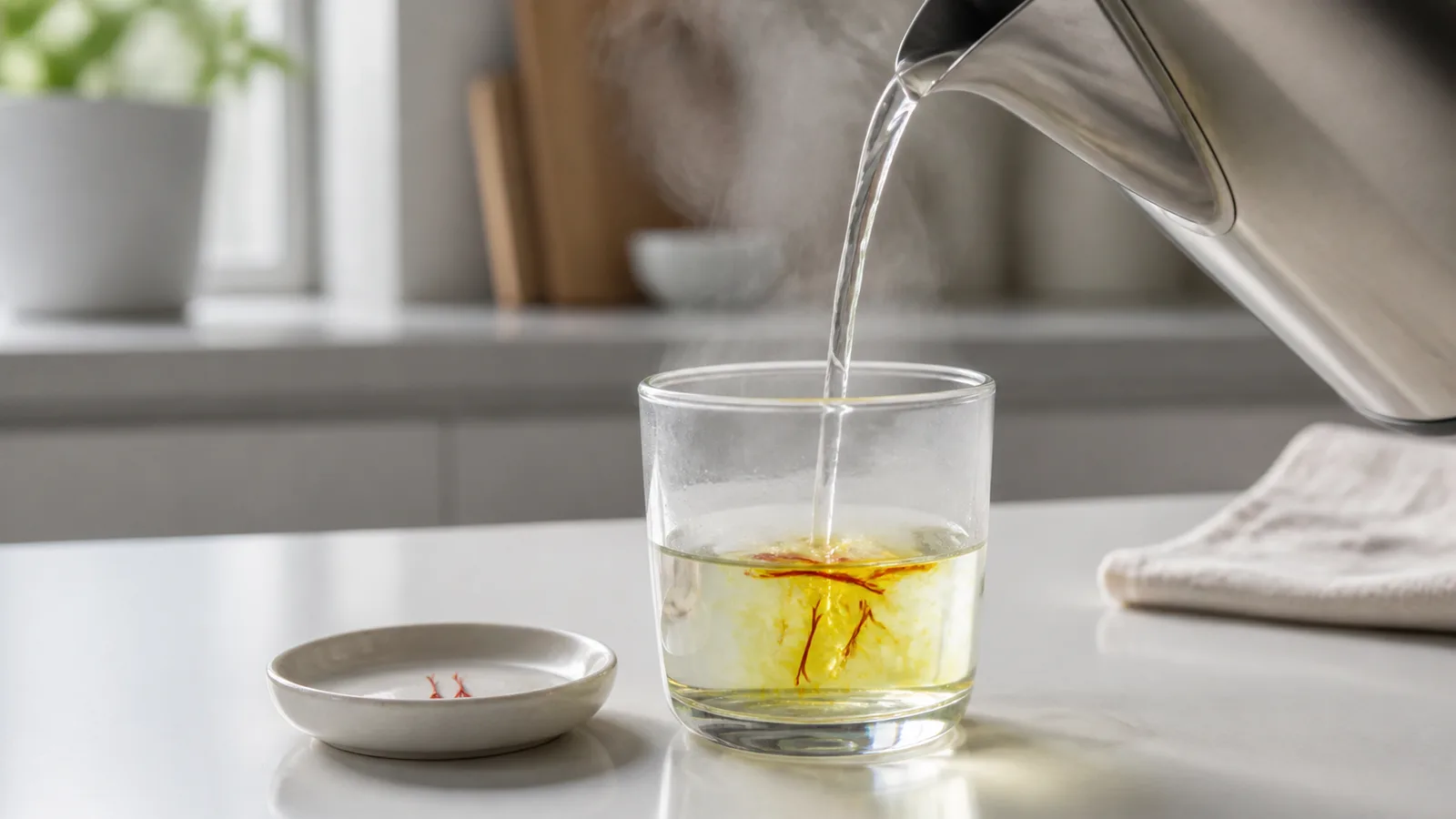
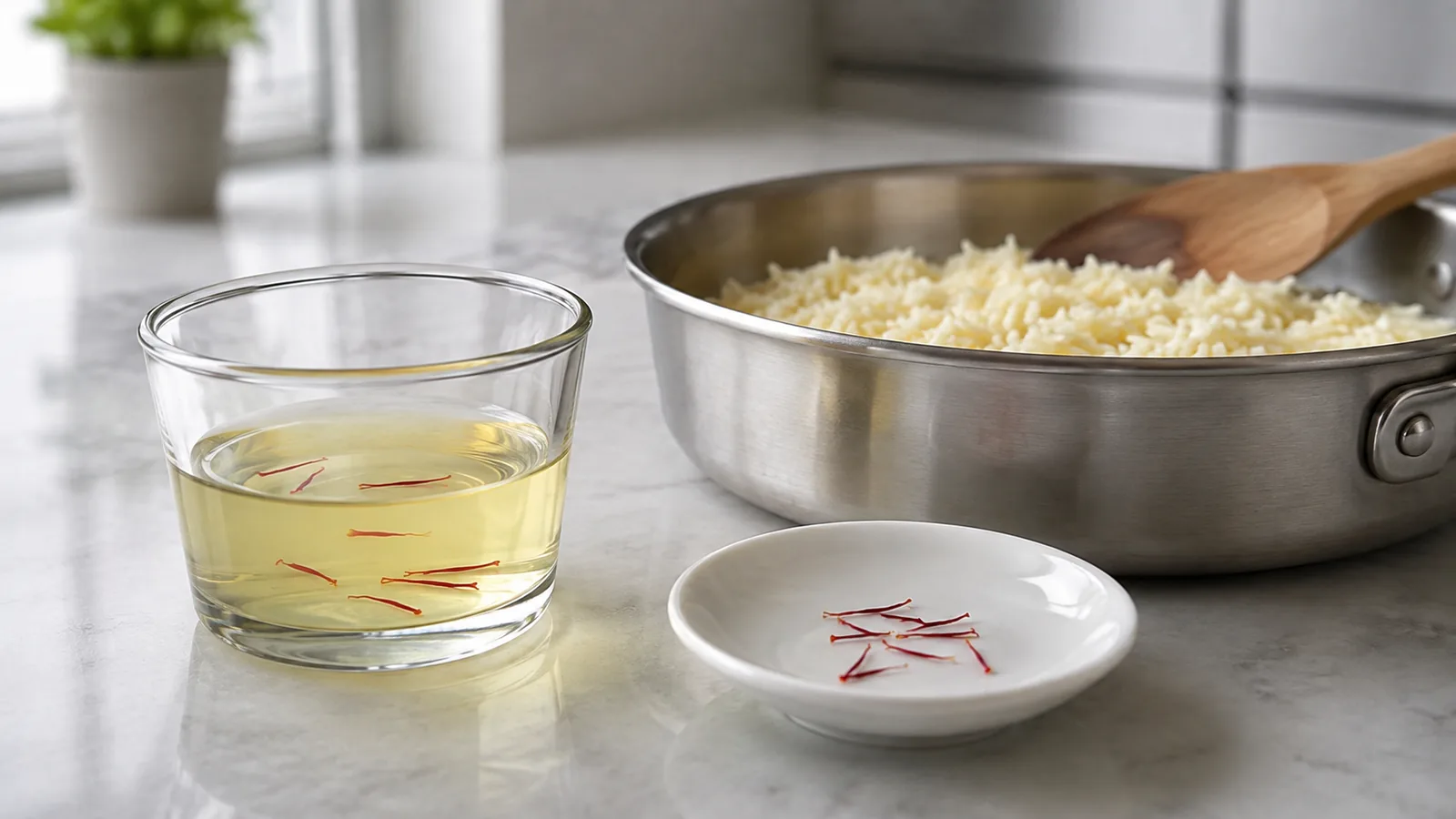
Crush the threads to a coarse powder, cover with 2 tablespoons hot water, and leave for 10 to 15 minutes. The liquid should become deeply golden and fragrant.
2. Rinse and parboil the rice
Rinse the basmati gently in several changes of cool water until the water is much clearer. Bring a large pot of water to a boil, add the 2 tablespoons salt, and add the rice. Boil for about 5 to 7 minutes, stirring once or twice.
Test a grain: the outside should be soft enough to bite, while the center remains firm and slightly opaque. Drain immediately and rinse briefly with lukewarm water to stop the cooking.
3. Make the yogurt mixture
Whisk the yogurt, egg yolk, bloomed saffron, 2 tablespoons oil, and 1/2 teaspoon salt in a large bowl. Add garlic or onion powder only if you want that flavor. Fold in about 2 packed cups of the parboiled rice until every grain is coated.
4. Build the crust
To turn this into a reliable tahdig with yogurt, use a well-seasoned heavy pot or a sound nonstick pot about 24 cm (9 to 10 inches) wide. Add the remaining 2 tablespoons oil and warm it over medium heat.
Spread the yogurt-coated rice across the base in an even layer about 1 to 1.5 cm thick. Press gently with the back of a spoon; compacting it lightly helps the crust hold together, but crushing it hard makes it dense.
5. Add the remaining rice and steam
Mound the plain parboiled rice over the crust without pressing. Make three or four steam channels with the handle of a wooden spoon. Wrap the lid in a clean kitchen towel, tying the ends securely on top so they cannot reach the flame, and cover the pot.
Cook over medium heat for 5 to 8 minutes, just until steam builds, then reduce to low. Cook for another 35 to 45 minutes. Rotate the pot once or twice if your burner heats unevenly.
6. Release the tahdig
Take the pot off the heat and let it stand for 5 minutes. Run a flexible spatula around the edge. Place a platter over the pot and invert in one confident movement, or remove the fluffy rice first and lift out the crust in sections.
How to tell when the crust is ready
Listen for steady, quiet sizzling rather than aggressive frying. A nutty toasted aroma should develop near the end. If you lift a tiny edge with a thin spatula, it should be deep gold and firm.
Forty-five minutes is a useful guide, not a promise. Pot material, burner size, rice quantity, and heat setting all change the timing. If the base is pale, return it to low heat for a few minutes. If it smells burnt, remove it immediately; a darker crust should be achieved with time and moderate heat, not a high flame.
Tips for crisp yogurt tahdig
- Parboil, do not fully cook, the rice. Fully tender grains turn soft during steaming.
- Keep the crust layer even. Thin patches burn before thick areas crisp.
- Use enough oil. It conducts heat and helps the crust release; too little commonly causes sticking.
- Choose full-fat yogurt. It provides better texture and browning than a watery low-fat yogurt.
- Control condensation. The towel under the lid absorbs steam that would otherwise drip back onto the rice.
- Do not rush. Low heat after the initial steam phase gives the bottom time to crisp without scorching.
Serving saffron yogurt and tahdig
Serve the crust with khoresh, grilled vegetables, chicken, fish, or a herb-filled salad. Soak dried barberries briefly, then sauté them gently in a little butter and scatter them over the platter with pistachios for a tart, colorful finish.
For a quick saffron yogurt sauce, stir a teaspoon of bloomed saffron into a cup of plain yogurt with salt and, if you like, chopped mint or grated cucumber. Serve it cold beside the hot rice. This answers the “saffron yogurt recipe” intent without mixing the sauce into the crust method.
Is saffron rice healthy?
Saffron rice can be part of a balanced meal. Rice mainly provides carbohydrate, yogurt and egg add some protein and calcium, and the oil supplies fat. The dish is energy-dense because a crisp crust needs oil; calling it anti-inflammatory, mood-boosting, or inherently “healthy” because it contains saffron would be misleading.
Tahdig calories depend on the recipe and portion. For this exact saffron crust, a sixth of the pot is roughly 300–350 calories before garnishes, depending on the rice brand, yogurt, and how much oil remains in the pan. It is not credible for a serving of rice tahdig to contain 23 calories while also listing substantial carbohydrate and fat. Potato tahdig and bread tahdig cannot be compared fairly without equal serving weights and measured ingredients.
If you want a lighter portion, make the crust in a wider pot and serve a smaller piece rather than cutting the oil so sharply that the rice sticks. Pair it with vegetables and a protein. Anyone tracking sodium can reduce the salt in the boiling water, though the drained-rice method removes much of it.
The pleasure of saffron rice crust with yogurt comes from contrast: fluffy grains above and a crisp, saffron-gold layer underneath. Precise parboiling, an even crust, and patient low heat matter more than decorative claims about the ingredients.