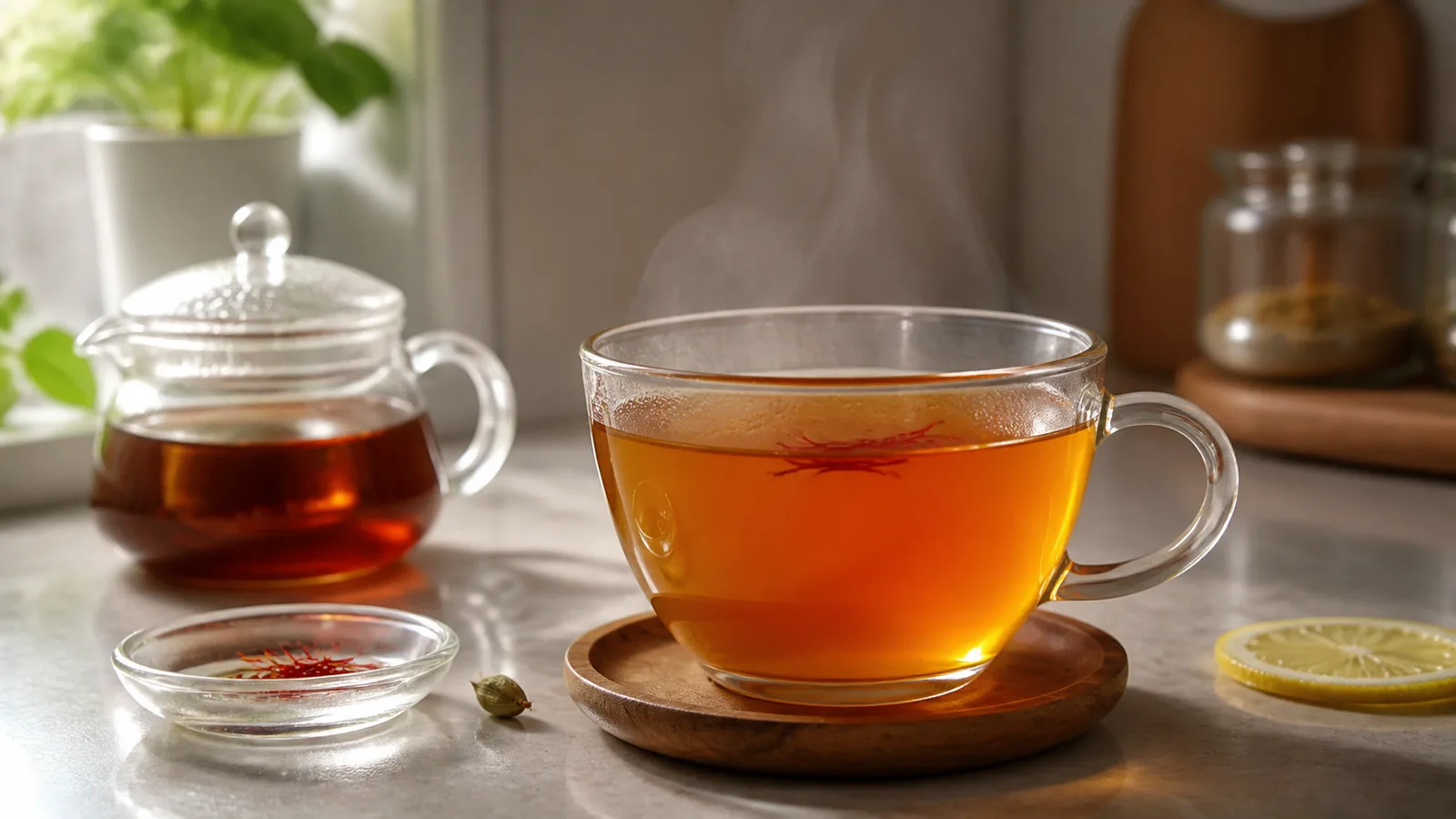
Yes, you can put saffron in hot tea. Add two to four threads to one cup for a gentle flavour, or bloom them separately before combining the infusion with your brewed tea. Hot water helps release saffron’s colour and aroma; it does not need to be cold.
The best method depends on the tea. Black tea can support a clear saffron note, while delicate green or white tea needs fewer threads so neither ingredient masks the other.
Can you put saffron in hot tea?
Saffron threads can go straight into the cup after the tea has brewed. Let them steep for at least five minutes, stir and taste. The drink should become pale gold to orange and smell floral without tasting bitter or medicinal.
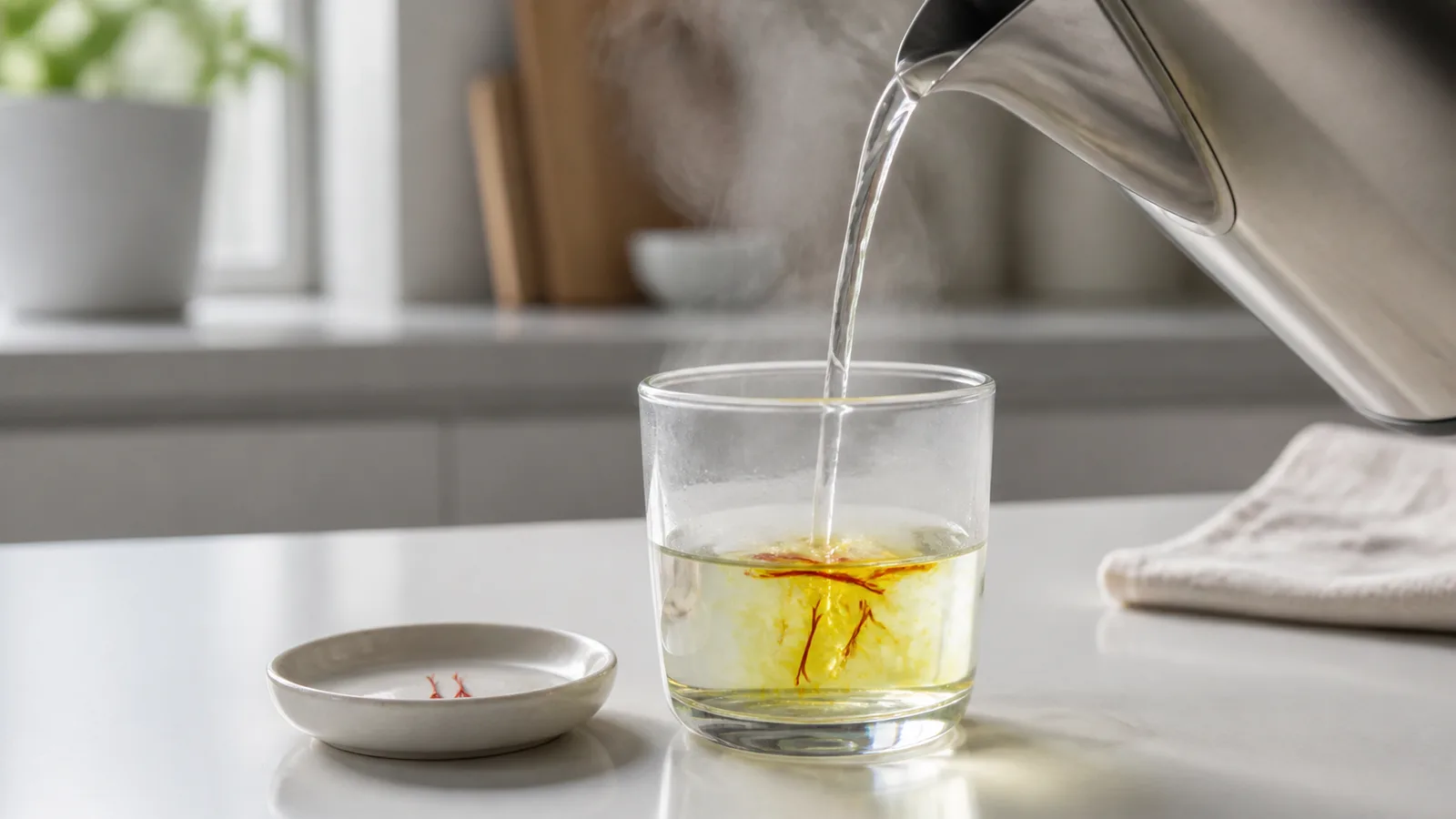
You can also make a small saffron infusion first. Blooming gives the threads more contact with liquid and makes it easier to distribute the flavour evenly, especially when preparing several cups.
How many saffron threads should you use?
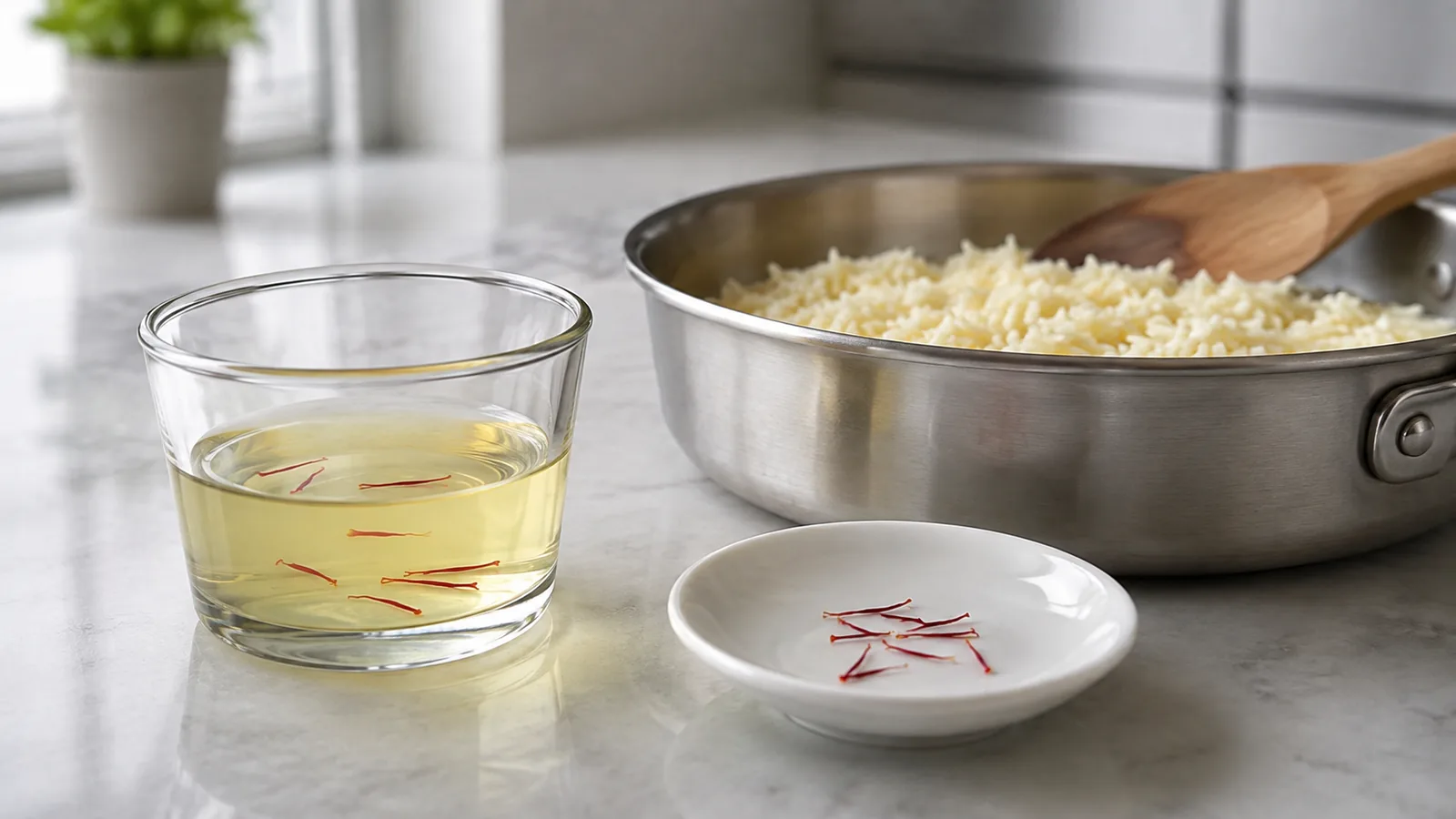
For one cup, begin with two to four saffron threads. This is a culinary starting point, not a medical dose. Long, thick stigmas and short broken pieces do not weigh the same, and batches vary in strength.
For a teapot serving four, start with a small pinch rather than simply multiplying the maximum amount by four. Taste one poured cup before adding more. If the tea is too strong, dilute it with more unsaffroned tea or hot water.
Two good ways to prepare saffron tea
Method 1: add the threads directly
- Brew the tea according to its own temperature and timing needs.
- Remove the leaves or tea bag so the base does not oversteep.
- Add two to four saffron threads to the hot cup.
- Cover for five to ten minutes, then stir and taste.
This method is quick and leaves the red threads visible in the finished drink. It works especially well for a plain black tea or a caffeine-free herbal infusion.
Method 2: bloom the saffron first
- Lightly crush the threads into shorter pieces.
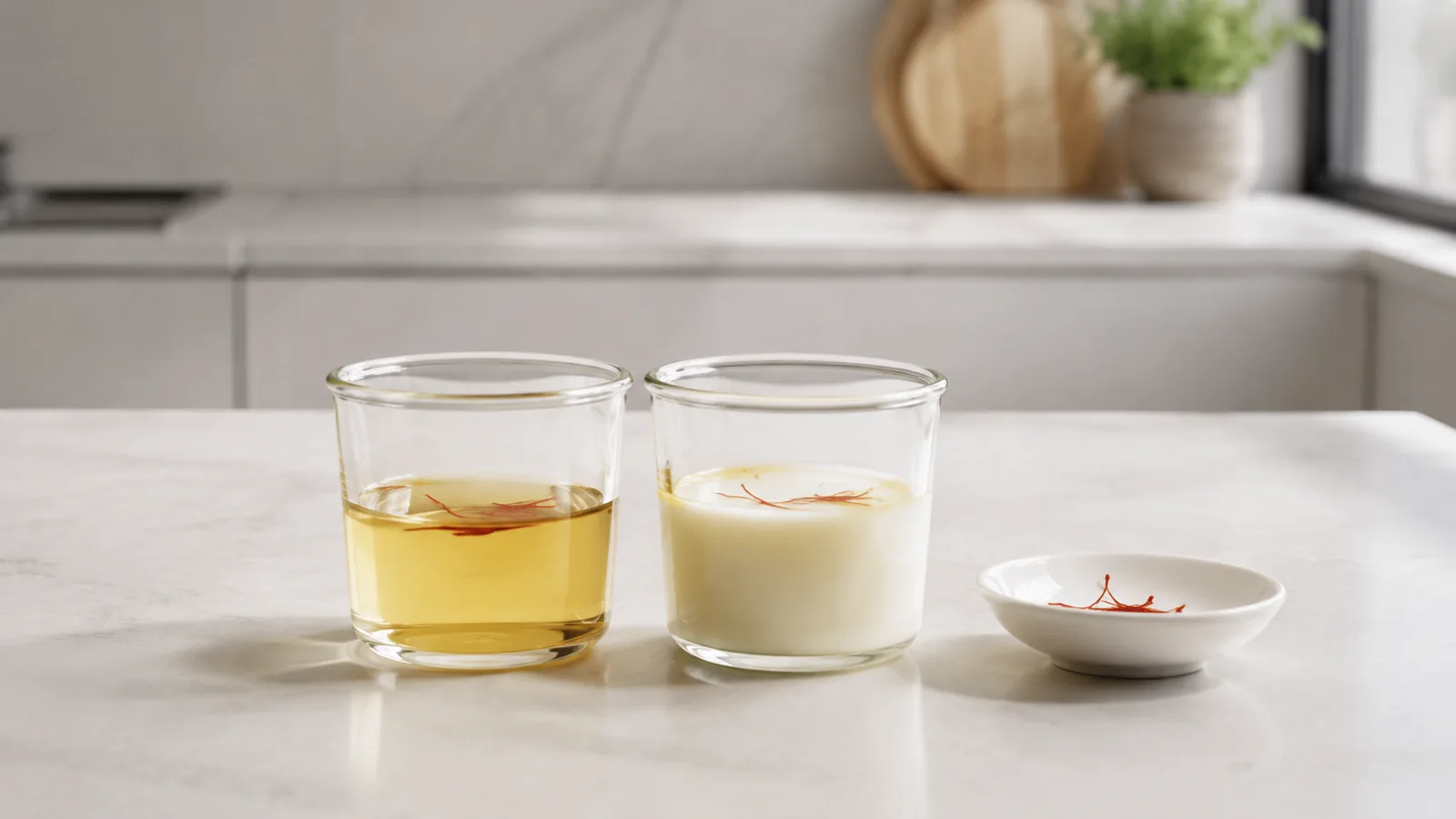
- Soak them in one or two teaspoons of warm water or milk for 10 to 15 minutes.
- Brew the main tea separately.
- Pour in the entire saffron infusion, including the softened threads.
Blooming is helpful when you want more even colour or are adding saffron to milky tea. The liquid should be warm or hot, but there is no need to boil a teaspoon of infusion aggressively.
Does the water temperature matter?
Choose the temperature for the tea leaves first. Black tea usually tolerates near-boiling water, whereas green and white teas are commonly brewed cooler to limit harshness. Add saffron during or just after brewing.
A brief contact with very hot water does not automatically ruin saffron. What is less useful is leaving a small amount in a rolling boil for a long time, which can drive off delicate aromas and reduce control over the final cup.
What tea goes well with saffron?
- Black tea: robust enough for two to four threads and a little milk if desired.
- Green tea: use fewer threads and a shorter saffron steep so the base remains recognisable.
- White tea: keep the saffron especially subtle.
- Herbal tea: ginger, mint or rooibos can work, but strong blends may hide the saffron.
- Milk tea: bloom the threads in warm milk before adding them to the brewed tea.
Honey, lemon and cardamom
Honey softens bitterness and adds body, but taste the tea first so sweetness does not cover the saffron. A thin slice of lemon can brighten black or herbal tea; too much acid may dominate. Cardamom is a classic partner, although one lightly cracked pod or a small pinch is usually enough for a cup.
Add one companion flavour at a time. Saffron, honey, lemon and cardamom can all be pleasant together, but using each heavily produces a crowded drink rather than a richer one.
What are the saffron tea benefits?
The reliable benefits in a cup are culinary: warm liquid extracts colour and aroma, a few threads make a distinctive drink, and the preparation can be served plain or adapted to different teas. It should not be described as a guaranteed way to treat stress, improve mood or prevent disease.
If you are pregnant or breastfeeding, giving saffron to a child, taking medicines, or considering a concentrated daily drink or supplement for a health purpose, discuss the product and amount with a clinician or pharmacist.
Common mistakes to avoid
- Using a large pinch before tasting a smaller amount.
- Boiling delicate tea leaves and saffron together for too long.
- Adding so much honey or cardamom that the saffron disappears.
- Using an unknown powder that is not clearly sold as food-grade saffron.
- Expecting colour alone to prove quality or strength.
For more detail, see our guide to using saffron in tea. You can also browse our saffron products when choosing threads for a balanced, aromatic cup.