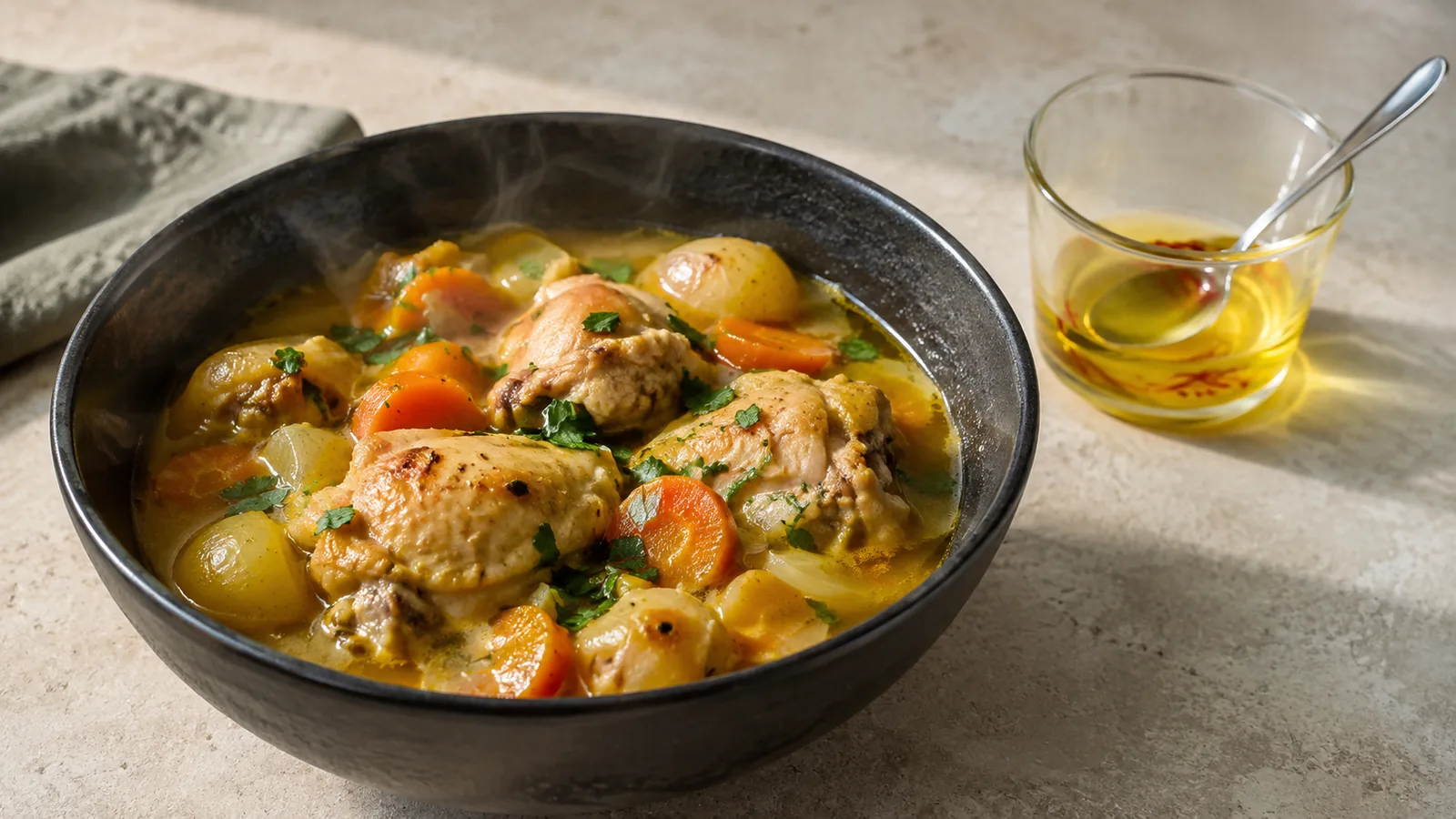
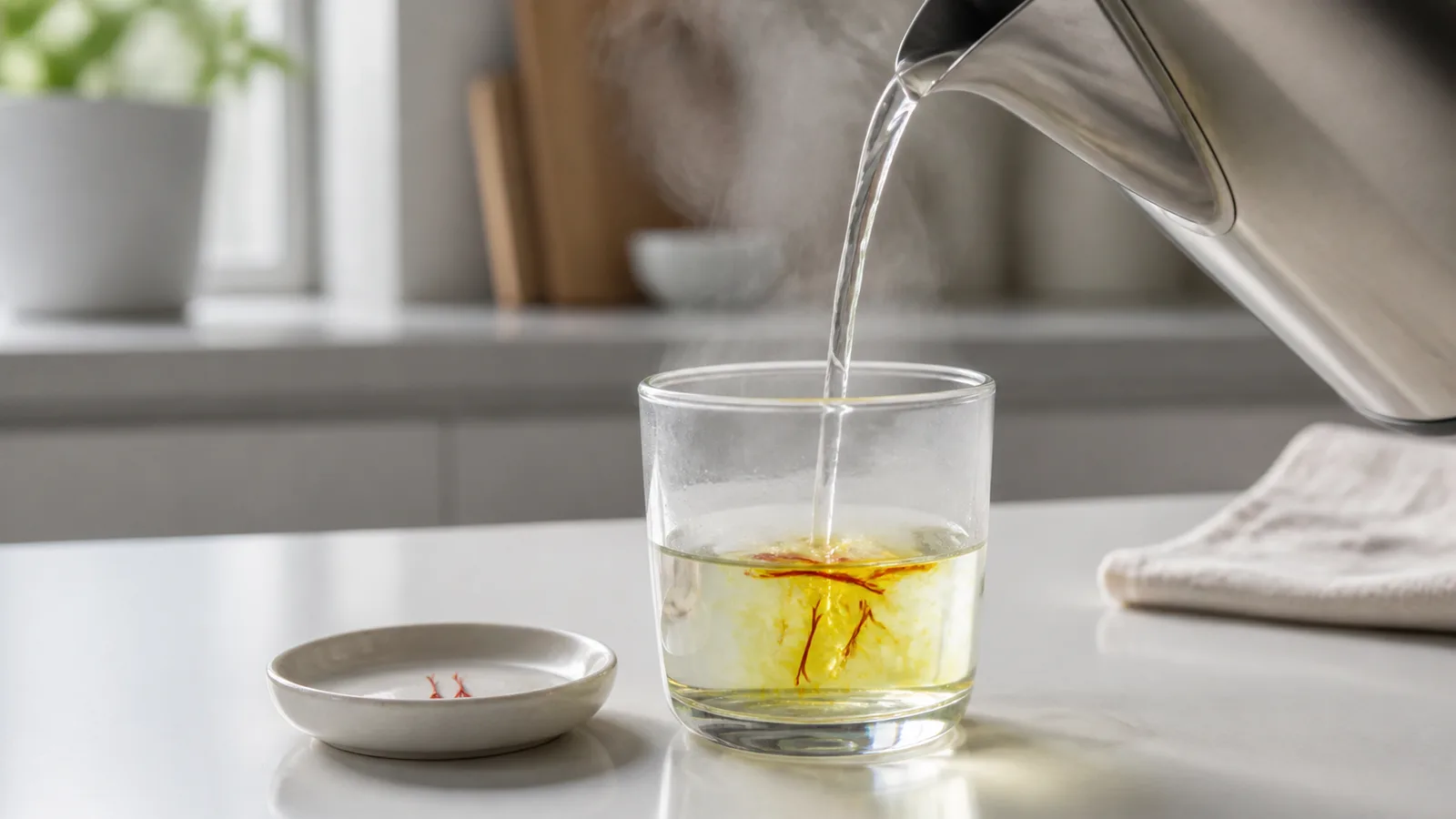
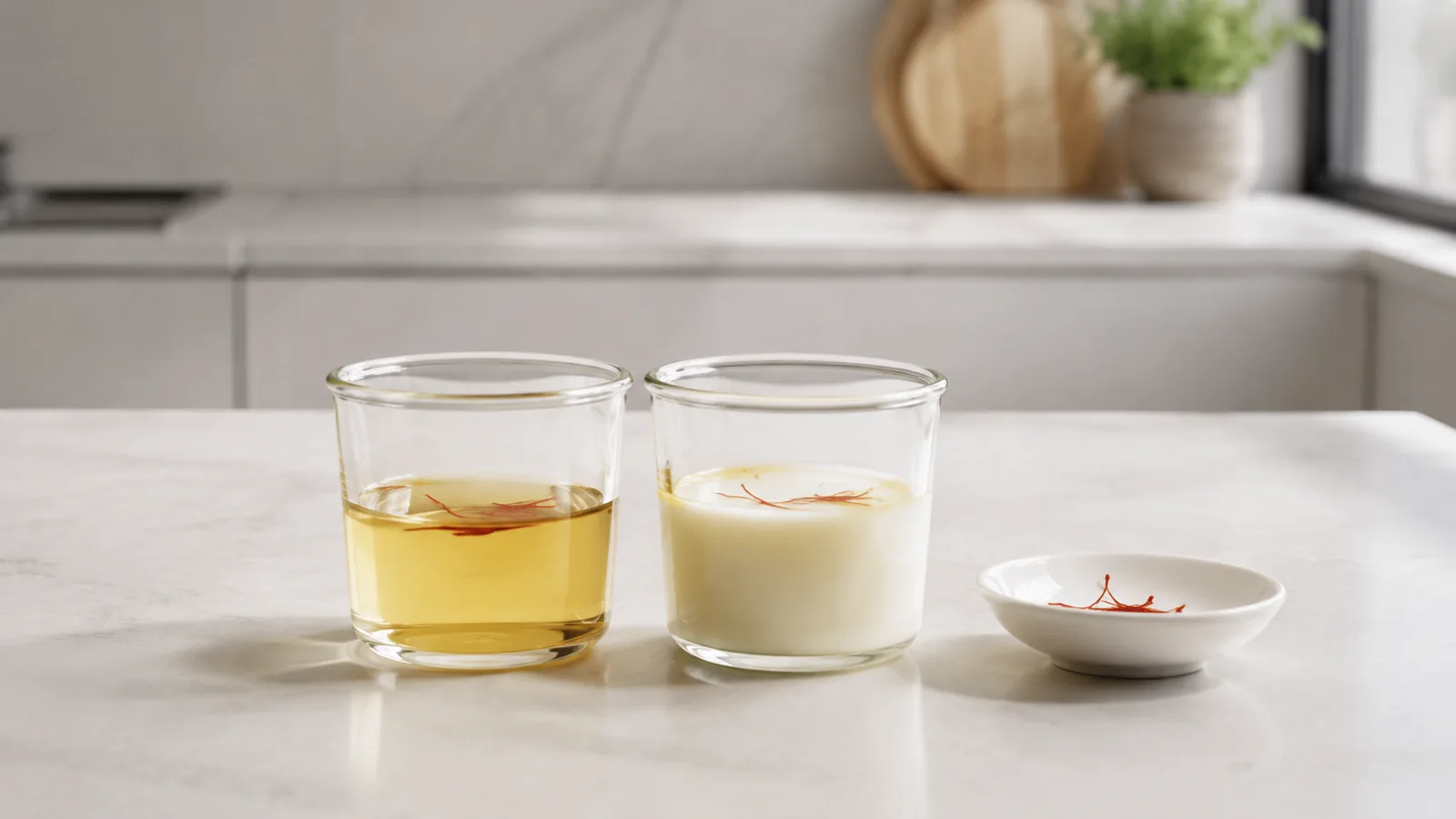
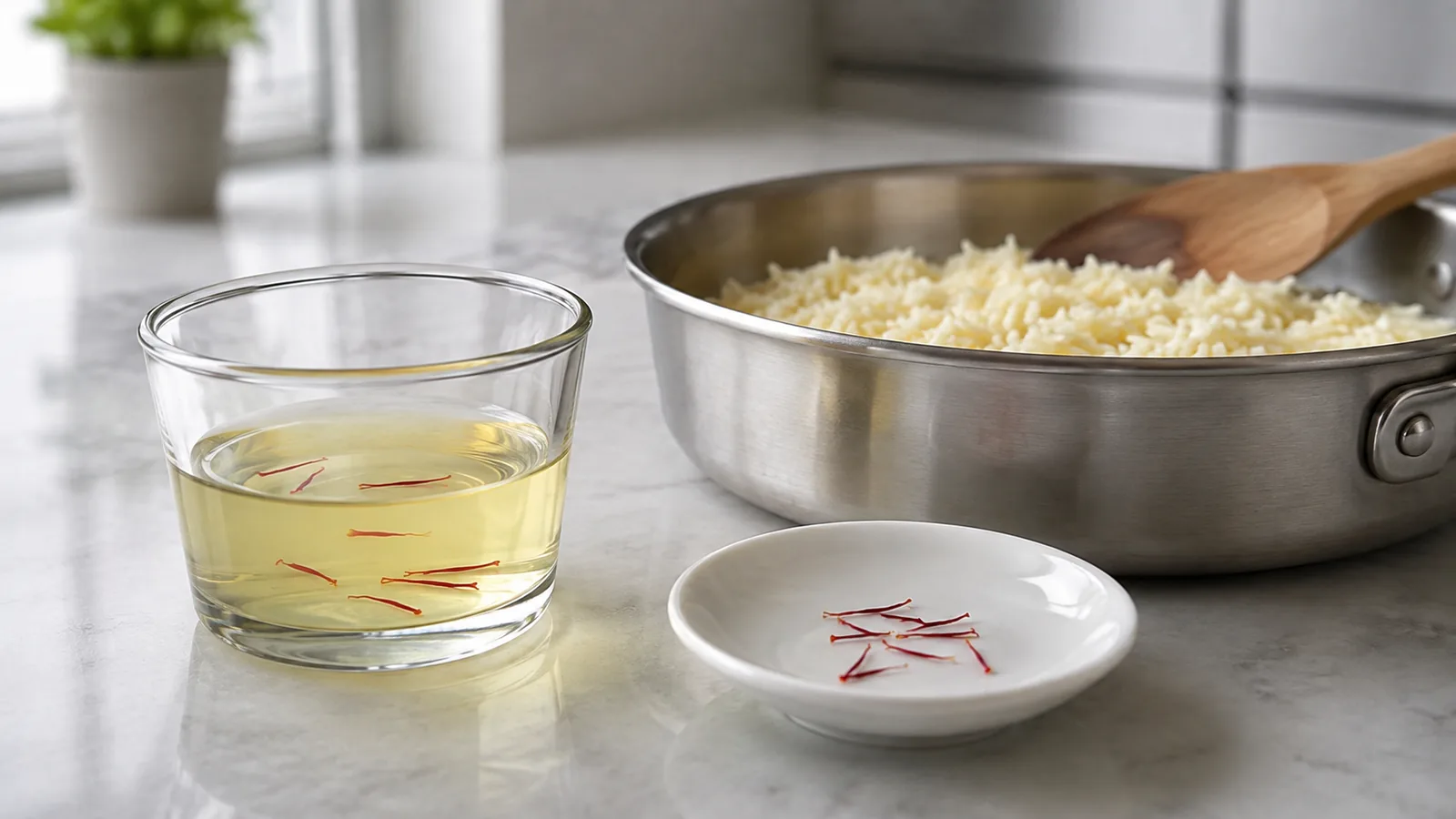
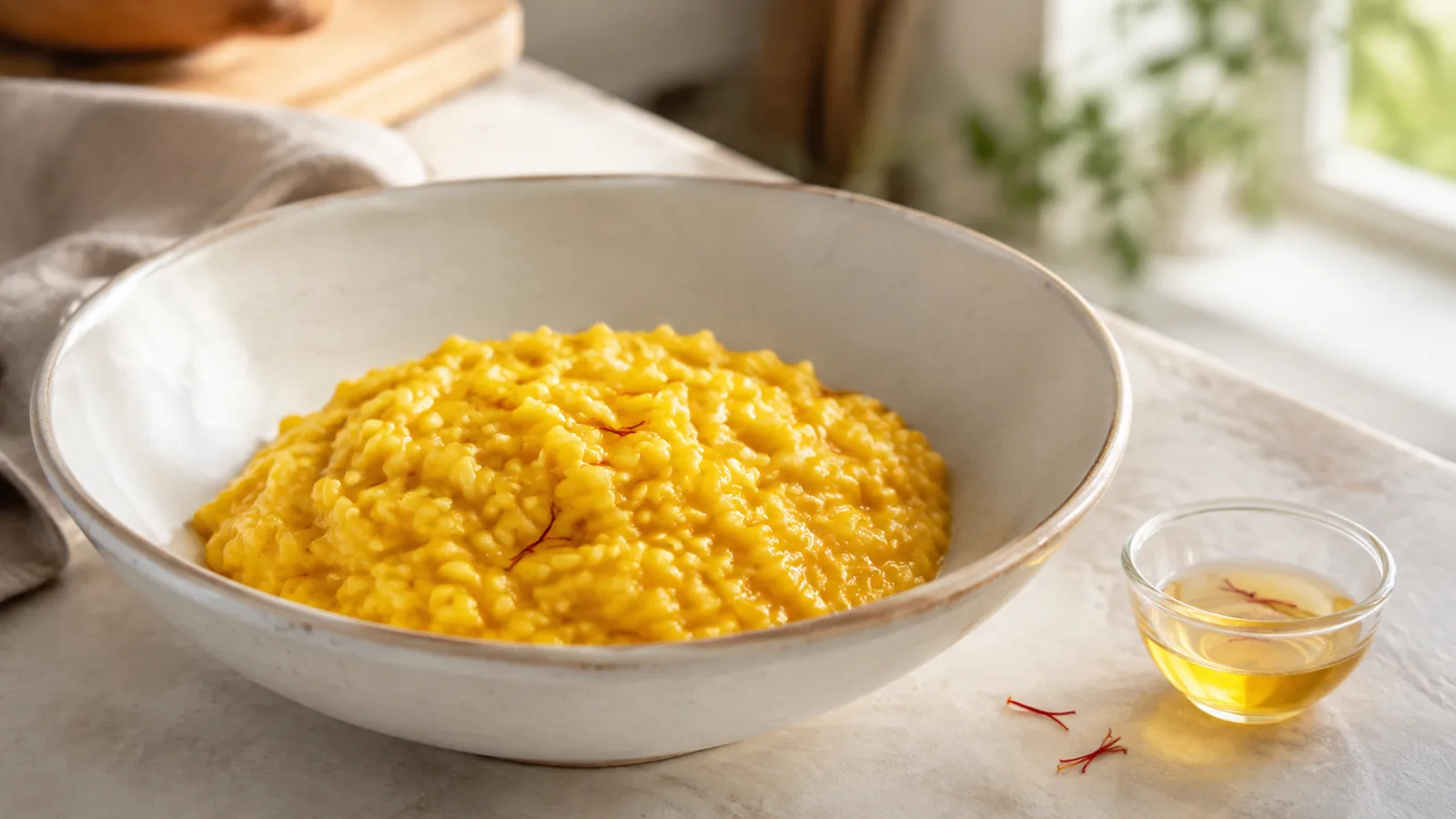
You can use saffron in tea by steeping a small pinch of lightly crushed threads in warm water for 10 to 15 minutes, then drinking that infusion on its own or adding it to black or green tea. Start modestly: the cup should smell floral and hay-like with a gentle bitter edge, not taste harsh or medicinal.
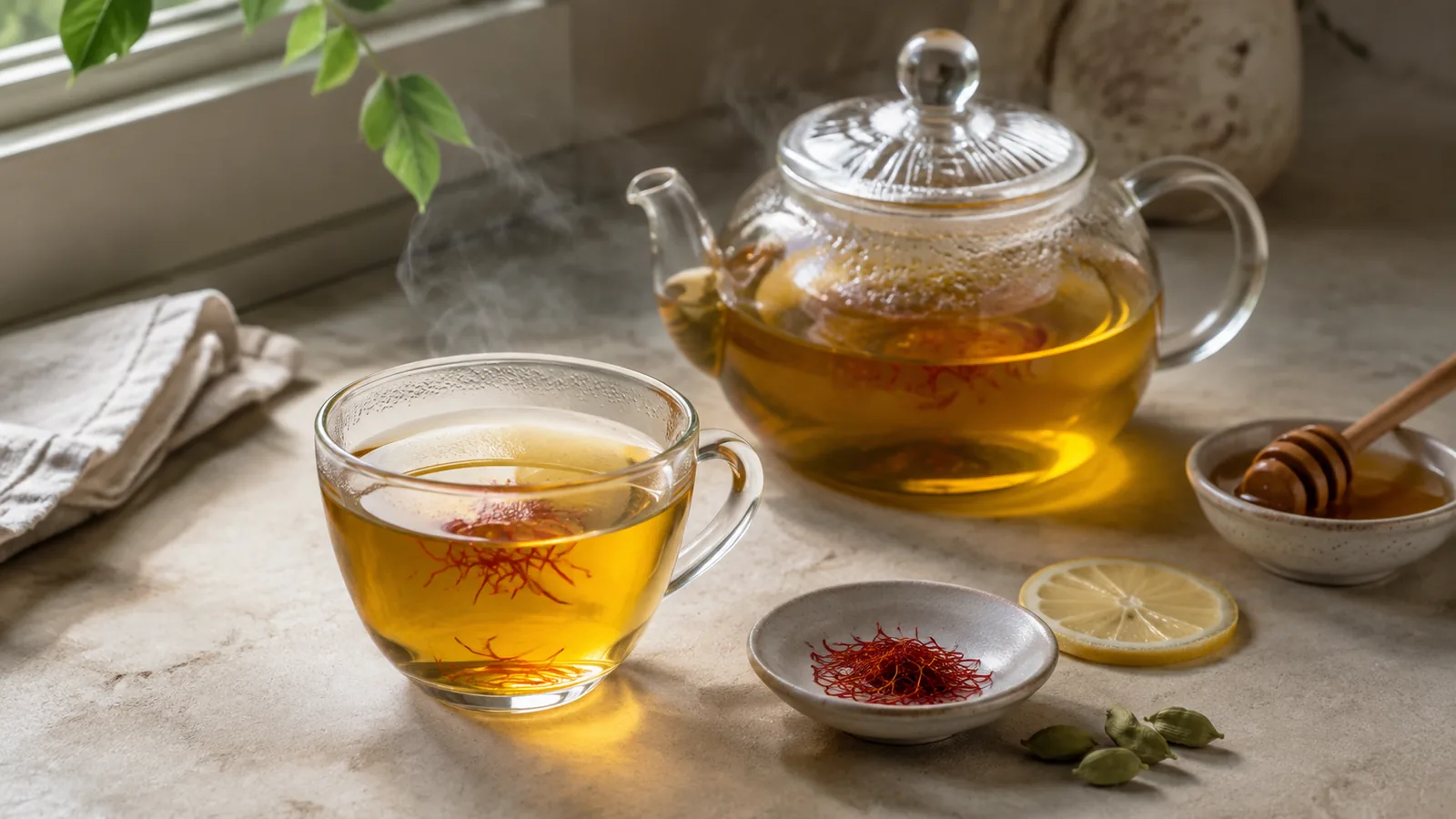
How to use saffron in tea
The simplest saffron tea recipe needs only saffron and water. For one cup, begin with roughly 3–5 long threads, or a small pinch weighing about 10–20 mg if you have a suitable scale. Thread length and strength vary, so a count is only a starting point. You can add more to a future cup after you know how that batch tastes.
Ingredients for one cup
- 240–300 ml fresh water;
- a small pinch of saffron threads; and
- optional honey, sugar, cardamom, ginger, cinnamon, lemon or rose water.
Method
- Lightly crush the saffron between clean fingers or in a small mortar. It does not need to become fine powder.
- Place it in a heatproof cup and add hot water. Water just below a vigorous boil is easy to work with.
- Cover the cup and let the saffron steep for 10 to 15 minutes. Five to ten minutes gives a lighter cup; a little longer usually produces a fuller colour and aroma.
- Stir, taste and add a small amount of sweetener or another aromatic only if you want it.
- Drink it warm, including the softened threads, or strain them out for a clear cup.
A well-made saffron infusion is clear golden yellow to orange, not opaque red. Colour alone does not prove quality or authenticity. The important test in the cup is balance: characteristic aroma, gentle bitterness and no harsh off-flavour.
Can I put saffron in ordinary tea?
Yes. Saffron can be added to tea with leaves or used on its own. Preparing a small saffron infusion first gives more even extraction than dropping dry threads into a finished cup, and it lets you control the tea leaves and saffron separately.
Green tea with saffron
Can I add saffron to green tea? Yes, but brew the green tea according to its packet rather than boiling the leaves for 10 to 15 minutes. Make the saffron infusion separately, brew the green tea at its recommended temperature and time, then combine them. This avoids blaming saffron for the astringency of over-steeped green tea.
Green tea is already aromatic, so begin with a mild saffron infusion. Lemon can brighten it; honey can soften bitterness. Try one addition at a time so the cup does not become a jumble of flavours.
Black tea with saffron
Black tea has enough body to carry saffron, cardamom and a little sweetener. Brew the leaves as usual, then add the prepared saffron liquid by the spoonful until the aroma is clear but not dominant. This approach works whether you serve one cup or a pot.
Herbal and caffeine-free cups
A plain saffron-and-water infusion contains no tea leaf and is naturally caffeine-free. Ginger, cinnamon or cardamom adds warmth; rose water adds a strong floral note, so use it sparingly. If caffeine matters to you, remember that adding saffron does not remove caffeine from black or green tea.
How much saffron should I put in my tea?
If you are deciding how much saffron to use in tea, begin with the original 3–5-strand rule as a practical visual starting point, not a precise dose. How many saffron threads a cup needs depends on the pieces: some are short fragments and others are full stigmas. When repeatability matters, weigh the saffron and record the water volume, steeping time and result.
More is not automatically better. Too much can make the drink bitter, astringent or medicinal. If a cup is too strong, dilute it with hot water or more unsaffroned tea rather than covering it with a large amount of sugar. For a pot, scale up cautiously and taste before adding the full calculated amount.
How long should saffron tea steep?
Allow 10 to 15 minutes for a plain warm-water infusion. If you prefer a lighter result, start checking at five minutes. Covering the cup helps retain aroma. Very long boiling is unnecessary for an everyday tea and can leave the fragrance flatter.
If the saffron is going into another tea, its infusion time and the leaf-brewing time need not match. Green tea may need only a few minutes, while saffron can be prepared in advance. Our detailed guide to brewing saffron explains the extraction method and common mistakes.
What does saffron tea taste like?
Saffron tea has a warm, slightly earthy taste and a fragrance often described as floral, grassy, hay-like or honeyed. It also has natural bitterness. “Sweet” usually describes the aroma rather than the liquid itself, which is why many drinkers add a little honey or sugar.
The flavour changes with the batch, water, dose and additions. Cardamom can make the cup feel more aromatic; ginger makes it sharper; cinnamon makes it warmer; lemon adds acidity. Good saffron should remain recognisable rather than disappearing under all four.
Persian, Iranian and Arabic saffron tea
There is no single recipe shared by every household or region. Iranian or Persian saffron tea may mean black tea scented with a saffron infusion, or a simpler saffron drink with cardamom, rose water or sweetener. Arabic saffron tea can likewise refer to several preparations, sometimes alongside other spices. Treat these names as families of serving styles, not one fixed historical formula.
For a restrained Persian-style cup at home, add a spoonful of saffron infusion to freshly brewed black tea and taste before adding more. Serve the sweetener separately if different people prefer different balances.
Does saffron tea have proven health benefits?
Saffron tea can be an enjoyable warm drink, but that is different from a proven treatment. Research on saffron often studies standardised extracts, capsules or fixed medicinal doses, not the variable pinch used in a kitchen cup. Results from those products cannot simply be transferred to every homemade tea.
One small randomised trial of saffron herbal tea studied 72 postmenopausal women and used 30 mg of dried stigmas in 300 ml of water daily for a limited period. It reported a change in a happiness questionnaire, but its narrow population and single study do not establish that saffron tea treats depression, anxiety, insomnia or another condition in the general public.
A 2026 systematic review of saffron adverse events found that many trials reported side effects, most often gastrointestinal symptoms, and advised attention to medicinal use at higher doses or over longer periods. A normal culinary cup is not the same as concentrated supplementation, but “natural” does not mean every amount suits every person.
Do not use saffron tea in place of prescribed care. If you are pregnant or breastfeeding, take regular medicine, have a medical condition, have reacted to saffron or plan to drink a concentrated preparation every day, ask a qualified clinician or pharmacist for advice.
How to choose saffron for tea
Whole threads are easier to inspect and portion than anonymous powder. Look for intact packaging, clear origin and lot information, and a seller who can answer a batch-specific question. A high price, deep red appearance or instant colour change cannot prove authenticity by itself.
Keep the container tightly closed in a dry, dark cupboard away from heat and strong odours. Use a dry utensil. If the product smells distinctly unpleasant, shows moisture or mould, or arrives in damaged packaging, do not taste it merely to test the quality.
If you want whole threads for the recipe, check the current Sargol saffron pack details before ordering. The product page states the available sizes; the tea recipe itself should still be adjusted to taste.
A dependable first cup
To make saffron tea without wasting the spice, begin with 3–5 full threads in one cup of hot water, cover for 10 to 15 minutes, and taste it before adding anything else. From there, decide whether the next cup needs a little more saffron, green or black tea, one supporting spice or a touch of sweetness. That simple sequence makes it much easier to learn what the saffron contributes.