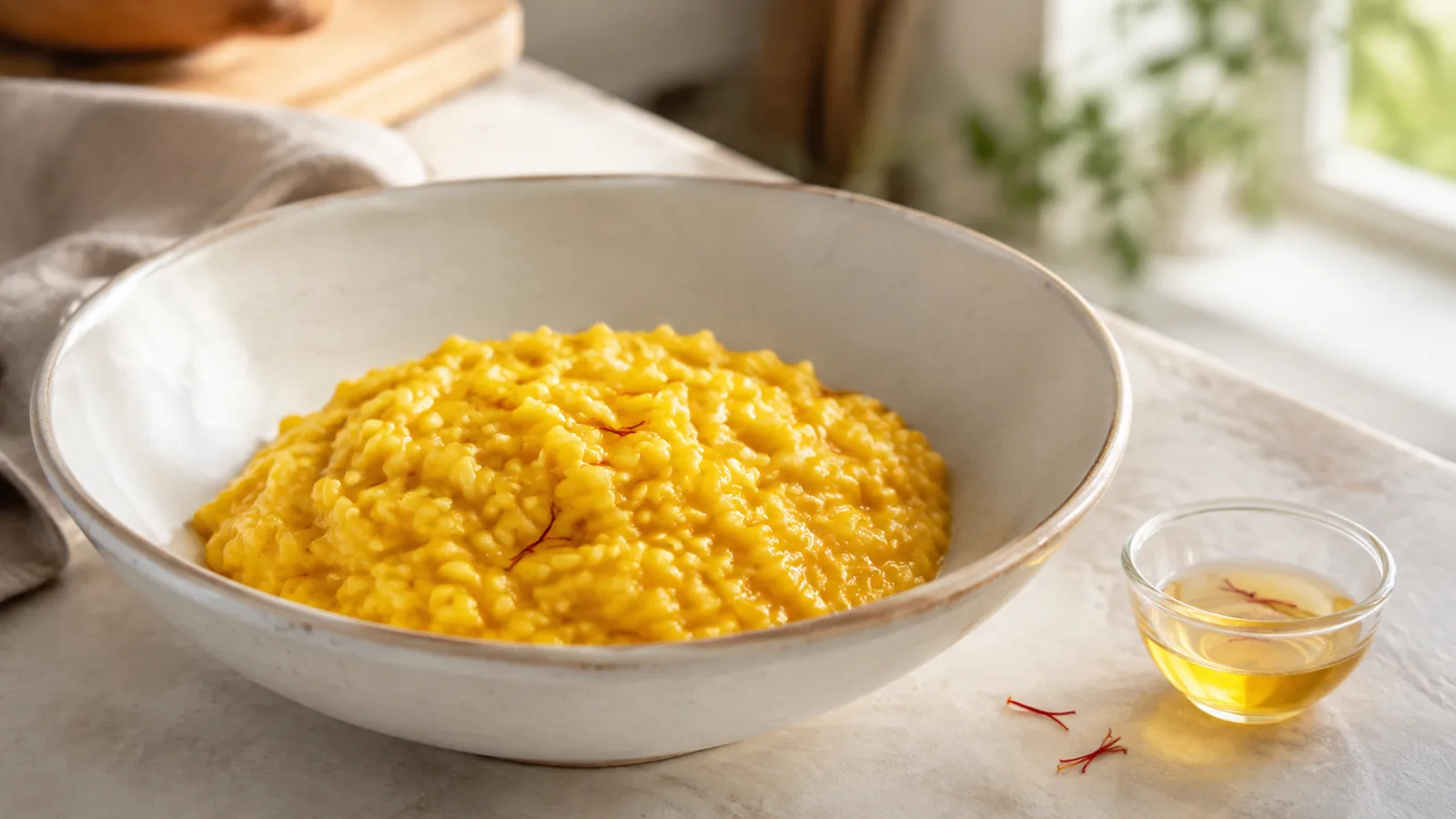
No—fishy is not a normal saffron taste. Genuine saffron is usually gently bitter, warm and earthy, with an aroma often described as floral, grassy, hay-like or honeyed. If a plain saffron infusion smells distinctly of fish, investigate the product, storage and equipment before adding it to food.
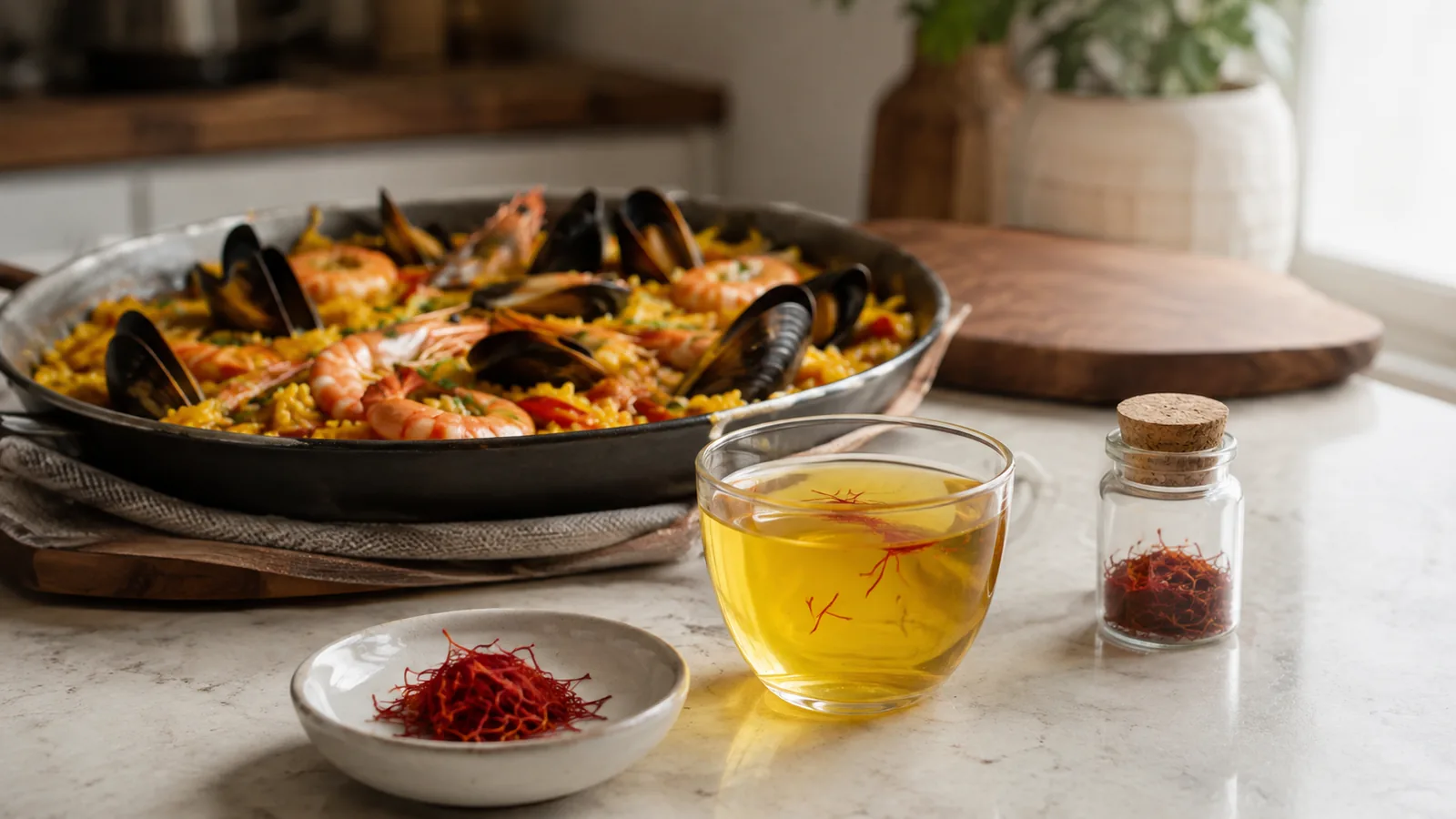
Does saffron taste fishy?
Saffron should not taste like fish or leave a marine aftertaste. The saffron flavor profile is subtle but recognisable: a slight bitterness, a warm aroma and notes that people may interpret as flowers, dry grass, honey or earth. It is not necessarily a strong flavor. “Sweet” in a saffron flavor description usually refers to fragrance; the threads contain no magic sweetness that replaces sugar in a recipe.
People perceive aromas differently, so no list of words is universal. Even so, fishy is not one of the standard descriptors used in saffron sensory work. In a trained-panel study of saffron samples, the evaluated characteristics included safranal, fruity, flowery and grassy odours and flavours, alongside bitterness, astringency and pungency. The study also linked differences in composition with differences in perception.
Does saffron have a flavor beyond its smell?
Does saffron have a taste? Yes. Picrocrocin is closely associated with bitterness, volatile compounds led by safranal shape the characteristic aroma, and crocins provide most of the yellow-orange colour. Those parts arrive together in food, which is why “what does saffron taste like?” cannot be answered by looking at colour alone.
A separate sensory-threshold study of picrocrocin found that temperature and the presence of other saffron compounds affected perceived bitterness. Dose and preparation can therefore change the saffron taste profile, but using too much normally makes it more bitter, medicinal or astringent—not fishy.
Why might a dish seem fishy?
The fish or seafood may be the source
Saffron is common in paella, seafood broth and fish sauces. In those dishes, a marine aroma may come from the seafood, stock or cooking fat. Because aroma is experienced as part of flavour, it can be easy to attach the whole impression to the most unusual ingredient on the plate.
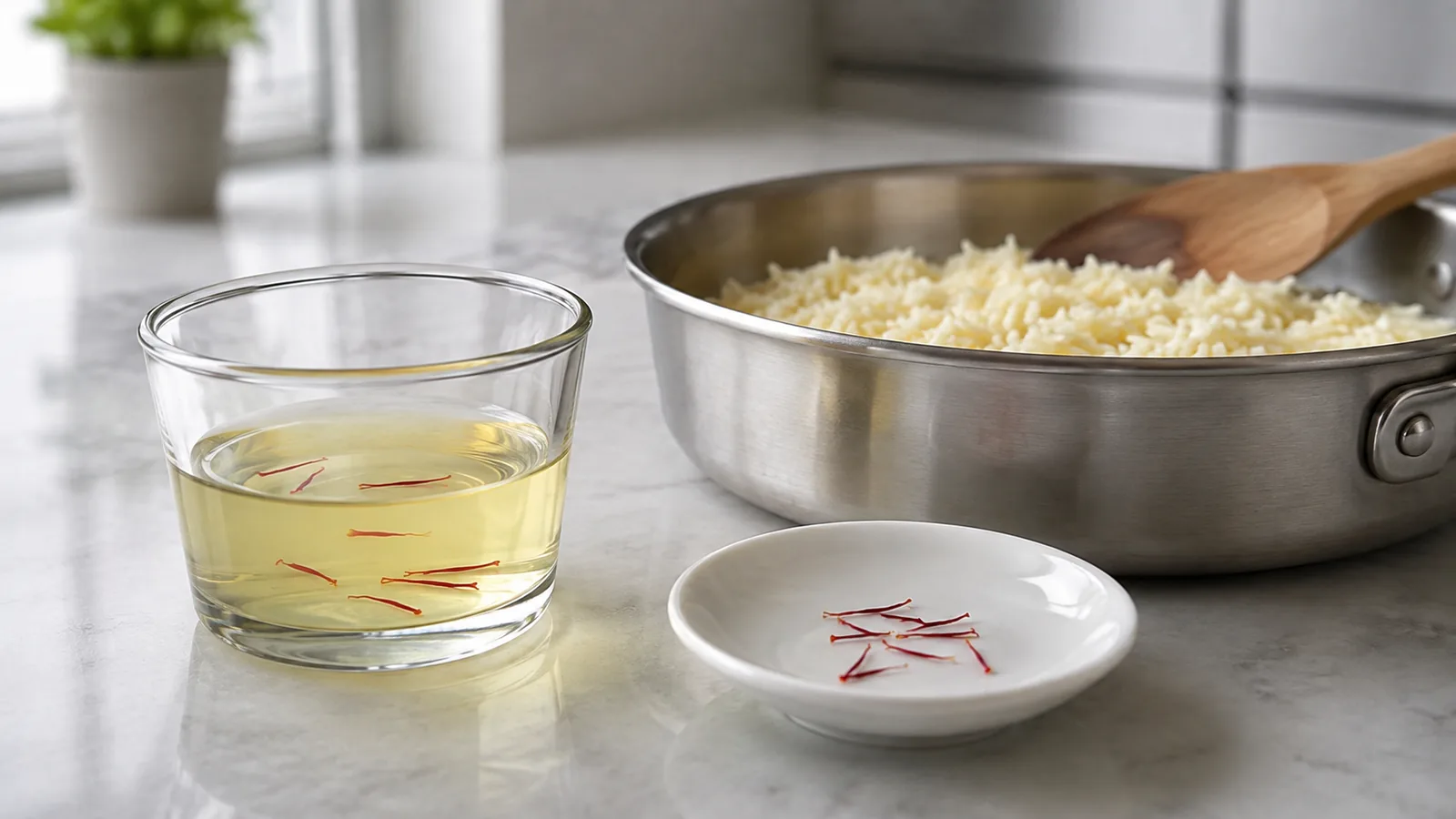
Test the components separately. Smell the dry saffron, make a plain infusion in a clean glass, and taste a spoonful of the unsaffroned base. If the plain infusion is normal but the finished dish is fishy, the cause lies in the recipe or another ingredient rather than in saffron alone.
The saffron may have picked up a foreign odour
An open or poorly sealed container stored beside strong-smelling foods, spices, smoke or household chemicals may no longer smell as it did when packed. A jar or grinder that previously held another ingredient can cause the same confusion. Store saffron tightly closed, dry and away from heat, light and strong odours, and use clean neutral equipment when testing it.
Too much saffron can taste harsh
A large dose can create a bitter, medicinal or metallic impression. Someone unfamiliar with saffron may describe that unfamiliar note in another way, including “fishy,” but improper usage does not turn saffron into a seafood flavour. Diluting a strong batch with more of the recipe’s unsaffroned base is usually more dependable than trying to cover it with salt or sugar.
The product itself may be suspect
A distinctly unpleasant odour in the dry product or a plain infusion deserves caution. The same applies if saffron tastes like plastic or soap rather than showing its expected bitter and aromatic character. It might reflect poor storage, foreign material, contamination or a product that is not what the label claims; taste alone cannot tell you which. Keep the packaging and lot information, stop using that batch and contact the seller or relevant food authority if needed.
Make a simple comparison infusion
You do not need a complicated recipe to check whether saffron is causing the off-flavour:
- Use a clean, odour-free glass and fresh water.
- Lightly crush a small measured portion of threads.
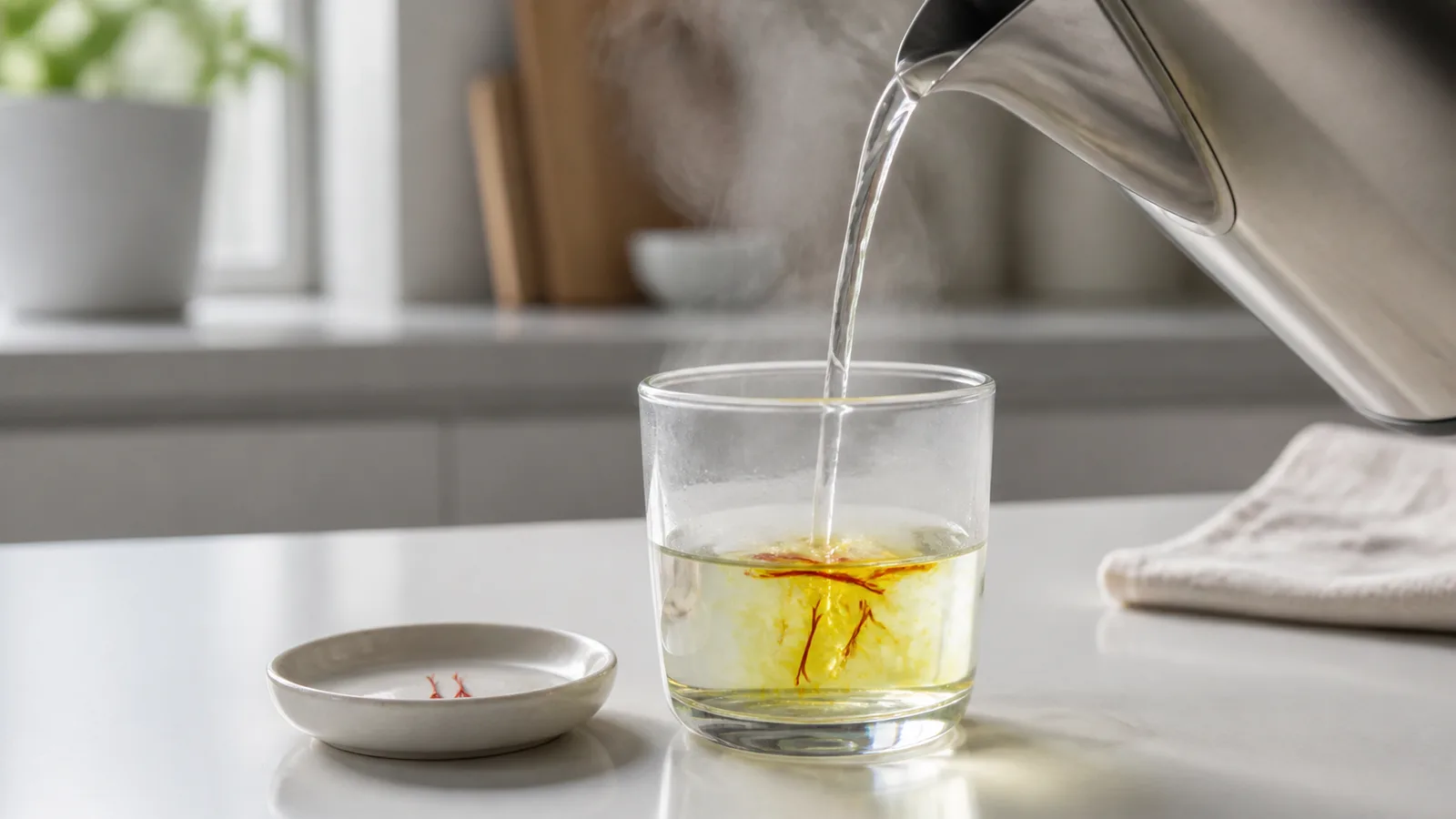
- Add warm, not violently boiling, water and cover it.
- Leave it for about 10 to 15 minutes.
- Smell first, then taste only if the product and packaging show no reason for concern.
A normal infusion develops a clear yellow-to-orange colour and a characteristic warm aroma, with gentle bitterness on tasting. It should not smell like fish. Colour appearing quickly does not prove authenticity, and a pale infusion does not by itself prove that a batch is unsafe; the sample weight, water volume, age and cut all affect the result.
For the complete preparation method, see the best way to brew saffron. If you want a broader sensory comparison, our guide to what saffron tastes like in food separates its aroma, taste and behaviour in different dishes.
How to use saffron without harsh off-flavours
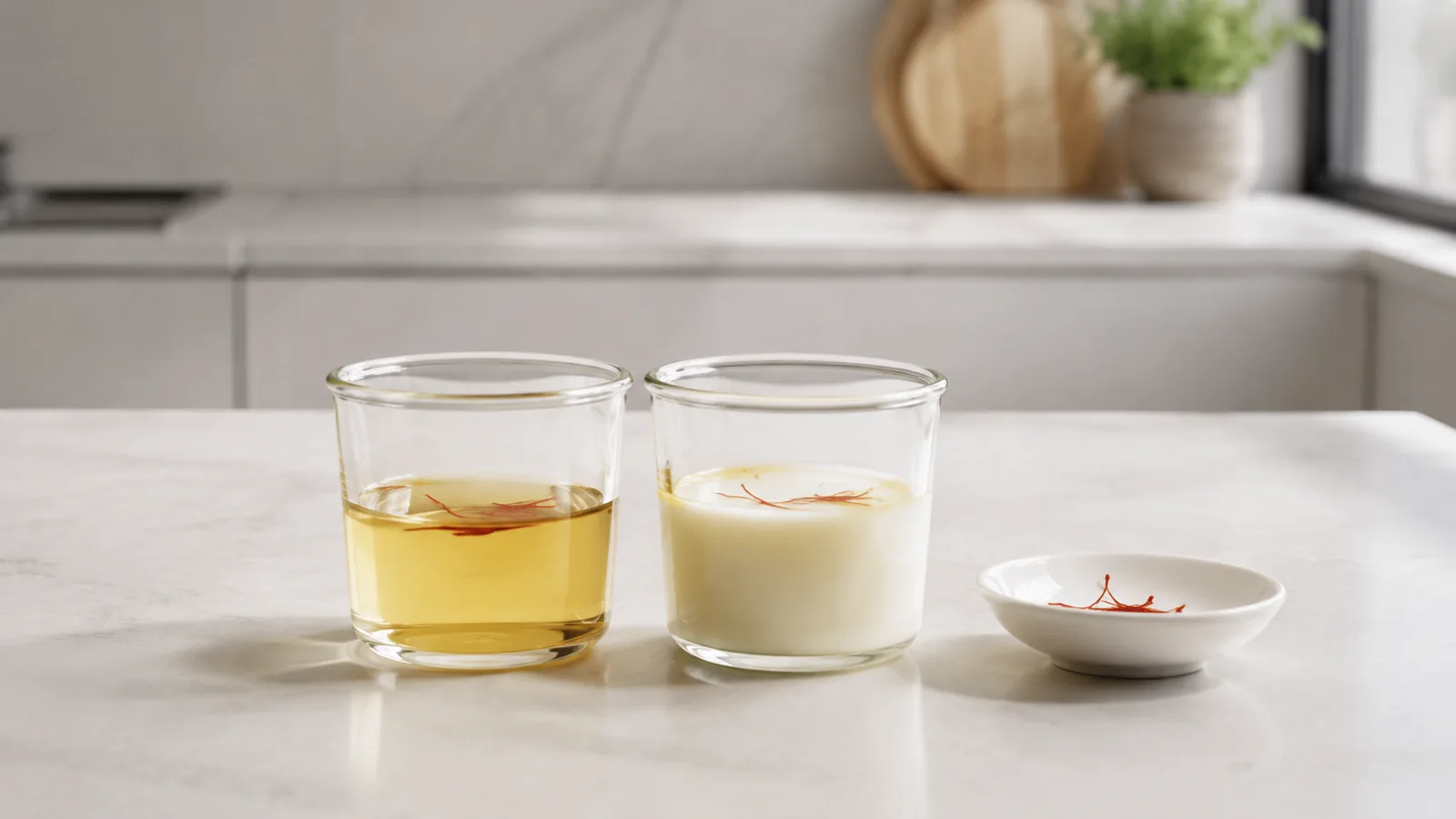
How does saffron taste when cooked? That depends partly on dose and timing. Begin with a tested recipe or a weighed amount rather than an arbitrary number of threads. Thread size and strength vary. Bloom the measured saffron in warm water, milk or broth so it disperses through the dish, then add it early enough to blend but not so early that its fragrance spends a long time under aggressive heat.
Pair it with ingredients that leave room for its aroma. Rice, mild stock, dairy, chicken, lamb, seafood, tomato, fennel, pistachio and almond are familiar partners. Strong smoke, very heavy chilli or a crowd of competing aromatics can hide saffron and make the overall flavour harder to read.
Common dishes should not make saffron itself seem fishy
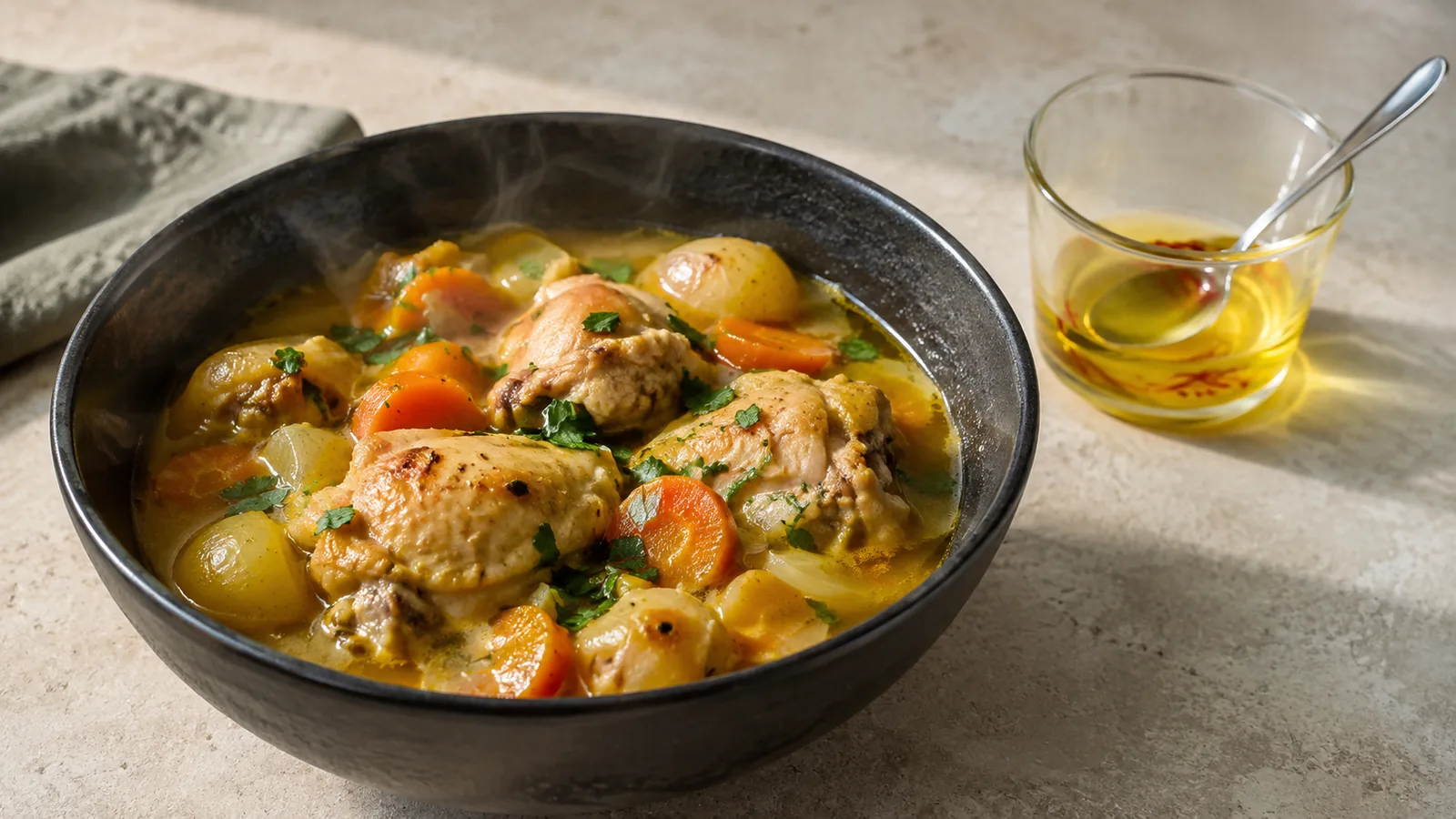
Mediterranean, Middle Eastern, Indian and Spanish cooking all use saffron in different ways. Paella may carry the aroma of seafood; biryani may surround saffron with warm spices; soups and sauces may make it feel earthier; and desserts such as ice cream or rice pudding emphasise its floral, honeyed side. These are interactions with the dish, not evidence that the spice has one fixed taste in every recipe.
In savoury and sweet dishes alike, good use is restrained. Saffron should add depth and fragrance without forcing the eater to work past a harsh bitter note. If the recipe tastes unpleasant, reduce the dose and test each ingredient rather than assuming that more infusion will solve it.
Can a fishy taste prove saffron is fake?
No. An unexpected flavour is a reason to pause, not a laboratory test for authenticity. Appearance, how the colour spreads, smell and taste can reveal obvious concerns, but none can confirm a product’s identity or grade on its own. Powder is especially difficult for a buyer to assess visually because the original plant material cannot be examined.
Use traceability and evidence: an intact package, responsible seller, origin and lot information, and a relevant certificate of analysis when quality claims depend on testing. A credible seller should be able to identify the product and address a batch-specific complaint. Price context is available on our saffron price page, but neither a high nor a low price proves that a particular packet is genuine.
When not to taste the batch
Do not keep sampling food that looks or smells suspicious simply to diagnose it. The FDA’s food-storage guidance says questionable-looking or suspicious-smelling food should be discarded, while also warning that appearance and odour cannot establish safety. A damaged package, moisture, visible mould, insects, an unknown loose product or a strong off-odour is a reason not to taste.
If only the finished fish or seafood dish smells wrong, assess the safety and storage of those perishable ingredients separately. Saffron cannot make improperly handled seafood safe.
The short answer
Saffron does not normally taste fishy. Its true flavor is gently bitter, warm, floral and earthy, with grassy or honey-like aromas that change with the batch and the food around it. If a clean, plain infusion has a clear fishy or otherwise unpleasant smell, stop using that lot until you can establish what the product is and how it was stored.