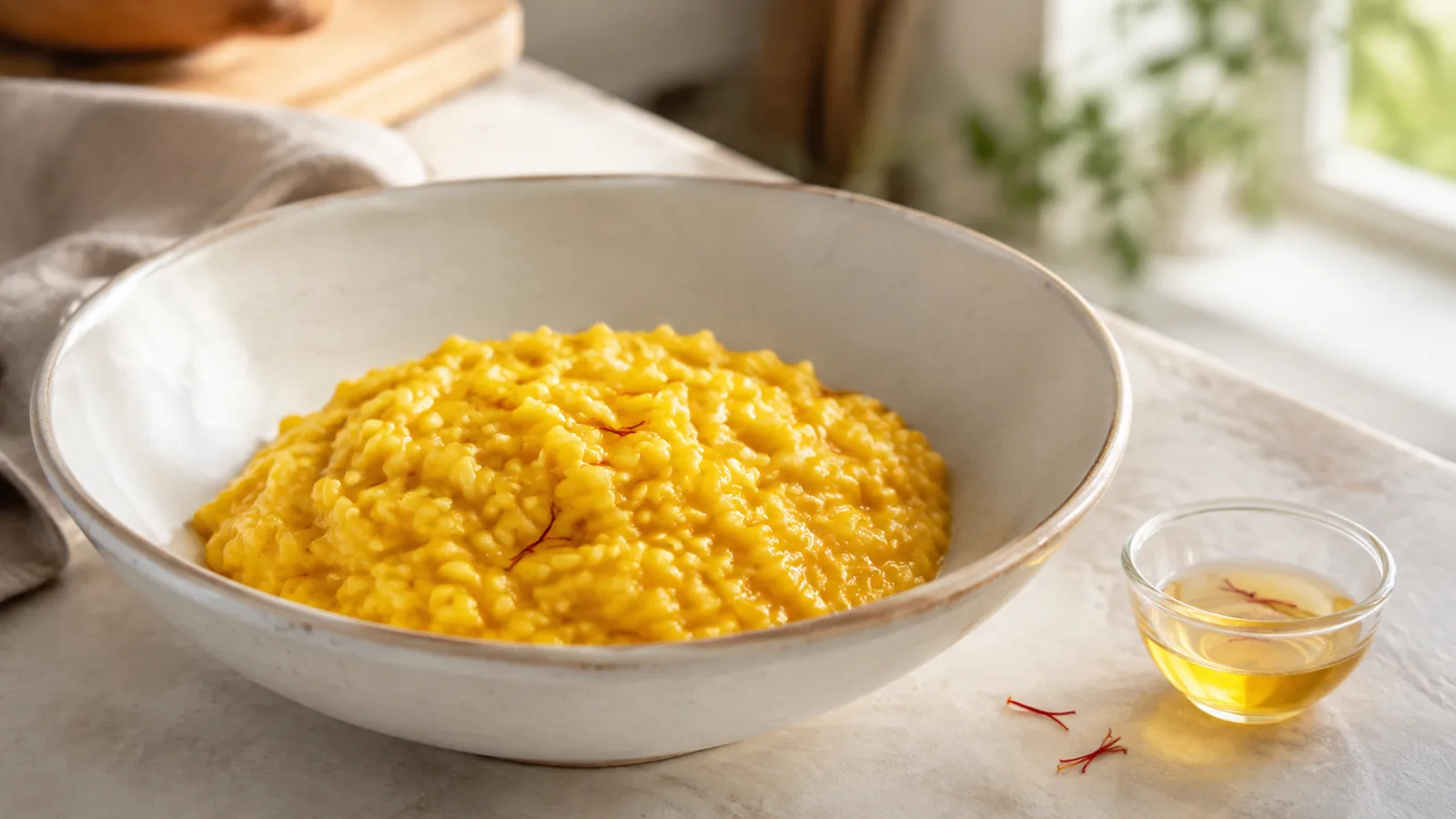
Saffron tastes gently bitter, warm and slightly earthy in food, with an aroma that many people describe as floral, hay-like or honeyed. It does not taste sugary on its own. Used well, it gives a dish a distinctive fragrance and a lingering savoury depth rather than one loud, easily named flavour.
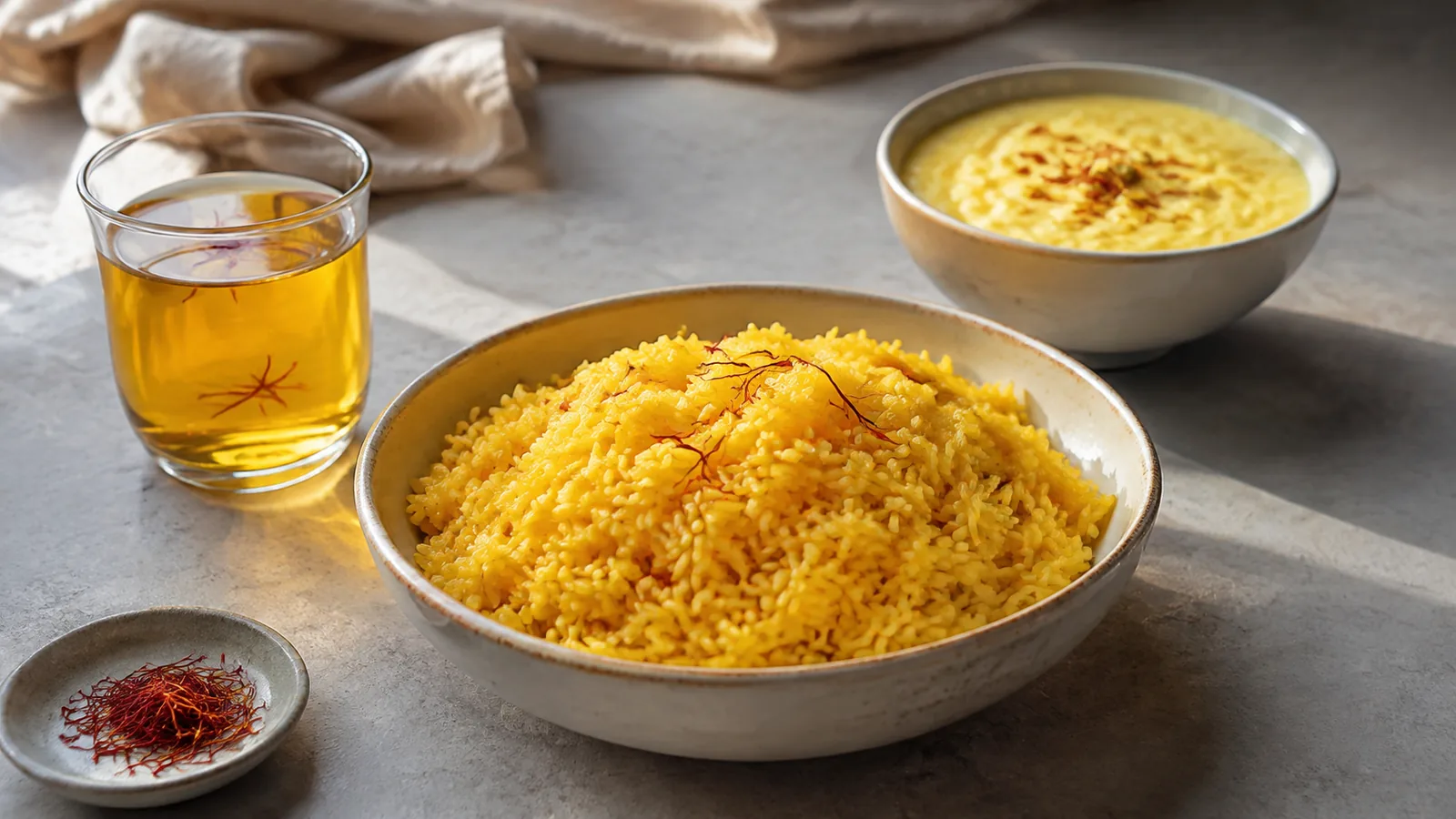
What does saffron taste like in food?
The clearest answer is that saffron has both a taste and an aroma, and much of what we call its “flavour” comes from experiencing them together. On the tongue, its most recognisable feature is a clean, restrained bitterness. Its fragrance can suggest dried flowers, warm hay, honey, tobacco leaf or damp earth, depending on the saffron, the person tasting it and the dish around it.
That is why descriptions such as earthy, sweet and floral are common but incomplete. “Sweet” usually refers to the scent, not to sugar. Saffron can make rice or milk smell rounded and almost honeyed while the liquid itself remains savoury or only as sweet as the recipe makes it.
Does saffron have flavor, or only a smell?
How does saffron taste? Saffron does have a taste. Picrocrocin is closely associated with its bitterness, while volatile compounds led by safranal shape its characteristic aroma. Crocins are responsible mainly for the yellow-orange colour. A trained-panel sensory study of saffron found that samples differed in odour, flavour, astringency and pungency as well as in their measured compounds. In other words, saffron is not merely a natural colourant, and different lots need not taste identical.
The bitterness is detectable at surprisingly low concentrations. In a controlled sensory-threshold study of picrocrocin, temperature and the presence of other saffron constituents changed how strongly trained tasters perceived it. That helps explain why a dry thread, a warm infusion and a finished dish can give different impressions.
What saffron tastes like when cooked
Cooking spreads saffron’s colour and aroma through the food, so the effect is usually more integrated than the taste of a dry thread. A modest amount can make a plain base feel fuller and more aromatic without announcing a separate “spice” note in every bite. Too much can shift the balance towards medicinal, metallic or harshly bitter.
The surrounding ingredients matter. Fat carries aroma, water helps extract the soluble colour, and salt or sugar changes the way bitterness is perceived. Gentle heat can help the flavour open up; long, aggressive cooking can leave the fragrance flatter. Add the infusion at a point when it can disperse but will not spend unnecessary time boiling.
In rice, paella and biryani
In rice dishes, saffron is fragrant first and bitter only at the edge. It gives the grains a warm savoury character that works with stock, onion and butter or oil. In paella, it sits alongside seafood, vegetables and the toasted flavours from the pan. In biryani, its aroma appears between richer spices rather than trying to overpower them.
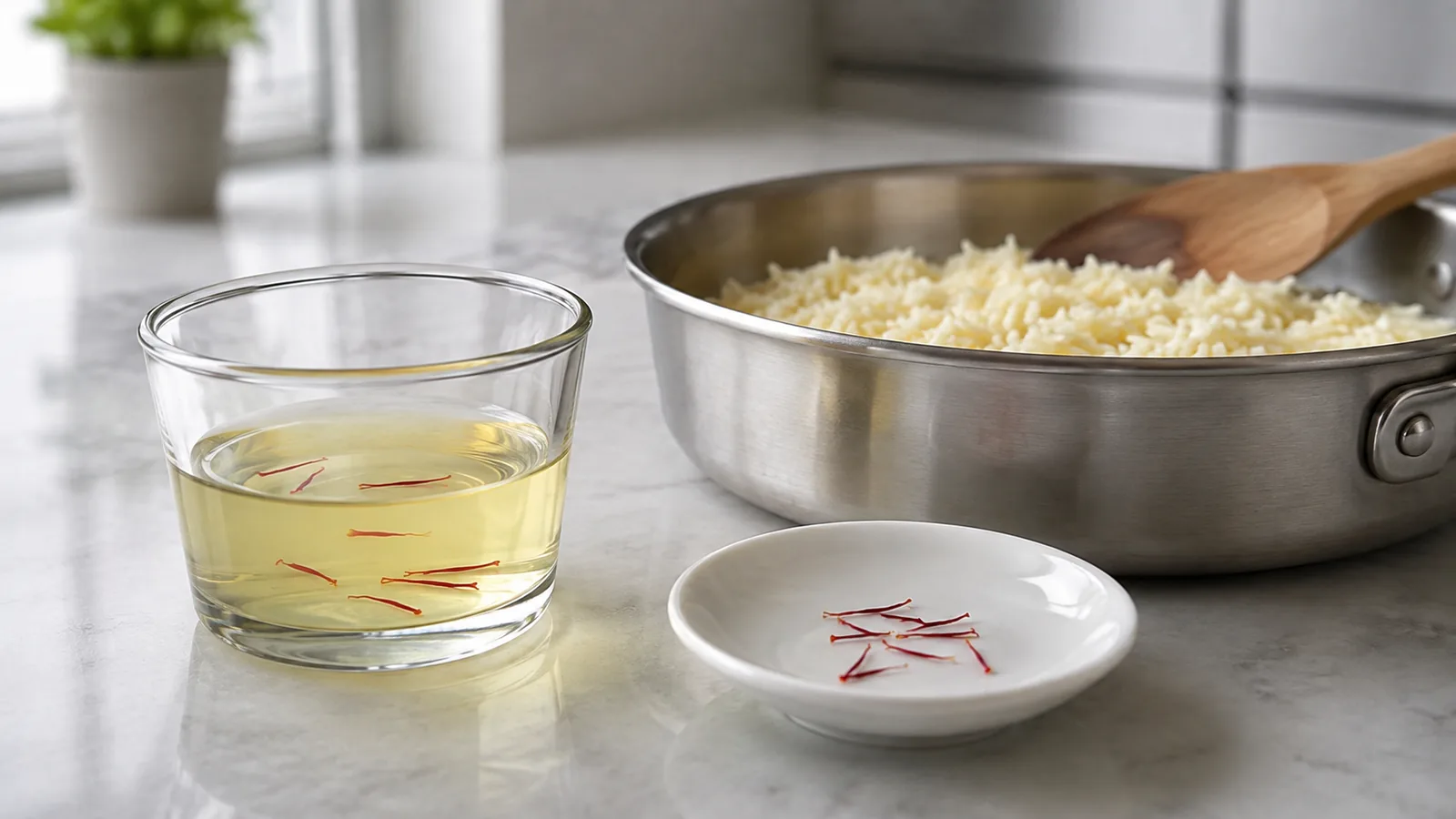
Even distribution makes a difference. Pouring a saffron infusion over part of the rice can create appealing streaks of colour and aroma; mixing it through the cooking liquid produces a more even result. Our guide to how much saffron to use in rice gives a practical starting point without pretending that every batch or recipe has the same strength.
In soups, stews and savoury sauces
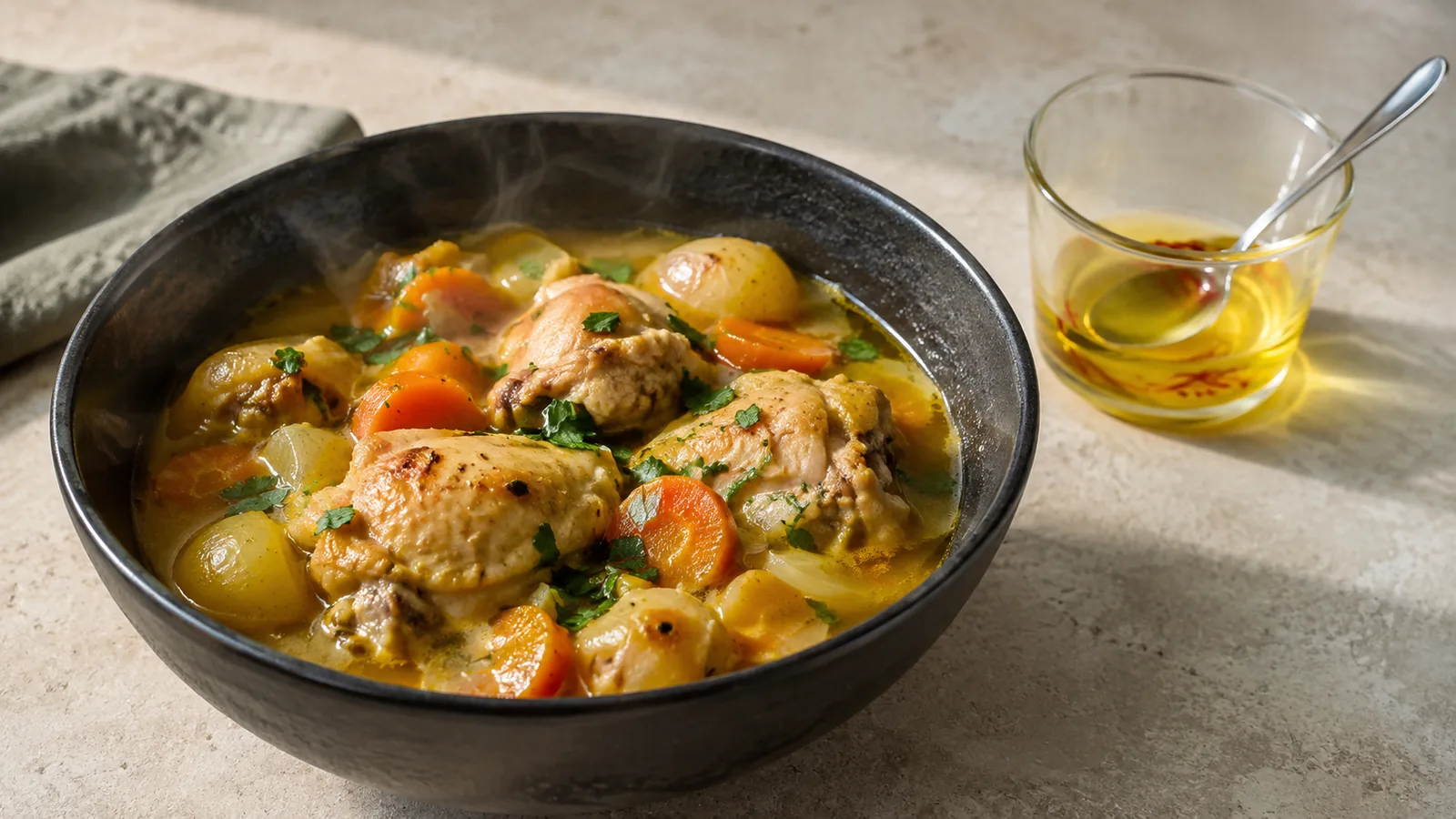
In a soup or stew, saffron can taste warmer and more earthy because it blends with stock and slow-cooked ingredients. It is especially at home with seafood, chicken, lamb, tomato, fennel, onion and mild legumes. Strong smoke, heavy chilli or a large amount of another bitter spice can mask it, so saffron works best when the recipe leaves some room for its aroma.
A sauce containing cream, butter or olive oil can hold the fragrance well. The goal is not to make every sauce yellow. Colour is a clue that extraction has happened, but the finished balance should still be judged by smell and taste.
In ice cream, cakes and other desserts
Milk and cream soften saffron’s bitterness and make its floral, hay-like aroma more obvious. In saffron ice cream, custard, rice pudding or milk drinks, sugar can create the impression of honey even when no honey is present. Pistachio, almond, cardamom, rose, vanilla, citrus and pear can all work beside it, but using several fragrant ingredients heavily at once makes the result muddy.
In cakes and pastries, saffron is usually quieter because flour, fat and oven heat absorb or alter the aroma. Infusing it into the recipe’s milk or other liquid before mixing gives more dependable distribution than scattering dry threads into the batter.
How to bring out saffron’s full flavour
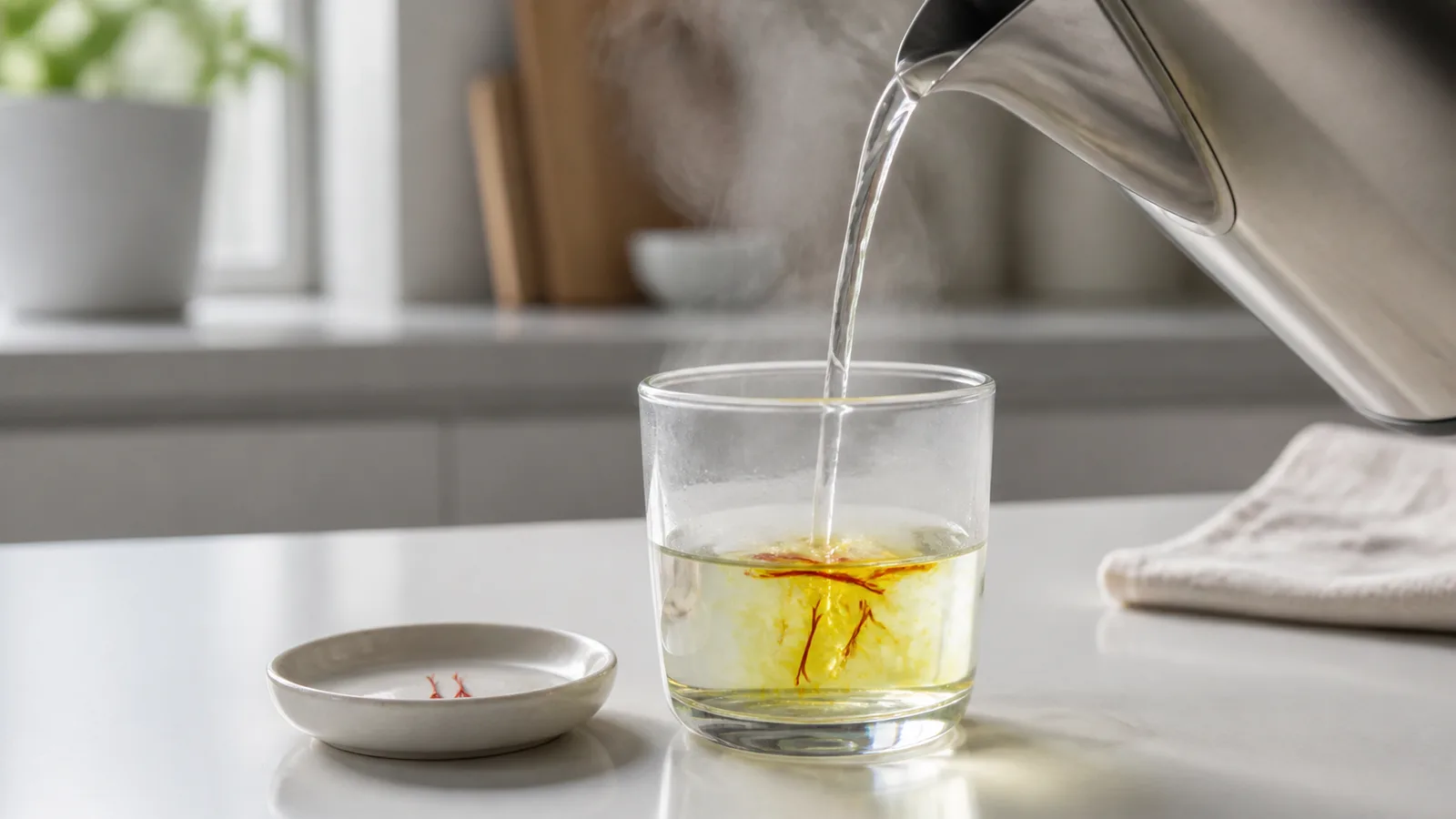
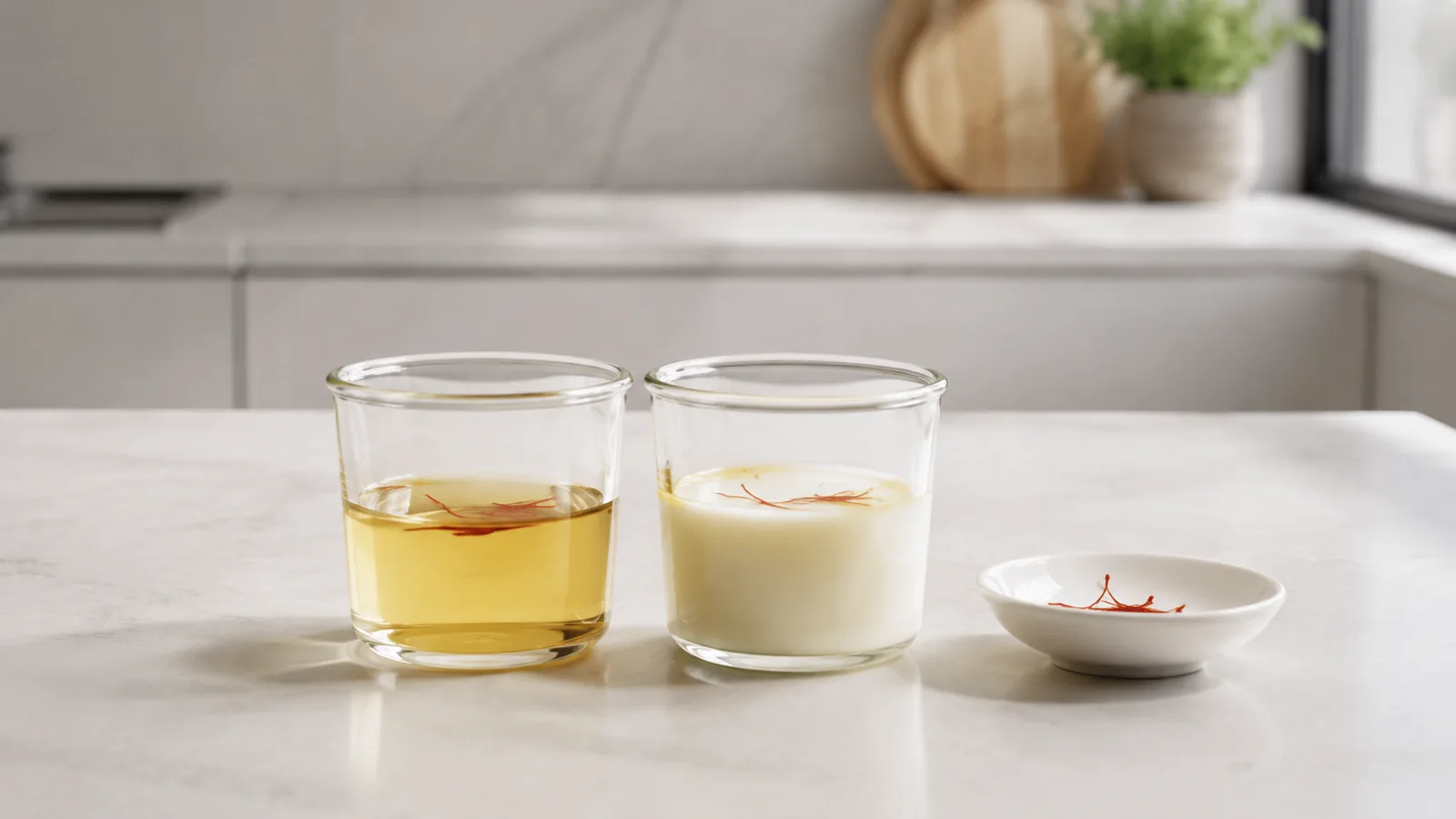
Crush a measured portion lightly, then steep it in a small amount of warm—not furiously boiling—water, milk or stock before adding it to the dish. Covering the cup while it infuses helps keep the aroma in the liquid. Use the infusion and the softened pieces unless the recipe specifically says otherwise.
There is no reliable universal thread count. Threads vary in length, moisture, cut and strength, and recipes vary greatly in volume. Follow a tested recipe or weigh the saffron when consistency matters. The detailed saffron-brewing guide explains the method, while our overview of foods that pair with saffron can help you choose a first dish.
Is saffron sweet or bitter?
A slight bitterness is normal. It is part of saffron’s taste profile, not automatically a sign that the spice is bad. The problem is intensity: if the dish tastes sharply medicinal or bitter, the dose may be too high, the saffron may be unevenly distributed, or the recipe may not have enough food and liquid around it.
Adding more sugar is not always the best repair, especially in a savoury dish. Diluting with more of the unsaffroned base is usually more predictable. Next time, begin with less, infuse it fully and taste before adding the remainder.
Why one saffron can taste different from another
Origin alone does not dictate flavour. Variety, field conditions, harvest timing, how quickly the stigmas were dried, the drying method, age, storage, cut and dose can all affect the experience. A recently opened lot may smell different after months in a warm, poorly sealed cupboard.
Store saffron tightly closed, dry and away from light and heat. Judge it in a simple warm infusion as well as in the jar: a powerful dry smell does not by itself show how the spice will behave in food. Compare samples at the same weight and preparation method if you want the comparison to mean anything.
What flavours pair well with saffron?
Saffron works across savoury and sweet dishes because it can sit beside both fresh and rich ingredients. Useful pairings include:
- rice and grains: basmati rice, risotto rice, couscous and barley;
- seafood: white fish, prawns, mussels and shellfish stock;
- meat and poultry: chicken and lamb with restrained seasoning;
- vegetables: tomato, fennel, onion, leek, potato and squash;
- dairy and nuts: milk, cream, yoghurt, butter, pistachio and almond; and
- aromatic accents: citrus peel, cardamom, rose and vanilla in careful amounts.
The list is a set of options, not a formula. Pick one or two supporting flavours that suit the dish and let the saffron remain recognisable.
What good saffron flavour should not be
A useful saffron flavor description should not sound like perfume, artificial vanilla, chilli or plain food dye. A weak result can come from too little saffron, poor extraction, old storage or a dish whose stronger flavours hide it. An oddly sweet, chemical or one-dimensional saffron spice taste can also justify checking the product and its ingredient list rather than simply increasing the dose.
Whole threads make the product easier to examine than an anonymous powder, though appearance alone cannot prove authenticity or quality. Choose traceable saffron from a seller who identifies the product and lot clearly. If you want to cook with whole threads, view the current Sargol saffron listing and check the stated pack details before ordering.
A simple way to learn the flavour
For a first tasting, make a small warm infusion and smell it before adding anything else. Then use part of it in plain rice, milk or a mild stock. This makes the saffron taste in food easier to recognise than beginning with a recipe full of competing spices.
The taste of saffron should show a gentle bitter edge, a warm floral or hay-like aroma and a finish that lasts without becoming harsh. Once you know that flavor profile, it becomes much easier to tell when saffron is enhancing a dish—and when the cook has simply used too much.