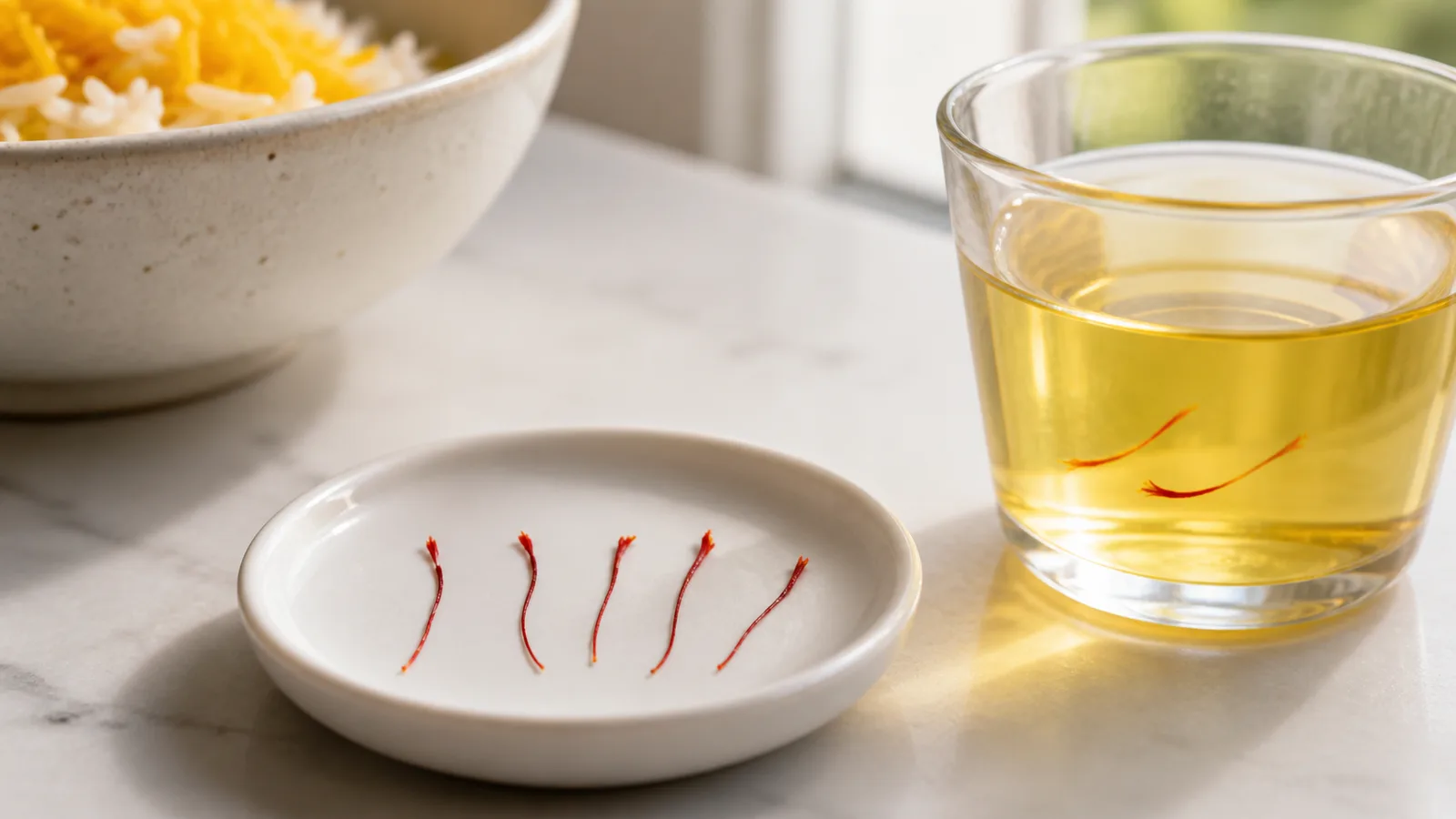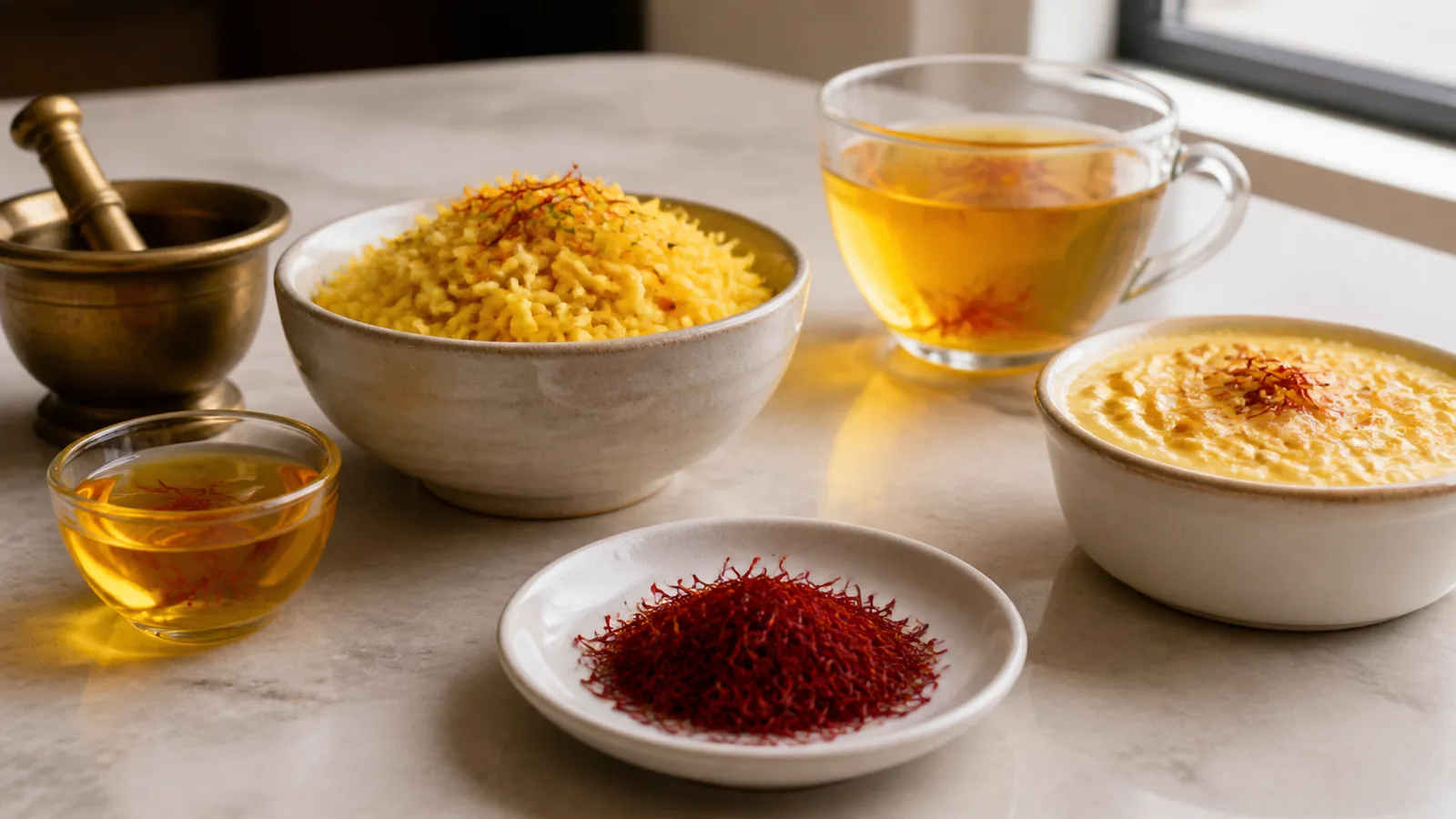
The main use of saffron is culinary. A small quantity is infused or added to food for its golden colour, distinctive aroma, and gently bitter, honeyed flavour. It appears in rice dishes, sauces, soups, breads, sweets, and drinks across Persian, Mediterranean, Middle Eastern, South Asian, and other cooking traditions.
Saffron also has a history in traditional medicine, dyeing, fragrance, and skin preparations. Those uses are real parts of its story, but they are not equally well supported by modern evidence. For most buyers, saffron is first and foremost a food.
Main Use of Saffron
What is the main use of saffron today? It is sold and used primarily as a spice. The dried red stigmas of Crocus sativus contribute three sensory qualities at once: crocins provide colour, picrocrocin is associated with bitterness, and volatile compounds including safranal contribute aroma.
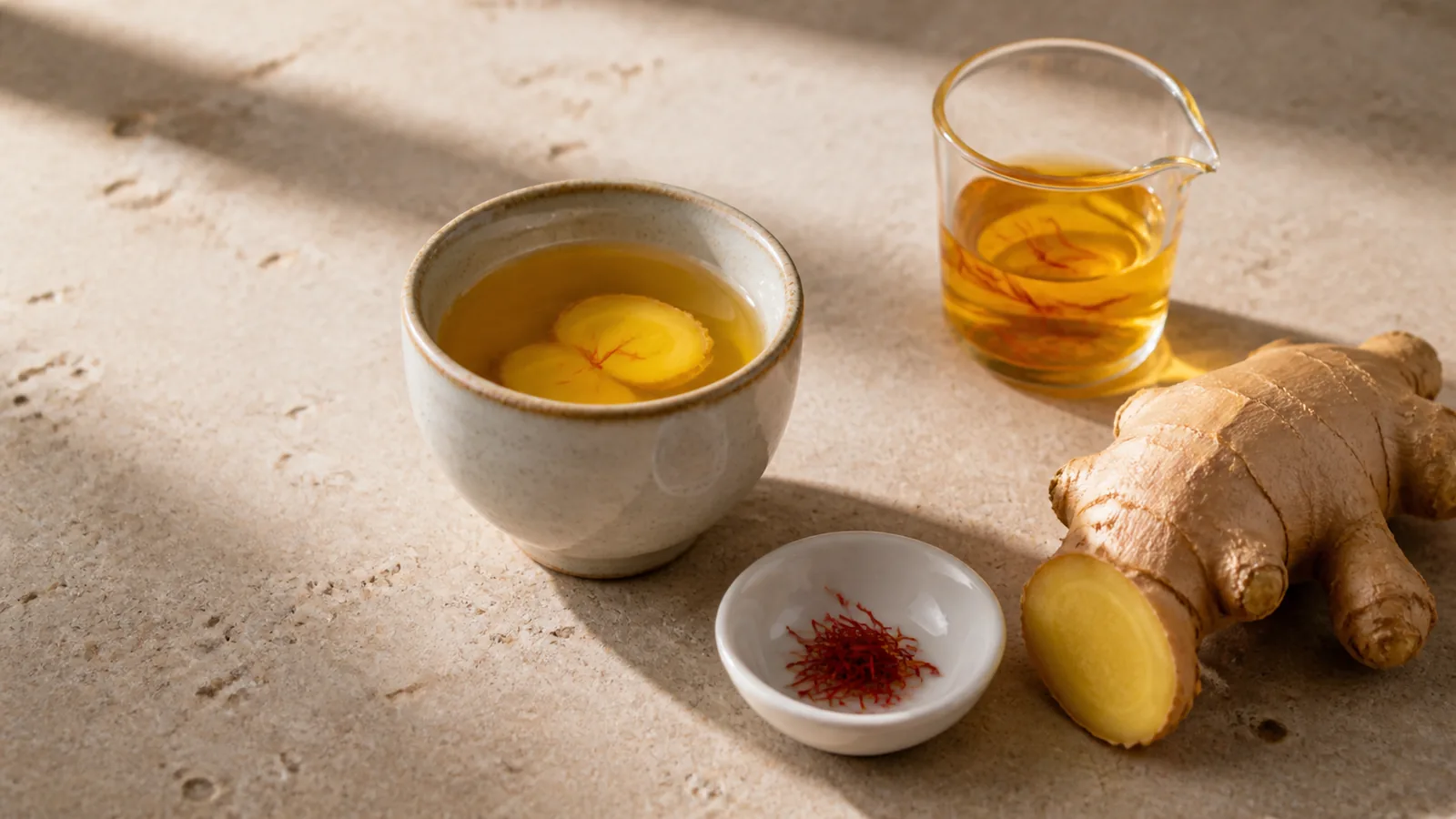
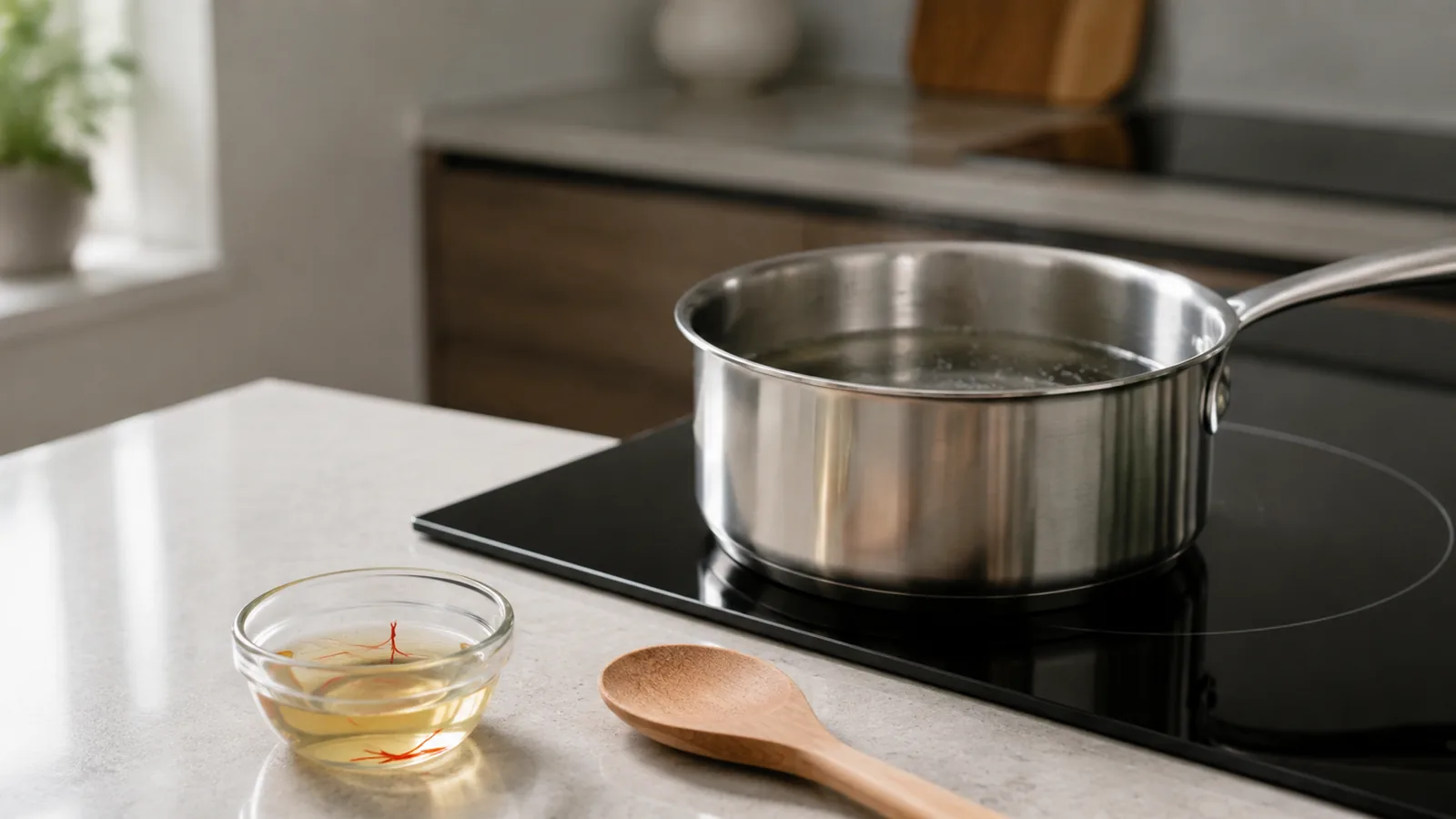
Saffron is concentrated, so a recipe normally needs a pinch rather than a spoonful. Lightly crushing the threads and steeping them in warm water, milk, or stock for 10 to 15 minutes spreads the colour and flavour more evenly. Pour the liquid and softened threads into the dish. Adding more does not always improve the result; excess can become bitter and obscure other ingredients.
Culinary Uses of Saffron
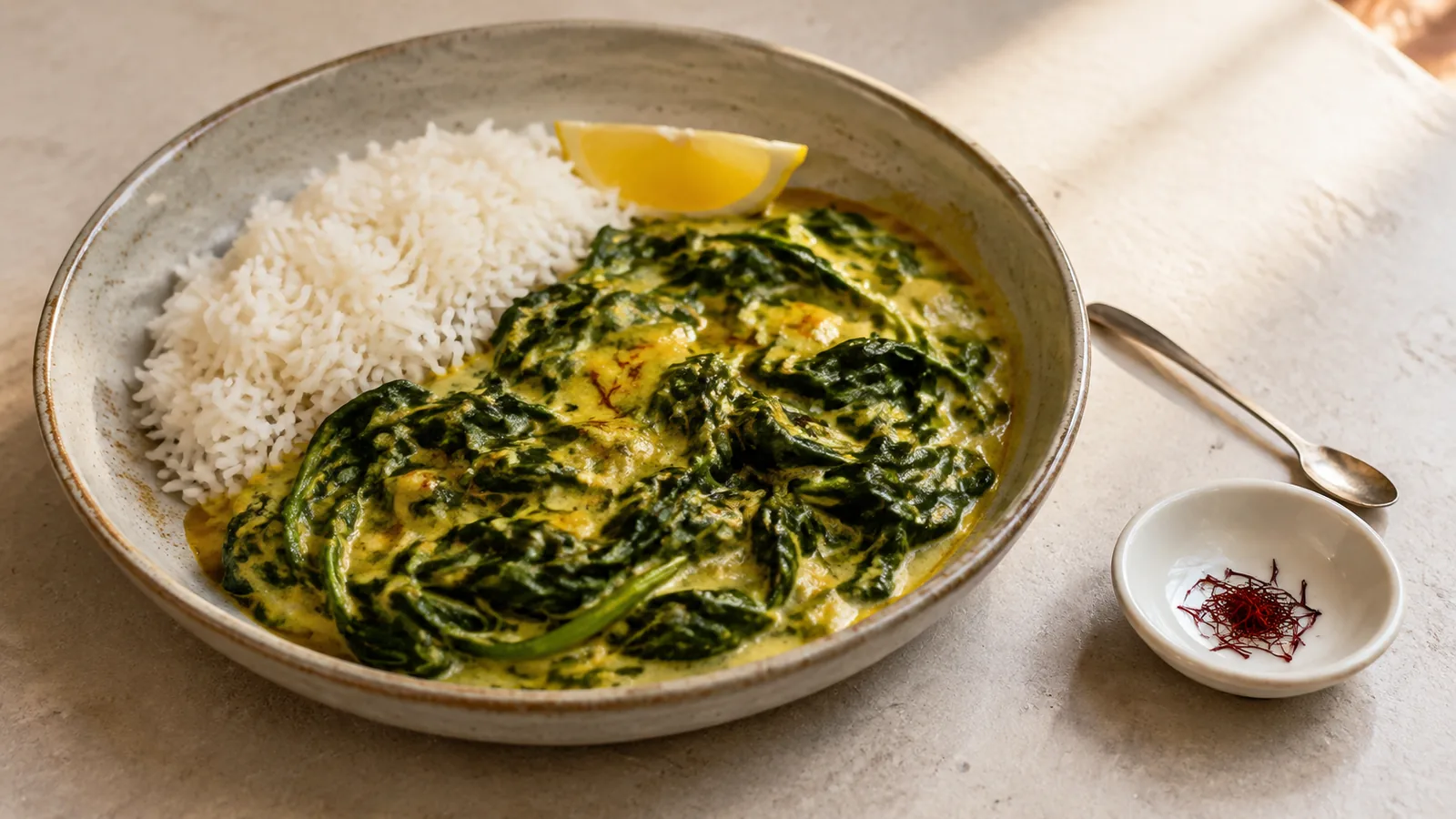
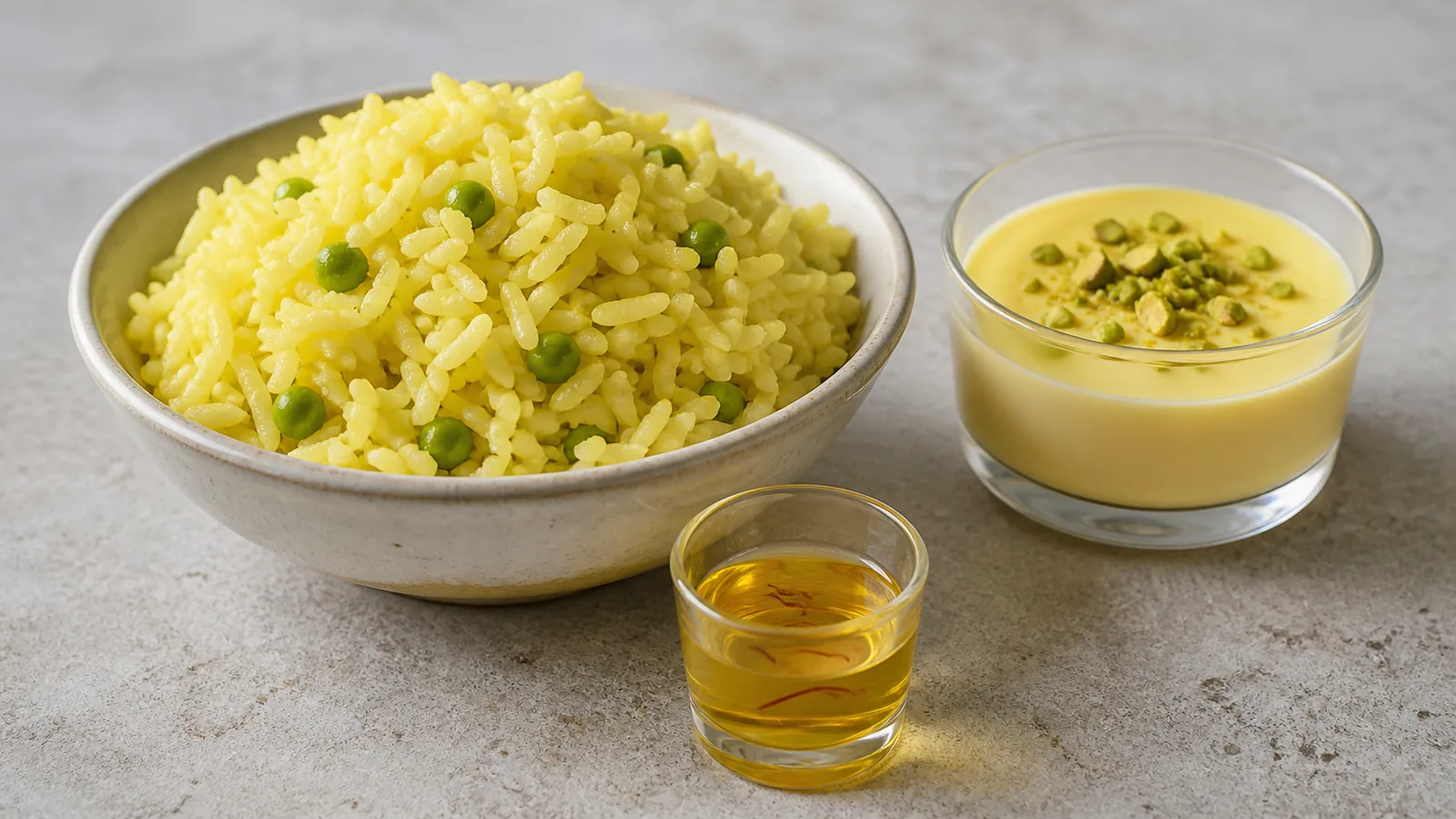
Rice is one of saffron’s best-known uses. In Persian cooking, a concentrated infusion can colour part of the rice or create golden sections through a larger dish. Paella, risotto alla Milanese, and biryani use the spice differently, but each relies on careful distribution rather than a heap of dry threads.
In liquid dishes, saffron can be stirred into broth, soup, seafood stew, or a light sauce. Add it early enough to blend but avoid prolonged hard boiling if you want its delicate aroma to remain noticeable. A separate infusion gives you more control over colour and strength.
Milk and saffron are a familiar pairing in kheer, custard, ice cream, barfi, tea, and warm milk drinks. The fat and sweetness round out saffron’s bitterness. It also works in yeast breads, cakes, biscuits, and fruit desserts, especially when the recipe leaves room for the spice instead of covering it with several stronger flavours.
A few intact threads can be used as a garnish, but decoration should not be the only source of flavour. Bloom most of the saffron first, then reserve a few threads for the surface if they will be pleasant to eat.
Medicinal Benefits of Saffron
Saffron has been used in traditional systems of medicine, and modern researchers have studied defined saffron preparations for mood, sleep, cognition, metabolic measures, sexual function, and other outcomes. That research is not the same as proof that a culinary pinch prevents or treats disease.
A meta-research review of saffron health evidence reported promising findings across several outcomes, while also finding that the scientific quality of published reviews needed improvement. Study formulations, doses, participant groups, and follow-up periods varied. An extract tested in a trial cannot be treated as interchangeable with any jar of threads.
Saffron should not be presented as a treatment for depression, anxiety, heart disease, inflammation, or a digestive condition. A person with symptoms needs appropriate medical care. Concentrated supplements also require a separate safety decision from ordinary food use, particularly for people taking medicines, preparing for surgery, or managing a health condition.
Cosmetic Uses of Saffron
Saffron appears in some soaps, creams, oils, masks, perfumes, and traditional beauty preparations. Its colour, scent, cultural reputation, and antioxidant activity in laboratory research make it attractive to cosmetic formulators. These points do not prove that a homemade saffron mask removes dark circles, reverses ageing, clears blemishes, or permanently changes skin tone.
A finished cosmetic product should be judged by its full formula, concentration, stability, preservation system, packaging, and safety testing. “Contains saffron” tells you very little about how the product performs. Botanical ingredients can also irritate or trigger an allergy. Patch-testing as directed and stopping after a reaction is more sensible than assuming natural means harmless.
Using expensive culinary threads in a homemade mixture may add colour without delivering the promised skin result. It can also stain fabric and temporarily tint skin. For a persistent skin problem, ask a qualified clinician rather than relying on a spice preparation.
Conclusion
Among the many saffron uses, cooking remains the central one. Choose whole threads when you want to inspect the product, and look for clear origin, net weight, seller details, storage guidance, and realistic claims. Powder can be convenient, but it is harder to assess visually and should come from a traceable supplier.
Store saffron tightly closed in a cool, dry, dark place. Moisture, heat, light, and strong surrounding odours shorten its useful life. A high price or ornate package does not by itself prove quality; neither does an instant burst of neon colour.
Our online saffron store shows the current thread formats and pack sizes. If you need help identifying the right product for a recipe, contact us.
In short, the main use of saffron is to change food in a way few spices can: a small infusion brings colour, aroma, and flavour together. Its medical and cosmetic history deserves accurate discussion, but it should not be converted into unsupported treatment or beauty promises.