


Saffron Futures Contracts give growers, processors and traders a standardized way to manage price risk before a later settlement date. They can improve price visibility and make planning easier, but they do not guarantee that a farmer will cover production costs, find a buyer for every grade or earn a profit.
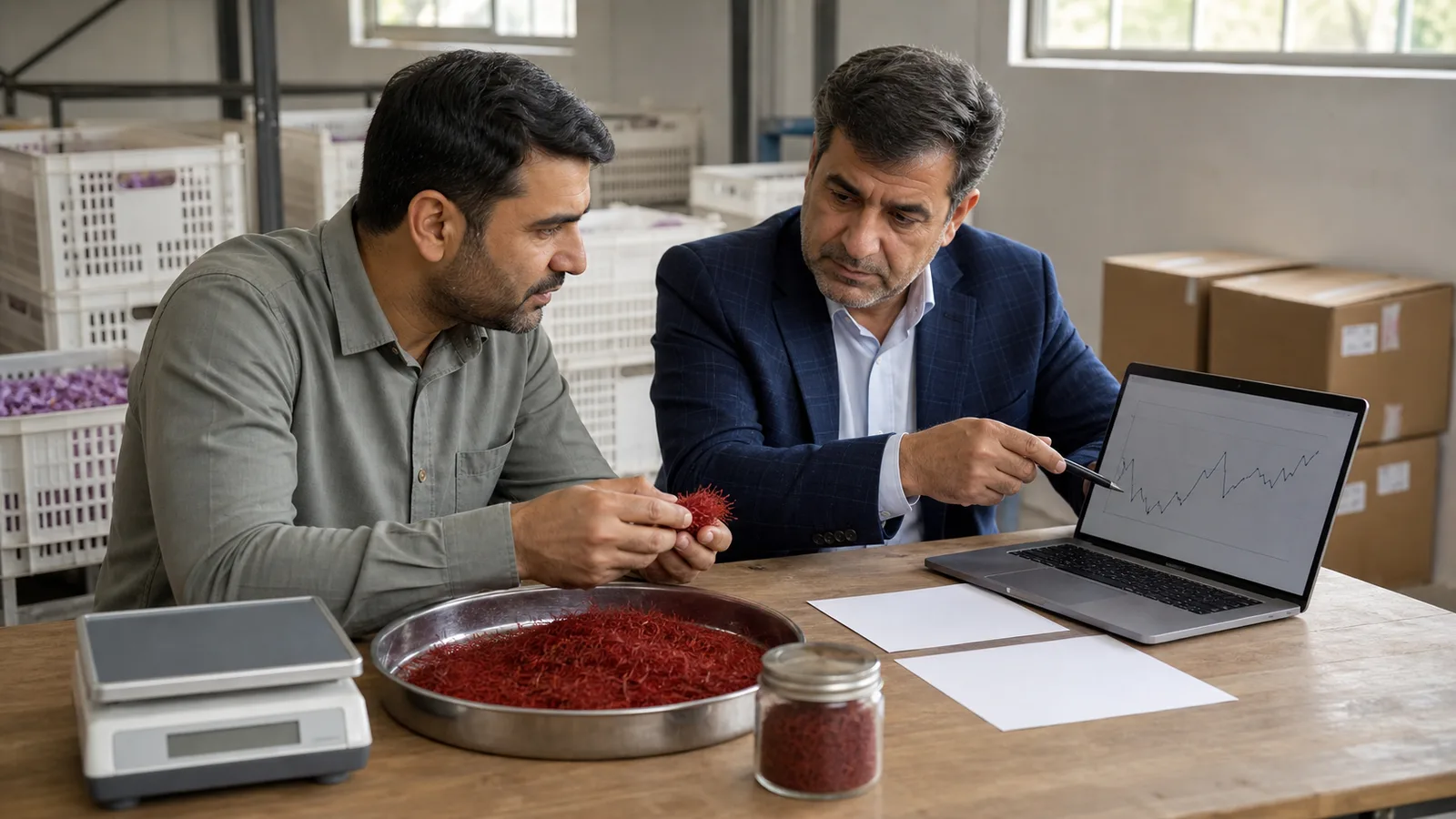
Iran introduced exchange-traded saffron futures as part of a broader market that also includes commodity warehouse receipts and options. The useful question is not whether a futures market is automatically good or bad for cultivation. It is whether the contract reflects the saffron a participant actually produces or needs, trades with enough liquidity, and can be used without creating an unaffordable margin obligation.
What is a saffron futures contract?
A futures contract is an exchange-traded agreement with standardized terms. The exchange defines the contract size, eligible quality, delivery month, delivery locations and settlement rules. Price is discovered as buyers and sellers trade the same contract.
This differs from an informal agreement between one grower and one buyer. A private forward contract can be tailored to those two parties, but it may be difficult to transfer and exposes each side to the other’s ability to perform. Exchange clearing, standard terms and daily settlement change that counterparty structure; they do not remove market risk.
The US Commodity Futures Trading Commission’s explanation of the economic purpose of futures markets uses the familiar example of a farmer selling futures to reduce exposure to a price fall before harvest. It also explains that most futures positions are offset before delivery and that delivery rules help futures and cash prices converge.
How can a saffron grower hedge a price decline?
A grower expecting an autumn crop is economically exposed to a lower cash price at harvest. Selling an appropriate amount of futures may offset part of that risk: if the cash and futures markets both fall, a gain on the short futures position can help counter the lower price received for physical saffron. If prices rise, the crop may sell for more while the futures position loses.
That is risk management, not a promise of the highest price. The hedge deliberately gives up some upside in exchange for less exposure to a fall. A producer also needs enough working capital for margin calls before the crop is sold. Daily losses on the futures account can require cash even when the expected physical crop has gained value.
Why contract quality and warehouse rules matter
Saffron is not perfectly uniform. Negin, Pushal and other commercial grades can differ in thread composition, colour strength, moisture and market value. A useful futures price must be tied to a clearly deliverable grade and approved storage arrangements. Otherwise a grower may hedge one product with a contract that follows another.
Iran’s commodity-market development therefore did not begin with futures alone. In 2017, saffron commodity-deposit certificates were formally traded after product was placed in approved warehouses and met required standards. Warehouse receipts connect physical grading and custody to a tradable instrument.
When did Iranian saffron futures begin?
Saffron futures were launched on the Iran Mercantile Exchange in 2018, not in an unspecified “June” that resets every year. New contract months have been listed over time. For example, a 2021 exchange notice reported by Tasnim announced a Negin saffron futures maturity for Dey 1400. A dated contract-month notice should not be mistaken for a permanent current specification.
Anyone considering the market must check the exchange’s current contract notice, eligible warehouse list, trading calendar, margin and position limits. Old article figures cannot supply those live terms.
What advantages can the saffron derivative market offer?
- Price discovery: bids and offers are visible in a standardized venue rather than known only to individual intermediaries.
- Risk transfer: commercial participants can offset part of a physical price exposure.
- Quality discipline: deliverable contracts and warehouse receipts require defined product and custody rules.
- Planning: a visible forward price can inform cash-flow, storage and planting decisions.
- Market data: prices, volume and open interest can reveal expectations, provided the contract trades actively.
These benefits are conditional. An exchange can reduce opaque bargaining without eliminating brokers, warehouses, graders, processors or merchants; many perform necessary functions. It also cannot prevent monopoly or manipulation merely because trading is electronic. Governance, surveillance, competitive participation and credible delivery all matter.
What risks remain for farmers?
Basis risk is the possibility that a grower’s local cash price and the futures price do not move together. Quality, region, transport and timing can all widen that gap. Production risk is separate: weather, disease or a poor corm stand may leave the grower with less saffron than was hedged. The CFTC notes that uncertain output can cause an agricultural producer to become over- or under-hedged.
There is also liquidity risk. A thin contract can be expensive to enter or leave and may not produce a robust reference price. Margin calls create cash-flow risk. Delivery can create grading, storage and transport obligations. Speculation adds the possibility of rapid loss; buying a contract because the currency is weakening or because saffron “must rise” is not hedging.
Do futures contracts finance cultivation?
Not directly. A futures position manages a price exposure; it does not pay for corms, water, labour or drying equipment. A warehouse receipt may support financing after eligible saffron has been deposited, while a lender may view a well-designed hedge as part of a risk plan. Those are related mechanisms, not the same instrument.
A visible forward price can influence whether expansion looks viable, but planting more saffron still depends on agronomy, water, labour, disease control and demand. Futures cannot make unsuitable land productive or guarantee that expanded output will meet the contract grade.
Can Iran become the global saffron price reference?
Iran’s production base gives its market economic weight, yet price authority is earned through participation and trust. International buyers would need confidence in grade definitions, testing, warehouses, settlement, currency conversion, capital access and legal enforceability. A domestic exchange price can be informative without automatically becoming the price used in every importing country.
The same caution applies to foreign participation. Access rules, trading codes, sanctions, payment channels and residency requirements can change. A historic statement that overseas customers “can participate” is not sufficient operational guidance in 2026.
A practical checklist before using saffron futures
- Identify the physical quantity, grade and sale month that need protection.
- Read the current contract specification and approved delivery terms.
- Compare the contract price with the actual local cash price over time.
- Size the hedge conservatively around realistic output, not the best possible harvest.
- Plan cash for initial and variation margin.
- Decide in advance whether the position will be offset or taken to delivery.
- Use a licensed broker and obtain legal, tax and financial advice appropriate to Iran and the participant’s jurisdiction.
For growers who understand the contract, saffron futures can be one part of a broader business plan. They work best alongside reliable production records, quality control, suitable storage and a cash-market strategy. They are a tool for transferring price risk—not a machine that creates profitability or expands cultivation by itself.

![Exporting Saffron to Turkey + Price Guide [Complete 0 to 100]](https://img.rowhanisaffron.com/20260827003933/saffron-export-turkey-quality-inspection.webp)



