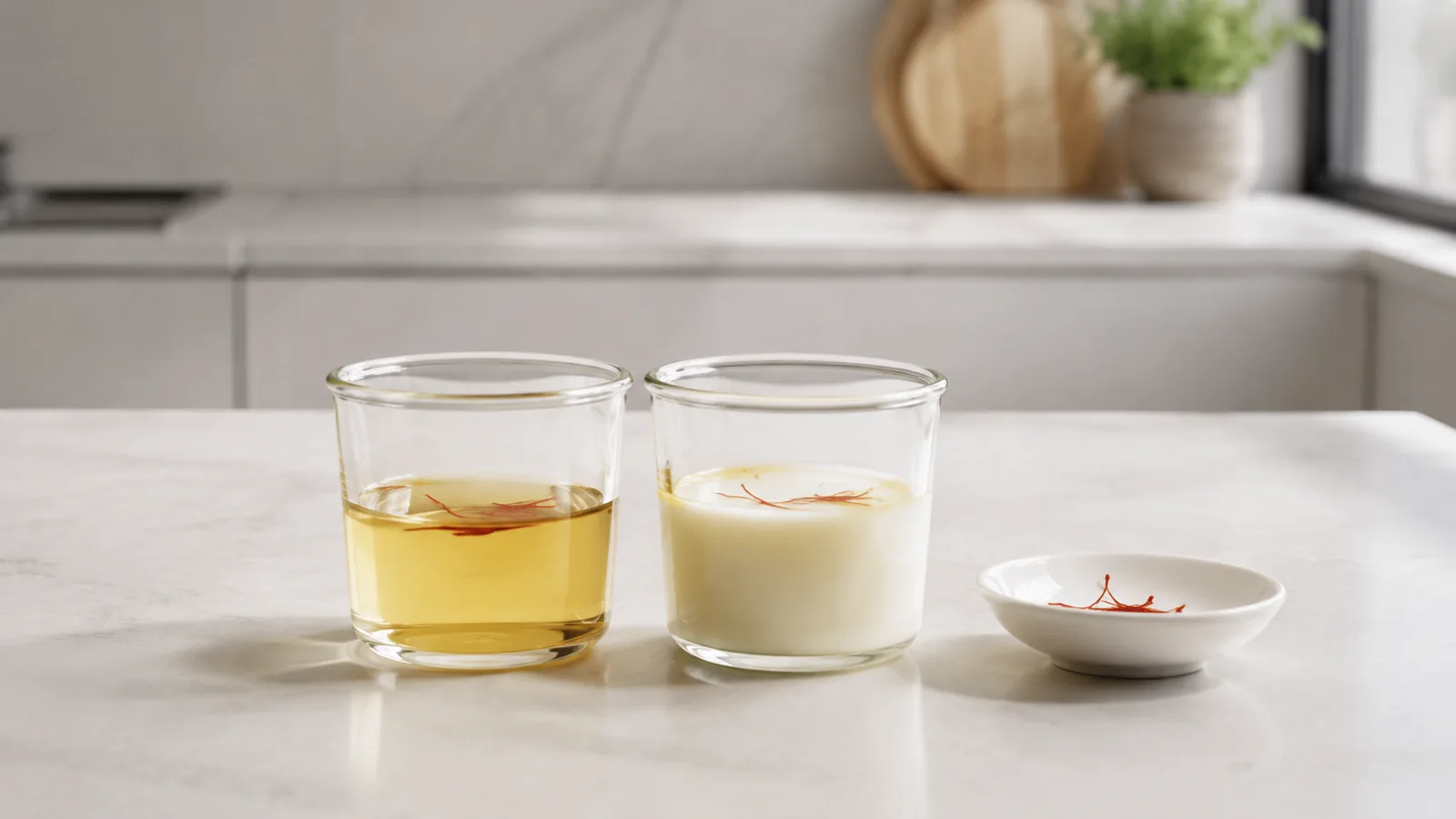
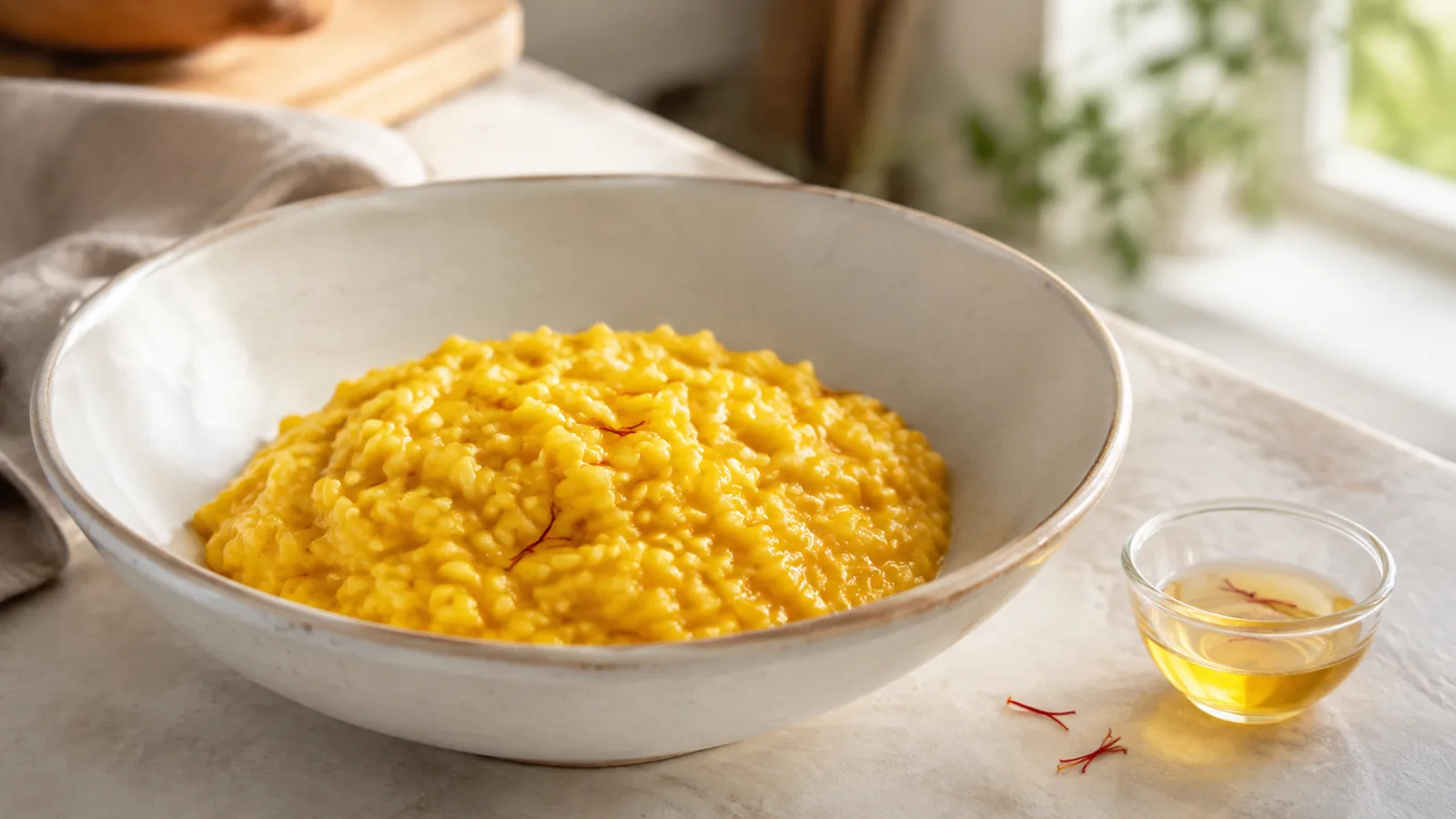
For one cup of milk, start with 3–5 saffron threads. That is usually enough for a light golden color and a clear floral aroma without making the drink bitter. Bloom the threads in a teaspoon of warm milk for 10–15 minutes, then stir that infusion into the rest of the cup.
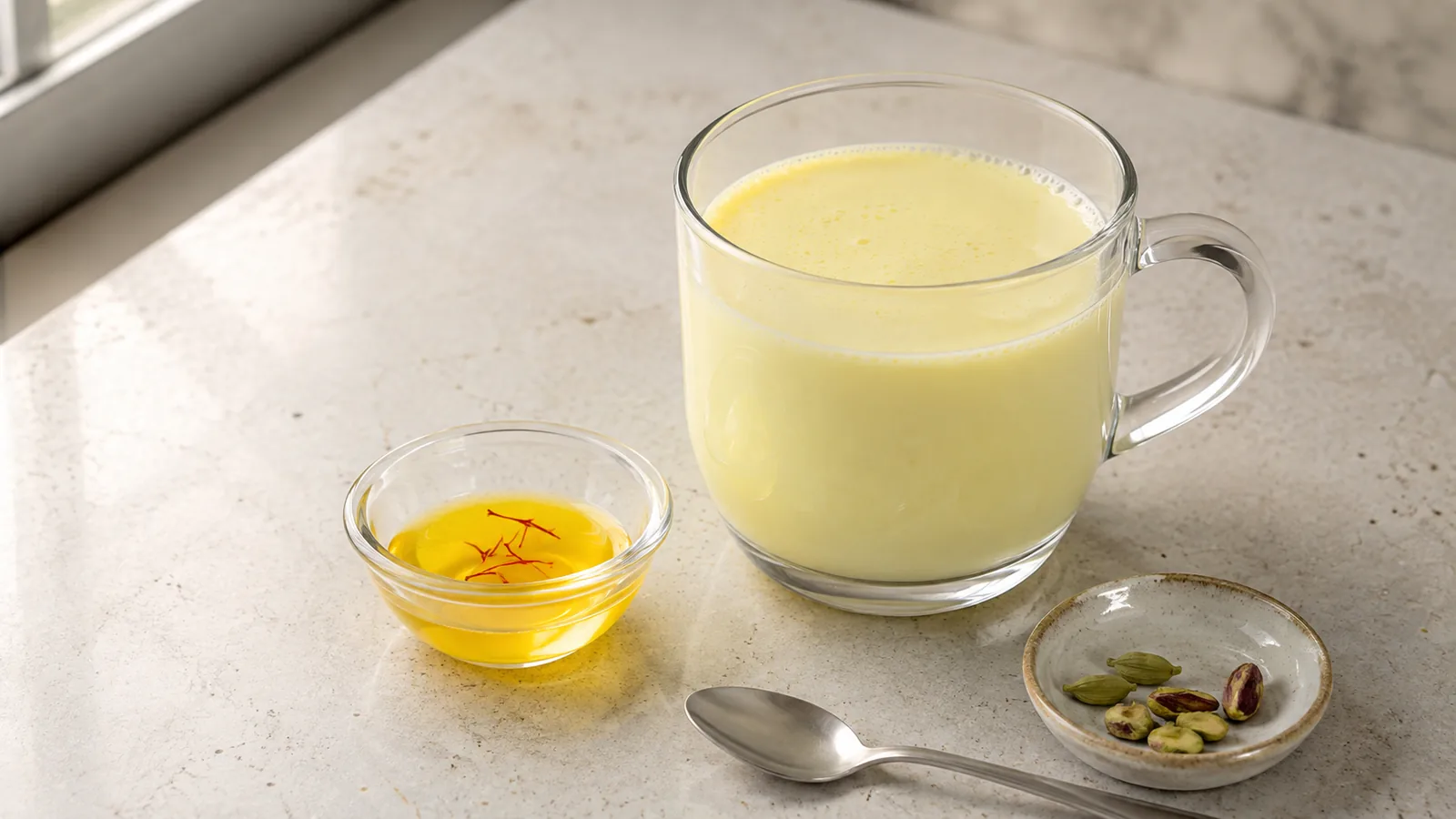
Adding Saffron to Milk
This saffron milk guide is about culinary flavor, not a therapeutic dose. Saffron in milk should taste delicate: floral and honeyed, with a gentle bitter edge. The spice itself is not sweet, so add honey or sugar separately if the recipe calls for it.
Whole milk gives a rounder result, while low-fat or plant milk keeps the drink lighter. The same basic method works with almond, oat and soy milk, although each has its own flavor. Coconut milk is much stronger and can make the saffron harder to notice.
Recommended Amount: How Much Saffron to Use in Milk
Use 3–5 threads for a single cup of milk as a dependable starting point. Saffron thread size varies, so this is not laboratory precision. A few thick, unbroken threads may weigh more than several short fragments.
- 1 cup (about 240 ml): start with 3–5 threads.
- 2 cups (about 480 ml): use roughly 6–10 threads.
- 1 litre: begin with 12–20 threads and adjust after tasting.
For a richly flavored dessert, you may prefer the upper end of the range. For a lightly scented bedtime drink or a recipe with cardamom and nuts, start at the lower end so the ingredients remain balanced. Excess saffron can produce a medicinal bitterness rather than a more elegant flavor.
How to Prepare Saffron Milk
- Measure the saffron threads before crushing them.
- Rub them gently between clean fingers or use a small mortar.
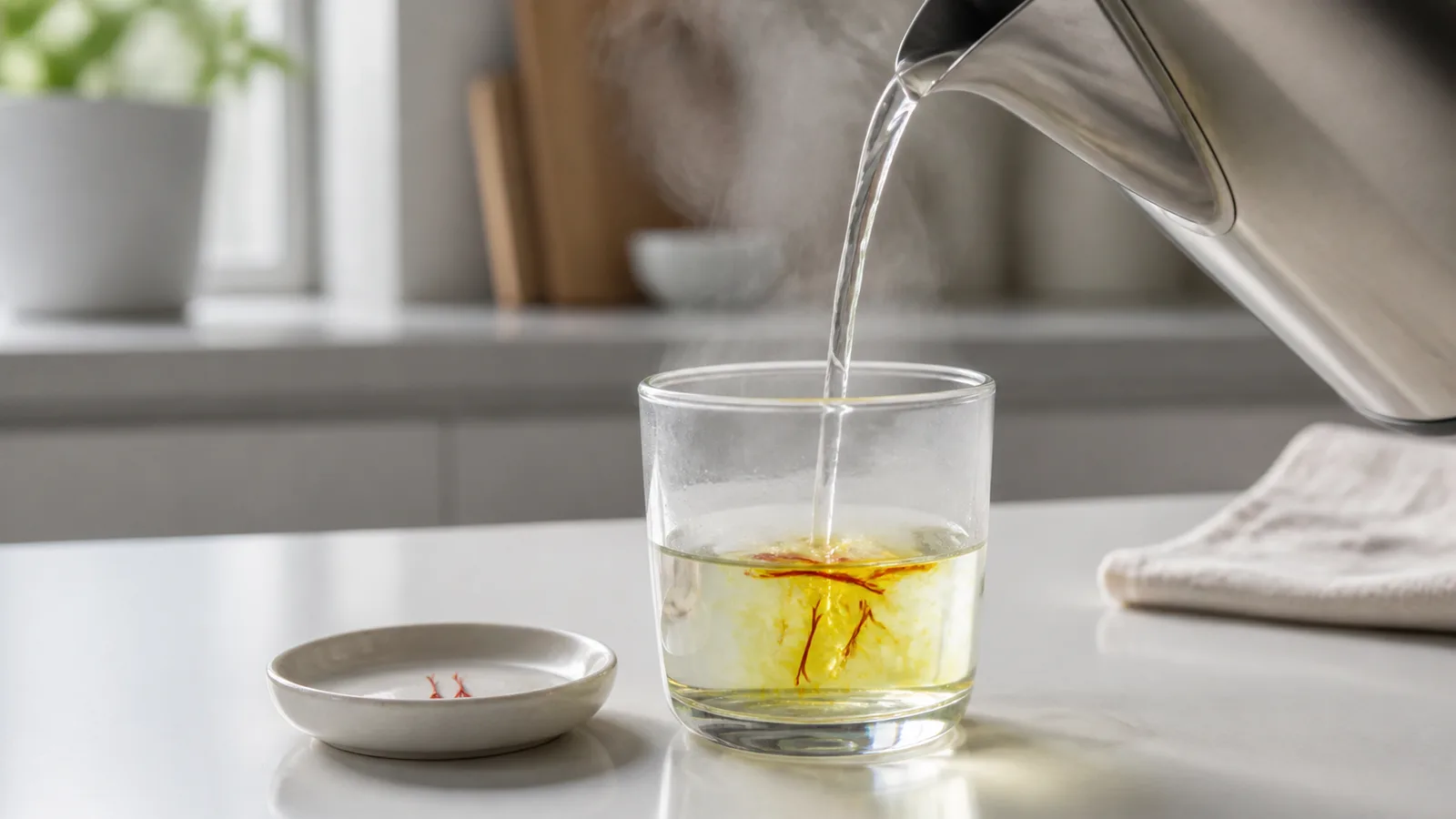
- Warm one teaspoon to one tablespoon of milk until hot to the touch but not boiling.
- Add the saffron, cover and leave it for 10–15 minutes.
- Stir the golden infusion and softened threads into the remaining warm milk.
Do not strain the threads away; they are part of the measured portion. A small covered cup gives the aroma time to develop without evaporating a full serving of milk. For a detailed comparison with water and ice methods, read the best way to brew saffron.
Should You Boil Saffron in Milk?
Warm the milk gently, then add saffron off the heat or over very low heat. A brief accidental simmer will not automatically ruin it, but several minutes of hard boiling can flatten the aroma, reduce the milk and form a skin.
When a dessert recipe must simmer, bloom the saffron separately and stir it in during the latter part of cooking. It will still have time to distribute without spending the entire cooking period at high heat.
How Much Kesar to Put in Milk
Kesar is another name for saffron, so use the same starting amount: 3–5 genuine threads per cup. The label does not require a different method. Products sold as a colored powder may contain other ingredients, so read the package rather than assuming every kesar powder is pure saffron.
Saffron Milk for Drinks and Desserts
A Warm Saffron Milk Drink
Prepare the infusion, mix it into warm milk and taste before adding sweetener. Cardamom, a little honey, pistachio or almond can complement the saffron, but one or two supporting flavors are enough. For a complete method, use this step-by-step saffron milk recipe.
Custard, Rice Pudding and Ice Cream
Bloom the saffron in warm milk or cream taken from the recipe, then return it to the mixture. Begin with the standard ratio and increase only when the batch is large or strongly flavored. Vanilla, rose, cardamom and pistachio are common partners, but they can easily crowd a subtle dose.
Cakes and Breads
Use part of the recipe’s measured milk to make the infusion so the batter or dough does not receive extra liquid. Let the milk cool to the temperature required by the recipe before it touches yeast, eggs or butter.
How to Take Saffron with Milk
For ordinary food use, drink saffron milk as you would another flavored milk: warm or chilled, plain or lightly sweetened. Let a hot infusion cool before refrigerating it, and keep it covered.
If you are asking how many saffron threads per day in milk for a health purpose, a culinary portion is not a medical dosage. Do not infer a treatment amount from a recipe. Pregnancy, medications and health conditions can change what is appropriate, so ask a qualified clinician about regular or concentrated use.
Tips for Enhancing Flavor
- Crush the threads gently so more surface meets the milk.
- Bloom in a small covered quantity before diluting the infusion.
- Pair saffron with cardamom, honey, sugar, rose, almond or pistachio only as the recipe needs.
- Use clean milk flavor as the base; scorched milk will mask the saffron.
- Taste before adding more threads.
Common Problems
The milk is yellow but not fragrant: the saffron may be old or poorly stored, or the color may come from another ingredient. Aroma is a better check than color alone.
The threads float in one spot: crush them lightly and make a concentrated infusion before adding it to the full cup.
The drink tastes bitter: reduce the saffron next time and make sure the milk was not scorched. More sweetener may cover bitterness, but it does not correct an excessive dose.
A skin forms on top: heat the milk more gently and stir as it cools. Preparing the bloom in a small separate cup also helps.
The Simple Ratio
Start with 3–5 saffron threads per cup of milk. Bloom them in a teaspoon of warm milk for 10–15 minutes, add the complete infusion and taste before increasing the amount. This preserves the working balance of color, aroma and flavor while leaving room for cardamom, nuts or a modest sweetener.
If you need whole threads for your drink or dessert, compare the available formats in the saffron shop.