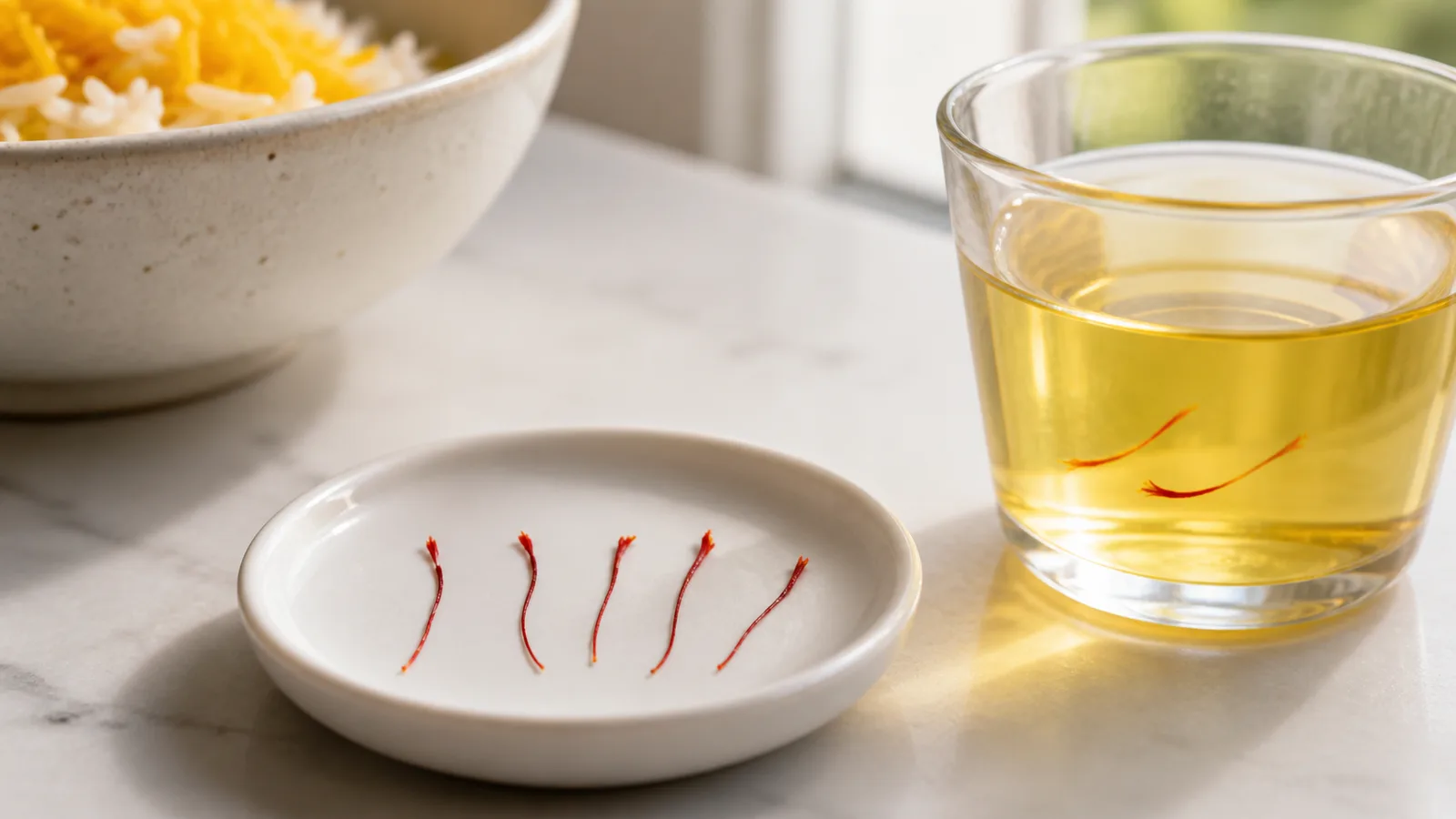
Do not drink saffron tea if you have had an allergic reaction to saffron, the product may be contaminated or mislabelled, or you have already taken a large or unknown amount. Pregnant people, children, people using medicines and anyone considering a concentrated saffron product should get advice appropriate to the product and their circumstances rather than relying on a universal rule.
For most adults without a relevant allergy or medical concern, a few food-grade threads used as flavouring in a drink are different from a capsule, extract or heavily concentrated brew. Good saffron consumption warnings should make that distinction clear.
Who should not drink saffron?
If you are allergic to saffron
If saffron has caused hives, swelling, wheezing, breathing difficulty, vomiting or faintness, do not try it again without specialist advice. Saffron allergy appears to be rare, but a published case report documents anaphylaxis to saffron. An allergy to “related plants” does not automatically prove a saffron allergy, yet a clinician can assess the history and decide whether testing or avoidance is appropriate.
Breathing difficulty, throat or tongue swelling, collapse or rapidly worsening symptoms require emergency care. Follow any prescribed allergy action plan and use epinephrine if you have been instructed to do so.
Anyone with a large or unknown exposure
Do not keep drinking the tea while trying to calculate how much saffron is too much. If someone swallowed an unknown powder, a large gram-level quantity or several capsules, call a poison service for case-specific advice. In the United States, Poison Help connects callers to a local poison centre at 1-800-222-1222; elsewhere, use the local equivalent.
Saffron overdose symptoms cannot be reduced to one list because the product, amount, person and other exposures matter. Severe vomiting, fainting, confusion, breathing trouble or another rapidly worsening symptom needs urgent medical help. Do not induce vomiting or take activated charcoal unless a poison professional tells you to.
Pregnant people considering more than culinary use
A 2026 review of saffron use in pregnancy found that the clinical evidence remains limited and inconclusive. It also reported dose-dependent concerns, with higher exposure or occupational exposure linked to uterine stimulation and miscarriage risk. That does not justify a blanket claim that one normal recipe is dangerous, but it does mean medicinal amounts, extracts and concentrated daily drinks should not be self-prescribed during pregnancy.
Discuss the actual product and amount with a maternity clinician. The same cautious approach is appropriate while breastfeeding because concentrated-product evidence is limited.
Children and people preparing for surgery
Do not give a child a saffron supplement or concentrated tea as a health remedy without paediatric advice. Before surgery, disclose saffron supplements and herbal products to the surgical team and follow its instructions about what to stop and when.
People with low blood pressure or relevant medicines
A meta-analysis of eight randomised trials found small average reductions in systolic and diastolic blood pressure with saffron supplementation; the authors said the effect might not be clinically important. Still, someone with symptomatic low blood pressure or blood-pressure medicine should discuss regular supplement use with a clinician or pharmacist rather than guessing from that average.
People taking anticoagulants, antiplatelet medicines, antidepressants or several medicines should also bring the saffron product label to a pharmacist before repeated medicinal use. This is a precaution, not a claim that every interaction is proven. Concentration, other ingredients and the person’s treatment plan all matter.
Saffron allergy, poisoning and ordinary side effects are different
Saffron tea side effects or kesar side effects may include nausea, stomach upset, poor appetite, headache or dizziness. Those symptoms do not by themselves diagnose an allergy or saffron poisoning.
- Side effect: an unwanted symptom that occurs after use, often involving the digestive system in published saffron trials.
- Allergy: an immune reaction that may include hives, swelling, wheeze or anaphylaxis.
- Poisoning or overdose concern: a large, concentrated or unknown exposure requiring case-specific advice.
A 2026 systematic review of adverse events examined 102 trials and one case report. It estimated that around 17.5% of participants experienced a saffron-related event; gastrointestinal problems were most common and usually minor and self-limiting. The authors advised monitoring during higher-dose or prolonged medicinal use.
Is 20–30 milligrams a safe daily amount?
Amounts around 20–30 milligrams appear in some studies and supplement labels, but they are not a universal daily requirement. They should not be translated into “a few threads,” because stigma size varies and extracts may have a defined concentration. Saffron safety depends on form, amount, duration, other ingredients and the person using it.
For ordinary food use, a few threads in a cup or a small pinch across several recipe portions is a culinary amount. Start modestly, use a clearly identified food-grade product and avoid repeatedly topping up a strong infusion.
What about the benefits of saffron?
Saffron is studied for several health outcomes, but possible benefits of saffron do not cancel allergy, pregnancy, medicine or dose considerations. A tea should not replace treatment, and stronger is not necessarily better. In a drink, the reliable expectations are flavour, aroma and colour.
A quick safety check before making saffron tea
- Confirm that the product is food-grade saffron with a clear label and source.
- Use a few threads, not an unknown spoonful of powder or an opened capsule.
- Ask for personal advice if pregnancy, a child, surgery, medicines, low blood pressure or a previous reaction applies.
- Stop and seek advice if symptoms develop; use urgent or poison help for severe or large-exposure concerns.
So, who should not take saffron as a drink or supplement? Anyone with a confirmed saffron allergy should avoid it; anyone facing a large exposure should seek immediate advice; and people in the higher-risk groups above should not use concentrated or medicinal products without professional review. You can browse our saffron products when choosing clearly identified threads for ordinary culinary use.