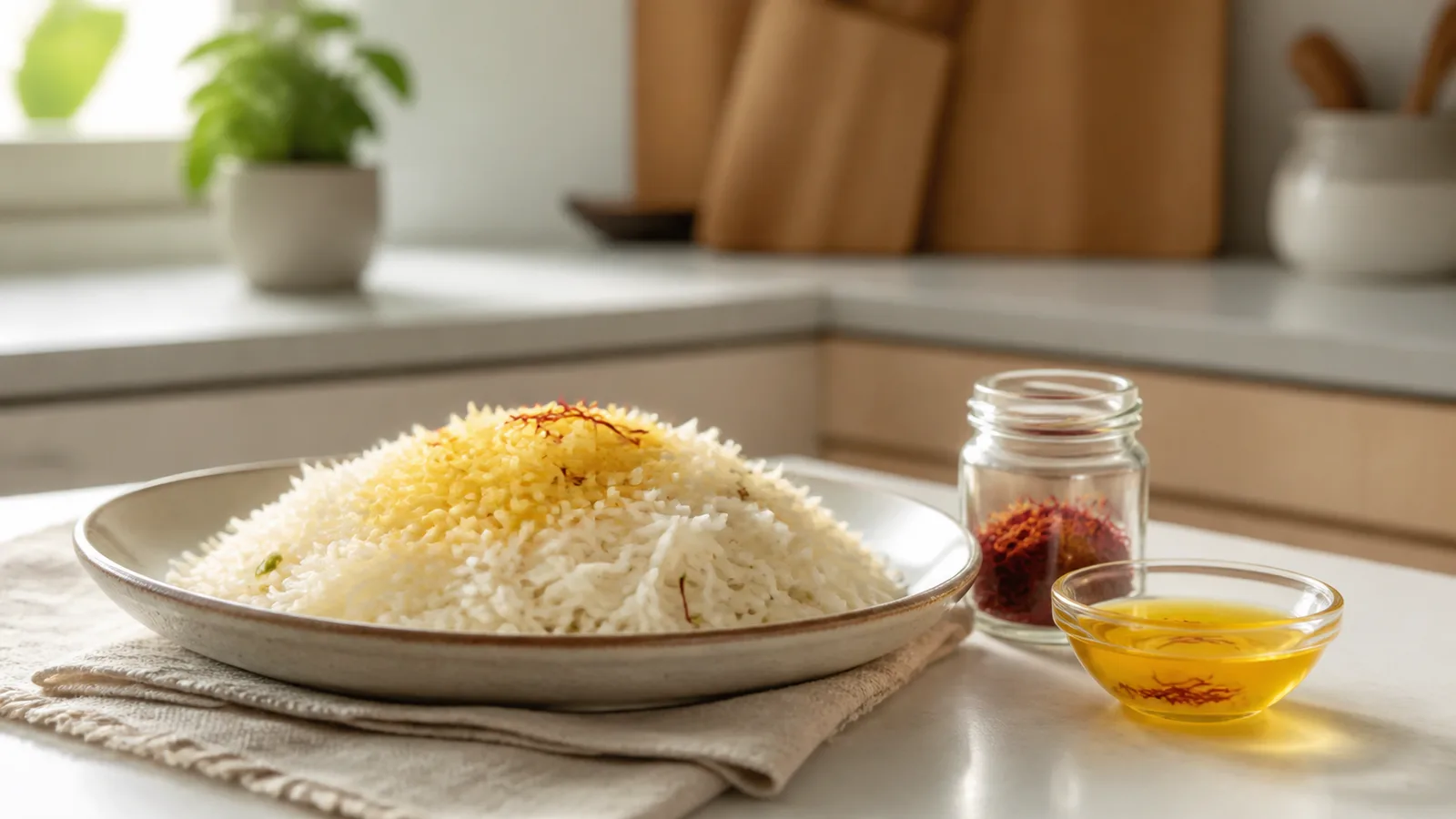
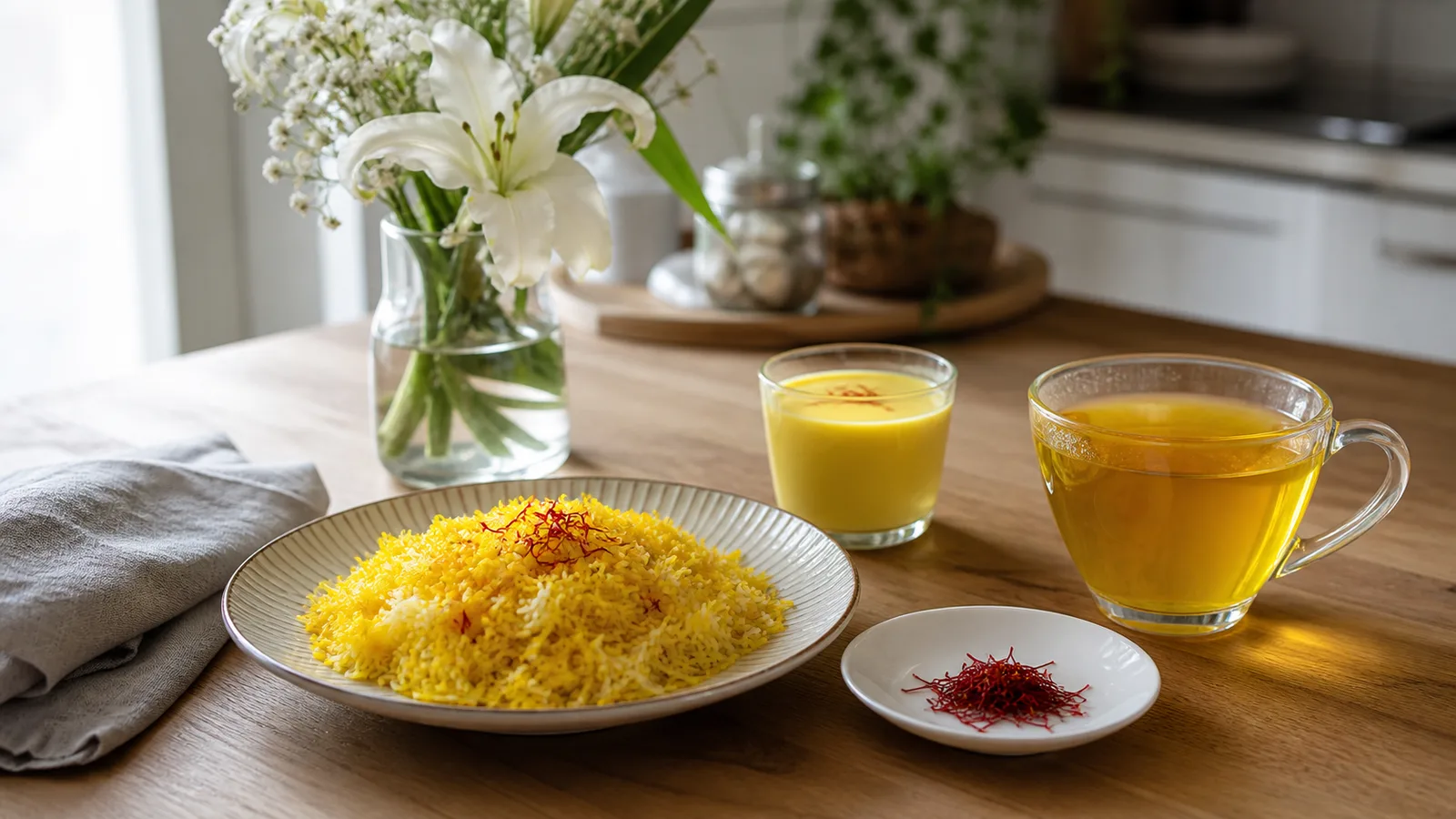
This Saffron Jam Recipe turns verified food-grade Crocus sativus petals into a delicate refrigerator preserve. It keeps the original five-serving idea and bitterness-removal method, but gives the water, syrup and storage instructions enough precision to produce a spoonable Persian jam safely.
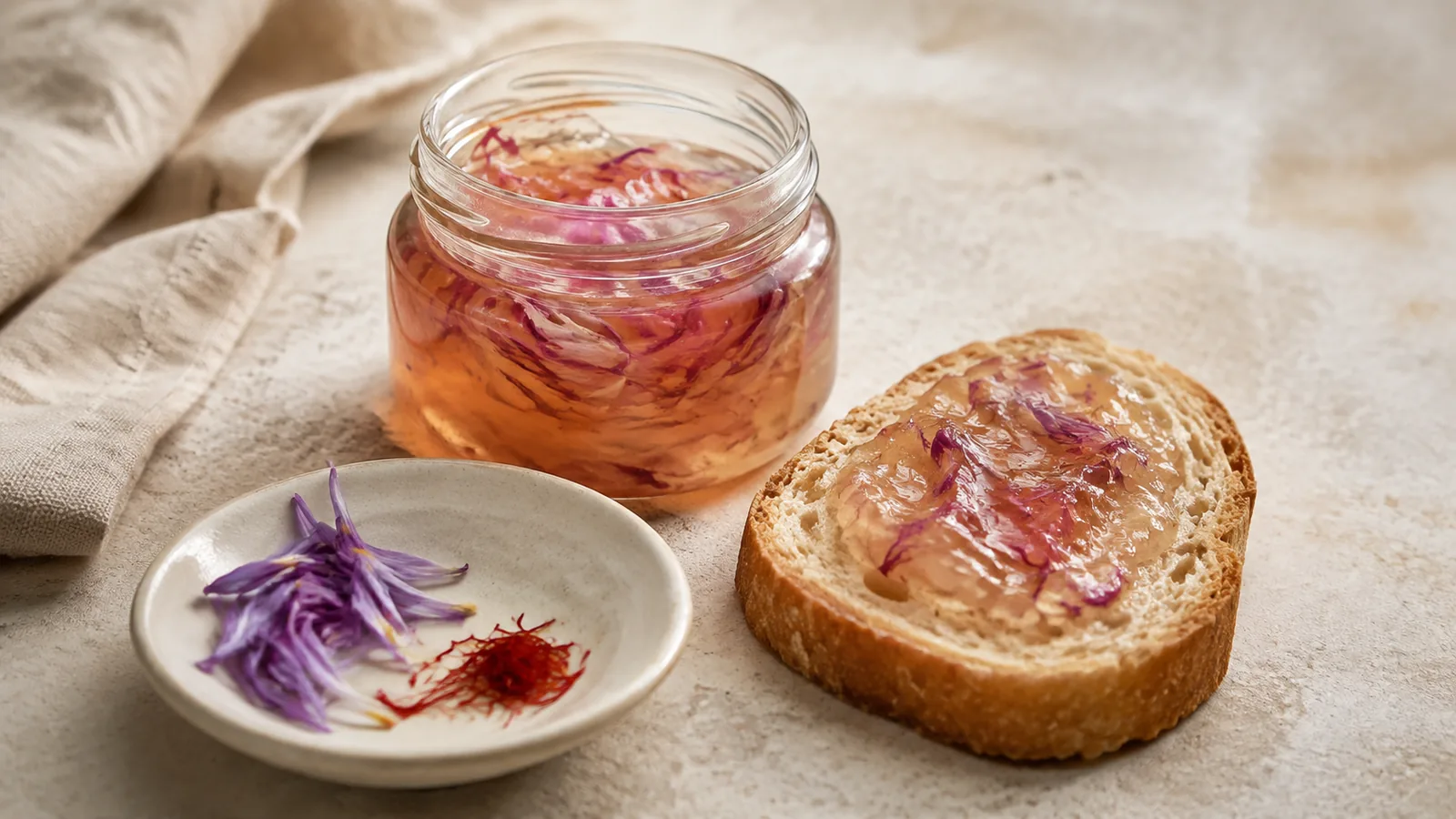
What saffron jam is made from
The saffron spice sold for cooking is made from the three red stigmas inside each Crocus sativus flower. This recipe uses the broad purple petals, sometimes called tepals, after those valuable red threads have been removed. A small measured amount of the spice goes into the syrup at the end for a familiar saffron aroma.
Use only petals supplied or grown for food. Decorative crocuses, roadside flowers and anonymous “autumn crocus” material are not acceptable substitutes. The common name autumn crocus is also used for Colchicum autumnale, a different and poisonous plant. Poison Control’s plant-safety guidance stresses the importance of correct identification rather than relying on appearance alone.
The petals should come from a known Crocus sativus crop with a suitable food-use and spray history. Discard material that is mouldy, slimy, heavily soiled or has an unknown source. A florist’s “edible-looking” flower is not evidence that it was cultivated for eating.
Saffron flower jam at a glance
- Makes: about 2 small jars, or 5 tasting portions
- Preparation: 25 minutes
- Cooking: 35–45 minutes
- Total time: about 1 hour 15 minutes, plus cooling
- Storage: refrigerated, not pantry-stable
This is a floral preserve in light syrup rather than a firm fruit spread. Petals do not supply the pectin and fruit solids found in a conventional berry jam, so chasing a stiff gel by prolonged boiling would flatten the flavour and darken the colour.
Ingredients
- 300 g fresh, verified food-grade Crocus sativus petals
- 200 g granulated sugar
- 150 ml water for the syrup
- about 1 litre additional water for the blanching and rinsing stages
- 1/4 teaspoon loosely packed saffron threads, lightly ground
- 2 tablespoons bottled lemon juice
- 1 strip orange peel or 1/2 teaspoon finely grated lemon zest, optional
The old formula listed one litre of water without saying where it belonged. Pouring all of it into 200 g of sugar would make a thin drink, not jam. Here, most of that water is used to reduce bitterness; only 150 ml becomes part of the syrup.
It also called for three teaspoons of ground saffron. That much can overwhelm this small batch and obscure the petals’ own flavour. A measured quarter teaspoon is enough to perfume the syrup. Add more only after tasting a cooled spoonful, not simply to force a darker colour.
How to prepare the saffron petals
Remove the stigmas and yellow stamens
If the flowers are freshly harvested, open them in a clean workspace. Lift out the red stigmas and keep them separate for controlled drying. Remove the yellow stamens and green stem material from the purple petals. This recipe is not a way to boil the whole flower in one pot.
Clean the petals gently
Sort the petals, then rinse them in cool potable water. Move them with your fingers rather than crushing them. Drain in a colander and check once more for insects, grit or damaged plant material.
Dried petals behave differently from 300 g of fresh petals and should not be substituted packet-for-packet. They absorb water, have a different density and may become tough. Use a formula developed specifically for the dried product if that is what you have.
Blanch to control bitterness
Bring 500 ml of the additional water to a boil. Add the petals, return just to a simmer and cook for 2 minutes. Drain immediately, rinse briefly with cool water and taste one cooled petal.
If it remains unpleasantly bitter, repeat with the remaining 500 ml water for a second 2-minute blanch. If the first taste is mild, skip the second round. Repeated boiling removes bitterness, but it also takes colour and aroma with it, so the taste test matters more than completing a ritual number of rinses.
Press very lightly to remove free water. Do not wring the petals dry; crushing them now makes the final preserve muddy.
How to make saffron jam
1. Prepare the jars
Wash two small heat-safe jars and their lids in hot soapy water, rinse well and keep them clean. This step prepares containers for a refrigerated preserve. It does not make an untested recipe shelf stable.
2. Bloom the saffron
Put the lightly ground saffron threads in a small cup with one tablespoon of the measured syrup water. Cover and leave for 10–15 minutes while the syrup starts.
3. Make a light syrup
Combine the sugar and the remaining syrup water in a wide, non-reactive saucepan. Warm over medium-low heat, stirring until the sugar dissolves. Bring it to a gentle simmer for 5 minutes. The bubbles should be steady rather than violent.
4. Add the petals
Fold in the drained petals. Simmer gently, uncovered, for 15–20 minutes. Stir from the bottom often enough to prevent sticking, but avoid beating the mixture. The petals should soften while the syrup reduces enough to coat a spoon lightly.
Add the bloomed saffron and lemon juice for the final 2 minutes. If using orange peel, add the strip with the petals and remove it before filling the jars. Finely grated lemon zest should go in with the lemon juice so its fresher aroma is not cooked away.
5. Check the texture
Put a teaspoon of syrup on a chilled plate and wait 30 seconds. It should move slowly when the plate is tilted but does not need to wrinkle or set hard. The preserve thickens further as it cools.
If it is still watery, simmer for another 3–5 minutes and test again. If it has become too thick, stir in one tablespoon of hot water. Do not continue boiling only because a fruit-jam recipe would have reached a firmer gel.
6. Fill, cool and refrigerate
Spoon the hot preserve into the clean jars, leaving a little space at the top. Let the jars cool briefly, close them and refrigerate promptly. Label them with the preparation date.
Use a clean spoon for every serving and keep the refrigerator at 4°C/40°F or colder. Because this particular formula has not been validated for long storage, use it within 7 days or freeze small portions promptly. Discard the entire jar if you see mould, bubbling, leakage or another sign of spoilage.
Why this is not a shelf-stable canning recipe
A sealed lid, plenty of sugar or added lemon juice does not by itself prove that a flower preserve is safe at room temperature. Finished acidity, ingredient ratios, jar size and processing time all matter.
The National Center for Home Food Preservation warns against untested changes to jam and jelly recipes because added low-acid ingredients can make the final acidity unpredictable. This formula is deliberately presented as a refrigerator jam. For pantry storage or commercial sale, use a process validated for the exact petals, sugar, acid, container and equipment.
The former two-month refrigerator claim was not supported by a shelf-life study and is not carried forward. Commercial producers can establish a longer date only through controlled formulation, hygienic processing, packaging and appropriate testing.
Is this saffron jam or saffron jelly?
Jam contains visible plant material; jelly is normally a clear gel made from strained liquid. This recipe keeps the petals, so “saffron flower jam” or “saffron petal preserve” is the accurate description.
A search for saffron jelly may lead to a clear, pectin-set product flavoured with saffron threads. Straining this recipe and adding an arbitrary amount of pectin would create a different formula, not a tested variation. Follow a pectin manufacturer’s recipe designed for the intended fruit or liquid, and treat saffron as a flavouring only where that tested formula permits additions.
How to serve this Persian treat
Saffron petal jam has a delicate floral character. Start with a teaspoon so it does not disappear beneath stronger flavours.
- spread a small amount on warm bread, toast or a scone;
- spoon it over plain yogurt, labneh or mild soft cheese;
- serve it beside vanilla ice cream or rice pudding;
- brush a little syrup over a cooled plain cake; or
- stir a teaspoon into hot water when you want a light floral drink.
The orange-peel version is slightly rounder and more aromatic; lemon zest gives a sharper finish. Add one, not both, to the first batch so you can still taste what the petals contribute.
The Persian context behind saffron-petal preserves
Using the petals also connects this recipe to efforts to find responsible uses for the material left after saffron threads are separated. A separate account of the Hamedan saffron-petal jam proposal explains how one Iranian growing region discussed the idea alongside standards, packaging and grower coordination.
That history does not turn an announcement into a tested recipe. At home, the sensible approach is a small, refrigerated batch made from correctly identified petals. The result is a gentle Persian treat with its own texture and flavour—not a jar of expensive threads hidden under sugar.