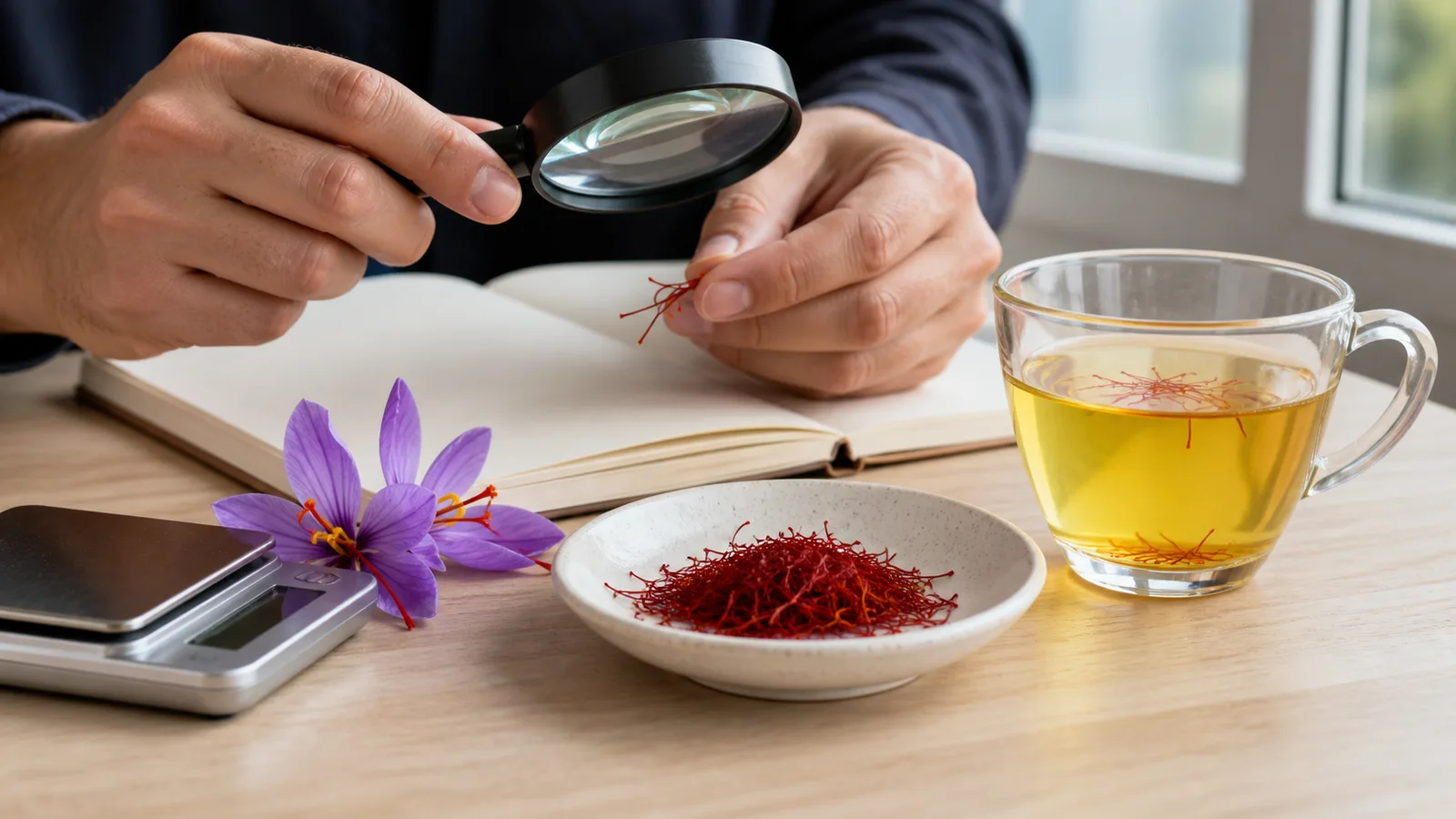
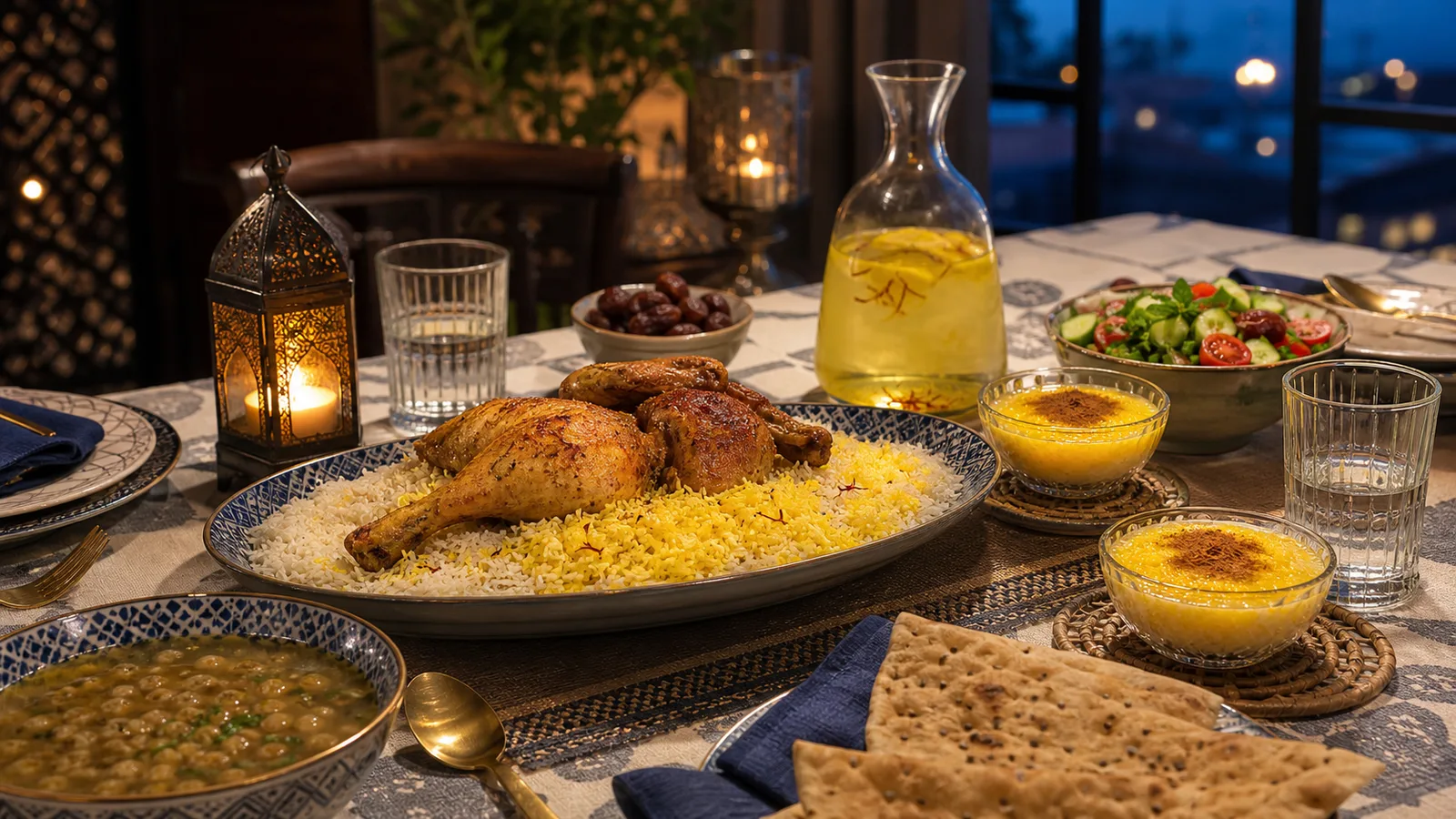
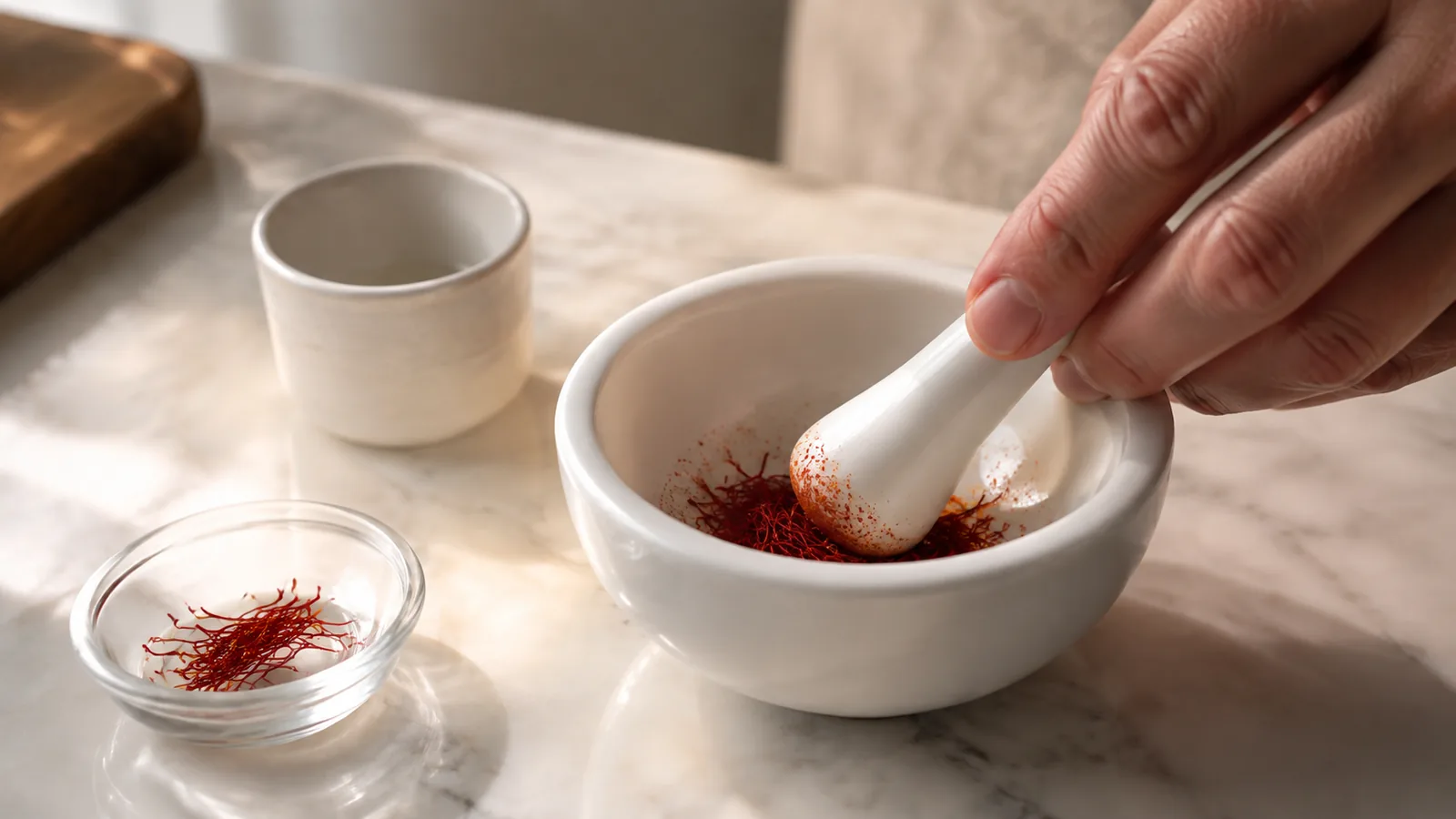
Saffron kachi is a soft Persian flour porridge scented with rose water, cardamom and saffron. It sits somewhere between a spoonable pudding and a loose halva: smooth, glossy and warming, with enough toasted-flour flavour to keep the sweetness in balance. This guide covers the two versions readers ask for most—rice flour and white flour—plus the Tabrizi variation, rock-candy substitution and the traditional links with menstruation and postpartum meals.
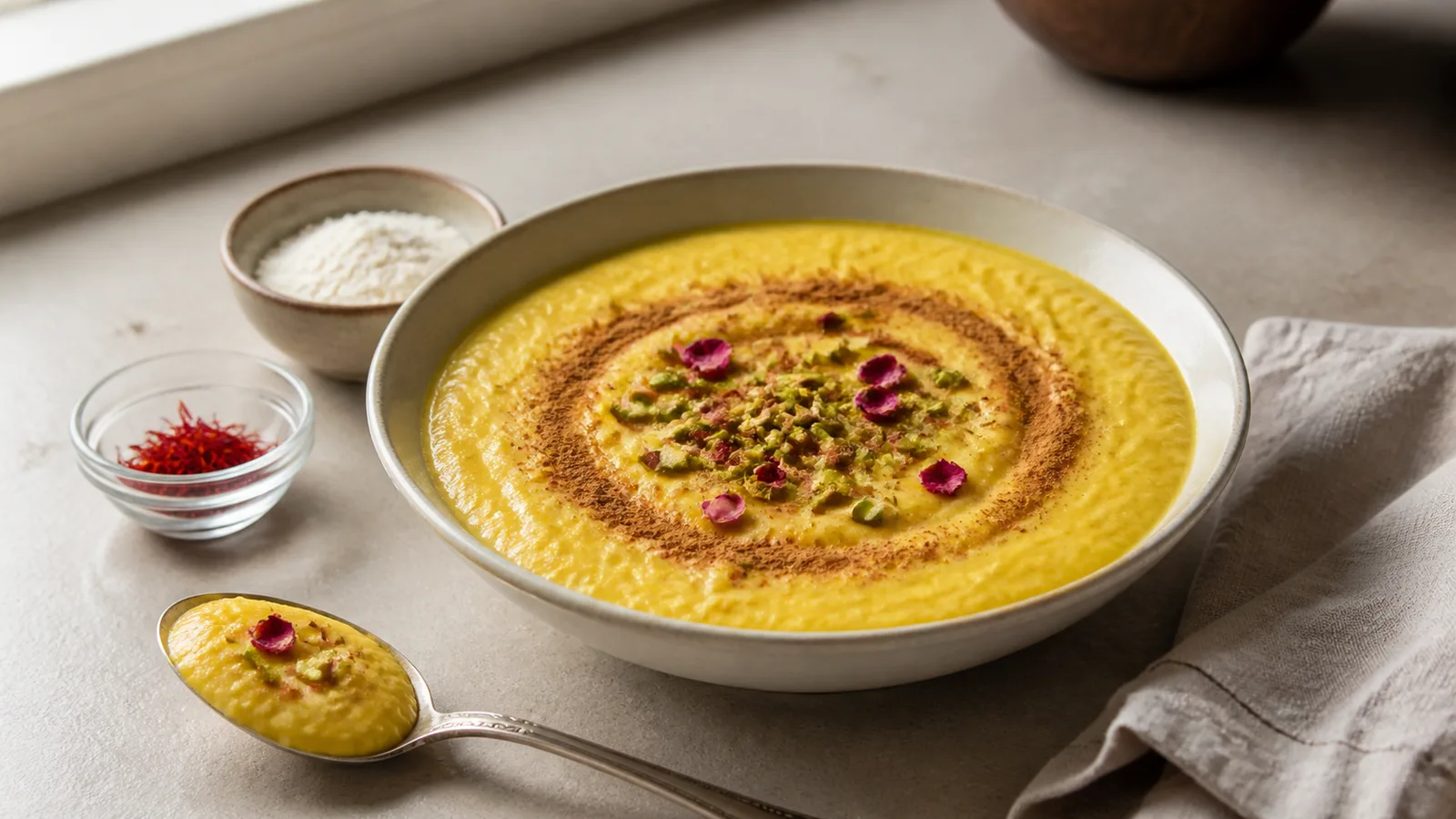
The method matters more than an extravagant amount of saffron. Cook the flour thoroughly, make a smooth liquid mixture, then add it gradually while stirring. That order prevents the little flour pockets that can turn a promising batch lumpy.
What is saffron kachi?
Kachi is made by cooking flour with fat and a sweet, aromatic liquid. The flour may be rice, plain wheat or whole wheat, depending on the household and regional style. Butter gives a familiar rounded flavour; ghee or clarified butter produces a richer finish. Rose water, saffron and cardamom provide the fragrance.
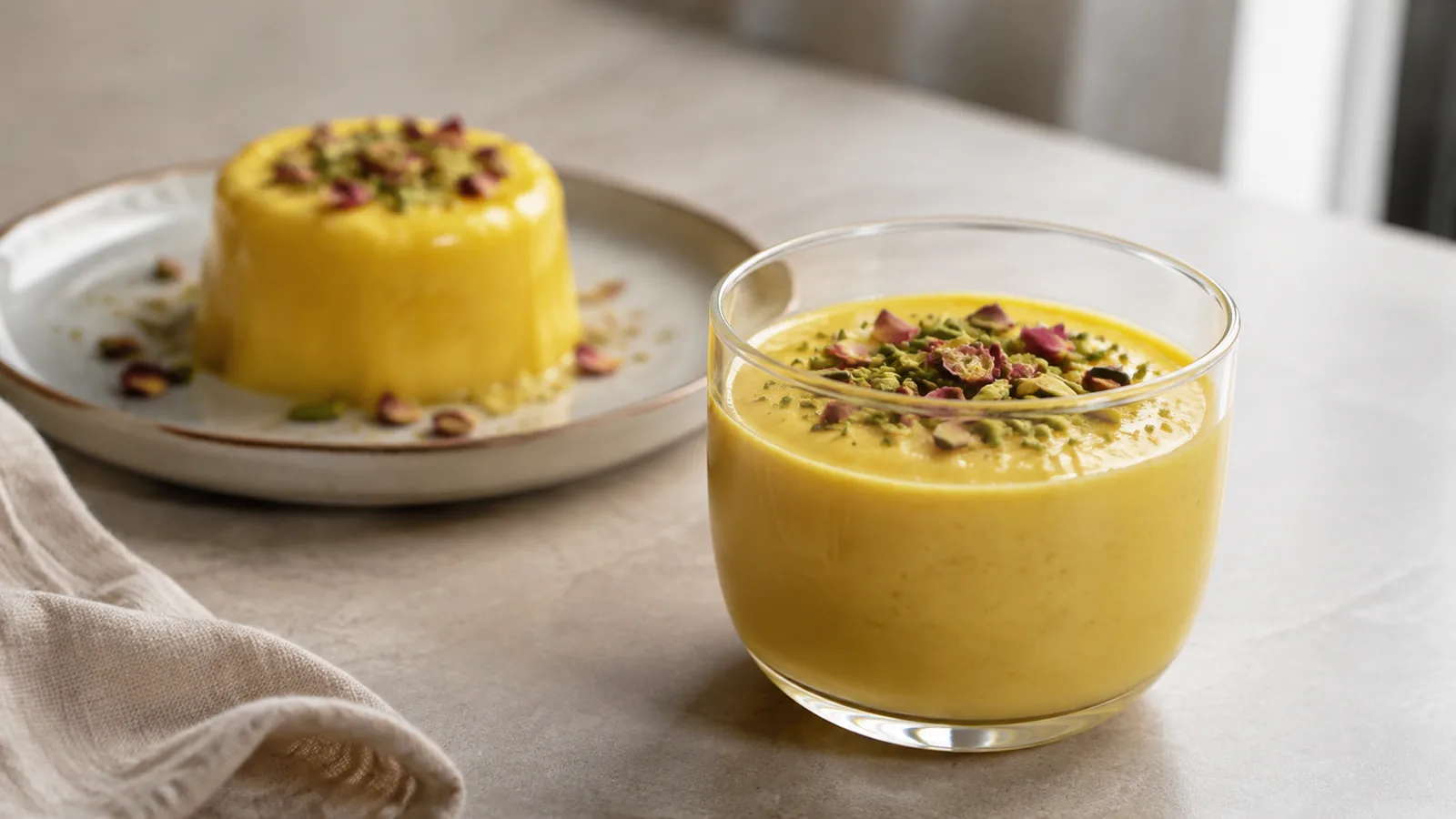
It is often described in English as saffron porridge, although it is not breakfast oatmeal. Kachi is traditionally served on its own in small bowls, sometimes with a cinnamon pattern, chopped pistachios or almonds on top. It thickens as it cools, so stop cooking while it is a little looser than the texture you want at the table.
Saffron kachi with rice flour
Rice flour makes a pale, delicate kachi with a particularly smooth texture. This recipe gives two generous or four small servings.
Ingredients
- 2 cups (480 ml) water
- 8 to 10 tablespoons rice flour
- 50 g unsalted butter or ghee
- 1/2 to 3/4 cup sugar, according to taste
- 1/4 teaspoon saffron threads, lightly ground
- 1/4 to 1/2 cup food-grade rose water
- 1/4 teaspoon ground cardamom, optional
The older, very sweet version uses up to 1 1/4 cups sugar for this amount of water. That ratio is preserved as an option, not a requirement. Start lower unless you know that is the taste you want. Likewise, a full teaspoon of ground saffron makes an unusually strong and costly bowl; a measured quarter teaspoon gives colour and aroma without burying the rose water.
Preparation
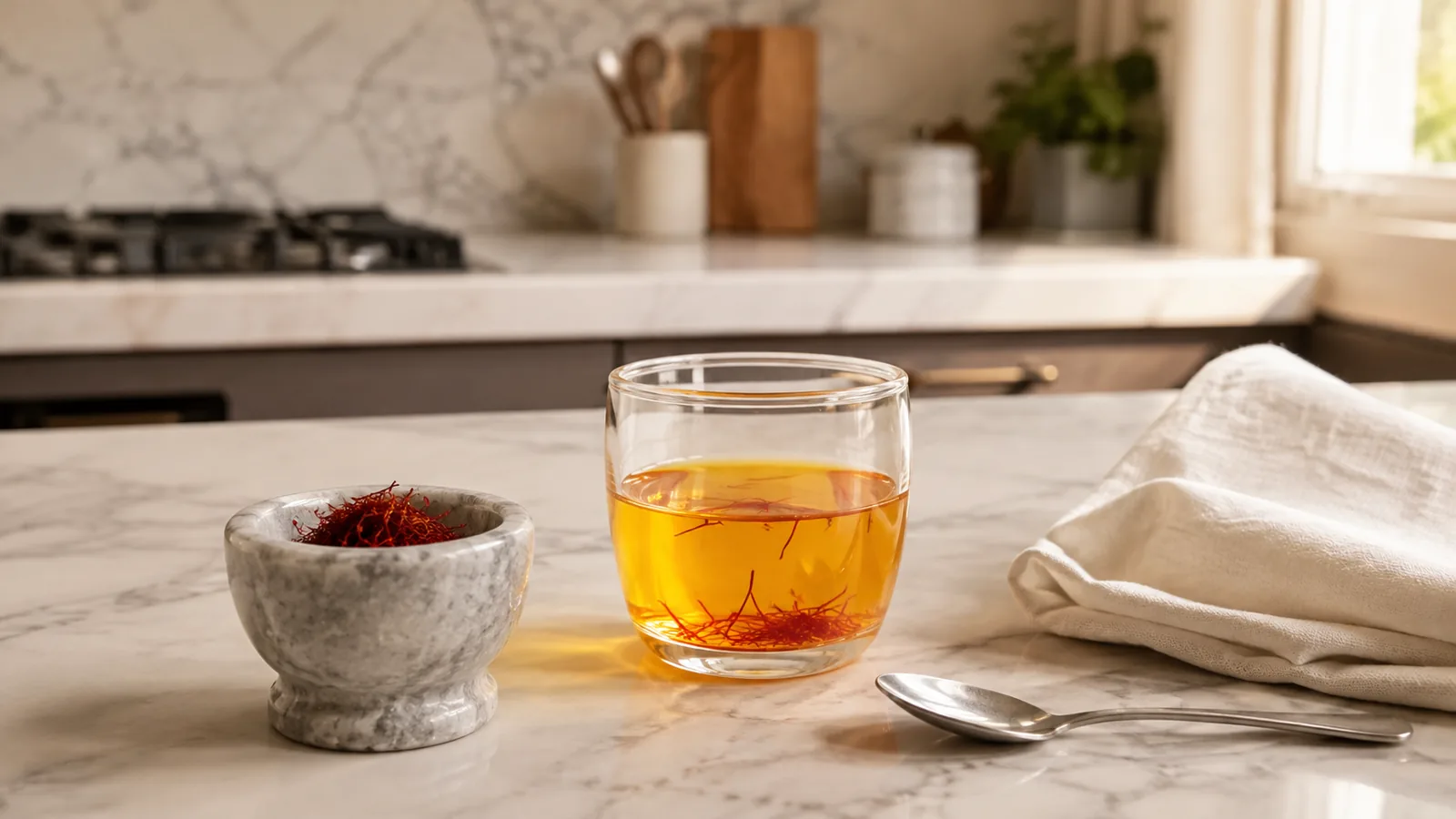
- Cover the ground saffron with 2 tablespoons of hot water and leave it to bloom for 10 minutes.
- Whisk the remaining water, sugar and rice flour together in a bowl until no dry pockets remain. Starting with cool liquid makes the flour easier to disperse.
- Melt the butter in a heavy saucepan over medium-low heat. Add the flour mixture slowly, whisking as it goes into the pan.
- Cook gently for 12 to 18 minutes, stirring across the base and into the corners. The raw flour smell should disappear and the spoon should leave a brief trail.
- Stir in the bloomed saffron, rose water and cardamom. Cook for another 2 minutes, then take the pan off the heat. Add a splash of hot water if it has become firmer than you like.
- Spoon into bowls and serve warm. Let it stand for a few minutes before eating; thick porridge holds heat.
Rice flour is raw food, even though it looks ready to eat. Do not taste the uncooked mixture. The US Food and Drug Administration’s flour guidance explains why complete cooking and careful cleanup matter.
Saffron kachi with white flour
White-flour kachi tastes toastier and is usually a little richer. The separate syrup method is reliable because it lets you brown the flour without trying to dissolve sugar in the same pan.
Ingredients for four servings
- 1 cup plain white flour
- 100 g unsalted butter
- 1/4 to 1/2 cup ghee or clarified butter, optional
- 4 cups (960 ml) water
- 3/4 cup sugar
- 1/4 teaspoon lightly ground saffron threads
- 1/2 cup food-grade rose water
- 1/2 teaspoon each ground cinnamon and cardamom
Preparation
- Warm the water and sugar in one pan just until the sugar dissolves. Stir in the bloomed saffron and rose water, then keep the syrup hot without boiling it hard.
- In a wide, heavy saucepan, cook the dry flour over medium-low heat for 8 to 12 minutes. Stir constantly. It should smell nutty and turn light beige, not brown.
- Add the butter and optional ghee. Stir until the mixture is smooth, then cook for another 3 to 5 minutes.
- Move the pan off the heat. Add the hot saffron syrup a ladle at a time while whisking. It will hiss and tighten at first, so keep your hand away from the steam.
- Return the pan to low heat, add cinnamon and cardamom, cover loosely and cook for 15 to 20 minutes. Stir several times so the base does not catch.
- Adjust with hot water if needed. The finished porridge should flow slowly from the spoon rather than sit as a stiff lump.
Tabrizi-style saffron kachi
For the Tabrizi variation, replace the white flour with whole-wheat flour and add 1/4 to 1/2 teaspoon ground cumin with the cinnamon and cardamom. Whole-wheat flour absorbs liquid differently, so keep a cup of hot water nearby and add only enough to maintain a soft consistency. Cumin should sit in the background; if it is the first aroma you notice, the amount is too high.
Can you make kachi with rock candy?
Yes. Rock candy is crystallized sugar, so it changes the form more than the finished sweetness. Weigh it rather than swapping pieces one for one: use the same weight as the sugar in your chosen recipe, dissolve it fully in the warm water, then proceed with the syrup. Plain rock candy gives you the most control. If it already contains saffron or another flavouring, taste before adding more.
Saffron porridge for menstruation and postpartum meals
Kachi is traditionally associated with menstruation and recovery after childbirth in some families. Warmth, familiarity and an energy-dense serving can make it appealing, but tradition is not proof that the dish regulates a cycle, replaces iron, increases milk supply or speeds postpartum recovery. Butter, ghee and sugar also make it rich; a small bowl may be more comfortable than a large one.
Saffron preparations have been studied for premenstrual syndrome and painful periods. A 2026 systematic review reported favourable pooled results, but the trials used defined preparations and outcomes. They do not establish saffron kachi as a treatment. Severe pain, fainting, unusually heavy bleeding or a major change in the menstrual cycle deserves medical assessment.
Pregnancy and saffron kachi
The old advice that kachi is routinely “recommended” during pregnancy is too broad. Evidence on saffron use in pregnancy remains limited, and culinary use is not the same as a concentrated powder, extract or remedy. A recent review of saffron practices and pregnancy evidence found that the safety picture is still inconclusive and that dose matters. If you are pregnant, keep saffron to an ordinary food amount and discuss frequent use or supplements with your midwife, doctor or pharmacist.
After childbirth, one sweet dish cannot cover the varied food and fluid needs of recovery or breastfeeding. Enjoy it as food if it suits you, but do not use it in place of prescribed iron, medical care or a balanced diet. Anyone managing diabetes or another condition that affects carbohydrate intake should account for the sugar in the serving.
Serving, storing and reheating
- Garnish lightly with cinnamon, pistachio, almond or dried food-grade rose petals.
- If the kachi is too thick, whisk in hot water one tablespoon at a time. If it is thin, cook it uncovered for a few more minutes.
- Refrigerate leftovers in a shallow covered container within 2 hours, following FoodSafety.gov guidance.
- Reheat gently with a splash of water. It will be firmer after chilling.
Once you understand the flour-to-liquid balance, saffron porridge is forgiving. Keep the heat modest, stir where the pan tends to catch and let aroma—not excess saffron—do the work. For another warm saffron preparation with a very different texture, see our saffron milk recipe.