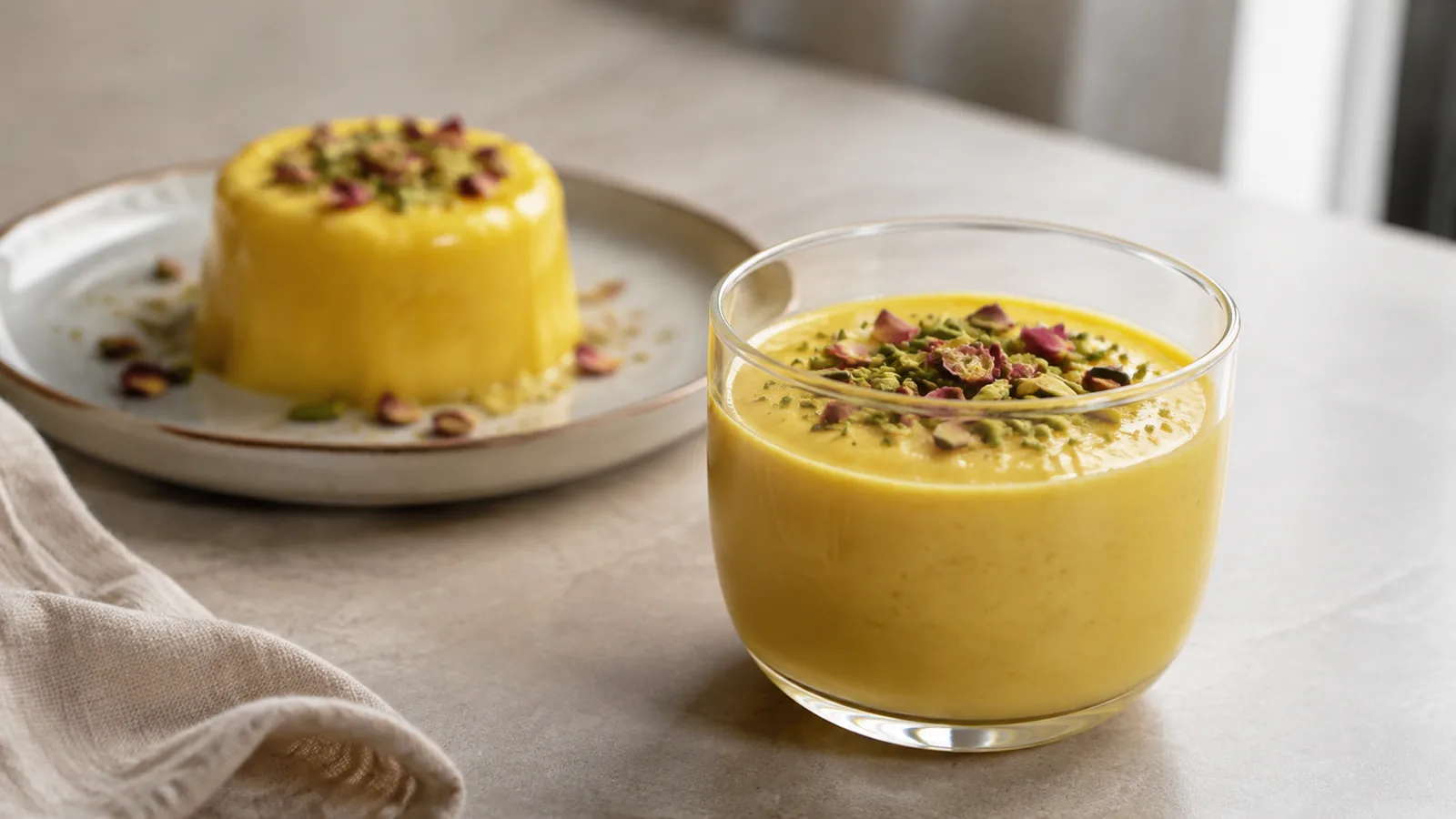
Homemade Saffron Ice Cream for four should taste clearly of saffron and rosewater without becoming sugary or perfumed. This version begins with a traditional salep-and-cream base, then explains how to adapt the same four-person batch when salep, cream or an ice-cream machine is unavailable.

The four-person recipe at a glance
- Makes: about 750 ml, or 4 dessert servings
- Active time: 30 minutes
- Chilling: at least 4 hours
- Final freezing: 3–4 hours
- Main texture: creamy and lightly stretchy, with optional frozen cream flakes
Salep is a strong thickener and different products do not always behave identically. Use food-grade salep from a traceable source and check its label. If the package gives a quantity for 500 ml milk, use that instruction in place of the one-teaspoon starting point below.
Ingredients for traditional saffron ice cream
- 500 ml (2 cups) full-fat milk
- 100 g (1/2 cup) granulated sugar
- 1 teaspoon food-grade salep powder
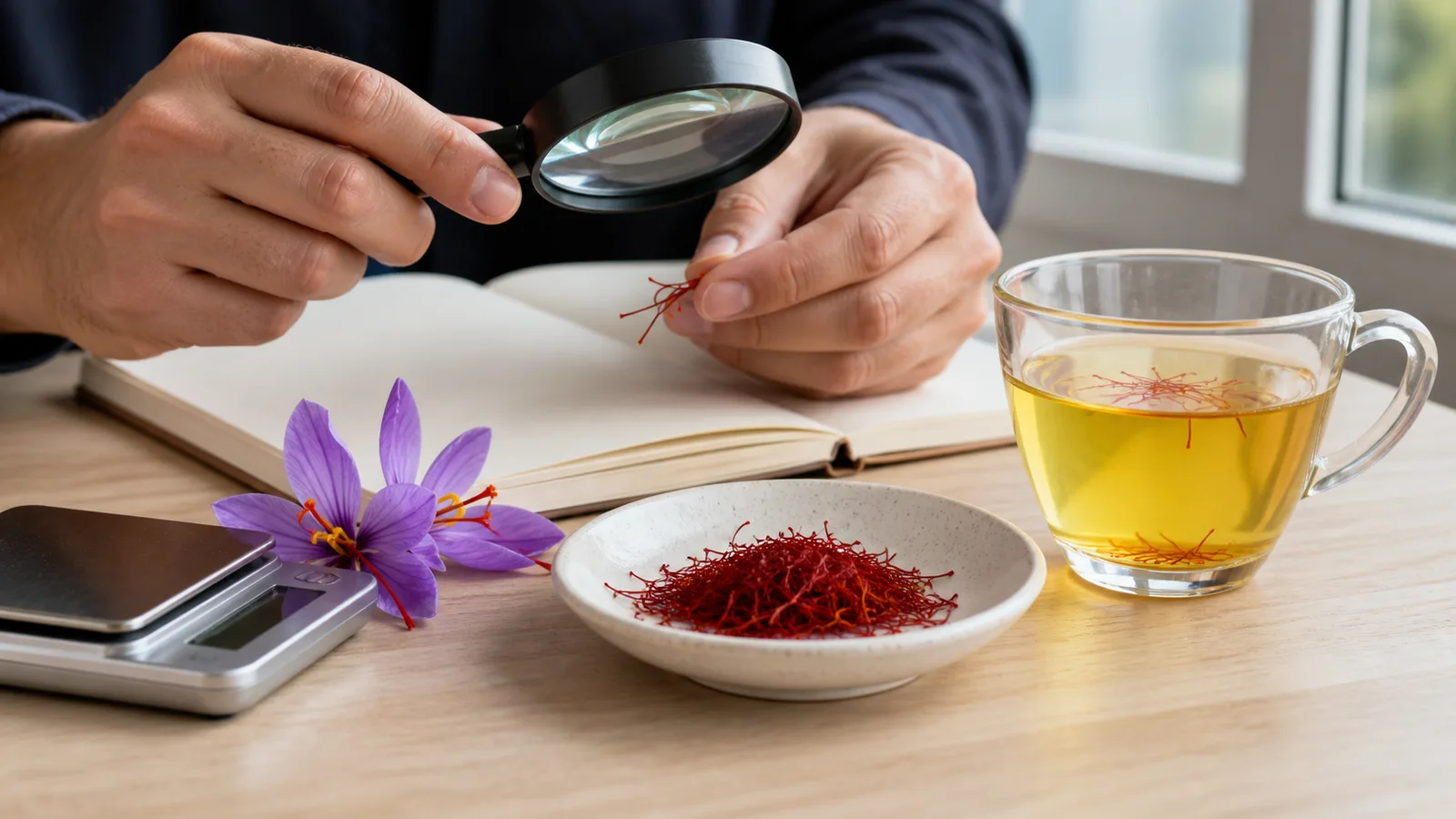
- 1/8 teaspoon saffron threads, about 0.08 g
- 2 tablespoons hot water
- 2 tablespoons rosewater
- 100 g whipping cream with at least 35% fat
- 2 tablespoons slivered pistachios, plus a little for serving
- 1/2 teaspoon vanilla extract, optional
The earlier four-person formula called for four cups of milk, two cups of sugar, half a cup of rosewater and a full teaspoon of saffron. Those quantities produce a much larger, very sweet and strongly perfumed batch. The proportions here are sized for four while retaining the same milk, sugar, salep, cream, saffron, rosewater and pistachio character.
How to make saffron ice cream with salep and cream
1. Make the frozen cream flakes
Whip the cold cream just until it holds soft peaks. Spread it about 3 mm thick on a small tray lined with baking paper, then freeze until firm. Baking paper releases more cleanly than loose plastic film and is easier to keep flat.
Traditional Persian saffron ice cream often includes irregular pieces of frozen cream. They are optional: leave the cream in the liquid base instead if you prefer a uniformly creamy scoop.
2. Bloom the saffron
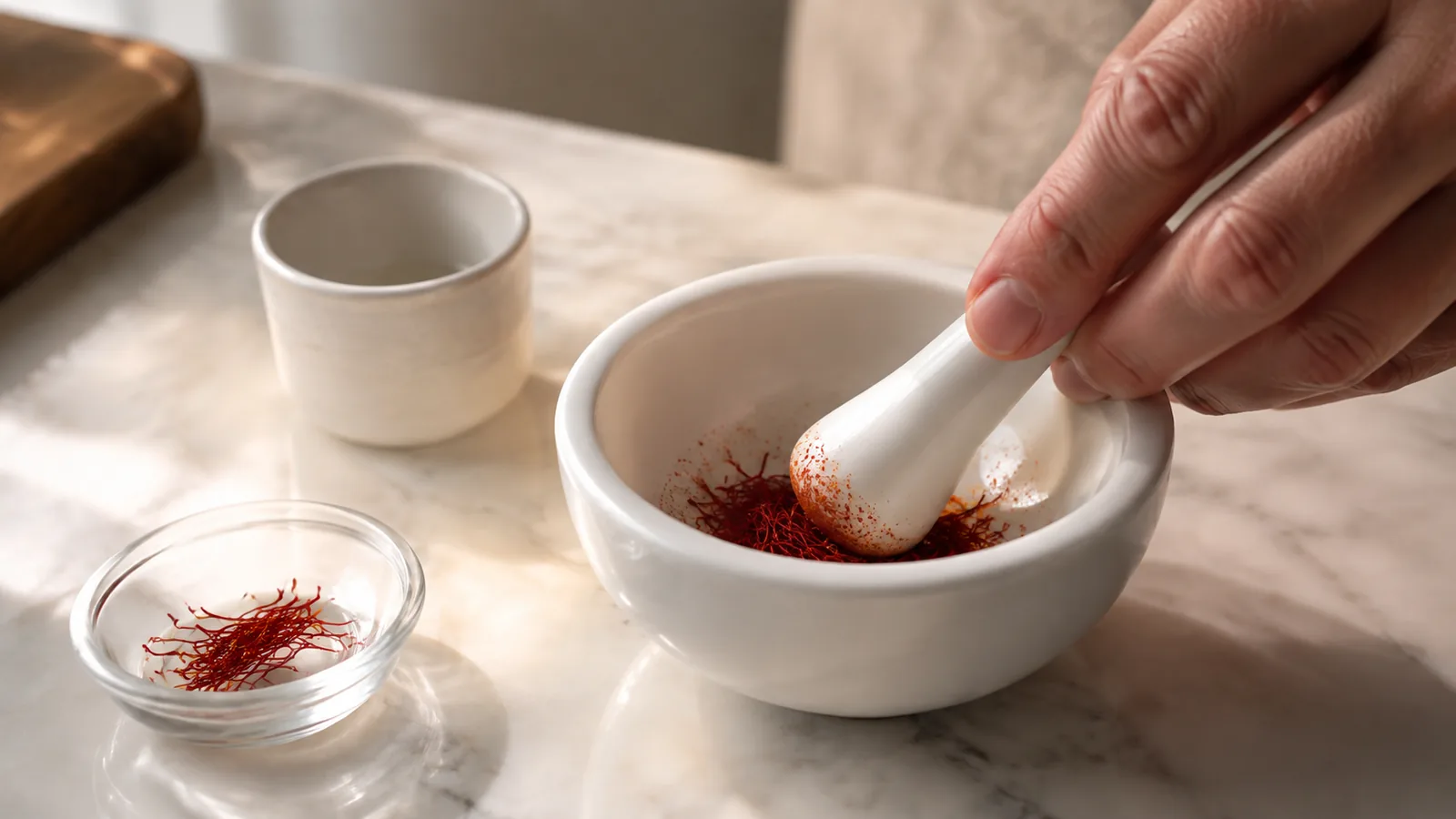
Lightly crush the saffron threads in a clean, dry mortar. Pour over the hot water, cover and leave for 15 minutes. The covered cup gives the colour and aroma time to move into the water before it meets the dairy.
3. Mix the sugar and salep
Whisk the dry sugar and salep together thoroughly. Do not tip salep by itself into hot milk; it can form stubborn gummy lumps before there is time to disperse it.
4. Cook the milk base
Warm the milk in a heavy saucepan over medium heat until steaming. It does not need a hard boil. Add the sugar-and-salep mixture in a slow stream while whisking continuously.
Lower the heat and stir for 5–8 minutes. The base should lightly coat the back of a spoon while remaining pourable. Salep continues to thicken as it cools, so stop before the saucepan resembles pudding.
5. Add saffron and rosewater
Remove the pan from the heat. Stir in the bloomed saffron, rosewater and optional vanilla. Taste a cooled teaspoon before adding anything else; steam can hide rosewater’s intensity, and saffron may look a little paler after freezing.
6. Cool and chill thoroughly
Set the saucepan in a larger bowl of ice water and stir until the base is no longer warm. Transfer it to a covered container and refrigerate for at least 4 hours, preferably overnight. A 30-minute rest is not enough for a warm dairy base to chill evenly.
7. Churn or stir by hand
With a machine, churn according to its instructions until the texture resembles soft serve. Without one, pour the base into a shallow metal container and freeze for 45 minutes. Scrape the frozen edges into the centre and whisk firmly. Repeat every 30–45 minutes for four or five cycles.
Break the frozen cream sheet into small irregular flakes. Fold them and the pistachios through during the final churn or hand-stirring cycle. Cover the surface and freeze for another 3–4 hours.
8. Temper before serving
Move the container to the refrigerator for 15 minutes, or leave it at cool room temperature for 5–10 minutes, before scooping. Homemade ice cream contains less air and fewer stabilisers than many commercial versions, so it can be firm straight from the freezer.
How to make saffron ice cream without salep
A cooked egg-yolk custard replaces salep’s thickening power. For four servings, use 2 egg yolks, 90 g sugar, 250 ml full-fat milk, 200 g whipping cream, two tablespoons bloomed saffron water, two tablespoons rosewater, half a teaspoon vanilla and pistachios.
- Whisk the yolks with the sugar until evenly combined.
- Warm the milk until steaming, then pour it slowly into the yolks while whisking.
- Return the mixture to low heat and stir continuously until it reaches 71°C/160°F and coats the spoon.
- Remove from the heat; stir in the cream, saffron, rosewater and vanilla.
- Cool rapidly, chill for at least 4 hours, then churn or use the hand-stirring method above.
The FDA’s egg-safety guidance recommends cooking foods containing eggs thoroughly. A thermometer is more reliable than judging a custard only by thickness. For a more detailed cooked-custard method, use the separate homemade saffron custard ice cream recipe.
How to make it without cream
For a lighter dairy base, omit the cream and use 600 ml full-fat milk, 3 egg yolks, 100 g sugar, 1/2 teaspoon salep, the same bloomed saffron, two tablespoons rosewater and half a teaspoon vanilla. The old version listed three whole eggs; yolks produce a smoother result and avoid setting visible pieces of egg white in the hot milk.
Whisk the yolks and sugar, temper with the hot milk, then cook to 71°C/160°F while stirring. Whisk in the salep only after first blending it with a spoonful of sugar, and continue over low heat until the base lightly coats the spoon. Add saffron, rosewater and vanilla off the heat. Cool, chill and freeze as directed above.
This version will be less rich and may freeze harder. The repeated hand-stirring cycles matter more when there is no cream to soften the texture.
How to make saffron ice cream with cornstarch
Cornstarch gives body without eggs or salep. It will not create salep’s characteristic stretch, but it makes a useful, cleanly flavoured frozen dessert.
- 500 ml full-fat milk
- 100 g sugar
- 2 tablespoons cornstarch
- 100 g whipping cream
- 2 tablespoons bloomed saffron water
- 2 tablespoons rosewater
- 1/2 teaspoon vanilla
- pistachio slivers as desired
Whisk the cornstarch with 100 ml of the cold milk until completely smooth. Warm the remaining milk with the sugar, then whisk in the slurry. Bring to a gentle bubble and cook for 1 minute while stirring. Remove from the heat, add the cream, saffron, rosewater and vanilla, then cool and chill. Churn or hand-stir, adding the pistachios near the end.
How the four methods differ
The salep version is the closest to stretchy Persian bastani sonnati and works naturally with frozen cream flakes. The egg-yolk version is richer and silkier. The no-cream version has a cleaner milk flavour but freezes firmer, while cornstarch gives a straightforward egg-free base without claiming to reproduce salep’s texture.
Choose one method before shopping rather than combining all four thickeners. Salep, egg yolk, flour and cornstarch do not need to appear in the same saucepan. The former wheat-flour option is absorbed by the smoother egg-custard method; cornstarch is the better neutral choice when the goal is an egg-free alternative.
Troubleshooting homemade saffron ice cream
The base has lumps
Salep or cornstarch was probably added too quickly. Mix salep with sugar before it reaches milk, and dissolve cornstarch in cold liquid. A fine sieve can rescue small cooked lumps before chilling.
The texture is icy
The base may have entered the freezer while warm, or the hand-stirring intervals were missed. Chill it fully, use a shallow container and break up the ice crystals as the edges freeze. Keep the finished container tightly covered.
The flavour is bitter or too floral
Reduce saffron or rosewater in the next batch rather than adding more sugar. One teaspoon of saffron and one cup of rosewater, as suggested in the old cream-free version, would overpower this four-serving quantity.
The cream flakes are hard
Use cream with at least 35% fat, whip only to soft peaks and spread it thinly. Large frozen blocks are difficult to eat; small broken flakes soften quickly in the churned base.
Saffron ice cream and pregnancy
The former claim that a small portion is safe except during the first trimester was not supported and should not be used as medical advice. A dessert made with culinary saffron is also different from a concentrated extract or supplement.
The NHS says not every natural remedy is safe during pregnancy and advises people using herbal remedies to tell their midwife, doctor or pharmacist. If you are pregnant, have been told to avoid saffron or are considering saffron in concentrated form, follow individual clinical advice. The NHS page on medicines and herbal remedies in pregnancy explains that boundary.
A balanced saffron ice cream for four
Good saffron ice cream depends on proportion and temperature more than extravagance. Bloom a measured pinch of saffron, keep rosewater restrained, chill the base completely and give ice crystals time to break down during churning. With those steps in place, four bowls will have a clear saffron aroma, a creamy scoop and enough pistachio and cream texture to feel special without becoming heavy.