Saffron halva is a Persian flour sweet with a deep toasted flavour, a soft but shapeable texture and the unmistakable scent of saffron and rose water. The ingredient list is short. The craft lies in browning the flour evenly, adding the hot syrup without lumps and stopping while the halva is still supple enough to arrange on a plate.
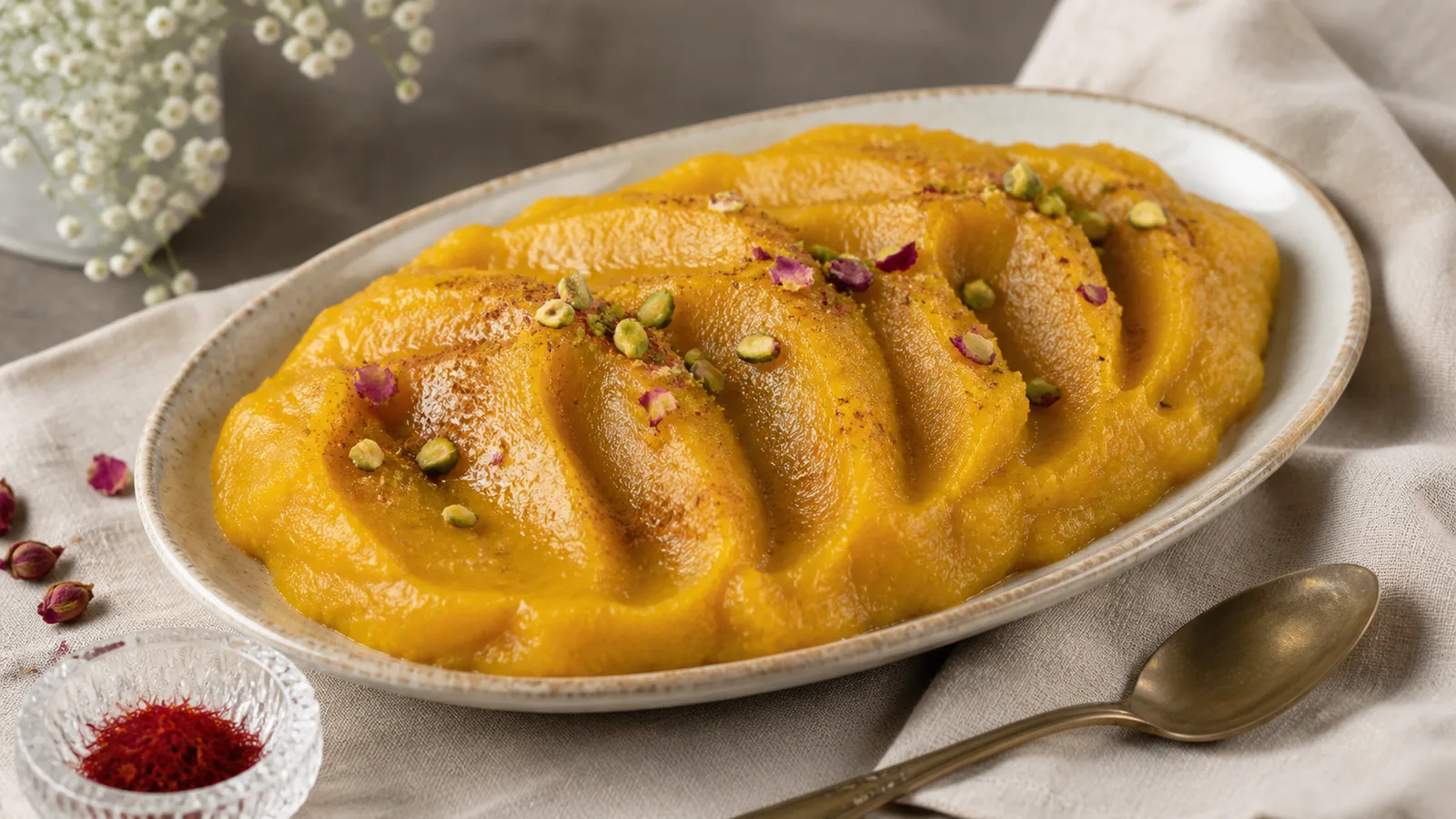
This version uses butter for a rounded flavour, although part or all of it can be replaced with a neutral oil or ghee. It can be served in one large dish, shaped into small portions or pressed into moulds once it is cool enough to handle.
What makes Persian saffron halva different?
Halva is a broad family of sweets, not one universal recipe. Persian flour halva begins with flour toasted in fat, then combines it with a fragrant sugar syrup. That is different from sesame-based halva, which is made with tahini. Saffron gives this version its golden colour and floral depth; rose water supports the aroma rather than making the sweet taste perfumed.
In Iran, flour halva appears at family gatherings, religious occasions and memorial tables, but it is also made simply because someone enjoys it. The presentation changes with the occasion. Some cooks spread it on a platter and decorate it with a spoon; others pipe it, roll it or serve it in small dishes with nuts.
Saffron halva ingredients
This saffron halva recipe makes about eight small servings.
- 1 cup (125 g) all-purpose flour
- 1/2 cup (113 g) unsalted butter, ghee or a butter-and-neutral-oil mixture
- 3/4 to 1 cup sugar
- 1 1/4 cups water, plus more only if a softer halva is wanted
- 1/4 teaspoon saffron threads, lightly ground
- 2 tablespoons hot water for blooming the saffron
- 1 tablespoon food-grade rose water
- 1/4 teaspoon ground cardamom, optional
- 1/4 cup chopped pistachios, almonds or walnuts, optional
An older version of this recipe called for “2 tablespoons of saffron steeped in water.” That should mean two tablespoons of prepared saffron infusion, not two tablespoons of dry threads. The latter would be wasteful, overpoweringly bitter and far beyond what this batch needs. The original two-cup water amount makes a much softer, pudding-like halva; keep extra hot water ready and add it only if that is the consistency you prefer.
How to make saffron halva
1. Bloom the saffron
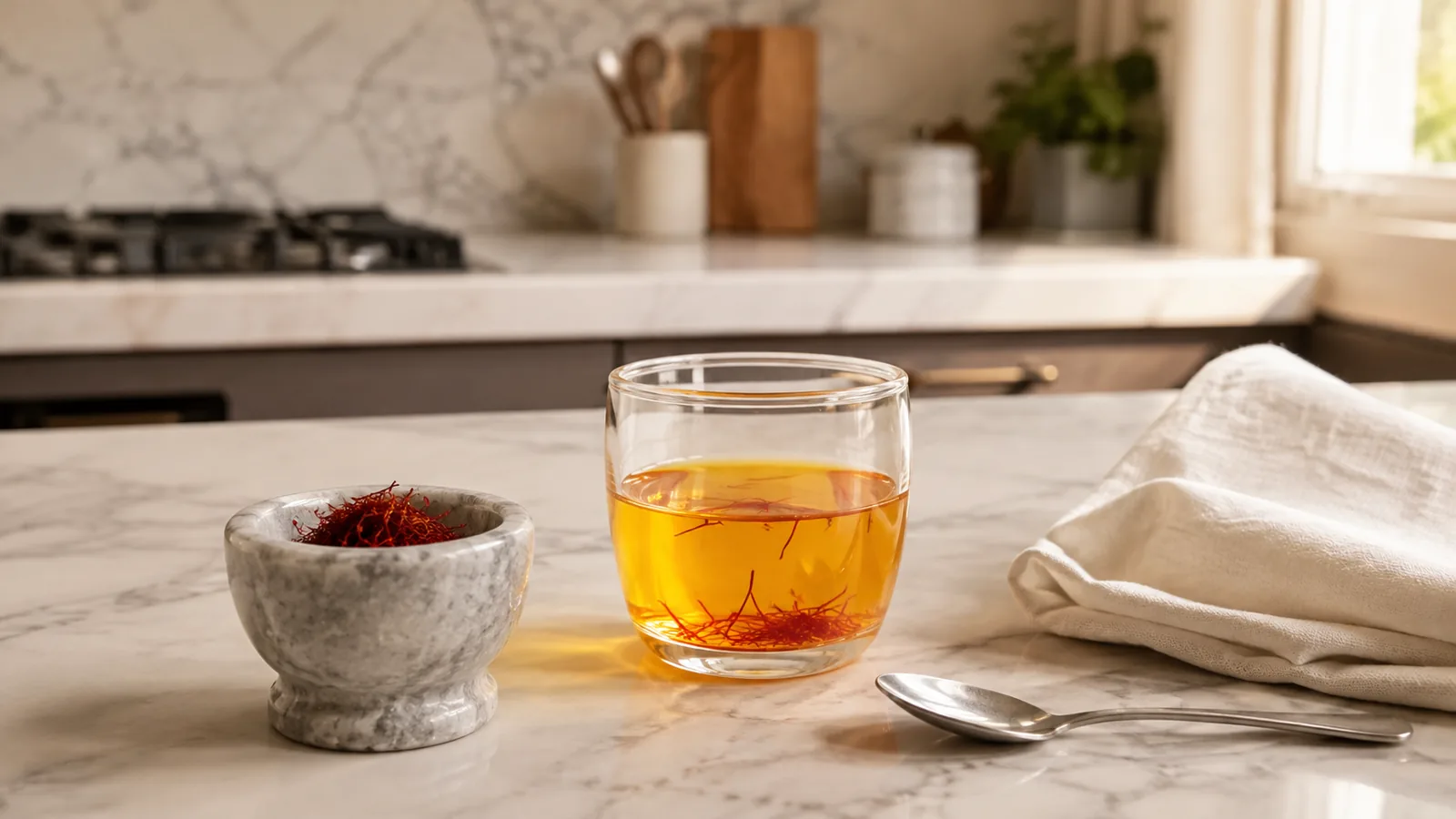
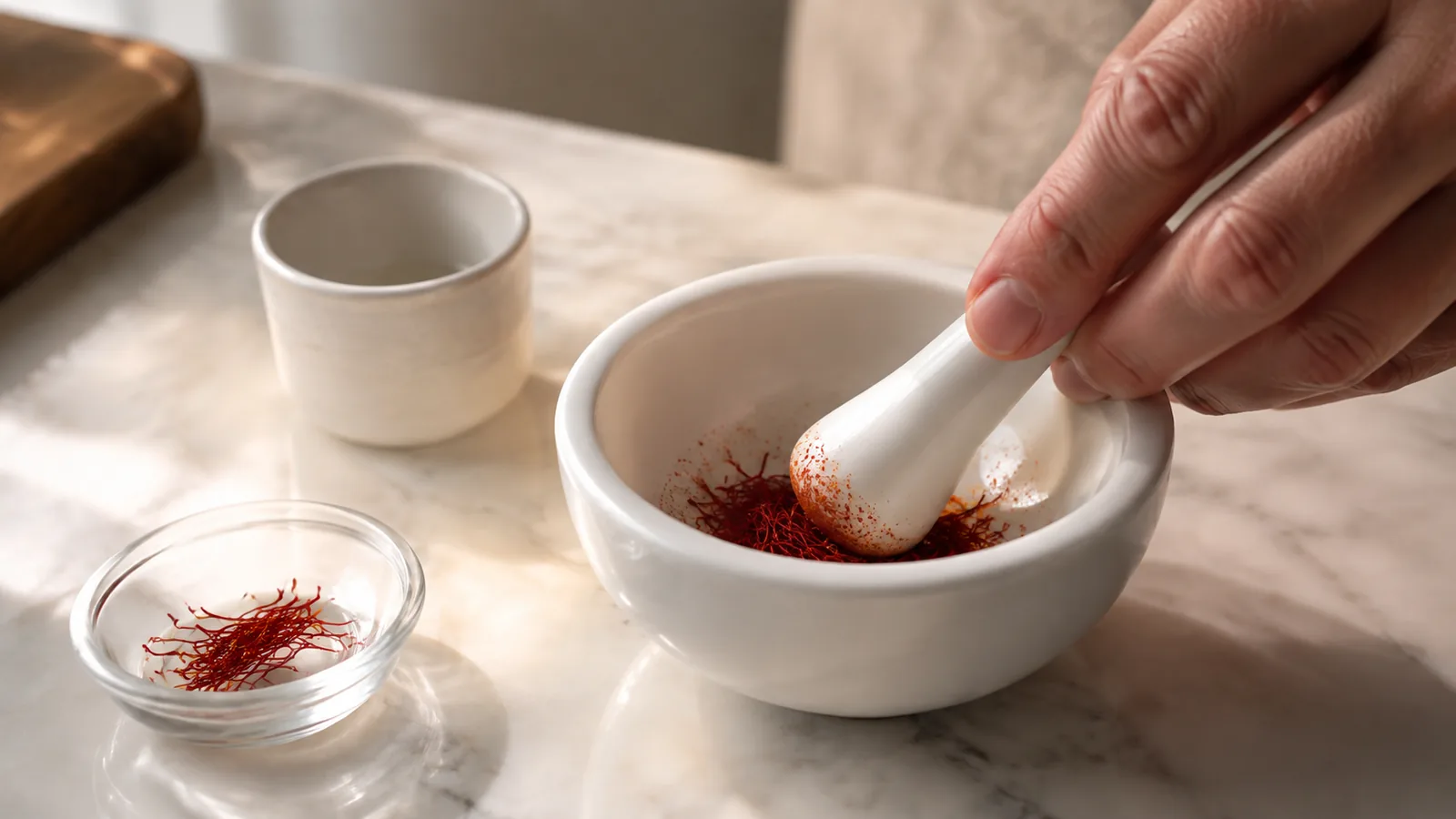
Put the lightly ground threads in a small cup, add 2 tablespoons hot water, cover and leave for 10 to 15 minutes. Blooming distributes the colour and aroma more evenly than dropping dry saffron into the finished mixture.
2. Make the syrup
Combine 1 1/4 cups water and the sugar in a saucepan. Warm gently, stirring until the crystals dissolve. It does not need to boil for long or become a thick candy syrup. Turn off the heat, then add the saffron infusion, rose water and cardamom. Keep the syrup hot.
3. Toast the flour
Sift the flour into a wide, heavy pan. Cook it dry over medium-low heat for 10 to 15 minutes, stirring continuously and scraping the corners. It should smell nutty and change from white to light beige. A dark brown flour makes a deeper halva but can cover saffron’s colour and aroma.
Flour is a raw food and should not be tasted at this stage. The US Food and Drug Administration advises cooking flour fully and cleaning hands, utensils and work surfaces after handling it.
4. Add the fat
Add the butter or fat carefully. Stir for another 4 to 6 minutes until every trace of dry flour is gone and the mixture looks smooth. Keep the heat moderate; scorched flour cannot be rescued by extra rose water or saffron.
5. Bring the halva together
Move the flour pan off the heat. Add the hot syrup in three or four portions, whisking or stirring firmly after each one. The mixture will steam and tighten quickly. Return it to low heat and stir for 5 to 10 minutes, until it pulls from the sides and moves as one soft mass when the pan is tilted.
For soft, pudding-like halva, add more of the reserved hot water and stop before it forms a mass. For a shapeable finish, keep stirring for another minute or two. Remember that it firms further as it cools.
6. Shape and serve
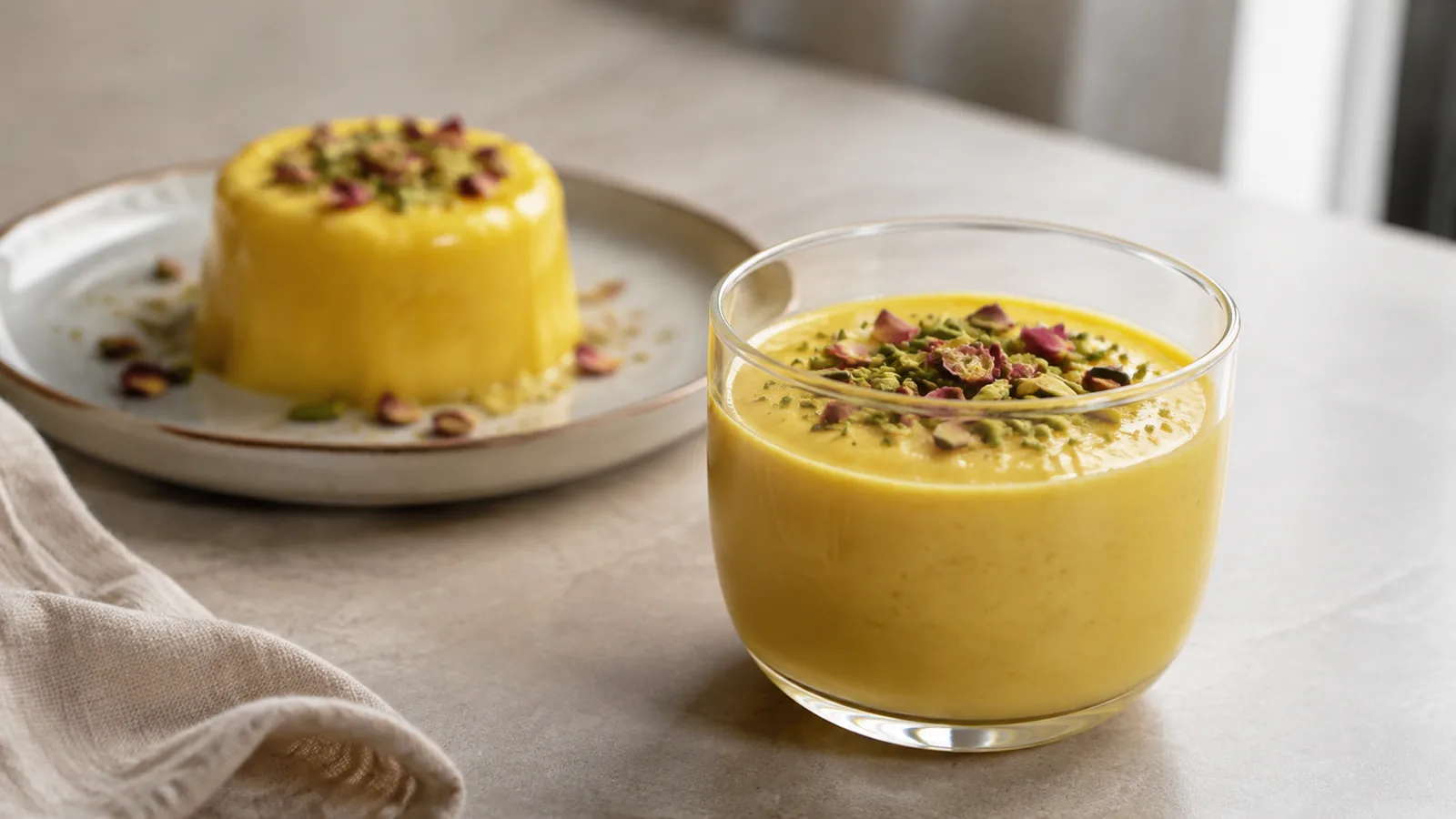
Spoon the halva onto a plate while warm. Smooth it with the back of an oiled spoon, or make a simple ridged pattern around the edge. Add chopped nuts sparingly so the saffron remains visible. Let it cool before serving; the dense mixture holds heat longer than its surface suggests.
Troubleshooting the texture
- Lumpy: the syrup probably went in too quickly. Remove the pan from the heat and press the mixture firmly with a whisk before cooking again.
- Greasy: keep stirring over low heat. If fat still pools after a few minutes, work in a small amount of sifted, separately toasted flour.
- Dry or crumbly: add hot water one tablespoon at a time. Cold water can make the mixture seize unevenly.
- Too loose: cook uncovered over low heat, stirring constantly. It may only need two more minutes.
- Bitter: either the flour scorched or the saffron amount was excessive. Neither is fixed by adding more sugar; begin again with gentler heat.
Halva benefits and health claims
Questions about halva health benefits need a careful answer. The most defensible halva benefits are culinary and practical: it is aromatic, energy-dense and easy to divide into small servings. Flour, butter, sugar and nuts each contribute nutrients, but the finished sweet is not a treatment. Adding saffron does not make the sugar and fat disappear, and a dessert-sized amount cannot be assumed to reproduce results from standardized saffron extracts used in clinical research.
Antioxidant and anti-inflammatory claims
Saffron contains compounds studied for antioxidant and anti-inflammatory activity. That laboratory description does not show that a serving of saffron halva relieves arthritis, prevents oxidative damage or treats an inflammatory condition. The recipe is best understood as food, not a way to dose those compounds.
Mood and depression
Saffron has also been examined in mood trials. A recent GRADE-assessed review found moderate-certainty evidence for improvement on some self-reported depression and anxiety scales, while several clinician-rated outcomes were not significant and results varied. Those studies used controlled preparations over time; they do not prove that halva treats depression. Persistent low mood or anxiety warrants qualified care.
Memory, cognitive decline and skin
Claims that saffron halva boosts memory, prevents cognitive decline, clears acne or improves skin are not established by eating this dessert. These are different outcomes that require different human studies, preparations and doses. A colourful ingredient and an antioxidant label are not substitutes for that evidence.
Saffron in Persian sweets
Saffron appears across Persian desserts because a small quantity can colour and perfume a whole batch. Saffron ice cream uses it in a cold dairy base; saffron rice pudding carries it in a soft grain texture; halva places it against toasted flour and fat. That contrast is why the same spice feels different in each sweet.
Rose water and saffron are sometimes described as symbols of luxury, warmth or hospitality. In the kitchen, their more useful role is sensory: together they make modest pantry ingredients feel ceremonial. Restraint matters. If either perfume dominates, the flour’s toasted flavour disappears.
Storage
Cover the cooled halva and refrigerate it if it will not be eaten the same day, especially when it contains butter. Bring it toward room temperature before serving so the texture softens and the aroma returns. For another Persian flour-and-saffron preparation with a spoonable consistency, compare our saffron kachi recipe. The site’s Iranian saffron egg halva is a separate style rather than a direct substitute for this flour method.