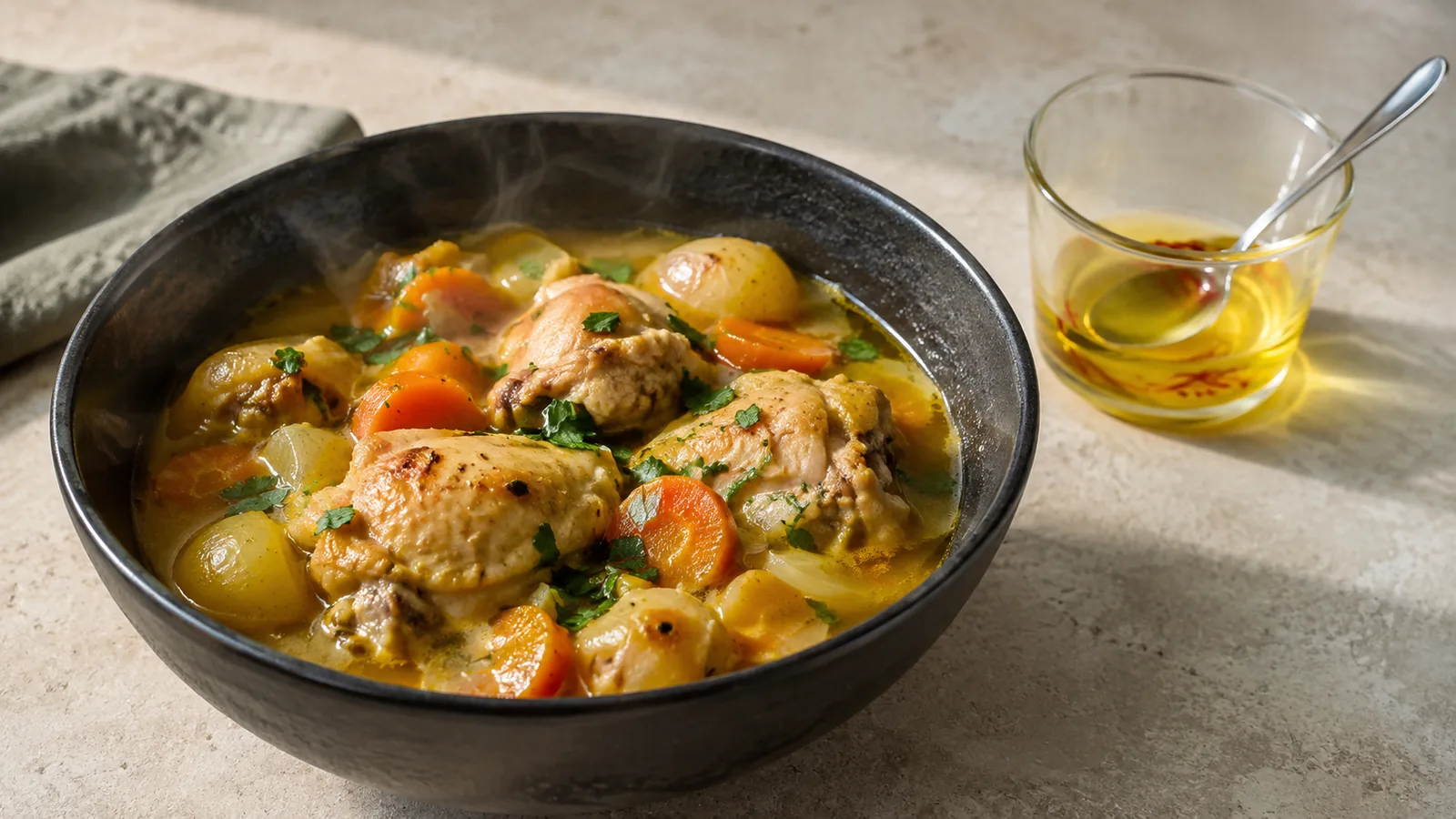
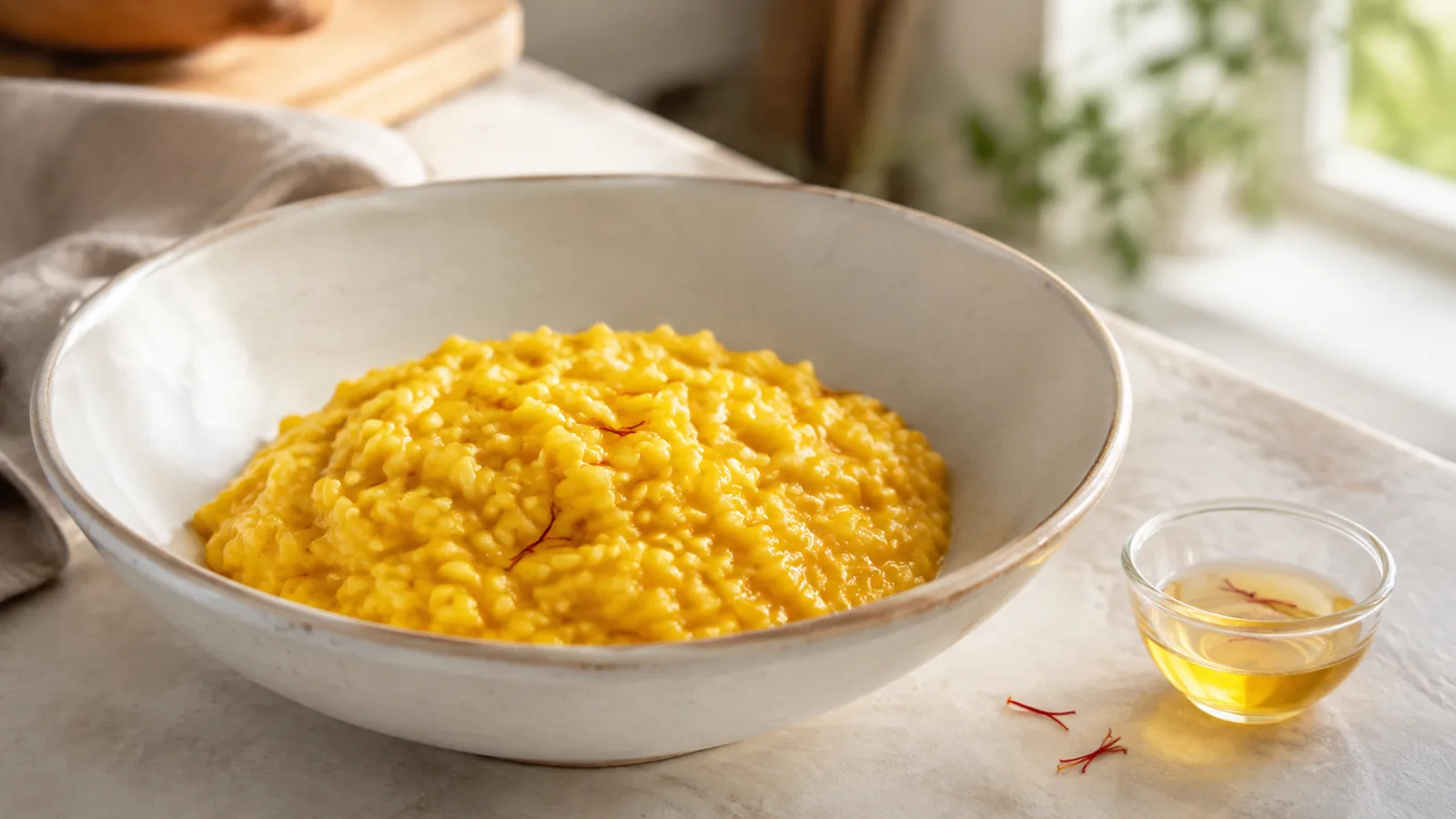
Egg halva is a soft Iranian rice-flour dessert enriched with egg yolks, saffron, rosewater and cardamom. It is richer and more custard-like than ordinary flour halva, yet it still has the roasted aroma and mouldable finish that make Persian halva so distinctive.
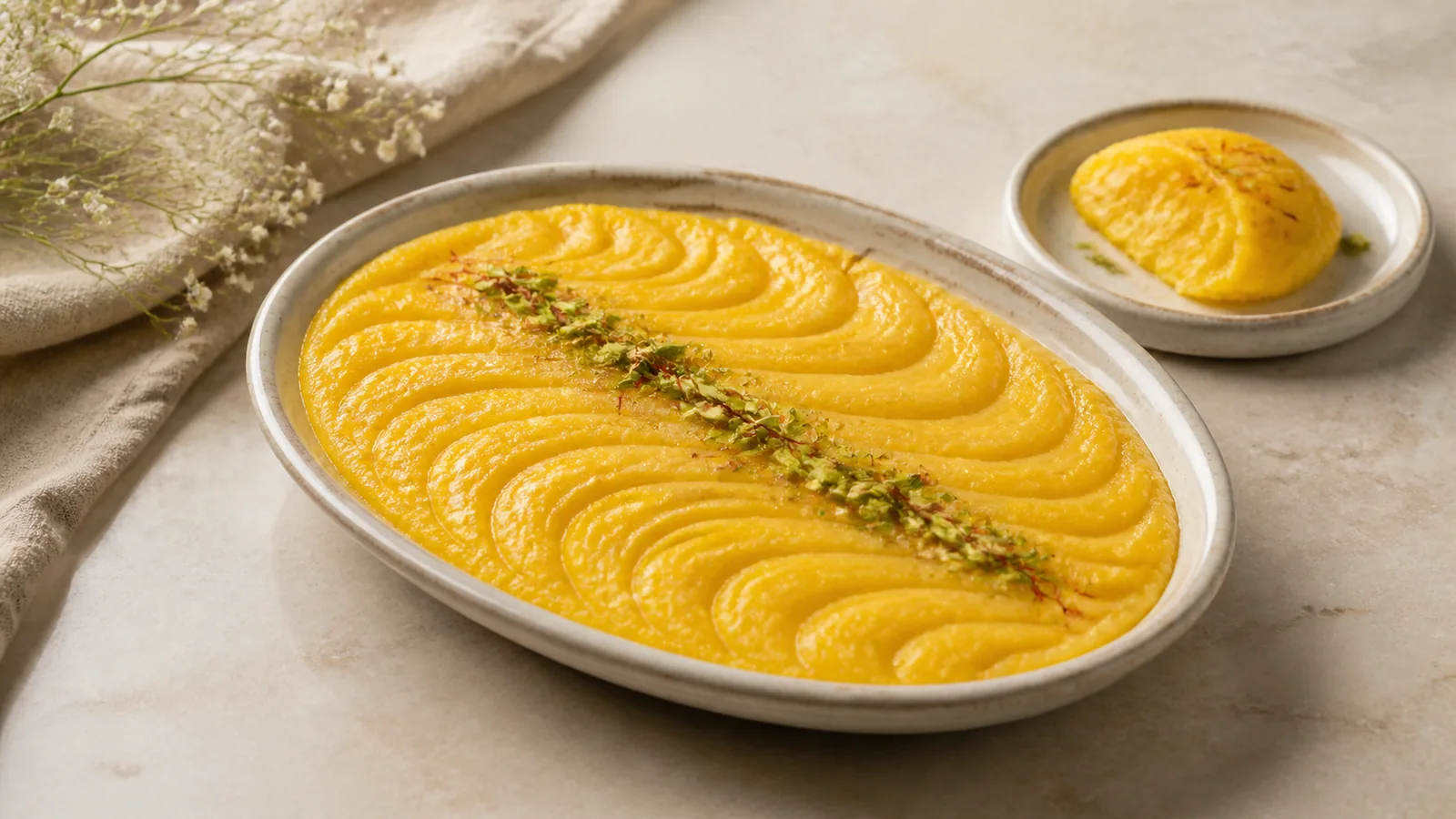
The critical step is adding the yolk mixture to the toasted flour without scrambling it or splashing hot oil. Take the pan off the heat, work gradually and then return the halva to low heat until the eggs are fully cooked.
Egg halva ingredients for eight servings
- 2 cups fine rice flour
- 2 cups granulated sugar
- 1 cup neutral oil
- 6 large egg yolks
- 1 tablespoon concentrated brewed saffron
- 1 cup rosewater
- 1/4 teaspoon ground cardamom, or to taste
- Slivered pistachios, for decorating
This is the original full-sweet formula. It produces a substantial dessert, so serve it in small portions. Use a neutral oil without a strong aroma; the saffron, rosewater and toasted rice flour should lead the flavour.
Choosing or making rice flour
Finely milled shop-bought rice flour is the simplest choice. Sift it before cooking and break up every lump.
The traditional preparation in the original recipe starts with whole rice. Wash it, soak it in warm water for five to six hours, drain thoroughly and spread it in a thin layer on a clean cotton cloth. The rice must become completely dry before grinding. Damp rice can clump, spoil in storage and may not be suitable for an ordinary home mill.
Grind dried rice finely, sift it, then regrind the coarse particles. Measure the finished flour, not the whole rice before processing, because its volume changes after milling.
How to make egg halva with saffron
1. Prepare the saffron and the serving dish
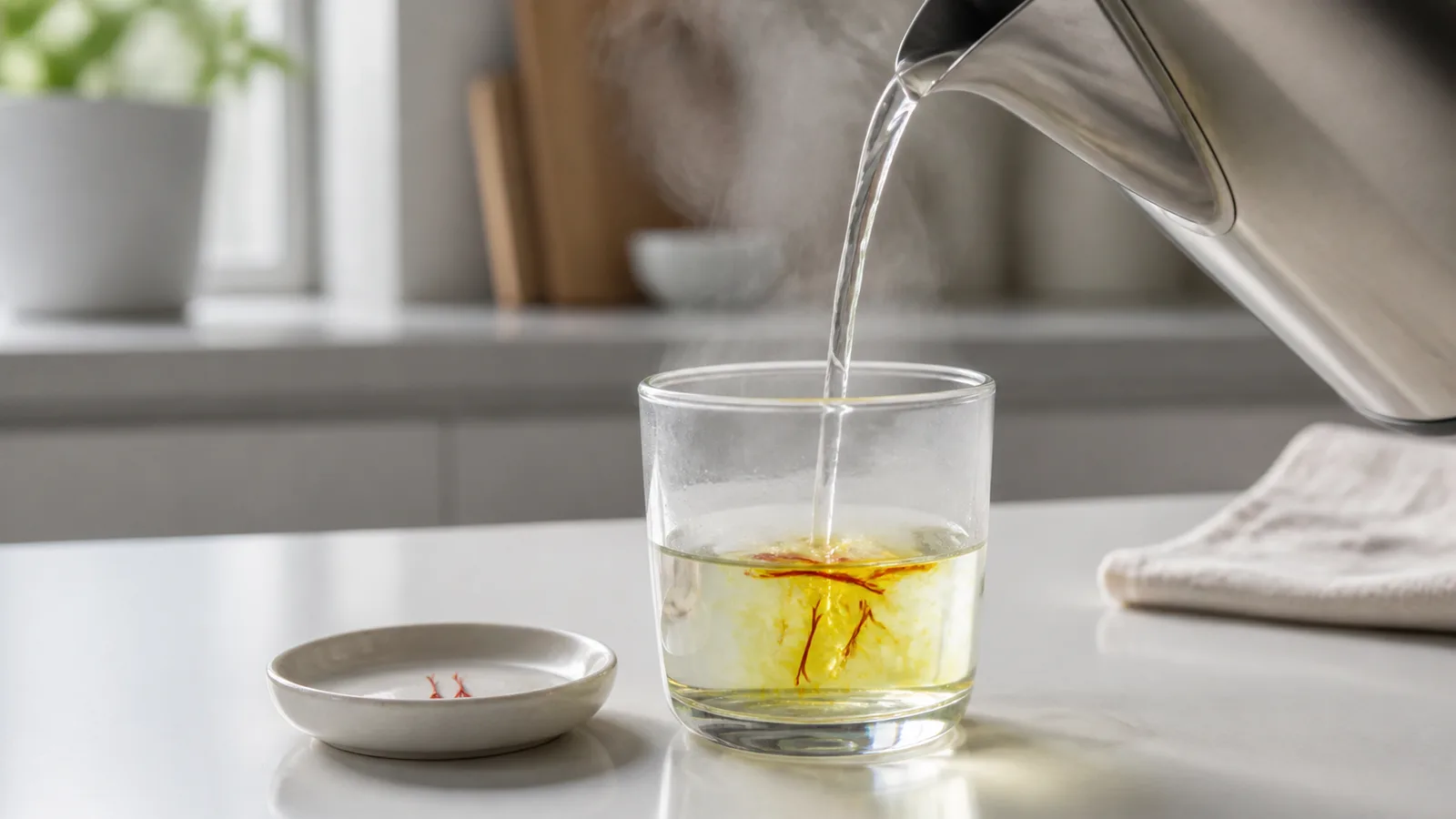
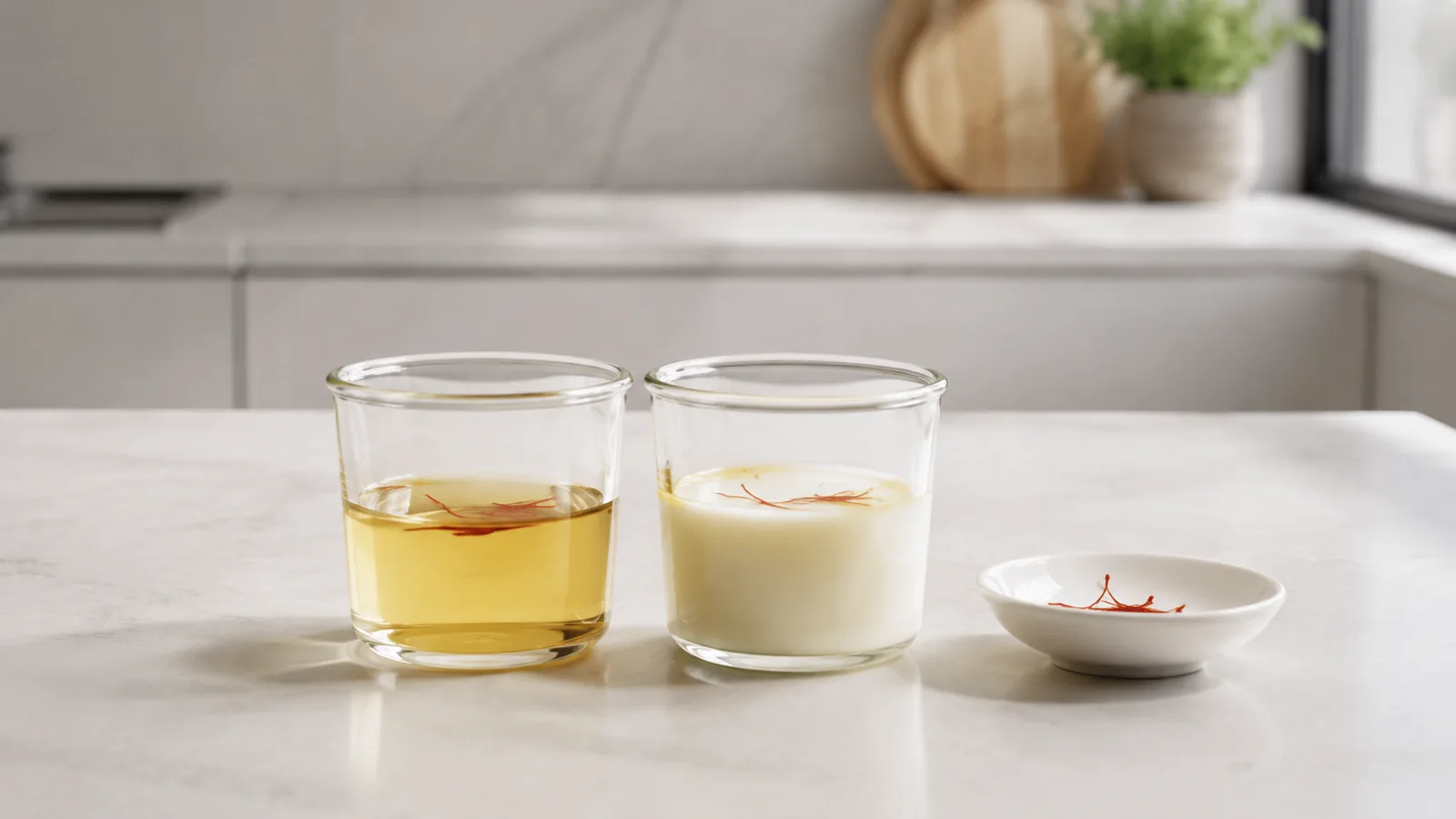
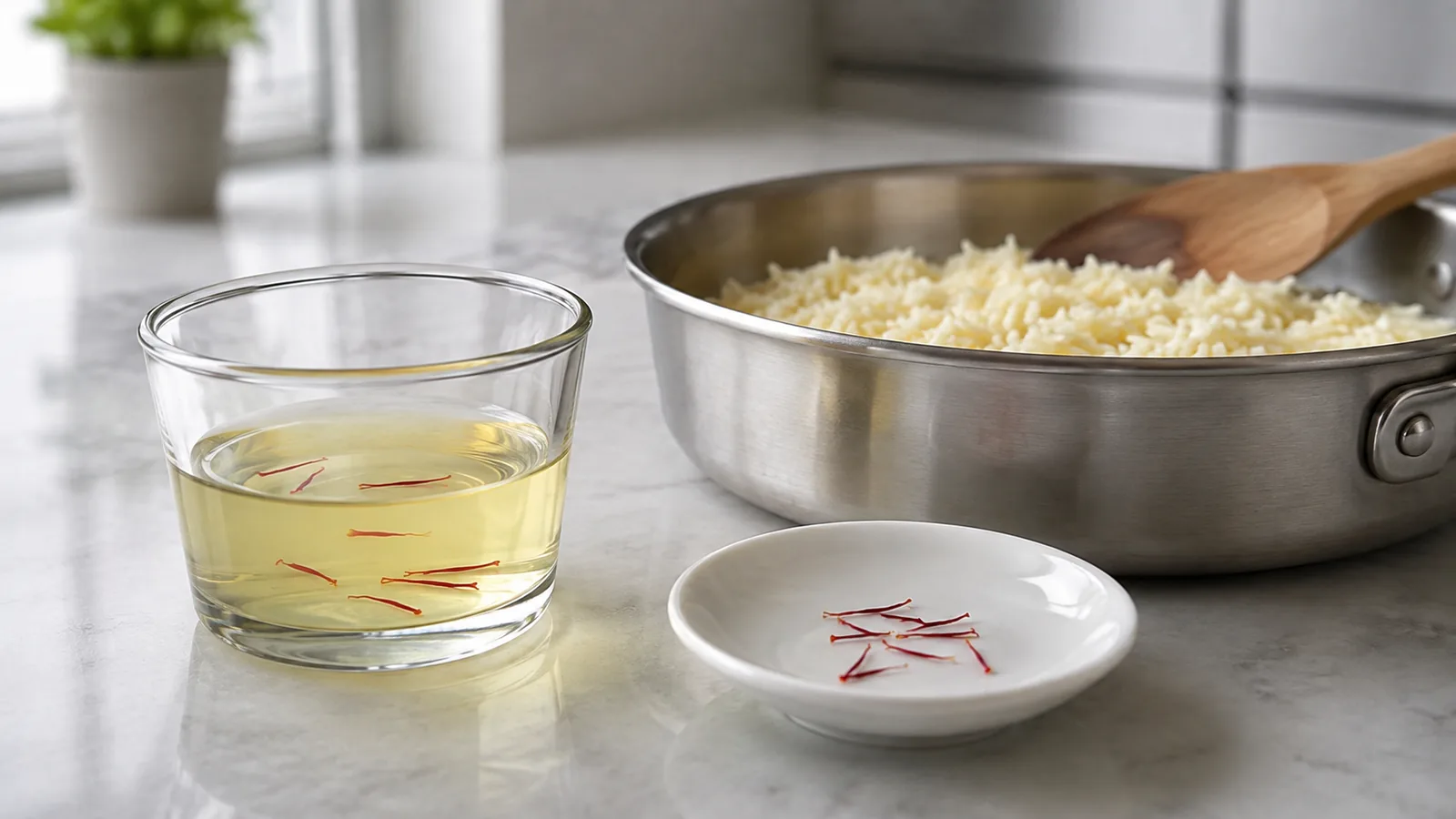
Brew the saffron into a strong, low-volume infusion. Lightly oil a shallow serving dish and place the pistachio slivers nearby. Once the halva reaches its final texture, it firms quickly.
2. Beat the yolks and sugar
Put the six yolks and sugar in a large bowl. Beat for four to five minutes until the mixture is pale, creamy and noticeably thicker. Add the cardamom and brewed saffron.
Pour in the rosewater gradually while mixing on low speed. The mixture will loosen. Scrape the bowl so no dense yolk remains at the bottom, then set it beside the stove.
3. Toast the rice flour in oil
Warm the oil in a wide, heavy saucepan over medium-low heat. Add the sifted rice flour and stir continuously with a flat-edged spoon.
Cook until the flour loses its raw aroma and changes from white to pale cream or light gold. Rice flour darkens more subtly than wheat flour, so use aroma and texture as well as colour. This usually takes 10–15 minutes over gentle heat.
4. Add the egg mixture safely
Remove the saucepan from the burner and let the bubbling settle for one or two minutes. Add the yolk mixture in four or five small additions, stirring each one completely into the flour before adding the next.
The pan may steam strongly when the rosewater mixture meets the hot flour and oil. Keep your face and hands back, use a long spoon and never pour all the liquid in at once.
5. Cook until smooth and safe
Return the pan to low heat and stir constantly, reaching into the corners. At first the halva may look loose or slightly separated. As the egg cooks and water evaporates, it becomes glossy and gathers into one soft mass.
Cook until the centre reaches 71°C/160°F, the safe temperature listed for egg dishes in the United States government’s minimum-temperature chart. Check the thickest part without letting the thermometer touch the pan.
Stop when the halva pulls cleanly from the sides and a faint film of oil appears around the mass. The older instruction “until the halva falls into the oil” refers to this release; it does not mean the dessert should sit in a pool of oil.
6. Shape and decorate
Spoon the hot egg halva into the prepared dish and smooth it with the back of an oiled spoon. While it is still warm, draw a simple pattern across the surface and add slivered pistachios.
Let it cool until warm or room temperature before serving. The texture will become firmer as it stands, but it should remain soft rather than crumbly.
How to avoid scrambled egg in the halva
- Beat the yolks and sugar until the sugar is evenly dispersed.
- Remove the flour-and-oil pan from direct heat before adding liquid.
- Wait until violent bubbling has stopped.
- Add the yolk mixture in several small portions.
- Stir continuously and use low heat for the final cooking.
If you see a few small yolk flecks, press the warm halva through a coarse sieve before it sets. Large curds usually mean the flour base was too hot or the liquid was added too quickly.
Why is the halva oily?
A little oil release at the end is normal. A large puddle can come from undercooked flour, insufficient mixing or continuing to fry after the mass had already come together. Remove the pan as soon as the halva is cooked, glossy and leaving the sides cleanly.
If your rice flour absorbs less than the full cup, hold back 2 tablespoons of oil at the beginning. Add them only if the flour mixture looks dry while toasting. That small adjustment respects differences between rice flours without changing the dessert’s character.
Why is the egg halva grainy?
Coarse rice flour, undissolved sugar or scrambled yolk can all produce graininess. Fine flour and patient beating help. Do not expect the elastic smoothness of wheat-flour halva; rice flour naturally gives a more delicate, slightly sandy finish.
Serving and storage
Serve egg halva in small pieces or spoonfuls as dessert. Its richness also suits iftar during Ramadan, accompanied by unsweetened tea.
Because this halva contains cooked egg, do not treat it like a shelf-stable dry sweet. Cool it promptly, cover and refrigerate. Serve within three days. FoodSafety.gov’s chilling guidance says perishable food should be refrigerated within two hours, or within one hour above 32°C/90°F.
The finished halva should taste rounded rather than perfumed: toasted rice first, then saffron, rosewater and a quiet trace of cardamom. Pistachios add colour and a clean nutty finish without making the dessert heavier.