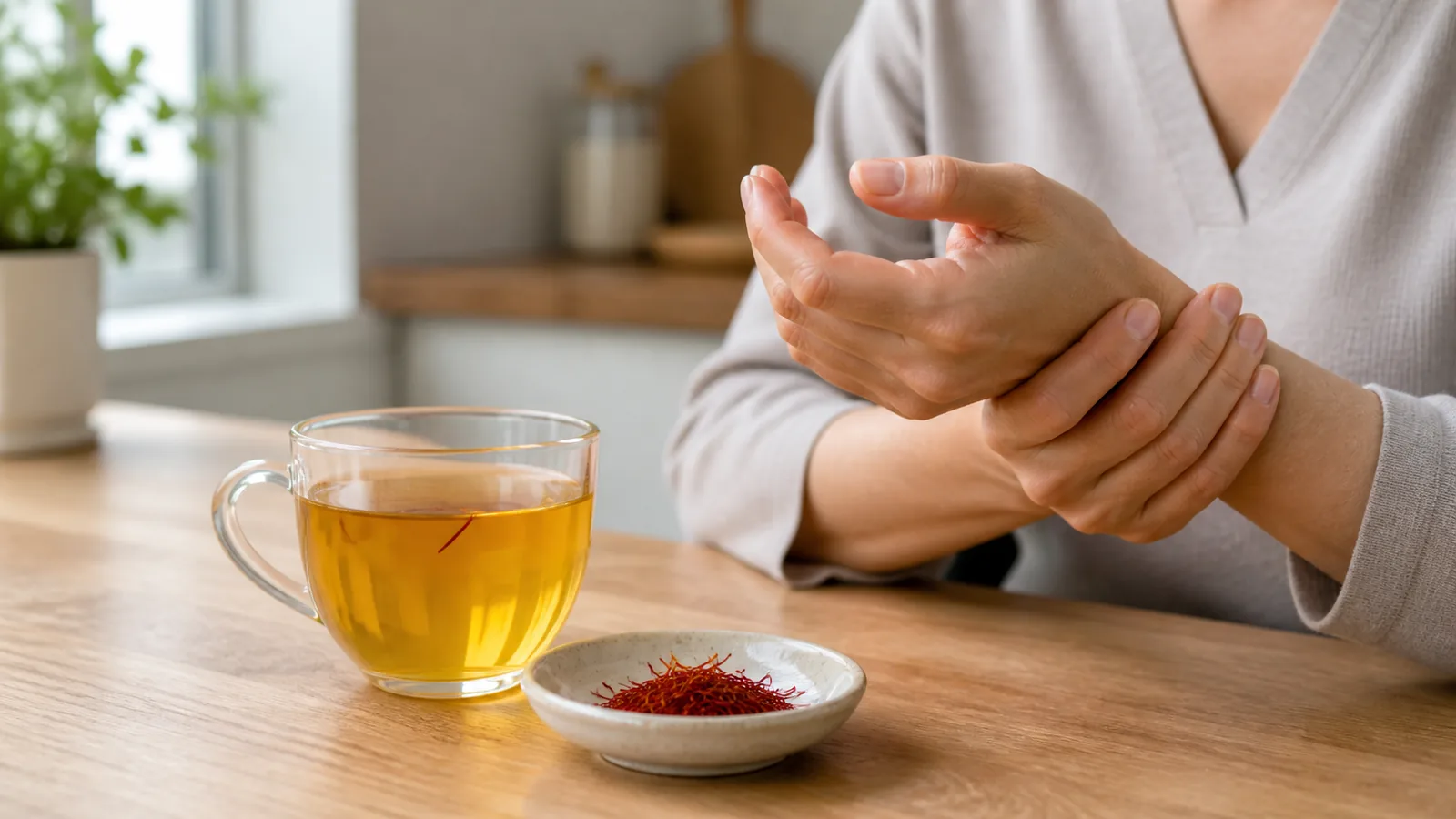
Saffron for cancer treatment is not an established therapy. Saffron, crocin and crocetin can affect cancer cells in laboratory experiments, which gives researchers useful leads. Those experiments have not shown that eating saffron or taking a supplement can shrink a tumour, prevent cancer from spreading or replace surgery, radiotherapy, immunotherapy, hormone therapy or chemotherapy.
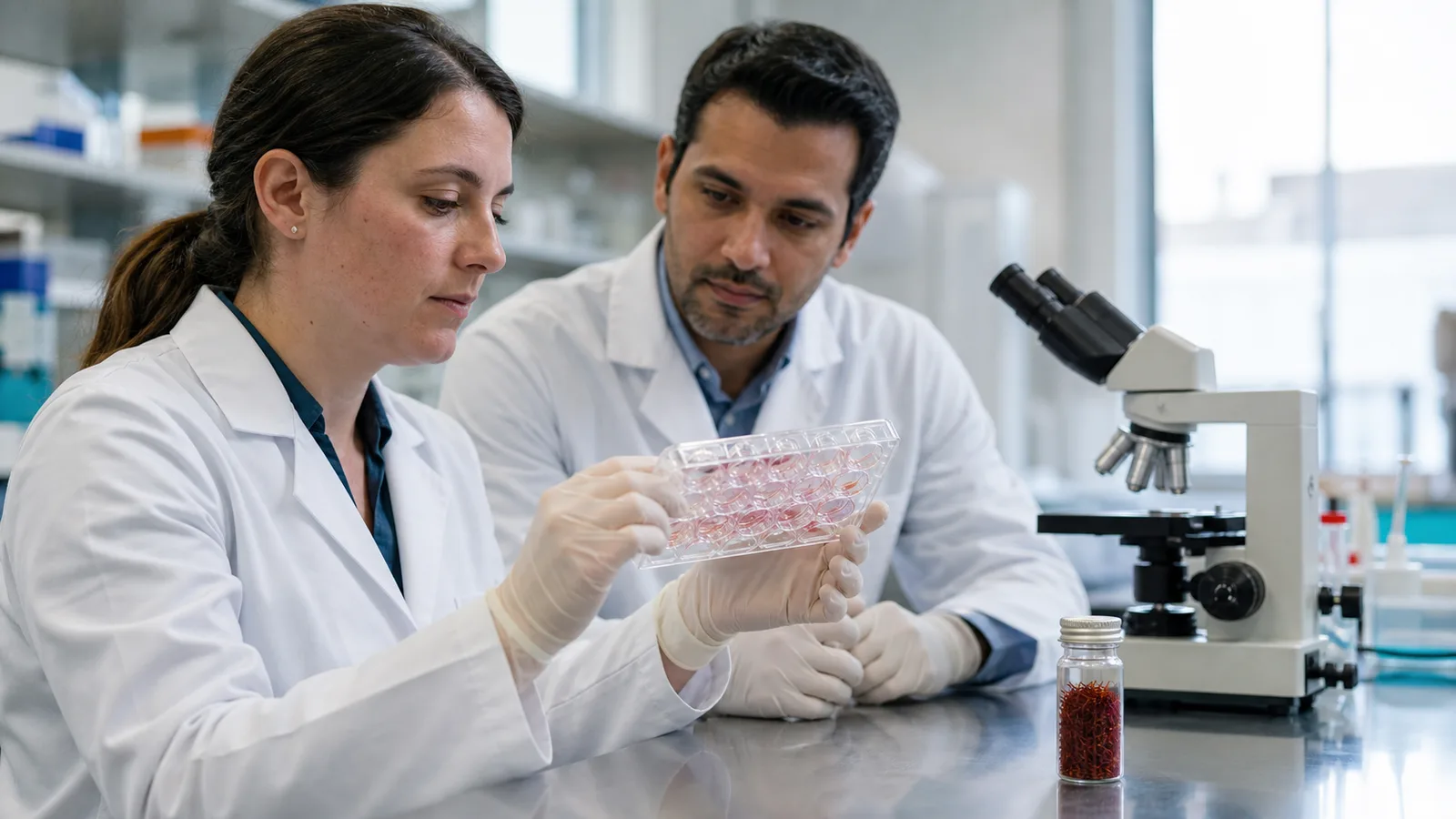
The word “impact” therefore needs context. Most saffron and cancer evidence is preclinical. A small amount of human research has looked at symptoms or treatment side effects, usually with a standardized crocin product under medical supervision. That is supportive-care research, not proof of an anticancer effect.
Saffron and cancer research: what happens in the laboratory?
In practice, most saffron cancer research is preclinical. Saffron contains several compounds that scientists can isolate and expose to cultured cells. Crocin and crocetin receive much of the attention. Researchers have reported effects on cell-cycle signalling, apoptosis, inflammation, oxidative stress, angiogenesis and other pathways involved in tumour biology.
A 2023 narrative review of saffron, crocin and cancer research summarizes experiments involving breast, colorectal, lung, prostate, cervical and other cancer cell lines, as well as animal models. It also states that anticancer effects had not been evaluated in human clinical trials. A compound killing cells in a dish does not tell us whether a safe amount can reach a human tumour, work throughout the body or improve survival.
Laboratory concentrations also cannot be translated into a spoonful of spice. Absorption, metabolism, tumour type, dose and toxicity all matter. Many promising molecules fail when they move from cells to animals and then to people; preclinical research is the beginning of that process, not its conclusion.
Why saffron for cancer treatment is not established
No clinical evidence currently shows that saffron treats cancer itself. The US National Cancer Institute’s guidance on complementary and alternative medicine says no special diet, food, vitamin, mineral, supplement or herb has been proved to slow cancer, cure it or stop it returning. Some products can also change how treatment works.
“Anti-cancer” in a study title may describe a molecular pathway, a cell-line result or a proposed future use. It does not mean the substance is an approved anticancer medicine. A real cancer treatment needs clinical evidence about outcomes such as tumour response, progression, recurrence, quality of life and survival, together with dosing and safety.
What has been studied in breast cancer?
Saffron breast cancer research illustrates the difference between treating a tumour and studying support during treatment. One randomized trial in 72 patients receiving doxorubicin-based chemotherapy tested purified crocin for anxiety, depression and treatment toxicity. Mood scores improved, but grade II to IV leukopenia was more common in the crocin group. The trial did not establish that crocin treated the cancer or improved survival.
A 2025 trial in 193 eligible breast-cancer patients reported fewer clinically defined drops in heart-pumping function during anthracycline therapy among those assigned crocin tablets. This is an important research result, but it concerns a standardized adjunct used inside a monitored chemotherapy protocol. It is not evidence that saffron food or an over-the-counter supplement protects every patient’s heart, and it did not test cancer control.
Another small study tested a drink containing saffron, honey and rose water for cancer-related fatigue. Because the intervention combined ingredients and lasted four weeks, its result cannot be attributed to ordinary saffron alone or extended to tumour treatment.
Liver, lung, prostate and colorectal cancer claims
Claims about saffron for liver, lung, prostate or colorectal cancer mostly trace back to cells or animal models. Different cancers are not interchangeable. A substance affecting a colorectal cell line does not become a treatment for a person with colorectal cancer, and an animal result does not establish a human dose or outcome.
A registered small study of a saffron-related intervention in hepatocellular carcinoma was listed as not yet recruiting at its last posted update and had no results. A trial record shows that researchers intend to ask a question. It does not answer it. Our separate look at saffron and liver-cancer research should be read with the same limit: saffron is not a liver-cancer treatment.
Saffron, antioxidants and cancer prevention
Saffron pigments have antioxidant activity, but “antioxidant” does not mean “prevents cancer.” The National Cancer Institute’s antioxidant fact sheet explains that human research has not convincingly shown antioxidant supplements reduce the risk of developing or dying from cancer. Results from observational studies and clinical trials have been mixed.
Cancer prevention is also broader than neutralizing free radicals. Tobacco exposure, alcohol, infections, ultraviolet radiation, inherited risk, body weight, activity and recommended screening all affect risk in different ways. Adding saffron to a meal does not cancel another exposure or replace a screening test.
Saffron during chemotherapy or radiotherapy
People receiving treatment should show the oncology team every supplement, tea concentrate and herbal product they use. The NCI review of cancer-therapy interactions explains that supplements can affect how anticancer drugs are absorbed, metabolized or removed. It also notes that antioxidant supplements during chemotherapy or radiotherapy have produced mixed findings, with worse outcomes in some studies.
Saffron-specific interaction data are incomplete. That uncertainty is not permission to experiment. Product strength, other ingredients, bleeding risk, liver and kidney function, blood counts and the exact treatment regimen can all change the decision. The leukopenia signal in the crocin trial is one concrete reason an oncologist needs to be involved.
Can saffron manage treatment side effects?
Early trials involving fatigue, mood, neuropathy or heart function ask useful supportive-care questions. They do not support self-treatment. A symptom such as fatigue can reflect anemia, infection, nutrition, sleep, pain, depression, cancer activity or the treatment itself. The safe response depends on the cause, and some symptoms require the oncology team to adjust care quickly.
Using saffron as food during cancer care
For many people, a small culinary amount of saffron can remain part of ordinary food. It may make rice, soup or vegetables more appealing when taste and appetite have changed. That is a practical food role, not a cancer-fighting diet. Individual restrictions still matter after surgery, during severe nausea, with swallowing problems or when the care team has given food-safety instructions.
UT MD Anderson’s medically reviewed saffron guidance similarly distinguishes normal food use from supplements and advises people with cancer to discuss supplements with their care team. Concentrated extract, powder in capsules and a pinch used for flavour are not equivalent exposures.
- Do not delay diagnosis, screening or cancer treatment to try saffron.
- Do not change chemotherapy, radiotherapy or another prescribed treatment because of a cell or animal study.
- Give the oncology pharmacist the complete label for every supplement or concentrated herbal product.
- Report fever, bleeding, severe vomiting, breathing difficulty or another urgent symptom to the cancer team rather than treating it with saffron.
What is the impact of saffron on cancer?
Saffron has an impact on cancer research because its isolated compounds produce biologically interesting results in cells and animals. A few clinical trials have begun testing defined crocin or saffron-containing products for particular side effects alongside standard care. That is where the evidence stands.
It does not support calling saffron a natural anti-cancer agent, a prevention method or a cancer treatment. Use saffron for flavour if it fits the care plan. Let oncology treatment, symptom assessment and properly controlled research carry the medical claims.