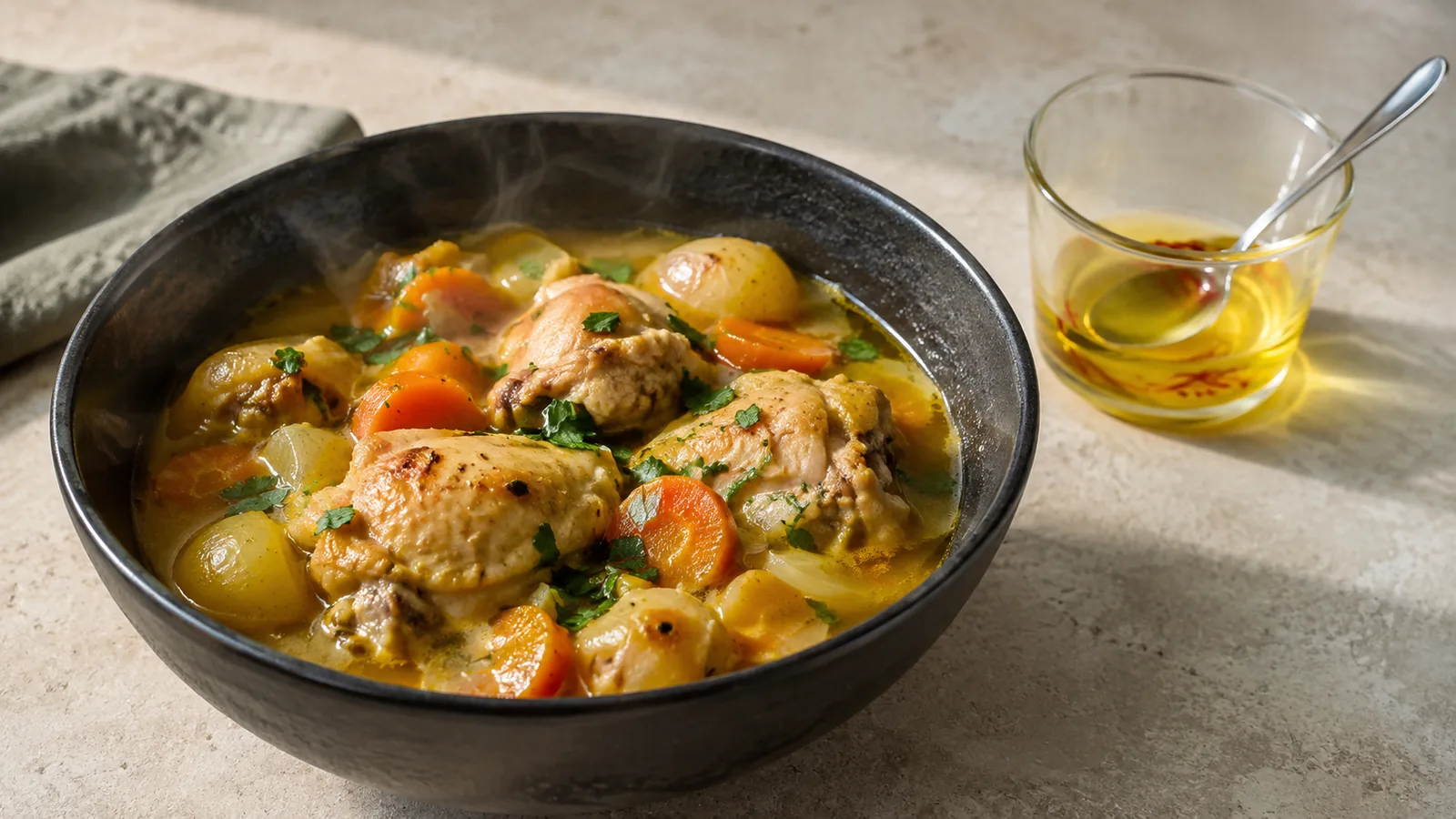
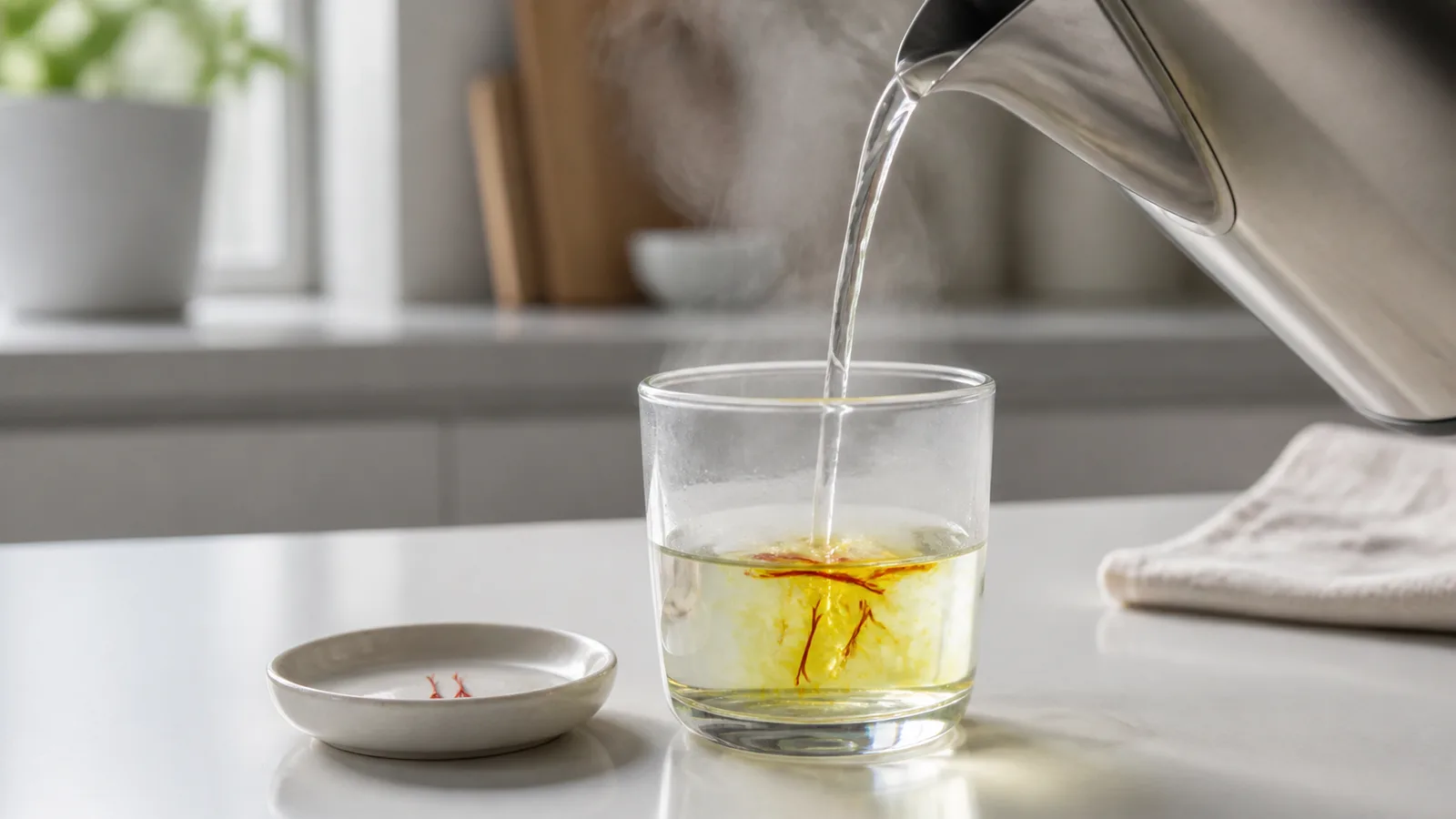
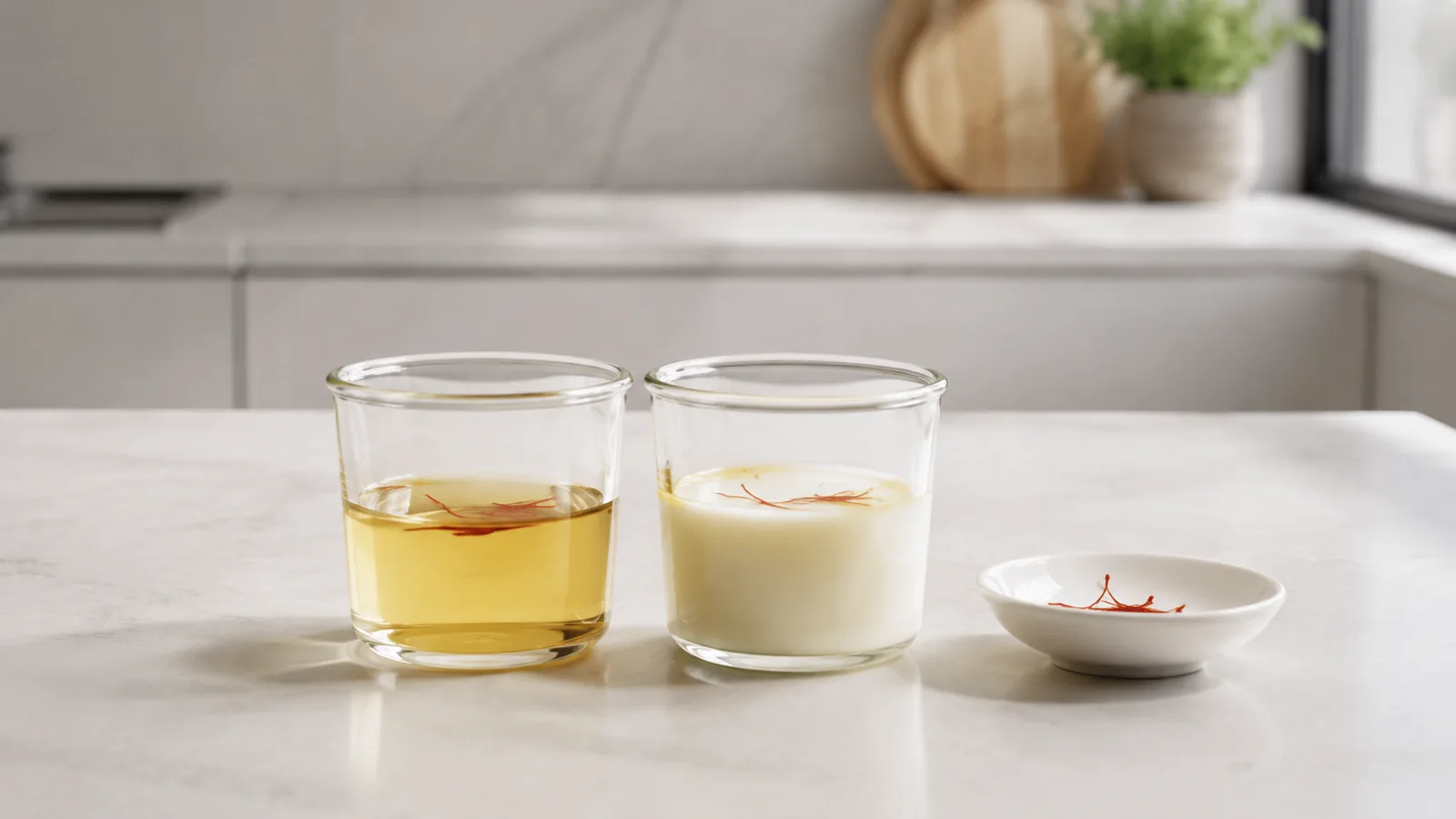
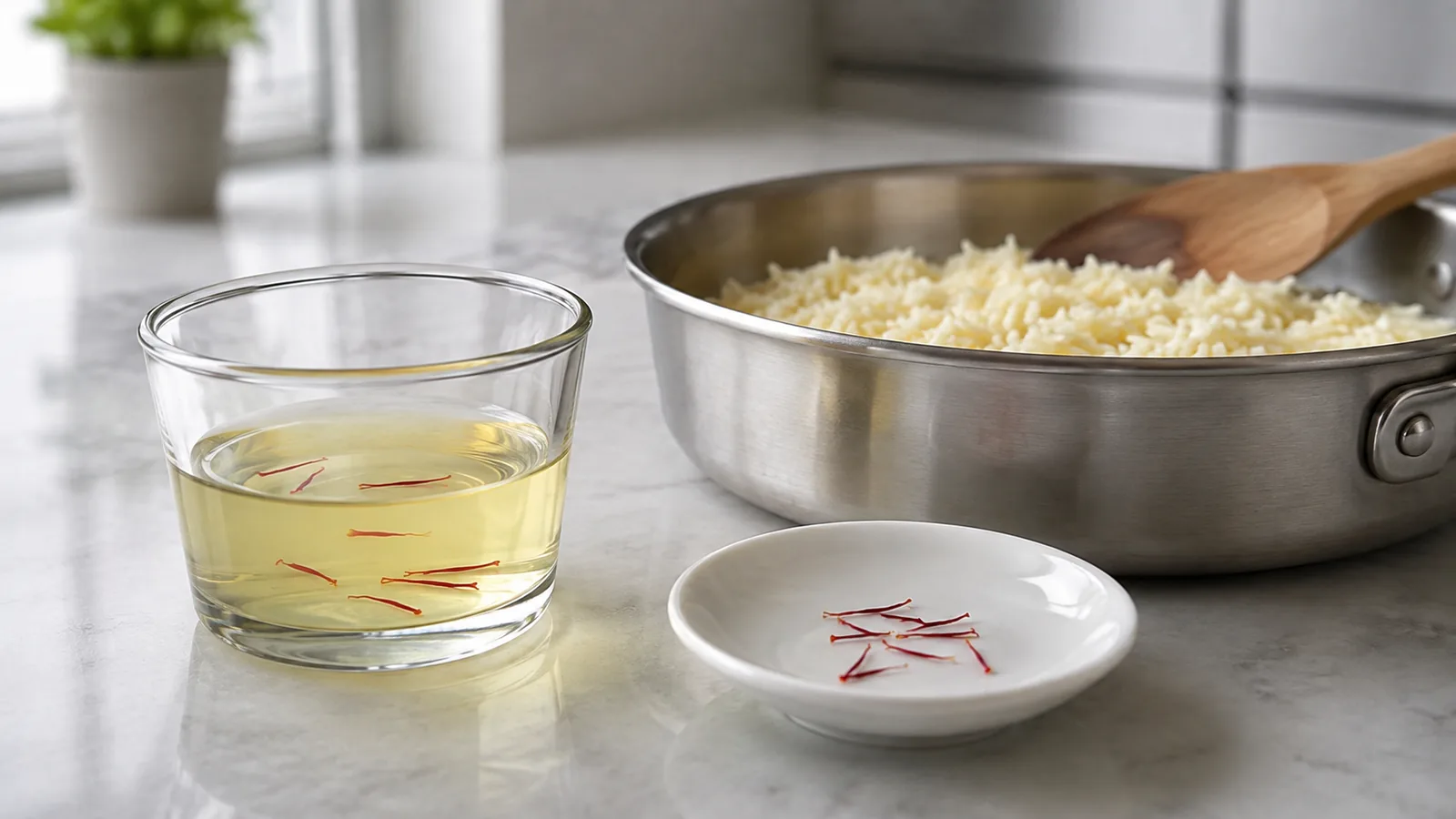
These Saffron Jelly Recipes cover five textures: clear saffron jelly, a rosewater milk jelly, a creamy ice-cream version, soft panna cotta and a glossy saffron cake glaze. Among desserts with saffron, these are especially useful when you want make-ahead portions. The measurements below keep each one tender enough to eat rather than stiff and rubbery.
What about gelatin?
Gelatin must be matched to the total amount of liquid. The earlier recipes on this page repeatedly used 5 tablespoons of gelatin powder with as little as half a cup of water. That is far beyond a pleasant dessert set. As a practical starting point, use about 2–2 1/2 teaspoons powdered gelatin for 2 cups of liquid, then adjust for acidic ingredients, moulding and brand strength.
Sprinkle gelatin over cold liquid and leave it for 5 minutes. Dissolve it gently over steam or in a warm mixture, but never boil it. Vegetarian guests need a separately tested agar formula; agar is not a one-for-one replacement.
Basic saffron jelly with gelatin
This clear golden jelly makes four small servings and is the simplest place to start.
Ingredients
- 2 cups water, divided
- 2 1/2 teaspoons powdered gelatin
- 3 tablespoons sugar
- 1/2 teaspoon saffron threads, finely ground
- 1/4 teaspoon vanilla extract, optional
- 1 teaspoon liquid glucose, optional for a glossier finish
Method
Sprinkle the gelatin over 1/2 cup cold water and leave for 5 minutes. Set the bowl over barely simmering water and stir until clear. Bloom the saffron with 2 tablespoons hot water or one small melting ice cube.
Warm the remaining water with the sugar only until dissolved. Remove from the heat and stir in the saffron, vanilla, optional glucose and dissolved gelatin. Pour into four glasses or lightly oiled flexible moulds. Refrigerate for at least 3 hours.
Saffron jelly with milk and rosewater
Ingredients
- 1 cup full-fat milk
- 1/2 cup cold water
- 1/3 cup rosewater
- 2 1/2 teaspoons powdered gelatin
- 3 tablespoons sugar
- 1/2 teaspoon ground saffron, bloomed
- 1/4 teaspoon vanilla, optional
Method
Bloom the gelatin in 1/2 cup cold water for 5 minutes and dissolve it over steam. Warm the milk and sugar until steaming but not boiling. Remove from the heat, then stir in the gelatin, saffron, rosewater and vanilla.
Let the mixture cool for 10 minutes, stirring once or twice so the saffron remains evenly distributed. Pour into glasses or moulds and refrigerate for 3–4 hours.
Saffron jelly with ice cream
Ingredients
- 1 cup vanilla or saffron ice cream, softened but still cold
- 1/2 cup cold water
- 2 teaspoons powdered gelatin
- 1/2 teaspoon ground saffron, bloomed in 2 tablespoons hot water
- Up to 2 tablespoons sugar, only if needed
Method
Bloom the gelatin in the cold water, then dissolve it over steam. Whisk 2 tablespoons of softened ice cream into the warm gelatin to temper it. Gradually whisk that mixture into the remaining ice cream, followed by the saffron.
Taste before adding sugar; commercial ice cream may already be sweet enough. Divide into small glasses and chill for at least 3 hours. This version is opaque and creamy rather than a transparent jelly.
Saffron panna cotta jelly
This larger recipe serves six to eight. It is a soft dairy gel, so glasses are easier than a large decorative mould.
Ingredients
- 3 cups full-fat milk
- 1 cup heavy cream
- 1/3 cup rosewater
- 3/4 cup sugar
- 1 tablespoon plus 1 teaspoon powdered gelatin
- 1/2 cup cold water
- 1 teaspoon saffron threads, ground and bloomed
- 1 teaspoon vanilla extract
The older formula listed another 1/2 cup room-temperature water, 1 cup sugar, “one container” of cream and 5 tablespoons gelatin. The revised quantities define the cream and reduce both dilution and excessive firmness while preserving the same saffron-milk-rosewater dessert.
Method
Bloom the gelatin in the cold water for 5 minutes. Warm the milk, cream and sugar over medium-low heat until steaming and the sugar has dissolved. Do not boil. Remove from the heat and whisk in the gelatin until clear.
Stir in the saffron, rosewater and vanilla. Divide into glasses or lightly oiled moulds, cool, then refrigerate for 4–5 hours. A large mould needs the full chilling time.
Saffron Birello jelly glaze
This final formula is not a gelatine jelly. It is a lemon-saffron cornstarch glaze for cake, fruit or the top of a chilled dessert.
Ingredients
- 1/4 cup water, divided
- 1/3 cup sugar
- 1 tablespoon cornstarch
- 2 tablespoons lemon juice
- 1 teaspoon ground saffron, bloomed in 1 tablespoon hot water
Method
Whisk the cornstarch with half the cold water. Warm the remaining water and sugar in a small pan until dissolved. Whisk in the slurry and cook gently until it bubbles and turns glossy.
Add the lemon juice and saffron, then cook for another minute. Use warm for a thin cake glaze or simmer briefly longer for a frosting-like consistency. If it becomes too thick, whisk in hot water a teaspoon at a time.
How to make clean layers
For layered saffron jellies, chill the first layer until it is set enough to support the next but still slightly tacky. Cool the next mixture to room temperature and pour it over the back of a spoon. Very hot liquid melts the layer below; fully dried surfaces can separate when sliced.
A clear saffron layer pairs naturally with the milk or ice-cream layer. Keep each flavour distinct rather than adding rosewater, vanilla, chocolate and fruit to every level.
Unmoulding and decoration
Lightly oil flexible moulds with a neutral oil and wipe away every visible drop. To release, loosen the rim, dip the outside in warm water for 3–5 seconds, dry it and invert onto a chilled plate.
Pistachio slivers, pomegranate arils, berries and a few saffron threads are enough. Heavy nuts sink into soft jelly; add them after unmoulding. For a more detailed basic saffron jelly method, compare the set before choosing decorative moulds.
Troubleshooting saffron jellies
- Rubbery: too much gelatin; weigh or level the spoon and match it to total liquid.
- Did not set: gelatin may have boiled, been undermeasured or not chilled long enough.
- Cloudy clear jelly: the mixture boiled or was whisked hard enough to trap bubbles.
- Milk separated: gelatin or saffron liquid was too hot when combined, or the mix sat unstirred while cooling.
- Weak saffron flavour: bloom a measured concentrate and add it off high heat.
Storage
Cover and refrigerate saffron jelly for up to 3 days. Dairy versions should not sit at room temperature for an extended period. Add crisp nuts and fresh fruit shortly before serving. Freezing is not recommended because thawing can cause the gel to release water.