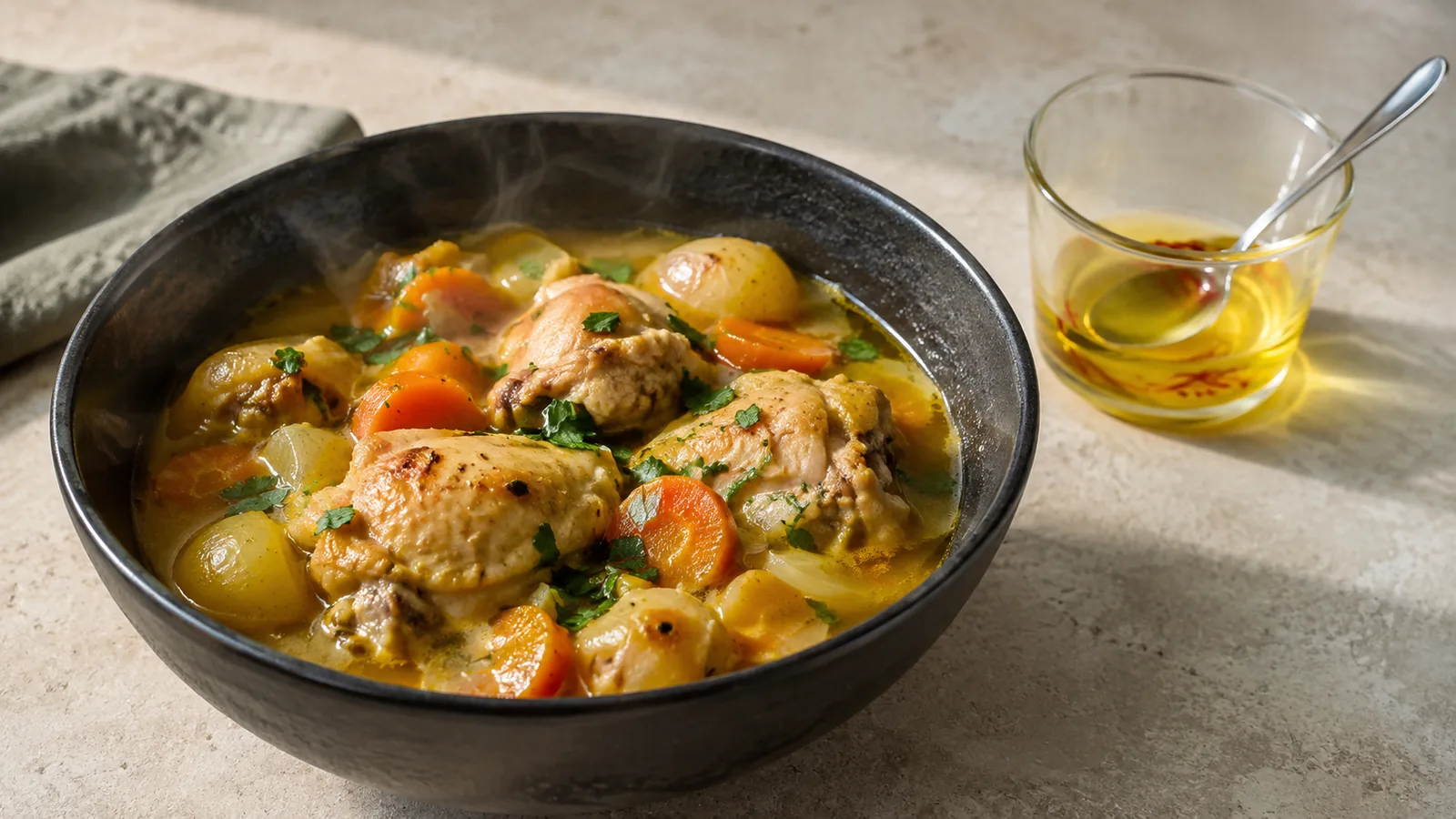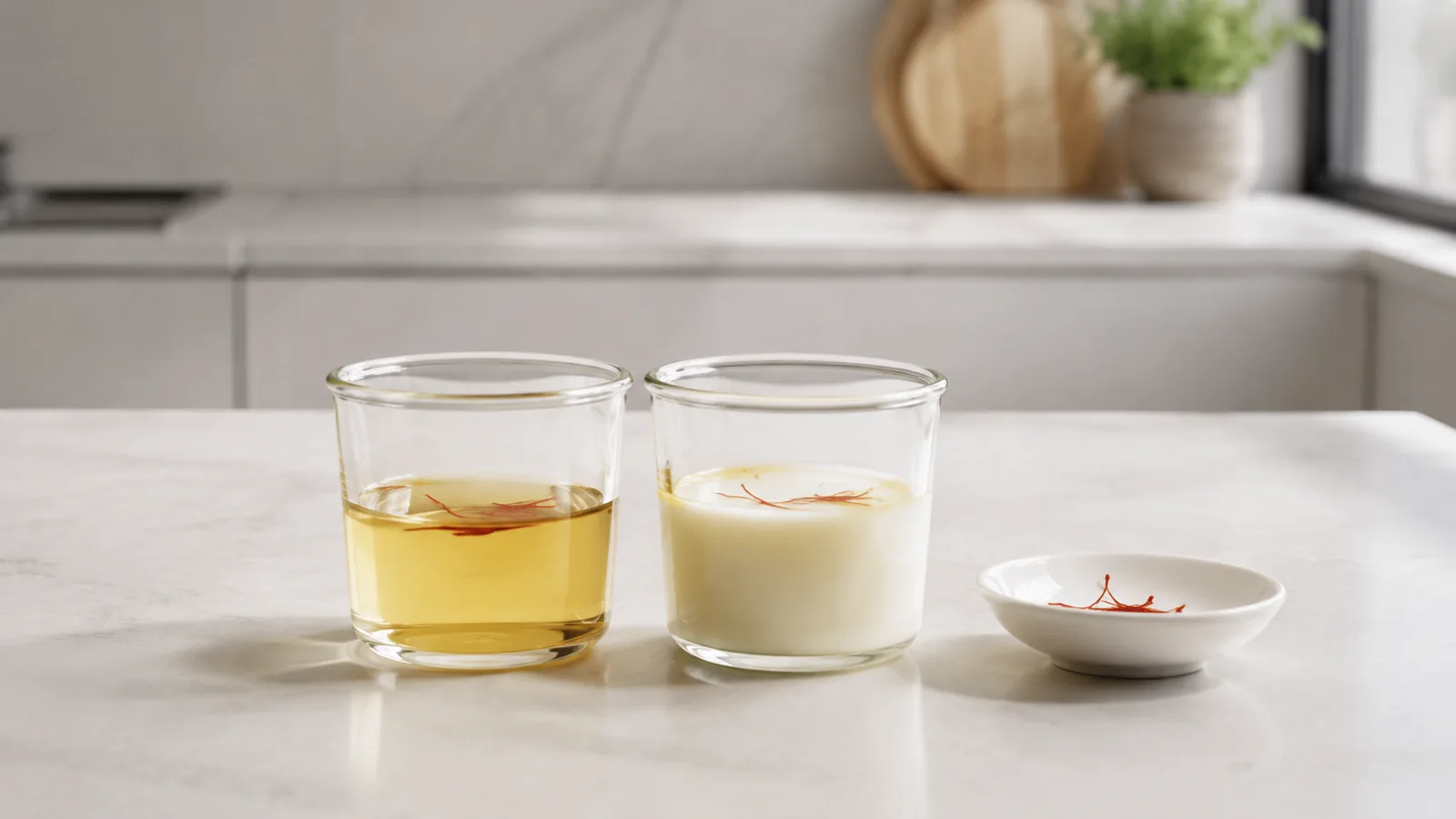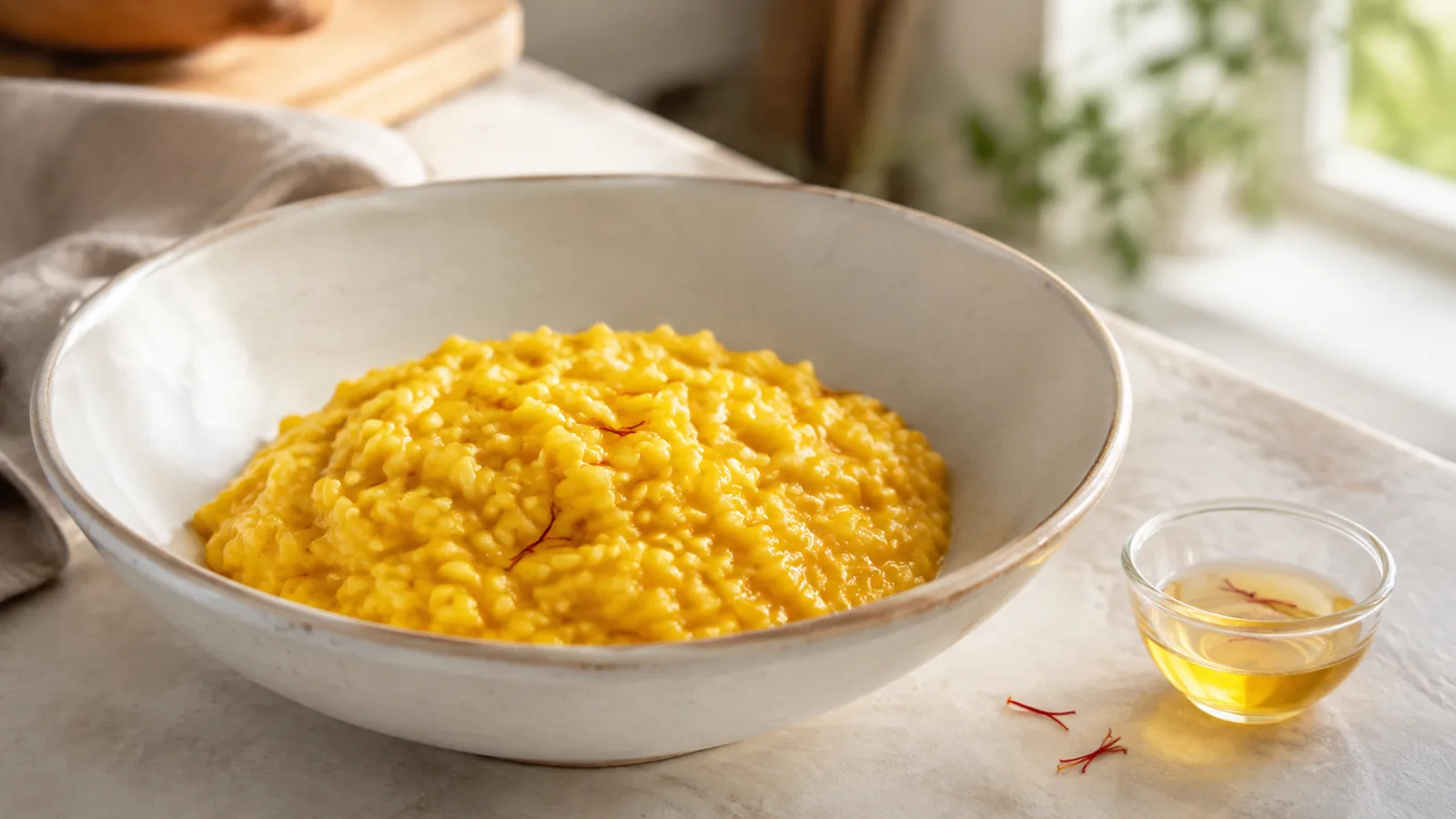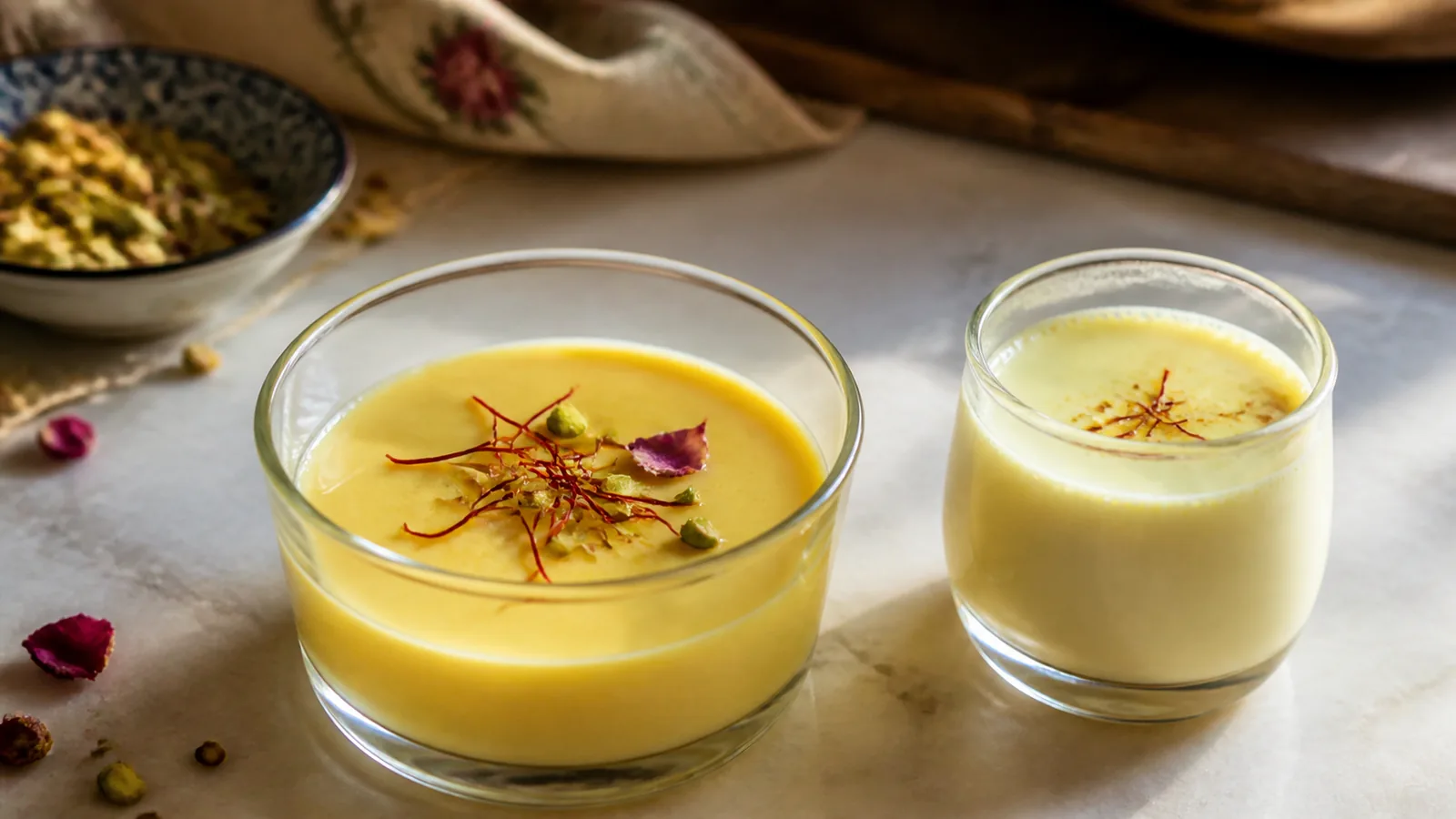
This saffron jelly has a soft, creamy set, a clear saffron aroma and just enough rose water to round out the flavour. The same ingredients can also make a simple glass of warm saffron milk, so nothing here asks you to buy a spice for one narrowly defined dessert.
The older recipes combined milk, cream, gelatin, sugar, saffron and rose water, but their translated quantities and instructions were difficult to follow. The method below keeps that original idea while giving practical measurements, a reliable gelatin technique and visual cues for each stage.
Creamy saffron jelly at a glance
This recipe makes six small servings. Allow about 20 minutes to prepare it and at least four hours for chilling. The texture is closer to a delicate milk pudding than a firm packet jelly.
You will need:
- 3 cups (720 ml) whole milk
- 1/2 cup (120 ml) cold water
- 2 tablespoons powdered gelatin, about 18 grams
- 1/2 cup (100 grams) sugar, or up to 3/4 cup for a sweeter dessert
- 1/4 teaspoon saffron threads, lightly ground
- 1/2 cup (120 ml) whipping cream or breakfast cream
- 1 tablespoon food-grade rose water
- 1/2 teaspoon vanilla extract, optional
- A very small pinch of salt
The original version called for a full cup of sugar. That produces a markedly sweet dessert, especially when served in small glasses. Starting with half a cup lets the saffron and rose water remain noticeable; taste the warm milk before adding more.
Bloom the saffron first
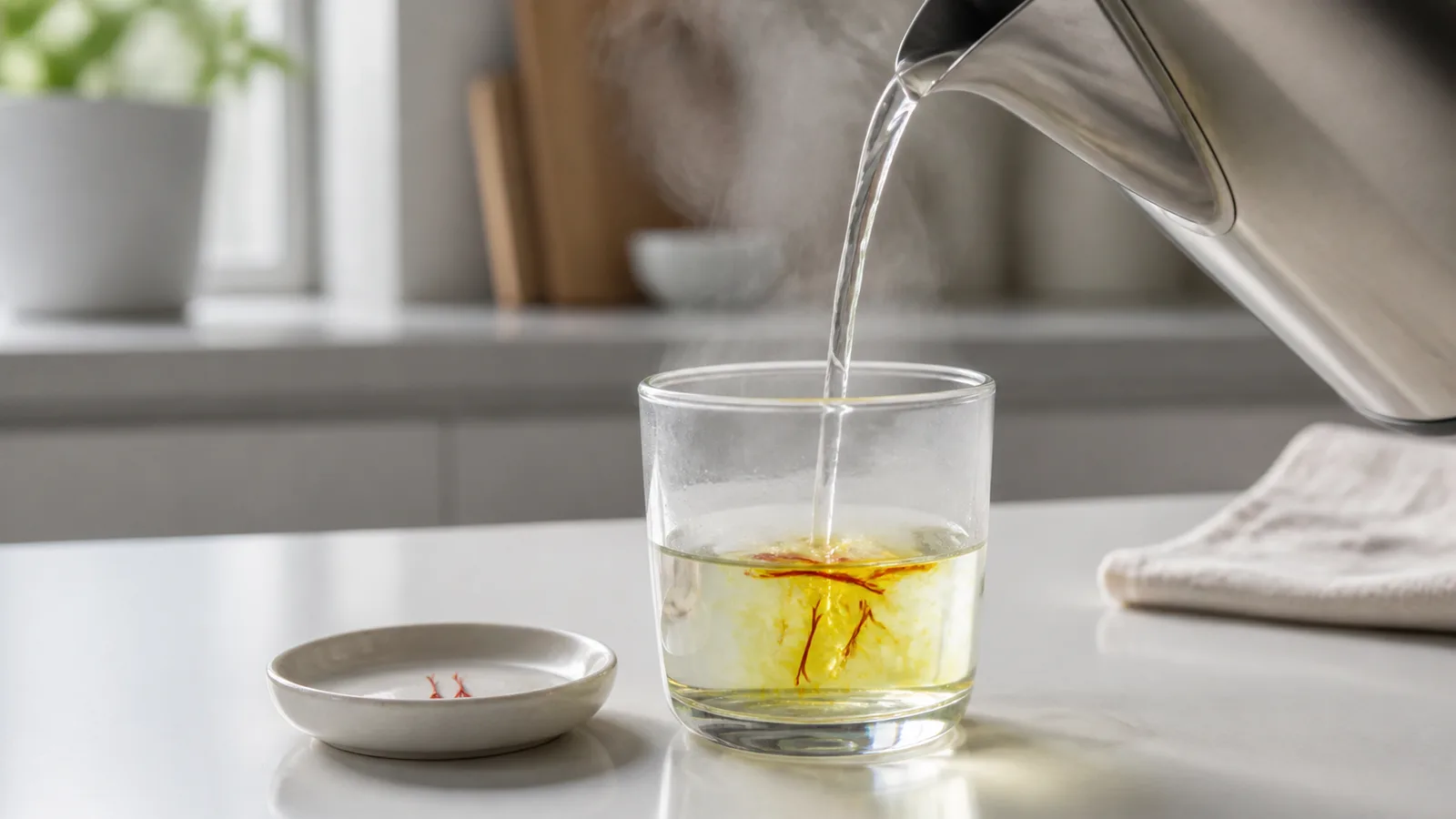
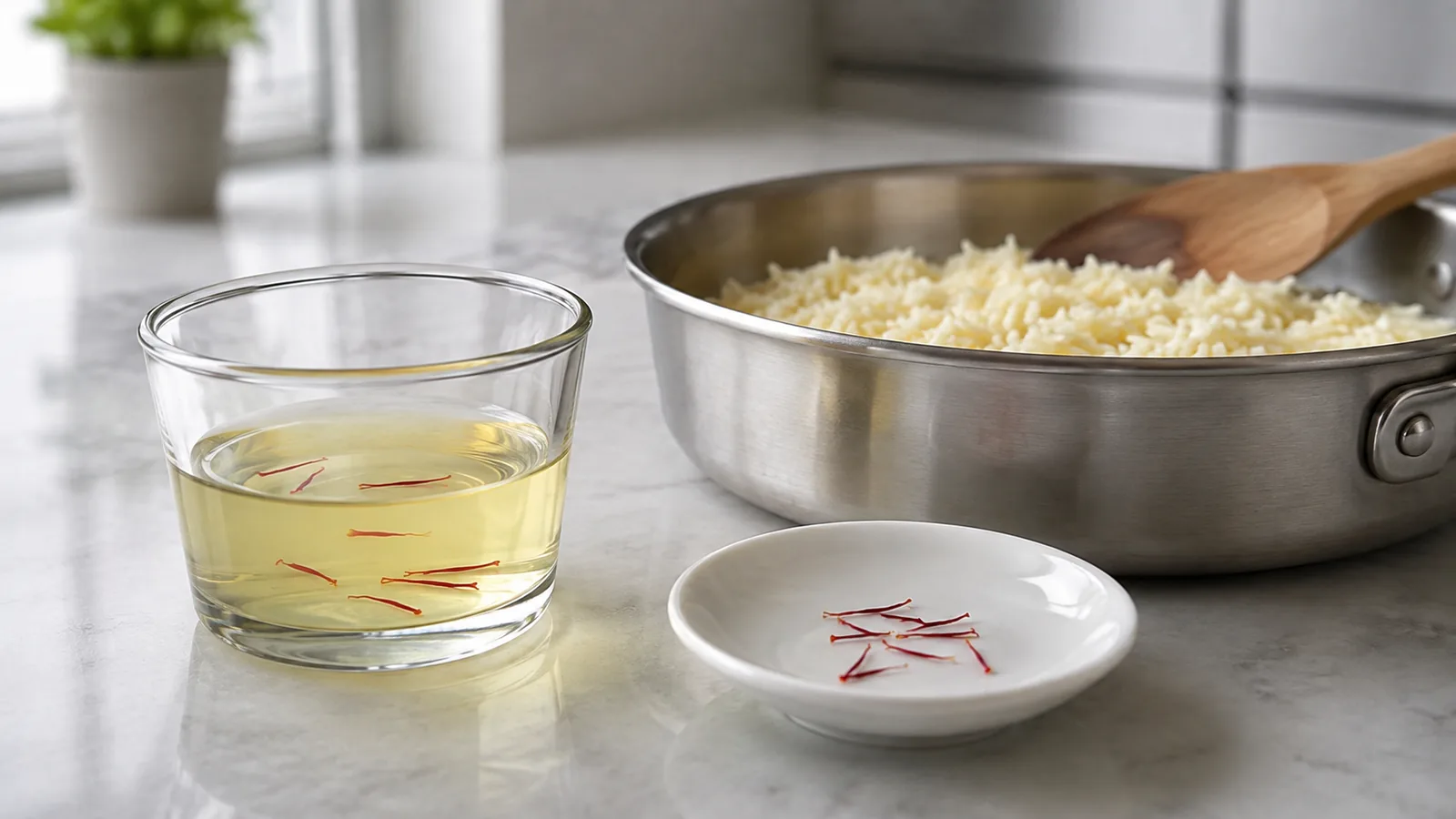
Crush the saffron lightly between your fingers or with a small mortar. Take two tablespoons of the measured milk, warm it until hot but not boiling, and stir in the threads. Cover the cup and leave it for 10 minutes. The liquid should turn a deep golden yellow and smell distinctly floral.
Blooming distributes a small amount of saffron more evenly than dropping dry threads into the full pan. There is no need to use a large handful. Fresh, properly stored saffron threads should give both colour and aroma in a modest quantity.
How to make saffron jelly
- Hydrate the gelatin. Pour the cold water into a heatproof bowl. Sprinkle the gelatin evenly over the surface rather than tipping it into one mound. Leave it untouched for 5 to 10 minutes, until the powder has absorbed the water and looks swollen.
- Warm the milk. Add the remaining milk, sugar and salt to a saucepan. Heat gently, stirring until the sugar dissolves. Stop before a rolling boil; hard boiling can give milk an overcooked flavour and creates a skin.
- Add the saffron. Stir the bloomed saffron and its milk into the saucepan. Keep the heat low for another minute, then remove the pan from the stove.
- Dissolve the gelatin. Set the bowl of hydrated gelatin over a small pan of barely simmering water, making sure the base of the bowl does not touch the water. Stir until the gelatin becomes clear and fluid. Do not boil it.
- Combine carefully. Whisk the dissolved gelatin into the warm saffron milk. Add the rose water and vanilla. Let the mixture cool for about 10 minutes, until warm rather than steaming.
- Add the cream. Whisk a little of the warm mixture into the cream first. Pour that loosened cream back into the pan and stir until smooth. This gradual step helps prevent small fatty lumps.
- Chill. Divide the mixture among six clean glasses or lightly oiled moulds. Refrigerate for at least four hours, preferably six, until the centre trembles gently but no longer flows.
How to serve and unmould it
Serving the jelly in glasses is the easiest option and protects its delicate shape. If you use moulds, dip only the outside in warm water for five to eight seconds. Loosen the edge with a fingertip, place a plate on top and invert in one smooth motion. Too much heat will melt the surface.
Keep the garnish restrained. A few visible saffron threads, a light scatter of chopped pistachio or one edible rose petal is enough. Avoid pouring extra rose water over the finished jelly; it can overwhelm the saffron and make the surface wet.
Why saffron jelly sometimes fails to set
The gelatin formed lumps
Gelatin needs to be sprinkled over cold liquid and given time to hydrate. Adding dry powder directly to hot milk seals the outside of each clump before the centre can absorb liquid. Gentle bain-marie heat then dissolves the bloomed gelatin without scorching it.
The mixture separated
Very hot milk added straight to cold cream can create an uneven texture. Let the milk cool slightly and temper the cream with a small amount first. Use dairy that smells fresh, and avoid strongly acidic additions because acid can affect both flavour and texture.
The jelly is too firm or too soft
Different gelatin brands do not always have identical setting strength. The quantity here gives a spoonable set with standard powdered gelatin. If your brand provides instructions for a specific liquid volume, follow the package. Do not substitute agar gram for gram; it sets differently and needs its own heating method.
The saffron flavour is weak
Give the crushed threads time to bloom and keep them covered so the aroma does not escape with steam. Old saffron, moisture-damaged threads or a product mixed with other plant material will behave differently. Adding more rose water will not replace missing saffron flavour.
Companion recipe: warm saffron milk
The source assigned to this article also promised a saffron milk recipe. It uses the same gentle infusion but leaves out gelatin and cream. This version makes four small glasses.
Ingredients:
- 4 cups (960 ml) milk
- 1/4 teaspoon saffron threads, lightly ground
- 2 tablespoons hot water or hot milk for blooming
- Sugar or honey to taste, added after heating
- A pinch of ground cardamom, optional
Bloom the saffron in the hot water or milk for 10 minutes. Warm the four cups of milk in a saucepan over medium-low heat, stirring occasionally. When steam begins to rise and small bubbles appear at the edge, stir in the saffron infusion. Keep it below a hard boil for two minutes, then remove it from the heat.
Pour into heat-safe glasses and sweeten each serving to taste. If using honey, wait until the milk is comfortably warm rather than piping hot. The result should taste mainly of milk and saffron; cardamom is optional and should remain in the background.
A note on older health claims
The retired milk recipe attached broad claims about depression, concentration, Alzheimer’s disease, Parkinson’s disease and pain to an ordinary drink. A serving of saffron milk is food, not a demonstrated treatment or prevention strategy for those conditions. This recipe therefore makes no medical promise.
Saffron has a long culinary and traditional-use history, and researchers continue to study its compounds. That does not make an unspecified kitchen dose equivalent to a tested clinical preparation. Anyone managing a health condition, taking medication, pregnant or considering concentrated saffron supplements should speak with a qualified clinician rather than relying on a recipe.
Storage and preparation notes
Cover the saffron jelly and refrigerate it promptly. For the best texture and aroma, serve it within two days. Do not leave milk-based jelly at room temperature for an extended period, and discard it if it develops an unusual smell, surface liquid or other signs of spoilage.
Warm saffron milk is best made just before serving. Cool any unused portion promptly in a clean covered container, refrigerate it and reheat only the amount you plan to drink. Avoid repeated warming and cooling.
Both preparations depend on the same simple choices: bloom a modest amount of saffron, heat dairy gently and keep the floral ingredients balanced. Follow those cues and the finished saffron jelly will hold its shape while remaining soft, with a companion drink that tastes deliberate rather than overly sweet.