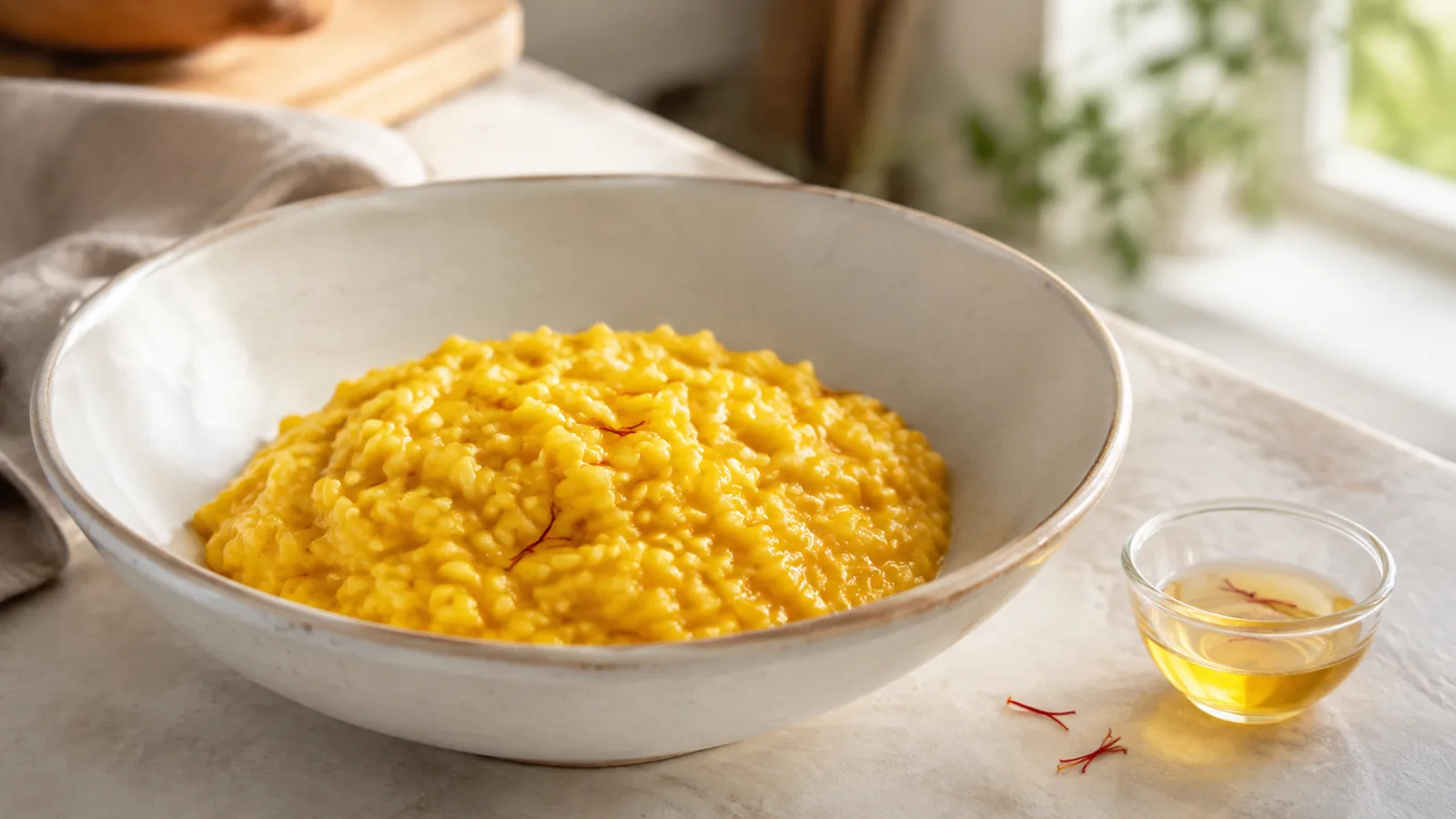
To use saffron in pasta, bloom a small pinch of lightly crushed threads in warm water or stock for 10 to 15 minutes, then stir the complete infusion into the sauce. Saffron in pasta recipes works best when the sauce is simple enough for its subtle aroma and unique flavor to remain clear.
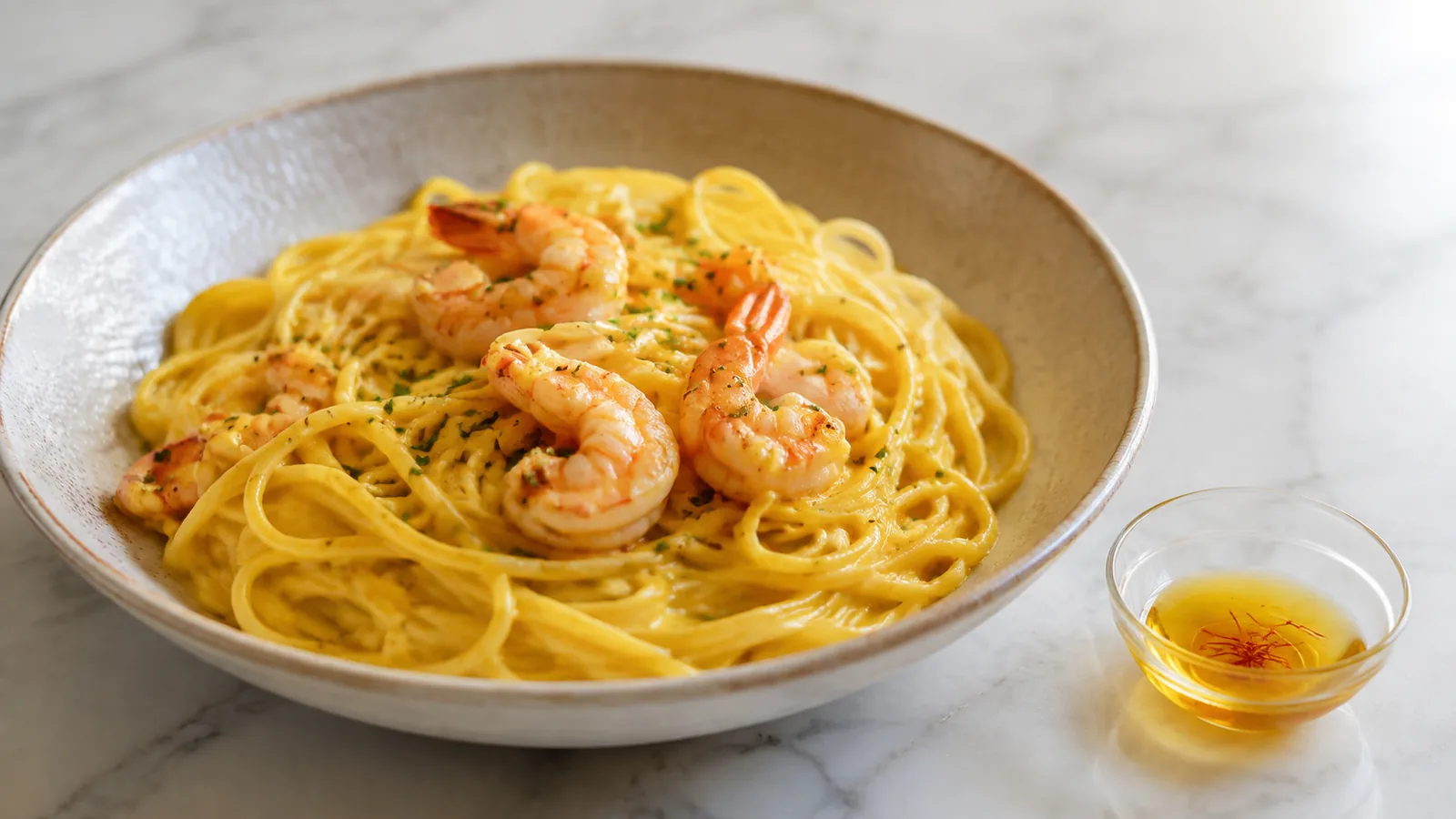
The basic saffron pasta method
- Lightly crush the saffron threads in a dry mortar.
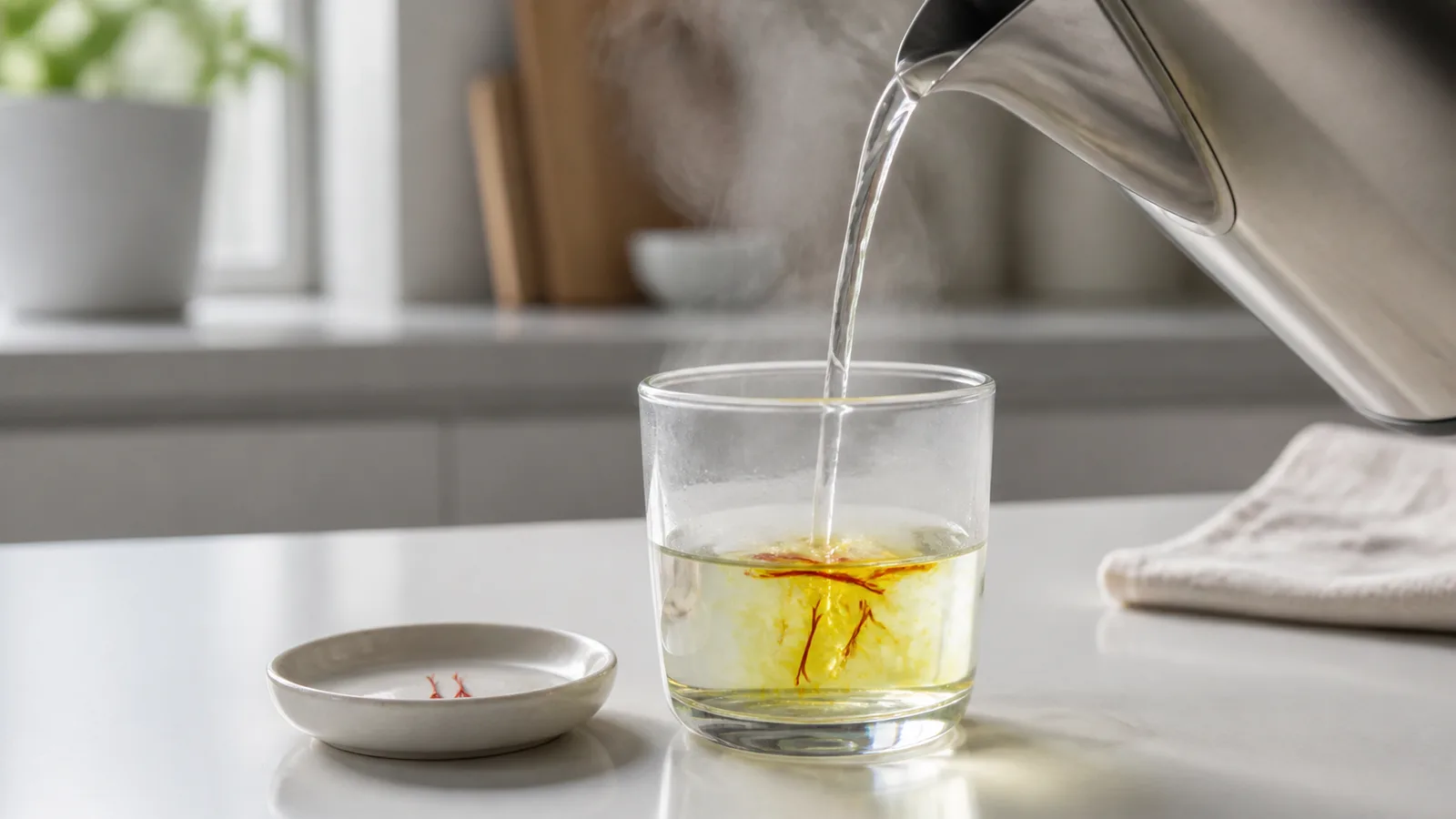
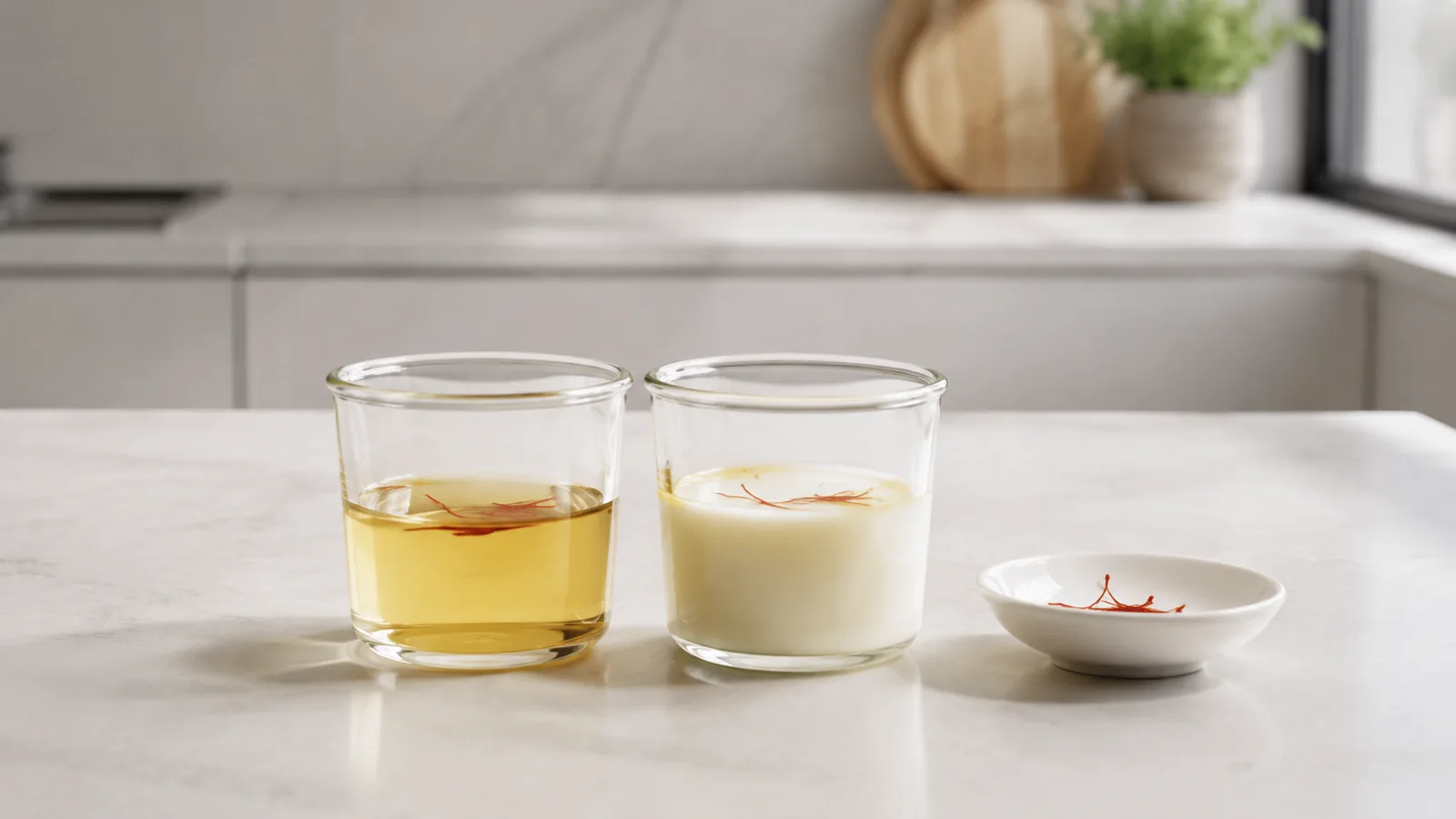
- Cover them with two or three tablespoons of warm water, broth or milk.
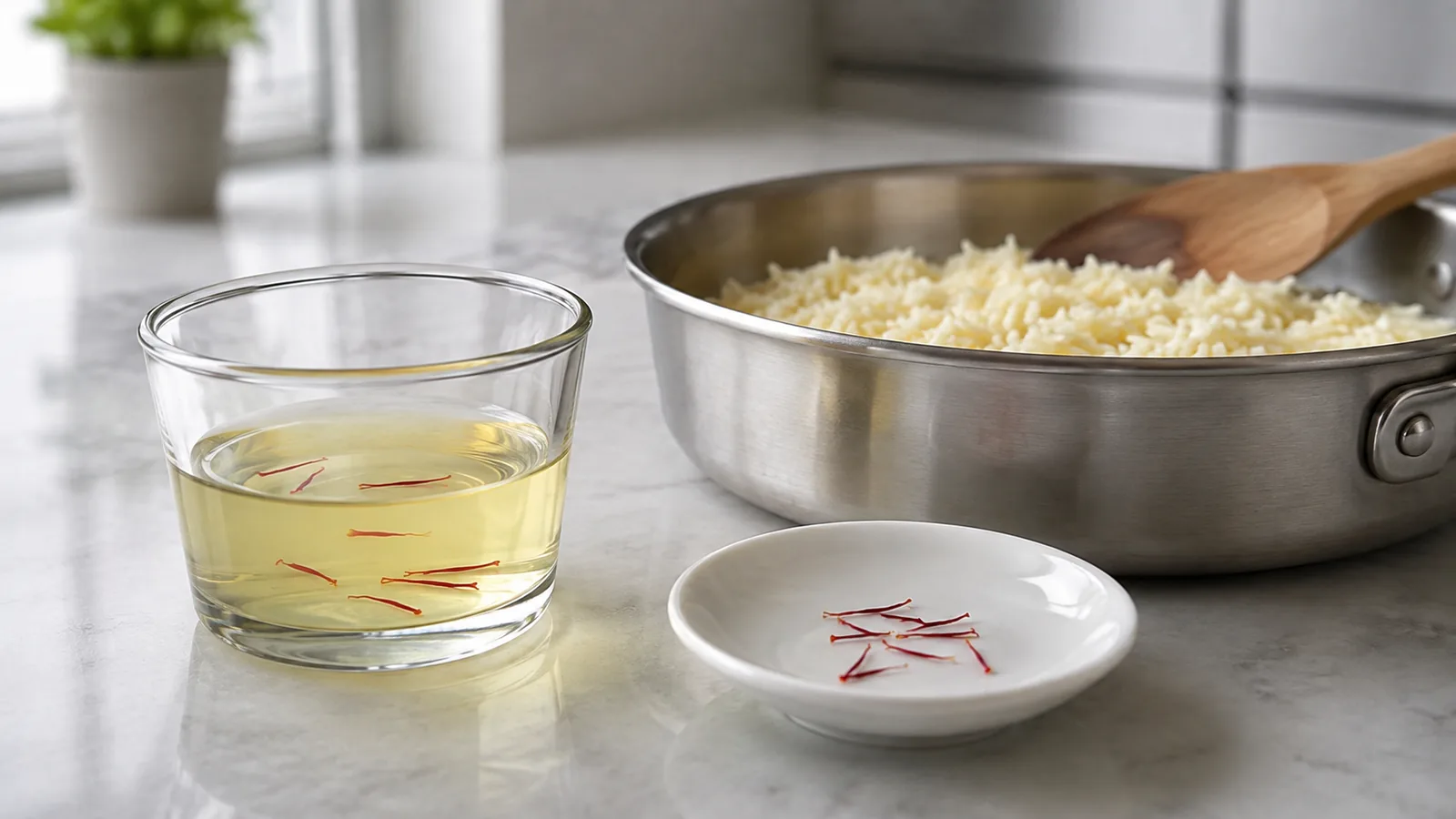
- Leave them for 10 to 15 minutes, until the liquid turns golden.
- Prepare the pasta and sauce as usual.
- Stir in the saffron infusion during the final few minutes.
- Toss with the pasta, using a little pasta water only if the sauce needs loosening.
Adding both the liquid and softened threads gives even distribution. Do not pour a large, weak infusion into the pan; a concentrated bloom adds flavour without making the sauce watery.
Why bloom saffron before adding it?
Dry threads dropped straight into a finished sauce release colour and aroma unevenly. Warm liquid increases contact with the threads and gives the water-soluble pigment time to disperse. Light crushing increases surface area without reducing the spice to dust.
5 to 10 minutes can be enough for finely crushed saffron, but 10 to 15 minutes is more forgiving. Avoid adding saffron directly to boiling water or cooking the bloom at a rolling boil for a long time, since the delicate fragrance can fade.
Should saffron go in pasta water or sauce?
The sauce is usually the better place. A large pot of cooking water dilutes the saffron, and much of that pasta water is drained away. Adding a concentrated infusion to the sauce keeps more of the color, flavor and aroma in the finished dish.
A spoonful of saffron bloom can go into the pasta water when the recipe intentionally uses most of that water—for example, in a very fluid one-pot preparation—but it should not be the default.
Which pasta sauces suit saffron?
Cream and butter sauces
Cream, butter and mild cheese soften saffron’s bitterness and carry its aroma. Keep the cheese restrained; a very sharp or salty cheese can dominate. Add the bloom once the sauce is smooth, then heat gently.
Seafood sauces
Shrimp, scallops, mussels and firm white fish work with saffron’s dry floral character. Garlic, shallot, fennel and a modest splash of wine can support the sauce, but the seafood and saffron should remain the focus.
Tomato and vegetable sauces
Saffron can work in tomato or vegetable-based sauces with courgette, leek, peas or fennel, but acidity and roasting change the balance. Bloom the spice separately and judge the overall taste before deciding whether more is needed. The phrase “balances acidity” is too absolute: saffron adds complexity but does not neutralise acid.
For broader pairing ideas, see what foods go well with saffron.
A simple saffron cream pasta
For four modest servings, prepare a small saffron bloom, cook about 320–400 g of pasta and reserve some pasta water. Soften one finely chopped shallot in butter or olive oil, add about 240 ml (1 cup) of cream, and simmer gently until it begins to coat a spoon.
Stir in the saffron infusion, season, then add the drained pasta. Toss over low heat and loosen with a spoonful of pasta water if needed. Finish with parsley, chives or a small amount of mild grated cheese. Seafood can be cooked separately and folded in at the end.
What does saffron pasta taste like?
The final flavour depends on the sauce. In a cream sauce, saffron tastes rounder, more honeyed and slightly sweet; with seafood, its mineral and hay-like qualities become clearer. Too much can taste bitter or medicinal.
Our detailed guide to what saffron tastes like in pasta explains how different sauce bases change the result.
What are the benefits of using saffron in pasta?
The relevant benefits are culinary: a distinctive aroma, subtle complexity, natural golden color and a visually appealing finish. A small bloom can create a flavorful experience and a vibrant final dish without a long list of ingredients, but it does not automatically turn simple noodles into “gourmet meals.”
That does not make saffron pasta a health treatment. The nutritional profile depends mainly on the pasta, sauce, portion and accompanying ingredients; broad supplement claims should not be attached to a culinary pinch.
Common mistakes
- Using too much: extra saffron can make the sauce bitter instead of luxurious.
- Adding it only to draining water: much of the expensive infusion is lost.
- Hard-boiling the bloom: colour may remain after the aroma has faded.
- Overloading the sauce: strong chilli, smoke or cheese can hide the subtle flavor.
- Expecting a neon shade: real saffron usually produces yellow to warm gold, not fluorescent orange.
Choosing and storing the saffron
High-quality saffron threads should have a recognisable aroma and predominantly crimson colour. Store them airtight away from light, heat and moisture. “Premium saffron” on a package is not enough; traceability, structure, aroma and actual cooking performance matter.
The reliable pasta rule
Bloom a modest pinch, put the infusion into the sauce rather than a drainable pot of water, and add it toward the end of cooking to preserve its aroma. That method can look visually striking while still giving saffron pasta a delicate flavor that does not overwhelm the cream, vegetables or seafood around it.