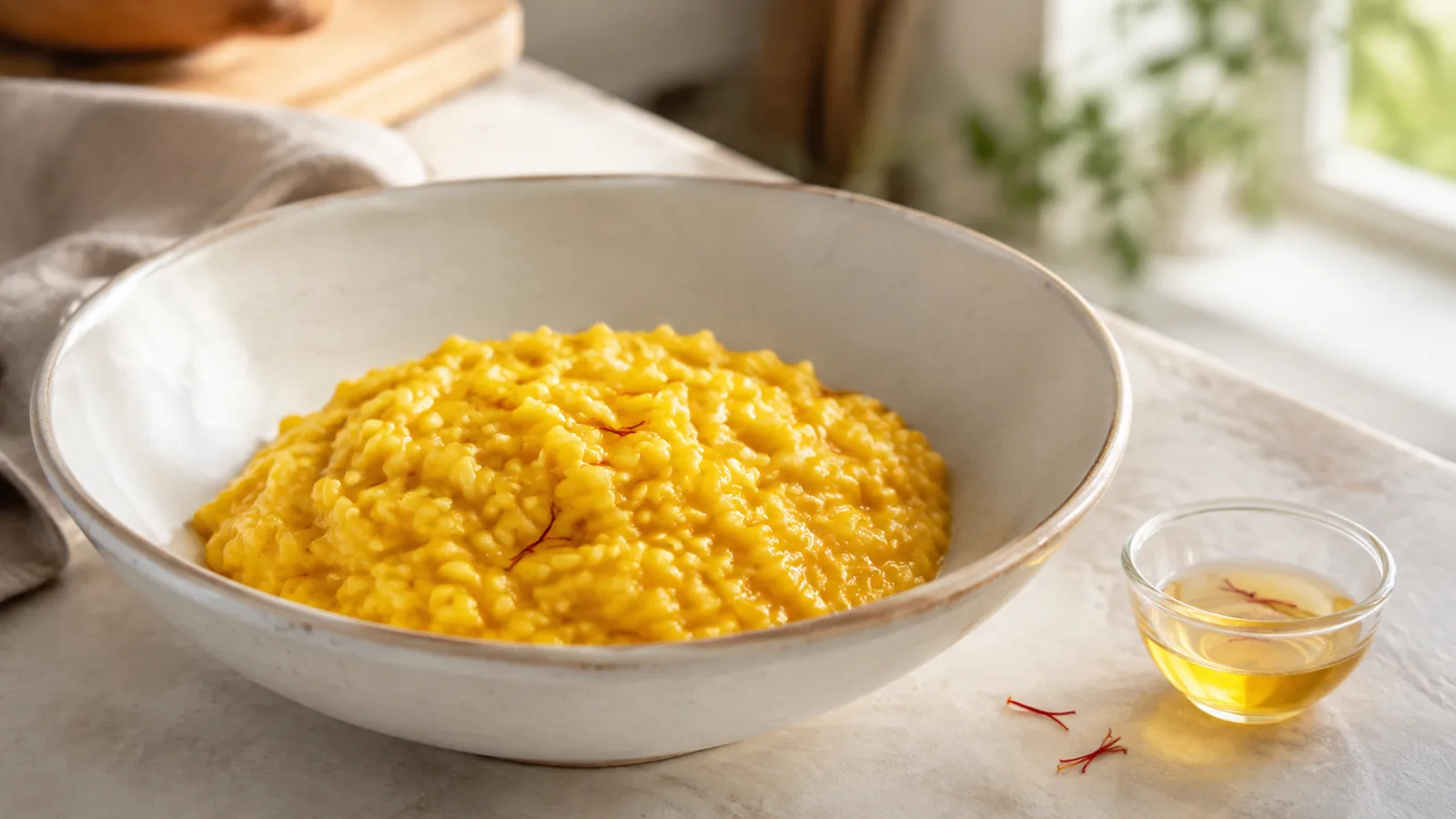
In pasta, saffron tastes floral, warm and gently earthy, with a honeyed aroma and a restrained bitter edge. It does not make the dish sugary. Instead, saffron flavor in pasta rounds out butter, cream, broth or seafood while giving the sauce a golden colour.
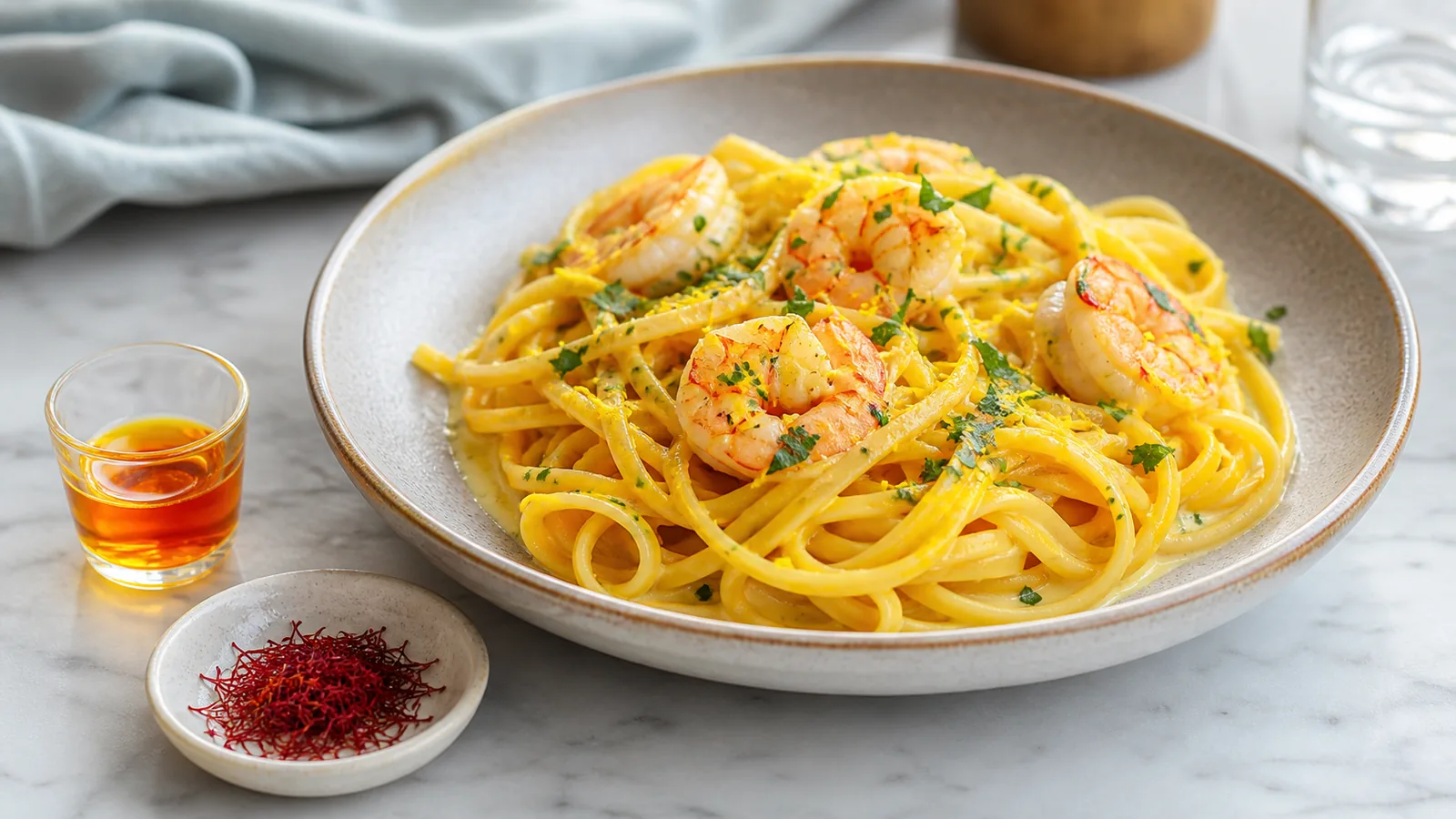
What makes saffron pasta distinctive?
Saffron pasta is aromatic before it is intense. The first impression often comes from the fragrance rising off a warm sauce. On the tongue, the spice adds depth that can seem slightly sweet, grassy or mineral depending on the other ingredients.
A balanced dish should still taste of pasta and sauce. If saffron is the only flavour you notice, too much may have been used.
How the sauce changes saffron’s taste
Butter and cream emphasise its soft floral and honey-like side. They are familiar bases for saffron linguine, tagliatelle and filled pasta.
Broth and pasta water make a lighter sauce in which the earthy, tea-like character is easier to notice.
Tomato can work in a restrained sauce, but a very sharp or heavily seasoned tomato base may cover the spice.
Olive oil gives a clean result when paired with garlic, seafood or vegetables and enough starchy water to bind the sauce.
Ingredients that pair well with saffron
- prawns, mussels, crab and firm white fish;
- chicken and mild cured pork;
- peas, asparagus, courgette, fennel and mushrooms;
- garlic, shallot and gently cooked onion;
- lemon zest, parsley, chives and a small amount of basil;
- Parmesan or pecorino when the seafood pairing allows it.
White wine can add acidity, but reduce it before adding the saffron infusion. Too much alcohol, chilli, smoke or strong herbs can dominate the subtle aroma.
How to add saffron to pasta sauce
- Measure a small pinch of saffron threads.
- Crush them lightly in a clean mortar.
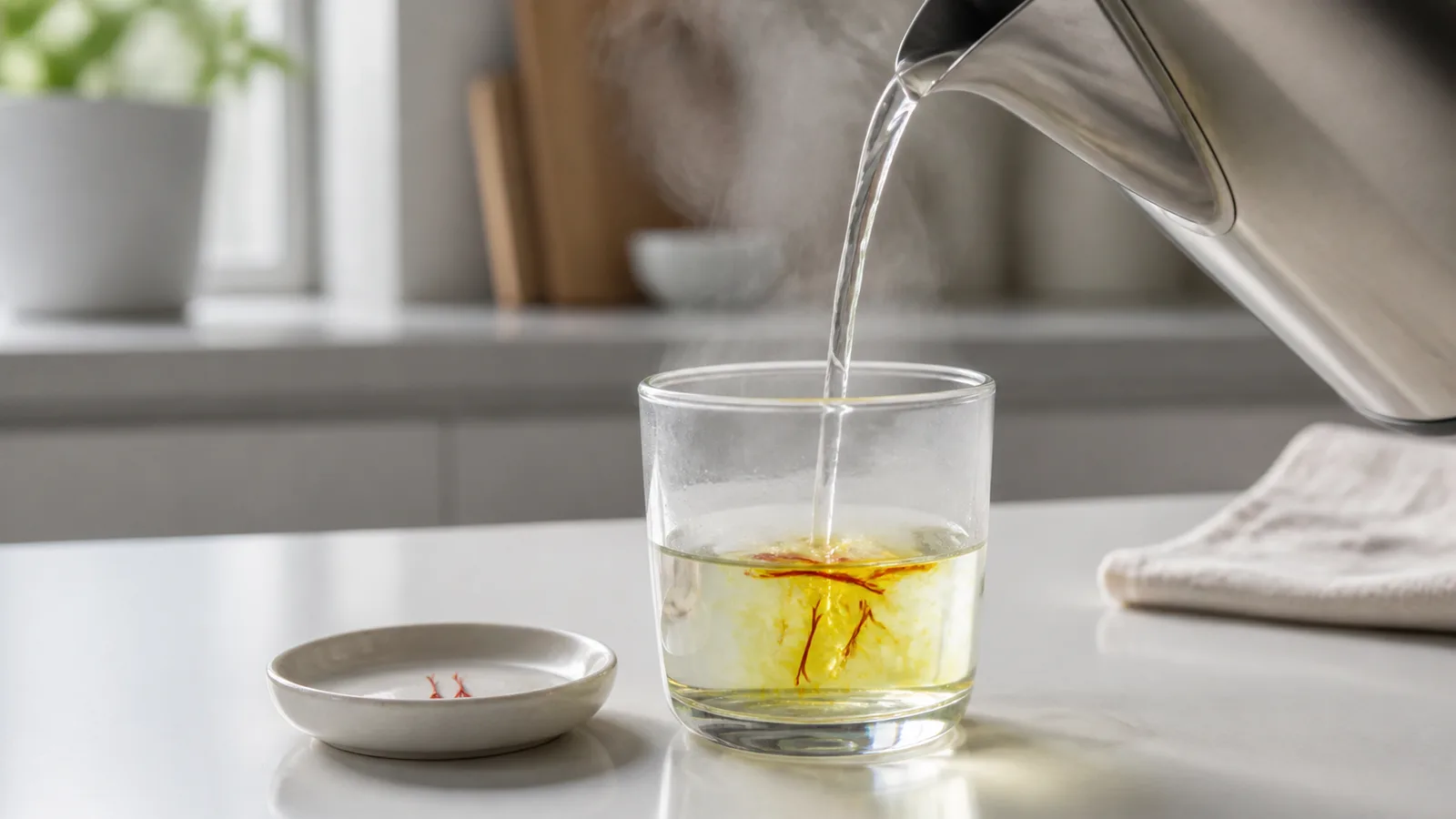
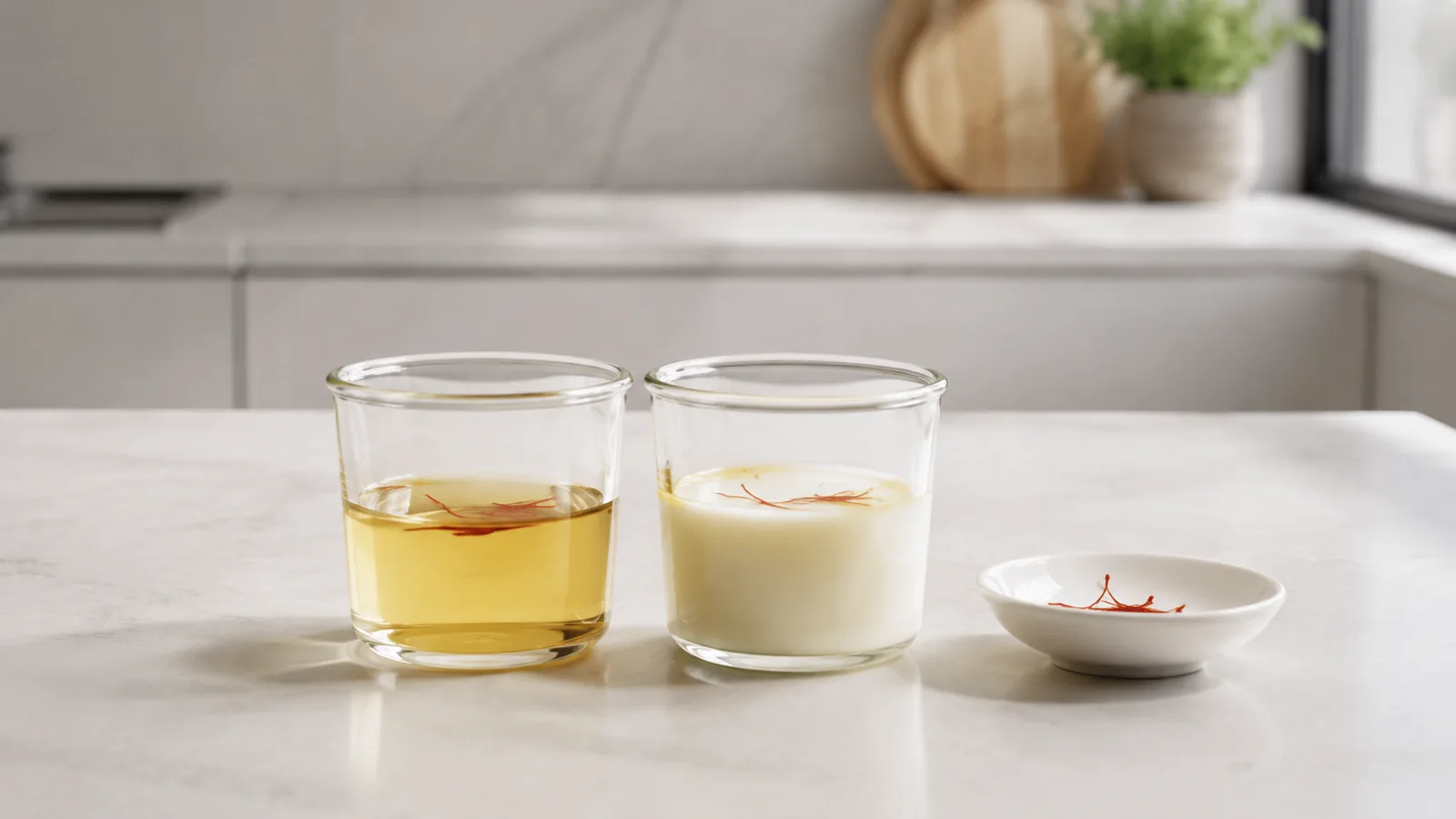
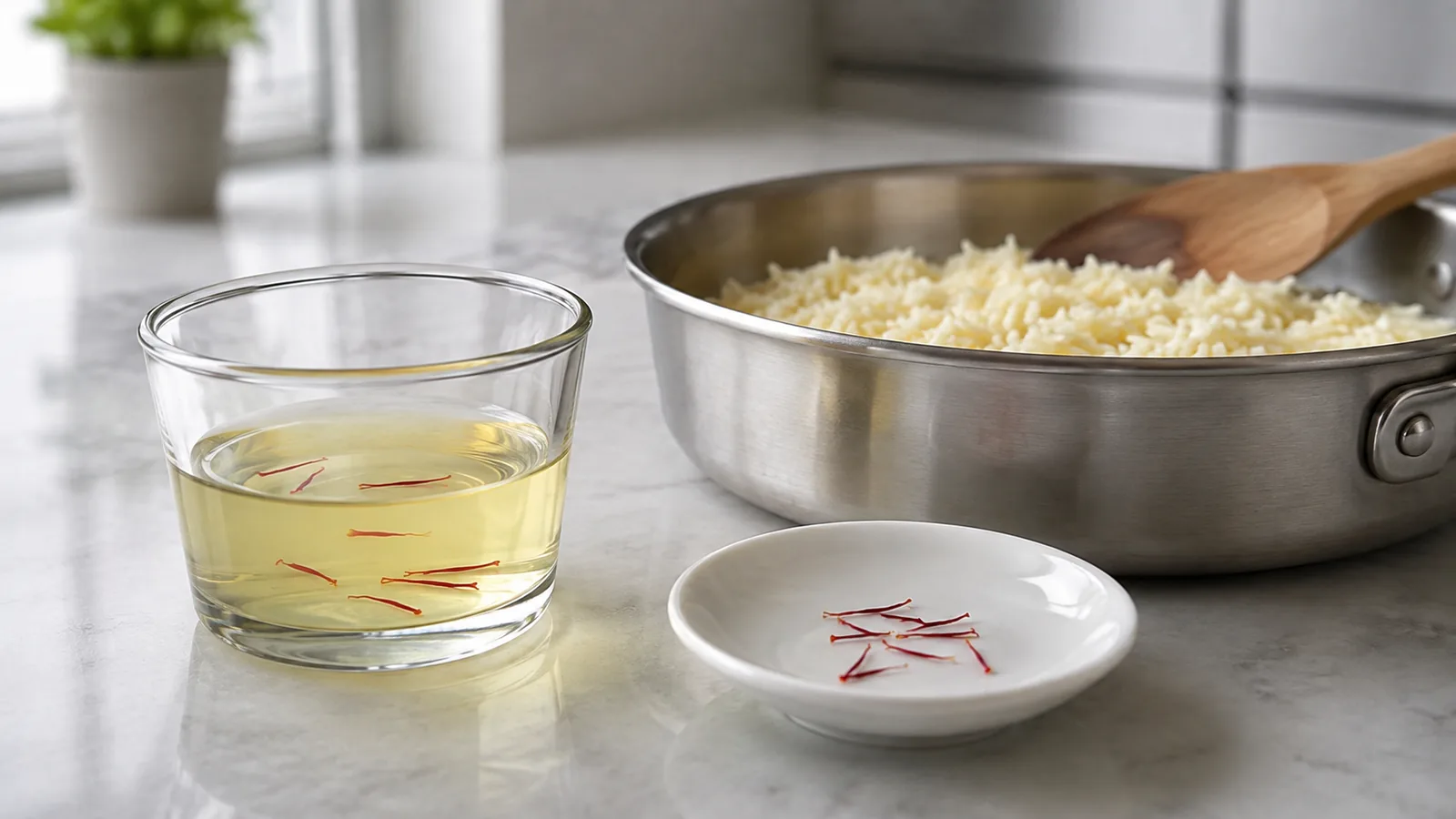
- Cover with a few spoonfuls of warm water, broth or milk.
- Leave for 5 to 10 minutes, or up to 15 minutes when convenient.
- Add the liquid and softened threads to the sauce.
- Toss with the pasta and enough reserved cooking water to coat it evenly.
Blooming first helps the colour and aroma spread throughout the dish. Our practical guide to using saffron when cooking pasta covers timing for different sauce styles.
Should saffron go in the pasta water?
It can, but a full pot dilutes the infusion and much of the coloured water is drained away. A better approach is usually to bloom saffron separately and add it to the sauce or to a measured amount of pasta water that will remain in the pan.
For fresh pasta dough, a concentrated infusion can be mixed into the liquid ingredients. Keep it small enough that it does not change the dough’s hydration.
A simple saffron linguine method
Cook the linguine until just shy of done. Meanwhile, soften a little shallot in butter or olive oil, add the bloomed saffron and a ladle of pasta water, then simmer briefly. Transfer the pasta to the pan and toss until the sauce clings to the strands. Finish with lemon zest, parsley or a modest amount of cheese according to the main ingredients.
For seafood saffron linguine, cook prawns or mussels separately enough to keep their texture, then return them as the sauce finishes.
How much saffron should you use?
Use the quantity in a tested recipe or begin with a small measured pinch for a household pan. Thread counts vary because stigmas differ in size. Adding a large handful can make the sauce bitter and wastes the spice.
The goal is a golden tint and a clear aroma, not fluorescent yellow pasta.
Why saffron pasta can taste bitter
Common causes are too much saffron, an infusion that was scorched, or a sauce reduced aggressively after the spice was added. Burnt garlic, overheated butter and bitter wine can also be mistaken for saffron.
Add the infusion after long reductions are complete. Taste before increasing the dose.
Does quality matter in a sauce?
Authentic, well-stored threads should bring a clean recognisable aroma. Old or damp saffron may contribute colour with little fragrance, while adulterated material can introduce unrelated flavours or dye.
Store saffron airtight and away from heat, light and moisture. Crush only what the recipe needs.
How saffron compares with other pasta seasonings
Saffron is not hot like chilli, woody like rosemary or sweet like vanilla. Turmeric can colour pasta yellow but tastes different. The spice is most successful when treated as an aromatic ingredient rather than only a colouring agent.
For the broader sensory profile, read what flavour saffron gives to food.
The taste in one sentence
What does saffron taste like in pasta? It gives the sauce a floral, earthy and honeyed character with gentle bitterness, making simple ingredients feel warmer and more layered without hiding them.