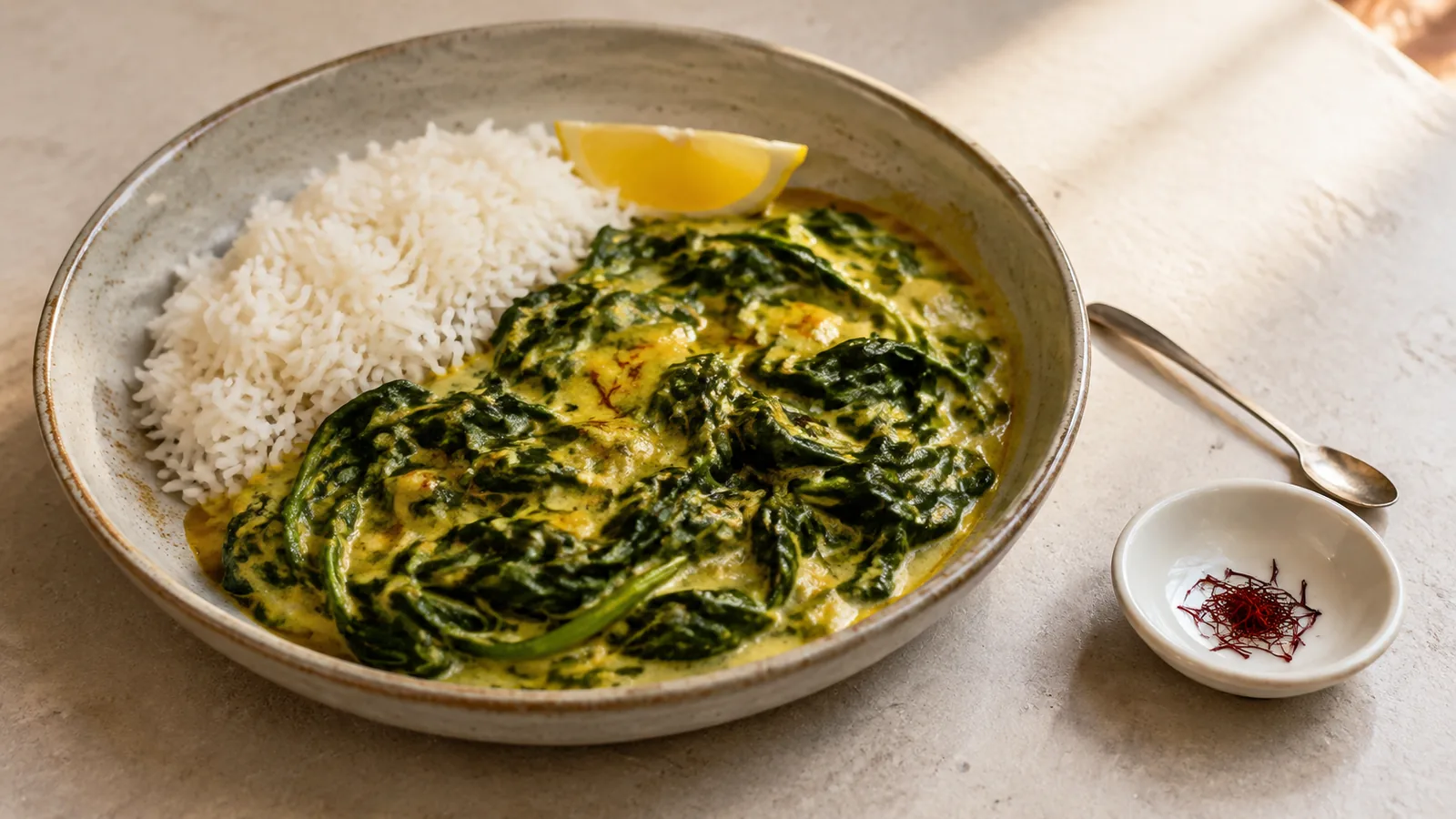
Is saffron used in Indian food? Yes—especially in festive rice dishes, milk sweets and recipes shaped by Mughal and regional traditions. It is not an everyday ingredient in every Indian kitchen, but saffron in Indian cuisine has a clear and long-established place.
Where saffron appears in Indian cooking
Saffron is often known as kesar. Because it is expensive and powerful, cooks generally use it in small amounts where its aroma, flavour and golden colour will be noticed. Its cultural significance varies by family and region; in some celebratory meals it is associated with prosperity, richness and care in preparation. Those meanings form one part of the culinary heritage carried by traditional recipes and an appreciation for quality spices, but they are not universal.
The spice is particularly visible in Mughlai-style cookery and in dishes associated with Kashmir. It also appears in recipes across the country wherever fragrant rice, milk, nuts and warming spices are part of the local repertoire.
Indian rice dishes that use saffron
Biryani
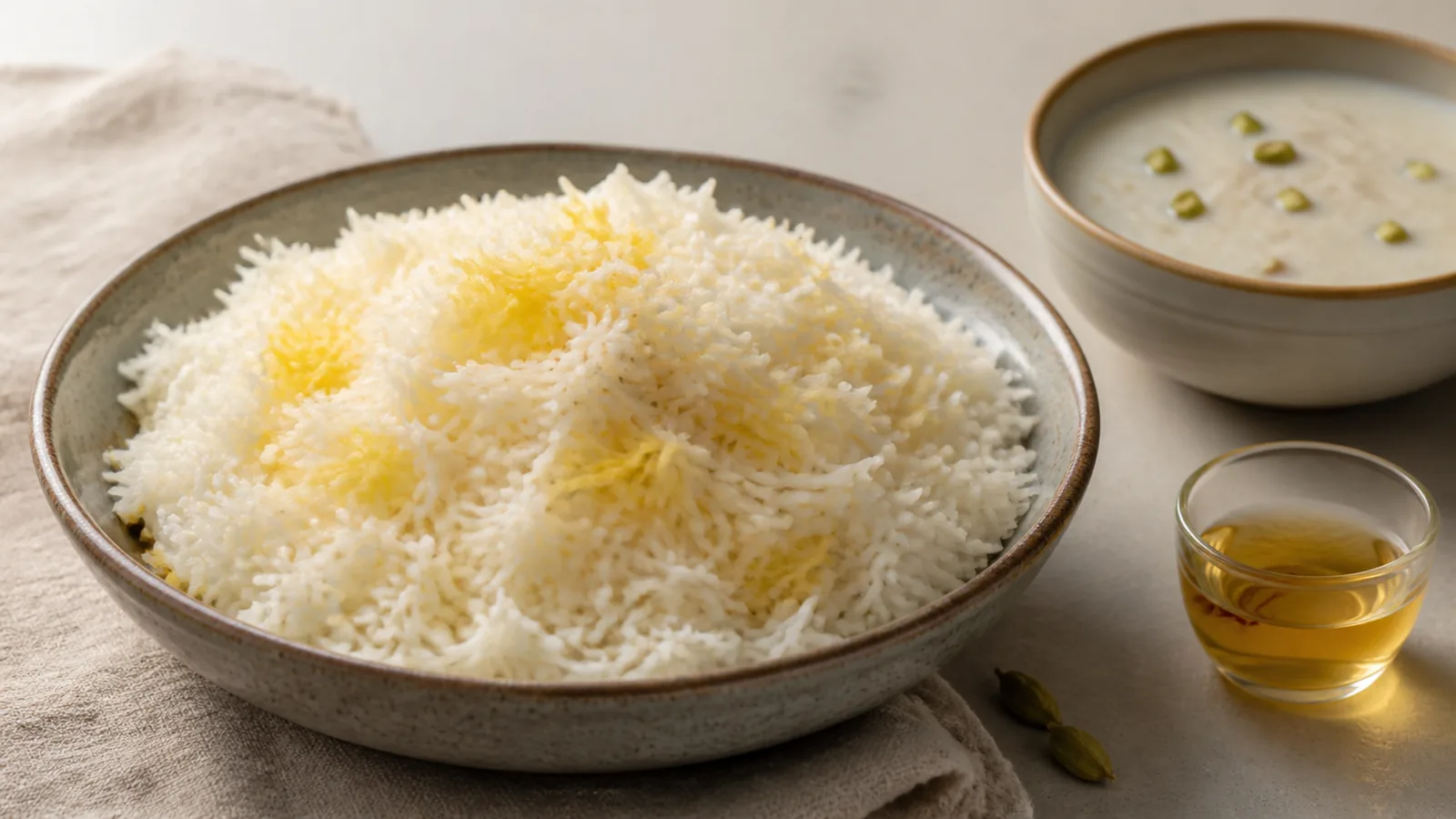
A saffron infusion may be drizzled over layered rice before the pot finishes cooking. This creates irregular white and golden grains rather than dyeing every grain the same shade. The aroma joins basmati rice, fried onion, herbs, meat or vegetables without replacing them.
Pulao and festive rice
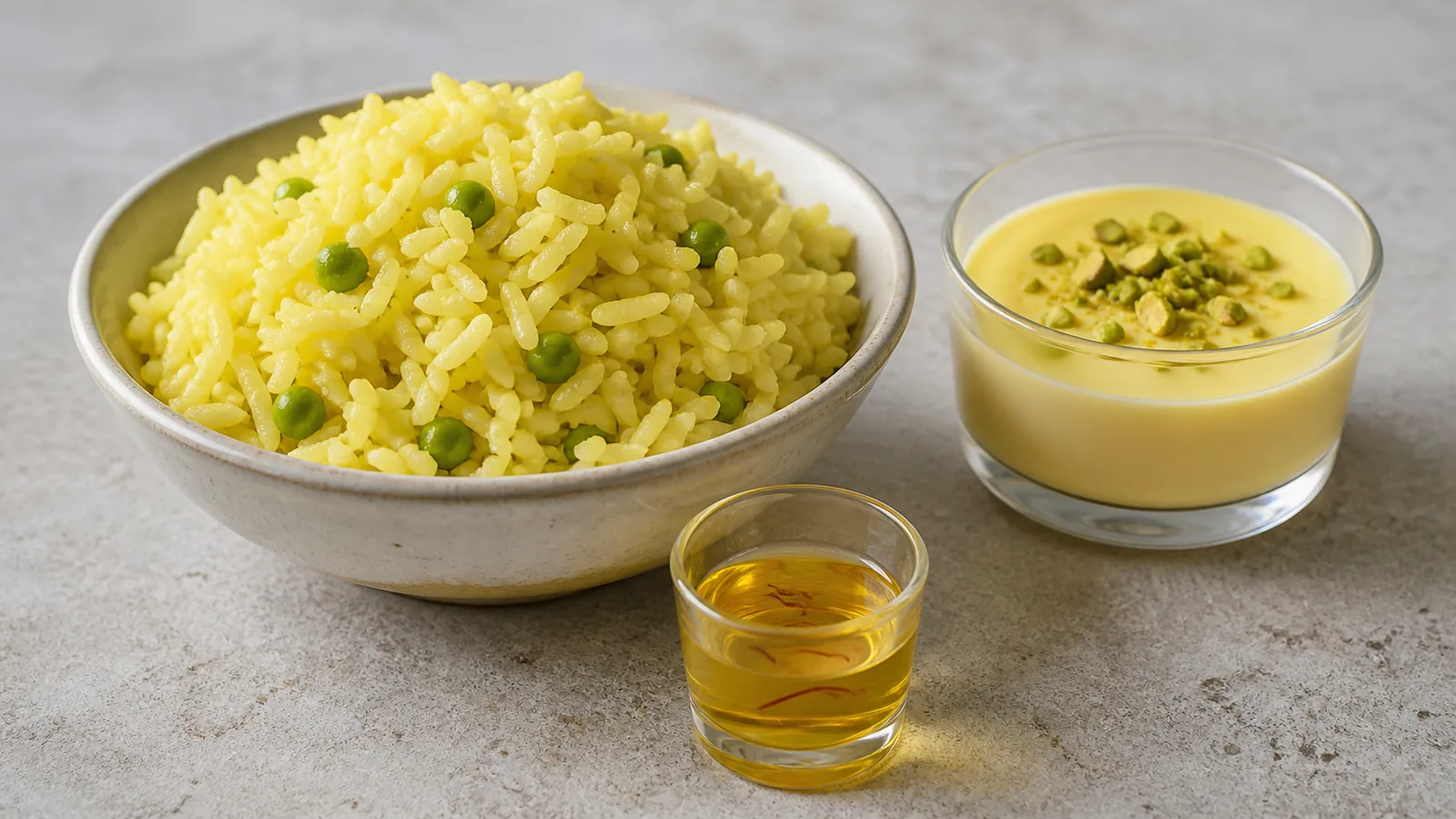
Some pulao recipes use saffron with nuts, dried fruit or whole spices. The result can be savoury or gently sweet depending on the dish. Saffron should remain one element in the fragrance, not obscure cardamom, cinnamon or the rice itself.
For practical dose guidance, see how much saffron to use in rice.
Indian sweets and drinks with saffron
- Kheer and payasam: rice, vermicelli or another base is cooked in milk, with saffron added for aroma and colour.
- Kulfi: saffron works with reduced milk, pistachio, almond or cardamom.
- Phirni: a ground-rice pudding in which a small bloom disperses easily.
- Shrikhand: some versions pair saffron with thickened yoghurt and cardamom.
- Kesar milk: one of several sweet milk preparations in which bloomed saffron is stirred into gently heated milk, sometimes with nuts or restrained sweetener.
These preparations show why saffron suits dairy. Milk softens bitterness and carries its aroma, while the spice gives a pale golden colour and a distinctive floral note.
What flavour does saffron add?
Saffron is floral, hay-like, faintly honeyed, slightly sweet and gently bitter. Calling it merely sweet misses much of its character. Its aroma can sit beside spices commonly found in Indian cooking—along with rose water, nuts, basmati rice and dairy—but those pairings still need restraint.
It does not automatically balance every strong spice. In an aggressively chilli-hot or heavily roasted mixture, a tiny quantity may disappear. Successful savory and sweet dishes make room for its delicate aroma, so the sensory experience remains clear rather than muddled.
How saffron colours Indian dishes
Crocin and related pigments produce a golden-yellow infusion. In biryani, the bloom often creates patches of colour; in kheer or kulfi, it can tint the base more evenly. A natural result need not be bright orange.
Colour is only one quality signal. Artificial dye can also look vivid, so judge saffron by aroma, flavour, plausible crimson thread structure and traceable sourcing as well.
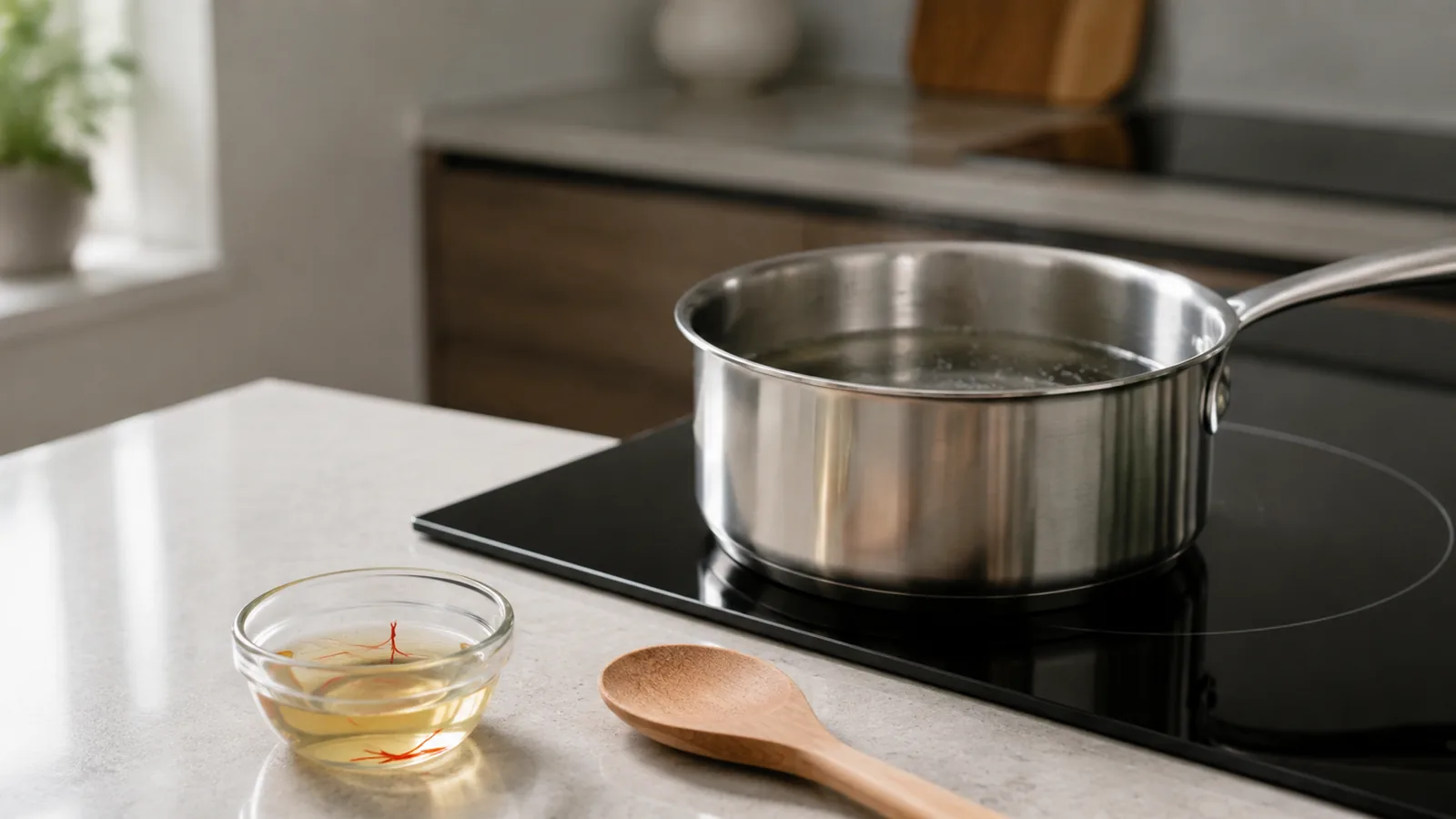
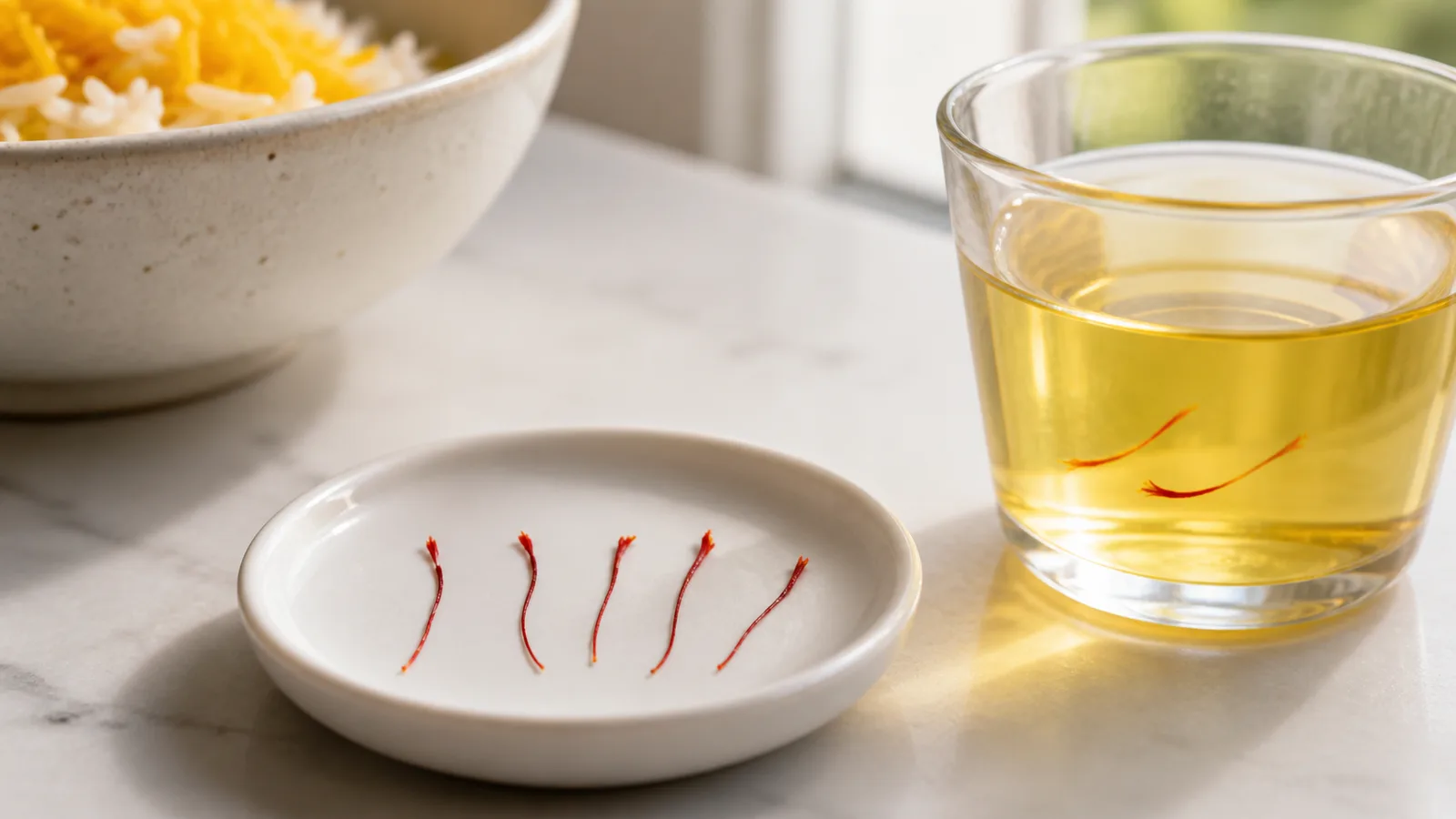
How to bloom saffron for Indian recipes
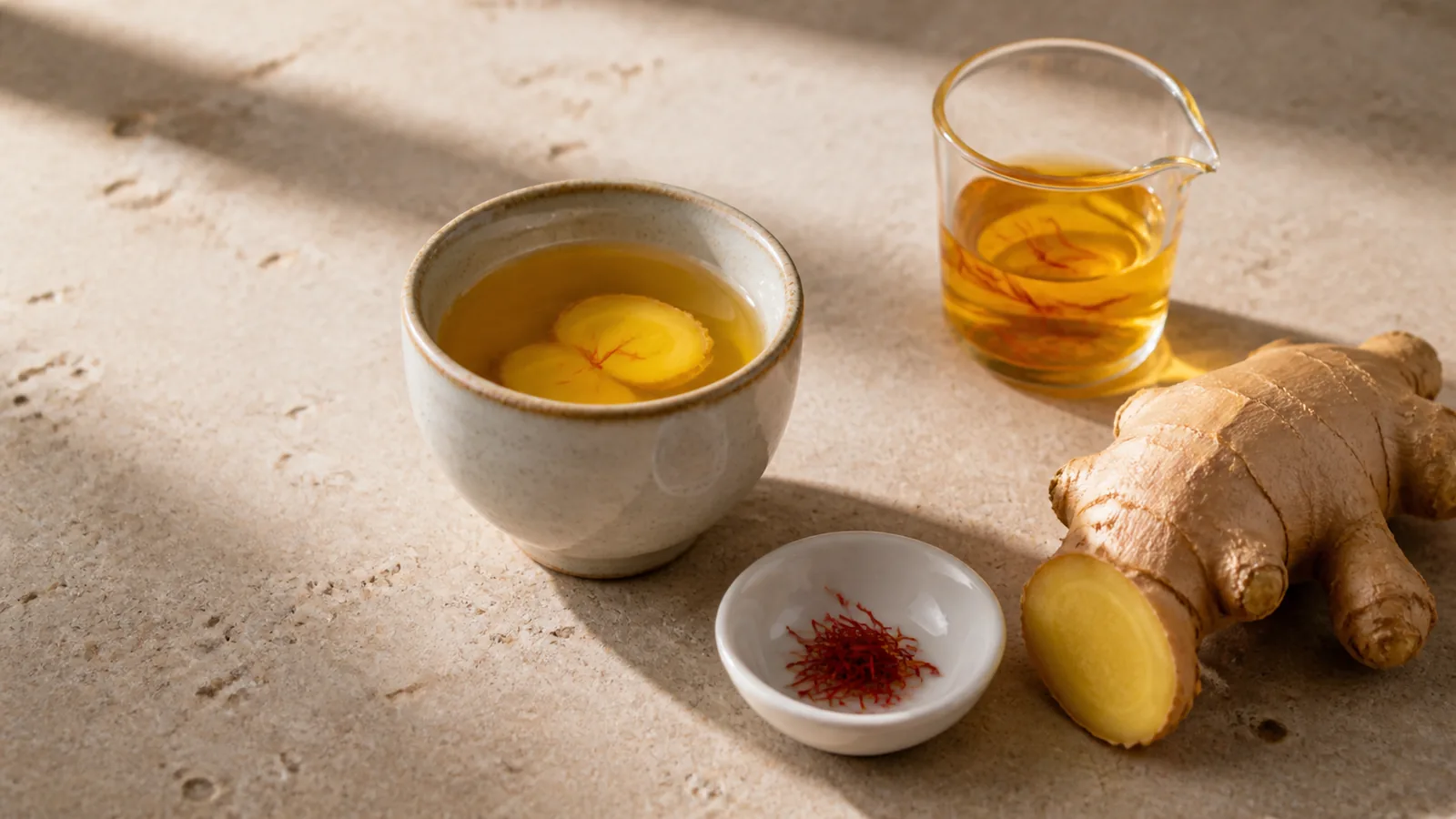
- Lightly crush a small pinch of saffron threads.
- Place them in a small cup of warm milk or warm water.
- Cover and steep for 10 to 15 minutes.
- Add the complete infusion, including the softened threads, to the dish.
Warm milk is useful for dairy desserts; water keeps the colour easy to see and works well for rice. Blooming before cooking improves distribution of colour, flavor and aroma. Avoid keeping the saffron at a hard boil for a long time.
When to add it
For biryani, drizzle the infusion during layering or shortly before the final covered cook. For kheer, phirni and other milk desserts, stir it in late enough to preserve fragrance but early enough to spread through the mixture. For kulfi, add it while the base is still warm and fluid.
Dry threads scattered on top can be decorative, but garnish alone does not extract much flavour. Put most of the measured saffron into the dish as an infusion.
Is saffron essential to Indian cuisine?
No single ingredient defines all Indian cooking. Many celebrated Indian dishes contain no saffron at all. The spice is better understood as a valued specialist ingredient used in particular regional, courtly, festive and sweet preparations.
That distinction matters: saying that Indian cooking uses saffron is accurate; suggesting that all Indian food depends on it is not.
Choosing saffron for Indian dishes
High-quality saffron should have a recognisable aroma and predominantly crimson threads. This luxurious spice still needs ordinary authenticity checks: plausible structure, careful storage and traceable sourcing. Labels such as “premium saffron” do not guarantee strength, and excessive quantities can make a dish bitter.
For the wider culinary context, see which cuisines use saffron most often.
The short answer
Indian cooking uses saffron selectively and purposefully: in biryanis, pulaos, kheer, kulfi, phirni, kesar milk and other special dishes. A small, properly bloomed amount adds golden colour, floral aroma and subtle complexity while respecting the rest of the recipe.