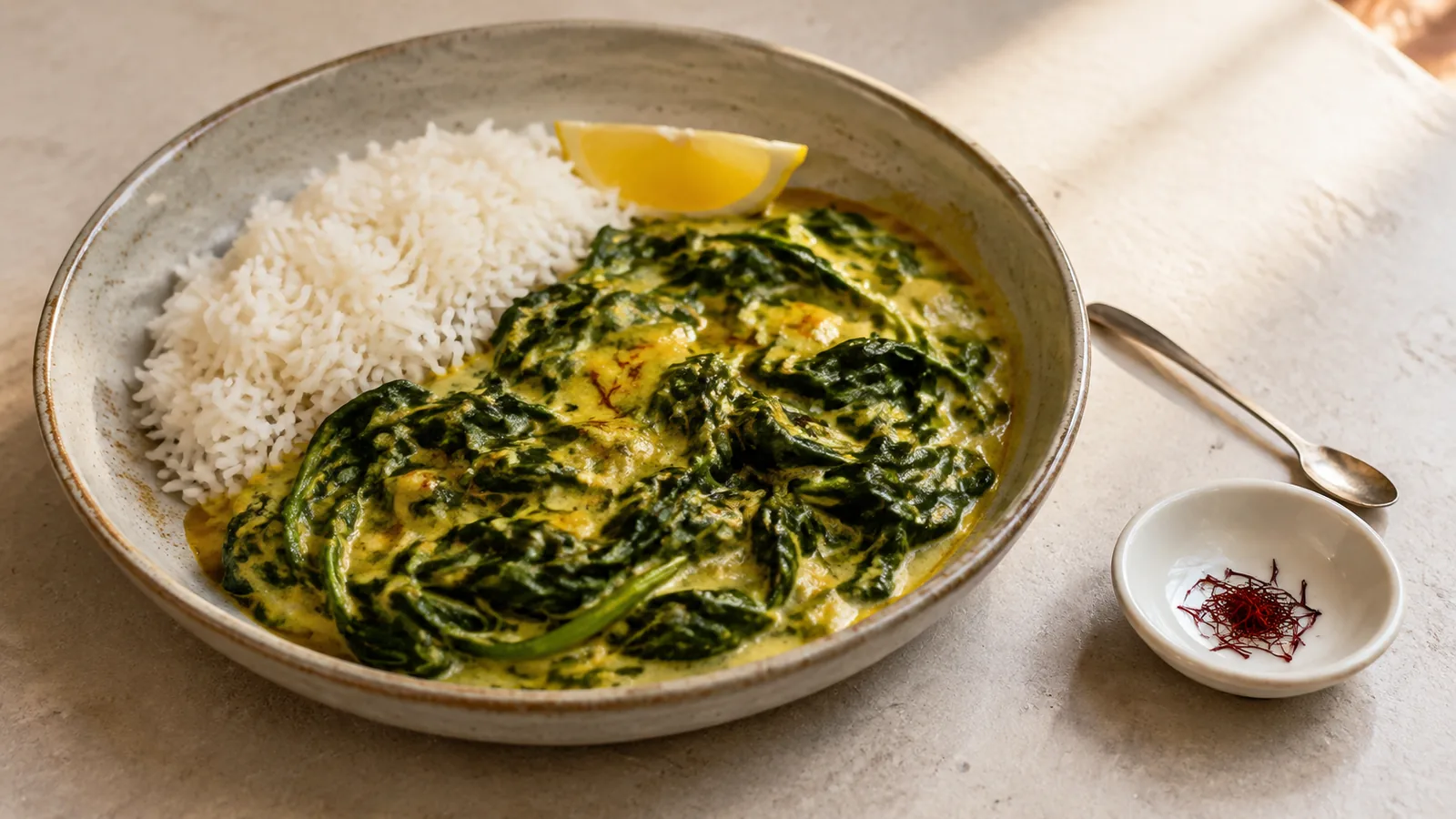
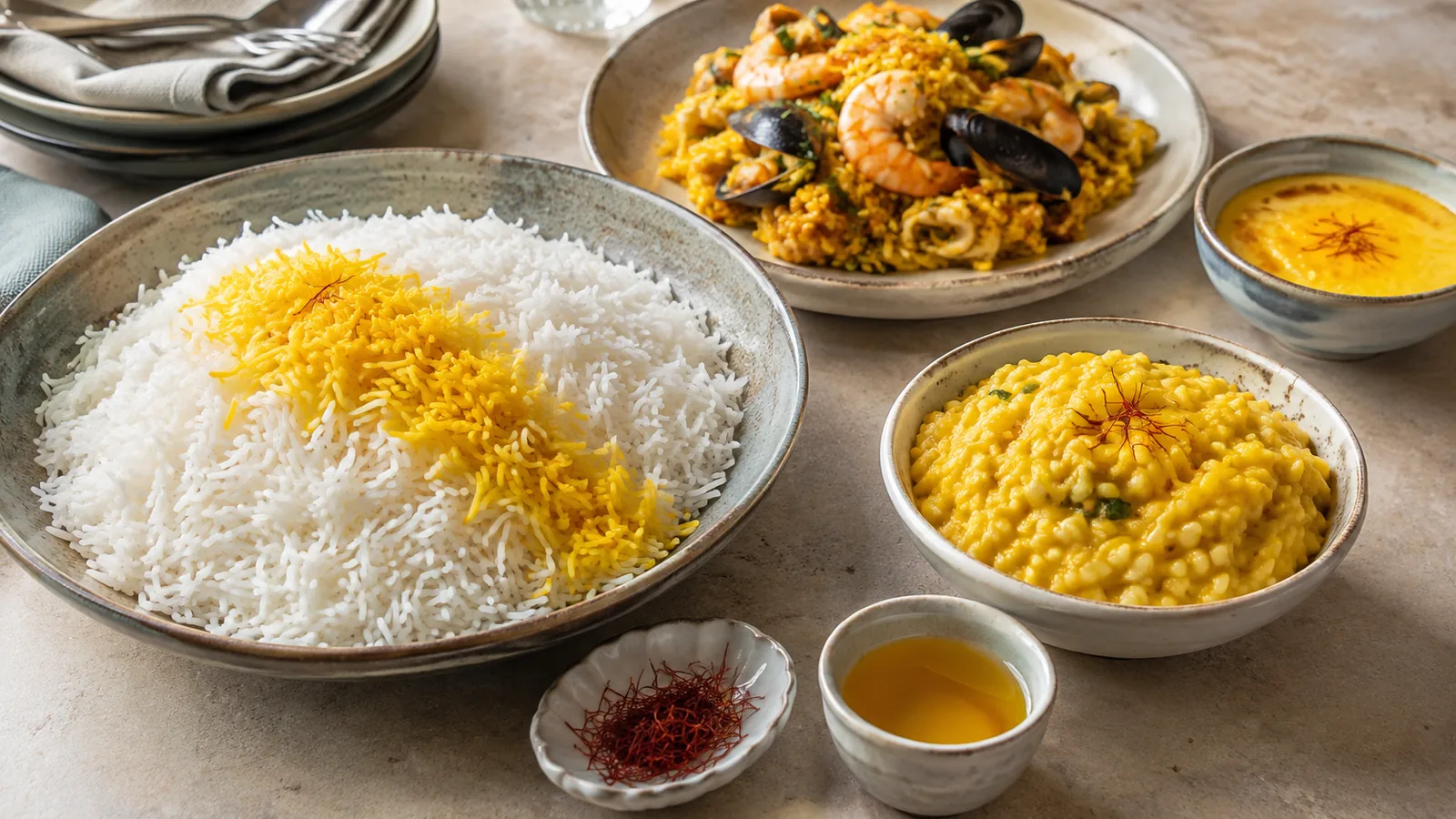
Saffron is most closely associated with Iranian and wider Persian cuisine, where it appears in rice, stews, sweets and drinks. It is also central to dishes in India, Spain, Italy and parts of the Arab world, the eastern Mediterranean and North Africa. No single cuisine owns it; centuries of trade made saffron a global ingredient. That history explains the remarkable range of saffron in global cuisine today.
Why Persian cuisine is the clearest answer
Iran is both a historic centre of saffron culture and the source of much of the world’s supply. In Persian cooking, the spice is not reserved for one famous recipe. It colours rice, scents khoresh and marinades, flavours ice cream and puddings, and appears in tea, sherbet and celebratory sweets.
That range makes Persian cuisine the strongest answer to the question of where saffron is most often used. Household practice varies, but the spice has a sustained place across savoury and sweet cooking.
What color is saffron: red or yellow?
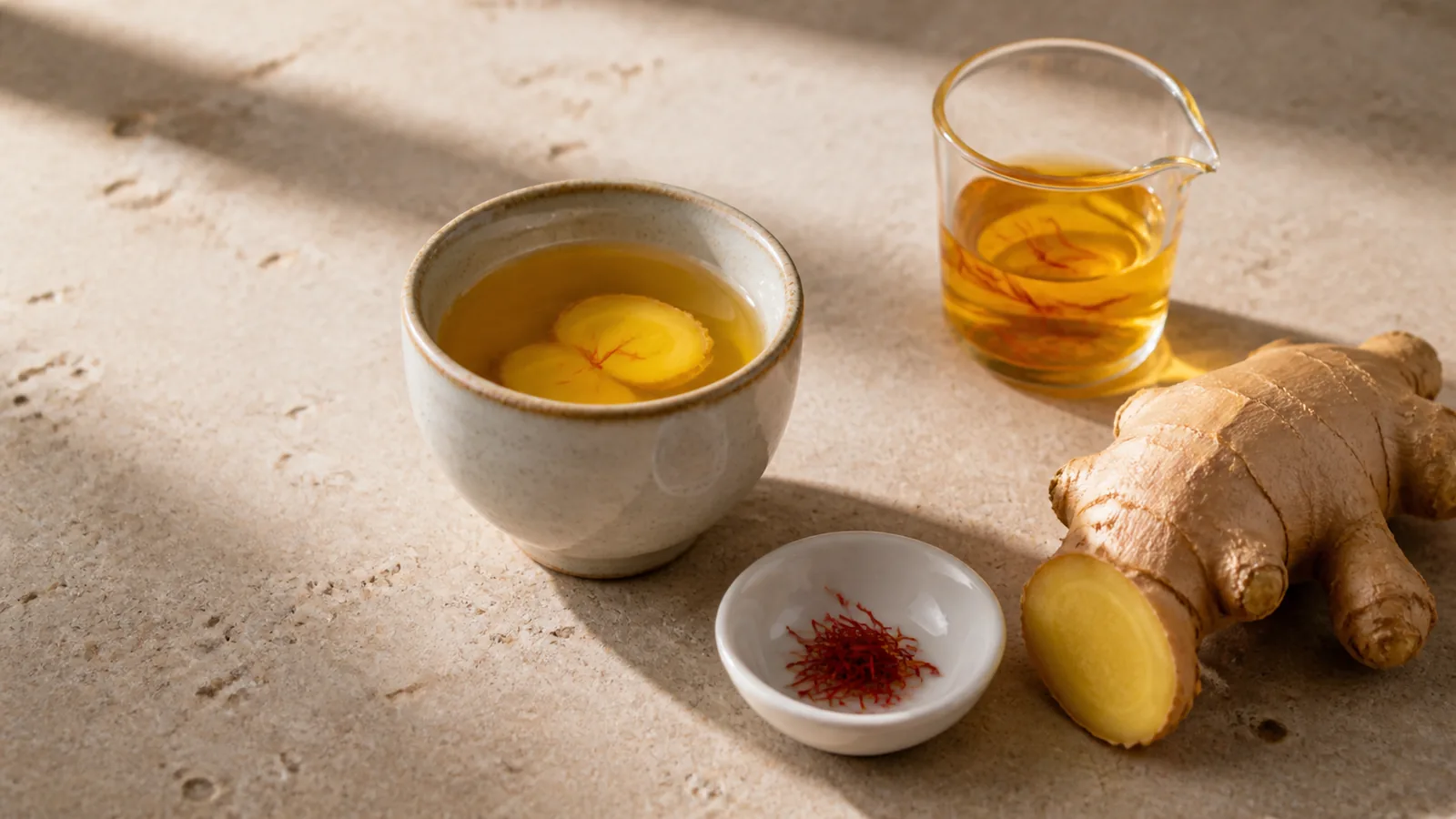
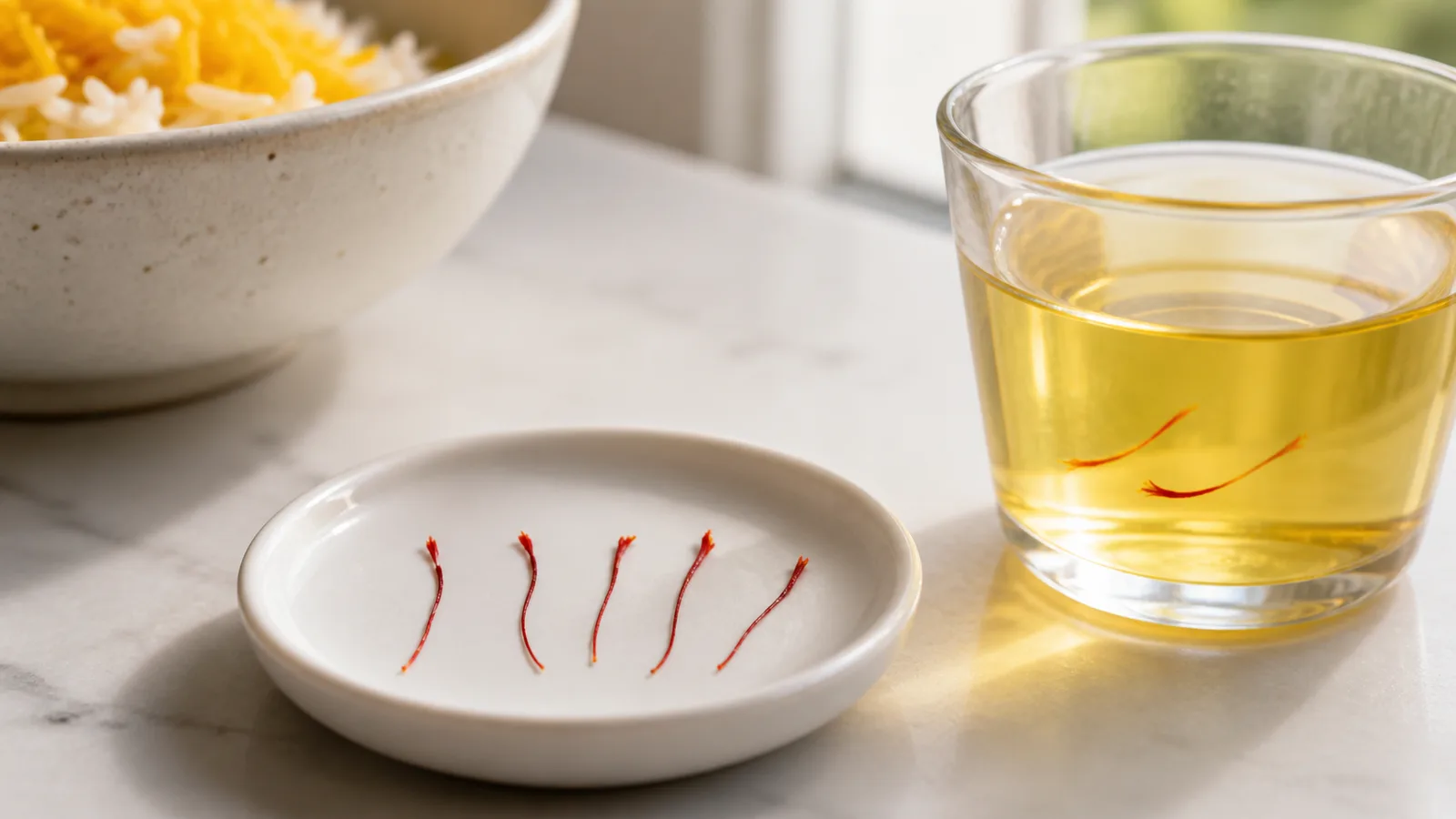
What colour is saffron spice itself? The dried spice is red, while the liquid and food it colours become golden yellow. This resolves the common questions “is saffron red or yellow?” and “is saffron yellow or red?” The threads are crimson stigmas; their water-soluble pigment, crocin, moves into water, milk or broth and creates the familiar yellow-gold hue.
The color of saffron in a dish depends on dose, freshness, storage, liquid volume and lighting. Saffron spice is not itself a yellow powder, and genuine food does not need to look fluorescent.
How real saffron releases colour
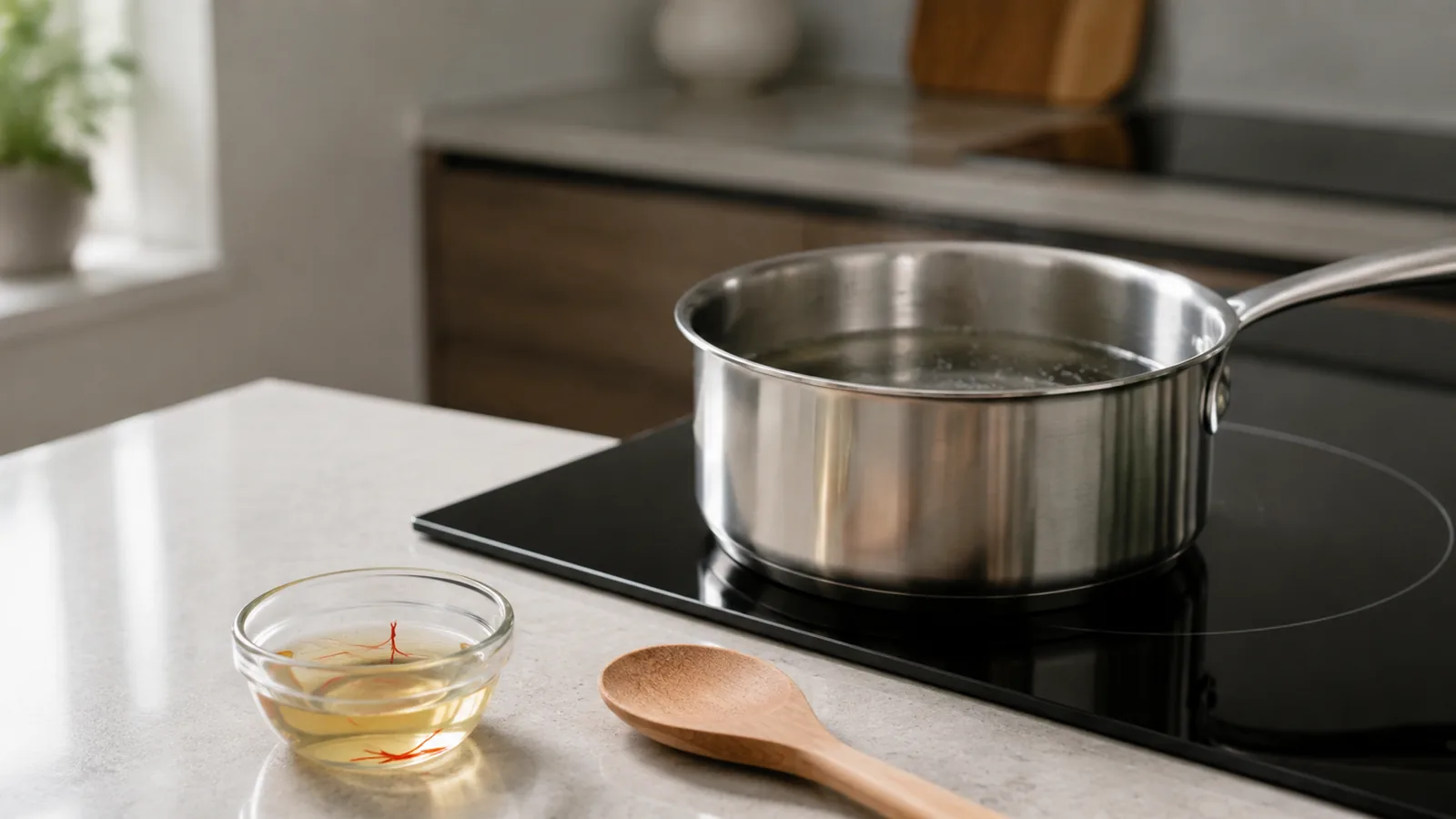
Lightly crush a few threads and steep them in warm water or milk for 5 to 10 minutes. Real saffron gradually releases a golden-yellow colour while the pieces often remain visibly red or dark crimson. Blooming also spreads its aroma and flavour through the dish.
A home saffron color test can reveal warning signs, such as an instant orange plume from surface dye or other artificial colouring, but it cannot prove authenticity by itself. Thread structure, aroma, packaging, traceability and laboratory analysis all provide additional evidence. A slowly developing yellow infusion is consistent with real saffron, not a guarantee.
Our dedicated guide to why real saffron turns food yellow examines that process in detail.
Saffron in Indian cuisine
Across India, saffron is used in biryani, pulao, kheer, kulfi, milk drinks and sweets. Kashmiri cooking and regional ceremonial dishes give it particular cultural importance. It is often infused in milk, then drizzled through rice or folded into dairy desserts.
Cardamom, rosewater, nuts and gentle warming spices are common partners. The combinations vary by region and recipe.
Saffron in Spanish cuisine
Paella is the internationally recognised example, but saffron also appears in other rice dishes, fish preparations, soups and sauces. It normally enters through warm stock so the colour and aroma spread evenly.
Spanish regional recipes differ, and not every yellow rice uses saffron. Some preparations rely on other colouring ingredients.
Saffron in Italian cuisine
Risotto alla Milanese is Italy’s best-known saffron dish. The spice gives the rice a warm colour and aromatic depth that complements butter, stock and cheese. It also appears in pasta, breads, seafood recipes and regional sweets.
In risotto, timing matters: saffron should have enough contact with the liquid to spread, but it need not boil through the entire cooking process.
Arab, Turkish and eastern Mediterranean uses
Saffron features in rice, meat dishes, sweets and hot drinks across parts of the Arab world and Turkey. It may be paired with cardamom, cinnamon, rosewater, citrus, nuts or dried fruit. Gulf rice dishes and coffee traditions are particularly visible examples, although household practice is diverse.
In the eastern Mediterranean, the spice also appears in breads, broths, seafood and festive foods.
North African and French cooking
Moroccan dishes may use saffron in tagines, rice, soups and celebratory cooking, often alongside ginger, cinnamon or preserved lemon. In France, bouillabaisse and related fish soups show how saffron’s floral warmth suits seafood broth.
These traditions demonstrate the same practical idea: dissolve the spice’s compounds into a liquid that can carry them through the meal.
Scandinavian baking
Saffron buns, especially those associated with St Lucia celebrations in Sweden, are among northern Europe’s most recognisable saffron foods. Warm milk helps distribute the spice through enriched dough, creating a golden crumb and distinctive aroma.
The bread context brings forward saffron’s honeyed and floral side rather than the savoury depth found in rice or broth.
What these cuisines have in common
Although the dishes are different, successful saffron cooking tends to follow a few shared principles:
- use a measured amount because too much can taste bitter;
- bloom or disperse the threads in warm liquid;
- pair them with rice, dairy, broth, seafood or gently seasoned meat;
- avoid prolonged excessive heat in an uncovered pan, which drives away aroma;
- balance stronger spices so saffron remains perceptible.
Which dishes are good places to start?
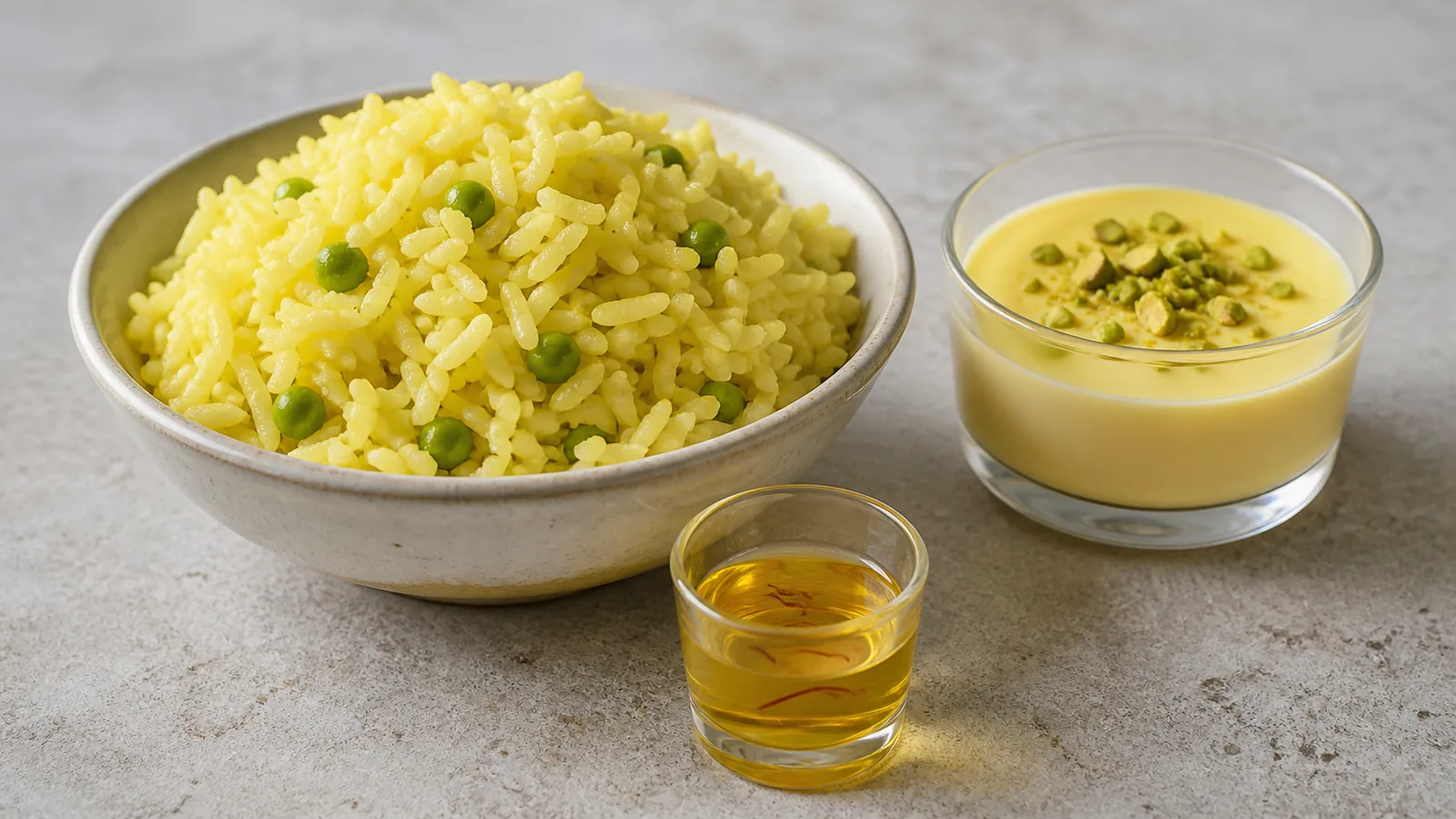
A simple saffron rice or pilaf is the easiest introduction because the colour, aroma and flavour are clear. Risotto, biryani and paella teach how the infusion works with stock. Rice pudding, custard or warm saffron milk shows its sweeter side.
For more options, see what you can cook with saffron.
Quality and storage across every cuisine
High-quality saffron contains more useful aroma, flavour and colouring potential than old, damp or adulterated material. Keep authentic threads airtight, dry and away from light and heat. Crush only the amount required by the recipe.
Origin and grade influence appearance and strength, but careful storage and honest traceability matter more than romantic claims about one national style being automatically superior.
The global answer
In what cuisine is saffron most often used? Persian cuisine has the broadest and deepest everyday relationship with it, but Indian, Spanish, Italian, Arab, Turkish, North African, French and Scandinavian traditions all contain important saffron dishes. Its red threads and golden-yellow infusion connect that remarkably wide culinary map.