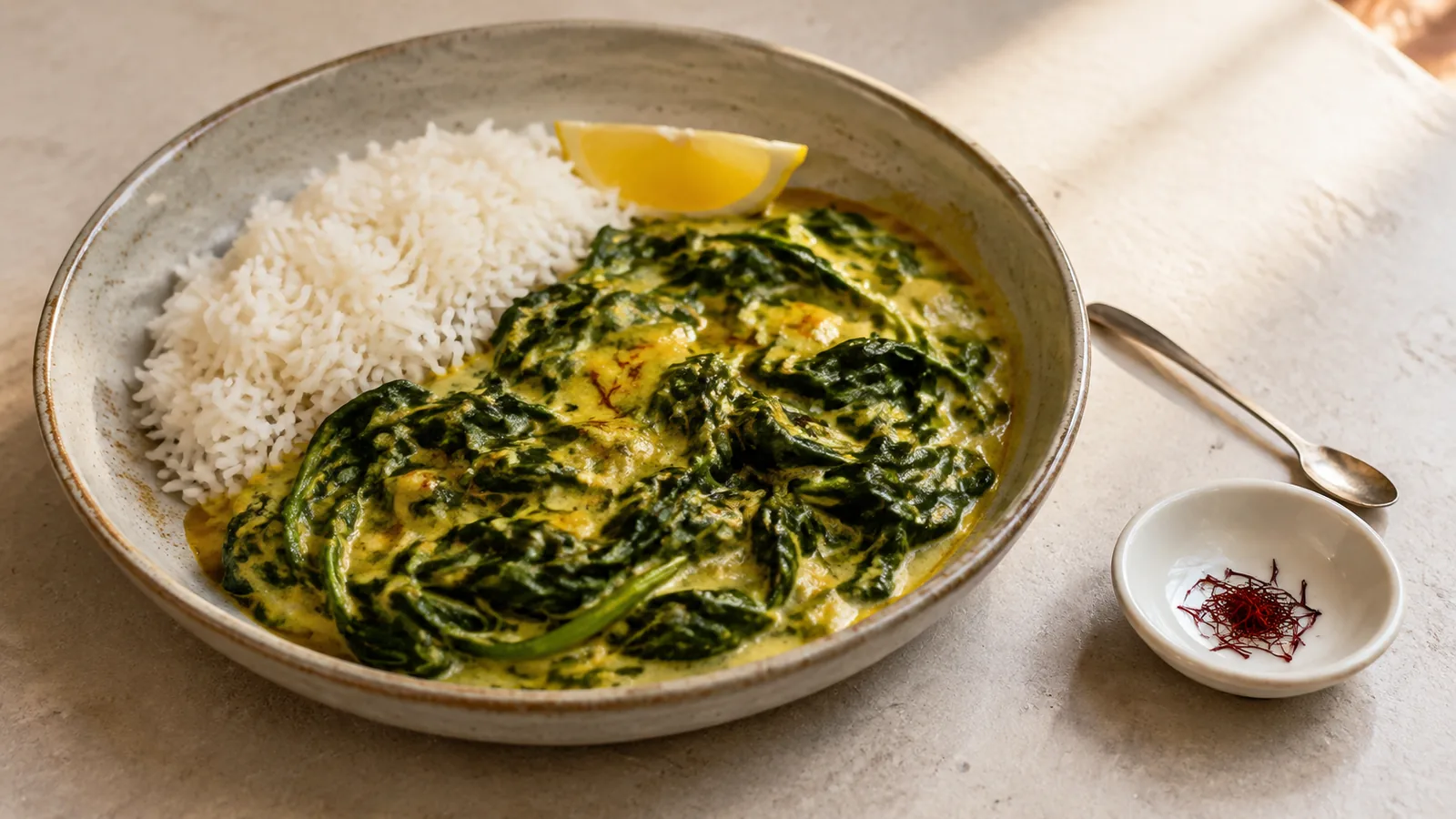
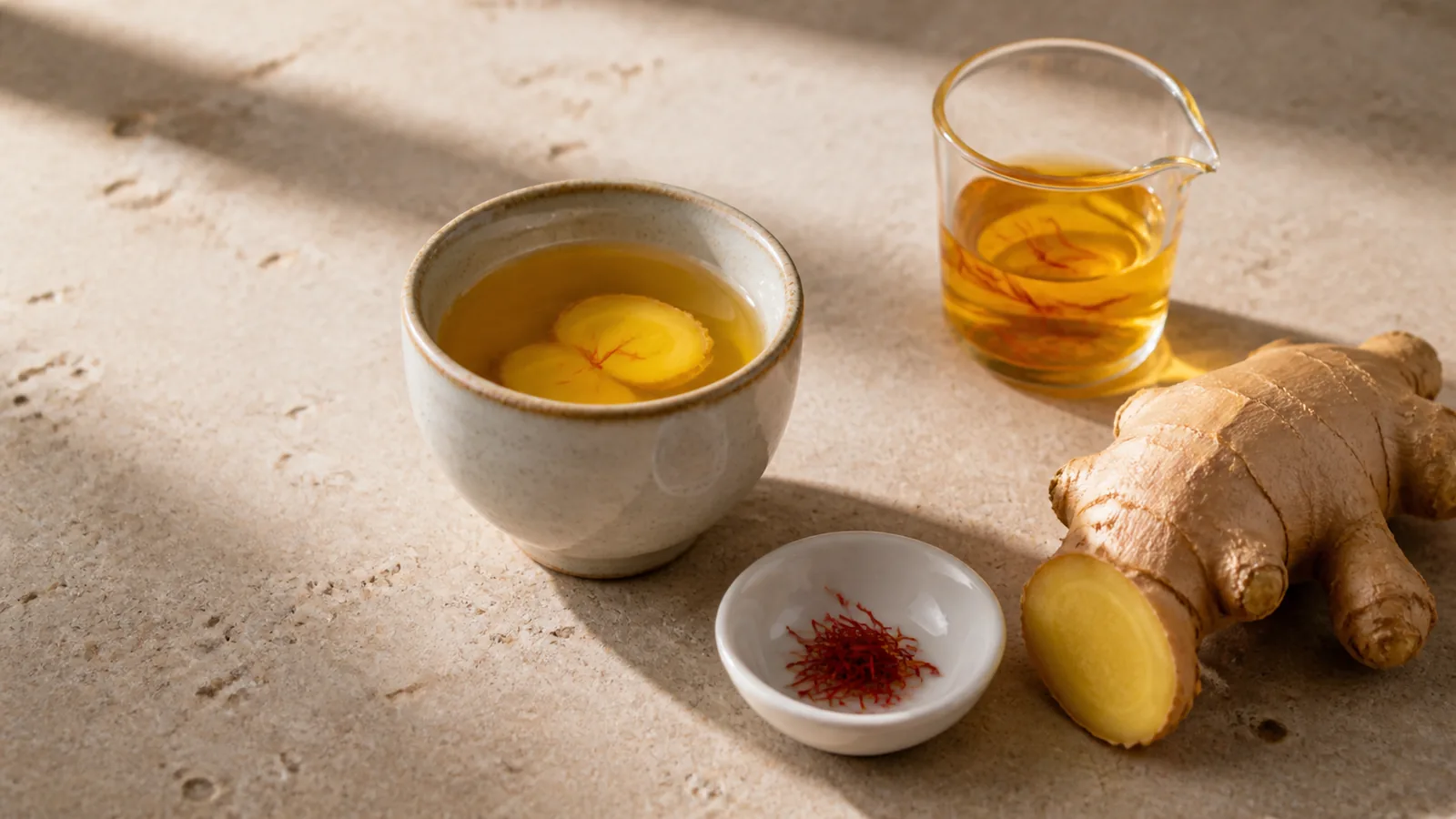
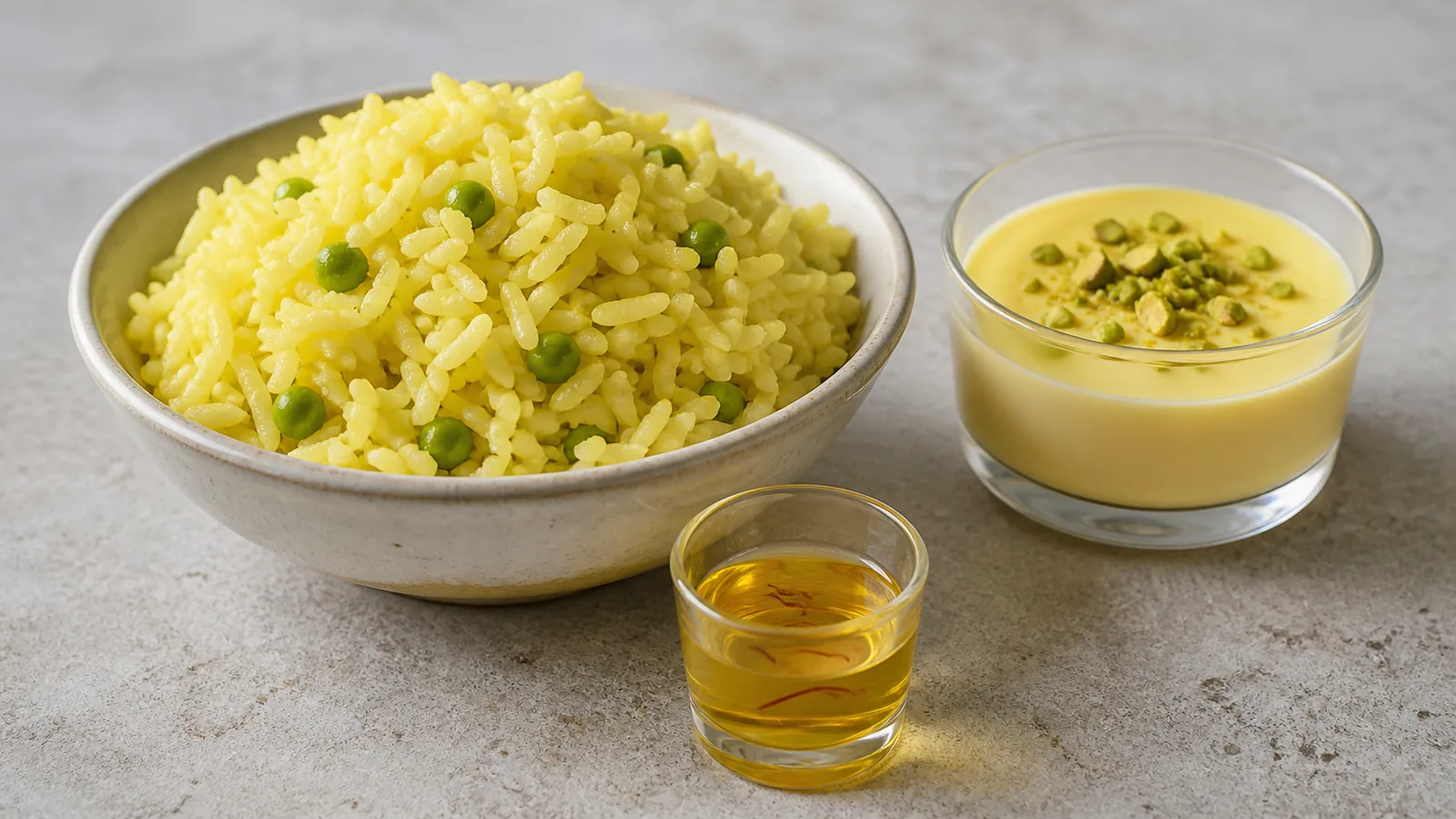
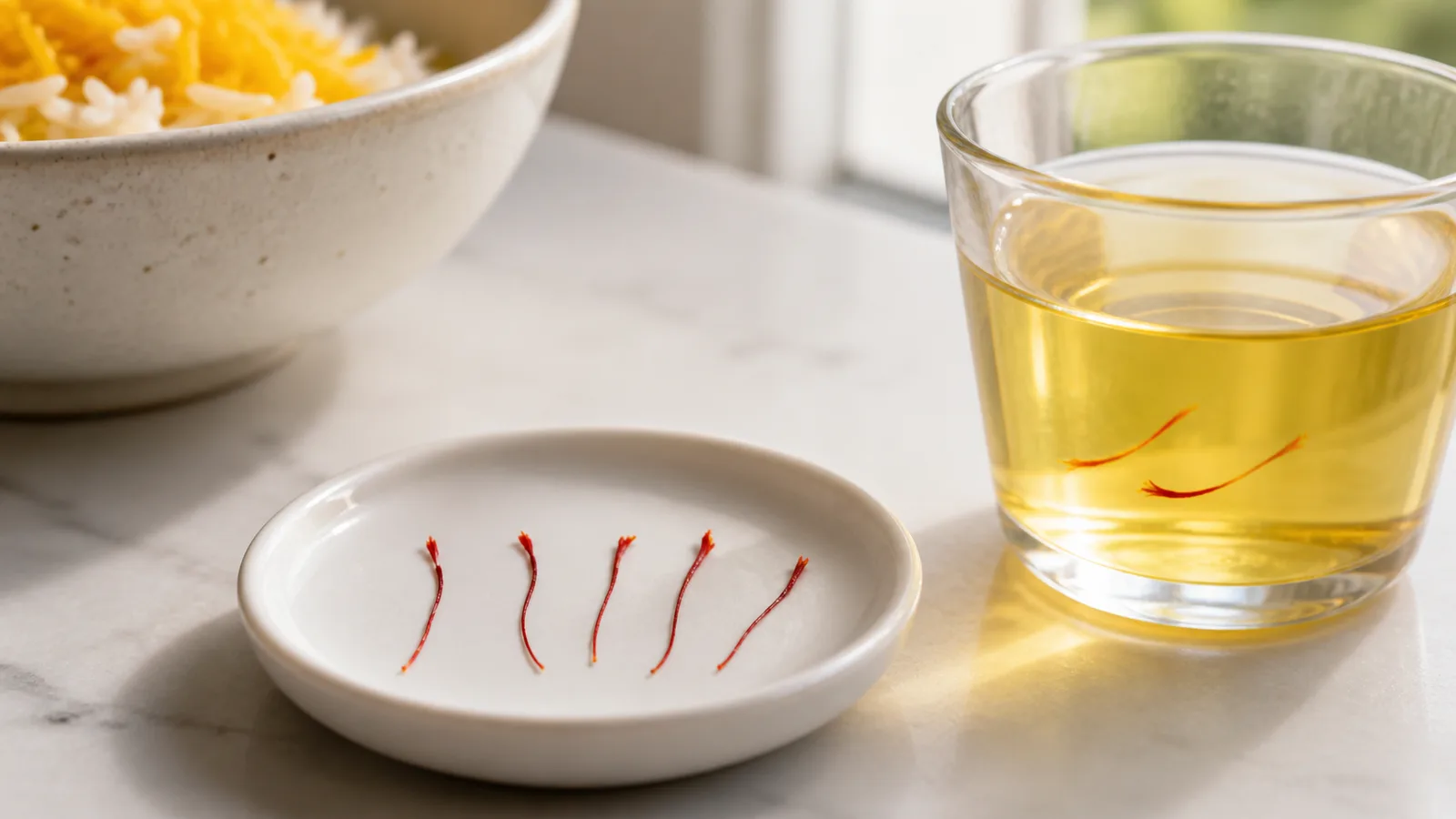
Yes. Real saffron turns water, milk and food a golden-yellow colour when its pigments are extracted. The dried spice itself is red or deep crimson, so both descriptions can be correct: red threads create a yellow-gold infusion.
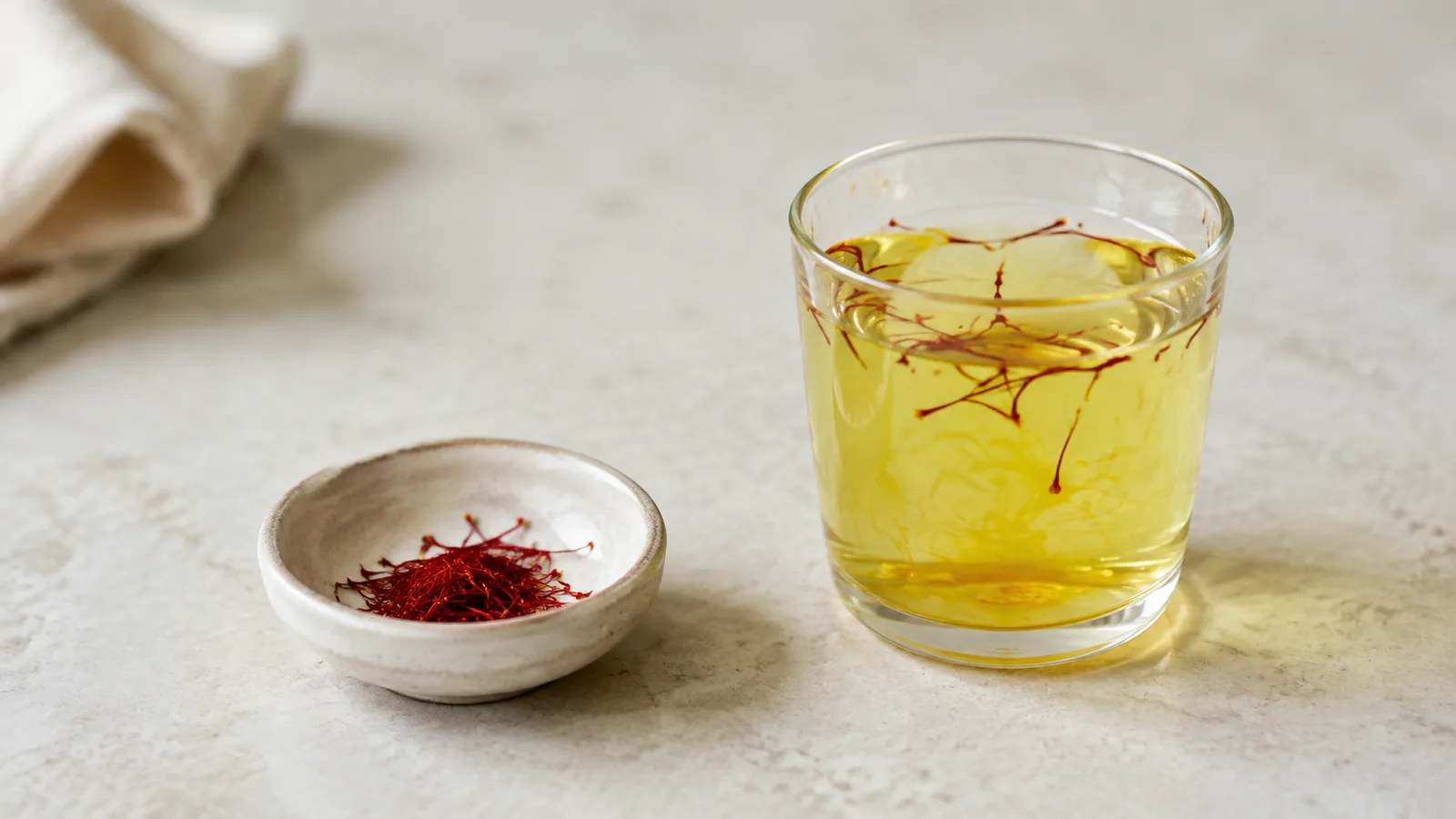
For saffron color authenticity, that contrast matters more than a single shade viewed in isolation.
Is saffron yellow or red?
If you are looking at genuine dried stigmas, saffron should be predominantly red. If you are looking at the liquid they have coloured, saffron yellow is the expected result. The thread and the infusion are not supposed to be the same shade.
This is why the questions “is saffron yellow?” and “what color is saffron spice?” need context. Saffron spice is red; the color of saffron in a prepared dish is commonly golden yellow.
People sometimes call saffron spice yellow because of the colour it gives food, but the usable stigmas should not resemble a jar of uniform yellow powder. What color is saffron? In thread form it is crimson; once infused, it is gold. The same answer applies when the question is phrased “what colour is saffron?”
Why does saffron turn yellow?
Crocin and related water-soluble pigments move out of the dried stigmas when they meet water. As those compounds disperse, the liquid develops a clear yellow-to-golden hue. Crushing increases the surface area, while warmth and time help extraction.
The colour can appear gradually even though the aroma is already noticeable. Opaque milk also makes a pale result harder to see than clear water.
How quickly should real saffron release colour?
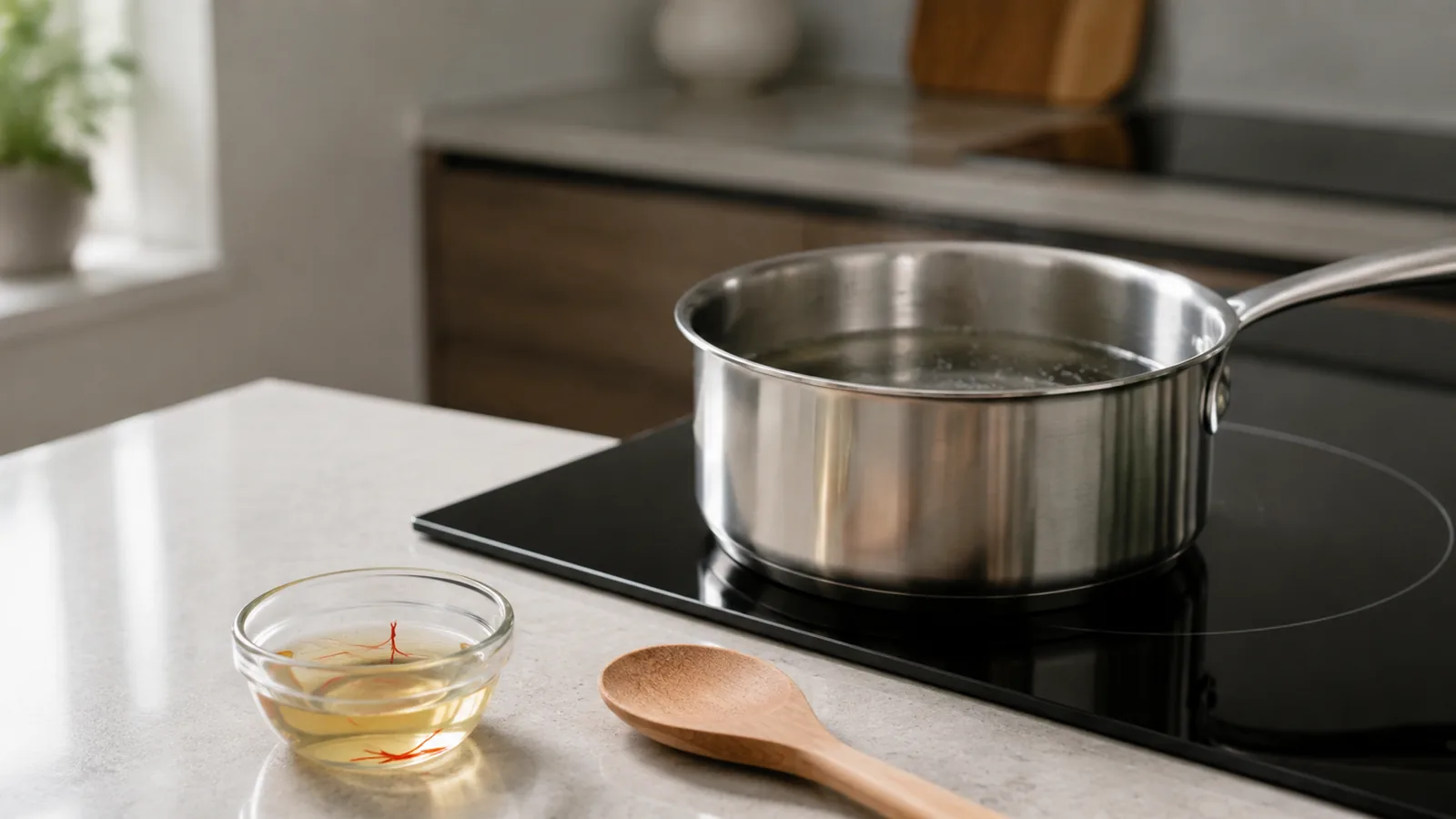
Place a few threads in warm water or warm milk and watch them for 5 to 10 minutes. Genuine saffron normally releases colour progressively rather than behaving like a drop of instant food dye. Lightly crushing the threads makes the change faster.
The threads often remain red or dark crimson as the surrounding liquid turns golden-yellow. They may soften and fade somewhat over a longer infusion, which is normal.
Is saffron orange?
A concentrated infusion can look amber or yellow-orange, especially under warm lighting. That does not automatically make it fake. The warning sign is an abrupt orange or red cloud that behaves like artificial surface dye, particularly if the material underneath rapidly loses all colour or has the wrong structure.
Use neutral light and compare aroma and thread shape as well as the liquid. Colour alone cannot confirm identity.
How to carry out a saffron color test
- Place several whole threads in a clean clear glass.
- Add a small amount of warm water.
- Watch the first release without stirring aggressively.
- Wait 5 to 10 minutes, then smell the infusion.
- Examine the softened threads rather than only the water.
A gradual golden-yellow release, recognisable aroma and plausible stigma structure are reassuring signs. They are not a laboratory certificate. Adulterated saffron can be sophisticated, and some genuine threads release pigment faster than others.
For a broader set of checks and their limitations, see how to test saffron purity at home.
What affects saffron color?
- Quality and grade: stronger colouring potential generally produces a deeper infusion at the same dose.
- Freshness: old or poorly stored threads lose potency.
- Storage: light, heat, moisture and air accelerate deterioration.
- Dose: a tiny pinch cannot deeply colour a very large pot.
- Liquid: clear water shows colour more plainly than opaque milk or cream.
- Time and particle size: crushed threads extract faster than whole ones.
Origin may correlate with commercial grade or processing style, but a country name alone does not determine the result.
What does weak colour mean?
Weak colour can result from using too little saffron, steeping it cold for only a few minutes, or dispersing it through a large volume. Old, damp or light-damaged threads may also be less effective.
If saffron does not colour milk as expected, allow more time and judge the aroma too. Our troubleshooting guide explains why saffron may not turn milk yellow.
What if the threads dissolve?
Real saffron threads soften but do not dissolve like sugar within a short infusion. Small fragments may break away after crushing or stirring. A powder will naturally disperse differently, which is one reason whole threads are easier to inspect.
Complete rapid disappearance, combined with instant dye-like colour and no recognisable aroma, deserves caution. No single observation should be treated as conclusive.
How saffron colours food
Bloom lightly crushed threads in warm water, milk or broth, then add both the liquid and softened saffron to rice, soups, desserts or sauces. This produces more even colour than dropping dry threads into one corner of the dish.
Avoid prolonged boiling once the saffron is present. Its colour may survive after delicate aroma and flavour have faded.
Saffron as a colour name
Saffron, the color name, is also used for a yellow-orange hue in art, clothing and design. There is no single universal screen value that captures every usage. This colour name should not be confused with the appearance of the dried spice, which is red.
If you are asking “what is saffron color?”, first decide whether you mean the dried spice, the prepared infusion or the design term. Each has a different but related answer.
So if the question is “saffron, which colour?”, specify whether you mean the stigmas, the infusion or the named colour.
The reliable conclusion
Does real saffron turn yellow? Yes: authentic red threads release golden-yellow pigment into liquid and food. That behaviour supports an authenticity assessment, but quality is best judged from the complete picture—colour release, aroma, structure, storage, traceability and, when necessary, laboratory testing.