Saffron shelf life is best understood as a quality window, not a timer that makes every jar unsafe on the same day. For practical home use, plan to use properly stored saffron threads within two to three years. They may remain usable beyond that, but their colour, taste and aroma can change gradually.
How many years does saffron last?
Two to three years is a sensible planning period for dry saffron kept in a tightly closed container, away from light, heat and moisture. The answer starts with the date on the package, but it also depends on the condition of the spice and how it has been handled since opening.
There is no single day on which all saffron suddenly expires. Storage studies show that its chemical profile changes over time. In one peer-reviewed comparison of freshly dried and two-year-stored saffron, the older samples had less crocin, which contributes colour, while several aroma compounds had also shifted. The full saffron storage study is useful evidence for gradual ageing, but it does not establish a universal household expiry date.
That distinction matters. Saffron that gives a weaker infusion may be past its best without being visibly spoiled. A jar exposed to steam or a damp spoon can develop a genuine safety problem much sooner.
Saffron preservation time depends on four things
The condition when it was packed
Only fully dried threads should be sealed for long-term storage. The Royal Horticultural Society advises drying harvested stigmas completely and then keeping them in an airtight container away from light. Its saffron harvesting and storage guidance is written for home-grown saffron, but the same basic protection is useful after a commercial pack is opened.
Good storage cannot restore saffron that was old, damp or poorly processed before purchase. Buy from a traceable seller, retain the original lot or date information, and be wary of a package that was already unsealed.
The container
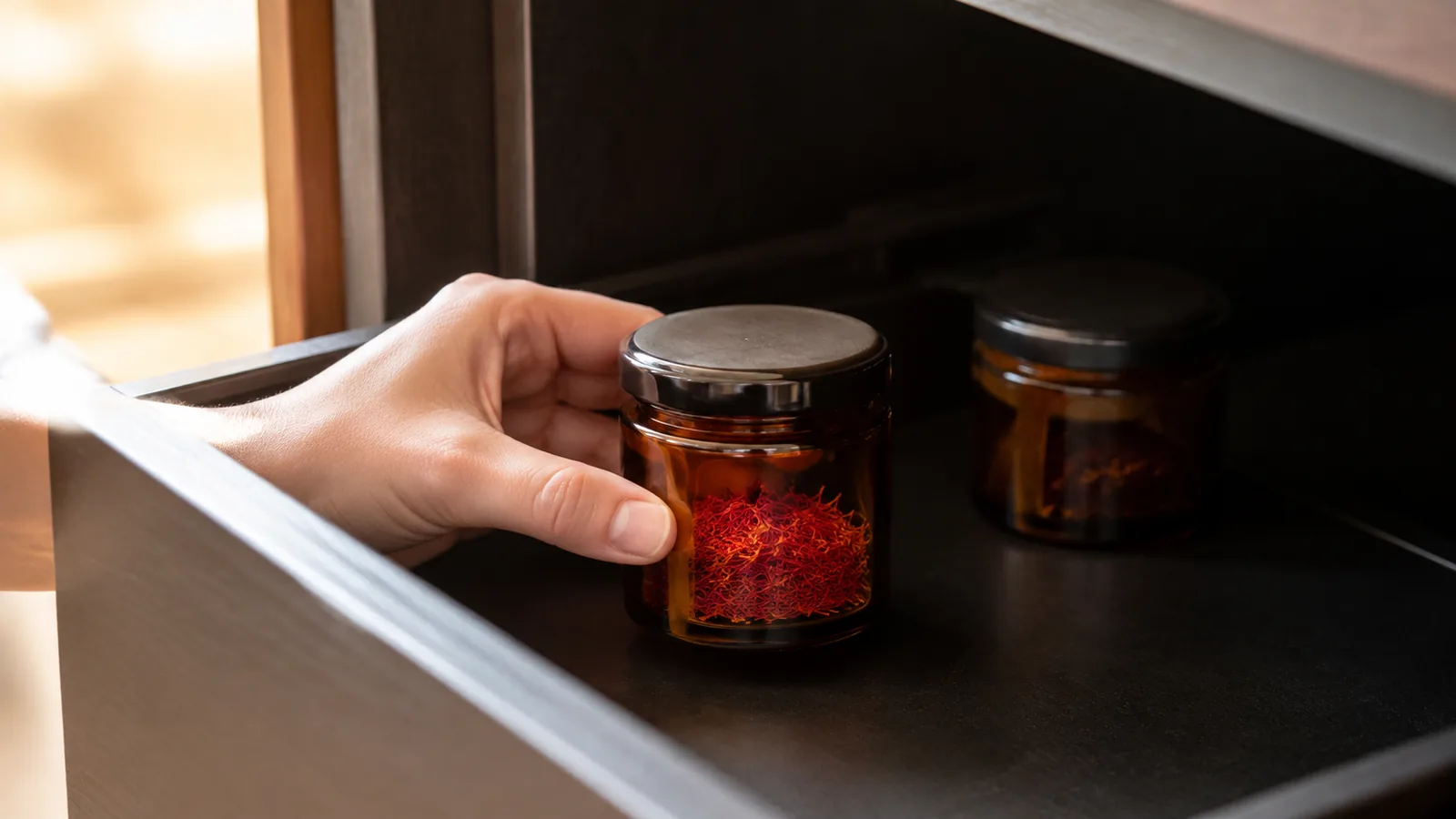
Use a clean, dry jar with a close-fitting lid. An amber or opaque container protects the threads from light; a clear jar should be kept inside a closed cupboard. A small container is helpful because it leaves less empty air and is opened for less time than a large display jar.
Whole threads are also easier to inspect than powder. Ground saffron has much more surface area exposed to air, and a powder gives the buyer fewer visual clues about purity or moisture. If you use powder, keep it especially well sealed and follow the producer’s storage instructions.
Heat and light
A cupboard away from the oven, hob, kettle, dishwasher and sunny window is usually a better place than an attractive jar on the counter. Research on saffron quality identifies time and storage conditions as important to the compounds associated with colour, taste and aroma. ISO 3632-1:2025, the current international saffron specification, also includes recommendations for storage and transport in its Annex A, as noted in the official ISO standard summary.
Moisture and handling
Moisture is the problem to prevent most carefully. Do not hold an open jar over a steaming pan, and do not reach into it with a wet spoon or wet fingers. Take out what the recipe needs, close the lid promptly, and return the container to its cupboard.
Routine refrigeration is usually unnecessary for a small household jar. Moving a cold container into warm, humid air can allow condensation to form if it is opened too soon. A consistently cool, dark, dry cupboard is simpler. If a producer requires a different method for a particular packaged product, follow that label.
Does saffron expire on the printed date?
Read the exact wording beside the saffron expiry date. A best-before or best-quality date generally speaks to expected quality under the stated storage conditions; it should not be silently treated as a universal food-safety deadline. Requirements and terminology vary by country and product.
For example, the US Food and Drug Administration explains that, apart from infant formula, US federal law does not generally require quality-based dates on packaged foods. Its food-date guidance supports the wording “Best if Used By” to identify the period of best flavour and quality. A saffron producer’s specific use-by instruction, damaged-package warning or local legal requirement still deserves priority.
If the date or lot code is missing, do not invent one. Record the purchase and opening dates yourself. That gives you a useful reference when deciding whether a later loss of strength is normal ageing or a reason to replace the jar.
Can saffron go bad, or does it only lose strength?
Begin with the closed container. Look for moisture, condensation, insects, a broken seal or unusual material. Then check a small amount in good light and smell it without putting your face inside the jar.
- Normal dry threads: genuine saffron stigmas are dried before sale. They can feel dry or somewhat brittle; dryness alone is not evidence that saffron has gone bad.
- Quality loss: a much weaker characteristic aroma, dull-looking threads or a faint infusion can mean that the spice is old or poorly stored. It may take more to flavour a dish, making replacement the better culinary choice.
- Reasons to discard it: visible mould, condensation, wet clumps, insects, foreign debris, or a musty or otherwise abnormal odour. Do not taste a visibly contaminated sample to test it.
Colour alone is not a perfect test of age or authenticity. Saffron naturally varies, lighting alters its appearance, and artificial colour can mislead. If you are uncertain about a jar, use our detailed guide to signs that saffron has gone bad rather than relying on one clue.
A simple infusion check for cooking quality
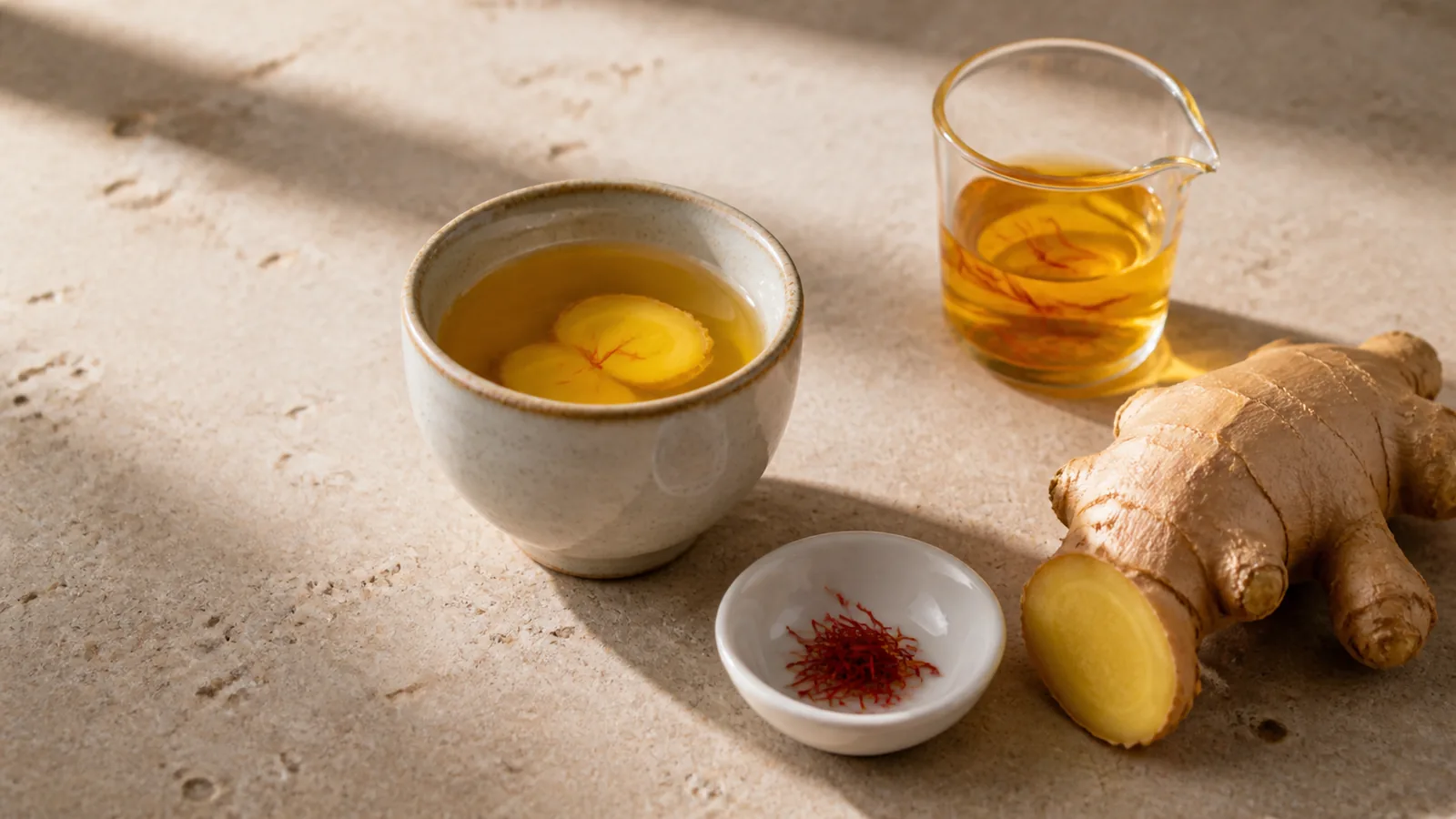
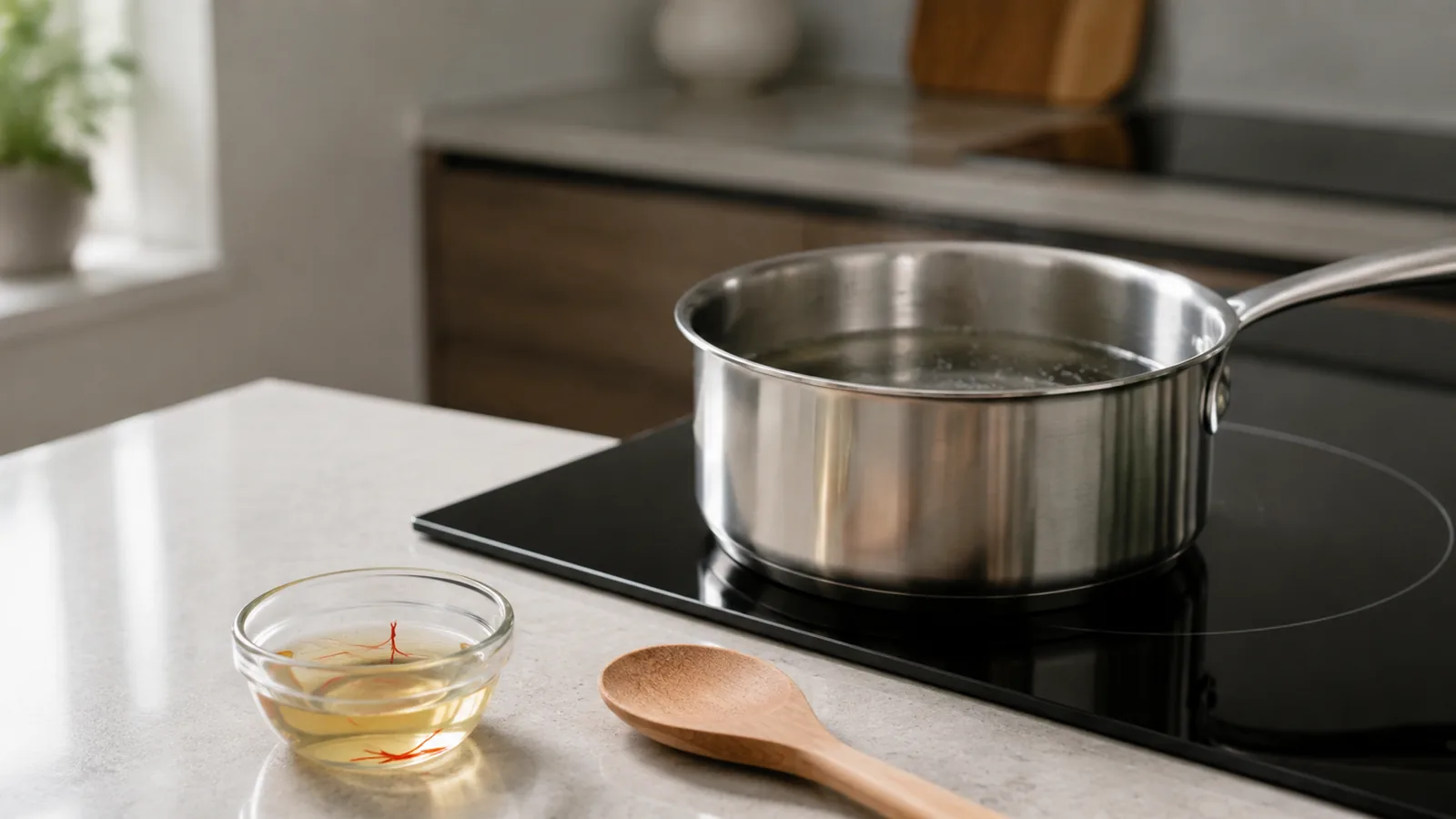
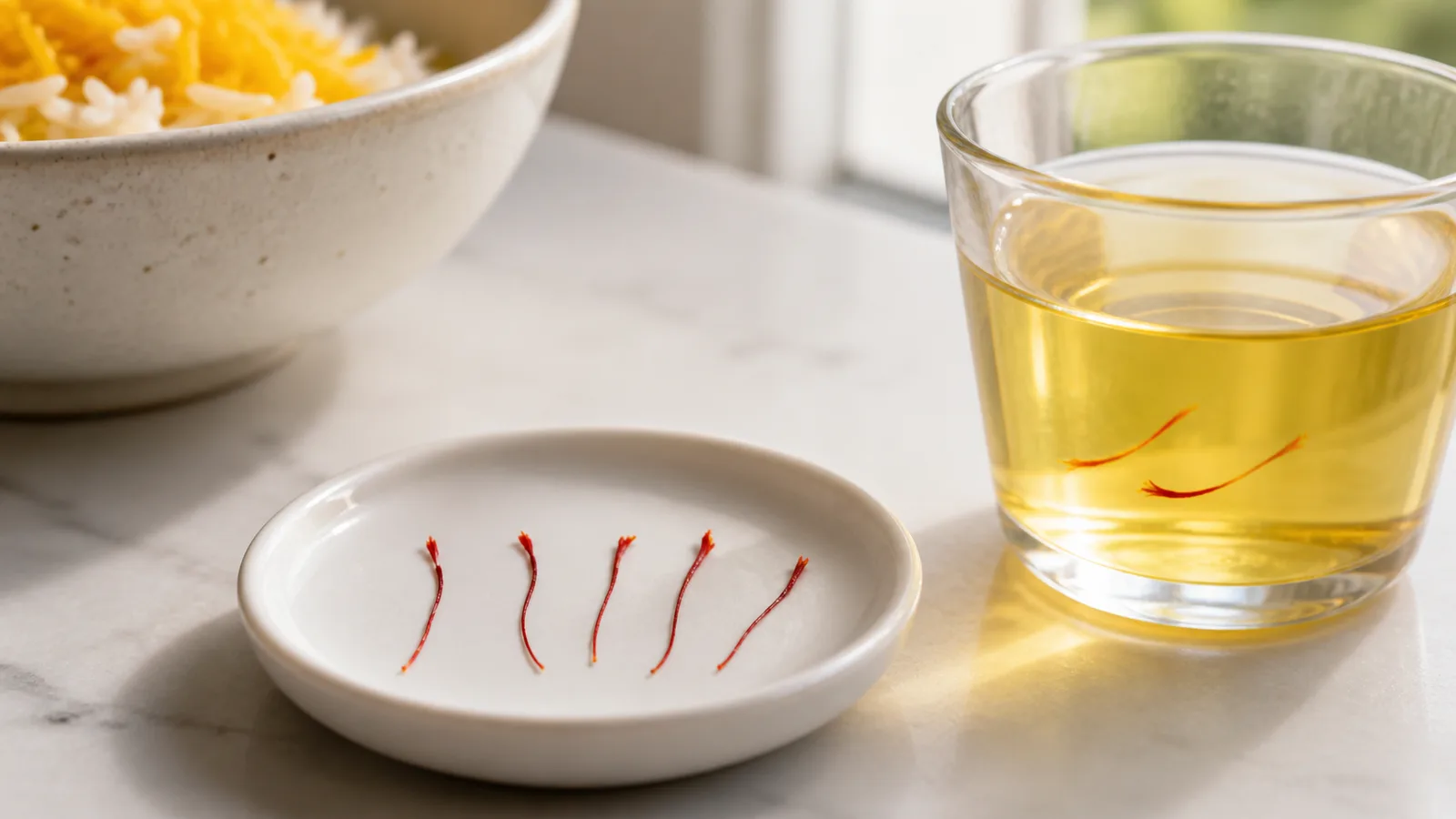
When the threads look and smell sound but seem old, compare their performance in water before using them in an important dish. Crush a small, measured pinch gently and steep it in warm water in a clean white cup. Give it time to release colour and aroma; pouring boiling water over a large amount is not a fair freshness test.
The result should develop rather than behave like instant dye. Judge the aroma and the colour of the liquid together. This is a practical cooking check, not a laboratory purity test and not proof that a questionable sample is safe.
If the infusion is clean but noticeably weak, the saffron is probably past its best culinary period. Use it soon in a forgiving recipe or replace it. Adding stale threads indefinitely is rarely economical because the dish still lacks the balance fresh saffron provides.
How long can saffron be stored after opening?
The practical answer to “How long does saffron stay fresh?” still depends more on handling than on the first opening alone. Opening does not start an automatic countdown, but it changes the risk: each use brings fresh air and an opportunity for light, heat or moisture exposure. A jar opened occasionally with a dry utensil and closed at once can keep its quality far better than one left beside a steaming cooker.
Keep the original date and lot details when transferring saffron to another container. Write the opening date on a separate removable label, not on the threads or inside the jar. Check aroma and condition before use, especially once the pack is older than the producer’s stated quality period.
Storage checklist for a longer saffron life span
- keep the threads completely dry;
- close them in a clean, airtight jar;
- protect the container from direct and prolonged light;
- store it in a cool cupboard away from steam and appliances that produce heat;
- use only dry utensils and close the lid promptly;
- retain the package date, lot code and storage directions;
- inspect the saffron before use instead of judging it by age alone.
In short, the normal saffron preservation period is measured in years when the spice begins dry and remains protected. Two to three years is a practical target for good culinary quality, while the package instructions and the jar’s actual condition decide whether a particular batch should still be used.
If your current jar has lost the colour and aroma you want, browse our saffron products. For a question about the date, lot or storage of a Rowhani Saffron purchase, use the contact page and include the package details.