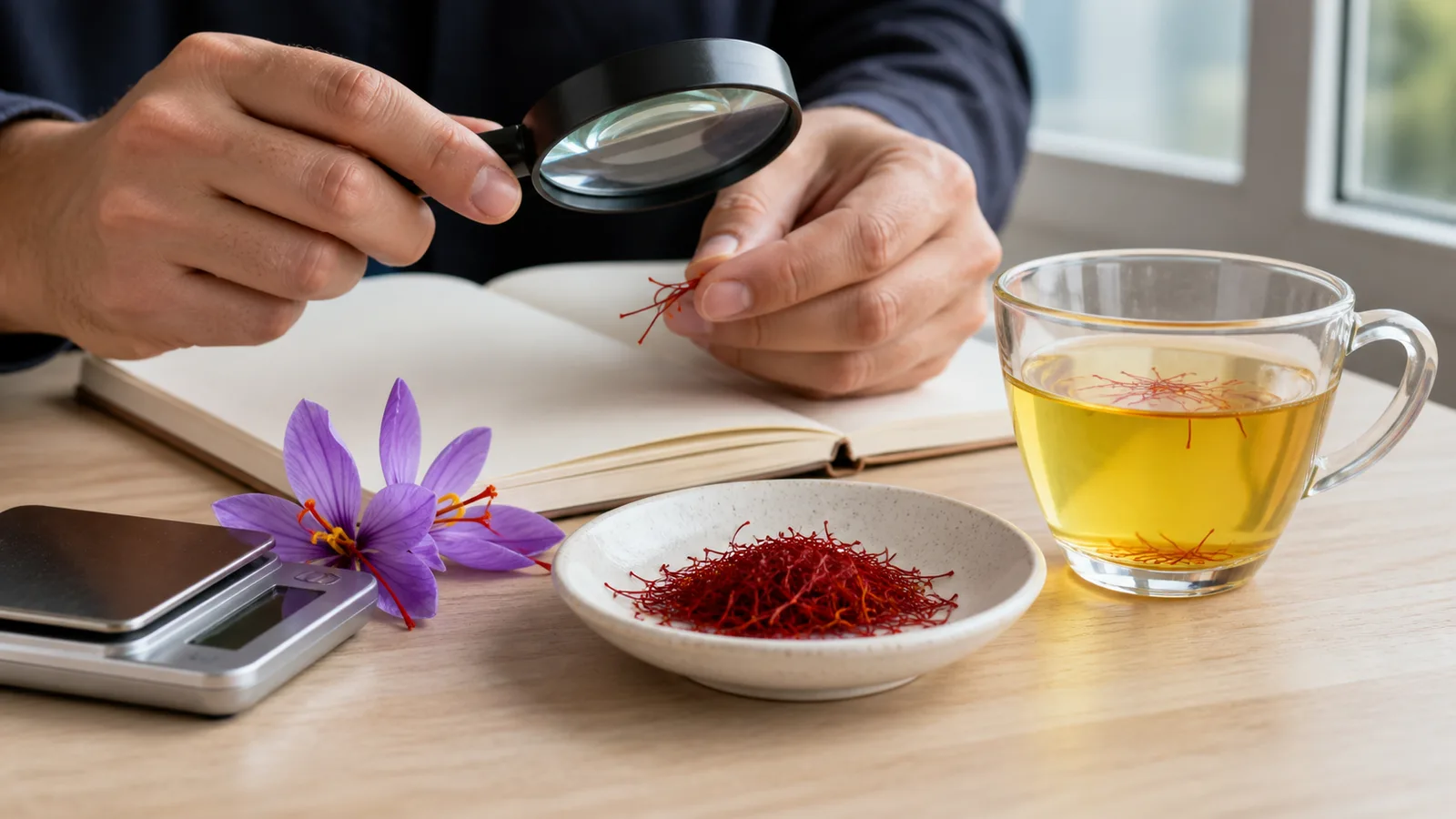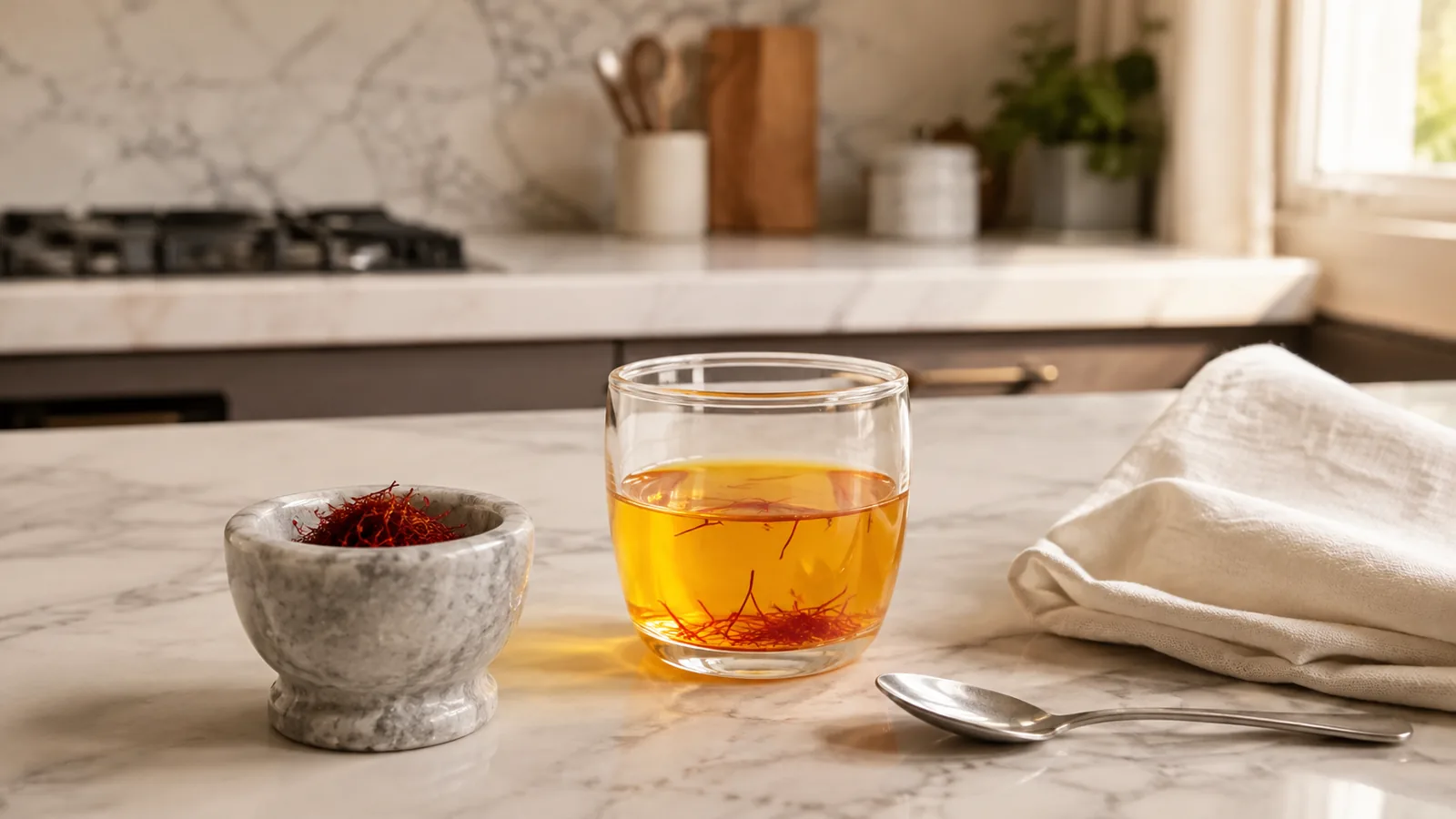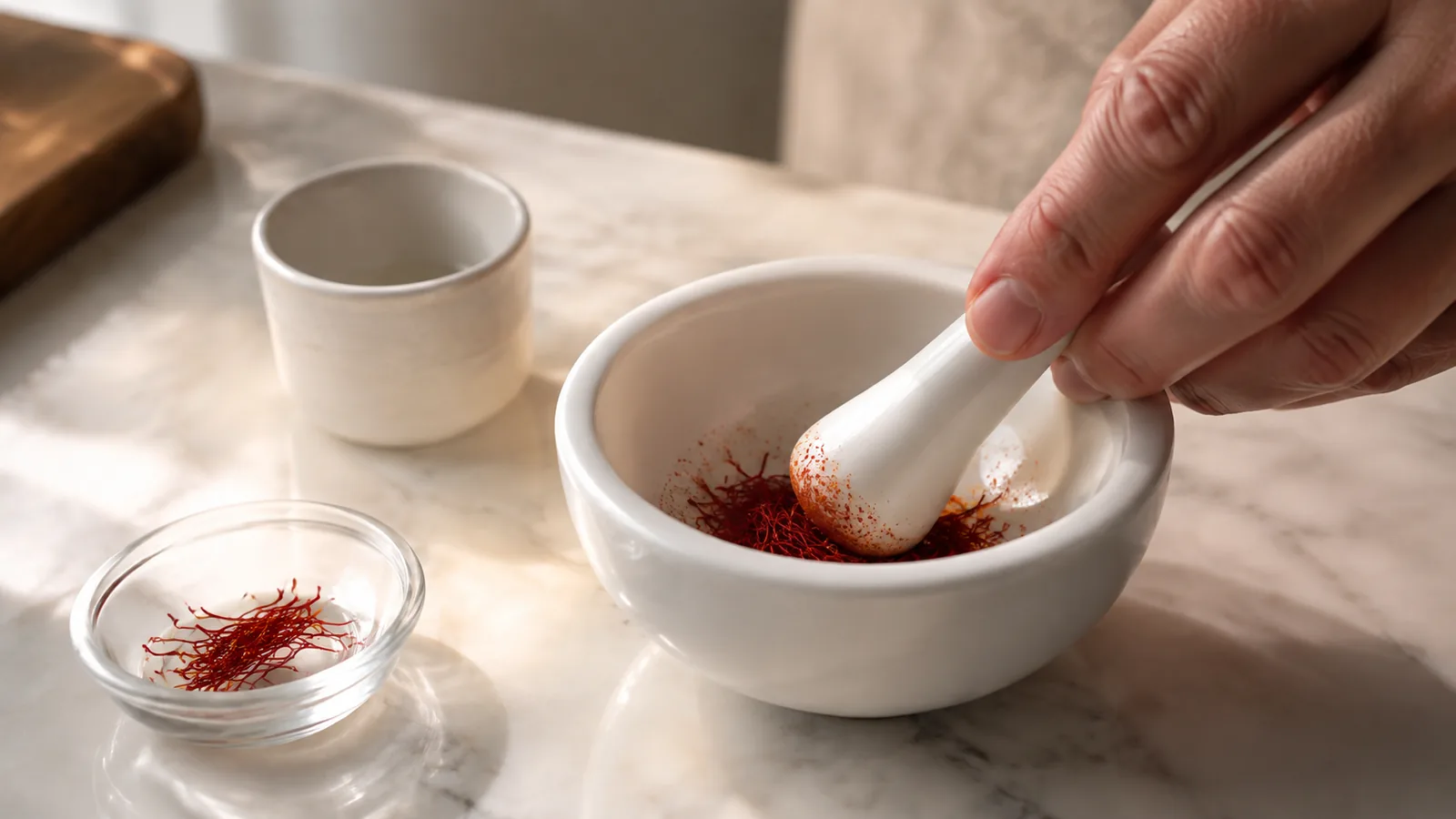


Knowing how to tell if saffron is bad starts with separating loss of quality from actual spoilage. Faded aroma usually means the spice is old and weak; visible mould, dampness, insects, or a distinctly musty smell means it should be discarded.
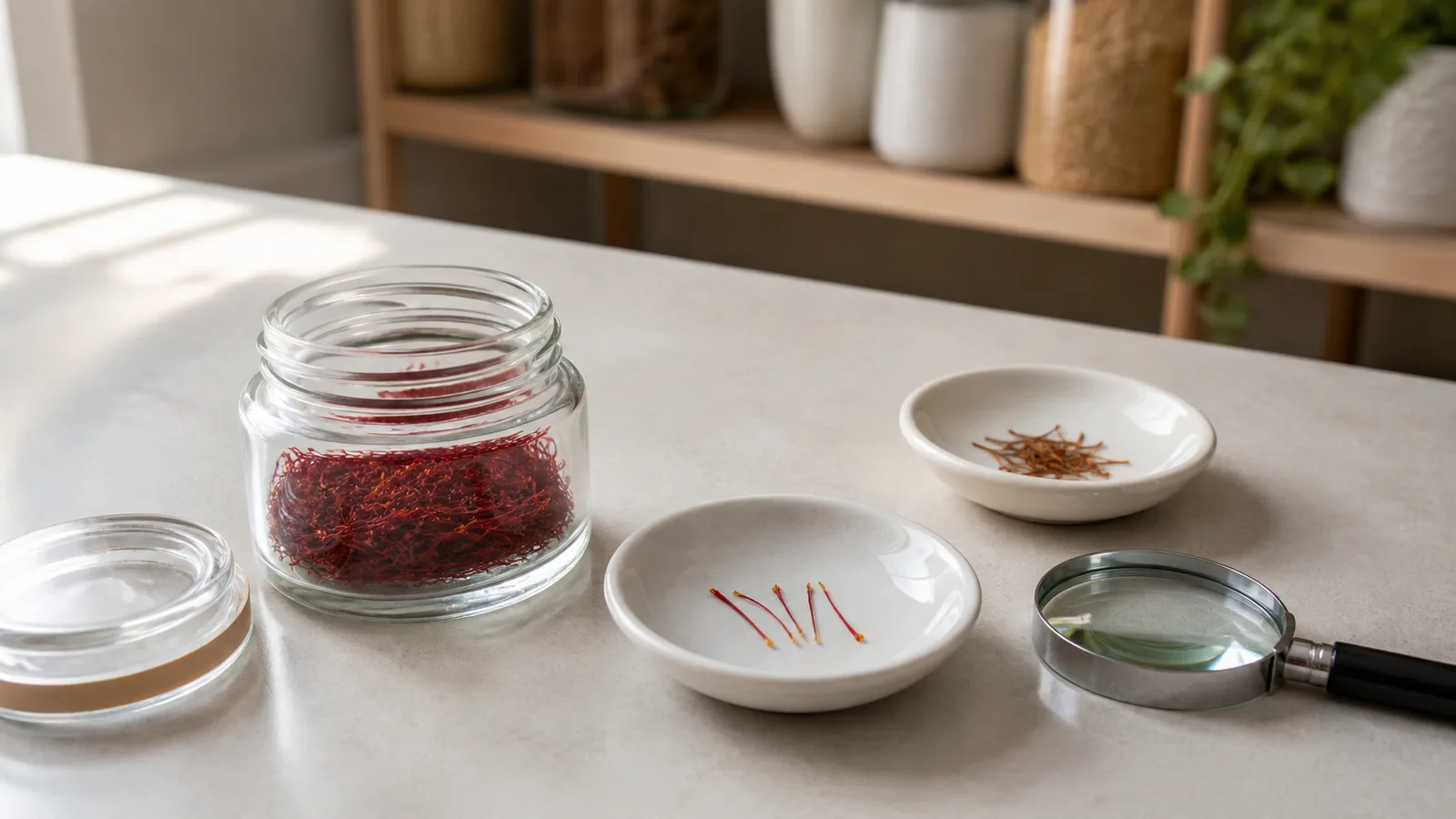
Has the saffron spoiled, or is it simply past its best?
Dried saffron does not usually become unsafe just because it has sat in a closed jar for a long time. More often, light, air, warmth, and repeated opening gradually diminish its aroma, colour strength, and flavour. That is stale saffron: disappointing in a dish, but not the same as mouldy or moisture-damaged food.
True spoilage is less subtle. Water may have entered the container, the threads may not have been dried fully before packing, or pantry insects may have reached an unsealed package. When there is visible growth, unexplained damp clumping, contamination, or an abnormal musty odour, do not try to rescue the spice.
Signs that saffron should be discarded
Visible mould or damp patches
Mould may appear as fuzzy, dusty, or web-like growth that was not part of the dry threads. Moist threads can also stick into soft clumps or leave condensation inside the container. Saffron is hygroscopic, which means it can take up moisture from the surrounding air, so a jar left open in a steamy kitchen is especially vulnerable.
Do not sniff a visibly mouldy spice closely. The USDA Food Safety and Inspection Service explains in its guidance on mould in food that some moulds can produce harmful substances and that growth may extend beyond what can be seen. For a tiny, porous food such as saffron, discarding the whole batch is the sensible response.
A musty, sour, or otherwise foreign smell
Saffron has a distinctive, complex aroma. People describe it differently—hay-like, floral, honeyed, earthy, or slightly metallic—but it should not smell of damp cupboards, mildew, rancid cooking oil, cleaning products, or another spice stored beside it. A foreign odour may come from contamination or from a container that was not truly odour-proof.
If the jar looks normal but has almost no aroma, the saffron is more likely stale than spoiled. Crush one or two threads gently between clean fingers and check again. A weak scent means you may need more for the same culinary effect, though replacing it usually gives a better result.
Pantry insects or debris
Discard saffron if you find live or dead insects, larvae, webbing, droppings, or unexplained debris in the package. Then inspect nearby dry goods and clean the shelf. Moving the remaining spice into another jar does not undo the contamination.
A broken or wet package
A torn pouch, loose lid, water mark, or failed seal changes the decision even if the threads still look red. If you cannot tell what entered the package or how long it was exposed, replacement costs less than taking a needless food-safety risk.
Signs that saffron has lost quality
The aroma has become faint
Aroma is the most useful home check for old saffron. Open the container away from cooking steam and other strong smells. High-quality threads should release a clear scent; a dull or barely detectable aroma suggests that the volatile compounds have faded.
The colour looks dull or faded
Saffron threads are normally deep red, sometimes with a lighter orange or yellow portion where the stigma joined the flower. Long exposure to light can dull that appearance. Colour change alone cannot prove spoilage, however. Natural batches vary, and an unusually pale product may have been low-grade or adulterated from the beginning rather than damaged in your cupboard.
The flavour is weak in a familiar recipe
If the threads look dry and clean but a known recipe no longer develops its usual aroma, flavour, or golden colour, the spice may be past its prime. Make the comparison using the same quantity and preparation method. Poor blooming technique, an unusually large dish, or very hot liquid can otherwise confuse the result.
Brittle threads are not automatically bad
Properly dried saffron is light and breakable. Brittleness is therefore not a reliable sign that saffron has gone bad; it can indicate that the threads were dried correctly. The warning signs are moisture, visible growth, contamination, or an abnormal smell—not the simple fact that a dry thread snaps.
The University of Vermont’s research guide to drying saffron explains that the fresh stigmas must lose most of their water to become a stable spice. That drying process naturally changes their texture.
Can you judge saffron by an expiration date?
Use the date on the package as useful context, not as the only test. A best-before date generally describes expected quality under appropriate storage. What happened after opening matters just as much: a tightly closed jar in a dark cupboard can fare better than a newer packet repeatedly exposed to heat, light, and steam.
If the pack carries a specific use-by instruction from its producer or local regulator, follow it. If it has no date, write the opening month and year on the container. That small habit is more useful than trying to remember when a nearly empty jar first appeared in the cupboard.
How to check saffron without contaminating it
- Read the package. Check the date, storage instructions, seal, and any evidence of water damage.
- Inspect through the container. Look for condensation, mould, insects, webbing, or soft clumps before opening it.
- Move away from steam. A dry worktop gives a fairer aroma test and prevents the spice absorbing kitchen moisture.
- Use a clean, dry utensil. Remove only the threads you need. Do not reach in with wet fingers.
- Check a small sample. If it looks clean, gently crush a thread and assess the aroma. A weak but normal scent points to quality loss; an abnormal odour is a reason to discard it.
- Close the jar promptly. Do not leave the whole supply open while you cook.
Home checks cannot verify every contaminant, identify every adulterant, or measure saffron to a laboratory standard. When the product’s history is unknown and something seems wrong, replacing it is safer than relying on an internet trick.
How long does saffron stay fresh?
There is no honest single number for every package. Form, initial quality, moisture, container, temperature, light, and opening frequency all affect the result. Properly dried threads in airtight dark storage can retain useful quality for a long period, while a loose packet above a warm cooker may fade much sooner.
Whole threads are easier to inspect than powder and expose less surface area to air. Powder is convenient, but colour, aroma, contamination, and composition are harder to judge by sight. Buy an amount you can use while it remains fragrant rather than choosing the largest pack by default.
How to store saffron so it lasts
- Use a clean, dry, airtight glass or metal container.
- Keep it in a dark cupboard away from the oven, hob, kettle, dishwasher, and direct sun.
- Open the container only as long as needed and use dry utensils.
- Do not store warm, newly dried saffron until it has cooled completely.
- Keep the spice away from strongly scented ingredients and cleaning products.
- Divide a large supply into smaller containers so the whole batch is not exposed each time.
The University of Vermont’s post-harvest best-practice guide recommends letting dried saffron cool, using airtight containers, and storing it in the dark. Utah State University likewise explains in its food-storage packaging guidance that dried foods can absorb moisture and that light and oxygen contribute to loss of spice colour and flavour.
A quick decision before you cook
Discard saffron that is mouldy, damp, insect-contaminated, strangely odorous, or from a package whose safety you cannot trust. Replace saffron that is clean and dry but so faint that it no longer improves the dish. Keep using threads that remain dry, clean, characteristically aromatic, and properly stored, even if they are naturally brittle.
If your jar is past its best and you want intact threads that are easier to inspect, see our published All Red Saffron selection.