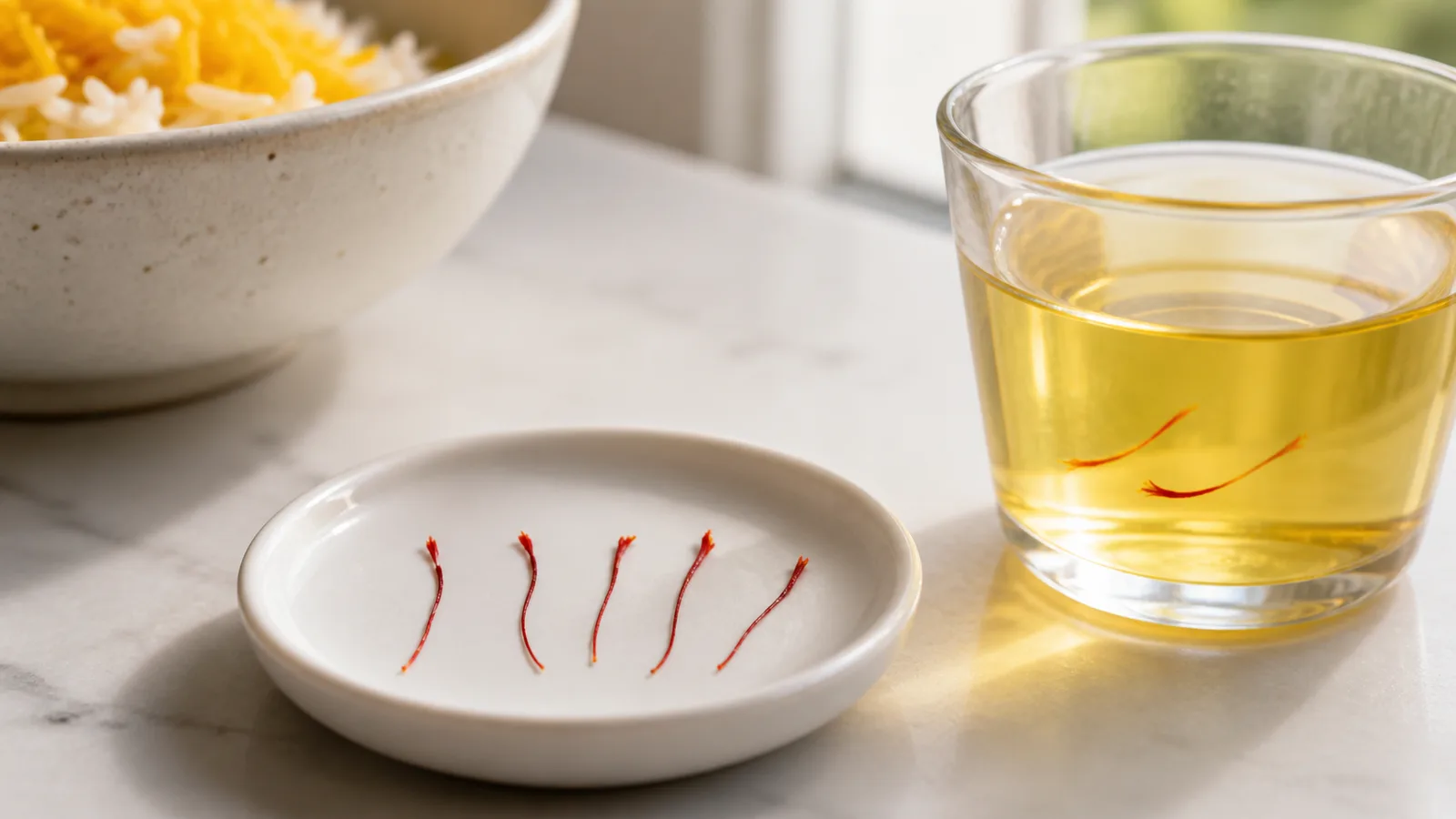
Many countries can grow saffron if they can give Crocus sativus a sunny site, freely draining soil, a suitable seasonal cycle and dry conditions while the corms are dormant. The best-known countries that grow saffron commercially include Iran, India, Afghanistan, Greece, Morocco and Spain, with smaller production in Italy, Turkey, Azerbaijan, the United States and other regions.
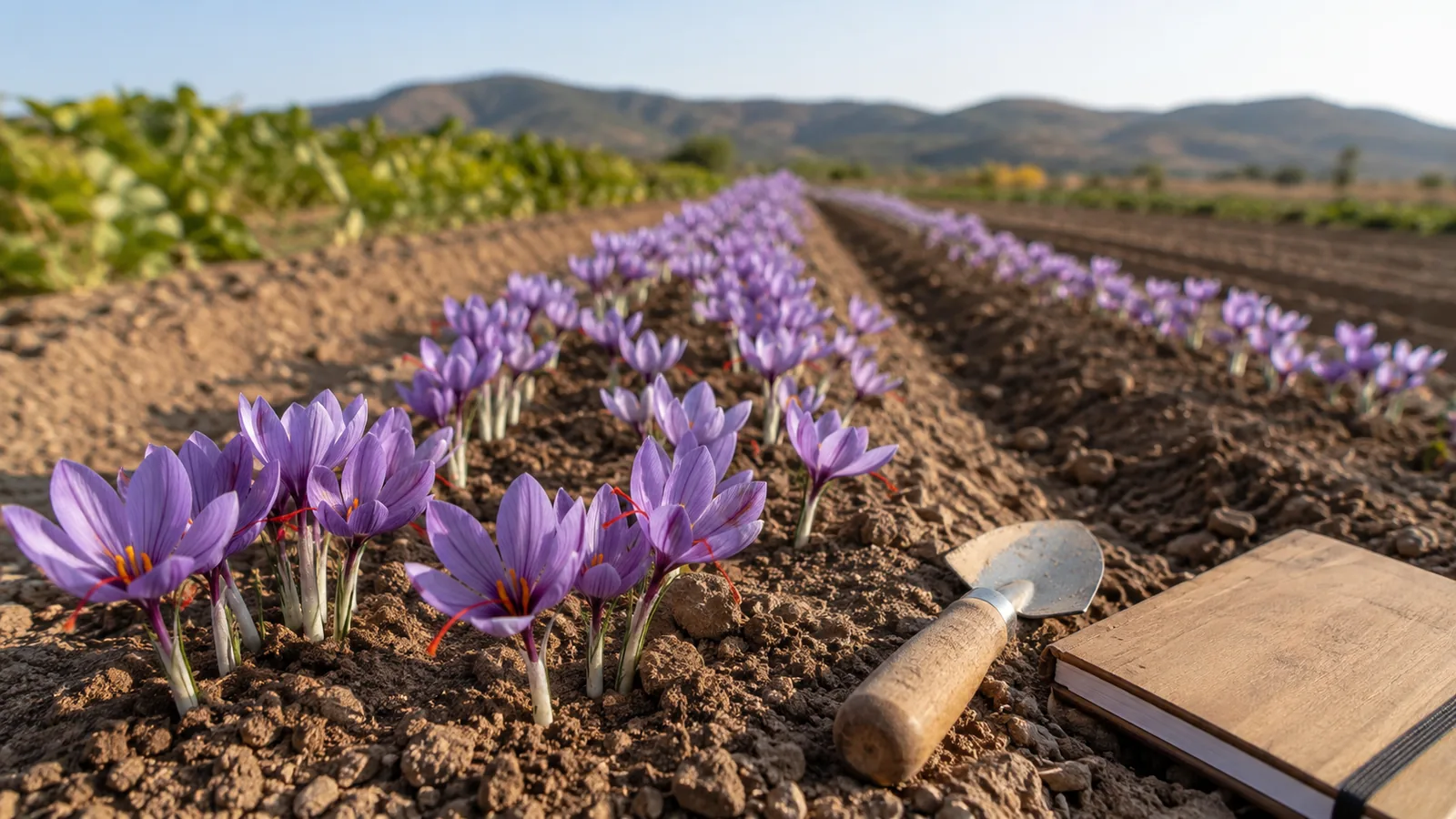
Saffron producing countries are not the same as countries that can grow it
A plant can flower in a garden without supporting a profitable industry. Commercial saffron requires healthy corms, reliable flowering, enough labour to pick blooms quickly, careful stigma separation, controlled drying, quality checks and buyers. Those requirements narrow the list of major saffron producing countries, even though the plant can survive in many more places.
This is why searches for saffron producing countries, saffron growing countries and where saffron is grown need two answers: one about established output and another about horticultural possibility. A “top 5 saffron producing countries” list also needs a named year and comparable source before it can be treated as a ranking.
The Codex Alimentarius Committee on Spices and Culinary Herbs has identified Iran, India, Greece, Morocco, Spain and Afghanistan among the main countries involved in saffron production. That is a useful established group, not a fixed annual ranking.
Which countries grow saffron at meaningful commercial scale? Those six belong among the top saffron producing countries, with Iran far ahead in volume. Where can saffron be grown at smaller scale? The later sections show that the horticultural answer extends well beyond that group.
Saffron production by country
Iran: the world’s largest saffron producer
Iran is the largest saffron producing country by a wide margin. In other words, Iran is where the most saffron is produced. The UN Food and Agriculture Organization’s profile of the Gonabad Qanat-based saffron farming system states that Iran accounts for more than 90% of world production. Khorasan Razavi and neighbouring eastern provinces are central to the crop.
Iran’s dry and semi-arid growing regions suit saffron’s cycle, but climate is only part of the explanation. Generations of farming knowledge, a large corm and labour base, drying practice, trade infrastructure and established demand all support its scale.
India: Kashmir’s specialised production
For anyone asking where saffron grows in India—or looking for saffron growing states in India—the answer is mainly Jammu and Kashmir, especially the Pampore area. India’s official Geographical Indications Registry records Kashmir Saffron as a protected GI. The crop has a strong culinary and cultural identity there, but India’s total output is much smaller than Iran’s.
Kesar is a common South Asian name for saffron, so searches for kesar production in the world refer to the same crop. India is an important named origin; it is not the largest global producer.
Afghanistan: production centred in Herat
Afghanistan has developed saffron as a high-value crop, particularly in Herat Province. FAO’s official Afghanistan saffron profile lists production districts including Ghoryan, Zindajan, Guzara, Anjil, Karokh, Pashtun Zarghun, Shindand and Obe.
Afghan saffron is commercially significant, but exact annual positions should be checked against a dated dataset rather than repeated as a permanent “number two” or “top five” claim.
Spain, Greece and Italy
Does Spain grow saffron? Yes: La Mancha is one of Europe’s best-known saffron regions. Greece has protected Krokos Kozanis, and the European Commission describes its production as a combination of regional soil, climate, hand harvesting and careful drying. Italy has smaller specialist farms in regions including Abruzzo and Sardinia.
These European origins may have strong reputations and high retail prices even though their volumes are far below Iran’s. Production quantity, protected regional identity and batch quality are different measures.
Morocco, Turkey and Azerbaijan
Morocco’s saffron identity is closely associated with the Taliouine area. Turkey and Azerbaijan also have long-standing or renewed cultivation in suitable districts. They belong in a broad map of saffron growing countries, but output can be small and yearly estimates may be inconsistent.
Can saffron grow in the United States?
Yes. Small farms and research plots show that saffron can be grown in parts of the United States. University of Vermont guidance describes field cultivation in USDA hardiness zones 4–8, including northern Vermont. Good drainage matters more than a simplistic “warm country” rule.
California, Pennsylvania, New York, Vermont and other states can offer workable sites, but local rainfall, soil drainage, rodent pressure, winter conditions and harvest labour determine success. A sunny raised bed may work where a wet heavy field fails.
Can saffron grow in the United Kingdom, Canada or northern Europe?
Cold winters do not automatically exclude saffron. The Royal Horticultural Society rates Crocus sativus hardy through much of the UK and recommends a sunny, free-draining site. Its practical saffron growing and harvesting guidance shows that home production is possible outside the classic dry regions.
The larger threat in many cool maritime places is persistent wetness, especially around dormant corms. Raised beds, grit-amended soil, shelter from excessive rain and careful site selection can matter. Canada and northern European growers need to assess drainage, winter extremes and the length of the local growing cycle rather than relying on latitude alone.
Can saffron grow in Malaysia or another humid tropical country?
Outdoor commercial cultivation is much harder in a hot, humid climate with heavy year-round rainfall. Saffron’s normal cycle benefits from seasonal change and a relatively dry dormancy. Warm wet soil increases the risk of corm rot and may not give the plant the cues it receives in Mediterranean or continental climates.
Controlled environments, containers, imported corms and managed temperature or moisture can make experimental flowering possible. That is not the same as saying Malaysia is naturally suited to open-field saffron production. This conclusion is an inference from the plant’s documented drainage and seasonal requirements; a local trial is stronger evidence than a country label.
Where does saffron grow best?
Saffron generally performs best where several conditions come together:
- Sun: an open, bright site supports growth and flower development.
- Drainage: water must move away from the corms; prolonged waterlogging encourages rot.
- Seasonality: the plant flowers in autumn, grows leaves through the cooler season and becomes dormant later.
- Suitable soil: a workable loam, sandy loam or amended raised bed is more forgiving than compacted wet clay.
- Healthy corms: clean planting stock and sensible spacing influence establishment and multiplication.
- Harvest access: flowers must be collected promptly and the stigmas separated and dried with care.
“Warm, dry climate” is therefore only shorthand. Saffron can tolerate substantial winter cold, while too much moisture can defeat a site that otherwise seems mild and sunny.
Where is saffron native?
Crocus sativus is sterile and is not known as a wild species in the usual sense. The Royal Horticultural Society says it was probably selected thousands of years ago from Crocus cartwrightianus, a relative native to parts of the eastern Mediterranean. Its exact domestication history remains a subject of research.
No single modern country can therefore be named with certainty when someone asks where saffron is native. The cultivated plant’s probable ancestry and its later farming history cover a region and a long period, not a present-day production ranking.
That makes “Which country is saffron native to?” less straightforward than asking where it is grown today. Ancient origin, present production and modern protected names should not be collapsed into one answer.
Iran saffron production and export quantity in 2026
There is no trustworthy live world counter for 2026 saffron production. National harvest reports, customs export data and international summaries are published on different schedules and may count crop years, calendar years or shipments differently. The FAO statement that Iran produces more than 90% is useful for scale, but it is not a precise 2026 export ledger.
Current saffron production in world tables should therefore be read as dated estimates, not simultaneous measurements. A country can harvest material in one period and export stored or imported saffron in another.
When a page claims an exact current quantity, check the publication date, whether it describes harvested saffron or exports, and whether the unit is kilograms or tonnes. A forecast should not be presented as a final harvest total. This caution protects readers from impressive-looking numbers that cannot be compared.
Which country produces the best saffron?
No country wins every quality comparison. Iran, Kashmir, La Mancha, Kozani, Herat and Taliouine can all produce respected saffron. Quality belongs to the batch: thread cut, freshness, drying, storage, moisture, foreign matter, colouring strength, aroma-related measures and traceability matter more than a flag.
A protected origin can document where and how a product was made. It does not prove that an unrelated jar using the same place name is genuine, and it does not make every harvest identical. Our separate guide to saffron price and origin by country explains why production volume, retail price and “best” are different questions.
Choosing saffron from any growing country
Buy from a supplier that states the origin and form clearly, shows the actual threads, protects the product from moisture and light, and can explain the grade. Deep red colour alone is not proof, and powder is harder to inspect than whole threads. Claims about numerous health benefits also do not establish agricultural quality.
For cooking, the important result is clean, aromatic saffron that releases a characteristic golden colour and balanced flavour. Buyers can compare the site’s current saffron products by pack size and description rather than assuming the largest producing country must supply the right jar for every use.
The short answer
Saffron can grow in far more countries than the old “Iran, India and Spain” list suggests. Iran dominates world production; India, Afghanistan, Greece, Morocco and Spain are established origins; Italy, Turkey, Azerbaijan and smaller farms across North America and Europe also grow the crop.
The best place to grow saffron is not defined by a border. It is a sunny, well-drained site with the right seasonal cycle, healthy corms and enough skilled labour to harvest and dry the stigmas well. That is the difference between a country where saffron can bloom and a region that can sustain commercial production.