Saffron and Alzheimer’s research includes a handful of small clinical trials, so the subject is more than a laboratory theory. The results are interesting, but they do not show that saffron cures Alzheimer’s disease, restores lost memory or slows the underlying disease process. Evidence for saffron and Alzheimer management remains too limited for clinical recommendations.

The trials used standardized oral extracts in people with a diagnosed condition. They did not test ordinary culinary saffron, tea or a shop-bought supplement as a home treatment. That difference matters when interpreting claims about saffron for memory.
Saffron and Alzheimer’s: what do the trials suggest?
Early studies measured changes on cognitive and functional rating scales. Some found better scores than placebo, while two comparison trials reported similar changes with saffron extract and established symptom medicines. These are preliminary signals. They are not evidence that saffron removes amyloid, protects brain cells in everyday life or changes how long a person can live independently.
A systematic review of four randomized trials found possible improvement in cognition in Alzheimer’s disease and mild cognitive impairment. The reviewers also concluded that the number and quality of studies were insufficient to recommend saffron in clinical practice. Another review covering five trials and 325 participants reached a similarly cautious judgment because the evidence had a potentially high risk of bias.
What did the Alzheimer’s studies actually test?
Saffron extract compared with placebo
A 16-week randomized trial enrolled 46 adults with mild to moderate Alzheimer’s disease. A standardized saffron capsule produced better average changes than placebo on two clinical rating scales. The study was short and small, and a scale score does not show whether the treatment altered Alzheimer’s biology or provided a durable benefit.
Saffron extract compared with donepezil
In a 22-week phase II trial of 54 adults, changes in cognitive and dementia-rating scores were similar between a saffron-extract group and a donepezil group. Vomiting occurred more often with donepezil. Because there was no placebo group and relatively few participants, “similar” does not prove the two treatments are interchangeable or equally effective in a larger population.
Saffron extract compared with memantine
A 12-month trial in 68 people with moderate to severe Alzheimer’s reported no significant difference between saffron extract and memantine on the study’s cognitive and functional scales. Here too, the trial lacked a placebo group and was not large enough to settle whether saffron offers a meaningful long-term benefit.
These studies all involved a defined extract and supervised participants. Their amounts are research protocols, not instructions for choosing a capsule or brewing tea. Product composition, diagnosis, disease stage and other medicines can all change safety and relevance.
Does saffron improve memory without Alzheimer’s disease?
The visible search interest in this page is for saffron for memory, but Alzheimer’s disease, mild cognitive impairment and ordinary forgetfulness are not the same condition. The small Alzheimer trials cannot show that saffron improves memory in a healthy person, prevents dementia or reverses a new memory problem.
A one-year study in mild cognitive impairment included only 35 participants and compared saffron with a waiting list rather than a matching placebo. It reported changes on cognitive and imaging measures, but its single-blind design and small sample leave considerable uncertainty. Larger, independent trials would be needed before applying the result to routine memory care.
Memory symptoms can also relate to sleep, depression, medication effects, thyroid problems, vitamin deficiencies, infection, stroke and other causes. The National Institute on Aging’s Alzheimer’s fact sheet advises people with memory and thinking concerns to seek an assessment rather than assume the cause.
Crocin, antioxidants and brain mechanisms
Crocin, crocetin and safranal are often described as the reason saffron might support brain health. Cell and animal studies have explored oxidative stress, inflammation, amyloid aggregation and signalling pathways involved in nerve-cell survival. These mechanisms help scientists decide what to study next; they do not demonstrate memory improvement in a person.
“Antioxidant” is especially easy to overinterpret. Alzheimer’s disease is not simply a lack of dietary antioxidants, and reducing one laboratory marker does not establish protection from cognitive decline. A measured change on a memory scale is also different from proving that a supplement slows the disease.
Saffron does not replace Alzheimer’s treatment
The National Institute on Aging’s treatment guide lists approved medicines that manage cognitive or behavioral symptoms, as well as newer immunotherapies for eligible people with early Alzheimer’s disease. These treatments have specific indications, risks and monitoring requirements. There is still no known intervention that cures Alzheimer’s.
Do not stop donepezil, memantine or another prescribed medicine because a small study reported similar average scores. A head-to-head research result is not permission to substitute an unregulated supplement. Any possible use of a standardized saffron product belongs in a conversation with the clinician who knows the diagnosis, disease stage, medicines, falls risk, blood pressure and other health conditions.
Food, tea and supplements are different
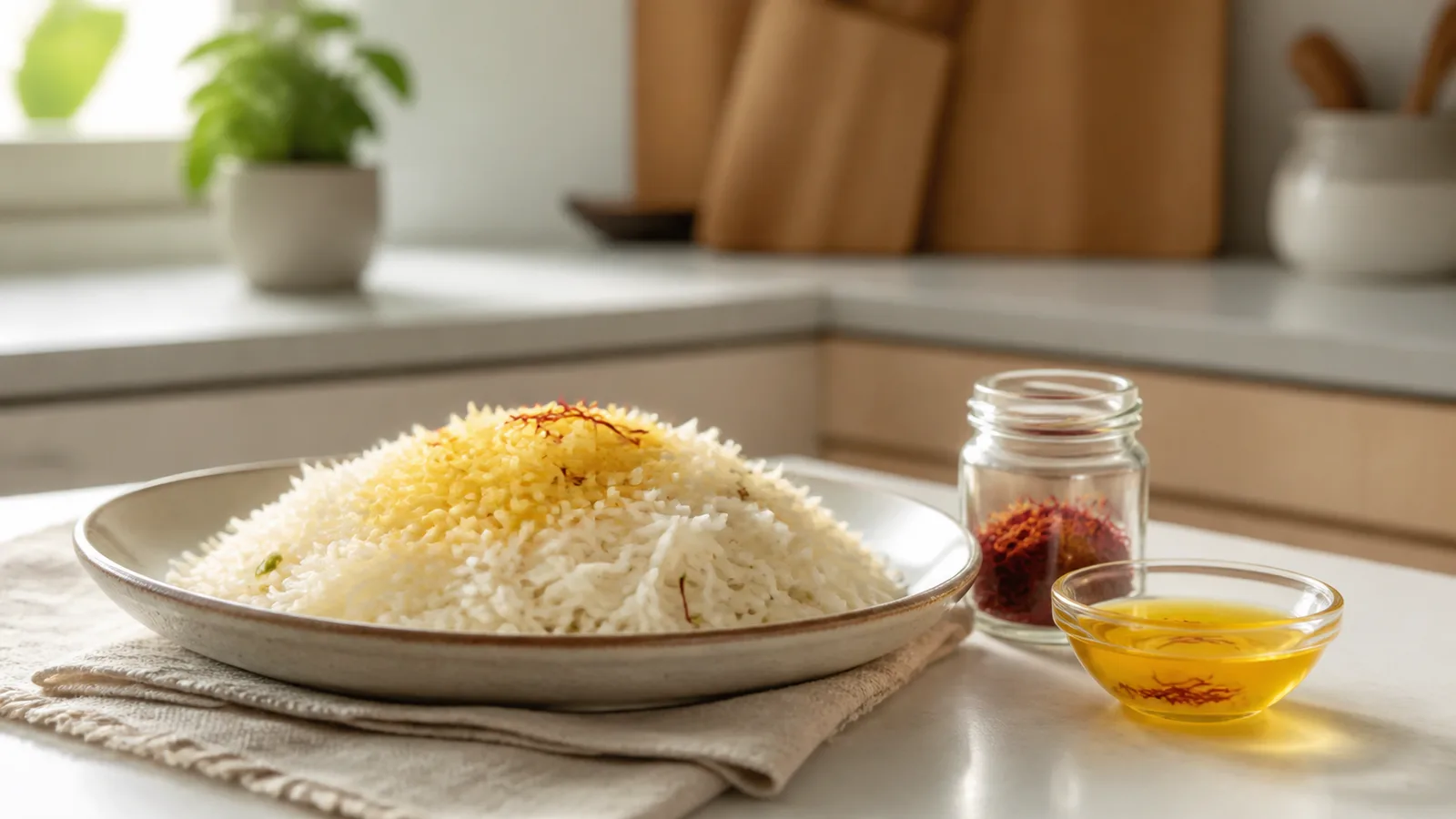
A small culinary amount of saffron can flavour rice, soup or another familiar meal. That may be worthwhile when a person still enjoys the aroma and can eat safely. It does not reproduce the standardized extract used in the trials, and there is no evidence that saffron tea is an effective Alzheimer’s treatment.
Concentrated products deserve more caution in an older adult who takes several medicines. Labels may not match the extract used in research, and swallowing difficulties can make any capsule unsafe. Our guide to using saffron in cooking is about food preparation, not memory treatment.
Practical priorities for memory concerns
- Arrange an assessment for a new or progressive change in memory, judgment, language or daily function.
- Bring every prescription, over-the-counter medicine and supplement to the review.
- Keep prescribed Alzheimer’s treatment unchanged unless the treating clinician adjusts it.
- Seek urgent care for sudden confusion, weakness, trouble speaking, a severe new headache or another abrupt neurological change.
Saffron and Alzheimer’s trials offer an early research signal, not an unbelievable benefit. Small studies of standardized extracts justify better independent trials with more participants, longer follow-up and measures of daily function and disease biology. Until then, diagnosis, established care and support for the person and caregiver should lead every decision.