Italian saffron has more than one origin story. Saffron was already known in Roman Italy, but today’s growing traditions developed in different regions and at different times, especially around L’Aquila in Abruzzo and in central Sardinia.
Where did saffron come from in Italy?
Saffron did not begin as an Italian plant. Modern botanical research places its early domestication in ancient Greece, followed by centuries of cultivation and exchange across the Mediterranean and western Asia. That wider history matters because the question “Is saffron Italian?” has two answers: the crop is not uniquely Italian in origin, yet Italy has genuine, long-established saffron traditions of its own.
The claim that the Romans simply brought saffron to Italy is too neat. Roman cooks, physicians and perfumers certainly knew the spice. Treccani’s history of spices records saffron among the aromatics used in the Greek and Roman world. That proves use in Roman Italy; it does not prove one single introduction event from which every later Italian crop descended.
Regional evidence tells a richer story. The official specification for Zafferano di Sardegna says cultivation on the island was probably introduced by the Phoenicians and became established through Punic, Roman and Byzantine periods. Written evidence for saffron trade in Sardinia appears in municipal statutes from 1317. In Abruzzo, the protected L’Aquila tradition has documented production and trade extending for more than six centuries.
What does “Roman saffron” mean?
Roman saffron is not a separate nationality or recognised botanical variety. In a historical context, the phrase normally means saffron used in Roman society. In a modern geographic context, it may simply refer to saffron grown near Rome or elsewhere in Lazio. Neither meaning establishes a distinct “Roman” type of Crocus sativus.
So, where is Roman saffron from? The honest answer depends on the product. A seller should be able to name the modern place of cultivation and provide traceability. The fact that ancient Romans valued saffron says nothing by itself about where a packet sold today was grown.
Where is saffron grown in Italy today?
Saffron in Italy is produced on a much smaller scale than in the world’s largest producing countries. Italian growing is regional, labour-intensive and often associated with a named local tradition. Two areas have particularly clear official protection.
L’Aquila and the Navelli plateau in Abruzzo
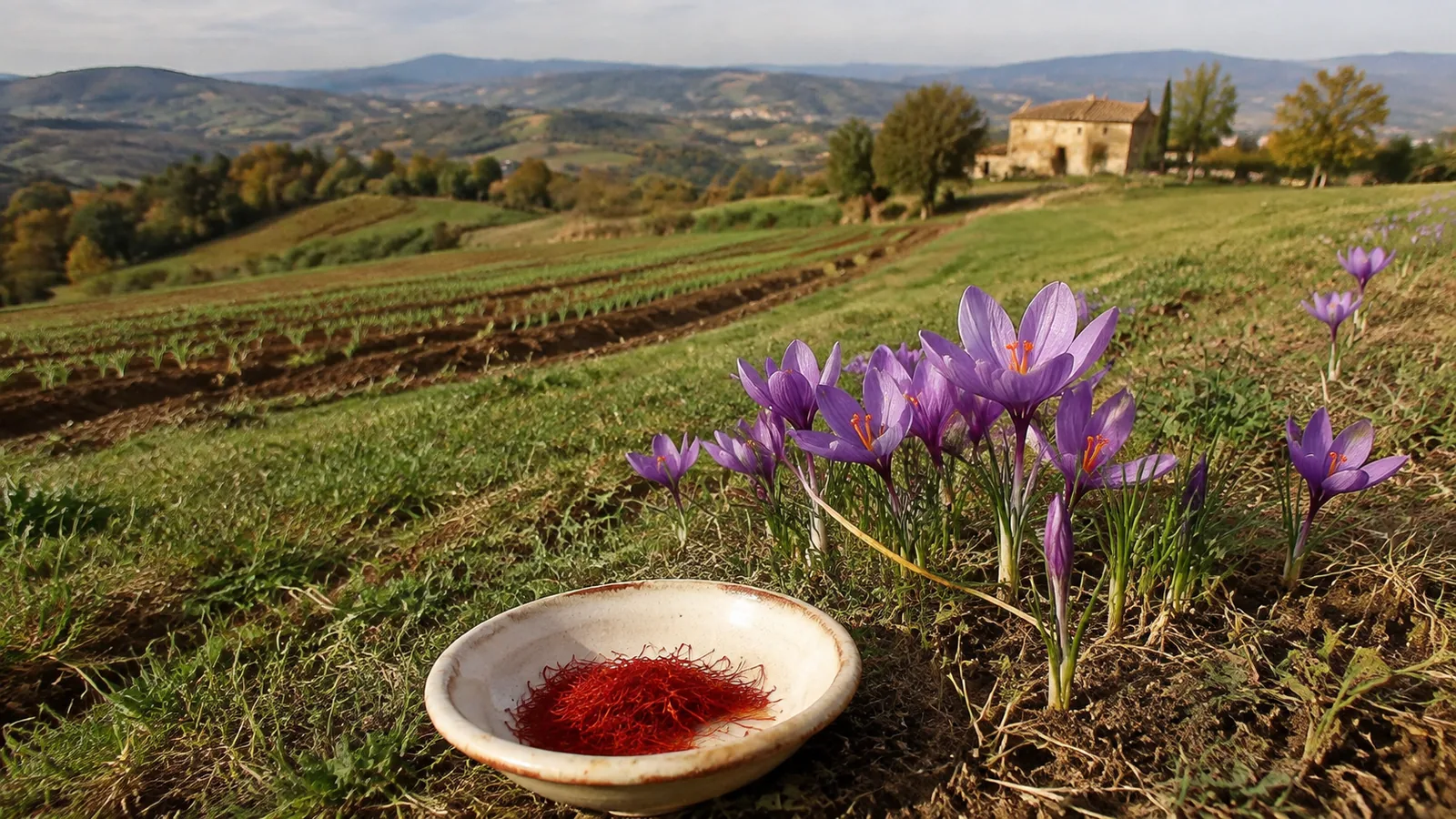
Zafferano dell’Aquila has Protected Designation of Origin status. Its defined production zone covers specified municipalities in the province of L’Aquila, including the Navelli plateau. The official Italian production specification links this saffron to local growing, hand harvesting and careful separation and drying of the stigmas.
L’Aquila saffron is sometimes described only in terms of cold winters and sunny summers. Climate is part of the setting, but quality is not created by weather alone. Planting material, soil, harvest timing, handling and drying all affect the finished spice. PDO labelling is useful because it ties the name to a defined place and method rather than to a loose marketing description.
Medio Campidano in Sardinia
Zafferano di Sardegna is another PDO product. Its official area comprises San Gavino Monreale, Turri and Villanovafranca in the historic Medio Campidano area. The EU product specification for Sardinian saffron describes the local cultivation history, the dry Mediterranean conditions and the characteristics used to define the protected spice.
This is one reason a general phrase such as “Italian saffron” is less precise than a regional name. Saffron grown in Sardinia and saffron grown in Abruzzo share the same cultivated species, but each belongs to a different landscape and production tradition.
Sicily, including Caltanissetta
Saffron cultivation also exists outside the two PDO areas. In Sicily, small farms and rural projects grow it in several locations. Official regional material identifies a saffron enterprise in Marianopoli, in the province of Caltanissetta. That supports the existence of Caltanissetta saffron production, but not claims that the province is one of Italy’s largest producers. Public production totals are not supplied in that material.
Similar small-scale cultivation can be found in other Italian regions. For a buyer, the useful questions are not merely whether the label says “saffron Italy,” but where it was harvested, whether the producer can be identified and whether the protected name on the package is genuine.
How saffron became part of Italian cooking
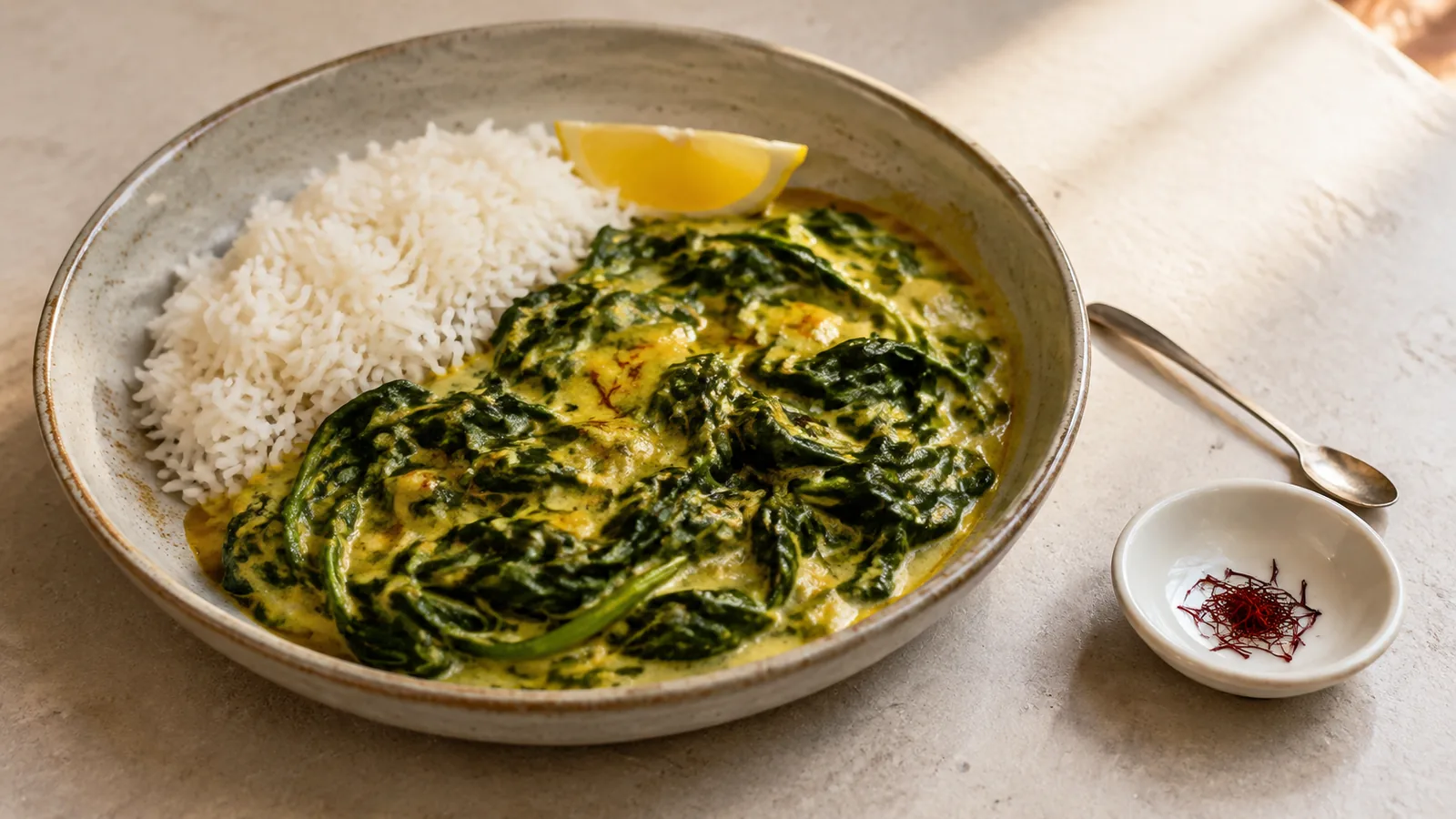
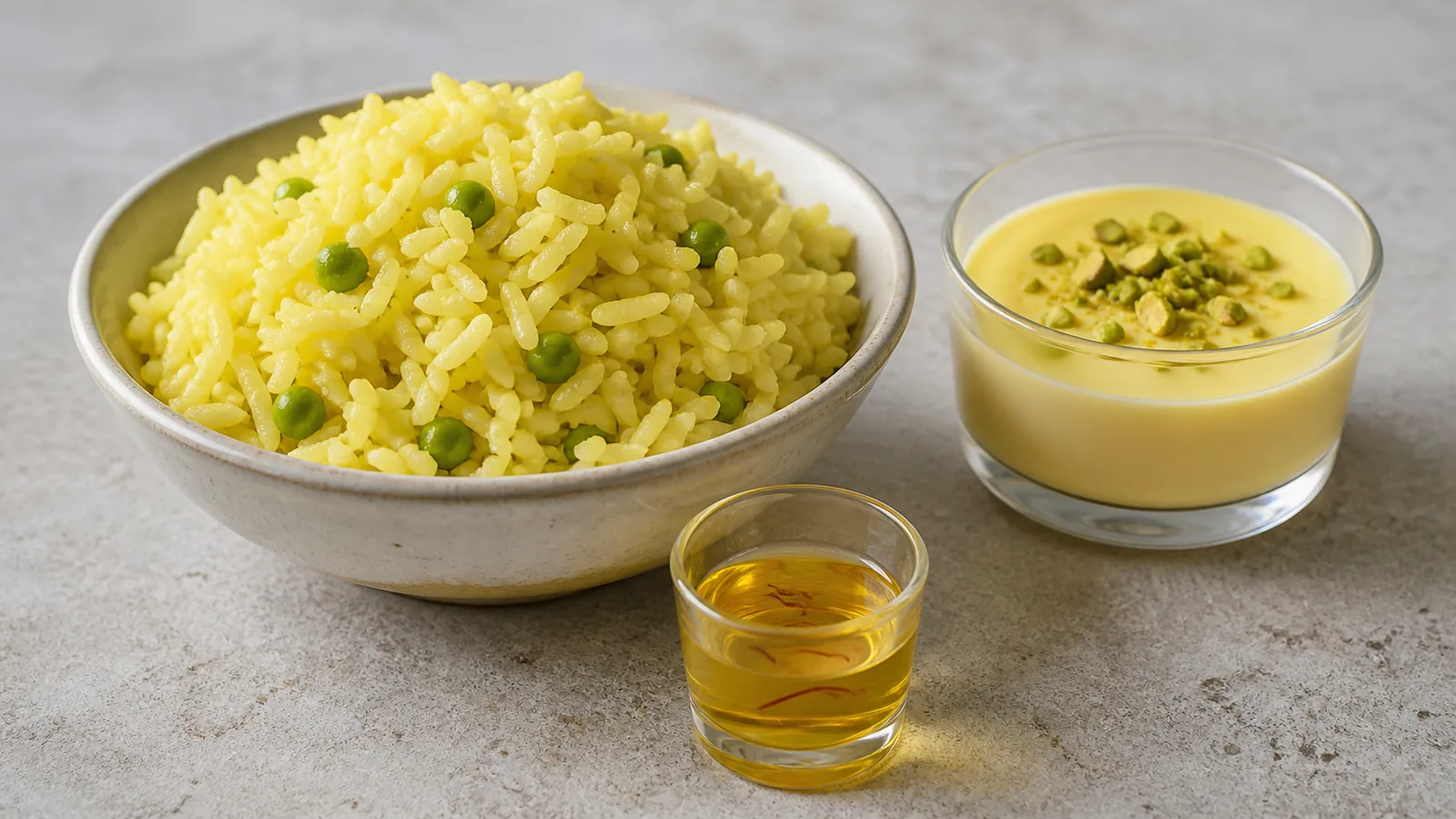
Saffron’s place in Italian cuisine is most visible in dishes where a small infusion colours and perfumes the whole preparation. Risotto alla Milanese is the best-known example: saffron gives the rice its golden colour and characteristic warm, hay-like aroma. It also appears in regional pasta and rice dishes, soups, breads, biscuits and liqueurs.
Panettone is often mentioned in lists of saffron foods, but saffron is not required in every traditional panettone. Some recipes use it for colour or aroma; many do not. It is more accurate to treat saffron panettone as a variation than to suggest the spice defines the entire category.
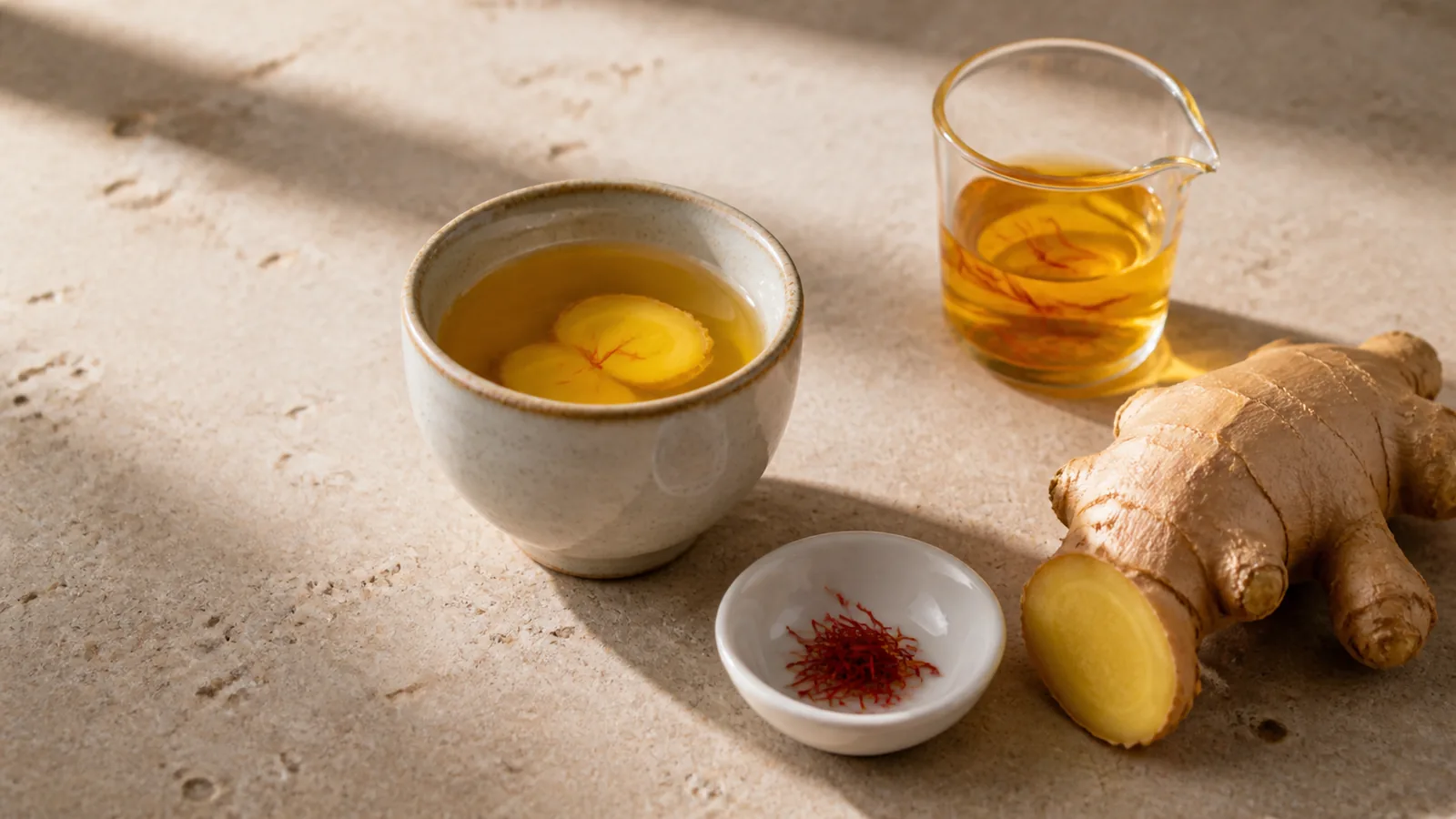
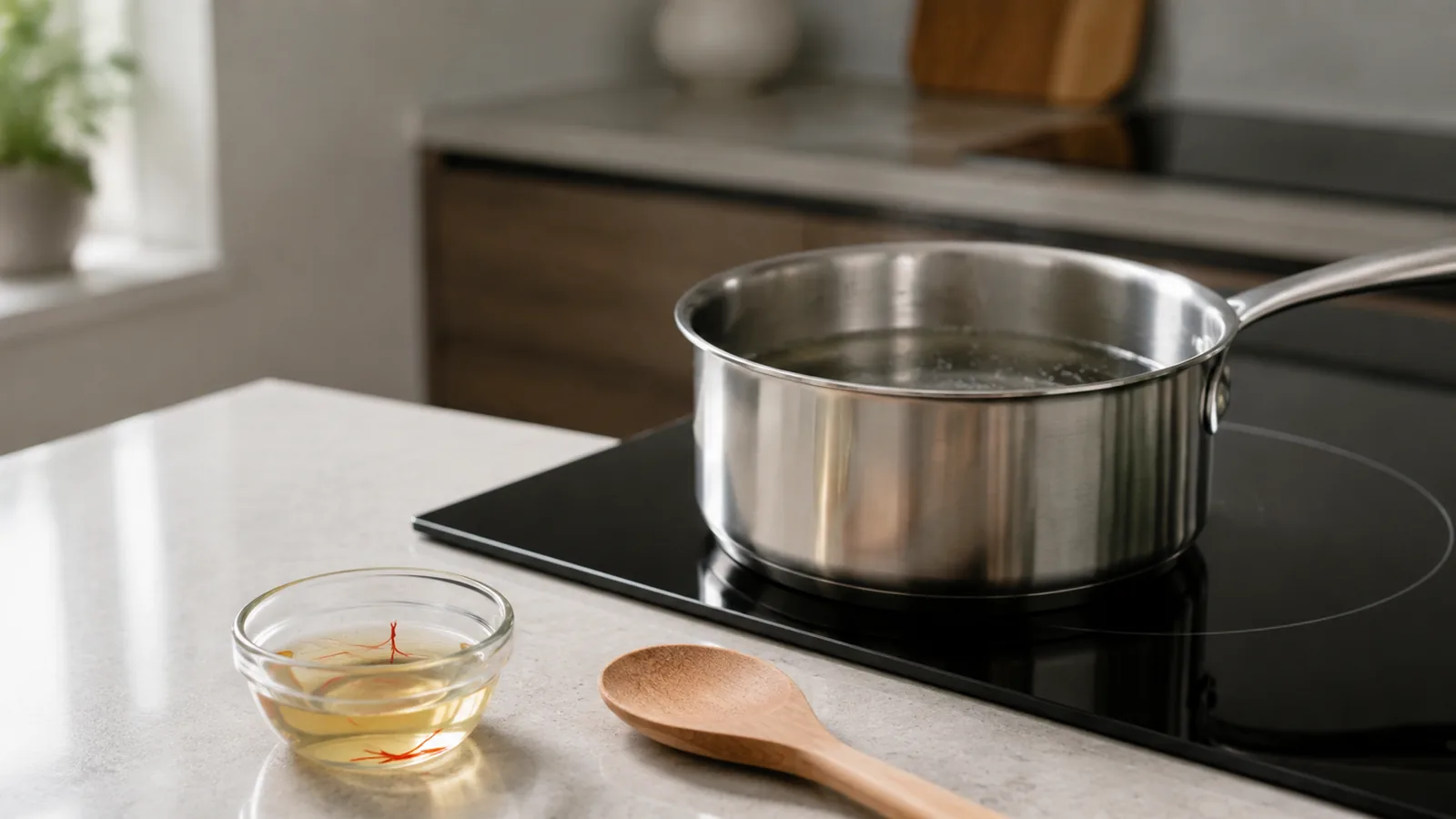
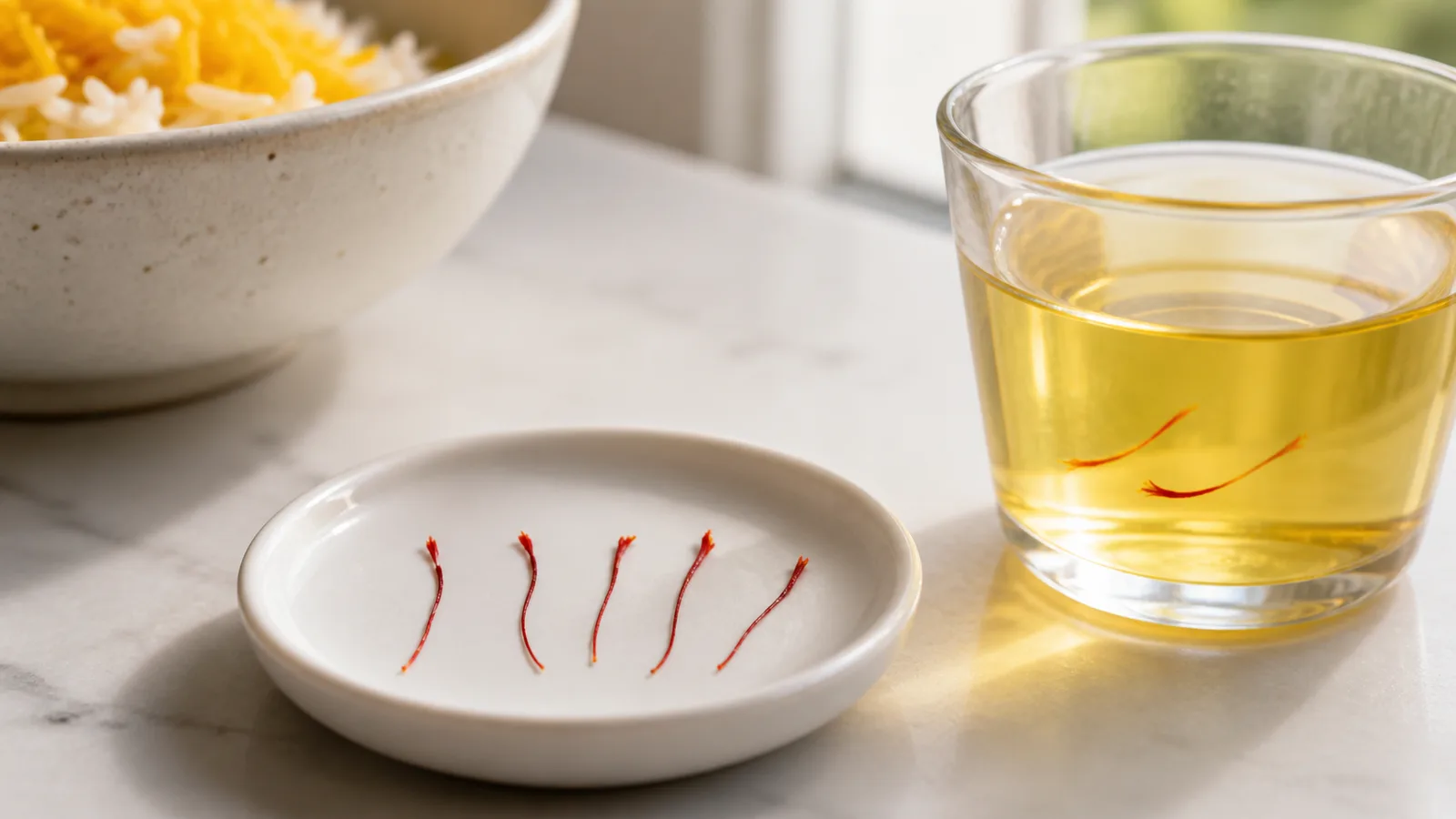
Whatever the recipe, the threads should be infused gently before use so their colour and aroma can disperse. Our guide to the best way to brew saffron explains a practical method for home cooking.
Is Italian saffron different from saffron grown elsewhere?
Italian origin does not create a different saffron species. All commercial saffron comes from the dried stigmas of Crocus sativus. Differences between batches can arise from the growing environment, flower handling, drying, storage and age. A country name alone cannot guarantee stronger colour, aroma or flavour.
Nor does the country with the largest harvest automatically produce every best batch. If you are comparing Italian saffron with Iranian, Spanish, Greek or Afghan saffron, judge the actual product: look for intact red threads, a clean aroma, traceable origin, sensible packaging and credible grading or laboratory information. Our explanation of saffron’s country of origin separates early history from modern production.
The current genetic and historical evidence is reviewed in a peer-reviewed study of saffron’s origin and domestication. It supports an early Greek origin for cultivated saffron while recognising its long movement through many cultures. That evidence is more reliable than trying to assign the plant itself a modern nationality.
How to buy authentic Italian saffron
If Italian provenance is important to you, read beyond the front label. For a protected product, look for the full PDO name and the relevant EU quality mark. Check that the producer or packer is identified and that the package gives a lot or traceability reference. A generic Italian-looking design is not proof of Italian cultivation.
Choose threads when possible because their structure is easier to inspect than powder. The threads should be predominantly deep red, with a recognisable saffron aroma and no unexplained plant material. Very low pricing, vague origin language or extravagant medicinal promises are reasons to slow down and ask questions.
Rowhani Saffron does not claim that every saffron associated with an Italian recipe was grown in Italy. Product origin should be checked on the specific listing or package. If you need help interpreting provenance or choosing saffron for an Italian dish, contact us before ordering.
Saffron origin in Italy: a regional history, not a single arrival date
The clearest answer to where saffron came from in Italy is that there was no single national starting point. The spice was known in the Roman world, Sardinia preserves a history linked to Phoenician and later Mediterranean influence, and L’Aquila developed a documented cultivation and trading tradition over many centuries. Today, Italian saffron remains a real but regionally specific product. Its value lies in traceable place and careful production, not in a simplified origin story.