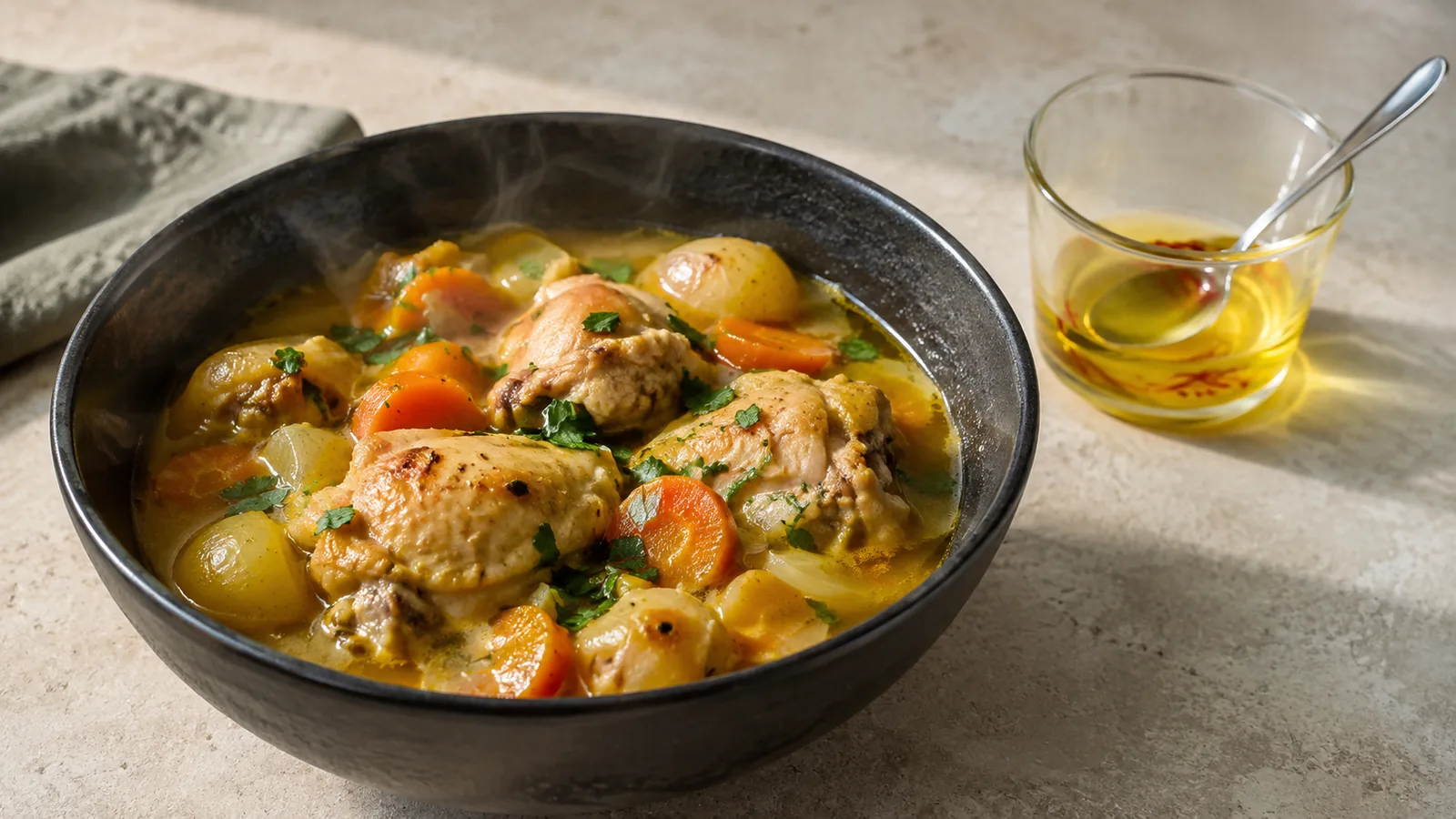
This Saffron Pudding Recipe shows the difference between rice flour and cornstarch using the same two-cup milk base. Rice flour makes a soft, comforting pudding with a slightly fuller body; cornstarch makes a smoother, glossier dessert with a cleaner set.
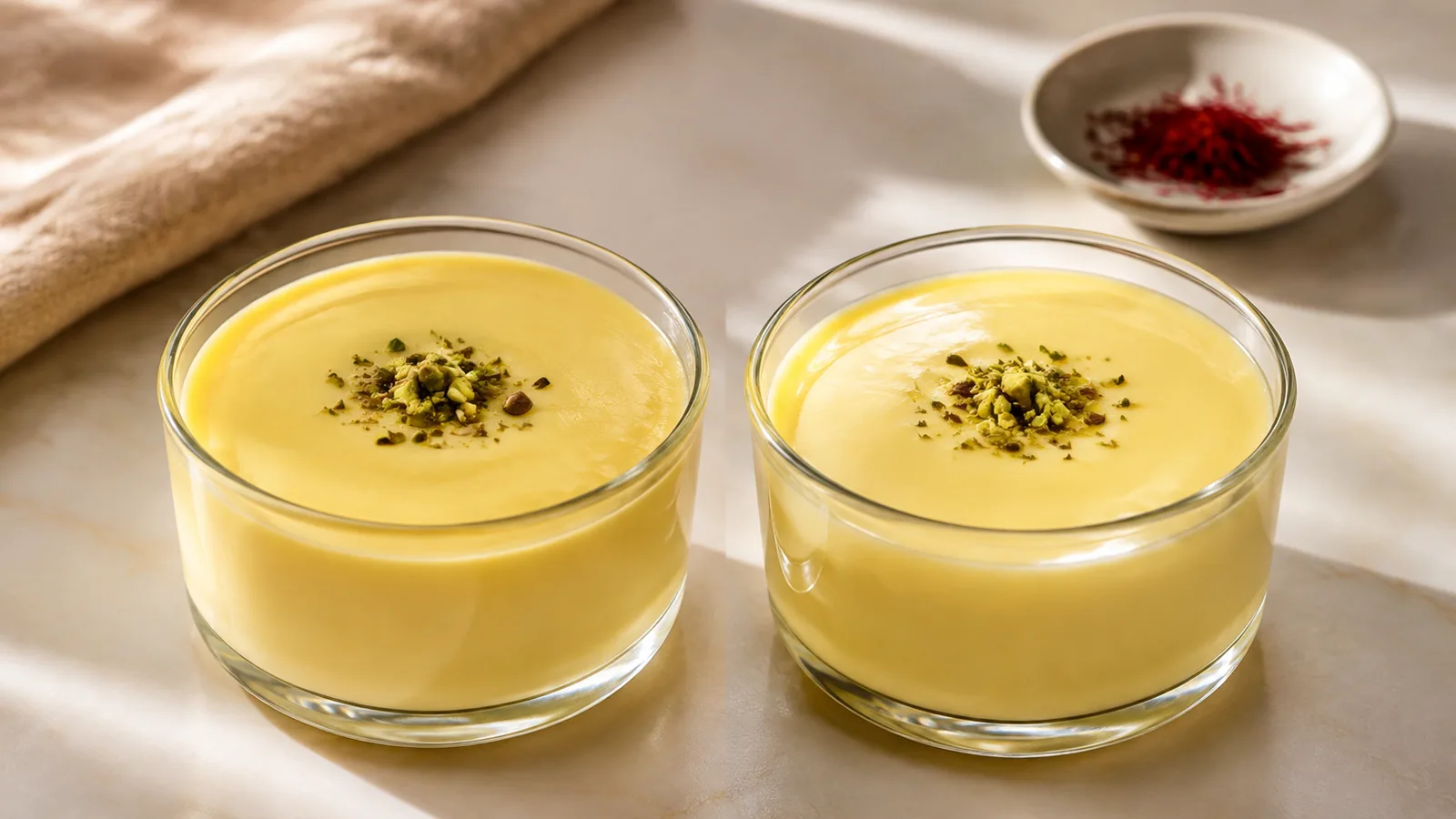
Rice flour or cornstarch: which should you choose?
Choose rice flour when you want a soft milk pudding that feels substantial but remains spoonable. It needs a few extra minutes of cooking so the flour loses its raw taste. Choose cornstarch for a silkier surface and a firmer chilled texture.
You can also combine them. Equal amounts produce a pudding that is smooth yet less bouncy than one thickened entirely with cornstarch. None of these versions needs gelatin.
Saffron pudding with rice flour
Ingredients for two to four servings
- 2 cups cold whole milk
- 3 tablespoons fine rice flour
- 3 to 4 tablespoons sugar
- 2 tablespoons strongly bloomed saffron
- 1 to 2 teaspoons rosewater
- ¼ teaspoon vanilla extract or a small pinch of ground cardamom
- A small pinch of salt
Method
- Put the rice flour, sugar and salt in a heavy saucepan. Whisk in about half a cup of the cold milk until no dry pockets remain.
- Add the remaining milk gradually while whisking. Starting cold is the simplest way to prevent lumps.
- Set the pan over medium-low heat. Stir continuously across the base and into the corners.
- Once the pudding begins to steam and thicken, reduce the heat to low. Cook gently for five to eight minutes, stirring, so the rice flour is fully hydrated.
- Remove the pan from the heat and stir in the saffron infusion, rosewater and vanilla or cardamom.
- Pour into cups while warm. Cool briefly, cover and refrigerate for at least two hours.
Rice flour pudding continues to thicken as it cools. Stop cooking when it falls from the spoon in a broad ribbon; waiting until it is very stiff in the pan can leave the chilled dessert dense.
Saffron pudding with cornstarch
Ingredients for two to four servings
- 2 cups cold whole milk
- 3 tablespoons cornstarch
- 3 to 4 tablespoons sugar
- 2 tablespoons strongly bloomed saffron
- 1 to 2 teaspoons rosewater
- ¼ teaspoon vanilla extract or a small pinch of ground cardamom
- A small pinch of salt
Method
- Whisk the cornstarch with half a cup of cold milk until completely smooth.
- Warm the remaining milk, sugar and salt over medium-low heat until the sugar dissolves.
- Whisk the starch slurry again, then pour it into the pan in a thin stream while stirring.
- Continue stirring until the pudding reaches a gentle bubble and visibly thickens. Cook for one further minute.
- Take it off the heat and mix in the saffron, rosewater and chosen secondary flavour.
- Divide between cups, cool briefly, cover and chill for at least three hours.
Do not add dry cornstarch directly to warm milk. Its outside gels immediately and traps dry starch inside, creating lumps that are difficult to remove.
Mixed rice-flour and cornstarch version
For a middle texture, use 1½ tablespoons rice flour and 1½ tablespoons cornstarch with the same two cups of milk. Disperse both in cold milk before heating. Once the mixture gently bubbles, cook for another two to three minutes so the rice flour has time to soften.
This blended version is a good choice for layered glasses because it holds a clear line while remaining creamy. It is still a spoon dessert, not a firm pudding for an elaborate mould.
How to bloom saffron for milk pudding
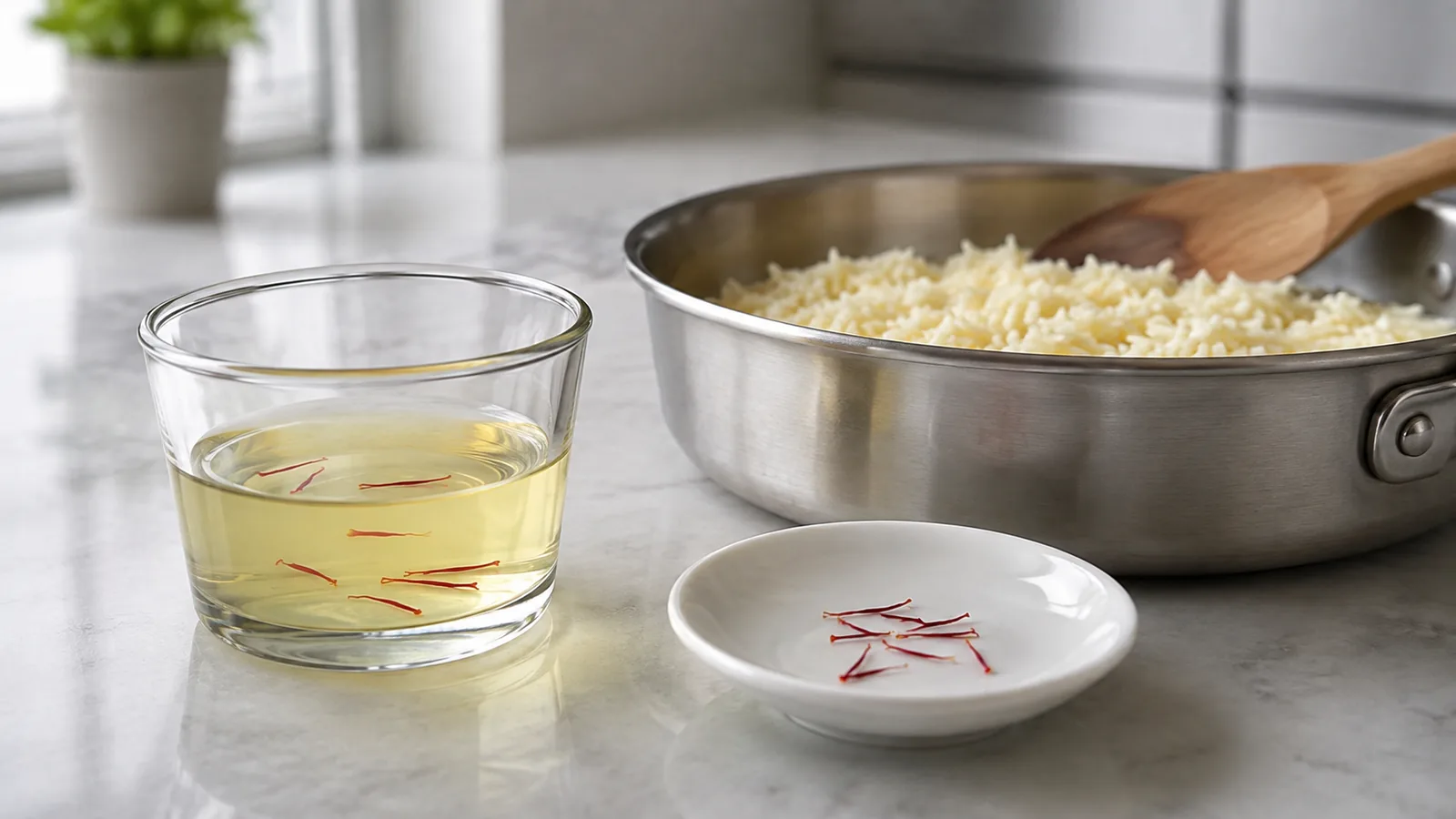
Crush a measured pinch of threads, add a small amount of hot water, cover and leave for 10 to 15 minutes. A concentrated infusion colours the pudding without adding enough water to thin it. See our guide to brewing saffron for a fuller comparison of methods.
Add the infusion after the thickener has cooked. This keeps the saffron away from a long simmer and lets you judge the final colour before pouring the cups.
Is this a saffron rice pudding recipe?
This page uses finely milled rice flour as a thickener; it does not contain whole grains of rice. Searchers sometimes use “saffron rice pudding recipe” for both styles. The whole-grain Persian dessert sholeh zard is a different dish made with rice, water, sugar, saffron and rosewater.
If you want a milk pudding with cream, gelatin, biscuits or jelly, use our broader guide to how to make saffron pudding. Keeping the methods separate prevents the thickener ratios from being mixed accidentally.
How to adjust sweetness and flavour
Begin with three tablespoons of sugar and taste a cooled spoonful after the saffron goes in. Cold desserts taste less sweet than warm ones, so make small adjustments. Honey can sweeten the pudding, but its flavour is more noticeable and it changes the colour slightly; reduce the other liquid only if you add a substantial amount.
This dessert should not be presented as infant food. The CDC’s botulism-prevention guidance says not to feed honey to children younger than 12 months. For older children, consider the whole recipe, allergies and portion size rather than assuming that replacing sugar makes a dessert nutritious.
Choose either vanilla or cardamom at first. Rosewater is powerful, so start with one teaspoon and add the second only after tasting. Cocoa changes this into a chocolate pudding and largely hides the saffron; use it for a separate portion if you want to compare flavours.
Serving and garnishing
For Ramadan iftar or another gathering, pour the hot pudding into heat-safe individual cups rather than chilling the saucepan. Leave it at room temperature only long enough for the strongest heat to escape, then cover and refrigerate.
Garnish shortly before serving with one or two of the following:
- Crushed pistachios
- Slivered almonds
- A light dusting of cinnamon
- A few culinary dried rose petals
- Unsweetened coconut
- A spoonful of tart fruit preserve
Extra dry saffron threads look attractive but are unpleasant in large mouthfuls. Use only a few, or bloom all of the saffron and let nuts provide the texture.
Troubleshooting both puddings
The pudding is lumpy
The flour or starch was not fully dispersed in cold milk, or the pan heated too quickly. Pass the warm pudding through a fine sieve and stir until smooth.
The rice flour tastes raw
It needs longer at low heat. Return the mixture to the pan and cook gently for several minutes, stirring so the milk does not scorch.
The cornstarch pudding is runny
It must reach a gentle bubble before the starch fully thickens. Reheat while stirring, then cook for one minute after bubbling. Measure with level tablespoons next time.
Water appears after chilling
The pudding may have been undercooked, repeatedly warmed and cooled, or stored uncovered. Cook the thickener properly, cool once and cover the surface before refrigeration.
The saffron flavour is weak
Use a more concentrated infusion rather than adding extra water. Make sure the threads are dry, aromatic and crushed before blooming. Strong vanilla or rosewater can also mask saffron.
Make-ahead and storage
Both versions can be made the day before serving. Keep the cups covered in the refrigerator and add nuts, fruit or preserves at the last moment. For the best texture, use them within about three days and do not leave milk pudding out for an extended buffet.
These two methods share the same saffron character but produce genuinely different results. Use rice flour for a softer, fuller pudding; choose cornstarch for a smoother, firmer cup; or combine them when you want something between the two.