This Saffron Syrup Recipe makes a fragrant rosewater cordial that you can dilute with cold still or sparkling water. It is a concentrated sweet syrup, not ready-to-drink saffron water: start with one or two tablespoons in a glass, taste, then add more only if you want a sweeter, stronger drink.
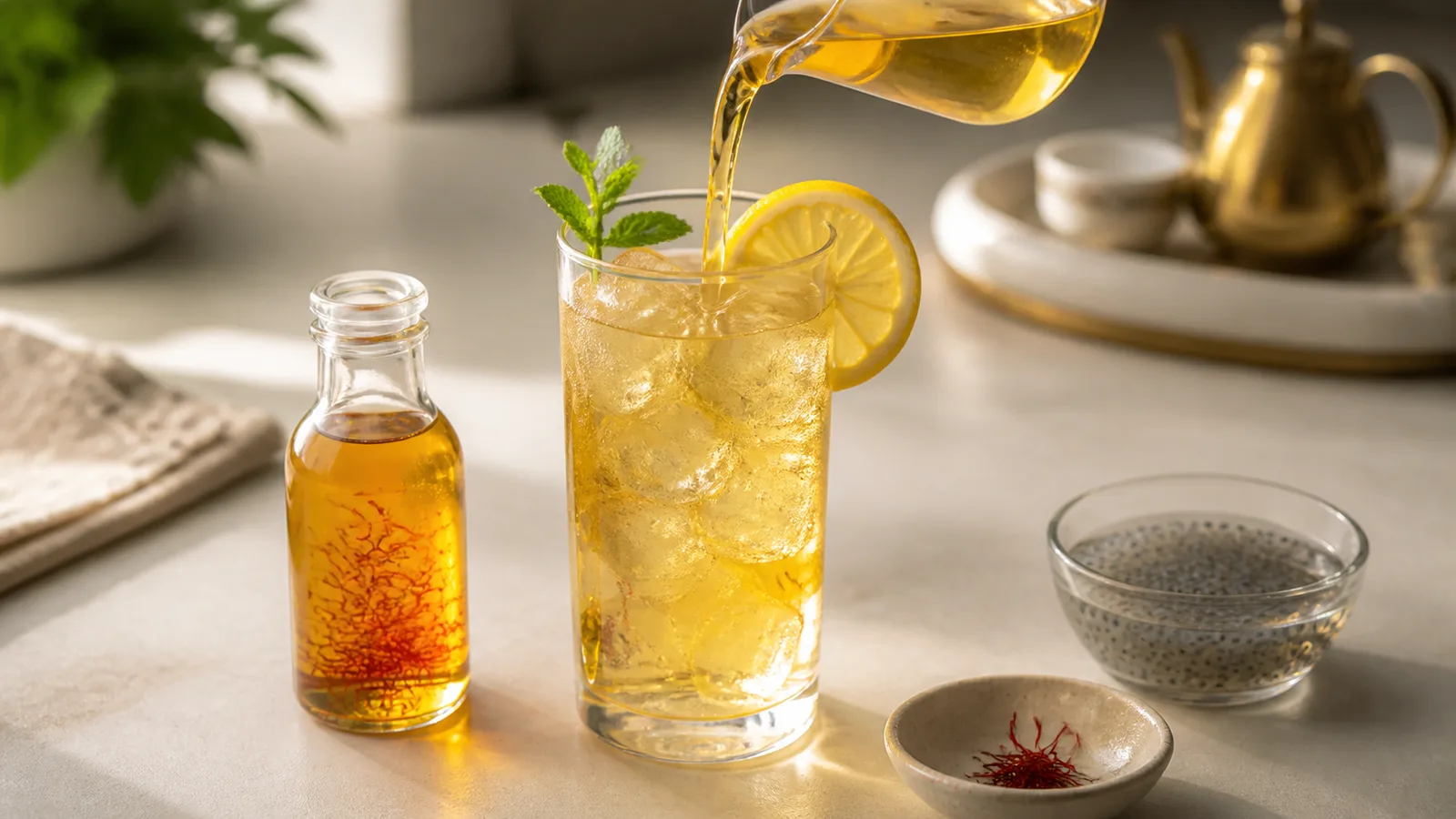
Saffron gives the syrup a clear golden colour and floral, slightly bitter depth. Rosewater rounds out the aroma, while a small squeeze of lemon keeps the sweetness from feeling flat. The method is simple, but the order matters: dissolve the sugar first, cool the syrup briefly, then add bloomed saffron and rosewater so they are not boiled for a long time.
Saffron syrup ingredients
For one small bottle of saffron simple syrup, use:
- 1 cup (240 ml) water;
- 1 cup (200 g) granulated sugar;
- about 20–30 good saffron threads, lightly crushed;
- 1 tablespoon food-grade rosewater; and
- 1 teaspoon fresh lemon juice, optional.
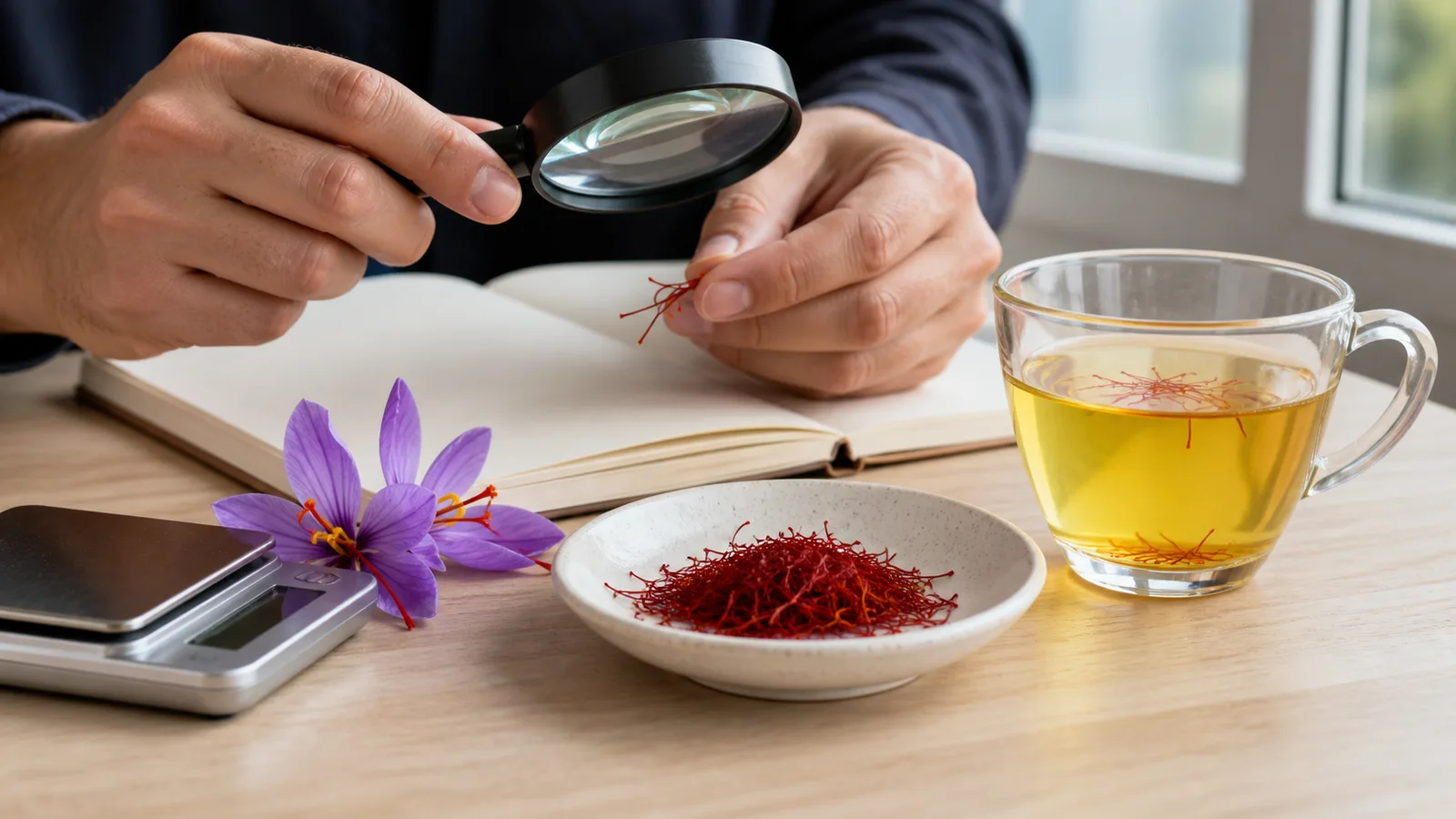
These saffron drink ingredients make a concentrate that must be diluted before serving. Whole threads are easier to assess and measure than an unidentified saffron powder. The old half-tablespoon measure was far more saffron than this small batch needs. A modest amount gives a clean aroma without making the cordial harsh or wasteful.
How to make saffron syrup
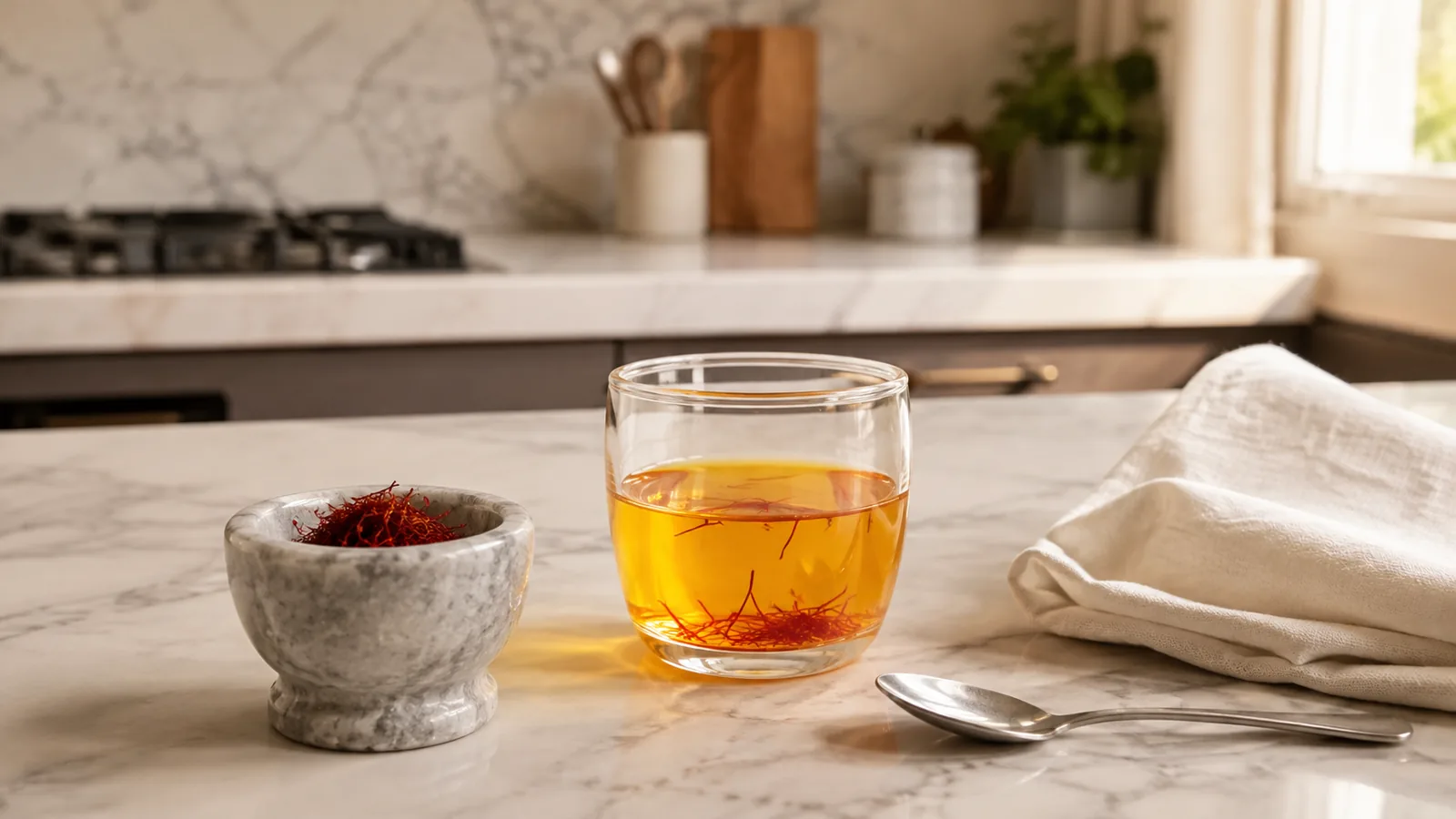
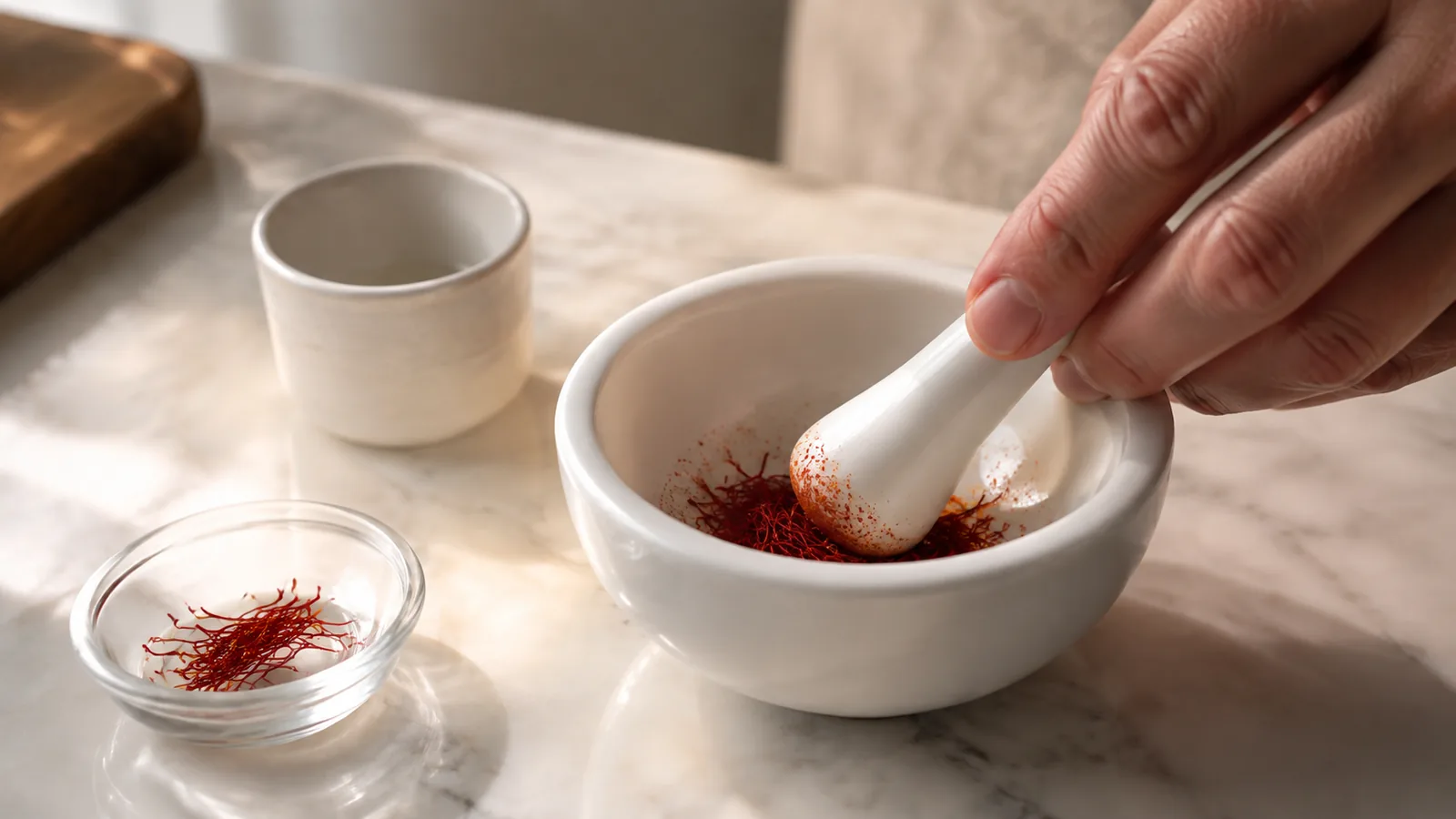
- Bloom the saffron. Lightly crush the threads and cover them with 2 tablespoons of warm water in a small cup. Leave them for 10 minutes.
- Dissolve the sugar. Put 1 cup water and 1 cup sugar in a small saucepan. Warm over medium-low heat, stirring gently until the liquid is clear.
- Simmer briefly. Once the mixture reaches a gentle simmer, cook for 2 minutes. Do not reduce it into a thick candy syrup.
- Add the aromatics. Remove the pan from the heat and wait 2–3 minutes. Stir in the bloomed saffron, rosewater and optional lemon juice.
- Cool and bottle. Let the syrup cool, pour it into a clean covered bottle or jar, label the date and refrigerate.
The syrup thickens a little as it cools. If crystals form, warm the bottle gently in a bowl of hot water and stir. A strong rolling boil is unnecessary and can flatten the floral notes that make this cordial distinctive.
Saffron drink recipe: how to dilute the cordial
Fill a tall glass with ice and add 1–2 tablespoons of syrup. Top with about 1 cup of cold still or sparkling water and stir well. Taste before adding more. Finish with a thin lemon slice, a mint sprig or a few soaked basil seeds if you enjoy their texture.
Soak edible basil seeds separately according to their package directions before adding them; dry seeds clump and continue absorbing liquid. Rose extract is usually much stronger than rosewater, so it is not a one-for-one substitute. Add it by the drop if that is the product you have.
Saffron water recipe and how it differs from cordial
These names describe related but different drinks:
- Saffron syrup or saffron cordial is the sweet concentrate in this recipe and is diluted before drinking.
- Saffron simple syrup is the same idea without rosewater, useful where you want a more neutral saffron flavour.
- Saffron water is saffron infused in water without a syrup-level amount of sugar.
Here is how to make saffron water for drinking: bloom 8–12 threads in a little warm water, add enough cool water for one or two glasses and serve. If you need the basic blooming technique, the saffron tea method uses the same gentle approach. Saffron water will be lighter and less shelf-stable than the cooked cordial, so make only what you plan to drink.
Saffron syrup uses beyond a cold drink
A bottle can flavour more than plain water. Use a measured spoonful rather than pouring freely, then taste:
- stir it into lemonade or an alcohol-free sparkling mocktail;
- sweeten iced tea or a lightly brewed black tea;
- brush a small amount over a plain cake while it is still warm;
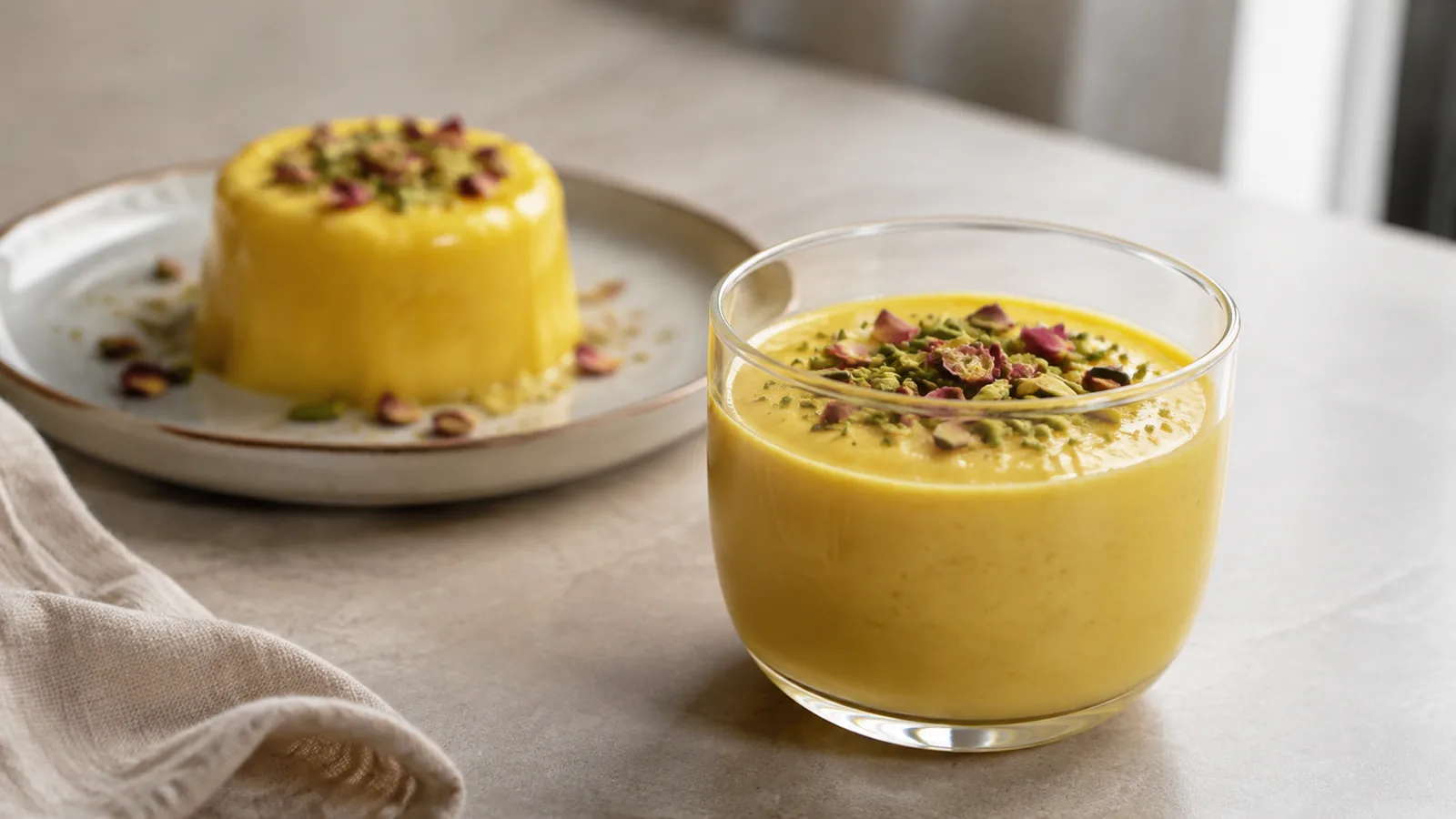
- spoon it over yogurt, fruit or vanilla ice cream; or
- add it to a fruit salad dressing with lemon or lime.
For cocktails, treat it like any other aromatic simple syrup and balance it with acid and dilution. For desserts, remember that it adds both sweetness and moisture.
Flavour variations
For a warmer profile, add one lightly crushed green cardamom pod while the sugar dissolves and remove it before bottling. A strip of lemon peel gives a drier citrus aroma than juice. Orange blossom water can replace rosewater, but start with half the amount because products vary in strength.
Honey can replace part of the sugar for flavour, although the result will taste like honey and may not have the same clarity. It is best to make a small trial rather than assuming the original sugar ratio can be changed without affecting texture and storage.
Saffron syrup benefits: what this recipe can honestly offer
Saffron contains well-known aromatic and coloured compounds, but this recipe is primarily a sugar syrup used for flavour. It should not be described as balancing blood sugar, supplying sustained energy, treating stress, aiding kidney function, fixing digestion or supporting immunity. Those promises are not established for a serving of homemade cordial, and the sugar content directly contradicts the idea that it is automatically healthier than every bottled drink.
The useful comparison is practical: because you make the syrup yourself, you know what went into it and can control how much concentrate goes into each glass. For a less sweet drink, use more water, a smaller spoonful of syrup and plenty of ice. Enjoy it for its saffron and rosewater flavour rather than as treatment.
Storage and signs to discard it
Refrigerate the cooled syrup in a clean, tightly covered container and pour with a clean spoon or spout. Make a small batch and use it promptly. Discard it if you see mould, unexpected cloudiness, bubbling, a swollen lid or an off smell. Do not rely on its sugar content to make home bottling shelf-stable.
The finished saffron drink should be golden, floral and refreshing, with enough acidity or cold water to balance the sweetness. Once you have the base ratio, it is easy to adjust one glass at a time without losing the character of the saffron.